log in
Website Items

Website Items (1257)

Children categories

The Book of the Bee

The Book of the Bee (19)

THE BOOK OF THE BEE

THE SYRIAC TEXT

EDITED FROM THE MANUSCRIPTS IN LONDON, OXFORD, AND MUNICH

WITH AN ENGLISH TRANSLATION

BY ERNEST A. WALLIS BUDGE, M.A.

LATE SCHOLAR OF CHRIST'S COLLEGE, CAMBRIDGE, AND TYRWHITT SCHOLAR ASSISTANT IN THE DEPARTMENT OF EGYPTIAN AND ASSYRIAN ANTIQUITIES, BRITISH MUSEUM

OXFORD AT THE CLARENDON PRESS 1886.


View items...
The Book of the Cave of Treasures

The Book of the Cave of Treasures (32)

THE BOOK OF THE CAVE OF TREASURES

A HISTORY OF THE PATRIARCHS AND THE KINGS
THEIR SUCCESSORS FROM THE CREATION
TO THE CRUCIFIXION OF CHRIST

TRANSLATED FROM THE SYRIAC TEXT OF THE
BRITISH MUSEUM MS. ADD. 25875

BY

SIR E. A. WALLIS BUDGE, KT.

M.A., LITT.D. (CAMBRIDGE), M.A., D.LITT. (OXFORD),
D.LIT. (DURHAM), F.S.A.
SOMETIME KEEPER OF EGYPTIAN AND ASSYIRIAN ANTIQUITIES, BRITISH MUSEUM;
CORRESPONDING MEMBER OF THE ACADEMY OF SCIENCES, LISBON; AND
CORRESPONDING MEMBER OF THE PHILOSOPHICAL SOCIETY OF AMERICA
With 16 plates and 8 illustrations in the text

LONDON
THE RELIGIOUS TRACT SOCIETY

MANCHESTER, MADRID, LISBON, BUDAPEST

1927


Front piece

Imdugud, in Imgig, the lion-headed eagle of Ningirsu, the great god of Lagash

cave-00-front

Sumerian relief in copper on wood representing Imdugud, or Imgig, the lion-headed eagle of Ningirsu, the great god of Lagash, grasping two stags by their tails. It is probable that it was originally placed over the door of the temple of Nin-khursag or Damgalnun at the head of the stairway leading on to the temple platform. This remarkable monument was made about 3100 B.C., and was discovered by Dr. H. R. Hall in 1919 at Tall al-`Ub, a sanctuary at "Ur of the Chaldees" in Lower Babylonia. It is now in the British Museum (No. 114308).


View items...
The Book of Enoch

The Book of Enoch (6)

The Book of Enoch

 A page of the Book of Enoch

enoch-index

A page of the Ethiopic text of the "Book of Enoch" (British Museum MS. Orient. No. 485, Fol. 83b) containing a description of one of Enoch's visits to heaven, and how the archangel Michael took him by the hand and showed him the mysteries of heaven.


From The Apocrypha and Pseudepigrapha of the Old Testament R.H. Charles Oxford: The Clarendon Press


View items...
The Forgotten Books of Eden

The Forgotten Books of Eden (34)

THE FORGOTTEN BOOKS OF EDEN

 Translated in the late 1800's

by

Dr. S. C. Malan and Dr. E. Trumpp.

Translated into King James English from both the Arabic version and the Ethiopic version which was then published in The Forgotten Books of Eden in 1927 by The World Publishing Company.

In 1995, the text was extracted from a copy of The Forgotten Books of Eden and converted to electronic form by Dennis Hawkins.


View items...
The Book of Jasher

The Book of Jasher (93)

The Book of Jasher

Referred to in Joshua and Second Samuel

Faithfully Translated

FROM THE ORIGINAL HEBREW INTO ENGLISH

SALT LAKE CITY: PUBLISHED BY J.H. PARRY & COMPANY 1887.


NOTE : According to some sources, this book was once the original start of the Bible. Originally translated from Hebrew in A.D. 800, "The Book of Jasher" was suppressed, then rediscovered in 1829 when it was once again suppressed. Reemerged again, in his preface Alcuin writes the reference to Jasher in 2 Samuel authenticates this book .

The root of the first book of Jasher must be written BEFORE the time of Joshua and Samuel in the Bible because both books refers to the book of Jasher.

"Is not this written in the Book of Jasher?"--Joshua, 10,13.

"Behold it is written in the Book of Jasher."--II. Samuel, 1,18


View items...
The Book of Jubilees

The Book of Jubilees (1030)

The Book of Jubilees

From The Apocrypha and Pseudepigrapha of the Old Testament

by R.H. Charles, Oxford: Clarendon Press,

1913.

Scanned and Edited by Joshua Williams, Northwest Nazarene College.


A page of the Book of Jubilees

jubilees-main

A page of the Ethiopic version of the apocryphal work known to ecclesiastical writers as the "Lesser Genesis," and the "Apocalypse of Moses" (British Museum MS. Orient. No. 485, Fol. 83b). Because each of the periods of time described in the book contains forty-nine to fifty years, the Ethiopians called it MAZHAFA K i.e. the "Book of Jubilees." The passage here reproducted describes the tale of Joseph in the 17th year of his age, his going down to Egypt, and his life in that country.


 See the video about Jubilees in 20 parts:

{youtube}Kq_0-D5UnxM{/youtube}
View items...
The Kebra Nagast

The Kebra Nagast (25)

The QUEEN of SHEBA
AND HER ONLY SON
MENYELEK

being

THE 'BOOK OF THE GLORY OF KINGS'

(KEBRA NAGAST)

A WORK WHICH IS ALIKE THE TRADITIONAL HISTORY OF THE ESTABLISH- MENT OF THE RELIGION OF THE HEBREWS IN ETHIOPIA, AND THE PATENT OF SOVEREIGNTY WHICH IS NOW UNIVERSALLY ACCEPTED IN ABYSSINIA AS THE SYMBOL OF THE DIVINE AUTHORITY TO RULE WHICH THE KINGS OF THE SOLOMONIC LINE CLAIMED TO HAVE RECEIVED THROUGH THEIR DESCENT FROM THE HOUSE OF DAVID

Translated from the Ethiopic

by SIR E. A. WALLIS BUDGE M.A., LITT.D., D.LITT., LIT.D. F.S.A.

Sometime Scholar of Christ's College, Cambridge Tyrwhitt Hebrew Scholar, and Keeper of the Department of Egyptian and Assyrian Antiqui- ties in the British Museum.

WITH THIRTY-TWO PLATES

MCMXXXII

OXFORD UNIVERSITY PRESS LONDON : HUMPHREY MILFORD

{Reduced to HTML by Christopher M. Weimer, September 2002}

 
View items...
The Book of Abraham

The Book of Abraham (10)

THE BOOK OF ABRAHAM

ITS AUTHENTICITY ESTABLISHED AS A DIVINE AND ANCIENT RECORD

WITH COPIOUS REFERENCES TO ANCIENT AND MODERN AUTHORITIES

BY ELDER GEO. REYNOLDS.

1879 SALT LAKE CITY, UTAH

DESERET NEWS PRINTING AND PUBLISHING ESTABLISHMENT.


View items...
The Writings of Abraham

The Writings of Abraham (2)

The Writings of Abraham

from the papyri found in Egypt 1831


View items...

Legends of the Gods, The history of Isis and Osiris 4

Legends of the Gods

The Egyptian Texts, edited with Translations

by E. A. Wallis Budge

London: Kegan Paul, Trench and Trner & Co. Ltd.

[1912]

THE HISTORY OF ISIS AND OSIRIS

WITH EXPLANATIONS OF THE SAME, COLLECTED BY PLUTARCH, AND SUPPLEMENTED BY HIS OWN VIEWS

XVI

Isis nursed the child by giving it her finger to suck instead of the breast. She likewise put him each night into the fire in order to consume his mortal part, whilst, having transformed herself into a swallow, she circled round the pillar and bemoaned her sad fate.

This she continued to do for some time, till the queen, who stood watching her, observing the child to be all of a flame, cried out, and thereby deprived him of some of that immortality which would otherwise have been conferred upon him.

The goddess then made herself known, and asked that the pillar which supported the roof might be given to her. Having taken the pillar down, she cut it open easily, and having taken out what she wanted, she wrapped up the remainder of the trunk in fine linen, and having poured perfumed oil over it, she delivered it again into the hands of the king and queen. Now, this piece of wood is to this day preserved in the temple, and worshipped by the people of Byblos.

When this was done, Isis threw herself upon the chest, and made at the same time such loud and terrible cries of lamentation over it, that the younger of the king's sons who heard her was frightened out of his life. But the elder of them she took with her, and set sail with the chest for Egypt. Now, it being morning the river Phaedrus sent forth a keen and chill air, and becoming angry she dried up its current.

XVII

At the first place where she stopped, and when she believed that she was alone, she opened the chest, and laying her face upon that of her dead husband, she embraced him and wept bitterly. Then, seeing that the little boy had silently stolen up behind her, and had found out the reason of her grief, she turned upon him suddenly, and, in her anger, gave him so fierce and terrible a look that he died of fright immediately.

Others say that his death did not happen in this manner, but, as already hinted, that he fell into the sea. Afterwards he received the greatest honour on account of the goddess, for this Maneros, whom the Egyptians so frequently call upon at their banquets, is none other than he. This story is contradicted by those who tell us that the true name of this child was Palaestinus, or Pelusius, and that the city of this name was built by the goddess in memory of him. And they further add that this Maneros is thus honoured by the Egyptians at their feasts because he was the first who invented music.

Others again state that Maneros is not the name of any particular person, but a were customary form of complimentary greeting which the Egyptians use towards each other at their more solemn feasts and banquets, meaning no more by it than to wish "that what they were then about might prove fortunate and happy to them."

This is the true import of the word. In like manner they say that the human skeleton which is carried about in a box on festal occasions, and shown to the guests, is not designed, as some imagine, to represent the particular misfortunes of Osiris, but rather to remind them of their mortality, and thereby to excite them freely to make use of and to enjoy the good things which are set before them, seeing that they must quickly become such as they there saw. This is the true reason for introducing the skeleton at their banquets. But to proceed with the narrative.

XVIII

When Isis had come to her son Horus, who was being reared at Buto, 1 she deposited the chest in a remote and unfrequented place. One night, however, when Typhon was hunting by the light of the moon, he came upon it by chance, and recognizing the body which was enclosed in it, he tore it into several pieces, fourteen 2 in all, and scattered them in different places up and down the country. When Isis knew what had been done, she set out in search of the scattered portions of her husband's body; and in order to pass more easily through the lower, marshy parts of the country, she made use of a boat made of the papyrus plant. For this reason, they say, either fearing the anger of the goddess, or else venerating the papyrus, the crocodile never injures anyone who travels in this sort of vessel. 3 And this, they say, hath given rise to the report that there are very many different sepulchres of Osiris in Egypt, for wherever Isis found one of the scattered portions of her husband's body, there she buried it.

Others, however, contradict this story, and tell us that the variety of sepulchres of Osiris was due rather to the policy of the queen, who, instead of the real body, as she pretended, presented to these cities only an image of her husband. This she did in order to increase the honours which would by these means be paid to his memory, and also to defeat Typhon, who, if he were victorious in his fight against Horus in which be was about to engage, would search for the body of Osiris, and being distracted by the number of sepulchres would despair of ever being able to find the true one. We are told, moreover, that notwithstanding all her efforts, Isis was never able to discover the phallus of Osiris, which, having been thrown into the Nile immediately upon its separation from the rest of the body, 4 had been devoured by the Lepidotus, the Phagrus, and the Oxyrhynchus, fish which above all others, for this reason, the Egyptians have in more especial avoidance. In order, however, to make some amends for the loss, Isis consecrated the phallus made in imitation of it, and instituted a solemn festival to its memory, which is even to this day observed by the Egyptians.

XIX

After these things Osiris returned from the other world, and appeared to his son Horus, and encouraged him to fight, and at the same time instructed him in the exercise of arms. He then asked him what he thought was the most glorious action a man could perform, to which Horus replied, "To revenge the injuries offered to his father 5 and mother." Osiris then asked him what animal he thought most serviceable to a soldier, and Horus replied, "A horse." On this Osiris wondered, and he questioned him further, asking him why he preferred a horse to a lion, and Horus replied, "Though the lion is the more serviceable creature to one who stands in need of help, yet is the horse more useful in overtaking and cutting off a flying enemy." 6 These replies caused Osiris to rejoice greatly, for they showed him that his son was sufficiently prepared for his enemy. We are, moreover, told that amongst the great numbers who were continually deserting from Typhon's party was his concubine Thoueris, 7 and that a serpent which pursued her as she was coming over to Horus was slain by his soldiers. The memory of this action is, they say, still preserved in that cord which is thrown into the midst of their assemblies, and then chopped in pieces. Afterwards a battle took place between Horus and Typhon, which lasted many days, but Horus was at length victorious, and Typhon was taken prisoner. He was delivered over into the custody of Isis, who, instead of putting him to death, loosed his fetters and set him free. This action of his mother incensed Horus to such a degree that he seized her, and pulled the royal crown off her head; but Hermes came forward, and set upon her head the head of an ox instead of a helmet. 8 After this Typhon accused Horus of illegitimacy, but, by the assistance of Hermes, his legitimacy was fully established by a decree of the gods themselves. 9 After this two other battles were fought between Horus and Typhon, and in both Typhon was defeated.

Moreover, Isis is said to have had union with Osiris after his death, 10 and she brought forth Harpokrates, 11 who came into the world before his time, and was lame in his lower limbs.

XX

Such then are the principal circumstances of this famous story, the more harsh and shocking parts of it, such as the cutting up of Horus and the beheading of Isis, being omitted. Now, if such could be supposed to be the real sentiments of the Egyptians concerning those divine Beings whose most distinguishing characteristics are happiness and immortality, or could it be imagined that they actually believed what they thus tell us ever to have actually taken place, I should not need to warn you, O Clea, you who are already sufficiently averse to such impious and absurd notions of the God, I should not, I say, have need to caution you, to testify your abhorrence of them, and, as Aeschylus expresses it, "to spit and wash your mouth" after the recital of them. In the present case, however, it is not so.

And I doubt not that you yourself are conscious of the difference between this history and those light and idle fictions which the poets and other writers of fables, like spiders, weave and spin out of their own imaginations, without having any substantial ground or firm foundation to work upon. There must have been some real distress, some actual calamity, at the bottom as the ground-work of the narration; for, as mathematicians assure us, the rainbow is nothing else but a variegated image of the sun, thrown upon the sight by the reflection of his beams from the clouds; and thus ought we to look upon the present story as the representation, or rather reflection, of something real as its true cause. And this notion is still farther suggested to us as well by that solemn air of grief and sadness which appears in their sacrifices, as by the very form and arrangement of their temples, which extend into long avenues and open aisles in some portions, 12 and in others retreating into dark and gloomy chapels which resembled the underground vaults which are allotted to the dead.

That the history has a substantial foundation is proved by the opinion which obtains generally concerning the sepulchres of Osiris.

There are many places wherein his body is said to have been deposited, and among these are Abydos and Memphis, both of which are said to contain his body. It is for this reason, they say, that the richer and more prosperous citizens wish to be buried in the former of these cities, being ambitious of lying, as it were, in the grave with Osiris. 13 The title of Memphis to be regarded as the grave of Osiris seems to rest upon the fact that the Apis Bull, who is considered to be the image of the soul of Osiris, is kept in that city for the express purpose that it may be as near his body as possible. 14

Others again tell us that the interpretation of the name Memphis 15 is "the haven of good men," and that the true sepulchre of Osiris lies in that little island which the Nile makes at Philae. 16

This island is, they say, inaccessible, and neither bird can alight on it, nor fish swim near it, except at the times when the priests go over to it from the mainland to solemnize their customary rites to the dead, and to crown his tomb with flowers, which, they say, is overshadowed by the branches of a tamarisk-tree, the size of which exceeds that of an olive-tree.

XXI

Eudoxus indeed asserts that, although there are many pretended sepulchres of Osiris in Egypt, the, place where his body actually lies is Busiris, 17 where likewise he was born. 18 As to Taphosiris, there is no need to mention it particularly, for its very name indicates its claim to be the tomb of Osiris.

There are likewise other circumstances in the Egyptian ritual which hint to us the reality upon which this history is grounded, such as their cleaving the trunk of a tree, their wrapping it up in linen which they tear in pieces for that purpose, and the libations of oil which they afterwards pour upon it; but these I do not insist on, because they are intermixed with such of their mysteries as may not be revealed.

Footnotes

1 In Egyptian, the double city Pe-Tep. See the texts from the Metternich Stele printed in this volume.
2 The fourteen members are: head, feet, bones, arms, heart, interior, tongue, eyes, fists, fingers, back, ears, loins, and body. Some of the lists in Egyptian add the face of a ram and the hair. The cities in which Isis buried the portions of his body are: Koptos, Philae in Elephantine, Herakleopolis Magna, Kusae, Heliopolis, Diospolis of Lower Egypt, Letopolis, Sa, Hermopolis of Lower Egypt, Athribis, Aq (Schedia), Ab in the Libyan nome, Netert, Apis.
3 Moses was laid in an ark of bulrushes, i.e., papyrus, and was found uninjured.
4 We meet with a similar statement in the Tale of the Two Brothers, where we are told that the younger brother, having declared his innocence to the elder brother, out off his phallus and threw it into the river, where it was devoured by the naru fish.
5 The texts give as a very common title of Horus, "Horus, the avenger of his father."
6 There is no evidence that the Egyptians employed the horse in war before the XVIIIth Dynasty, a fact which proves that the dialogue here given is an invention of a much later date than the original legend of Osiris.
7 In Egyptian, TA-URT, the hippopotamus goddess.
8 According to the legend given in the Fourth Sallier Papyrus, the fight between Horus and Set began on the 26th day of the month of Thoth, and lasted three days and three nights. It was fought in or near the hall of the lords of Kher-aha, i.e., near Heliopolis, and in the presence of Isis, who seems to have tried to spare both her brother Set and her son Horus. For some reason Horus became enraged with his mother, and attacking her like a "leopard of the south," he cut off the head of Isis. Thereupon Thoth came forward, and using words of power, created a substitute in the form of a cow's head, and placed it on her body (Sallier, iv., p. 2; see Select Papyri, pl. cxlv.).
9 Horus inherited the throne by his father's will, a fact which is so often emphasized in the texts that it seems there may be some ground for Plutarch's view.
10 This view is confirmed by the words in the hymn to Osiris, "she moved the inactivity of the Still-Heart (Osiris), she drew from him his essence, she made an heir."
11 In Egyptian, HERU-PA-KHART, "Horus the Child."
12 Plutarch refers to the long colonnaded courts which extend in a straight line to the sanctuary, which often contains more than one shrine, and to the chambers wherein temple properties, vestments, , were kept.
13 In what city the cult of Osiris originated is not known, but it is quite certain that before the end of the VIth Dynasty Abydos became the centre of his worship, and that he dispossessed the local god An-Her in the affections of the people. Tradition affirmed that the head of Osiris was preserved at Abydos in a box, and a picture of it, gods-34isis-osiris-4 became the symbol of the city. At Abydos a sort of miracle play, in which all the sufferings and resurrection of Osiris were commemorated, was performed annually, and the raising up of a model of his body, and the placing of his head upon it, were the culminating ceremonies. At Abydos was the famous shaft into which offerings were cast for transmission to the dead in the Other World, and through the Gap in the hills close by souls were believed to set out on their journey thither. One tradition places the Elysian Fields in the neighbourhood of Abydos. A fine stone bier, a restoration probably of the XXVIth Dynasty, which represented the original bier of Osiris, was discovered there by M. Amineau. It is now in the Egyptian Museum at Cairo.
14 Apis is called the "life of Osiris," gods-34isis-osiris-4, and on the death of the Bull, its soul went to heaven and joined itself to that of Osiris, and it formed with him the dual-god Asar-Hep, i.e., Osiris-Apis, or Sarapis. The famous Serapeum at Memphis was called gods-34isis-osiris-4.
15 In Egyptian, MEN-NEFER, i.e., "fair haven."
16 Osiris and Isis were worshipped at Philae until the reign of Justinian, when his general, Narses, closed the temple and carried off the statues of the gods to Constantinople, where they were probably melted down.
17 In Egyptian, Pa-Asar-neb-Tetu, "the house of Osiris, the lord of Tetu." In the temple of Neb-Sekert, the backbone of the god was preserved, according to one text, but another says it was his jaws(?) and interior.
18 This view represents a late tradition, or at all events one which sprang up after the decay of Abydos.

Legends of the Gods, The history of Isis and Osiris 3

Legends of the Gods

The Egyptian Texts, edited with Translations

by E. A. Wallis Budge

London: Kegan Paul, Trench and Trner & Co. Ltd.

[1912]

THE HISTORY OF ISIS AND OSIRIS

WITH EXPLANATIONS OF THE SAME, COLLECTED BY PLUTARCH, AND SUPPLEMENTED BY HIS OWN VIEWS

XI

When you hear, therefore, the mythological tales which the Egyptians tell of their gods, their wanderings, their mutilations, and many other disasters which befell them, remember what has just been said, and be assured that nothing of what is thus told you is really true, or ever happened in fact. For can it be imagined that it is the dog 1 itself which is reverenced by them under the name of Hermes 2 ?

It is the qualities of this animal, his constant vigilance, and his acumen in distinguishing his friends from his foes, which have rendered him, as Plato says, a meet emblem of that god who is the chief patron of intelligence. Nor can we imagine that they think that the sun, like a newly born babe, springs up every day out of a lily. It is quite true that they represent the rising sun in this manner, 3 but the reason is because they wish to indicate thereby that it is moisture to which we owe the first kindling of this luminary. In like manner, the cruel and bloody king of Persia, Ochus, who not only put to death great numbers of the people, but even slew the Apis Bull himself, and afterwards served him up in a banquet to his friends, is represented by them by a sword, and by this name he is still to be found in the catalogue of their kings.

This name, therefore, does not represent his person, but indicates his base and cruel qualities, which were best suggested by the picture of an instrument of destruction. If, therefore, O Clea, you will hear and entertain the story of these gods from those who know how to explain it consistently with religion and philosophy, if you will steadily persist in the observance of all these holy rites which the laws require of you, and are moreover fully persuaded that to form true notions of the divine nature is more acceptable to them than any sacrifice or mere external act of worship can be, you will by this means be entirely exempt from any danger of falling into superstition, an evil no less to be avoided than atheism itself.

XII

Now, the story of Isis and Osiris, its most insignificant and superfluous parts being omitted, runs thus:--

The goddess Rhea, 4 they say, having accompanied with Kronos 5 by stealth, was discovered by Helios 6 who straightway cursed her, and declared that she should not be delivered in any month or year. Hermes, however, 'being also in love with the same goddess, in return for the favours which he had received from her, went and played at dice with Selene, 7 and won from her the seventieth part of each day. These parts he joined together and made from them five complete days, and he added them to the three hundred and sixty days of which the year formerly consisted. These five days are to this day called the "Epagomenae," 8 that is, the superadded, and they are observed by them as the birthdays of their gods. 9 On the first of these, they say, Osiris was born, and as he came into the world a voice was heard saying, "The Lord of All 10 is born." Some relate the matter in a different way, and say that a certain person named Pamyles, as he was fetching water from the temple of Dios at Thebes, heard a voice commanding him to proclaim aloud that the good and great king Osiris was then born, and that for this reason Kronos committed the education of the child to him, and that in memory of this event the Pamylia were afterwards instituted, which closely resemble the Phallephoria or Priapeia of the Greeks. Upon the second of these days was born Aroueris, 11 whom some call Apollo, and others the Elder Horus. Upon the third day Typhon was born, who came into the world neither at the proper time nor by the right way, but he forced a passage through a wound which he made in his mother's side. Upon the fourth day Isis was born, in the marshes of Egypt, 12 and upon the fifth day Nephthys, whom some call Teleute, or Aphrodite, or Nike, was born. As regards the fathers of these children, the first two are said to have been begotten by Helios, Isis by Hermes, and Typhon and Nephthys by Kronos. Therefore, since the third of the superadded days was the birthday of Typhon, the kings considered it to be unlucky, 13 and in consequence they neither transacted any business in it, nor even suffered themselves to take any refreshment until the evening. They further add that Typhon married Nephthys, 14 and that Isis and Osiris, having a mutual affection, enjoyed each other in their mother's womb before they were born, and that from this commerce sprang Aroueris, whom the Egyptians likewise call Horus the Elder, and the Greeks Apollo.

XIII

Osiris having become king of Egypt, applied himself to civilizing his countrymen by turning them from their former indigent and barbarous course of life. He taught them how to cultivate and improve the fruits of the earth, and he gave them a body of laws whereby to regulate their conduct, and instructed them in the reverence and worship which they were to pay to the gods. With the same good disposition he afterwards travelled over the rest of the world, inducing the people everywhere to submit to his discipline, not indeed compelling them by force of arms, but persuading them to yield to the strength of his reasons, which were conveyed to them in the most agreeable manner, in hymns and songs, accompanied with instruments of music. From this last circumstance the Greeks identified him with their Dionysos, or Bacchus. During the absence of Osiris from his kingdom, Typhon had no opportunity of making any innovations in the state, Isis being extremely vigilant in the government, and always upon her guard. After his return, however, having first persuaded seventy-two other people to join with him in the conspiracy, together with a certain queen of Ethiopia called Aso, who chanced to be in Egypt at that time, he formed a crafty plot against him. For having privily taken the measure of the body of Osiris, he caused a chest to be made of exactly the same size, and it was very beautiful and highly decorated. This chest he brought into a certain banqueting room, where it was greatly admired by all who were present, and Typhon, as if in jest, promised to give it to that man whose body when tried would be found to fit it. Thereupon the whole company, one after the other, went into it, but it did not fit any of them; last of all Osiris himself lay down in it. Thereupon all the conspirators ran to the chest, and clapped the cover upon it, and then they fastened it down with nails on the outside, and poured melted lead over it. They next took the chest to the river, which carried it to the sea through the Tanaic mouth of the Nile; and for this reason this mouth of the: Nile is still held in the utmost abomination by the Egyptians, and is never mentioned by them except with marks of detestation. These things, some say, took place on the seventeenth day of the month of Hathor, when the sun was in Scorpio, in the twenty-eighth year of the reign of Osiris, though others tell us that this was the year of his life and not of his reign.

XIV

The first who had knowledge of the accident which had befallen their king were the Pans and Satyrs, who inhabited the country round about Chemmis, 15 and they having informed the people about it, gave the first occasion to the name of Panic Terrors, which has ever since been made use of to signify any sudden fright or amazement of a multitude. As soon as the report reached Isis, she immediately cut off one of the locks of her hair, and put on mourning apparel in that very place where she happened to be; for this reason the place has ever since been called "Koptos," or the "city of mourning," though some are of opinion that this word rather signifies "deprivation." After this she wandered round about through the country, being full of disquietude and perplexity, searching for the chest, and she inquired of every person she met, including some children whom she saw, whether they knew what was become of it. Now, it so happened that these children had seen what Typhon's accomplices had done with the body, and they accordingly told her by what mouth of the Nile it had been conveyed to the sea. For this reason the Egyptians look upon children as endued with a kind of faculty of divining, and in consequence of this notion are very curious in observing the accidental prattle which they have with one another whilst they are at play, especially if it be in a sacred place, forming omens and presages from it. Isis meanwhile having been informed that Osiris, deceived by her sister Nephthys, who was in love with him, had unwittingly enjoyed her instead of herself, as she concluded from the melilot-garland which he had left with her, made it her business likewise to search out the child, the fruit of this unlawful commerce (for her sister, dreading the anger of her husband Typhon, had exposed it as soon as it was born). Accordingly, after much pains and difficulty, by means of some dogs that conducted her to the place where it was, she found it and bred it up; and in process of time it became her constant guard and attendant, and obtained the name of Anubis, and it is thought that it watches and guards the gods as dogs do men.

XV

At length Isis received more particular news that the chest had been carried by the waves of the sea to the coast of Byblos, and there gently lodged in the branches of a bush of tamarisk, which in a short time had grown up into a large and beautiful tree, and had grown round the chest and enclosed it on every side so completely that it was not to be seen. Moreover, the king of the country, amazed at its unusual size, had cut the tree down, and made that part of the trunk wherein the chest was concealed into a pillar to support the roof of his house. These things, they say, having been made known to Isis in an extraordinary manner by the report of demons, she immediately went to Byblos, where, setting herself down by the side of a fountain, she refused to speak to anybody except the queen's women who chanced to be there. These, however, she saluted and caressed in the kindest manner possible, plaiting their hair for them, and transmitting into them part of that wonderful odour which issued from her own body. This raised a great desire in the queen their mistress to see the stranger who had this admirable faculty of transfusing so fragrant a smell from herself into the hair and skin of other people. She therefore sent for her to court, and, after a further acquaintance with her, made her nurse to one of her sons. Now, the name of the king who reigned at this time at Byblos was Melkander (Melkarth?), and that of his wife was Astarte, or, according to others, Sais, though some call her Nemanoun, which answers to the Greek name Athenais.

Footnotes

1 The animal here referred to must be the dog-headed ape, gods-33isis-osiris-3, which we see in pictures of the Judgment assisting Thoth to weigh the heart of the dead. This dog-headed ape is a wonderfully intelligent creature, and its weird cleverness is astonishing.
2 The Egyptian Tehuti, or Thoth.
3 gods-33isis-osiris-3
4 I.e., NUT, the Sky-goddess.
5 I.e., KEB, the Earth-god.
6 I.e., RA.
7 I.e., AAH.
8 In Egyptian, "the five days over the year,"
9In Egyptian thus:--

I. Birthday of Osiris,

II. Birthday of Horus,

III. Birthday of Set,

IV. Birthday of Isis,

V. Birthday of Nephthys
10 One of the chief titles of Osiris was Neb er tcher, i.e., "lord to the uttermost limit of everything."
11 I.e., Heru-ur, "Horus the Elder."
12 It was Horus, son of Isis, who was born in the marshes of Egypt.
13 This day is described as unlucky in the hieroglyphic texts.
14 Set and Nephthys are regarded as husband and wife in the texts; their offspring was Anubis, Anpu.
15 I In Egyptian, KHEBT, in the VIIIth nome of Lower Egypt.

Legends of the Gods, The history of Isis and Osiris 2

Legends of the Gods

The Egyptian Texts, edited with Translations

by E. A. Wallis Budge

London: Kegan Paul, Trench and Trner & Co. Ltd.

[1912]

THE HISTORY OF ISIS AND OSIRIS

WITH EXPLANATIONS OF THE SAME, COLLECTED BY PLUTARCH, AND SUPPLEMENTED BY HIS OWN VIEWS

VI

The priests of the Sun at Heliopolis 1 never carry wine into their temples, for they regard it as indecent for those who are devoted to the service of any god to indulge in the drinking of wine whilst they are under the immediate inspection of their Lord and King. 2

The priests of the other deities are not so scrupulous in this respect, for they use it, though sparingly. During their more solemn purifications they abstain from wine wholly, and they give themselves up entirely to study and meditation, and to the hearing and teaching of those divine truths which treat of the divine nature.

Even the kings, who are likewise priests, only partake of wine in the measure which is prescribed for them in the sacred books, as we are told by Hecataeus. This custom was only introduced during the reign of Psammetichus, and before that time they drank no wine at all. If they used it at any time in pouring out libations to the gods, it was not because they looked upon it as being acceptable to them for its own sake, but they poured it out over their altars as the blood of their enemies who had in times past fought against them.

For they believe the vine to have first sprung out of the earth after it was fattened by the bodies of those who fell in the wars against the gods. And this, they say, is the reason why drinking its juice in great quantities makes men mad and beside themselves, filling them, as it were, with the blood of their own ancestors. These things are thus related by Eudoxus in the second book of his Travels, as he had them from the priests themselves.

VII

As to sea-fish, the Egyptians in general do not abstain from all kinds of them, but some from one sort and some from another. Thus, for example, the inhabitants of Oxyrhynchus 3 will not touch any that have been taken with an angle; for as they pay especial reverence to the Oxyrhynchus Fish, 4 from whence they derive their name, they are afraid lest perhaps the hook may be defiled by having been at some time or other employed in catching their favourite fish.

The people of Syene 5 in like manner abstain from the Phagrus Fish 6 ; for as this fish is observed by them to make his first appearance upon their coasts just as the Nile begins to overflow, they pay special regard to these voluntary messengers as it were of that most joyful news. The priests, indeed, entirely abstain from all sorts in general. 7 Therefore, upon the ninth day of the first month, when all the rest of the Egyptians are obliged by their religion to eat a fried fish before the door of their houses, they only burn them, not tasting them at all. For this custom they give two reasons: the first and most curious, as falling in with the sacred philosophy of Osiris and Typhon, will be more properly explained in another place.

The second, that which is most obvious and manifest, is that fish is neither a dainty nor even a necessary kind of food, a fact which seems to be abundantly confirmed by the writings of Homer, who never makes either the delicate Pheacians or the Ithacans (though both peoples were islanders) to feed upon fish, nor even the companions of Ulysses during their long and most tedious voyage, till they were reduced thereto by extreme necessity. In short, they consider the sea to have been forced out of the earth by the power of fire, and therefore to lie out of nature's confines; and they regard it not as a part of the world, or one of the elements, but as a preternatural and corrupt and morbid excrement.

VIII

This much may be depended upon: the, religious rites and ceremonies of the Egyptians were never instituted upon irrational grounds, never built upon mere fable and superstition, but founded with a view to promote the morality and happiness of those who were to observe them, or at least to preserve the memory of some valuable piece of history, or to represent to us some of the phenomena of nature.

As concerning the abhorrence which is expressed for onions, it is wholly improbable that this detestation is owing to the loss of Diktys, who, whilst he was under the guardianship of Isis, is supposed to have fallen into the river and to have been drowned as he was reaching after a bunch of them. No, the true reason of their abstinence from onions is because they are observed to flourish most and to be in the greatest vigour at the wane of the moon, and also because they are entirely useless to them either in their feasts 8 or in their times of abstinence and purification, for in the former case they make tears come from those who use them, and in the latter they create thirst.

For much the same reason they likewise look upon the pig as an impure animal, and to be avoided, observing it to be most apt to engender upon the decrease of the moon, and they think that those who drink its milk are more subject to leprosy and such-like cutaneous diseases than others. The custom of abstaining from the flesh of the pig 9 is not always observed, for those who sacrifice a sow to Typhon once a year, at the full moon, afterwards eat its flesh. The reason they give for this practice is this: Typhon being in pursuit of this animal at that season of the moon, accidentally found the wooden chest wherein was deposited the body of Osiris, which he immediately pulled to pieces. This story, however, is not generally admitted, there being some who look upon it, as they do many other relations of the same kind, as founded upon some mistake or misrepresentation.

All agree, however, in saying that so great was the abhorrence which the ancient Egyptians expressed for whatever tended to promote luxury, expense, and voluptuousness, that in order to expose it as much as possible they erected a column in one of the temples of Thebes, full of curses against their king Meinis, who first drew them off from their former frugal and parsimonious course of life. The immediate cause for the erection of the pillar is thus given:

Technatis, 10 the father of Bocchoris, leading an army against the Arabians, and his baggage and provisions not coming up to him as soon as he expected, was therefore obliged to eat some of the very poor food which was obtainable, and having eaten, he lay down on the bare ground and slept very soundly. This gave him a great affection for a mean and frugal diet, and induced him to curse the memory of Meinis, and with the permission of the priests he made these curses public by cutting them upon a pillar. 11

IX

Now, the kings of Egypt were always chosen either out of the soldiery or priesthood, the former order being honoured and respected for its valour, and the latter for its wisdom. If the choice fell upon a soldier, he was immediately initiated into the order of priests, and by them instructed in their abstruse and hidden philosophy, a philosophy for the most part involved in fable and allegory, and exhibiting only dark hints and obscure resemblances of the truth.

This the priesthood hints to us in many instances, particularly by the sphinxes, which they seem to have placed designedly before their temples as types of the enigmatical nature of their theology. To this purpose, likewise, is that inscription which they have engraved upon the base of the statue of Athene 12 at Sa, whom they identify with Isis: "I am everything that has been, that is, and that shall be: and my veil no man hath raised." In like manner the word "Amoun," or as it is expressed in the Greek language, "Amm," which is generally looked upon as the proper name of the Egyptian Zeus, is interpreted by Manetho 13 the Sebennite 14 to signify "concealment" or "something which is hidden." 15

Hecataeus of Abdera indeed tells us that the Egyptians make use of this term when they call out to one another. If this be so, then their invoking Amoun is the same thing as calling upon the supreme being, whom they believe to be "hidden" and "concealed" in the universal nature, to appear and manifest itself to them. So cautious and reserved was the Egyptian wisdom in those things which appertained to religion.

X

And this is still farther evinced from those voyages which have been made into Egypt by the wisest men among the Greeks, namely, by Solo, Thales Plato, Eudoxus, Pythagoras, and, as some say, even by Lycurgus himself, on purpose to converse with the priests. And we are also told that Eudoxus was a disciple of Chnouphis the Memphite, Solo of Sonchis the Sae, and Pythagoras of Oinuphis the Heliopolite.

But none of these philosophers seems either to have been more admired and in greater favour with the priests, or to have paid a more especial regard to their method of philosophising, than this last named, who has particularly imitated their mysterious and symbolical manner in his own writings, and like them conveyed his doctrines to the world in a kind of riddle. For many of the precepts of Pythagoras come nothing short of the hieroglyphical representations themselves, such as, "eat not in a chariot," "sit not on a measure (choenix)," "plant not a palm-tree," and "stir not the fire with a sword in the house."

And I myself am of the opinion that, when the Pythagoreans appropriated the names of several of the gods to particular numbers, as that of Apollo to the unit, of Artemis to the duad, of Athene to the seven, and of Poseidon to the first cube, in this they allude to something which the founder of their sect saw in the Egyptian temples, or to some ceremonies performed in them, or to some symbols there exhibited. Thus, their great king and lord Osiris is represented by the hieroglyphics for an eye and a sceptre, 16 the name itself signifying "many-eyed," as we are told by some 17 who would derive it from the words os, 18 "many," and iri, 19 an "eye," which have this meaning in the Egyptian language.

Similarly, because the heavens are eternal and are never consumed or wax old, they represent them by a heart with a censer placed under it. Much in the same way are those statues of the Judges at Thebes without hands, and their chief, or president, is represented with his eyes turned downwards, which signifies that justice ought not to be obtainable by bribes, nor guided by favour or affection. Of a like nature is the Beetle which we see engraven upon the seals of the soldiers, for there is no such thing as a female beetle of this species; for they are all males, and they propagate their kind by casting their seed into round balls of dirt, which afford not only a proper place wherein the young may be hatched, but also nourishment for them as soon as they are born.

Footnotes

1 Called ANU in the Egyptian texts; it was the centre of the great solar cult of Egypt. It is the "On" of the Bible.
2 The Sun-god was called Ra.
3 The Per-Matchet.
4 Probably the pike, or "fighting fish."
5 In Egyptian, SUNU, the Seweneh of the Bible, and the modern Aswan.
6 A kind of bream, the an of the Egyptian texts.
7 Compare Chap. CXXXVIIAof the Book of the Dead. "And behold, these things shall be performed by a man who is clean, and is ceremonially pure, one who hath eaten neither meat nor fish, and who hath not had intercourse with women" (ll. 52, 53).
8 Bunches of onions were offered to the dead at all periods of Egyptian history, and they were regarded as typical of the "white teeth" of Horus. The onion was largely used in medicine.
9 The pig was associated with Set, or Typhon, and the black variety was specially abominated because it was a black pig which struck Horus in the eye, and damaged it severely. See Book of the Dead, Chap. CXII.
10 In Egyptian, TAFNEKHT, the first king of the XXIVth Dynasty.
11 An unlikely story, for Tafnekht had no authority at Thebes.
12 The Egyptian goddess Net, in Greek Νηιθ, the great goddess of Sa, in the Western Delta. She was self-existent, and produced her son, the Sun-god, without union with a god. In an address to her, quoted by Mallet (Culte de Neit, p. 140), are found the words, "thy garment hath not been unloosed," thus Plutarch's quotation is correct.
13 He compiled a History of Egypt for Ptolemy II., and flourished about B.C. 270; only the King-List from this work is preserved.
14 He was a native of the town of Sebennytus.
15 Amen means "hidden," and AMEN is the "hidden god."
16 The oldest form of the name is AS-AR, gods-32isis-osiris-2; the first sign, gods-32isis-osiris-2, is a throne, and the second, gods-32isis-osiris-2, is an eye, but the exact meaning represented by the two signs is not known. In late times a sceptre, gods-32isis-osiris-2 took the place of the throne, but only because of its phonetic value as or us. Thus we have the forms gods-32isis-osiris-2 and gods-32isis-osiris-2.
17 This is a mistake.
18 In Egyptian, gods-32isis-osiris-2 ash, "many."
19 in Egyptian, gods-32isis-osiris-2 art, Coptic gods-32isis-osiris-2, "eye."

Legends of the Gods, The history of Isis and Osiris 1

Legends of the Gods

The Egyptian Texts, edited with Translations

by E. A. Wallis Budge

London: Kegan Paul, Trench and Trner & Co. Ltd.

[1912]

THE HISTORY OF ISIS AND OSIRIS

WITH EXPLANATIONS OF THE SAME, COLLECTED BY PLUTARCH, AND SUPPLEMENTED BY HIS OWN VIEWS

I

Though it be the wise man's duty, O CLEA, 1 to apply to the gods for every good thing which he hopes to enjoy, yet ought he more especially to pray to them for their assistance in his search after that knowledge which more immediately regards themselves, as far as such knowledge may be attained, inasmuch as there is nothing which they can bestow more truly beneficial to mankind, or more worthy themselves, than truth. For whatever other good things are indulged to the wants of men, they have all, properly speaking, no relation to, and are of a nature quite different from, that of their divine donors.

For 'tis not the abundance of their gold and silver, nor the command of the thunder, but wisdom and knowledge which constitute the power and happiness of those heavenly beings. It is therefore well observed by Homer (Iliad, xiii. 354), and indeed with more propriety than be usually talks of the gods, when, speaking of Zeus and Poseidon, he tells us that both were descended from the same parents, and born in the same region, but that Zeus was the elder and knew most"; plainly intimating thereby that the empire of the former was more august and honourable than that of his brother, as by means of his age he was his superior, and more advanced in wisdom and science. Nay, 'tis my opinion, I own, that even the blessedness of that eternity which is the portion of the Deity himself consists in that universal knowledge of all nature which accompanies it; for setting this aside, eternity might be more properly styled an endless duration than an enjoyment of existence.

II

To desire, therefore, and covet after truth, those truths more especially which concern the divine nature, is to aspire to be partakers of that nature itself, and to profess that all our studies and inquiries are devoted to the acquisition of holiness. This occupation is surely more truly religious than any external purifications or mere service of the temple can be. But more especially must such a disposition of mind be highly acceptable to that goddess to whose service you are dedicated, for her especial characteristics are wisdom and foresight, and her very name seems to express the peculiar relation which she bears to knowledge. For "Isis" 2 is a Greek word, and means "knowledge," and "Typhon," 3 the name of her professed adversary, is also a Greek word, and means "pride and insolence."

This latter name is well adapted to one who, full of ignorance and error, tears in pieces and conceals that holy doctrine which the goddess collects, compiles, and delivers to those who aspire after the most perfect participation in the divine nature. This doctrine inculcates a steady perseverance in one uniform and temperate course of life, and an abstinence from particular kinds of foods, as well as from all indulgence of the carnal appetite, and it restrains the intemperate and voluptuous part within due bounds, and at the same time habituates her votaries to undergo those austere and rigid ceremonies which their religion obliges them to observe.

The end and aim of all these toils and labours is the attainment of the knowledge of the First and Chief Being, who alone is the object of the understanding of the mind; and this knowledge the goddess invites us to seek after, as being near and dwelling continually with her. And this also is what the very name of her temple promiseth to us, that is to say, the knowledge and understanding of the eternal and self-existent Being (τοῦ ὄντας)-now, it is called "Iseion," which suggests that if we approach the temple of the goddess rightly, and with purity, we shall obtain the knowledge of that eternal and self-existent Being (τὸ ὂν).

III

The goddess Isis is said by some authors to be the daughter 4 of Hermes, 5 and by others of Prometheus, both of them famous for their philosophic turn of mind. The latter is supposed to have first taught mankind wisdom and foresight, as the former is reputed to have invented letters and music.

They likewise call the former of the two Muses at Hermopolis 6 Isis as well as Dikaiosune, 7 she being none other, it is said, than Wisdom pointing out the knowledge of divine truths to her votaries, the true Hierophori and Hierostoli. Now, by the former of these are meant such who carry about them looked up in their souls, as in a chest, the sacred doctrine concerning the gods, purified from all such superfluities as superstition may have added thereto.

And the holy apparel with which the Hierostoli adorn the statues of these deities, which is partly of a dark and gloomy and partly of a more bright and shining colour, seems aptly enough to represent the notions which this doctrine teaches us to entertain of the divine nature itself, partly clear and partly obscure.

And inasmuch as the devotees of Isis after their decease are wrapped up in these sacred vestments, is not this intended to signify that this holy doctrine still abides with them, and that this alone accompanies them in another life? For as 'tis not the length of the beard or the coarseness of the habit which makes a philosopher, so neither will these frequent shavings, or the mere wearing of a linen vestment, constitute a votary of Isis.

He alone is a true servant or follower of this goddess who, after he has heard, and has been made acquainted in a proper manner with the history of the actions of these gods, searches into the hidden truths which lie concealed under them, and examines the whole by the dictates of reason and philosophy.

IV

Nor, indeed, ought such an examination to be looked on as unnecessary whilst there are so many ignorant of the true reason even of the most ordinary rites observed by the Egyptian priests, such as their shavings 8 and wearing linen garments. Some, indeed, there are who never trouble themselves to think at all about these matters, whilst others rest satisfied with the most superficial accounts of them: "They pay a peculiar veneration to the sheep, 9 therefore they think it their duty not only to abstain from eating its flesh, but likewise from wearing its wool.

They are continually mourning for their gods, therefore they shave themselves. The light azure blossom of the flax resembles the clear and bloomy colour of the ethereal sky, therefore they wear linen"; whereas the true reason of the institution and observation of these rites is but one, and that common to all of them, namely, the extraordinary notions which they entertain of cleanliness, persuaded as they are, according to the saying of Plato, "none but the pure ought to approach the pure." Now, no superfluity of our food, and no excrementitious substance, is looked upon by them as pure and clean; such, however, are all kinds of wool and down, our hair and our nails. It would be the highest absurdity, therefore, for those who, whilst; they are in a course of purification, are at so much pains to take off the hair from every part of their own bodies, at the same time to clothe themselves with that of other animals.

So when we are told by Hesiod "not to pare our nails whilst we are present at the festivals of the gods," 10 we ought to understand that he intended hereby to inculcate that purity wherewith we ought to come prepared before we enter upon any religious duty, that we have not to make ourselves clean whilst we ought to be occupied in attending to the solemnity itself. Now, with regard to flax, this springs out of the immortal earth itself; and not only produces a fruit fit for food, but moreover furnishes a light and neat sort of clothing, extremely agreeable to the wearer, adapted to all the seasons of the year, and not in the least subject, as is said, to produce or nourish vermin; but more of this in another place.

V

Now, the priests are so scrupulous in endeavouring to avoid everything which may tend to the increase of the above-mentioned excrementitious substances, that, on this account, they abstain not only from most sorts of pulse, and from the flesh of sheep and swine, but likewise, in their more solemn purifications, they even exclude salt from their meals.

This they do for many reasons, but chiefly because it whets their appetites, and incites them to eat more than they otherwise would. Now, as to salt being accounted impure because, as Aristagoras tells us, many little insects are caught in it whilst it is hardening, and are thereby killed therein-this view is wholly trifling and absurd. From these same motives also they give the Apis Bull his water from a well specially set apart for the purpose, 11 and they prevent him altogether from drinking of the Nile, not indeed that they regard the river as impure, and polluted because of the crocodiles which are in it, as some pretend, for there is nothing which the Egyptians hold in greater veneration than the Nile, but because its waters are observed to be particularly nourishing and fattening. 12

And they strive to prevent fatness in Apis as well as in themselves, for they are anxious that their bodies should sit as light and easy about their souls as possible, and that their mortal part should not oppress and weigh down the divine and immortal.

Footnotes

1 She is said to have been a priestess of Isis and of Apollo Delphicus.
2 The Egyptian form of the name is AS-T, gods-31isis-osiris-1, gods-31isis-osiris-1, or gods-31isis-osiris-1. Plutarch wishes to derive the name from some form of οῖ᾽δα.
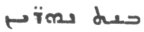
3 In Egyptian, TEBH.
4 According to the Egyptian Heliopolitan doctrine, Isis was the daughter of Keb, the Earth-god, and Nut, the Sky-goddess; she was the wife of Osiris, mother of Horus, and sister of Set and Nephthys.
5 The Egyptian. TEHUTI, or Thoth, who invented letters, mathematics, He was the "heart of Ra," the scribe of the gods, and he uttered the words which created the world; he composed the "words of power," or magical formulae which were beneficial for the dead, and the religious works which were used by souls in their journey from this world to the next.
6 The Hermopolis here referred to is the city of Khemenu in Upper Egypt, wherein was the great sanctuary of Thoth.
7 i.e., Righteousness, or Justice. The goddess referred to is probably Maat.
8 A rubric in the papyrus of Nes-Menu in the British Museum orders the priestesses of Isis and Nephthys to have "the hair of their bodies shaved off" (No. 10,188, col. 1), but they are also ordered to wear fillets of rams' wool on their heads.
9 Probably the ram of Amen. Animal sacrifices were invariably bulls and cows.
10 This saying is by Pythagoras--Παρὰ θυσίαν μὴ ὀνυχίζου. The saying of Hesiod (Works and Days, 740) is rendered by Goodwin:-- "Not at a feast of Gods from five-branched tree, With sharp-edged steel to part the green from dry."
11 It is quite possible that Apis drank from a special well, but the water in it certainly came from the Nile by infiltration. In all the old wells at Memphis the water sinks as the Nile sinks, and rises as it rises.
12 On account of the large amount of animal matter contained in it.

Legends of the Gods, THE NARRATIVE OF ISIS

Legends of the Gods

The Egyptian Texts, edited with Translations

by E. A. Wallis Budge

London: Kegan Paul, Trench and Trner & Co. Ltd.

[1912]

II.--THE NARRATIVE OF ISIS

I am Isis, [and] I have come forth from the dwelling (or, prison) wherein my brother Set placed me. Behold the god Thoth, the great god, the Chief of Maat 1 [both] in heaven and on the earth, said unto me, "Come now, O Isis, thou goddess, moreover it is a good thing to hearken, 2 [for there is] life to one who shall be guided [by the advice] of another. Hide thou thyself with [thy] son the child, and there shall come unto him these things. His members shall grow, 3 and two-fold strength of every kind shall spring up [in him]. [And he] shall be made to take his seat upon the throne of his father, [whom] he shall avenge, 4 [and he shall take possession of] the exalted position of Heq 5 of the Two Lands." 6

I came forth [from the dwelling] at the time of evening, and there came forth the Seven Scorpions which were to accompany me and to strike(?) for me with [their] stings. Two scorpions, Tefen and Befen, were behind me, two scorpions, Mestet and Mestetef, were by my side, and three scorpions, Petet, Thetet, and Maatet (or, Martet), were for preparing the road for me. I charged them very strictly (or, in a loud voice), and my words penetrated into their ears: "Have no knowledge of [any], make no cry to the Tesheru beings, and pay no attention to the 'son of a man' (i.e., anyone) who belongeth to a man of no account," [and I said,] "Let your faces be turned towards the ground [that ye may show me] the way." So the guardian of the company brought me to the boundaries of the city of Pa-Sui, 7 the city of the goddesses of the Divine Sandals, [which was situated] in front of the Papyrus Swamps. 8

When I had arrived at the place where the people lived 9 I came to the houses wherein dwelt the wives [and] husbands.

And a certain woman of quality spied me as I was journeying along the road, and she shut her doors on me. Now she was sick at heart by reason of those [scorpions] which were with me. Then [the Seven Scorpions] took counsel concerning her, and they all at one time shot out their venom on the tail of the scorpion Tefen; as for me, the woman Taha 10 opened her door, and I entered into the house of the miserable lady.

Then the scorpion Tefen entered in under the leaves of the door and smote (i.e., stung) the son of Usert, and a fire broke out in the house of Usert, and there was no water there to extinguish it; [but] the sky rained upon the house of Usert, though it was not the season for rain. 11

Behold, the heart of her who had not opened her door to me was grievously sad, for she knew not whether he (i.e., her son) would live [or not], and although she went round about through her town uttering cries [for help], there was none who came at [the sound of] her voice. Now mine own heart was grievously sad for the sake of the child, and [I wished] to make to live [again] him that was free from fault.

[Thereupon] I cried out to the noble lady, "Come to me. Come to me. Verily my mouth (?) possesseth life. I am a daughter [well] known in her town, [and I] can destroy the demon of death by the spell (or, utterance) which my father taught me to know. "I am his daughter, the beloved [offspring] of his body."

Then Isis placed her two hands on the child in order to make to live him whose throat was stopped, [and she said],

"O poison of the scorpion Tefent, come forth and appear on the ground! Thou shalt neither enter nor penetrate [further into the body of the child]. O poison of the scorpion Befent, come forth and appear on the ground!

I am Isis, the goddess, the lady (or, mistress) of words of power, and I am the maker of words of power (i.e., spells), and I know how to utter words with magical effect. 12 Hearken ye unto me, O every reptile which possesseth the power to bite (i.e., to sting), and fall headlong to the ground! O poison of the scorpion Mestet, make no advance [into his body]. O poison of the scorpion Mestetef, rise not up [in his body]. O poison of the scorpions Petet and Thetet, penetrate not [into his body]. [O poison of] the scorpion Maatet (or, Martet), fall down on the ground."

[Here follows the] "Chapter of the stinging [of scorpions]."

And Isis, the goddess, the great mistress of spells (or, words of power), she who is at the head of the gods, unto whom the god Keb gave his own magical spells for the driving away of poison at noon-day (?), and for making poison to go back, and retreat, and withdraw, and go backward, spake, saying, "Ascend not into heaven, through the command of the beloved one of Ra, the egg of the Smen goose which cometh forth from the sycamore. Verily my words are made to command the uttermost limit of the night. I speak unto you, [O scorpions] I am alone and in sorrow because our names will suffer disgrace throughout the nomes.

Do not make love, do not cry out to the Tesheru fiends, and cast no glances upon the noble ladies in their houses. Turn your faces towards the earth and [find out] the road, so that we may arrive at the hidden places in the town of Khebt. 13 Oh the child shall live and the poison die! Ra liveth and the poison dieth! Verily Horus shall be in good case (or, healthy) for his mother Isis. Verily he who is stricken shall be in good case likewise."

And the fire [which was in the house of Usert] was extinguished, and heaven was satisfied with the utterance of Isis, the goddess.

Then the lady Usert came, and she brought unto me her possessions, and she filled the house of the woman Tah (?), for the KA of Tah (?), because [she] had opened to me her door. Now the lady Usert suffered pain and anguish the whole night, and her mouth tasted (i.e., felt) the sting [which] her son [had suffered]. And she brought her possessions as the penalty for not having opened the door to me. Oh the child shall live and the poison die! Verily Horus shall be in good case for his mother Isis. Verily everyone who is stricken shall be in good case likewise.

Lo, a bread-cake [made] of barley meal shall drive out (or, destroy) the poison, and natron shall make it to withdraw, and the fire [made] of hetchet-plant shall drive out (or, destroy) fever-heat from the limbs.

"O Isis, O Isis, come thou to thy Horus, O thou woman of the wise mouth! Come to thy son"--thus cried the gods who dwelt in her quarter of the town--"for he is as one whom a scorpion hath stung, and like one whom the scorpion Uhat, which the animal Antesh drove away, hath wounded."

[Then] Isis ran out like one who had a knife [stuck] in her body, and she opened her arms wide, [saying] "Behold me, behold me, my son Horus, have no fear, have no fear, O son my glory! No evil thing of any kind whatsoever shall happen unto thee, [for] there is in thee the essence (or, fluid) which made the things which exist.

Thou art the son from the country of Mesqet, 14 [thou hast] come forth from the celestial waters Nu, and thou shalt not die by the heat of the poison.

Thou wast the Great Bennu, 15 who art born (or, produced) or; the top of the balsam-trees 16 which are in the House of the Aged One in Anu (Heliopolis). Thou art the brother of the Abtu Fish, 17 who orderest what is to be, and art the nursling of the Cat 18 who dwelleth in the House of Neith. The goddess Reret, 19 the goddess Hat, and the god Bes protect thy members.

Thy head shall not fall to the Tchat fiend that attacketh thee. Thy members shall not receive the fire of that which is thy poison. Thou shalt not go backwards on the land, and thou shalt not be brought low on the water. No reptile which biteth (or, stingeth) shall gain the mastery over thee, and no lion shall subdue thee or have dominion over thee. Thou art the son of the sublime god who proceeded from Keb. Thou art Horus, and the poison shall not gain the mastery over thy members. Thou art the son of the sublime god who proceeded from Keb, and thus likewise shall it be with those who are under the knife. And the four august goddesses shall protect thy members."

[Here the narrative is interrupted by the following texts:]

[I am] he who rolleth up into the sky, and who goeth down (i.e., setteth) in the Tuat, whose form is in the House of height, through whom when he openeth his Eye the light cometh into being, and when he closeth his Eye it becometh night. [I am] the Water-god Het when he giveth commands, whose name is unknown to the gods. I illumine the Two Lands, night betaketh itself to flight, and I shine by day and by night. 20 I am the Bull of Bakha 21 , and the Lion of Manu 22 . I am he who traverseth the heavens by day and by night without being repulsed. I have come by reason of the voice (or, cry) of the son of Isis. Verily the blind serpent Na hath bitten the Bull. O thou poison which floweth through every member of him that is under the knife, come forth, I charge thee, upon the ground. Behold, he that is under the knife shall not be bitten.

Thou art Menu, the Lord of Coptos, the child of the White Shat 23 which is in Anu (Heliopolis), which was bitten [by a reptile]. O Menu, Lord of Coptos, give thou air unto him that is under the knife; and air shall be given to thee.

Hail, divine father and minister of the god Nebun, [called] Mer-Tem, son of the divine father and minister of the god Nebun, scribe of the Water-god Het, [called] Ankh-Semptek (sic), son of the lady of the house Tent-Het-nub! He restored this inscription after he had found it in a ruined state in the Temple of Osiris-Mnevis, because he wished to make to live her name . . . . . . . . . . and to give air unto him that is under [the knife], and to give life unto the ancestors of all the gods. And his Lord Osiris-Mnevis shall make long his life with happiness of heart, [and shall give him] a beautiful burial after [attaining to] an old age, because of what he hath done for the Temple of Osiris-Mnevis.

Horus was bitten (i.e., stung) in Sekhet-An, to the north of Hetep-hemt, whilst his mother Isis was in the celestial houses making a libation for her brother Osiris. And Horus sent forth his cry into the horizon, and it was heard by those who were in . . . . . . Thereupon the keepers of the doors who were in the [temple of] the holy Acacia Tree started up at the voice of Horus. And one sent forth a cry of lamentation, and Heaven gave the order that Horus was to be healed.

And [the gods] took counsel [together] concerning the life [of Horus, saying,] "O goddess Pai(?), O god Asten, who dwellest in Aat-Khus(?) . . . . . . 24 thy . . . . . . enter in . . . . . lord of sleep . . . . . . the child Horus. Oh, Oh, bring thou the things which are thine to cut off the poison which is in every member of Horus, the son of Isis, and which is in every member of him that is under the knife likewise."

A HYMN OF PRAISE TO HORUS TO GLORIFY HIM, WHICH IS TO BE SAID OVER THE WATERS AND OVER THE LAND

Thoth speaketh and this god reciteth [the following]:--

"Homage to thee, god, son of a god. Homage to thee, heir, son of an heir. Homage to thee, bull, son of a bull, who wast brought forth by a holy goddess. Homage to thee, Horus, who comest forth from Osiris, and wast brought forth by the goddess Isis. I recite thy words of power, I speak with thy magical utterance. I pronounce a spell in thine own words, which thy heart hath created, and all the spells and incantations which have come forth from thy mouth, which thy father Keb commanded thee [to recite], and thy mother Nut gave to thee, and the majesty of the Governor of Sekhem taught thee to make use of for thy protection, in order to double (or, repeat) thy protective formulae, to shut the mouth of every reptile which is in heaven, and on the earth, and in the waters, to make men and women to live, to make the gods to be at peace [with thee], and to make Ra to employ his magical spells through thy chants of praise.

Come to me this day, quickly, quickly, as thou workest the paddle of the Boat of the god. Drive thou away from me every lion on the plain, and every crocodile in the waters, and all mouths which bite (or, sting) in their holes.

Make thou them before me like the stone of the mountain, like a broken pot lying about in a quarter of the town. Dig thou out from me the poison which riseth and is in every member of him that is under the knife. Keep thou watch over him . . . . . . by means of thy words. Verily let thy name be invoked this day. Let thy power (qefau) come into being in him. Exalt thou thy magical powers. Make me to live and him whose throat is closed up. Then shall mankind give thee praise, and the righteous (?) shall give thanks unto thy forms. And all the gods likewise shall invoke thee, and in truth thy name shall be invoked this day. I am Horus [of] Shet[enu] (?).

"O thou who art in the cavern, 25 O thou who art in the cavern. O thou who art at the mouth of the cavern. O thou who art on the way, O thou who art on the way. O thou who art at the mouth of the way. He is Urmer (Mnevis) who approacheth every man and every beast. He is like the god Sep who is in Anu (Heliopolis). He is the Scorpion-[god] who is in the Great House (Het-ur). Bite him not, for he is Ra. Sting him not, for he is Thoth. Shoot ye not your poison over him, for he is Nefer-Tem. O every male serpent, O every female serpent, O every antesh (scorpion?) which bite with your mouths, and sting with your tails, bite ye him not with your mouths, and sting ye him not with your tails. Get ye afar off from him, make ye not your fire to be against him, for he is the son of Osiris. Vomit ye. [Say] four times:--

"I am Thoth, I have come from heaven to make protection of Horus, and to drive away the poison of the scorpion which is in every member of Horus. Thy head is to thee, Horus; it shall be stable under the Urert Crown. Thine eye is to thee, Horus, [for] thou art Horus, the son of Keb, the Lord of the Two Eyes, in the midst of the Company [of the gods].

Thy nose is to thee, Horus, [for] thou art Horus the Elder, the son of Ra, and thou shalt not inhale the fiery wind. Thine arm is to thee, Horus, great is thy strength to slaughter the enemies of thy father. Thy two thighs 26 are to thee, Horus. Receive thou the rank and dignity of thy father Osiris. Ptah hath balanced for thee thy mouth on the day of thy birth. Thy heart (or, breast) is to thee, Horus, and the Disk maketh thy protection. Thine eye is to thee, Horus; thy right eye is like Shu, and thy left eye like Tefnut, who are the children of Ra. Thy belly is to thee, Horus, and the Children are the gods who are therein, and they shall not receive the essence (or, fluid) of the scorpion.

Thy strength is to thee, Horus, and the strength of Set shall not exist against thee. Thy phallus is to thee, Horus, and thou art Kamutef, the protector of his father, who maketh an answer for his children in the course of every day. Thy thighs are to thee, Horus, and thy strength shall slaughter the enemies of thy father. Thy calves are to thee, Horus; the god Khnemu hath builded [them], and the goddess Isis hath covered them with flesh. The soles of thy feet are to thee, Horus, and the nations who fight with the bow (Peti) fall under thy feet. Thou rulest the South, North, West, and East, and thou seest like Ra. [Say] four times. And likewise him that is under the knife."

Beautiful god, Senetchem-ab-Ra-setep-[en]-Amen, son of Ra, Nekht-Heru-Hebit, thou art protected, and the gods and goddesses are protected, and conversely. Beautiful god, Senetchem-ab-Ra-setep-[en]-Ra, son of Ra, Nekht-Heru-Hebit, thou art protected, and Heru-Shet[enu], the great god, is protected, and conversely.

ANOTHER CHAPTER LIKE UNTO IT

"Fear not, fear not, O Bast, the strong of heart, at the head of the holy field, the mighty one among all the gods, nothing shall gain the mastery over thee. Come thou outside, following my speech (or, mouth), O evil poison which is in all the members of the lion (or, cat) which is under the knife."

[The narrative of the stinging of Horus by a scorpion is continued thus]:

"I am Isis, who conceived a child by her husband, and she became heavy with Horus, the divine [child]. I gave birth to Horus, the son of Osiris, in a nest of papyrus plants. 27 I rejoiced exceedingly over this, because I saw [in him one] who would make answer for his father. I hid him, and I concealed him through fear of that [fiend (?)]. 28

I went away to the city of Am, [where] the people gave thanks [for me] through [their] fear of my making trouble [for them]. I passed the day in seeking to provide food for the child, [and] on returning to take Horus into my arms I found him, Horus, the beautiful one of gold, the boy, the child, without [life]. He had bedewed the ground with the water of his eye, and with foam from his lips. His body was motionless, his heart was powerless to move, and the sinews (or, muscles) of his members were [helpless]. I sent forth a cry, [saying]:

"'I, even I, lack a son to make answer [for me]. 29 [My] two breasts are full to overflowing, [but] my body is empty. [My] mouth wished for that which concerned him. 30 A cistern of water and a stream of the inundation was I. The child was the desire of my heart, and I longed to protect him (?). I carried him in my womb, I gave birth to him, I endured the agony of the birth pangs, I was all alone, and the great ones were afraid of disaster and to come out at the sound of my voice. My father is in the Tuat, 31 my mother is in Aqert, 32 and my elder brother is in the sarcophagus. Think of the enemy and of how prolonged was the wrath of his heart against me, [when] I, the great lady, was in his house.'

"I cried then, [saying,] 'Who among the people will indeed let their hearts come round to me?' I cried then to those who dwelt in the papyrus swamps (or, Ateh), and they inclined to me straightway. And the people came forth to me from their houses, and they thronged about me at [the sound of] my voice, and they loudly bewailed with me the greatness of my affliction. There was no man there who set restraint (?) on his mouth, every person among them lamented with great lamentation. There was none there who knew how to make [my child] to live.

"And there came forth unto me a woman who was [well] known in her city, a lady who was mistress of her [own] estate. 33 She came forth to me. Her mouth possessed life, and her heart was filled with the matter which was therein, [and she said,] 'Fear not, fear not, O son Horus!. Be not cast down, be not cast down, O mother of the god. The child of the Olive-tree is by the mountain of his brother, the bush is hidden, and no enemy shall enter therein. The word of power of Tem, the Father of the gods, who is in heaven, maketh to live. Set shall not enter into this region, he shall not go round about it. The marsh of Horus of the Olive-tree is by the mountain of his brother; those who are in his following shall not at any time . . . . . . it. This shall happen to him: Horus shall live for his mother, and shall salute [her] with his mouth. A scorpion hath smitten (i.e., stung) him, and the reptile Aun-ab hath wounded him.'".

Then Isis placed her nose in his mouth 34 so that she might know whether he who was in his coffin breathed, and she examined the wound 35 of the heir of the god, and she found that there was poison in it. She threw her arms round him, and then quickly she leaped about with him like fish when they are laid upon the hot coals, [saying]:

"Horus is bitten, O Ra. Thy son is bitten, [O Osiris]. Horus is bitten, the flesh and blood of the Heir, the Lord of the diadems (?) of the kingdoms of Shu. Horus is bitten, the Boy of the marsh city of Ateh, the Child in the House of the Prince.

The beautiful Child of gold is bitten, the Babe hath suffered pain and is not. 36 Horus is bitten, he the son of Un-Nefer, who was born of Auh-mu (?). Horus is bitten, he in whom there was nothing abominable, the son, the youth among the gods. Horus is bitten, he for whose wants I prepared in abundance, for I saw that he would make answer 37 for his father. Horus is bitten, he for whom [I] had care [when he was] in the hidden woman [and for whom I was afraid when he was] in the womb of his mother. Horus is bitten, he whom I guarded to look upon. I have wished for the life of his heart. Calamity hath befallen the child on the water, and the child hath perished."

Then came Nephthys shedding tears and uttering cries of lamentation, and going round about through the papyrus swamps. And Serq [came also and they said]: "Behold, behold, what hath happened to Horus, son of Isis, and who [hath done it]? Pray then to heaven, and let the mariners of Ra cease their labours for a space, for the Boat of Ra cannot travel onwards [whilst] son Horus [lieth dead] on his place."

And Isis sent forth her voice into heaven, and made supplication to the Boat of Millions of Years, and the Disk stopped 38 in its journeying, and moved not from the place whereon it rested. Then came forth Thoth, who is equipped with his spells (or, words of power), and possesseth the great word of command of maa-kheru, 39 [and said:] "What [aileth thee], what [aileth thee], O Isis, thou goddess who hast magical spells, whose mouth hath understanding? Assuredly no evil thing hath befallen [thy] son Horus, [for] the Boat of Ra hath him under its protection.

I have come this day in the Divine Boat of the Disk from the place where it was yesterday, --now darkness came and the light was destroyed--in order to heal Horus for his mother Isis and every person who is under the knife likewise."

And Isis, the goddess, said: "O Thoth, great things [are in] thy heart, [but] delay belongeth to thy plan. Hast thou come equipped with thy spells and incantations, and having the great formula of maa-kheru, and one [spell] after the other, the numbers whereof are not known?

Verily Horus is in the cradle(?) of the poison. Evil, evil is his case, death, [and] misery to the fullest [extent]. The cry of his mouth is towards his mother(?). I cannot [bear] to see these things in his train. My heart [hath not] rested because of them since the beginning(?) [when] I made haste to make answer [for] Horus-Ra (?), placing [myself] on the earth, [and] since the day [when] I was taken possession of by him. I desired Neheb-ka . . . . . . . "

[And Thoth said:] "Fear not, fear not, O goddess Isis, fear not, fear not, O Nephthys, and let not anxiety [be to you]. I have come from heaven having life to heal(?) the child for his mother, Horus is . . . Let thy heart be firm; 40 he shall not sink under the flame.

Horus is protected as the Dweller in his Disk, 41 who lighteth up the Two Lands by the splendour of his two Eyes; 42 and he who is under the knife is likewise protected.

Horus is protected as the First-born son in heaven, 43 who is ordained to be the guide of the things which exist and of the things which are not yet created; and he who under the knife is protected likewise.

Horus is protected as that great Dwarf (nemu) 44 who goeth round about the Two Lands in the darkness; and he who is under the knife is protected likewise.

Horus is protected as the Lord (?) in the night, who revolveth at the head of the Land of the Sunset (Manu); and he who is under the knife is protected likewise.

Horus is protected as the Mighty Ram 45 who is hidden, and who goeth round about in front of his Eyes; and he who is under the knife is protected likewise. Horus is protected as the Great Hawk 46 which flieth through heaven, earth, and the Other World (Tuat); and he who is under the knife is protected likewise. Horus is protected as the Holy Beetle, the mighty (?) wings of which are at the head of the sky; 47 and he who is under the knife is protected likewise. Horus is protected as the Hidden Body, 48 and as he whose mummy is in his sarcophagus; and he who is under the knife is protected likewise.

Horus is protected [as the Dweller] in the Other World [and in the] Two Lands, who goeth round about 'Those who are over Hidden Things'; and he who is under the knife is protected likewise.

Horus is protected as the Divine Bennu 49 who alighteth in front of his two Eyes; and he who is under the knife is protected likewise. Horus is protected in his own body, and the spells which his mother Isis hath woven protect him. Horus is protected by the names of his father [Osiris] in his forms in the nomes; 50 and he who is under the knife is protected likewise. Horus is protected by the weeping of his mother, and by the cries of grief of his brethren; and he who is under the knife is protected likewise. Horus is protected by his own name and heart, and the gods go round about him to make his funeral bed; and he who is under the knife is protected likewise."

[And Thoth said:]

"Wake up, Horus! Thy protection is established. Make thou happy the heart of thy mother Isis. The words of Horus shall bind up hearts, he shall cause to be at peace him who is in affliction. Let your hearts be happy, O ye who dwell in the heavens (Nut). Horus, he who hath avenged (or, protected) his father shall cause the poison to retreat. Verily that which is in the mouth of Ra shall go round about (i.e., circulate), and the tongue of the Great God shall repulse [opposition].

The Boat [of Ra] standeth still, and travelleth not onwards. The Disk is in the [same] place where it was yesterday to heal Horus for his mother Isis, and to heal him that is under the knife of his mother 51 likewise. Come to the earth, draw nigh, O Boat of Ra, make the boat to travel, O mariners of heaven, transport provisions (?) of . . . . . . Sekhem 52 to heal Horus for his mother Isis, and to heal him that is under the knife of his mother likewise. Hasten away, O pain which is in the region round about, and let it (i.e., the Boat) descend upon the place where it was yesterday to heal Horus for his mother Isis, and to heal him that is under the knife of his mother likewise.

Get thee round and round, O bald (?) fiend, without horns at the seasons (?), not seeing the forms through the shadow of the two Eyes, to heal Horus for his mother Isis, and to heal him that is under the knife likewise. Be filled, O two halves of heaven, be empty, O papyrus roll, return, O life, into the living to heal Horus for his it mother Isis, and to heal him that is under the knife likewise. Come thou to earth, O poison. Let hearts be glad, and let radiance (or, light) go round about.

"I am Thoth, 53 the firstborn son, the son of Ra, and Tem and the Company of the gods have commanded me to heal Horus for his mother Isis, and to heal him that is under the knife likewise. O Horus, O Horus, thy KA protecteth thee, and thy Image worketh protection for thee. The poison is as the daughter of its [own] flame; [it is] destroyed [because] it smote the strong son. Your temples are in good condition for you, [for] Horus liveth for his mother, and he who is under the knife likewise."

And the goddess Isis said:

"Set thou his face towards those who dwell in the North Land (Ateh), the nurses who dwell in the city Pe-Tept (Buto), for they have offered very large offerings in order to cause the child to be made strong for his mother, and to make strong him that is under the knife likewise. Do not allow them to recognize the divine KA in the Swamp Land, in the city (?) of Nemhettu (?) [and] in her city."

Then spake Thoth unto the great gods who dwell in the Swamp-Land [saying]: "O ye nurses who dwell in the city of Pe, who smite [fiends] with your hands, and overthrow [them] with your arms on behalf of that Great One who appeareth in front of you [in] the Sektet Boat, 54 let the Matet 55 (Mantchet) Boat travel on. Horus is to you, he is counted up for life, and he is declared for the life of his father [Osiris].

I have given gladness unto those who are in the Sektet Boat, and the mariners [of Ra] make it to journey on. Horus liveth for his mother Isis. and he who is under the knife liveth for his mother likewise. As for the poison, the strength thereof has been made powerless. Verily I am a favoured one, and I will join myself to his hour 56 to hurl back the report of evil to him that sent it forth. The heart of Ra-Heru-Khuti rejoiceth. Thy son Horus is counted up for life [which is] on this child to make him to smite, and to retreat (?) from those who are above, and to turn back the paths of the Sebiu fiends from him, so that he may take possession of the throne of the Two Lands.

Ra is in heaven to make answer on behalf of him and his father. The words of power of his mother have lifted up his face, and they protect him and enable him to go round about wheresoever he pleaseth, and to set the terror of him in celestial beings. I have made haste . . . . . ."

Footnotes

1 I.e., Law, or Truth.
2 Or, obey.
3 I.e., flourish.
4 He avenged his father Osiris by vanquishing Set.
5 I.e., tribal chief.
6 I.e., Upper and Lower Egypt.
7 "The House of the Crocodile," perhaps the same town as Pa-Sebekt, a district in the VIIth nome of Lower Egypt (Metelites).
8 Perhaps a district in the Metelite nome.
9 In Egyptian Teb, which may be the Tebut in the Metelite nome.
10 Taha may be the name of a woman, or goddess, or the word may mean a "dweller in the swamps," as Golischeff thinks.
11 I.e., it was not the season of the inundation.
12 By uttering spells Isis restored life to her husband Osiris for a season, and so became with child by him. She made a magical figure of a reptile, and having endowed it with life, it stung Ra as he passed through the sky, and the great god almost died. In Greek times it was believed that she discovered a medicine which would raise the dead, and she was reputed to be a great expert in the art of healing men's sicknesses. As a goddess she appeared to the sick, and cured them.
13 The island of Chemmis of classical writers.
14 Mesqet was originally the name of the bull's skin in which the deceased was wrapped in order to secure for him the now life; later the name was applied to the Other World generally. See Book of the Dead, Chap. xvii. 121.
15 The Bennu who kept the book of destiny. See Book of the Dead, Chap. xvii. 25.
16 These are the balsam-trees for which Heliopolis has been always famous. They are described by Wansleben, L'Histoire de l'lise, pp. 88-93, and by 'Abd al-Latif (ed. de Sacy), p. 88.
17 The Abtu and Ant Fishes swam before the Boat of Ra and guided it.
18 This is the Cat who lived by the Persea tree in Heliopolis. See Book of the Dead, Chap. xvii. 18.
19 A hippopotamus goddess.
20 I.e., always.
21 The land of the sunrise, the East.
22 The land of the sunset, the West.
23 Perhaps an animal of the Lynx class.
24 The text appears to be corrupt in this passage.
25 Or, den or hole.
26 We ought, perhaps, to translate this as "forearms."
27 Or, Ateh, the papyrus swamp.
28 I.e., Set.
29 I.e., to be my advocate.
30 Literally "his thing."
31 Tuat is a very ancient name of the Other World, which was situated either parallel with Egypt or across the celestial ocean which surrounded the world.
32 The "perfect place," i.e., the Other World.
33 Or perhaps, "a lady who was at the head of her district."
34 I.e., the mouth of Horus.
35 Literally, "pain" or "disease."
36 He is nothing, i.e., he is dead.
37 I.e., become an advocate for.
38 Literally, "alighted."
39 When a god or a man was declared to be maa-kheru, "true of voice," or "true of word," his power became illimitable. It gave him rule and authority, and every command uttered by him was immediately followed by the effect required.
40 I.e., "Be of good courage."
41 The Sun-god.
42 The Sun and Moon.
43 Osiris (?).
44 Bes (?).
45 Probably the Ram, Lord of Tattu, or the Ram of Mendes.
46 Heru-Behutet.
47 The beetle of Khepera, a form of the Sun-god when he is about to rise on this earth.
48 The Hidden Body is Osiris, who lay in his sarcophagus, with Isis and Nephthys weeping over it.
49 The Bennu was the soul of Ra and the incarnation of Osiris.
50 See the names of Osiris and his sanctuaries in Chapter CXLII. of the Book of the Dead.
51 We should probably strike out the words "of his mother."
52 The city in the Delta called by the Greeks Letopolis.
53 Thoth stood by during the fight between Horus and Set, and healed the wounds which they inflicted on each other.
54 The boat in which Ra travelled from noon to sunset, or perhaps until midnight.
55 The boat in which Ra travelled from dawn, or perhaps from midnight, to noon.
56 i.e., I will be with him at the moment of his need.

Legends of the Gods, The Death of Horus, ANOTHER CHAPTER

Legends of the Gods

The Egyptian Texts, edited with Translations

by E. A. Wallis Budge

London: Kegan Paul, Trench and Trner & Co. Ltd.

[1912]

ANOTHER CHAPTER

Say the [following] words:--

"O Ra-[Khuti], come to thy daughter. O Shu, come to thy wife. O Isis, come to thy sister, and deliver her from the evil poison which is in all her members. Hail, O ye gods, come ye and overthrow ye the evil poison which is in all the members of the Cat which is under the knife.

"Hail, O aged one, who renewest thy youth in thy season, thou old man who makest thyself to be a boy, grant thou that Thoth may come to me at [the sound of] my voice, and behold, let him turn back from me Neta-ter. Osiris is on the water, the Eye of Horus is with him. A great Beetle spreadeth himself over him, great by reason of his grasp, produced by the gods from a child. He who is over the water appeareth in a healthy form. If he who is over the water shall be approached (or, attacked), the Eye of Horus, which weepeth, shall be approached.

"Get ye back, O ye who dwell in the water, crocodiles, fish, that Enemy, male dead person and female dead person, male fiend and female fiend, of every kind whatsoever, lift not up your faces, O ye who dwell in the waters, ye crocodiles and fish. When Osiris journeyeth over you, permit ye him to go to Busiris. Let your nostrils [be closed], your throats stopped up.

"Get ye back, Seba fiends! Lift ye not up your faces against him that is on the water . . . . . Osiris-Ra, riseth up in his Boat to look at the gods of Kher-ahat, and the Lords of the Tuat stand up to slay thee when [thou] comest, O Neha-her, against Osiris. [When] he is on the water the Eye of Horus is over him to turn your faces upside down and to set you on your backs.

"Hail, ye who dwell in the water, crocodiles and fish, Ra shutteth up your mouths, Sekhet stoppeth up your throats, Thoth cutteth out your tongues, and Heka blindeth your eyes. These are the four great gods who protect Osiris by their magical power, and they effect the protection of him that is on the water, of men and women of every kind, and of beasts and animals of every kind which are on the water by day. Protected are those who dwell in the waters, protected is the sky wherein is Ra, protected is the great god who is in the sarcophagus, protected is he who is on the water.

"A voice [which] crieth loudly is in the House of Net (Neith), a loud voice is in the Great House, a great outcry from the mouth of the Cat. The gods and the goddesses say, 'What is it? What is it?' [It] concerneth the Abtu Fish which is born. Make to retreat from me thy footsteps, O Sebau fiend. I am Khnemu, the Lord of Her-urt. Guard thyself again from the attack which is repeated, besides this which thou hast done in the presence of the Great Company of the gods.

Get thee back, retreat thou from me. I am the god. Oh, Oh, O [Ra], hast thou not heard the voice which cried out loudly until the evening on the bank of Netit, the voice of all the gods and goddesses which cried out loudly, the outcry concerning the wickedness which thou hast done, O wicked Sebau fiend? Verily the lord Ra thundered and growled thereat, and he ordered thy slaughter to be carried out. Get thee back, Seba fiend! Hail! Hail!"

Legends of the Gods, THE CHAPTER OF CASTING A SPELL ON THE CAT

Legends of the Gods

The Egyptian Texts, edited with Translations

by E. A. Wallis Budge

London: Kegan Paul, Trench and Trner & Co. Ltd.

[1912]

THE CHAPTER OF CASTING A SPELL ON THE CAT

Recite [the following formula]:--

"Hail, Ra, come to thy daughter! A scorpion hath stung her on a lonely road. Her cry hath penetrated the heights of heaven, and is heard along the paths. The poison hath entered into her body, and circulateth through her flesh. She hath set her mouth against it; 1 verily the poison is in her members.

"Come then with thy strength, with thy fierce attack, and with thy red powers, and force it to be hidden before thee. Behold, the poison hath entered into all the members of this Cat which is under my fingers. Be not afraid, be not afraid, my daughter, my splendour, [for] I have set myself near (or, behind) thee. I have overthrown the poison which is in all the limbs of this Cat. O thou Cat, thy head is the head of Ra, the Lord of the Two Lands, the smiter of the rebellious peoples.

Thy 2 fear is in all lands, O Lord of the living, Lord of eternity. O thou Cat, thy two eyes are the Eye of the Lord of the Khut uraeus, who illumineth the Two Lands with his Eye, and illumineth the face on the path of darkness. O thou Cat, thy nose is the nose of Thoth, the Twice Great, Lord of Khemenu (Hermopolis), the Chief of the Two Lands of Ra, who putteth breath into the nostrils of every person. O thou Cat, thine ears are the ears of Nebertcher, who hearkeneth unto the voice of all persons when they appeal to him, and weigheth words (i.e., judgeth) in all the earth.

O thou Cat, thy mouth is the mouth of Tem, the Lord of life, the uniter (?) of creation, who hath caused the union (?) of creation; he shall deliver thee from every poison. O thou Cat, thy neck (nehebt) is the neck of Neheb-ka, President of the Great House, vivifier of men and women by means of the mouth of his two arms. O thou Cat, thy breast is the breast of Thoth, the Lord of Truth, who hath given to thee breath to refresh (?) thy throat, and hath given breath to that which is therein. O thou Cat, thy heart is the heart of the god Ptah, who healeth thy heart of the evil poison which is in all thy limbs.

O thou Cat, thy hands are the hands of the Great Company of the gods and the Little Company of the gods, and they shall deliver thy hand from the poison from the mouth of every serpent. O thou Cat, thy belly is the belly of Osiris, Lord of Busiris, the poison shall not work any of its wishes in thy belly. O thou Cat, thy thighs are the thighs of the god Menthu, who shall make thy thighs to stand up, and shall bring the poison to the ground. O thou Cat, thy leg-bones are the leg-bones of Khensu, 3 who travelleth over all the Two Lands by day and by night, and shall lead the poison to the ground. O thou Cat, thy legs (or, feet) are the legs of Amen the Great, Horus, Lord of Thebes, who shall stablish thy feet on the earth, and shall overthrow the poison. O thou Cat, thy haunches are the haunches of Horus, the avenger (or, advocate) of his father Osiris, and they shall place Set in the evil which he hath wrought. O thou Cat, thy soles are the soles of Ra, who shall make the poison to return to the earth.

O thou Cat, thy bowels are the bowels of the Cow-goddess Meh-urt, who shall overthrow and cut in pieces the poison which is in thy belly and in all the members in thee, and in [all] the members of the gods in heaven, and in [all] the members of the gods on earth, and shall overthrow every poison in thee. There is no member in thee without the goddess who shall overthrow and cut in pieces the poison of every male serpent, and every female serpent, and every scorpion, and every reptile, which may be in any member of this Cat which is under the knife. Verily Isis weaveth and Nephthys spinneth against the poison.

This woven garment strengtheneth this [being, i.e., Horus], who is perfect in words of power, through the speech of Ra Heru-khuti, the great god, President of the South and North: 'O evil poison which is in any member of this Cat which is under the knife, come, issue forth upon the earth.'"

Footnotes

1 I.e., she hath directed her words against it.
2 Literally "his."
3 He was the messenger of the gods, and travelled across the sky under the form of the Moon; he sometimes appears as a form of Thoth.

Legends of the Gods, INCANTATIONS AGAINST REPTILES AND NOXIOUS CREATURES IN GENERAL

Legends of the Gods

The Egyptian Texts, edited with Translations

by E. A. Wallis Budge

London: Kegan Paul, Trench and Trner & Co. Ltd.

[1912]

THE LEGEND OF THE DEATH OF HORUS THROUGH THE STING OF A SCORPION AND OF HIS RESURRECTION THROUGH THOTH, AND OTHER MAGICAL TEXTS.

I.--INCANTATIONS AGAINST REPTILES AND NOXIOUS CREATURES IN GENERAL

Get thee back, Apep, thou enemy of Ra, thou winding serpent in the form of an intestine, without arms [and] without legs. Thy body cannot stand upright so that thou mayest have therein being, long is thy tail in front of thy 1 den, thou enemy; retreat before Ra.

Thy head shall be cut off, and the slaughter of thee shall be carried out. Thou shalt not lift up thy face, for his (i.e., Ra's) flame is in thy accursed soul. The odour which is in his chamber of slaughter is in thy members, and thy form shall be overthrown by the slaughtering knife of the great god. The spell of the Scorpion-goddess Serq driveth back thy might. Stand still, stand still, and retreat through her spell.

Be vomited, O poison, I adjure thee to come forth on the earth. Horus uttereth a spell over thee, Horus hacketh thee in pieces, he spitteth upon thee; thou shalt not rise up towards heaven, but shalt totter downwards, O feeble one, without strength, cowardly, unable to fight, blind, without eyes, and with thine head turned upside down. Lift not up thy face. Get thee back quickly, and find not the way. Lie down in despair, rejoice not, retreat speedily, and show not thy face because of the speech of Horus, who is perfect in words of power. The poison rejoiced, [but] the heart[s] of many were very sad thereat.

Horus hath smitten it with his magical spells, and he who was in sorrow is [now] in joy. Stand still then, O thou who art in sorrow, [for] Horus hath been endowed with life. He coineth charged, appearing himself to overthrow the Sebiu fiends which bite. All men when they see Ra praise the son of Osiris. Get thee back, Worm, 8 and draw out thy poison which is in all the members of him that is under the knife. Verily the might of the word of power of Horus is against thee. Vomit thou, O Enemy, get thee back, O poison.

Footnotes

1 Literally, "his."

Legends of the Gods, A LEGEND OF THE GOD KHNEMU AND OF A SEVEN YEARS' FAMINE

Legends of the Gods

The Egyptian Texts, edited with Translations

by E. A. Wallis Budge

London: Kegan Paul, Trench and Trner & Co. Ltd.

[1912]

A LEGEND OF THE GOD KHNEMU AND OF A SEVEN YEARS' FAMINE

In the eighteenth year of the Horus, Neter-Khat, of the King of the South and North, Neter-Khat, of the Lord of the Shrines of Uatchit and Nekhebit, Neter-Khat, of the Golden Horus Tcheser, 1 when Matar was H Prince, and Erpa, and Governor of the temple-cities in the Land of the South, and director of the Khenti 2 folk in Abtu, 3 there was brought unto him the following royal despatch: "This is to inform thee that misery hath laid hold upon me [as I sit] upon the great throne by reason of those who dwell in the Great House. 4 My heart is grievously afflicted by reason of the exceedingly great evil [which hath happened] because Hapi (i.e., the Nile) hath not come forth 5 in my time to the [proper] height for seven years.

Grain is very scarce, vegetables are lacking altogether, every kind of thing which men eat for their food hath ceased, and every man [now] plundereth his neighbour. Men wish to walk, but are unable to move, the child waileth, the young man draggeth his limbs along, and the hearts of the aged folk are crushed with despair; their legs give way under them, and they sink down to the ground, and their hands are laid upon their bodies [in pain]. The shennu 6 nobles are destitute of counsel, and [when] the storehouses which should contain supplies are opened, there cometh forth therefrom nothing but wind. Everything is in a state of ruin. My mind hath remembered, going back to former time, when I had an advocate, to the time of the gods, and of the Ibis-god, and of the chief Kher-heb priest I-em-hetep, 7 the son of Ptah of his Southern Wall.

"Where is the place of birth of Hapi (the Nile)? What god, or what goddess, presideth (?) over it? What manner of form hath he? It is he who stablisheth revenue for me, and a full store of grain. I would go to the Chief of Het-Sekhet 8 whose beneficence strengtheneth all men in their works. I would enter into the House of Life, 9 I would unfold the written rolls [therein], and I would lay my hand upon them."

Then [Matar] set out on his journey, and he returned to me straightway. He gave me instruction concerning the increase of Hapi, 10 and told me all things which men had written concerning it, and he revealed to me the secret doors (?) whereto my ancestors had betaken themselves quickly, the like of which has never been, to [any] king since the time of Ra, (?). And he said unto me: "There is a city in the middle of the stream wherefrom Hapi maketh his appearance;

'Abu' 11 was its name in the beginning; it is the City of the Beginning, and it is the Nome of the City of the Beginning. [It reacheth] to Uaua, 12 which is the beginning of the land. There is too a flight of steps, 13 which reareth itself to a great height, and is the support of Ra, when he maketh his calculation to prolong life to everyone; 'Netchemtchem Ankh' 14 is the name of its abode. 'The two Qerti' 15 is the name of the water, and they are the two breasts from which every good thing cometh forth (?).

Here is the bed of Hapi (the Nile), wherein he reneweth his youth [in his season], wherein he causeth the flooding of the land. He cometh and hath union as he journeyeth, as a man hath union with a woman. And again he playeth the part of a husband and satisfieth his desire. He riseth to the height of twenty-eight cubits [at Abu], and he droppeth at Sma-Behutet 16 to seven cubits. The union(?) there is that of the god Khnemu in [Abu. He smiteth the ground] with his sandals, and [its] fulness becometh abundant; he openeth the bolt of the door with his hand, and he throweth open the double door of the opening through which the water cometh.

"Moreover, he dwelleth there in the form of the god Shu, 17 as one who is lord over his own territory, and his homestead, the name of which is 'Aa' (i.e., the 'Island'). There he keepeth an account of the products of the Land of the South and of the Land of the North, in order to give unto every god his proper share, and he leadeth to each [the metals], and the [precious stones, and the four-footed beasts], and the feathered fowl, and the fish, and every thing whereon they live. And the cord [for the measuring of the land] and the tablet whereon the register is kept are there.

"And there is an edifice of wood there, with the portals thereof formed of reeds, wherein he dwelleth as one who is over his own territory, and he maketh the foliage of the trees (?) to serve as a roof.

His God-house hath an opening towards the south-east, and Ra (or, the Sun) standeth immediately opposite thereto every day. The stream which floweth along the south side thereof hath danger [for him that attacketh it], and it hath as a defence a wall which entereth into the region of the men of Kens 18 on the South. Huge mountains [filled with] masses of stone are round about its domain on the east side, and shut it in. Thither come the quarrymen with things (tools?) of every kind, [when] they seek to build a House for any god in the Land of the South, or in the Land of the North, or [shrines] as abodes for sacred animals, or royal pyramids, and statues of all kinds. They stand up in front of the House of the God and in the sanctuary chamber, and their sweet smelling offerings are presented before the face of the god Khnemu during his circuit, even as [when they bring] garden herbs and flowers of every kind.

The fore parts thereof are in Abu (Elephantine), and the hind parts are in the city of Sunt (?). 19 One portion thereof is on the east side 20 of the river, and another portion is on the west side 21 of the river, and another portion is in the middle 22 of the river. The stream decketh the region with its waters during a certain season of the year, and it is a place of delight for every man. And works are carried on among these quarries [which are] on the edges [of the river?], for the stream immediately faceth this city of Abu itself, and there existeth the granite, the substance whereof is hard (?); 'Stone of Abu' it is called.

"[Here is] a list of the names of the gods who dwell in the Divine House of Khnemu. The goddess of the star Sept (Sothis), the goddess Anqet, Hap (the Nile-god), Shu, Keb, Nut, Osiris, Horus, Isis, and Nephthys.

"[Here are] the names of the stones which lie in the heart of the mountains, some on the east side, some on the west side, and some in [the midst of] the stream of Abu. They exist in the heart of Abu, they exist in the country on the east bank, and in the country on the west bank, and in the midst of the stream, namely, "Bekhen-stone, Meri (or Meli)-stone, Atbekhab (?)-stone, Rakes-stone, and white Utshi-stone; these are found on the east bank. Per-tchani-stone is found on the west bank, and the Teshi-stone in the river.

[Here are] the names of the hard (or, hidden) precious stones, which are found in the upper side, among them being the . . . . . stone, the name 23 of which hath spread abroad through [a space of] four atru measures: Gold, Silver, Copper, Iron, Lapis-lazuli, Emerald, Thehen (Crystal?), Khenem (Ruby), Kai, Mennu, Betka (?), Temi, Na (?). The following come forth from the fore part 24 of the land: Mehi-stone, [He]maki-stone, Abheti-stone, iron ore, alabaster for statues, mother-of-emerald, antimony, seeds (or, gum) of the sehi plant, seeds (or, gum) of the amem plant, and seeds (or, gum) of the incense plant; these are found in the fore parts of its double city." These were the things which I learned therefrom (i.e., from Matar).

Now my heart was very happy when I heard these things, and I entered into [the temple of Khnemu]. The overseers unrolled the documents which were fastened up, the water of purification was sprinkled [upon me], a progress was made [through] the secret places, and a great offering [consisting] of bread-cakes, beer, geese, oxen (or, bulls), and beautiful things of all kinds were offered to the gods and goddesses who dwell in Abu, whose names are proclaimed at the place [which is called], "Couch of the heart in life and power."

And I found the God standing in front of me, and I made him to be at peace with me by means of the thank-offering which I offered unto him, and I made prayer and supplication before him. Then he opened his eyes, and his heart was inclined [to hear] me, and his words were strong [when he said], "I am Khnemu, 25 who fashioned thee. My two hands were about thee and knitted together thy body, and made healthy thy members; and it is I who gave thee thy heart. Yet the minerals (or, precious stones) [lie] under each other, [and they have done so] from olden time, and no man hath worked them in order to build the houses of the god, or to restore those which have fallen into ruin, or to hew out shrines for the gods of the South and of the North, or to do what he ought to do for his lord, notwithstanding that I am the Lord and the Creator.

"I am [he] who created himself, Nu, the Great [God], who came into being at the beginning, [and] Hapi, who riseth according to his will, in order to give health to him that laboureth for me. I am the Director and Guide of all men at their seasons, the Most Great, the Father of the Gods, Shu, the Great One, the Chief of the Earth.

The two halves of the sky (i.e., the East and the West) are as a habitation below me. A lake of water hath been poured out for me, [namely,] Hap (i.e., the Nile), which embraceth the field-land, and his embrace provideth the [means of] life for every nose (i.e., every one), according to the extent of his embrace of the field-land. With old age [cometh] the condition of weakness. I will make Hap (i.e., the Nile) rise for thee, and [in] no year shall [he] fail, and he shall spread himself out in rest upon every land. Green plants and herbs and trees shall bow beneath [the weight of] their produce.

The goddess Renenet 26 shall be at the head of everything, and every product shall increase by hundreds of thousands, according to the cubit of the year. The people shall be filled, verily to their hearts' desire, and everyone. Misery shall pass away, and the emptiness of their store-houses of grain shall come to an end. The land of Ta-Mert (i.e., Egypt) shall come to be a region of cultivated land, the districts [thereof] shall be yellow with grain crops, and the grain [thereof] shall be goodly. And fertility shall come according to the desire [of the people], more than there hath ever been before."

Then I woke up at [the mention of] crops, my heart (or, courage) came [back], and was equal to my [former] despair, and I made the following decree in the temple of my father Khnemu:--

The king giveth an offering to Khnemu 27 the Lord of the city of Qebhet, 28 the Governor of Ta-Sti, 29 in return for those things which thou hast done for me. There shall be given unto thee on thy right hand [the river bank] of Manu, 30 and on thy left hand the river bank of Abu, together with the land about the city, for a space of twenty measures, 31 on the east side and on the west side, with the gardens, and the river front everywhere throughout the region included in these measures. From every husbandman who tilleth the ground, and maketh to live again the slain, and placeth water upon the river banks and all the islands which are in front of the region of these measures, shall be demanded a further contribution from the growing crops and from every storehouse, as thy share.

"Whatsoever is caught in the nets by every fisherman and by every fowler, and whatsoever is taken by the catchers of fish, and by the snarers of birds, and by every hunter of wild animals, and by every man who snareth lions in the mountains, when these things enter [the city] one tenth of them shall be demanded.

"And of all the calves which are cast throughout the regions which are included in these measures, one tenth of their number shall be set apart as animals which are sealed for all the burnt offerings which are offered up daily.

"And, moreover, the gift of one tenth shall be levied upon the gold, ivory, ebony, spices, carnelians (?), sa wood, seshes spice, dum palm fruit (?), nef wood, and upon woods and products of every kind whatsoever, which the Khentiu, 32 and the Khentiu of Hen-Resu, 33 and the Egyptians, and every person whatsoever [shall bring in].

And [every] hand shall pass them by, and no officer of the revenue whatsoever shall utter a word beyond these places to demand (or, levy on) things from them, or to take things over and above [those which are intended for] thy capital city.

"And I will give unto thee the land belonging to the city, which beareth stones, and good land for cultivation. Nothing thereof shall be [diminished] or withheld, of all these things in order to deceive the scribes, and the revenue officers, and the inspectors of the king, on whom it shall be incumbent to certify everything.

"And further, I will cause the masons, and the hewers of ore (?), and the workers in metal, and the smelters (?) of gold, and the sculptors in stone, and the ore-crushers, and the furnace-men (?), and handicraftsmen of every kind whatsoever, who work in hewing, and cutting, and polishing these stones, and in gold, and silver, and copper, and lead, and every worker in wood who shall cut down any tree, or carry on a trade of any kind, or work which is connected with the wood trade, to pay tithe upon all the natural products (?), and also upon the hard stones which are brought from their beds above, and quarried stones of all kinds.

"And there shall be an inspector over the weighing of the gold, and silver, and copper, and real (i.e., precious) stones, and the [other] things, which the metal-workers require for the House of Gold, and the sculptors of the images of the gods need in the making and repairing of them, and [these things] shall be exempted from tithing, and the workmen also. And everything shall be delivered (or, given) in front of the storehouse to their children, a second time, for the protection of everything. And whatsoever is before thy God-house shall be in abundance, just as it hath ever been from the earliest time.

And a copy of this decree shall be inscribed upon a stele, [which shall be set up] in the holy place, according to the writing of the [original] document which is cut upon wood, and [figures of] this god and the overseers of the temple shall be [cut] thereon. Whosoever shall spit upon that which is on it shall be admonished by the rope. And the overseers of the priests, and every overseer of the people of the House of the God, shall ensure the perpetuation of my name in the House of the god Khnemu-Ra, the lord of Abu (Elephantine), for ever."

Footnotes

1 Tcheser was a king of the IIIrd Dynasty, and is famous as the builder of the Step Pyramid at Sakkarah. His tomb was discovered by Mr. J. Garstang at Bet Khallaf in Upper Egypt in 1901.
2 I.e., the people who were in front of, that is, to the South of Egypt, or the population of the country which lies between Dakkah and Aswan.
3 The ancient Egyptian name for Elephantine Island, which appears to have gained this name because it resembled an elephant in shape.
4 I.e., the palace.
5 I.e., risen.
6 I.e., the high court officials and administrators.
7 The famous priest and magician, who was subsequently deified and became one of the chief gods of Memphis.
8 Hermopolis.
9 Per-ankh, or Pa-ankh, was a name given to one of the temple-colleges of priests and scribes.
10 I.e., the Inundation, or Nile Flood.
11 The Elephant City, i.e., Elephantine.
12 A portion of Northern Nubia.
13 This is probably an allusion to the famous Nilometer on the Island of Philae.
14 I.e., "Sweet, sweet life."
15 The Qerti were the two openings through which the Nile entered this world from the great celestial ocean.
16 Diospolis of Lower Egypt, or "Thebes of the North."
17 The god who separated the Sky-goddess Nut from the embrace of her husband, the Earth-god Keb, and who holds her above him each day.
18 Kens extended south from Philae as far as Korosko.
19 Perhaps Sunut, = the Syene of the Greeks, and the סְוֵנֶה of the Hebrews.
20 I.e., Syene.
21 I.e., Contra Syene.
22 I.e., the Island of Elephantine.
23 I.e., the stone was very famous.
24 The "fore part," or "front," of the land means the country lying to the south of Nubia, and probably some part of the modern Egyptian Sudan.
25 He was the "builder of men, maker of the gods, the Father who was from the beginning, the maker of things which are, the creator of things which shall be, the source of things which exist, Father of fathers, Mother of mothers, Father of the fathers of the gods and goddesses, lord of created things, maker of heaven, earth, Tuat, water and mountains" (Lanzone, Dizionario, p. 957).
26 The goddess of the harvest.
27 Or perhaps, Khnemu-Ra.
28 Qebhet is the name given to the whole region of the First Cataract.
29 The "Land of the Bow," i.e., the Northern Sudan.
30 The Land of the setting sun, the West.
31 schoinos.
32 The inhabitants of the Northern Sudan, probably as far to the south as Napata.
33 The people of the Island of Mero and probably those living on the Blue and White Niles.

Legends of the Gods, A LEGEND OF PTAH NEFER-HETEP AND THE PRINCESS OF BEKHTEN

Legends of the Gods

The Egyptian Texts, edited with Translations

by E. A. Wallis Budge

London: Kegan Paul, Trench and Trner & Co. Ltd.

[1912]

A LEGEND OF PTAH NEFER-HETEP AND THE PRINCESS OF BEKHTEN

The Horus: "Mighty Bull, the form(?) of risings 1 , stablished in sovereignty like Tem." The Golden Horus: "Mighty one of strength 2 , destroyer of the Nine Nations of the Bow." 3 King of the South and North: "The Lord of the Two Lands, User-Maat-Ra-setep-en-Ra Son of Ra: "Of his body, Ra-meses-meri-Amen, of Amen-Ra; 4 the Lord of the thrones of the Two Lands, and of the Company of the Gods, the Lords of Thebes, the beloved one. The beneficent god, the son of Amen, born of Mut, begotten of Heru-khuti, the glorious offspring of Neb-tchert, 5 begetting [as] the Bull of his Mother, 6 king of Egypt, Governor of the deserts, the Sovereign who hath taken possession of the Nine Nations of the Bow; [who] on coming forth from the womb ordained mighty things, who gave commands whilst he was in the egg, the Bull, stable of heart, who hath sent forth his seed; the king who is a bull, [and] a god who cometh forth on the day of battle like Menthu, 7 the mighty one of strength like the son of Nut." 8

Behold, His Majesty was in the country of Neheru 9 according to his custom every year, and the chiefs of every land, even as far as the swamps, came [to pay] homage, bearing offerings to the Souls of His Majesty; and they brought their gifts, gold, lapis-lazuli, turquoise, bars of wood of every kind of the Land of the God, 10 on their backs, and each one surpassed his neighbour.

And the Prince of Bekhten [also] caused his gifts to be brought, and he set his eldest daughter at the head of them all, and he addressed words of praise to His Majesty, and prayed to him for his life. And the maiden was beautiful, and His Majesty considered her to be the most lovely [woman] in the world, and he wrote down as her title, "Great Royal Wife, Ra-neferu; and when His Majesty arrived in Egypt, he did for her whatsoever was done for the Royal Wife.

On the twenty-second day of the second month of the season of Shemu, 11 in the fifteenth year [of his reign], behold, His Majesty was in Thebes, the Mighty [city], the Mistress of cities, performing the praises of Father Amen, the Lord of the thrones of the Two Lands, in his beautiful Festival of the Southern Apt, 12 which was the seat of his heart (i.e., the chosen spot) from primaeval time, [when] one came to say to His Majesty, "An ambassador of the Prince of Bekhten hath arrived bearing many gifts for the Royal Wife."

And having been brought into the presence of His Majesty with his gifts, he spake words of adoration to His Majesty, saying, "Praise be unto thee, O thou Sun (Ra) of the Nine Nations of the Bow, permit us to live before thee!" And when he had spoken, and had smelt the earth before His Majesty, he continued his speech before His Majesty, saying, "I have come unto thee, my King and Lord, on behalf of Bent-Resht, the younger sister of the Royal Wife Ra-neferu. [Some] disease hath penetrated into her members, and I beseech Thy Majesty to send a man of learning to see her."

And His Majesty said, "Bring to me the magicians (or, scribes) of the House of Life, and the nobles of the palace." And having been brought into his presence straightway, His Majesty said unto them, "Behold, I have caused you to be summoned [hither] in order that ye may hear this matter. Now bring to me [one] of your company whose heart is wise 13 , and whose fingers are deft." And the royal scribe Tehuti-em-heb came into the presence of His Majesty, and His Majesty commanded him to depart to Bekhten with that ambassador.

And when the man of learning had arrived in Bekhten, he found Bent-Resht in the condition of a woman who is possessed by a spirit, and he found this spirit to be an evil one, and to be hostile in his disposition towards him.

And the Prince of Bekhten sent a messenger a second time into the presence of His Majesty, saying, "O King, my Lord, I pray His (i.e., Thy) Majesty to command that a god be brought hither [to contend against the spirit."

Now when the messenger came] to His Majesty in the first month 14 of the season of Shemu, in the twenty-sixth year [of his reign], on the day which coincided with that of the Festival of Amen, His Majesty was in the palace (or, temple?) of Thebes. And His Majesty spake a second time 15 in the presence of Khensu in Thebes, [called] "Nefer-Hetep," saying, "O my fair Lord, I present myself before thee a second time on behalf of the daughter of the Prince of Bekhten."

Then Khensu, in Thebes, [called] "Nefer-Hetep", was carried to Khensu, [called] "Pa-ari-sekher," the great god who driveth away the spirits which attack. And His Majesty spake before Khensu in Thebes, [called] "Nefer-Hetep," saying, "O my fair Lord, if thou wilt give (i.e., turn) thy face to Khensu, [called] 'Pa-ari-sekher,' the great god who driveth away the spirits which attack, permit thou that he may depart to Bekhten;" [and the god] inclined his head with a deep inclination twice. And His Majesty said, "Let, I pray, thy protective (or, magical) power [go] (with him, so that I may make His Majesty to go to Bekhten to deliver the daughter of the Prince of Bekhten [from the spirit].

And Khensu in Thebes, [called] "Nefer-Hetep," inclined his head with a deep inclination twice. And he made [his] protective power to pass into Khensu, [called] "Pa-ari-sekher-em-Uast," in a fourfold measure. Then His Majesty commanded that Khensu, [called] "Pa-ari-sekher-em-Uast," should set out on his journey in a great boat, [accompanied by] five smaller boats, and chariots, and a large number of horses [which marched] on the right side and on the left.

And when this god arrived in Bekhten at the end of a period of one year and five months, the Prince of Bekhten came forth with his soldiers and his chief[s] before Khensu, [called] "Pa-ari-sekher," and he cast himself down upon his belly, saying, "Thou hast come to us, and thou art welcomed by us, by the commands of the King of the South and North, User-Maat-Ra-setep-en-Ra!"

And when this god had passed over to the place where Bent-Resht was, he worked upon the daughter of the Prince of Bekhten with his magical power, and she became better (i.e., was healed) straightway. And this spirit which had been with her said, in the presence of Khensu, [called] "Pa-ari-sekher-em-Uast," "Come in peace (i.e., Welcome!), O great god, who dost drive away the spirits which attack! Bekhten is thy city, the people thereof, both men and women, are thy (servants, and I myself am thy servant. I will [now] depart unto the place whence I came, so that I may cause thy heart to be content about the matter concerning which thou hast come. I pray that Thy Majesty will command that a happy day (i.e., a festival, or day of rejoicing) be made with me, and with the Prince of Bekhten." And this god inclined his head [in approval] to his priest, saying, "Let the Prince of Bekhten make a great offering in the (presence of this spirit."

Now whilst Khensu, [called] "Pa-ari-sekher-em-Uast," was arranging these [things] with the spirit, the Prince of Bekhten and his soldiers were standing there, and they feared with an exceedingly great fear. And the Prince of Bekhten made a great offering in the presence of Khensu, [called] "Pa-ari-sekher-em-Uast," and the spirit of the Prince of Bekhten, and he made a happy day (i.e., festival) on their behalf, and [then] the spirit departed in peace unto the place which he loved, by the command of Khensu, [called] "Pa-ari-sekher-em-Uast."

And the Prince of Bekhten, and every person who was in the country of Bekhten, rejoiced very greatly, and he took counsel with his heart, saying, "It hath happened that this god hath been given as a gift to Bekhten, and I will not permit him to depart to Egypt."

And [when] this god had tarried for three years and nine months in Bekhten, the Prince of Bekhten, who was lying down asleep on his bed, saw this god come forth outside his shrine (now he was in the form of a golden hawk), and he flew up into the heavens and departed to Egypt; and when the Prince woke up he was trembling. And he said unto the prophet of Khensu, [called] "Pa-ari-sekher-em-Uast," "This god who tarried with us hath departed to Egypt; let his chariot also depart to Egypt."

And the Prince of Bekhten permitted [the image of] the god to set out for Egypt, and he gave him many great gifts of beautiful things of all kinds, and a large number of soldiers and horses [went with him]. And when they had arrived in peace in Thebes, Khensu, [called] "Pa-ari-sekher-em-Uast," went into the Temple of Khensu in Thebes, [called] "Nefer-Hetep," and he placed the offerings which the Prince of Bekhten had given unto him, beautiful things of all kinds, before Khensu in Thebes, [called] "Nefer-Hetep," and he gave nothing thereof whatsoever to his [own] temple.

Thus Khensu, [called] "Pa-ari-sekher-em-Uast," arrived in his temple in peace, on the nineteenth day of the second month 16 of the season Pert, in the thirty-third year of the [reign of the] King of the South and North, User-Maat-en-Ra-setep-en-Ra, the giver of life, like Ra, for ever.

Footnotes

1 I.e., the image who rises like the sun day by day, or the image of [many] crowns.
2 Or, mighty one of the thigh, i.e., he of the mighty thigh.
3 The nations of Nubia who fought with bows and arrows.
4 In this version of the protocol of Rameses II. the second "strong name" of the king is omitted.
5 I.e., Neb-er-tcher.
6 Ka-mut-f, the καμῆφις of the Greeks.
7 The War-god of Thebes.
8 I.e., Osiris.
9 The "country of the rivers," the אֲרַם נֲהַרַיִםof Gen. xxiv. 10, the gods-25ptah of Syrian writers.
10 A name including Western Asia and a portion of the East Coast of Africa.
11 The summer. The Copts called the second month of this season Paoni.
12 The modern Temple of Luxor.
13 Or, a skilled craftsman.
14 The month Pakhon of the Copts.
15 The text makes no mention of the first application to Khensu.
16 The month Mekhir of the Copts; the season Pert is the Egyptian spring.

Subscribe to this RSS feed

Log in or create an account