THE BOOK OF THE CAVE OF TREASURES
part of the "forgotten" books of Eden
part 6
THE FIVE HUNDRED YEARS FROM THE SECOND YEAR OF CYRUS TO THE BIRTH OF CHRIST.
Now when the people had gone up (to Jerusalem) they had no Books of the Prophets. And Ezra the scribe went down into that pit (wherein Simeon had cast the Books), and he found a censer full of fire, and the perfume of the incense which rose up from it. And thrice he took some of the dust of those Books, and cast it into his mouth, and straightway God made to abide in him the spirit of prophecy, and he renewed all the Books of the Prophets.
(NOTE.--According to the Book of Adam (iv. 10) the manuscripts and the library of the Temple were burnt. Simeon begged the commander to give him the ruins of the library, and he went in and collected the ashes of the books and put them into a pot, which he placed in a vault. He filled a censer with coals and incense, and, having lighted the fire, he set the censer over the place where the ashes of the books lay. The fire continued to burn until Ezra came to the vault, and the smoke of the incense was rising from the censer. He spread his hands thrice over the ashes of the books, and God gave him the spirit of prophecy, and he rewrote the Books of the Law and the Prophets.)
And that same fire which was found in the pit became the holy fire in the house of the Lord. And Zerubbabel reigned in Jerusalem, and Joshua, the son of Y, was high-priest, and Ezra was the scribe of the Law and the Prophets. And the children of Israel celebrated a Passover when they went up from Babel. These are the three Passovers which the children of Israel kept; the first was (kept) in Egypt in the days of Moses; the second was (kept) in the reign of Josiah; the third was (kept) when they went up from the land of Babel. And now an end hath been made to the Passover for them for ever. From the first captivity of Jerusalem, that in which Daniel went down into captivity, to the reign of Cyrus the Persian, was seventy years according to the prophecy of Jeremiah. And the children of Israel began the (re)building of the Temple in the days of Zerubbabel, and Joshua, the son of Y, and Ezra the scribe, and the building thereof was finished in six and forty years, even as it is written in the holy Gospel (John ii. 19).
The genealogies of the later Israelites.
Now the genealogy of the tribes (or, families) was lost by the scribes, and they were unable to show either whence the heads of families took (their) wives, or whence they came. I, however, possess the knowledge of the correct genealogy, and will show the truth to everyman. When the children of Israel went up from Babylon--
Zerubbabel begot Abiud by Malkath, the daughter of Ezra the scribe.
Abiud took to wife Zakhyath, the daughter of Joshua, the son of Y, the priest, and begot by her Eliakim.
Eliakim took to wife Hh, the daughter of Dnh, and begot by her Az.
Az took to wife Yalpath, the daughter of Haz, and begot by her Zadok.
Zadok took to wife Kalt, the daughter of Dnibh, and begot by her Akh.
Akh took to wife Heskath, the daughter of Ta`, and begot by her Eliud.
Eliud took to wife Besht, the daughter of Has, and begot by her Eleazar.
Eleazar took to wife Dath, the daughter of Tu>h, and begot by her Mth.
Mth took to wife Sebhrath, the daughter of Phinehas, and begot by her two sons at one conception, Jacob and Yh.
Jacob took to wife Hadbhh, the daughter of Eleazur, and begot by her Joseph.
Yakh took D the daughter of Pu>kh, and begot by her Mary, of whom was born the Christ.
And because none of the early writers could discover the order of succession of the generations of their fathers, the Jews urged the sons of the Church very strongly to show them (who were) the fathers of the blessed Mary in the order of the succession of their families. And they pressed the children of the Church to enquire into the genealogy of the families of their fathers, and to show them the truth. For the Jews call Mary an adulteress. And here the mouth of the Jews is stopped, and they believe that Mary was of the seed of the house of David and of Abraham. Now the Jews have no table of succession which showeth them the true order of the families of their fathers, because their books have been burned thrice--once in the days of Antiochus (IV. Epiphanes), who raised up a persecution against them, and polluted the Temple of the Lord, and forced them to offer up sacrifices unto idols; the second time in the days of . . . . . . . ; and the third time in the days of Herod, when Jerusalem was destroyed. Because of this the Jews were greatly grieved, for they had no trustworthy table of the succession of the generations of their fathers. And they toiled eagerly that they might obtain the truth, but they were unable to do so.
Now the Jews had many writers, and each of them wrote what he pleased, and no two of them agreed in what they wrote, because they could not stand on a foundation of truth. And even our own writers, the children of the Church, cannot show us the certainty of the real truth. They cannot show how the ascent of the body of Adam to Golgotha took place, nor whence came the fathers (or, ancestors) of Melchisedek, and the fathers of the blessed woman Mary. And the children of Israel being urged by the Church, and being unable to ascertain the truth, waxed reckless, and wrote, as it were, in the madness of error. (Here the text is faulty and incomplete.) And as concerning the table of succession of the sixty-three families, which (reach) from Adam to Christ, the Greek writers, and the Hebrew writers, and the Syrian writers, can neither show whence each head of a family took his wife, nor whose daughter she was. Now each divine doctor (or, teacher) has laid down for the Church one true doctrine, and they have given unto believers the armour wherewith they can fight and overcome her enemies. Besides this, the grace of Christ hath granted unto us that which was lacking in them, and this we will cast into the rich treasury (of their knowledge). And this, with great diligence, we have bestirred ourselves to do, even as our truly loving brother in Christ, the illustrious N(Nemesius ?) greatly desireth. And although I have been hindered through my dilatoriness, thou hast through thy love of learning, not been dilatory. And because of thy loving kindness towards me, and also because I myself am eager not to withhold from thee that which thou requirest of me, I will (here) write down the true table of succession. Hear, O my brother Nemesius (?) the following table of succession which I write for thee; none of the (other) doctors hath been able to light upon it. The following are the sixty-three generations from which the Incarnation of Christ is descended, and their order is thus:--
|
1.
|
Adam begot Seth.
|
|
2.
|
Seth took to wife Kelath, who was born with Abel, and begot by her Enos.
|
|
3.
|
Enos took to wife Hann the daughter of Jubal, the daughter of Hu>h, the daughter of Seth, and begot by her Cainan.
|
|
4.
|
Cainan took to wife Peryath, the daughter of K, the daughter of Yarb, and begot by her Mahll.
|
|
5.
|
Mahll took to wife Sehatpar, the daughter of Enos, and begot by her Y (Jared).
|
|
6.
|
Jared took to wife Zebhh the daughter of Kuhl, the daughter of Kenan, and begot by her Enoch.
|
|
7.
|
Enoch took to wife Zadhk, the daughter of Tu>h, the daughter of Mahll, and begot by her Methuselah.
|
|
8.
|
Methuselah took to wife Shh, the daughter of Sh, and begot by her Lamech.
|
|
9.
|
Lamech took to wife K, the daughter of Thh, the daughter of Methuselah, and begot by her Noah.
|
|
10.
|
Noah took to wife Hayk, the daughter of Nam, and he begot by her Shem, Ham and Japhet.
|
|
11.
|
Shem begot Arpakhshar (Arphaxad) .
|
|
12.
|
Arphaxad begot Sh (Salah).
|
|
13.
|
Salah begot h (Eber).
|
|
14.
|
Eber begot P (Peleg) .
|
|
15.
|
Peleg begot Ar`(Reu) .
|
|
16.
|
Reu begot Sh (Serug) .
|
|
17.
|
Serug took to wife Ku>h, the daughter of Peleg, who begot Nu>h.
|
|
18.
|
N took to wife Naph (Yaph ?), the daughter of Reu, and begot Tarah (Terah).
|
|
19.
|
Terah took two wives, Yand Salmh; by Yhe begot Abraham, and by Salmh he begot S(Sarah).
|
|
20.
|
Abraham took to wife Sarah and begot Isaac.
|
|
21.
|
Isaac took to wife Rebecca and begot Jacob.
|
|
22.
|
Jacob took to wife Leah and begot Judah.
|
|
23.
|
Judah begot Pars (Pharez) by Tamar.
|
|
24.
|
Pharez begot Hezron.
|
|
25.
|
Hezron begot Aram.
|
|
26.
|
Aram begot Amminadab.
|
|
27.
|
Amminadab begot Nahsh (Nahasson).
|
|
28.
|
Nahasson begot Salmon.
|
|
29.
|
Salmon begot Boaz, by Rahab.
|
|
30.
|
Boaz took to wife Ruth, the daughter of Lot, and begot Obed.
|
|
31.
|
Obed begot Jesse.
|
|
32.
|
Jesse begot David the king.
|
|
33.
|
David took to wife Bathsheba, and begot by her Solomon.
|
|
34.
|
Solomon begot Rehoboam.
|
|
35.
|
Rehoboam begot Abijah.
|
|
36.
|
Abijah begot Asa.
|
|
37.
|
Asa begot Jehoshaphat.
|
|
38.
|
Jehoshaphat begot Joram.
|
|
39.
|
Joram begot Ahaziah.
|
|
40.
|
Ahaziah begot Joash.
|
|
41.
|
Joash begot Amaziah.
|
|
42.
|
Amaziah begot Uzziah.
|
|
43.
|
Uzziah begot Jotham.
|
|
44.
|
Jotham begot Ahaz.
|
|
45.
|
Ahaz begot Hezekiah.
|
|
46.
|
Hezekiah begot Manasseh.
|
|
47.
|
Manasseh begot Amon.
|
|
48.
|
Amon begot Josiah.
|
|
49.
|
Josiah begot Jehoiakim.
|
|
50.
|
Jehoiakim begot Jehoiachin.
|
|
51.
|
Jehoiachin begot Salathiel.
|
|
52.
|
Salathiel begot Nedabijah (sic).
|
|
53.
|
Nedabijah begot Zerubbabel.
|
|
54.
|
Zerubbabel begot Abiud.
|
|
55.
|
Abiud begot Eliakim.
|
|
56.
|
Eliakim begot Azor.
|
|
57.
|
Azor begot Zadok.
|
|
58.
|
Zadok begot Achin.
|
|
59.
|
Achin begot Eliud.
|
|
60.
|
Eliud begot Eleazar.
|
|
61.
|
Eleazar begot Mthan.
|
|
62.
|
Mthan took to wife Sabhrath, the daughter of Phinehas, and begot Jacob and Yh.
|
|
63.
|
Jacob took to wife Hadhbhh, the daughter of Eleazar, and begot Joseph, the betrothed of Mary.
|
Yh took to wife D that is to say, Hann the daughter of Ph, and sixty years after he had taken her to wife she brought forth Mary, of whom was born Christ.
The Genealogy of Mary.
And because Joseph was the son of Mary's uncle, by the fore-knowledge of God, Who knew that Mary would be certainly attacked by the Jews, Mary was given to Joseph, who was the son of her uncle, that he might take care of her. Observe, O our brother Nemesius, that the fathers of the blessed woman Mary belonged to the succession of the generations of David.
(NOTE.--An alternative genealogy is given in the Book of the Bee (chapter xxxiii ), and reads: David begot Nathan, Nathan begot Mattatha, Mattatha begot Mani, Mani begot Melea, Melea begot Eliakim, Eliakim begot Jonam, Jonam begot Levi. (Add Joseph, Juda and Simeon from Luke iii. 19, 20.) Levi begot Mattha, Mattha begot Jorim, Jorim begot Eliezer, Eliezer begot Jose, Jose begot Er. Er begot Elmodad, Elmodad begot Cosam, Cosam begot Addi, Addi begot Melchi, Melchi begot Neri, Neri begot Salathiel, Salathiel begot Zerubbabel, Zerubbabel begot Rhesa, Rhesa begot Johannan, Johannan begot Juda, Juda begot Joseph, Joseph begot Semei, Semei begot Mattatha, Mattatha begot Maath, Maath begot Nagge, Nagge begot Esli, Esli begot Nahum, Nahum begot Amos, Amos begot Mattha, Mattha begot Joseph, Joseph begot Janni, Janni begot Melchi, Melchi begot Levi, Levi begot Matthat, Matthat begot Heli, Heli begot Joseph.)
Behold, I have set thee upon a foundation of truth, which none of the (former) chroniclers found to stand upon; see, too, how these sixty-three generations (reaching) from Adam to the birth of Christ, succeeded each other. And the Jews also rejoiced because they also had found the generations of the familles of their fathers.
Observe, O our brother Nemesius, that in the days of Cyrus the FIFTH THOUSAND (YEARS) CAME TO AN END. And from the thousand (years) of Cyrus until the Passion of our Redeemer, the years were in number five hundred, according to the prophecy of Daniel, who prophesied and said, "After sixty-two weeks the Messiah shall be slain." And these weeks make five hundred years.
(NOTE.--According to the Book of Adam (iv. 14), Daniel said, "After seven weeks Christ shall come, and shall be put to death." Now seven weeks are 490 years, for a great week contains 70 years. But on that the prophet said, "after seven years," he pointed to the (remaining) ten (of the 500 years). Daniel did not say, "Christ shall come at the end of seven weeks," but "after seven weeks, and He shall be put to death.")
Behold, from this time the mouth of the Jews is shut, for they have dared to say that the Messiah hath not yet come. They must, perforce, do one of two things: either accept the prophecy of Daniel, or say, "We do not accept it." For the prophecy hath fulfilled itself, and the weeks have passed, and the Messiah hath been slain, and the Holy City hath been laid waste by Vespasian.
The Birth of Christ.
Observe now, O thou lover of learning, our brother Nemesius, in the forty-second year of the kingdom of Augustus, Christ was born in Bethlehem of Judah, as it is written in the Holy Gospel.
The Star and the Magi.
Now, it was two years before Christ was born that the star appeared to the Magi. They saw the star in the firmament of heaven, and the brilliancy of its appearance was brighter than that of every other star. And within it was a maiden carrying a child, and a crown was set upon his head. Now it was the custom of the ancient kings, and the Magi of the Chaldeans, to consult the Signs of the Zodiac about all the affairs of their lives. And when the Magi saw the star they were perturbed, and terrified, and afraid, and the whole land of Persia was disturbed. And the kings, and the Magi, and the Chaldeans, and the wise men of Persia, were stupefied, and they were exceedingly afraid of the portent which they saw. And they said, "Peradventure the king of the Greeks hath determined to wage war against the land of Nimrod." And the Magi and the Chaldeans were terrified, and they consulted their books of wisdom, and through the might of the wisdom of their books they understood and learned, and stood upon the strength of the truth. Now, in truth, the Magi of the Chaldeans discovered that by means of the motions of the stars, to which they gave the name of "Signs of the Zodiac," they were able to know and understand the strength (or, importance) of events before they took place. And this same knowledge is also given to those who go down into the sea, and by the motions of the stars they know beforehand when there is going to be a disturbance of the winds, and when a violent storm is going to rise up against them, and whenever they are about to be threatened with danger from winds and waves. Thus also was it with the Magi. When they saw and read in the "Revelation of Nimrod" they discovered therein that a king was born in Judah, and the whole path of the Dispensation of Christ was revealed unto them.
(NOTE.--As touching the nature of that star, whether it was a star in its nature, or in appearance only, it is right to know that it was not of the other stars, but a secret power which appeared like a star; for all the other stars that are in the firmament, and the sun and moon, perform their course from east to west. This one, however, made its course from north to south, for Palestine lies thus, over against Persia. This star was not seen by them at night only, but also during the day, and at noon; and it was seen at the time when the sun is particularly strong, because it was not one of the stars. Now the moon is stronger in its light than all the stars, but it is immediately quenched and its light dissipated by one small ray of the sun. But this star overcame even the beams of the sun by the intensity of its light. Sometimes it appeared, and sometimes it was hidden entirely. It guided the Magi as far as Palestine. . . . . . This was not an ordinary movement of the stars, but a rational power. Moreover, it had no fixed path. It did not remain always in the height of heaven, but sometimes it came down, and sometimes it mounted up. Book of the Bee (chapter xxxviii ).)
The Signs of the Zodiac.
The names of the Babylonian Signs of the Zodiac were:--
| 1 |
|
 |
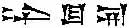
(amel) Agru |
| 2 |
|
|

Kakkab u Alap shame |
| 3 |
{ |
|

Re`u kinu shame u |
|

Tuame rabuti |
| 4 |
|
|

AL.LUL (Shittu ?) |
| 5 |
|
|

Kalbu rabu |
| 6 |
|
|

Shiru |
| 7 |
|
|

Zibanitum |
| 8 |
|
|

Akrabu |
| 9 |
|
|
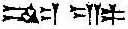
PA-BIL-SAG |
| |
| 10 |
|
|

SUHUR.MASH |
| 11 |
|
|

Gula |
| 12 |
|
|

DILGANU u Rikis nuni |
(The sign placed before each name is the determinative for star.)
| |
Meaning of the name. |
Modern equivalent. |
Name of month. |
|
| 1 |
The Labourer |
Goat |
Nisannu |
 |
| 2 |
The Star and the Bull of heaven |
Bull |
Airu |
 |
| 3 |
The Faithful Shepherd of heaven and the Great Twins |
Twins |
Simanu |
 |
| 4 |
The Tortoise |
Crab |
Duuzu |
 |
| 5 |
The Great Dog (Lion) |
Lion |
Abu |
 |
| 6 |
Virgin with ear of corn |
Virgin |
Ululu |
 |
| 7 |
|
Scales |
Tashritum |
 |
| 8 |
The Scorpion |
Scorpion |
Arah shamna |
 |
| 9 |
Enurta (the god) |
Bow |
Kislimu |
 |
| 10 |
The Goat-fish |
Capricornus |
Tebetum |
 |
| 11 |
The Great Star |
Water-Bearer |
Shabatu |
 |
| 12 |
The star . . . and the Band of Fishes |
The Fishes |
Addaru |
 |
On the first Zodiac which was set up by Tiat, the Evil one, see The Babylonian Legends of the Creation, London, 1921, page 17 (British Museum publication.))
And straightway, according to what they had received from the tradition which had been handed down to them by their fathers, they left the East, and went up to the mountains of Nh, which lie inside the entrances to the East from the lands on the skirts of the North, and they took from them gold, and myrrh, and frankincense. And from this (passage) understand, O my brother Nemesius, that the Magi knew the whole service of the Dispensation of our Redeemer through the offerings which they brought: the gold was for a king, the myrrh for a physician, and the frankincense for a priest, for the Magi knew Who He was, and that He was a king, and a physician, and a priest. Now when the son of the king of Sheba was a little boy his father brought him to a Rabbi, and he learned the Book of the Hebrews better than all his companions and his fellow countrymen, and he said unto all his slaves, "It is written in all the books of genealogies that the king shall be born in Bethlehem."
The names of the Magi.
These are they who bore offerings to the King, kings, the sons of kings:--
|
1.
|
HMDADH of Mhd king of Persia, who was called "King of Kings," and dwelt in Lower hgh.
|
|
2.
|
GARAD (Yazdegerd), the king of Sh
|
|
3.
|
PERH, the king of Sheba, which is in the East.
|
(NOTE.--In the Book of Adam (iv. 15) the kings are called Hor, king of Persia, Basantar, king of Saba, and Karsundas, king of the East. According to the Book of the Bee (chapter xxxix ), the Magi were twelve in number, and their names were:--
Zarwd, the son of Artab.Hmd, the son of Su>tu>k (Santaru>k).Ghnh (Gushnasp), the son of Gdaphar.Arshakh, the son of M.
These four brought gold.
Zarwd, the son of Wzw.y the son of Kesro (Khusrau).Artahshesht, the son of HolAsht`, the son of Shhr.
These four brought myrrh.
Meh, the son of H.Ahshiresh, the son of Hasb.Sard, the son of Balad.Merh, the son of Beldar.
These four brought frankincense.)
The Magi in Jerusalem.
And the Magi having made ready to go up, the kingdom of the mighty men of war was perturbed and terrified, and there was with the Magi so mighty a following that all the cities of the East were in dismay before them, and Jerusalem also. And when they entered the presence of Herod, he trembled before them, and he commanded them, saying, "Depart in peace, and seek diligently for the young Child, and when ye have found Him, come and show me, that I too may go and make obeisance unto Him"; though deceit was hidden in Herod's heart, he offered homage with his mouth. Now when, the Magi went up to Jerusalem there was great commotion in Judea, because of the edict of Augustus Car, which commanded that every man should be registered in his country, and in the city of his fathers. Because of this Herod was greatly perturbed, and he said unto the Magi, "Go ye and search for Him." Now the Magi are called "Magi" because of the garb of Magianism in which the heathen kings arrayed themselves whensoever they offered up a sacrifice and made offerings to their gods. They made use of two different kinds of apparel; that which appertained to royalty (they wore) inside, and that which appertained to Magianism outside. And thus also was it with those who went up prepared to make offerings to Christ, and they were arrayed in both kinds of apparel.
And when the Magi had gone forth from Jerusalem, and from the presence of Herod, that same star which had been their guide on the road appeared to them, and they rejoiced greatly. And the star went on before them until they entered the cave, where they saw the young Child swathed in bands and laid in a manger. Whilst they were on their way up thither they said within themselves, "When we arrive there we shall see mighty and wonderful things, according to the law and custom which prevail among royal personages when a king is born." Thus did they think that they would find in the land of Israel a royal palace, and couches of gold with cushions laid upon them, and the king and the son of the king arrayed in purple, and awestruck soldiers and companies of royal troops, and the nobles of the kingdom paying him honour by presenting gifts, and tables laid out with meats fit for the king, and vessels of drink standing in rows, and men servants and women servants serving in fear. Such were the things which the Magi expected to see, but they saw them not; they saw sights which were far better than these when they went into the cave. They saw Joseph sitting in astonishment, and Mary in a state of wonderment, but there was no couch with cushions laid upon it, and no table with food laid out upon it, and no sign of the preparations which accompany royal state. And although they saw all this humble estate and poverty, they had no doubt in their minds, but they drew nigh in fear and made obeisance to Him in honour, and they offered unto Him, gold, and myrrh, and frankincense. And it was very grievous unto Mary and Joseph that they had nothing to set before them, but the Magi fed themselves with food of their own providing.
(NOTES.--In addition to the gold, frankincense and myrrh which the Magi brought, they laid before the Child as an offering thirty z of silver. Their weight was according to the weight of the sanctuary, but they were equal to six hundred pieces according to the weight of the country. (The Syriac z= the Arabic dirham and the Greek drachme.) The thirty pieces were made by Terah, who gave them to Abraham, who gave them to Isaac. With them Isaac bought a village, and the man who received them took them to Pharaoh. Pharaoh sent them to David as a contribution towards the building of the Temple, and Solomon placed them round the door of the altar. Nebuchadnezzar carried them away to Babylon, and gave them to certain royal Persian hostages, who took them to Persia and gave them to their parents. When the Magi set out for Jerusalem they took the thirty pieces with their other offerings out with them they bought from certain shepherds at Edessa "the garment without seam," which an angel had given to them. Abgar, king of Edessa, took the thirty pieces and the garment from the shepherds, and sent them to Christ. Christ kept the garment and sent the thirty pieces to the Jewish treasury. The priests gave them to Judas Iscariot for betraying our Lord, but he repented and took them back to the priests. After Judas hanged himself the priests purchased a burial ground for strangers with the thirty pieces (Book of the Bee, chapter xliv ) . Another legend says that Joseph had the thirty pieces, and that with them he bought spices to embalm Jacob. They passed into the possession of the Queen of Sheba, who gave them to Solomon (Sandeys, Christmas Carols, London, 1883, page lxxxiii).)
The Circumcision of Christ.
Now Christ was eight days old when the Magi presented their offerings; and Mary received them at the very time when Joseph circumcised Christ. In truth, Joseph circumcised Him according to the Law, but he only went through (or imitated) the act of cutting, for no (flesh) whatsoever was cut off from Him. For as (a rod of) iron passeth through the fire and cutteth the rays thereof, without any part of it being cut off from it, so in like manner was Christ circumcised without anything being taken from Him.
The Conversion of the Magi.
And the Magi lived with the Child three days, and they saw the hosts of heaven going up and coming down to Christ. And they heard the sound of the praises of the angels, who sang hymns and cried out, "Holy, Holy, Holy, Mighty God, with whose praises the heavens and the earth are filled." And they were in great fear, and in truth they believed in Christ, and said, "This is the King Who hath come down from heaven and become man." And Perdhh answered and said unto them, "Now know I that the prophecy of Isaiah is true. For when I was in the school of the Hebrews I read in (the Book of) Isaiah, and I found (written) therein thus: 'For unto us a child is born, and unto us a son hath been given. And His Name shall be called Wonderful, and Counsellor, and God, Giant of the Worlds'" (Isa. ix. 6). And it is written in another place, "Behold, a virgin is with child, and she shall bring forth a son, and his name shall be called 'Emmanuel,' which is, being interpreted, 'God with us'" (Isa. vii. 14). And because He became like a man, and the angels were coming down from heaven to Him, truly He is the Lord of angels and men. And all the Magi believed and said, "Truly this King is God. Kings are born unto us frequently, and mighty men, the sons of mighty men, are born unto us on earth, but it is an unheard-of thing for the angels to come down to them." And straightway they all rose up, and did homage to Him as the Lord and King of the world. And having prepared food for their journey, they went down to their own country by a desert road.
The Massacre of the Innocents.
Now, there are certain men who will dispute this (statement) and say, "Where was Christ when the children were massacred, for it is written that He was not found in the land of Judah?" It was because of this massacre that He fled to Egypt, so that there might be fulfilled that which is written "From Egypt I called my Son" (Hos. xi. 1). And know this also. When Christ entered Egypt all the idols therein were swept from their places, and fell down, and were broken, so that there might be fulfilled that which is written, "Behold, the Lord rideth on a swift cloud, and entereth Egypt, and the idols of Egypt shall be broken before Him" (Isa. xix. 1).
(NOTE.--When Joseph and Mary and the Child reached the gate of the city of Hermopolis, there were by the two buttresses of the gate two figures of brass that had been made by the sages and philosophers; and they spoke like men. When our Lord entered Egypt these two figures cried out with a loud voice, saying, "A great king has come into Egypt." Book of the Bee (chapter xl.))
And He did not return from Egypt (at once), but lived there until Herod died, and after him reigned Archelaus.
Now, thou must know, O my brother Nemesius, that, even as I have already told thee, all the men who were under the rule of Herod were (included) in that registration for taxation; and the registration was completed in fifty days. And it was not until this registration was completed and sealed, and until Herod had sealed it and sent it to Augustus in Rome, that the Messiah was searched for; up to that time no children had been slain. And it was during the commotion caused by that registration that Christ was born. When forty days after His birth had been fulfilled, Christ went into the Temple of the Lord. And Simeon the Aged, the son of Joshua bar-Yhu>k, in whose days the captivity went up from Babel, took Him in his arms. Now, Simeon was five hundred years old when he took Christ in his arms.
The Flight into Egypt.
And straightway the angel said unto Joseph, "Arise, take the young Child and His mother, and flee into Egypt." And when the registration was completed, the Jews were dismissed, so that each man might depart to his own district and to his own village.
Herod and John the Baptist.
Then did Herod enquire for the Magi, and when he was told, "they have gone back to their own country," he was exceedingly wroth, and he sent straightway and slew all the young children in Bethlehem, and in all the villages round about. And when Herod had passed among the slain children, and they did not find there (the body of) John, the son of Zacharias, he said, "Truly, his son will reign over Israel." For he had heard of what had been said unto Zacharias by the angel, when he announced to him concerning (the birth of) John. And Herod sent to Zacharias (and commanded him) to bring John, and Zacharias said, "I am a priest, and I minister in the Temple of the Lord; I do not know where the Child and his mother are." And because of these words Zacharias was slain between the bench (or, steps) and the altar. Now, Elizabeth had taken John and gone forth into the desert.
The Death of Herod.
And as for Herod, a divine punishment that was pitiless overtook him, and he fell ill of a sickness through which he stank, and his body melted away into a mass of worms, and he suffered most grievous pains, and at length people were unable to come near him because of his putrid smell. And through that bitter suffering his soul departed into outer darkness. Nevertheless, by his death he destroyed many.
(NOTE.--First of all, he slew his wife and his daughter, and he killed one man of every family, saying, "At the time of my death there shall be mourning and weeping and lamentation in the whole city." His bowels and his legs were swollen with running sores, and matter flowed from them, and he was consumed by worms. He had nine wives and thirteen children. There was a knife in his hand, and he was eating an apple; and by reason of the severity of his pain, he drew the knife across his throat, and cut it with his own hand; and his belly burst open, and he died and went to perdition. An evil fate also overtook B the daughter of Herodias, who begged for the head of John the Baptist on a charger. Having given the saint's head to her mother, she went out to dance upon the ice, but the ice broke and she sank into the water up to her neck, and no one could deliver her. At length men came with the sword which had been used in beheading John, and they cut off B#39;s head and gave it to her mother. The right hand with which Herodias took up John's head withered, and when she saw the heads of the saint and her daughter she became blind, and Satan entered her and bound her with fetters. See Book of the Bee (chapters xxxix and xli ).)
Now Herod had said unto Archelaus his son, and unto Sh his sister, "Immediately I am dead, let those whom I have fettered in prison be slain"--now he had imprisoned one person from every house. And he said, "I know that the Jews will feel great joy at my death. But in order that they may not rejoice and be glad whilst ye are sorrowful and are weeping, let all those whom I have shut up in prison be slain, so that through their death they may cause lamentation unintentionally." And Archelaus and Sh did as Herod commanded them, and when this order had been carried out in all Judea there remained not one house in which there was not lamentation, even as it was in Egypt (in days of old).
Christ returns to Galilee.
And when Herod died, and his death had been announced to Joseph, he went back to Galilee. And when Christ was thirty years old He was baptized by John. Now John was in the desert all the days of his life, and he lived upon the root which is called "Ku>s," which is wild honey. (According to some this root was like unto a carrot.) And in the twelfth year of the kingdom of Tiberius Christ suffered.
Chronological statement.
Understand now and see, O my brother Nemesius, that in the days of Y, in his fortieth year, the FIRST Thousand Years came to an end. In the six hundredth year of Noah the SECOND Thousand Years came to an end. In the seventy-fourth year of Reu the THIRD Thousand Years came to an end. In the twenty-sixth year of (Ehud) the FOURTH Thousand Years came to an end. In the second year of Cyrus the FIFTH Thousand Years came to an end. And in the five hundredth year of the SIXTH Thousand Years Christ was born in His human form.
The Crucifixion of Christ.
And know thou also that Christ dwelt in Mary, and suffered in Nazareth, and was born in Bethlehem, and was laid in a manger, and was carried by Simeon in the Temple of Solomon, and was reared in Galilee, and was anointed by Mary Magdalene, and ate the Passover in the house of Nicodemus, the brother of Joseph of Reth and was bound in the house of Hann, and was struck with a reed in the house of Caiaphas, and embraced the pillar and was scourged with a whip in the Prorium of Pilate, and on Friday, on the first day of N (April), on the fourteenth day of the moon, our Redeemer suffered.
At the FIRST HOUR of Friday God fashioned Adam from the dust, and at the first hour of Friday Christ received spittle from the sons of Adam.
At the SECOND HOUR of Friday the wild beasts, and the cattle, and the feathered fowl gathered themselves together to Adam, and he gave names to them as they bowed their heads before him. And at the second hour of Friday the Jews gathered themselves together against Christ, and they gnashed their teeth at Him, even as the blessed David said, "Many bulls have gathered together round about me, bulls of Bashan have beset me round" (Ps. xxii. 12).
At the THIRD HOUR of Friday a crown of glory was placed on the head of Adam, and at the third hour of Friday the crown of thorns was placed on the head of Christ.
THREE HOURS was Adam in Paradise and shining with splendour, and three hours was Christ in the Judgment Hall being beaten by creatures that had been fashioned out of dust.
At the SIXTH HOUR Eve went up to the tree of the transgression of the commandment, and at the sixth hour Christ ascended the Cross, the Tree of Life.
At the SIXTH HOUR Eve gave unto Adam the fruit of the gall of death, and at the sixth hour the crowd of iniquity gave unto Christ vinegar and gall.
For THREE HOURS Adam remained under the Tree naked, and for three hours was Christ naked on the wood of the Cross. And from the right side of Adam went forth Eve, the mother of mortal offspring, and from the right side of Christ went forth baptism, the mother of immortal offspring.
On Friday Adam and Eve sinned, and on Friday their sin was remitted.
On Friday Adam and Eve died, and on Friday they came alive.
On Friday Death reigned over them, and on Friday they were freed from his dominion.
On Friday Adam and Eve went forth from Paradise, and on Friday our Lord went into the grave.
On Friday Adam and Eve became naked, and on Friday Christ stripped Himself naked and clothed them.
On Friday Satan stripped Adam and Eve naked, and on Friday Christ stripped naked Satan and all his hosts, and put them to shame openly.
On Friday the door of Paradise was shut and Adam went forth, and on Friday it was opened and a robber went in.
On Friday the two-edged sword was given to the Cherub, and on Friday Christ smote with the spear, and brake the two-edged sword.
On Friday kingdom, and priesthood, and prophecy were given unto Adam, and on Friday priesthood, and kingdom, and prophecy were taken from the Jews.
At the NINTH HOUR Adam went down into the lowest depth of the earth from the height of Paradise, and at the ninth hour Christ went down to the lowest depths of the earth, to those who lay in the dust, from the height of the Cross.
Know also that Christ was like unto Adam in everything, even as it is written. In that very place where Melchisedek ministered as a priest, and where Abraham offered up his son Isaac as an offering, the wood of the Cross was set up, and that self-same place is the centre of the earth, and there the Four Quarters of the earth meet each other. For when God made the earth His mighty power was running before it, and the earth was running after it, and the power of God stood still and became motionless in Golgotha; and that same place formeth the boundary of the earth. When Shem took up the body of Adam, that same place, which is the door of the earth, opened itself. And when Shem and Melchisedek had deposited the body of Adam in the centre of the earth the Four Quarters of the earth closed in about it, and embraced Adam, and straightway that opening was closed firmly, and all the children of Adam were not able to open it. And when the Cross of Christ, the Redeemer of Adam and his sons, was set up upon it, the door of that place was opened in the face of Adam. And when the Wood (i.e. the Cross) was fixed upon it, and Christ was smitten with the spear, and blood and water flowed down from His side, they ran down into the mouth of Adam, and they became a baptism to him, and he was baptized.
Now when the Jews crucified Christ on the Wood, they divided His garments among them beneath the Cross, even as it is written. His tunic was of purple, which is the raiment of royalty; and when they stripped Him of the raiment of royalty Pilate would not permit the Jews to array Him in ordinary apparel, but only in the actual raiment of royalty, either purple or scarlet. By both of these it might be known that He was a king. For it is impossible for any other man to wear purple; only a king can do this. And one of the Evangelists hath said, "The soldiers put on Him a purple robe" (Mark xv. 17; John xix. 2, 5), and this is a true word and is highly credible; and another Evangelist uses the word "scarlet "(Matt. xxvii. 28), and he proclaimed what was true. The scarlet garment indicateth to us blood, and the purple garment water; for the scarlet one was like unto blood, and the purple one was like unto water. The scarlet garment proclaimeth the joyful and immortal nature of man, and the purple one the sad and mortal nature of man. Understand, therefore, O our brother Nemesius, that scarlet proclaimeth life.
Now the spies said prophetically to Rahab, the harlot, "thou shalt tie a thread of scarlet to the window" (Joshua ii. 18) when they descended having been (well) entreated by her. And through her they prefigured a certain matter, for the window (symbolized) the side of our Lord Christ, and the thread of scarlet His precious blood which produced life.
And they (i.e. the Jews) wove a crown of spikes of thorn bushes, and set it upon His head. And they arrayed Him in royal apparel, not knowing what they were doing. And they bowed the knee, and made obeisance unto Him, and they spake with their mouths, without being compelled to do so, saying, "Hail to Thee, King of the Jews." Observe ye, O my brethren, that not even in His death did He lack the (sign of) royalty. And when the Jews and the soldiers who were the servants of Herod and Pilate were struggling together to rend the tunic of Christ, to divide it among them, they did so because they all eagerly desired the beauty of the sight thereof. And the centurion also who watched the Cross himself testified before all the crowd, saying, "Verily, this man is the Son of God." And this centurion said unto them, "The orders which have been given to me do not permit me to rend the apparel of royalty, but cast lots for it (and we shall see) to whom it will come"; and when the Jews and the soldiers of the king had cast lots, the lot fell upon one of the soldiers of Pilate. Now the tunic of our Lord had no seam, but had been woven whole in one piece. And whensoever there was a lack of rain in the place where it had been deposited and taken care of, the people used to bring out the tunic, and as soon as they lifted it up towards heaven an abundance of rain fell. And also, whensoever the soldier who had received it lacked rain for his crop, he brought out the tunic, and it worked this miracle. Now the tunic was taken away by force from the man who got it by Pilate, who sent it to the Emperor Tiberius. To us this tunic indicateth the Orthodox Faith, which all the nations (joined) together are unable to cleave.
Three valuable gifts, than which there is nothing more valuable, were given to the Jews in olden time, namely, royalty, priesthood, and prophecy: prophecy by the hand of Moses, priesthood by the hand of Aaron, and royalty by the hand of David. These three gifts which the generations and families of the children of Israel had enjoyed for (many) years were taken from them in one day; and they were stripped of all three of them, and became aliens to them, that is to say, prophecy by the Cross, priesthood by the rending of the tunic (of Christ), and royalty by the crown of thorns. Moreover, that spirit of compassion (or propitiation) which had dwelt in the Temple, in the Holy of Holies, forsook them and departed. And the curtain (or veil) of the sanctuary was cleft in twain. And the Passover fled from them, for they never celebrated another Passover in it. And know, O my brethren, that when Pilate pressed them to go into the Judgment Hall, they said unto him, "We are unable to go into the Prorium, because up to now we have not eaten the Passover."
And when the sentence of death had been passed on our Lord by Pilate, they (the Jews) made haste and went into the sanctuary and brought out from thence the carrying poles of the Ark of the Covenant, and out of them they made the Cross of Christ. Verily it was meet that these pieces of wood which used to carry the Covenant should also carry the Lord of the Covenant. The Cross of Christ was formed of two pieces of wood which were of the same height, and depth, and length, and breadth. And Paul the Apostle laboured exceedingly that the Gentiles might know what was the might of the Cross, which embraced the height, and depth, and length, and breadth of the earth. And when they raised up Christ, the Lamp of Light of all the earth, and set Him upon the candlestick of the Cross, the light of the sun became dark, and was extinguished, and a covering of darkness was spread over the whole earth. Three nails were driven into the body of our Redeemer, two through His hands, and one through both His feet. And there were two thieves (with Him), one on His right hand and one on His left hand.
And they handed out to Him vinegar and gall in a sponge. By the vinegar which they gave unto Him it was made known concerning them that their will was changed from what it had been formerly, and that they had turned themselves from integrity to wickedness, and by the gall was made known the bitterness of the accursed serpent which was in them. And they showed that they also had belonged to that good vineyard from which prophets, and kings, and priests, and they themselves had drunk; but because they had become wicked heirs, who would not labour in the vineyard of my beloved, they produced husks instead of grapes, and the wine which they pressed out therefrom was sour. And having crucified the Heir on the Wood, they mixed some of the impurity of their wickedness with their sour wine, and gave Him to drink of the wine from the vineyard of the Gentiles; but He would not drink (saying), "Give me of that vine which My Father brought out of Egypt." For Christ knew that the prophecy of Moses which had been prophesied concerning them had been fulfilled in them; for Moses said, "Your grapes are grapes of gall, your clusters are bitter. Your poison is the poison of the serpent, and their head is that of a malignant viper. These are the things which ye render unto the Lord" (Deut. xxxii. 32, 33).
Observe, O my brother Nemesius, that the blessed Moses with the eye of the Spirit foresaw the things which they were going to do to Christ (and said), "These are the things which ye render to the Lord." The congregation of the crucifiers was a decayed vine, its daughters were bitter grapes, and its sons were clusters of gall. Their head was Caiaphas, the malignant viper, and they were all evil serpents, and all of them were filled with the venom of Satan, who is the Evil Serpent. Instead of the water of the rock which had been given them to drink in the wilderness, they gave Him vinegar to drink, and instead of manna, the gall of the quail. They did not give Him a cup to drink from, but a sponge, so that they might show that the blessing of their fathers had been swept away from them. Now this is evident from what follows: When a vessel is empty and there is no wine in it, they wash and wipe it with a sponge. Even so did the Jews do when they crucified Christ, (for) with a sponge they wiped away and removed from themselves royalty, and priesthood, and prophecy, and the religion of Christ, and gave them to Christ, and the vessels of their bodies washed and empty remained only.
And the Law and the Prophets having been fulfilled, and Adam having been sent and seen the fountain of living water which was poured out from above for his redemption, then was Christ smitten with the spear, and blood and water flowed down from His side; but they were not mingled with each other. For what reason did the blood come forth before the water? For two reasons: First, that through the blood life might be given unto Adam, and then, after life and resurrection, the water for his baptism. Secondly, that through the blood He might show that He was immortal, and through the water He might show that He was mortal, and a bearer of sufferings. The blood and the water ran down into the mouth of Adam, and Adam was redeemed, and put on a garment of glory. And Christ wrote the edict of His return with the blood of His own Person, and despatched it by the thief.
And when an end had been made of everything, the writ of repudiation of the congregation was written, and the congregation became a thing cast aside, and it was stripped of its glorious raiment, even as in times of old David had, through the Holy Spirit, said and prophesied, saying, "Even unto the horns of the altar" --to this pass were the festivals of the Jews brought. "Unto the horns of the altar" (means) to the crucifixion of Christ, that is to say:
The Genealogy of Christ.
From Adam to Seth; from Seth to Enos; from Enos to Cainan; from Cainan to Mahall; from Mahall to Jared; from Jared to Enoch; from Enoch to Methuselah; from Methuselah to Lamech; from Lamech to Noah; from Noah to Shem; from Shem to Arphaxad; from Arphaxad to Salah; from Salah to Eber; from Eber to Peleg; from Peleg to Reu; from Reu to Serug; from Serug to Nahor; from Nahor to Terah; from Terah to Abraham; from Abraham to Isaac; from Isaac to Jacob; from Jacob to Judah; from Judah to Pharez; from Pharez to Hesron; from Hesron to Aram; from Aram to Amminadab; from Amminadab to Nahasson; from Nahasson to Salmon; from Salmon to Boaz; from Boaz to Obed; from Obed to Jesse; from Jesse to David; from David to Solomon; from Solomon to Rehoboam; from Rehoboam to Abijah; from Abijah to Ara; from Ara to Jehoshaphat; from Jeshoshaphat to Joram; from Joram to Ahaziah; from Ahaziah to Joash; from Joash to Amaziah; from Amaziah to Uzziah; from Uzziah to Jotham; from Jotham to Ahaz; from Ahaz to Hezekiah; from Hezekiah to Manasseh; from Manasseh to Ammon; from Ammon to Josiah; from Josiah to Jehoahaz; from Jehoahaz to Jehoiakim; from Jehoiakim to Jehoiachin; from Jehoiachin to Salathiel; from Salathiel to Zerubbabel; from Zerubbabel to Abiud; from Abiud to Eliakim; from Eliakim to Azor; from Azor to Zadok; from Zadok to Achin; from Achin to Eliud; from Eliud to Eleazar; from Eleazar to Mathan; from Mathan to Jacob and Yh; from Yh to Mary; from Mary to the manger; from the manger to circumcision; from the circumcision to the Temple; from the Temple to Egypt; from Egypt to Galilee; from Galilee to Jerusalem; from Jerusalem to the Jordan; from the Jordan to the desert; from the desert to Judah; from Judah to the preaching; from the preaching to the Upper Chamber; from the Upper Chamber to the Passover; from the Passover to the Judgment Hall; from the Judgment Hall to the Cross; from the Cross to the grave; from the grave to the Upper Chamber; from the Upper Chamber to heaven; and from heaven to the throne. He sitteth on the right hand of His Father.
The end of the two and sixty weeks.
Observe, O our brother Nemesius, how the generations and families have succeeded each other; from Adam to the Jews, and the Jews also from one (generation) to another until the Cross of Christ. From that time and onwards the festivals of the Jews have ceased, even as the blessed David saith concerning them: "Bind our festivals with chains even to the horns of the altar". The chains are the families which are linked each to the other, and the altar is the Cross of Christ. The festivals of the Jews succeeded each other until the Cross of Christ, in priesthood, and royalty, and prophecy, and Passover; but from the Cross of Christ up to the present they all have ceased, even as I have said. The Jews have no longer among them a king, or a priest, or a prophet, or a Passover, even as Daniel prophesied concerning them, saying, "After two and sixty weeks Christ shall be slain, and the city of holiness shall be laid waste until the completion of things decreed". That is to say, for ever and ever.
Christ's body is embalmed and laid in the tomb made for Joshua, the son of N.
And when the end of all the Law and the Prophets had come, and Christ was hanging on the Cross, Joseph, the brother of Nicodemus and Cleophas, went in to Pilate--now he was the bearer of the seal-ring of Pilate, and was a councillor, and had free intercourse with him--and asked for the body of our Redeemer; and Pilate commanded that it should be given to him. And when Joseph had taken His body, straightway Pilate commanded that the garden also in which the grave was situated should be given to him; it belonged to Joseph, and it had been given unto him as an inheritance by Phinehas, the Levite, the son of Joseph's uncle. Now Joseph was from Jerusalem, but he had been made a councillor in Rth and all the letters which had been written during the whole period of Pilate's administration had been sealed with the seal which Joseph carried. And when Joseph had taken down the body of our Lord from the Cross, the Jews ran and took the Cross, and brought it into the Temple, because (the pieces of wood thereof) were the bearing poles of the Ark of the Covenant. And Nicodemos also embalmed the body of our Lord (and swathed it) in clean, new linen swathings, and Joseph made it ready for the grave and buried it in a new tomb which had been made for Joshua, the son of N, to be buried in. And because he saw with the eye of the Spirit, and the way of the Dispensation of Christ had appeared to him, he took the stone which had travelled about with the children of Israel in the desert and placed it at the door of the tomb, and therefore he was not buried in it. And when Joseph, and Nicodemus, and Cleophas had buried Christ, they laid that stone before the door of the building of the tomb. And the high priests, and men of the house of Pilate, went out and set seals on the grave and on the stone.
The Cross of Christ.
And now, my brother Nemesius, be amazed and give praise to God that all the straps (or, ligatures) of the . . . . . . of Christ were joined together on the bearing poles of the Ark of the service of God and the covering of the sanctuary of propitiation. This was what God commanded Moses: to make a breast-plate of judgment and of peace; of judgment for the Jews who crucified Him, and of peace for the Gentiles who have believed in him. His Cross was made of the wood of the Sanctuary, His grave was a new one, which had been made for the death of Joshua, the son of N, and the stone (or rock), which is Christ, had when in the desert given water to six hundred thousand people, and now it became an altar and gave life to all the Gentiles. And the saying of the Apostle, "that rock was Christ" is true and well worthy of belief. Joseph was a councillor in Rth Nicodemus was a teacher of the Law in Jerusalem, and Cleophas was the recorder of the Hebrews in `Ams. Nicodemus prepared everything which was required for the Passover in the Upper Chamber; and Joseph made Him ready for burial and buried Him in his own inheritance, and Cleophas received Him into his house. And when He had risen from the dead these men became to Him true and faithful brethren.
The trilingual inscription above the Cross.
And when Joseph brought Him down from the Cross, he took away that inscription which was spread out above His head, that is to say, over the head of the Cross of Christ, because it had been written by Pilate in Greek, and Latin, and Hebrew. And why did Pilate write in it no word of the Syrians? Because the Syrians participated in no way whatsoever in the (shedding of the) blood of Christ. And Pilate, a wise man and a lover of the truth, did not wish to write a lie as wicked judges do, but he did according to what is written in the Law of Moses. Pilate wrote in the inscription (the names of the languages of) those who condemned the innocent in the order in which the slayers of Christ laid their hands upon him, and he hung the writing above Him. Herod was a Greek, Caiaphas was a Hebrew, and Pilate a Roman. Now the Syrians had no part in the murder of Christ, and to this testifieth Abhgar, king of Edessa, who wished to take Jerusalem and destroy it because the Jews crucified Christ. (See Cureton, Doctrine of Addai, ed. Phillips, page 30; Cureton, Ancient Syrian Documents, page 107; and Wright, Journal of Sacred Literature, No. XX, New Series, January, 1865.)
The Harrowing of Hell.
Now the descent of Sheol was not in vain, for it was the cause of manifold benefits to our race. He dismissed Death from his domination. He preached the resurrection to those who were lying in the dust, and He pardoned those who had sinned against the Law. He laid waste Sheol, and slew sin. He put Satan to shame, and made the devils sad, and He abrogated sacrifices and offerings and made an apology for Adam, and abolished the festivals of the Jews.
(NOTE.--According to the Coptic Book of the Resurrection, which is attributed to Bartholomew the Apostle, Christ broke down the doors of hell, and smashed the bolts, and destroyed the doorposts and frames. He overthrew the blazing furnaces of brass, and extinguished their fires, and, sweeping everything out of hell, He left it like a desert. He fettered the "Shameless One," and bound the ministers of Satan, and tied up a devil called Melkhir with a chain. See British Museum MS. Oriental No. 6804, and Budge, Coptic Apocrypha, page 184.)
The Resurrection of Christ.
And having risen from the grave on the third day, Christ appeared to K (Peter) and John.
And whilst Christ was in the grave, and the watchmen were sitting round about it, Simon Peter conceived the design of giving the watchmen wine to drink so that they might become drunk and fall asleep, when he intended to rise up and open the tomb, and take out the body of Christ without breaking the seals on the tomb, so that the Jews might not say, "Assuredly His disciples stole Him away." And whilst the watchmen were eating and drinking, Christ rose up and showed Himself to K (Peter), for He had indeed risen. And Peter believed that He was truly Christ, the Lord of the heavens and the earth, and did not approach the tomb. And afterwards Christ also appeared to the watchmen openly, and He went to His disciples in the Upper Chamber, and Thomas felt Him. And He appeared to His disciples on the sea shore. Now, though Simon Peter denied Him thrice before the Jews, he acknowledged Him thrice before the disciples. And Christ delivered to him and committed to his hands all His flock, saying, before His disciples, "Feed thou for Me My sheep and lambs and ewes," that is to say, men, women and children. And forty days after His Resurrection He bestowed upon the Apostles the laying on of hands of the priesthood, and He went up to heaven, and sat down on the right hand of His Father.
Then the Apostles gathered themselves together and went up into the Upper Chamber with Mary, the Holy Virgin, and Simon Peter baptized Mary, and John, the virgin, received her (into his house). And they decreed a fast until they had received the Spirit, the Paraclete, at Pentecost, they all being gathered together. And tongues (i.e. languages) were distributed among them, so that each of them might go and teach that nation in the tongue which he had received, so that there might never be strife among them.
Here endeth the "BOOK OF THE ORDER OF THE SUCCESSION OF FAMILlES FROM ADAM TO CHRIST," which is called the "Cave of Treasures."
And to God be glory for ever!
Footnotes
1 This is the order in which this paragraph appears in the text, though in the "Genealogy of our Lord" the circumcision and the presentation in the Temple precede the flight into Egypt.


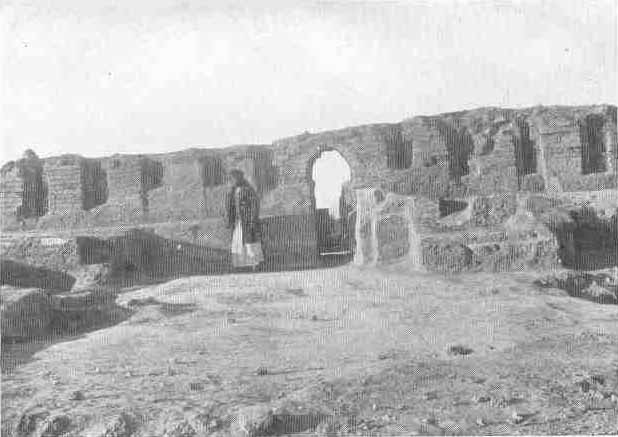


 King of Persia, 538 B.C. He restored to their original shrines throughout the country the images of the gods which a former king Nabonidus had collected in Babylon and gave the Jews permission to rebuild their temple. (British Museum No. 90920.)
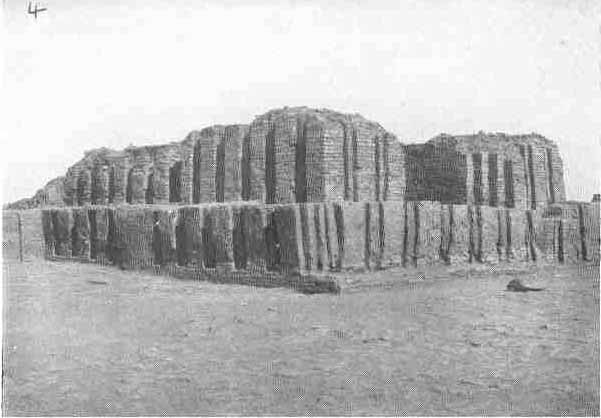
 , the founder of the Ist dynasty of Ur has been recovered. Several of the kings of this dynasty have hitherto been regarded as mythical
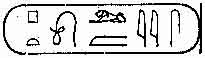 PTU(O)LMIS
 meri sen (i.e. "brother-loving"). He enlarged the great Alexandrian Library, which was founded by his father, and in his day it is said to have contained as many as 400,000 books, (i.e. rolls of papyrus). It was by his orders that Manetho, a priest of Sebennytus in the Delta compiled his History of Egypt.)
 , and it is found with his title "beloved of Amen" in a cartouche thus:
  .)
.)


 , which we find in the Bible under the form of "Pul." (See II Kings xv. 29; xvi. 7, 10; and I Chron. v. 26.))
 (727-722 B.C.
 , king of Assyria, 705-681 B.C.


