log in
The Book of Jubilees

The Book of Jubilees (1030)

The Book of Jubilees

From The Apocrypha and Pseudepigrapha of the Old Testament

by R.H. Charles, Oxford: Clarendon Press,

1913.

Scanned and Edited by Joshua Williams, Northwest Nazarene College.


A page of the Book of Jubilees

jubilees-main

A page of the Ethiopic version of the apocryphal work known to ecclesiastical writers as the "Lesser Genesis," and the "Apocalypse of Moses" (British Museum MS. Orient. No. 485, Fol. 83b). Because each of the periods of time described in the book contains forty-nine to fifty years, the Ethiopians called it MAZHAFA K i.e. the "Book of Jubilees." The passage here reproducted describes the tale of Joseph in the 17th year of his age, his going down to Egypt, and his life in that country.


 See the video about Jubilees in 20 parts:


Children categories

The Book of Earths

The Book of Earths (36)

The Book of Earths

This is a compendium of theories of the shape of the Earth, along with a great deal of 'Earth Mystery' lore. Richly illustrated, the Book of Earths includes many unusual theories, including Columbus' idea that the Earth is literally pear-shaped, modern theories that the Earth was originally tetrahedral, and so on. Kenton also covers many traditional theories including the ancient Babylonians and Egyptians, Hindu and Buddhist cosmology, and those of the Peruvians, Aztecs and Mongols.


View items...
Compendium of World History

Compendium of World History (92)

COMPENDIUM OF WORLD HISTORY

by Dr. Herman L. Hoeh

A Dissertation Presented to The Faculty of the Ambassador College Graduate School of Education In Partial Fulfillment of the Requirements for the Degree Doctor of Philosophy

1963 1966, 1969 Edition

Note : I have published this book for educational purposes only. This publication will be removed on first request of the rightful owner's of the copyright. L.C.Geerts, earth-history.com


View items...
The Lost Lemuria

The Lost Lemuria (507)

THE LOST LEMURIA

BY W. SCOTT-ELLIOT

THE THEOSOPHICAL PUBLISHING HOUSE, LTD.; LONDON

[1904]

Scanned at sacred-texts.com, March 2004. John Bruno Hare, redactor. This text is in the public domain in the United States. These files may be used for any non-commercial purpose, provided this notice of attribution is left intact.

View items...
The Sacred theory of the Earth

The Sacred theory of the Earth (191)

THE SACRED THEORY OF THE EARTH

Containing an Account
OF THE
Original of the Earth
AND OF ALL THE

GENERAL CHANGES

Which it hath already undergone

OR

IS TO UNDERGO

Till the CONSUMMATION of all Things

by Thomas Burnet

The Second Edition,

LONDON

Printed by R. Norton, for Walter Kettilby, at the Biƒhops-Head in St. Paul's Church-Yard

[1691]

Thomas Burnet, born 1635 deceased 1715

NOTICE OF ATTRIBUTION

Scanned at sacred-texts.com, July 2005. Proofed and formatted by John Bruno Hare. This text is in the public domain worldwide. These files may be used for any non-commercial purpose provided this notice of attribution accompanies all copies.

Frontispiece
Click to enlarge
Frontispiece

Title Page
Click to enlarge
Title Page


View items...
The Syrian Goddess

The Syrian Goddess (153)

Astarte Syriaca (1875-1877), by Dante Gabriel Rossetti (Public Domain Image)

Click to enlarge)

The Syrian Goddess

De Dea Syria, by Lucian of Samosata

by Herbert A. Strong and John Garstang

[1913]


View items...

A Dweller on two Planets, Interlude 7

A DWELLER ON TWO PLANETS

OR

THE DIVIDING OF THE WAY

BY PHYLOS THE THIBETAN

SEVEN SHASTA SCENES

By Frederick S. Oliver, Amanuensis

INTERLUDE VII

Beside a roaring, dashing mountain torrent, failing in myriad cascades of foam white as drifted snow, interspersed with pools of quiet water, deep, trout-filled, blue, reflecting flowery banks and towering pine-crested ridges, "ribs of the planet," we pause. The day is hot, but the waters of this branch of McCloud river axe cold -as the pristine snows of Shasta from which they flow to our feet and thence away.

We recline on the brink of a deep blue crystal pool, idly casting pebbles into and shivering the image of a tall basalt cliff reflected from the mirror-calm surface.

What secrets perchance are about us? We do not know as we lie there, our bodies resting, our souls filled with peace, nor do we know until many years are passed out through the back door of time that that tall basalt cliff conceals a doorway. We do not suspect this, nor that a long tunnel stretches away, far into the interior of majestic Shasta. Wholly unthought is it that there lie at the tunnel's far end vast apartments, the home of a mystic brotherhood, whose occult arts hollowed that tunnel and mysterious dwelling: "Sach" the name is. Are you incredulous as to these things? Go there, or suffer yourself to be taken as I was, once! See, as I saw, not with the vision of flesh, the walls, polished as by jewelers, though excavated as by giants; floors carpeted with long, fleecy gray fabric that looked like fur, but was a mineral product; ledges intersected by the builders, and in their wonderful polish exhibiting veinings of gold, of silver, of green copper ores, and maculations of precious stones. Verily, a mystic temple, made afar from the madding crowd, a refuge whereof those who, "Seeing, see not," can truly say:

"And no man knows . . .
"And no man saw it e'er."

Once I was there, friend, casting pebbles in the stream's deep pools; yet it was then hid, for only a few are privileged. And departing, the spot was forgotten, and to-day, unable as any one who reads this, I cannot tell its place. Curiosity will never unlock that secret. Does it truly exist? Seek and ye shall find; knock and it shall be opened unto you. Shasta is a true guardian and silently towers, giving no sign of that within his breast. But there is a key. The one who first conquers self, Shasta will not deny.

This is the last scene. You have viewed the proud peak both near and far; by day, by night; in the smoke, and in the clear mountain air; seen its interior, and from its apex gazed upon it and the globe stretched away 'neath your feet. 'Tis a sight of God's handiwork, sublime, awful, never to be forgotten; and as thy soul hath rated itself with admiration thereof, in that measure be now filled with His Peace.

A Dweller on two Planets, Interlude 6

A DWELLER ON TWO PLANETS

OR

THE DIVIDING OF THE WAY

BY PHYLOS THE THIBETAN

SEVEN SHASTA SCENES

By Frederick S. Oliver, Amanuensis

INTERLUDE VI

Returned from the far south, and in camp. In camp at the timber line on Tchastel's side, awaiting the nightfall, and through the long afternoon gazing out over a wealth of scenery not in word power to paint. To the north "Goose Nest" mountain, its crater ever full of fleecy snow, rears itself aloft eleven thousand feet. Down yonder in that gemlike valley is the lovely town of Sissons; down, to our traveler, albeit on a plane seven thousand feet above the ocean. Night. But not in a tent door. No, on muleback, he and a companion are toiling upwards. There is no moon, no wind, no sound, save a few strange noises arising from the nether regions. No moon, yet plenty of light, since the snow seems self luminous, so that objects appear against it in sharp silhouette. How black the bleak rocks and ledges! And those glimmerings of light afar in the night, what are they? Lamps; lamps miles away, thousands of feet lower, yet in seeming not so far off. It is cold; oh, so frightfully cold, numbing the mind! And still-as the grave. No sounds now arise to the ear; 'tis too high for aught save silence. So cold; and yet midday sun heats reflect from the snows as from a mirror, and then the temperature if fearful to feel, yet the snow melts not. Here is a hot, sulphur spring, one-thousand feet below the apex. Warm your chilled hands in the hot mud, wipe them quickly, lest they freeze, and climb on. Your eyes, could you see them, congested as they are in the rarefied atmosphere, the color of liver, would horrify you. Your breathing pains you; your heartbeats sound like the thuds of a piledriver; your throat is afire from thirst. No matter; here is the top! Two o'clock a. m. in July, 188-. As yet no light, but faint dawn. But ere long the soul is awestricken by a weird glow in the cut, which lights nothing. The beholders are filled with a strange disquiet; see the waxing light, and--in a fearful wonder, almost terror---see the great sun, scarce heralded by the aerial rarity, spring from. beneath the horizon. Yet all below is in "the darkest hour before the dawn." No ridges, no hills appear, no valleys, nothing but "night's deep darkness." We seem to have lost the world, and, for the nonce, are free of time! The planet is swallowed up, leaving the mountain top's half acre sole visible spot of all the Universe, save only the fearful splendor of Helios. Understand now, for you may, the sensations of Campbell's "last man." The world all gone, and self and comrade alone on a small spot in midair, whereon the almost rayless sun casts cold beams of strange, weird brightness. Look north. Afar in the night axe four cones of light, Mt. Hood, Mt. Adams, Mt. Tacoma, and St. Helen's tall torch, all peers of our Ieka. As the Day King soars higher lesser peaks appear, then long black ridges, ranges of vast extent, begin near by, only to lose themselves in distant darkness.

Now the void of night vanishes, hills stand forth, silvery spots and streaks appear as the dawn lights lakes and rivers, and at last, no fog obscuring, in the distant west, seventy miles away, is seen a great gray plain, the Pacific's broad expanse. To the south, interrupted streaks of silver show where flow Pitt and Sacramento rivers, while over two hundred miles away behold an indentation of California's central coast, marking the Golden Gate, and San Francisco's world-famed bay.

A Dweller on two Planets, Interlude 5

A DWELLER ON TWO PLANETS

OR

THE DIVIDING OF THE WAY

BY PHYLOS THE THIBETAN

SEVEN SHASTA SCENES

By Frederick S. Oliver, Amanuensis

INTERLUDE V

Traveling, southward, miner no more, the youth bends his course. A year agone the golden phantoms died, the mine caved in, and "no man knows that sepulcher" in the wilds of Siskiyou. Winter wet had extinguished the flames and laid the smoky sea. But the succeeding summer saw all aglow again, matched by the lightnings of heaven. Our traveler is at the very base of Ieka Butte, and he and his steed crawl along the slopes and vales in the bed of the fireborn ocean of smoke as do crustacea on the bottoms of aqueous seas. A flaw of wind decreases the denseness of the clouds, and above his head he sees an indistinct shape, lit feebly by the smoke-smothered moon, at its full now, as on that other night, a year ago. Beautiful through the murky air it is not; but when told that the point dimly seen overhead is the smoke-free, gleaming crest of Shasta, fifteen miles away as the crow flies, e'en though we gaze at it from its own base, we feel an indescribable sense of awe. And we liken the mount, with the flaming forests glowing at its feet and its own muffled form rising in obscured grandeur, to a silent sentinel by his watchfire, wrapped around with his cloak, and meditating on the trust he has kept, lo! these many ages, still keeps, and forever!

A Dweller on two Planets, Interlude 4

A DWELLER ON TWO PLANETS

OR

THE DIVIDING OF THE WAY

BY PHYLOS THE THIBETAN

SEVEN SHASTA SCENES

By Frederick S. Oliver, Amanuensis

INTERLUDE IV

Night. Otherwise the same scene. Our miner sits in his tent door, meditating on the novel beauty of the scene before, below him. A north breeze has rolled the smoky sea silently away and left no sign. Beneath the tent outspreads a vast abyss, dark, silent, "the night's Plutonian shore." Our miner's fancy fills it with golden phantoms. Only the stars, "night's tall tapers," lighten the gloom. But far away east, over ranges of lesser mountains, dim shapes couched in the darkness, far away, miles real as well as seeming, familiar shadowy shape of vast, uncertain size appears to shut from sight vision of some awful conflagration. Look! It grows, it brightens, till on the charmed eyes bursts a sudden, intense spark, then a full flame in Ieka's side--'tis the moon at its roundest! And now Ieka's snows glow in its ray like molten silver, the dark abyss before, beneath the tent lightens, the phantoms flee, while over all, sublime, glorious, supreme, rises Shasta's argent image.

A Dweller on two Planets, Interlude 3

A DWELLER ON TWO PLANETS

OR

THE DIVIDING OF THE WAY

BY PHYLOS THE THIBETAN

SEVEN SHASTA SCENES

By Frederick S. Oliver, Amanuensis

INTERLUDE III

Of the youth, what? A year later we find him suffering a violent fever, the "gold-fever," which yet lingers in that region of once famed mines; lingers, though it be now A. D. 1890. Away up on a mountain's side with pick, pan and shovel he has camped where a little gold may always be found; where hope whispers he may find a "pile" some time and--fortune.

All through that region forest fires have raged many weeks; all the valleys lie hidden under a pile of smoke. But the miner on the mountain is above it all, and as he labors looks out over the undulating surface of the silvery, smoky. ocean, down below. He sees a strange sight. No waves disturb this sea, which, nearly a mile deep, extends away beyond scope of vision. Two or three islands dot its expanse; these are all that is left to see of lofty mountain peaks whose bases are hidden. Perchance the words "smoke-ocean" seem figurative. Look heavenward from its bottom down in the valleys; the sun, appearing like a globe of blood, needs no colored glass to shield too sensitive eyes. Now go aloft to the miner on the mountain, looking down on, but seeing not, Yreka (town). With him again gaze at the "islands"; one only of them is not black in hue. It is the largest; sharp-summited, white, shrouded in eternal snows, Mt. Shasta rises, a noble island in the murky ocean about it, nine thousand feet.

A Dweller on two Planets, Interlude 2

A DWELLER ON TWO PLANETS

OR

THE DIVIDING OF THE WAY

BY PHYLOS THE THIBETAN

SEVEN SHASTA SCENES

By Frederick S. Oliver, Amanuensis

INTERLUDE II

On the old wagon road which existed ere ever iron rails linked Oregon's greatest city to the metropolis of the Golden West, there still stands, as for thirty years, not many miles from the State line, a station established for stage line uses, and "run" by "Daddy Dollarhyde." A lonely place, hidden amongst towering pines, which make regal raiment for the great "Siskiyou Ridge" of the Coast Range extending in gloomy grandeur not miles, but hundreds of miles, Dollarhyde's appeals to the heart of the traveler' as Saharan oasis, to the weary caravan. "'Tis a lodge in some vast wilderness," and in the days of this second "Shasta Scene" (A. D. 1884) was the only footprint of civilization for many a long mile.

Leaving Dollarhyde's, the road wound as directly as possible up a two-mile stretch of exceedingly steep mountain. Up this steep, long before aught but hinted dawn lit those grand ridges, a youth, on foot and alone, was climbing. A tramp? Temporarily; down below, at Dollarhyde's, the rest of his party yet slept. Up, up he toiled, stopping when the love of nature prompted him to "bold communion with her visible forms," and listen to her "various language"; pausing, the better to enjoy the exhilarating freedom, the beauty of the piny slopes, the whirr of the early grouse, and the chattering of squirrel and chipmunk. Once, enchanted by the exquisite charm of a crystal spring that leapt into and across the road, he stayed his step; and again, he stood gazing afar down into the gloom of a great canyon, which became lost to view "in the dawn's early light." The summit at last! But still no sun in the sky. All beneath was yet quietly resting 'neath the sway of Morpheus. Ah! what is that? Away in the south is a huge, dim mass, dull gray below, but, where its peak holds aloft the sky, 'tis rosy, glowing pink. As the youth gazes, spellbound, Old Sol dispels the valley glooms, thrusts aside the night, and the new day is born. The rose tints are gone, but also the gray, and in their place appears a giant, pointed cone of purest white, albeit streaked at its base with black lines, each some awful gorge. It rises not like other mountain piles, from ranges rivalling its own height; no, all alone it stands forth from its high plateau, piercing heaven's blue, from base to summit, eleven thousand feet, from ocean's plane to apical peak thirty-five hundred more--Shasta, O, Mt. Shasta.

A Dweller on two Planets, Interlude 1

A DWELLER ON TWO PLANETS

OR

THE DIVIDING OF THE WAY

BY PHYLOS THE THIBETAN

SEVEN SHASTA SCENES

By Frederick S. Oliver, Amanuensis

INTERLUDE I

If there are "sermons in stones and books in the running brooks," then is "Tchastel's" craggy pile a noble library in veritas. In it the vastness, the grandeur and the solemnity of, nature are expressed in mystic numbers carved in the eternal granite. On those stony, stratified pages Nature's students may read the doings of the gnomes, Mother Earth's treasurers. Here, too, in characters of lava, is writ Pluto's kingly record. Aye! 'tis indeed Nature's own volume, bound between covers of snow and ice; and marking the treasures thereof is a silvery ribbon whose ends hang out of the vast tome, at the north one end, at the south the other, the name of the one "McCloud" river, and of the other the "Sacramento." Again, two lesser markers are in this sublime epic, viz.: "Pitt" and 'Shasta" rivers. A volume of poems should bear poetic title; so shall this. Can we bestow one more appropriate than the aboriginal appellation, "Ieka," a name retained and used by the earliest white mer whose eyes gazed on that land, far northern California, land of romance, of gold and of adventure; retained through that intuitive recognition of eternal fitness which pioneer and trapper have ever, in all lands, exhibited toward existent nomenclature. For years the noble mountain bore, for white as for aborigine, the name it had fetched from out the night of time, as its sister peak far to the north, Mt. Rainier, retained its primal christening of "Tacoma." But, alas, for human conceit! Alas, for man's vain discontent, unable to let well enough alone! To the one snowy mount came a Russian trapper, and thereafter "Ieka" was no more on the tongues of men, unless, indeed, it was still lovingly murmured by the dusky Modoc and his savage bride. To the other glittering peak went an egotistic Englishman. His lordship found "Tacoma" so beastly savage, "doncher know," and so over its Indian appellate he tacked his own patronymic.

phylos-interlude-1

Time evens all things and "ever is justice done." The patriotic Americanism of the Northern Pacific Railroad topographers reinstated on the company maps musical "Tacoma," tossed to rubbish the imported name, and rebuked one egotist's vanity. That "Shasta Buttes" will ever know a parallel experience is problematical; if not, 'tis perhaps as well, for American gratitude willingly concedes the privilege of nomination of this proud peak to its friend, and, in the '60s, champion of our national autonomy -------- Russia. So much for a kind of mental view, past and present, of this pride of the crags and peaks.

A Dweller on two Planets, Index

A DWELLER ON TWO PLANETS

OR

THE DIVIDING OF THE WAY

BY PHYLOS THE THIBETAN

INDEX


BOOK I

CHAPTER I

Atlantis, Queen of the Sea and of the world. Zailm's pilgrimage to the top of Pitach Rhok to worship his Deity. He finds gold. The volcanic eruption--he is almost overtaken by lava flow, but escapes.

CHAPTER II

Caiphul, capital of Atlantis, and its people, its form of Government; politics and marvelous mechanical features. Excerpts from labor laws. Electrodic transit system.

CHAPTER III

Zailm determines his course of studies as he believes Incal has directed.

CHAPTER IV

Physical science as understood by the Poseidii, and the prime principles upon which it was based. "Incal Malixetho: i.e. God is immanent in Nature" was first--to this they appended--"Axte Incal, Axtuce Mun" translated "To know God is to know all worlds what ever". They held that but One Substance existed, and but One Energy, the one being Incal externalized, and the other His Life in action in His Body. Applying this principle to their scientific work they accomplished through it aerial navigation without gas or sails,--circumnavigating the globe in a day--conveyance of sound with reflection of the sender--heat and power conduction to whatever distance without material connection, transmuted metals--obtained, by electrical action, water from the atmosphere. These, and many others, were in common use. (Some of these things approach re-discovery, but the reader must remember that the book here indexed was finished in 1886, when the modern world knew them not. It knew not the Cathode Ray till 1896).

CHAPTER V

Zailm's life in Caiphul. The Rai of the Maxin Laws. Acquaintance with the prophet. Visit to the Emperor's Palace--an interview with the Emperor.

CHAPTER VI

No good thing can ever perish. Synopsis of the Origin of the Poseidii.

CHAPTER VII

Religion of the Poseidii. "Close not the Ends of My Cross." (Illustration.)

CHAPTER VIII

A Grave Prophecy of Zailm's future.

CHAPTER IX

Curing Crime. Zailm called to criminal court as witness. Treatment of the criminals.

CHAPTER X

Zailm offered the position of Secretary of Records--bringing him in close contact with the Rai, and all of the Princes, which he accepts. He is requested to go on an errand of courtesy to the country of the Suernii--a nation much more advanced in mystic knowledge than the Poseidii.

CHAPTER XI

Recital of Princess Lolix regarding an exhibition of Magic power.

CHAPTER XII

The unexpected happens. Prince Menax reveals his affection for Zailm and asks him to be his son.

CHAPTER XIII

The language of the Soul.

CHAPTER XIV

The adoption of Zailm. Description of the Incalithlon, or Great Temple,--The Incalix Mainin. The Rai of the Maxin. Establishment of the Maxin or Unfed Fire of Incal and the Book of the Law. Rai Gwauxln and Incalix Mainin "Sons of the Solitude."

CHAPTER XV

Zailm's mother deserts him and returns to the mountain. Brain fever. The vase of malleable glass for Ernon, Rai of Suern, with Poseid inscription.

CHAPTER XVI

The aerial voyage to Suern. Parting two miles above terra firma. The storm. Sowing seeds at sunset--three hundred and fifty miles horizon. Waiting the cessation of the storm. Friends at home appear in the mirror of the Naim. The Suernii a strange and angry people, rebelling against the rule of the Sons of the Solitude, who strove to lift them up. Death of Rai Ernon. His body, by command of Rai Gwauxln, taken back to Caiphul to pass through the Unfed Fire.

CHAPTER XVII

Impressive funeral of Rai Ernon, attended by the Sons of the Solitude.

CHAPTER XVIII

Rai Gwauxln tenders Zailm Suzerainty over the land of Suern. He hesitates, as he is yet an undergraduate at the Xioquithlon; but as the Emperor promises him that the Governor whom as Envoy-in-Special of the Rai of Poseid, he (Zailm) had appointed over Suernis should execute the duties of the position until himself should be legally capable of doing so, he accepts the almost imperial honor, and is dismissed to the completion of the pleasure trip interrupted by the death of Rai Ernon. They visit the Umaurean (present American) colonies of Poseid, which are described. The Grand Canon of the Colorado is not merely the gradual product of time and water and weather, but of sudden formation through volcanic action. "The hand of Pluto was the major worker;" 12,000 years ago he saw a sea cover that region, which "fled away into the Gulf of California." Visit to the building on the summit of the greater of the Three Tetons, in Idaho, rediscovered by Professor Hayden while on the same expedition which made known to the modern world the famous Yellowstone region--Professor Hayden once a Poseida, attached to the government body of scientists stationed there. Visit to the copper mines, in the present Lake Superior region. Present of a knife of tempered copper. Incalia, west of the chain now known as the Rocky Mountains. Toward home, East, then South. Forsaking the realms of air for the depths of the sea at the rate of a mile a minute. (Illustration.) Reproved by his father over the naim for recklessness.

CHAPTER XIX

Home again. The problem of teaching the Suernii. These people, having lost their seeming magic power, require tuition in the arts of life. Zailm and his vice-regents accomplish this. The latter records of this people to be found in the history of the Judaic race. Death of Lolix's father; her indifference at hearing of it. Slumbering of conscience.

CHAPTER XX

Duplicity. Graduation at the Xioquithlon. Festivities in honor of the graduates. Sadness of the Emperor at his nephew's wrong-doing.

CHAPTER XXI

The mistake of a life. The demand of karma. Atonement is not undoing. Christ atoned--we must undo. Reincarnation is expiation.

CHAPTER XXII

Zailm asks Anzimee to be his wife. She confides her joy to Lolix, who drops fainting to the floor, but does not betray the secret of Zailm and herself. In an interview she resigns him to his new love, but the shock unsettles her mind, and in the evening she appears before the assembly in the Great Temple, where the announcement of the coming marriage is being made, and a most exciting scene occurs, closing with the dramatic death of Lolix, through the magic art of the High Priest.

CHAPTER XXIII

A witness before the criminal. Remorse of Zailm. Speeding away on his vailx, for three months he wanders in agony of soul, that takes him for a time out of the body. Finding Lolix, he weeps over her and their child. Then a glorious radiance breaks over the scene, and One whom he has seen before is beside them and gives them rest. (Illustration.) At last he goes home, to learn that his father has died of grief at his supposed death. The shock of his unexpected return nearly causes the death of Anzimee. Confession to Anzimee and forgiveness. Departure for the mines of Southern Umaur. The electric generation of water. Loss of the vibrator of the naim, thus destroying communication with home. Finding of the cavern house and getting fastened therein. Hunger and thirst. Astral visit of Mainin, the High Priest. He promises to send help, but comes again taunting Zailm, blaspheming Deity. A glorious visitor appears, who blasts Mainin into outer darkness. To Zailm He gave "Peace and Sleep." (Death.)

CHAPTER XXIV

Awaking in the astral he returned to camp. Succeeding in making his men understand that they must return to Caiphul, he returned thither by exertion of will power, to be greeted by the Emperor, who alone could see him, thus: "What! Zailm! Dead! Dead!" Entrance to and "life" in Devachan. References to earlier earth lives. Completion of Devachan and reincarnation on earth.


BOOK II

APPENDIX

Seven Shasta Scenes.

CHAPTER I

In another personality--that of Walter Pierson, an American citizen. Orphaned in infancy--roving life on the sea. Is a soldier in the war of Secession. Next is a gold miner in California. Quong: companionship with p. 9 the Tehin on trips among the mountains. Philosophizing. Meeting with the grizzly bear and witnessing his docility at Quong's command.

CHAPTER II

The Lothinian Brotherhood. Reclamation of one on the wrong path. The mystic note. Offer to sell his mine; reason, want to go "home." The mountain lion and the deer. Visit to the Sach in Mount Shasta. Description of the lodge-room.

CHAPTER III

Pentecostal address of Mendocus, Master. Invocation ceremonies. A visitor from Pertoz--Mol Lang--"has come to induct one of their number, Quong, into the 'land of the departed,' and another, Walter Pierson, or 'Phylos,' to take home with himself."

CHAPTER IV

Visit to one enjoying life's rewards in the astral life; "As a man soweth so shall he reap." Visit to a Devachanic home. Temporary return to earth. Difference between Devachanic concepts and the objects conceived of. Who was the daughter?

CHAPTER V

Mol Lang is home in Hesper. " It is good to be at home again." Meeting with Phyris, his Alter Ego.

CHAPTER VI

Sohma's teachings. The better methods. The key to all wisdom. Phyris' thought creations. In the library. Books transported from earth to Hesper--(Venus.) Magic glasses. Magical growing of fruits through the power of the symbol.

CHAPTER VII

Phyris' magical painting which was a prophecy. Mol Lang's teachings. Why it is more wrong to take animal life than vegetable life. "Thou canst not compensate the animal for its lost opportunities, but a plant thou mayest." Farewell of Mol Lang. Other inhabitants of Hesper. A heritor of many lives. Faith replaced by knowledge. Of such is the kingdom of heaven. Phyris tells him of previous lives, but says that he will forget them "until he comes again." She teaches of the Crisis of Transfiguration. She takes him back to the Sagum in Mt. Shasta. Parting for a little time.

CHAPTER VIII

Awaking in the Sagum. Taking up earth-life again. "Do unto others as thou wouldst be done by." Sale of the mine. Travel. Meeting with Lizzie, the reclaimed one. Home to Washington. Marriage.

CHAPTER IX

A little retrospection--Meeting with the chela in Hindostan--a message from Mendocus. Stirring of Hesperian memories. Remembrance of a visit to the Sun with Sohma. The Navaz currents. Discontent with life. Death of little daughters. Starting on a sea voyage with Elizabeth. Storm and wreck and--Death. Home again to Pertoz. Home, now; Earth, with its ills, left behind forever, and Karma satisfied.

CHAPTER X

After the years, returned. Phyris as tutor and guide. Creation of a body for use in Hesperus. Teaching by the Voice of the Spirit. "Go into the Holy Place." (Illustration.)

CHAPTER XI

"To be or not to be! That is the question." The critical ordeal--temptation met and conquered.


BOOK III

CHAPTER I

"Ye shall reap as ye have sown." Perception.

CHAPTER II

Victory and Praise. Life ended. Being just begun.

CHAPTER III

Retrospection: Phyris and Phylos scan their Atlantean lives--Lolix and Elizabeth.

CHAPTER IV

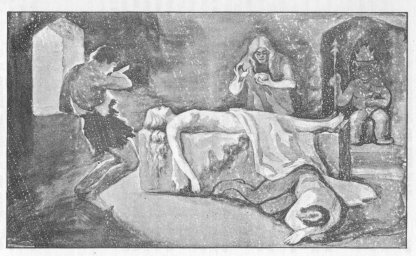
The decline of Atlantis during several thousand years. Decadence of Science. Aerial navigation and many scientific instruments forgotten. National depravity and ruin. Blood sacrifice in religion. Beginning of human sacrifice. Disappearance of the Maxin Book and the Unfed Light. Earthquake and deluge and sinking of Atlantis. Retrospective look at the time of Zailm in the continent of Lemuria, ages before Atlantis. Captives offered up to the gods. A sacrifice for love. (Illustration.)

CHAPTER V

Karmic retrospection: "Man's inhumanity to man."

CHAPTER VI

Why Atlantis perished.

CHAPTER VII

The Transfiguration.


NOTE BY THE AUTHOR


THE MIGHTY CAP STONE

A Dweller on two Planets, Glossary

A DWELLER ON TWO PLANETS

OR

THE DIVIDING OF THE WAY

BY PHYLOS THE THIBETAN

GLOSSARY.

Note:--Readers of "A Dweller on Two Planets" will please remember that in the Atlantean or Poseid language the word-terminations conveyed grammatical number and gender. Thus the singular was indicated by the equivalent for "a," the plural by "i," feminine by "u," while the absence of this terminal indicated masculinity.

Aphaisism--equivalent for mesmerism, but not hypnotism.

Astika--a prince.

Bazix--the name of one of the weeks of the year.

Devachan--the life after death.

Ene--terminal signifying study or student.

Espeid--Eden, Edenic.

Incal--the sun; also the Supreme God.

Incaliz, or Incalix--High Priest.

Inclut--first, or Sunday (also Incalon).

Inithlon--college devoted to religious learning.

Ithlon--any building, like a house.

Incalithlon--the great Temple.

Lemurinus, Lemuria or Lemorus--a continent of which Australia is the largest remnant to-day.

Karma--consequences growing out of one's actions in former lives.

Maxin--the Unfed Light.

Mo--to thee.

Murus--Boreas.

Naim--combined telephone and telephote.

Navaz--the night; also Goddess of the Night; also secret forces of Nature.

Navazzimin--the country of departed souls.

Ni--to.

Navamaxa--cremation furnaces for dead bodies.

Nosses--the moon.

Nossinithlon--insane asylum; [lit. a home for moon-struck persons.]

Nossura--mocking bird.

Pitach--a mountain peak.

Rai--Emperor or monarch, as Rai Gwauxln, pronounced Wallun.

Raina--a land governed; as the Raina of Gwauxln-Poseid.

Rainu [also Astiku]--a princess .

Su--be is gone.

Sattamun--desert, or wasted land.

Suernota--the Asian Continent.

Surada--to sing, or I sing.

Teka, or Teki--Poseid gold coin, value about $2.67.

Vailx--an aerial ship.

Ven--a linear unit of about a mile.

Xanatithlon--conservatory for flowers.

Xio, or Xioq--science.

Xiorain--the self-government board of Xioqua.

Xioqene--science student.

Ystranavu--the star of evening; also, when used astronomically Phyristunar.

Zo--personal pronoun, possessive my or mine.

Rai--Emperor or monarch, as Rai Gwauxln, pronounced Wallun.

Book 3, Notes by the Author

A DWELLER ON TWO PLANETS

OR

THE DIVIDING OF THE WAY

BY PHYLOS THE THIBETAN

The Third Book

NOTE BY THE AUTHOR

Friends, thirteen years have become past time since the words of this book were dictated; purposely hath publication been delayed unto the end that statements then made might acquire weight through the coming to pass of many of the predictions to be found within these covers; predictions which at that time were wholly unverified, and were, moreover, regarded by science as chimerical. Prophecy would be impossible in a Godless universe; and were it not that vibration is the law of laws, no mind could come into unison with the Creator or any of His ministers; each living being is minister to the creature immediately inferior. To-day witnesseth the faith of those who have believed in my words swallowed up in knowledge: the predictions have numerously been realized; all will be. So it is that to-day, in the middle of the final year of the century I add

THE MIGHTY CAP-STONE:

The Division of the Way Hath Come; the Midnight Hour of the Cycle Which, More Than Any Other, Formed Life's Great Divide, Hath Struck. When first I dictated for this book there lacked, as it were, yet a few seconds to the closing of the Sixth Day. But now for some seconds hath been fulfilled the initiation of that saying of Him who sitteth upon the throne: "Behold! I make all things new." The Hour hath struck. And now presently "the one overcoming shall inherit all things and I will he his God, and he shall be my son." This is for those who did set their hands to the Plow and their feet to Furrow, and looked not back, while yet the Sixth Cycle was. "But as for the cowards (a halt between two opinions) and the unbelievers (in aught above earthly, finite things) and the abominable, and takers of life, and passion and lust-servers, sorcerers, idolaters and swervers from truth, their portion is the (Great Karma of the World) second death." While the foolish ones were gone to buy oil, the bridegroom came, and they who were prepared entered in with him to the feast, and the door was shut. When the foolish returned the door was not opened unto then. Beloved, remember these words which were spoken by the apostles of the Christ; that they said that in the Last Time before the end of the Age "there will be mockers walking after their own impious lusts (10). These indeed blaspheme what things they do not understand; but that which they know naturally, as do the irrational animals, in these things they are corrupt (19). These are they who separate at the Dividing of the Way, going in the finite direction, not having the Spirit (7), and are placed as an example, to endure the retributive justice of an age-ending fire."

Many have been my references to America as being Atlantis come again; much hath in a general way been said of the beginning, rise, growth and destruction of that ancient prototype; a hint hath been here and there given, rather by inference than by specific statement, that while America should be peer and even more than Atl, just because she is Atl returned on a higher plane, she must endure the woes as well as retrace her precarnate glories. The penalty visited upon Poseid was the crowning sentence of that Age. Century after century in the majestic march of Time hath passed since the sun looked down upon a wild waste of ocean waters where but a few days before had been the regal Island-Continent. Another cycle hath reached its end, and its last hour hath chimed. All that which is imperfect in the now-closed Sixth Day is come, in stately, measured but inexorable way to face judgment by the standard, Truth. Spot nor blemish can not hope to stand nor continue before it. Neither can aught be amended so as now to escape its karmic penalty, for the seal of its full time is set upon it. "The one acting unjustly, let him be unjust still; and the filthy one, let him be filthy still; and the righteous one, let him righteousness do still, and the holy one, let him be holy still. Lo, I come speedily, and the reward of me is with me, to give back unto each one as the work of him shall be found." The Great Karma unfailingly setteth each evildoer back to the point attained ere the animal forces in riot obtained control over the human. Wherefore those who in the Sixth Cycle/ lost supremacy over their lower selves won no place in the Seventh. In the closing years of the spent cycle one deserted his helpless wife; verily, he really deserted his birthright in the New Age. Another sought, being weak-willed, to drown worries in wine; be but drowned his soul's advanced merits. A wife was faithless to her wedding vows; the Door of the New Time is fast against her. A thief stole, what? His own life's rewards. One there was who deprived another of physical life; he also erased his own name from TO-DAY'S roll-call. One swore to keep a vow, but broke it often; in this New Day, after the grave shall claim his physical being, be shall not again awaken, having lacked will to live. A man was buried with high honors who at merciless cost to his fellowmen enriched his bank account; a gravestone near as costly as pure gold rears above his mortal, aye, and under it is also the dead hopes of resurrection. She sold her body; purchased and purchaser form an unhallowed company in Yesterday's catacombs, whence they shall not emerge to see the light of To-day until, cycles afar hence "death and hell give up" their inhabitants. Such is a brief glimpse into a Closed Record. Turn the page. Another did deeds of love; love and doers thereof live through all the days, forever. One smiled when a smile was heroic and cheered faint souls; one visited the sick and prisoners; one clothed a naked stranger; and one gave half of her last crust, though only to a starving dog. Verily, all these shall receive their reward in the Day now dawning. The bad are not all bad, neither the good wholly good. She who lived a life of shame, yet ever kept hope of better things burning in her inmost heart, and longed for death to release her, since man would not:

"Looked beyond the shadow of the late unhallowed years,
To the far, far distant upland, where yon glimmering light appears."

Verily, she shall be chastened, and made new, in the glory of To-day; but the chastening is a weary ordeal, and slow. As the Great Karma handles her, so handleth it all others, for it is Christ's mercy, which healeth every soul's-hurt.

During many, many centuries prophecy hath looked forward to. the end of the Age as a time of awful woe, and has pictured dread scenes of terminal horror. Am I come to say that all these predictions shall fail? Is the book of the Apocalypse, mere allegory? Would it were! But as the Poseid age was stricken, this one must also be which has just passed. Shall America, the Glorious, together with the rest of the world, meet similar woe? Alas, worse, though not by water but by fire. Shall all be wiped out of existence, leaving a planet in ruins? Unto the end of full obedience and the coming into harmony with divine law shall the lash be applied; words may not portray the scenes. This is the Message of the End of the Age:

"The day of vengeance is in mine heart, and the year of my redeemed is come nigh"-Isaiah. "Behold, the day . . . that burneth as an oven."--Malachi.

The Hour hath struck. And yet in all of this there is no mystery, no supernatural penalty, no capricious infliction by an offended personal God, and nothing of "man's necessity, God's opportunity." It is all of Man's own doing. He hath wandered from the Way, and hath for the God-nature in him, which he should have revered and nourished, substituted worship of Self and of Mammon; hath cast out Love, and placed violence, lust, greed and all the riotous animalism in him in command of his life. Man is his own judge and executioner. Man is the type and the universe is the print; Nature patterns after Man, not Man after Nature. He, a being, of free-will, hath brought all coming woes of judgment to be inevitable; he must endure; as he hath sown, so must he reap. O Man, forgetter of Love, of Mercy, of Right; breeder of Hate, of Cruelty, and of the inhumanity that hath and still doth make countless millions mourn, is it possible that thou hast been blind to the handwriting on the wall? Alas, yes, thou hast! Rampant is the Spirit of selfishness, of greed, of merciless gain; its hand guides the trains and steamers, clicks the telegraph keys, operates the telephone and cables, makes a mockery of free speech, shackles the press so that it dares to utter only that which cannot offend its master; every human enterprise, all national policies and international comities, all things, even the churches, are willing vassals to this fiend, SELF. What then? Ruin is on all sides, the human race and all lower creatures its victims. Masons at work on a high wan shout as a brick falls: "Stand from under!"

Aye, stand from under! A world is falling! Pile no higher the racial and individual misdeeds now biding expiation; weary enough the awful reckoning of the Great Karma without additions to its terrible length that even now stretches ahead, a seeming eternity. Frenzied millions of men and women, boys and girls, no longer free save in name, are menaced with starvation. Hungry, cold, half-clad, shelterless only too often, denied the chance to work, however willing they may be, corporation-owned machinery their competitor; monopoly and trust-ridden, sleeping or waking. This inhuman picture is the rule, not the exception. Thou knowest this full well. I state nothing new in this regard, and the awful facts are under drawn instead of exaggerated. All of this, although in far, far less degree, has been so at the ending of every age, was so in Poseid and is therefore now repeated. But it can never be so again after this, for HERE THE WAY DIVIDES. Poseid survived; so also shall they of the Sixth Age. In the full time by fire the Reaper shall reap, and no place be found for physical safety by the unchanged of heart. But the time of it shall be foreshortened, else no flesh could remain alive. Stand from under! The roar of armed hosts must succeed the thunderous mutterings of the times. No more is there any chance to prevent the coming retribution (albeit it may seem unduly deferred), for the causes have had their way. Too late is it to even modify the result of the misguidance of that Spirit whose hand sways the helm. A short but sharp conflict, Sanguinary past belief, even now reddens on the horizon. The trained armies, millions of men active or in reserve, that are now engaged in conquest, fevered with war, will but little longer, comparatively, submit to having themselves and loved ones ground under the heel and strangled by the hand of that organized thing, Capital, which, itself merely the natural fruit of selfishness, none the less is a riotous animal principle, compelling the few to be masters of the many, denying the God-born declaration that all men are created free and equal, and warping it to seem a giant lie. Soon millions of trained soldiers will turn upon the visible representatives, the wealthy and worldly prosperous, who in reality are not more responsible than will be their assailants, of that Relentless Force behind all human enterprise. Later they will break up into lawless bands bent on satisfying Ishmaelitish tendencies, each self-server's hand weaponed against his fellow creatures. Then will the pentup hate, the savagery and selfishness begotten by ages of selfishness ruled by unbridled animalism break in a storm such as the world hath never yet seen, no, not during all the ages I scan, ages forgotten for untold thousands of years. That loveless conflict will initiate that which, Nature completing, will leave living but one where now are many. Hard and fast after the human conflict will come pestilences unparalleled, sweeping the wide earth over, for in that day none will pause to bury the slain until the evil is wrought, nor then, for the dead of the plagues will be as thousands for every one by violence. And all this because the love that should grace and soften men's hearts, each for all and all for each, dried up and became a mockery in the close of the ended cycle, leaving but scattered oases, few and far between. Nature follows Man. Wherefore the waters of Earth will dry out, rains be withheld, cyclones sweep, and an earthquake come such as was not since a man was on the earth; aye, I am mindful of Poseid! But all of this will occur only through natural causes, and in consonance with the selfishness, lust, greed, anger and general depravity of the Type. As these blaze in the human breast, so shall the air, dry and vaporless under brazen skies, develop solar heats more fierce than history ever knew. A parched earth, furnace-like, Piling all flesh mountains high; pestilences stalking unchecked. O ye! Blind to the Handwriting on the wall, which flickers Still, though writ for a spent cycle. Turn now and read, while yet the last midnight stroke reverberates.

The disciples asked the Great Master, saying: "Teacher, when will these things be?" And He said: ". . . When you see surrounded by encampments the Jerusalem, then you may know that has come near the desolation . . . For days of vengeance these axe, to be fulfilled of all the judgments."

Friends, know ye the meaning of the name Jerusalem? That it meaneth "Vision of Peace?" Verily, so it doth. One by one during the years all the signs of the end of the Age but one were fulfilled; but these were "only the beginning of sorrows," for still the Spirit of Liberty abode here and there in the breasts of lovers of their fellowmen. That Spirit wrapped itself in the glorious folds of the Stars and Stripes and proclaimed the imperishable declaration, of human equality, granting unto all that freedom which Americans for themselves demanded. But now the "Vision of Peace" is finally encompassed by armies, the last gap being filled with blue-coated soldiers forcing Mammon's commercial shackles upon alien peoples in tropical islands. Ah, the Starry Flag droops mourn fully low above the freedom-birthright sold for a mess of pottage. My People, O my People! As ye have sown, so must ye reap. The Vision of Spiritual Peace is wholly clouded by the dust of armed camps, and no gap is left unobscured. "Then shall the end come." A Son hath continually called from on High:

"Stand from under! Get into the shelter of that Cross."

In all the expiatory time must indeed those who thought no wrong suffer? Ah, thought no wrong. In every life, whether theist's, atheist's or merely one ignorant of any doctrine of belief, there comes a time when the inward Spirit beseeches the soul to go up higher. It pleads again and again and yet again so -long as faintest hope remains. Omission too, hath its penalty: "How shall we escape if we neglect so great salvation?" echoed throughout the past Age. Fire burns a babe's fingers as badly as it does an adult's. There were and are those who lived and live the Cross. These shall not suffer, not even though bodily death overtake them; they have no Karma to expiate.

What is the Cross? What is Christ? I have said, long ago, but I will re-state it: the Divine stream of Life, the Indefinable God, that is, the long arm of the Living Cross. Directed, purposed Human Will is the short arm. This will power is our call upon His Name that is never denied. Jesus, the Man of Nazareth, gave us pattern. He sacrificed self for us. He said: "Follow me." Also: "If any man will come after me, let him deny himself, and take up his cross and follow me." This self is the lower self; it is the animal. All animals are in man concreted. No hyena is so treacherous, no tiger so ferocious, no hog so brutish, no weasel so destructive; no animal creature of any sort is so perfect in its own peculiar nature as is the man who suffers any or all of these animal characteristics within him to run riot; and this is because his human soul is enslaved to the animal. Animal is only force undirected, whether it exist in a body or not. Directed, guided by will, it ceaseth to be animal. But in yielding to that guidance it must give up its free lawlessness, something never pleasant and often painful. It is sacrifice, always. Its symbol is the Cross. He sacrificed self for us on this same cross of the Causeless, Divine Stream which containeth all things and floweth no man knoweth whence nor whither. I would not minimize Calvary; it is very, very real and the one great fact forever! "Follow me." On that same Cross, day by day, aye, moment by moment, employing our wills, as He directed, that we may grow unto His likeness, we also, following, must sacrifice self, sacrifice the animal in us, that is, in God's service we must never cease to direct those vagrant forces which in running riot turn Earth into a veritable hell and supplant Love with Self. It is written that "a little child shall lead them." Verily the "little child" of the Spirit in the New Time shall be ruler over the menagerie within the man, and that man shall therefore be able, even as Quong, the Tchin, to rule any animal outside of himself. A vast power, this. And because of it in the New Time no longer shall any beast, whether in human form, or in lower animal body, or merely apparent as a raging tempest or a disease, be free to do evil.

When the Spirit in Man cometh fully to its own, "he shall rule them as with a rod of iron,", this riotous throng. Rule them to their own good; cut them off suddenly, even as Quong cut off the puma from furthering its own will. He shall destroy that theretofore unbridled animal, by the Cross converting it. into a servitor to the Father. All things must become new TO-DAY, because conditions will soon so differ that they who would hold fast to the old will, find nothing either in Nature or elsewhere that will longer yield to the old powers.

And now here, of all places, I would indeed not be vague in expression. The Seventh Cycle is that of the Spirit. TO-DAY existence will demand a spiritual eye, and ear, and that every sense be raised to the Heights. The very means of dealing with Nature will be no longer gross, but become as in Hesperus, manageable only by those who, using the Cross in their every life-act, swerve never to either side of the way, never, either in least or greatest deed doing. error, even that good may come, knowing it can not bring aught but pain and penalty. Not one can be lost, finally, of the evildoers, for God wastes nothing. He converts all things from lower into higher, inexorably, surely. Some must endure the retributive justice of the Great Karma, aye., the majority must experience more or less of this fire of transfiguration; the wrath of God is Love's severity.

Then will be those times when "all things are made new." What now, think ye? Shall not America, and the rest of the world, be mote glorious than ever thou hast dreamt. Aye, truly. She shall not indeed have the great population census-takers imagine. There shall be few where were many; tens replacing thousands. But not in numbers is there greatness or magnificence; remember the Saldans and Rai Ernon; which was greater, he or that ill-fated host? Yet never shall a soul be lost; God hath place for everyone.

It is written that after a thousand years Satan shall be loosed for a little season. That is well. For the Race possessing such amazing powers, though few, will be the people, yet will there be some who will have attained these powers through mere intellect; they will abuse their privileges, having not the Spirit, and these sinful ones will the Perfect in Evil assail, that karma shall overtake them. Having had much given unto them, of them shall much be demanded, wherefore their karmic atonement will be more intense than words can depict.

The wrath of God is love's severity. All shall be converted from lower into higher.

"A glory shines across the coming years,
The glory of a race grown great and free.
'Twas seen by poets, sages, saints and seers,
Whose vision glimpsed the dawn that is to be.
A shining shore is by the Future's sea,
Whereon each man all stand among his peers
As equal; and to none shall bend the knee.
Awake, my soul, shake off your doubts and fears;
Behold the hosts of darkness fade and flee
Before the magic of the Morning's face;
And hear the sweet and wondrous melody
That floats to us from far-off golden days--
It is the choral song of liberty
It is the anthem of the coming Race".

phylos-chapter-3-note

Subscribe to this RSS feed

Log in or create an account