log in
Website Items

Website Items (1257)

Children categories

The Book of the Bee

The Book of the Bee (19)

THE BOOK OF THE BEE

THE SYRIAC TEXT

EDITED FROM THE MANUSCRIPTS IN LONDON, OXFORD, AND MUNICH

WITH AN ENGLISH TRANSLATION

BY ERNEST A. WALLIS BUDGE, M.A.

LATE SCHOLAR OF CHRIST'S COLLEGE, CAMBRIDGE, AND TYRWHITT SCHOLAR ASSISTANT IN THE DEPARTMENT OF EGYPTIAN AND ASSYRIAN ANTIQUITIES, BRITISH MUSEUM

OXFORD AT THE CLARENDON PRESS 1886.


View items...
The Book of the Cave of Treasures

The Book of the Cave of Treasures (32)

THE BOOK OF THE CAVE OF TREASURES

A HISTORY OF THE PATRIARCHS AND THE KINGS
THEIR SUCCESSORS FROM THE CREATION
TO THE CRUCIFIXION OF CHRIST

TRANSLATED FROM THE SYRIAC TEXT OF THE
BRITISH MUSEUM MS. ADD. 25875

BY

SIR E. A. WALLIS BUDGE, KT.

M.A., LITT.D. (CAMBRIDGE), M.A., D.LITT. (OXFORD),
D.LIT. (DURHAM), F.S.A.
SOMETIME KEEPER OF EGYPTIAN AND ASSYIRIAN ANTIQUITIES, BRITISH MUSEUM;
CORRESPONDING MEMBER OF THE ACADEMY OF SCIENCES, LISBON; AND
CORRESPONDING MEMBER OF THE PHILOSOPHICAL SOCIETY OF AMERICA
With 16 plates and 8 illustrations in the text

LONDON
THE RELIGIOUS TRACT SOCIETY

MANCHESTER, MADRID, LISBON, BUDAPEST

1927


Front piece

Imdugud, in Imgig, the lion-headed eagle of Ningirsu, the great god of Lagash

cave-00-front

Sumerian relief in copper on wood representing Imdugud, or Imgig, the lion-headed eagle of Ningirsu, the great god of Lagash, grasping two stags by their tails. It is probable that it was originally placed over the door of the temple of Nin-khursag or Damgalnun at the head of the stairway leading on to the temple platform. This remarkable monument was made about 3100 B.C., and was discovered by Dr. H. R. Hall in 1919 at Tall al-`Ub, a sanctuary at "Ur of the Chaldees" in Lower Babylonia. It is now in the British Museum (No. 114308).


View items...
The Book of Enoch

The Book of Enoch (6)

The Book of Enoch

 A page of the Book of Enoch

enoch-index

A page of the Ethiopic text of the "Book of Enoch" (British Museum MS. Orient. No. 485, Fol. 83b) containing a description of one of Enoch's visits to heaven, and how the archangel Michael took him by the hand and showed him the mysteries of heaven.


From The Apocrypha and Pseudepigrapha of the Old Testament R.H. Charles Oxford: The Clarendon Press


View items...
The Forgotten Books of Eden

The Forgotten Books of Eden (34)

THE FORGOTTEN BOOKS OF EDEN

 Translated in the late 1800's

by

Dr. S. C. Malan and Dr. E. Trumpp.

Translated into King James English from both the Arabic version and the Ethiopic version which was then published in The Forgotten Books of Eden in 1927 by The World Publishing Company.

In 1995, the text was extracted from a copy of The Forgotten Books of Eden and converted to electronic form by Dennis Hawkins.


View items...
The Book of Jasher

The Book of Jasher (93)

The Book of Jasher

Referred to in Joshua and Second Samuel

Faithfully Translated

FROM THE ORIGINAL HEBREW INTO ENGLISH

SALT LAKE CITY: PUBLISHED BY J.H. PARRY & COMPANY 1887.


NOTE : According to some sources, this book was once the original start of the Bible. Originally translated from Hebrew in A.D. 800, "The Book of Jasher" was suppressed, then rediscovered in 1829 when it was once again suppressed. Reemerged again, in his preface Alcuin writes the reference to Jasher in 2 Samuel authenticates this book .

The root of the first book of Jasher must be written BEFORE the time of Joshua and Samuel in the Bible because both books refers to the book of Jasher.

"Is not this written in the Book of Jasher?"--Joshua, 10,13.

"Behold it is written in the Book of Jasher."--II. Samuel, 1,18


View items...
The Book of Jubilees

The Book of Jubilees (1030)

The Book of Jubilees

From The Apocrypha and Pseudepigrapha of the Old Testament

by R.H. Charles, Oxford: Clarendon Press,

1913.

Scanned and Edited by Joshua Williams, Northwest Nazarene College.


A page of the Book of Jubilees

jubilees-main

A page of the Ethiopic version of the apocryphal work known to ecclesiastical writers as the "Lesser Genesis," and the "Apocalypse of Moses" (British Museum MS. Orient. No. 485, Fol. 83b). Because each of the periods of time described in the book contains forty-nine to fifty years, the Ethiopians called it MAZHAFA K i.e. the "Book of Jubilees." The passage here reproducted describes the tale of Joseph in the 17th year of his age, his going down to Egypt, and his life in that country.


 See the video about Jubilees in 20 parts:

{youtube}Kq_0-D5UnxM{/youtube}
View items...
The Kebra Nagast

The Kebra Nagast (25)

The QUEEN of SHEBA
AND HER ONLY SON
MENYELEK

being

THE 'BOOK OF THE GLORY OF KINGS'

(KEBRA NAGAST)

A WORK WHICH IS ALIKE THE TRADITIONAL HISTORY OF THE ESTABLISH- MENT OF THE RELIGION OF THE HEBREWS IN ETHIOPIA, AND THE PATENT OF SOVEREIGNTY WHICH IS NOW UNIVERSALLY ACCEPTED IN ABYSSINIA AS THE SYMBOL OF THE DIVINE AUTHORITY TO RULE WHICH THE KINGS OF THE SOLOMONIC LINE CLAIMED TO HAVE RECEIVED THROUGH THEIR DESCENT FROM THE HOUSE OF DAVID

Translated from the Ethiopic

by SIR E. A. WALLIS BUDGE M.A., LITT.D., D.LITT., LIT.D. F.S.A.

Sometime Scholar of Christ's College, Cambridge Tyrwhitt Hebrew Scholar, and Keeper of the Department of Egyptian and Assyrian Antiqui- ties in the British Museum.

WITH THIRTY-TWO PLATES

MCMXXXII

OXFORD UNIVERSITY PRESS LONDON : HUMPHREY MILFORD

{Reduced to HTML by Christopher M. Weimer, September 2002}

 
View items...
The Book of Abraham

The Book of Abraham (10)

THE BOOK OF ABRAHAM

ITS AUTHENTICITY ESTABLISHED AS A DIVINE AND ANCIENT RECORD

WITH COPIOUS REFERENCES TO ANCIENT AND MODERN AUTHORITIES

BY ELDER GEO. REYNOLDS.

1879 SALT LAKE CITY, UTAH

DESERET NEWS PRINTING AND PUBLISHING ESTABLISHMENT.


View items...
The Writings of Abraham

The Writings of Abraham (2)

The Writings of Abraham

from the papyri found in Egypt 1831


View items...

Evidence from Archaic Records

THE LOST LEMURIA

BY W. SCOTT-ELLIOT

THE THEOSOPHICAL PUBLISHING HOUSE, LTD.; LONDON

[1904]


Evidence obtained from Archaic Records.

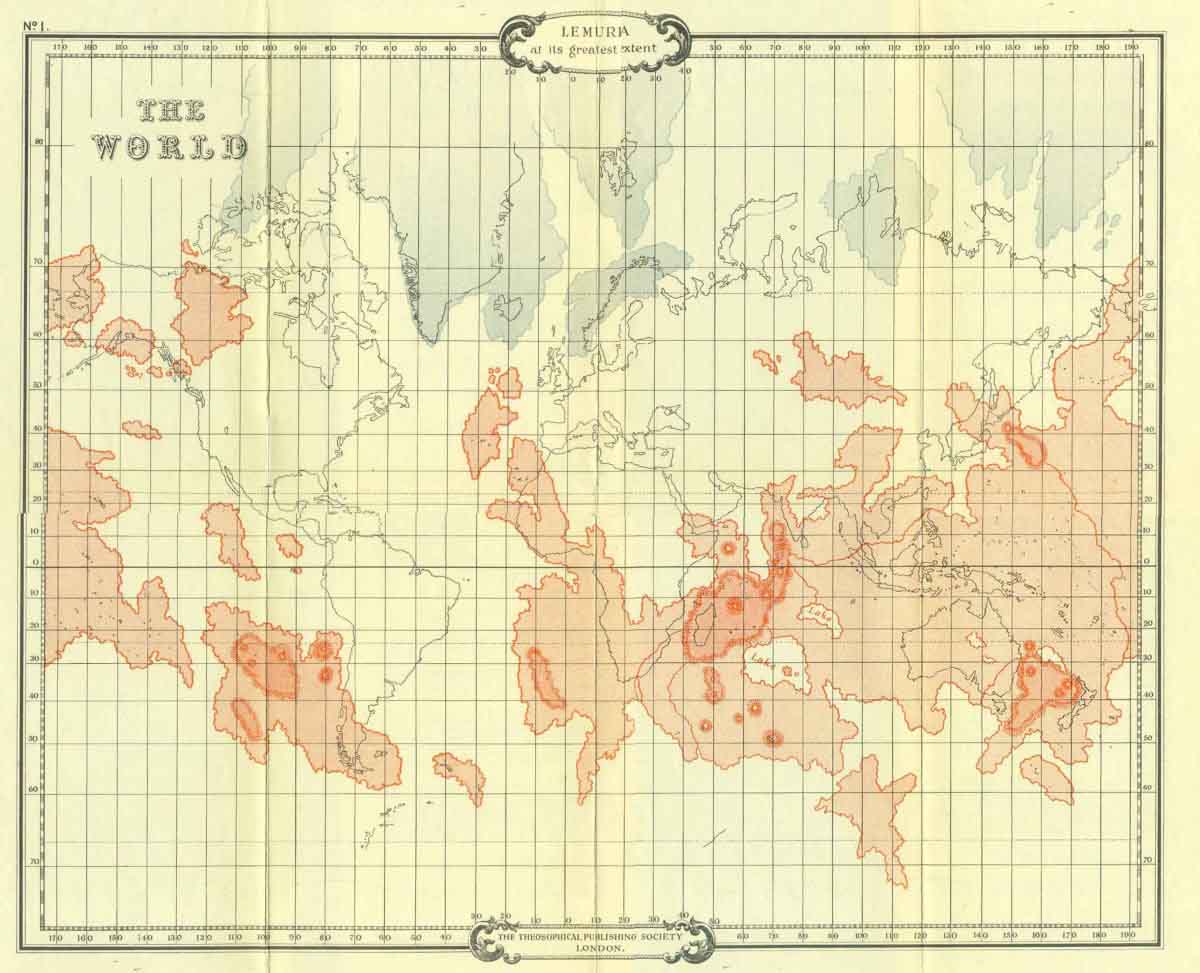
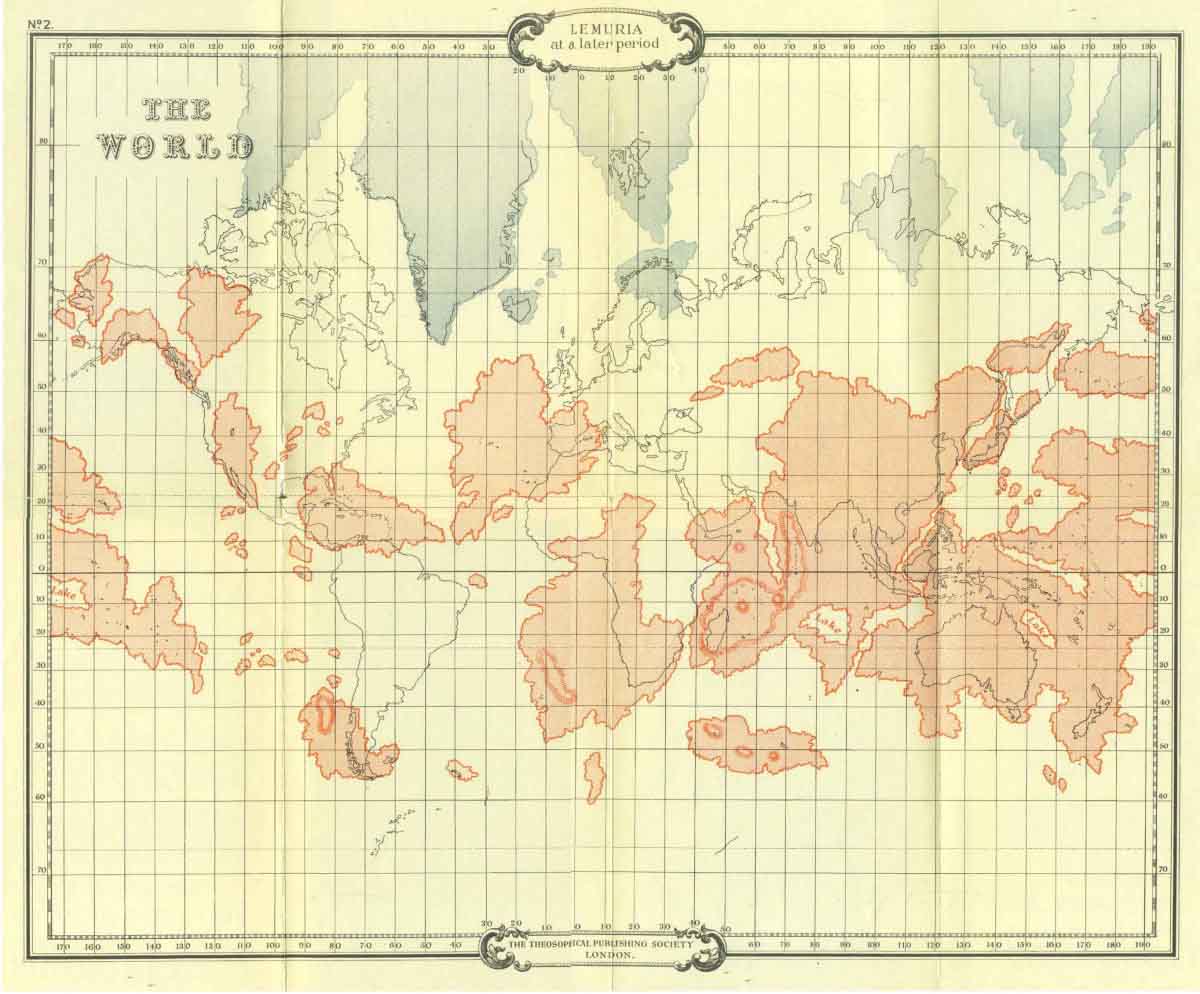
The further evidence we have with regard to Lemuria and its inhabitants has been obtained from the same source and in the same manner as that which resulted in the writing of the Story of Atlantis. In this case also the author has been privileged to obtain copies of two maps, one representing Lemuria (and the adjoining lands) during the period of that continent's greatest expansion, the other exhibiting its outlines after its dismemberment by great catastrophes, but long before its final destruction.

It was never professed that the maps of Atlantis were correct to a single degreeof latitude, or longitude, but, with the far greater difficulty of obtaining the information in the present case, it must be stated that still less must these maps of Lemuria be taken as absolutely accurate. In the former case there was a globe, a good bas-relief in terra-cotta, and a well-preserved map on parchment, or skin of some sort, to copy from. In the present case there was only a broken terra-cotta model and a very badly preserved and crumpled map, so that the difficulty of carrying back the remembrance of all the details, and consequently of reproducing exact copies, has been far greater.

We were told that it was by mighty Adepts in the days of Atlantis that the Atlantean maps were produced, but we are not aware whether the Lemurian maps were fashioned by some of the divine instructors in the days when Lemuria still existed, or in still later days of the Atlantean epoch.

But while guarding against over-confidence in the absolute accuracy of the maps in question, the transcriber of the archaic originals believes that they may in all important particulars, e taken as approximately correct.


Footnotes

12:1 Dr. G. Hartlaub "On the Avifauna of Madagascar and the Mascarene Islands," see "The Ibis," a Quarterly journal of Ornithology. Fourth Series, Vol. i., 1877, p. 334.


The Lost Lemuria: The Lost Lemuria: Evidence supplied by Geology and by the relative distribution of living and extinct Animals and Plants.

THE LOST LEMURIA

BY W. SCOTT-ELLIOT

THE THEOSOPHICAL PUBLISHING HOUSE, LTD.; LONDON

[1904]


Evidence supplied by Geology and by the relative distribution of living and extinct Animals and Plants.

It is generally recognised by science that what is now dry land, on the surface of our globe, was once the ocean floor, and that what is now the ocean floor was once dry land. Geologists have in some cases been able to specify the exact portions of the earth's surface where these subsidences and upheavals have taken place, and although the lost continent of Atlantis has so far received scant recognition from the world of science, the general concensus of opinion has for long pointed to the existence, at some prehistoric time, of a vast southern continent to which the name of Lemuria has been assigned.

"The history of the earth's development shows us that the distribution of land and water on its surface is ever and continually changing. In consequence of geological changes of the earth's crust, elevationsand depressionsof the ground take place everywhere, sometimes more strongly marked in one place, sometimes in another. Even if they happen so slowly that in the course of centuries the seashore rises or sinks only a few inches, or even only a few lines, still they nevertheless effect great results in the course of long periods of time. And long--immeasurably long--periods of time have not been wanting in the earth's history. During the course of many millions of years, ever since organic life existed on the earth, land and water have perpetually struggled for supremacy. Continents and islands have sunk into the sea, and new ones have arisen out of its bosom. Lakes and seas have been slowly raised and dried up, and new water basins have arisen by the sinking of the ground. Peninsulas have become islands by the narrow neck of land which connected them with the mainland sinking into the water. The islands of an archipelago have become the peaks of a continuous chain of mountains by the whole floor of their sea being considerably raised.

"Thus the Mediterranean at one time was an inland sea, when in the place of the Straits of Gibraltar, an isthmus connected Africa with Spain. England even during the more recent history of the earth, when man already existed, has repeatedly been connected with the European continent and been repeatedly separated from it. Nay, even Europe and North America have been directly connected. The South Sea at one time formed a large Pacific Continent, and the numerous little islands which now lie scattered in it were simply the highest peaks of the mountains covering that continent. The Indian Ocean formed a continent which extended from the Sunda Islands along the southern coast of Asia to the east coast of Africa. This large continent of former times Sclater, an Englishman, has called Lemuria, from the monkey-like animals which inhabited it, and it is at the same time of great importance from being the probable cradle of the human race, which in all likelihood here first developed out of anthropoid apes. 1 The important proof which Alfred Wallace has furnished, by the help of chorological facts, that the present Malayan Archipelago consists in reality of two completely different divisions, is particularly interesting. The western division, the Indo-Malayan Archipelago, comprising the large islands of Borneo, Java and Sumatra, was formerly connected by Malacca with the Asiatic continent, and probably also with the Lemurian continent just mentioned. The eastern division on the other hand, the Austro-Malayan Archipelago, comprising Celebes, the Moluccas, New Guinea, Solomon's Islands, etc., was formerly directly connected with Australia. Both divisions were formerly two continents separated by a strait, but they have now for the most part sunk below the level of the sea. Wallace, solely on the ground of his accurate chorological observations, has been able in the most accurate manner to determine the position of this former strait, the south end of which passes between Balij and Lombok.

"Thus, ever since liquid water existed on the earth, the boundaries of water and land have eternally changed, and we may assert that the outlines of continents and islands have never remained for an hour, nay, even for a minute, exactly the same. For the waves eternally and perpetually break on the edge of the coast, and whatever the land in these places loses in extent, it gains in other places by the accumulation of mud, which condenses into solid stone and again rises above the level of the sea as new land. Nothing can be more erroneous than the idea of a firm and unchangeable outline of our continents, such as is impressed upon us in early youth by defective lessons on geography, which are devoid of a geological basis." 1

The name Lemuria, as above stated, was originally adopted by Mr. Sclater in recognition of the fact that it was probably on this continent that animals of the Lemuroid type were developed.

"This," writes A. R. Wallace, "is undoubtedly a legitimate and highly probable supposition, and it is an example of the way in which a study of the geographical distribution of animals may enable us to reconstruct the geography of a bygone age. . . .

It [this continent] represents what was probably a primary zoological region in some past geological epoch; but what that epoch was and what were the limits of the region in question, we are quite unable to say. If we are to suppose that it comprised the whole area now inhabited by Lemuroid animals, we must make it extend from West Africa to Burmah, South China and Celebes, an area which it possibly did once occupy." 1

"We have already had occasion," he elsewhere writes, "to refer to an ancient connection between this sub-region (the Ethiopian) and Madagascar, in order to explain the distribution of the Lemurine type, and some other curious affinities between the two countries. This view is supported by the geology of India, which shows us Ceylon and South India consisting mainly of granite and old-metamorphic rocks, while the greater part of the peninsula is of tertiary formation, with a few isolated patches of secondary rocks. It is evident, therefore, that during much of the tertiary period, 2 Ceylon and South India were bounded on the north by a considerable extent of sea, and probably formed part of an extensive Southern Continent or great island. The very numerous and remarkable cases of affinity with Malaya, require, however, some closer approximation with these islands, which probably occurred at a later period. When, still later, the great plains and tablelands of Hindostan were formed, and a permanent land communication effected with the rich and highly developed Himalo-Chinese fauna, a rapid immigration of new types took place, and many of the less specialised forms of mammalia and birds became extinct. Among reptiles and insects the competition was less severe, or the older forms were too well adapted to local conditions to be expelled; so that it is among these groups alone that we find any considerable number of what are probably the remains of the ancient fauna of a now submerged Southern Continent." 1

After stating that during the whole of the tertiary and perhaps during much of the secondary periods, the great land masses of the earth were probably situated in the Northern Hemisphere, Wallace proceeds, "In the Southern Hemisphere there appear to have been three considerable and very ancient land masses, varying in extent from time to time, but always keeping distinct from each other, and represented more or less completely by Australia, South Africa and South America of our time. Into these flowed successive waves of life as they each in turn became temporarily united with some part of the Northern land." 2

Although, apparently in vindication of some conclusions of his which had been criticised by Dr. Hartlaub, Wallace subsequently denied the necessity of postulating the existence of such a continent, his general recognition of the facts of subsidences and upheavals of great portions of the earth's surface, as well as the inferences which he draws from the acknowledged relations of living and extinct faunas as above stated, remain of course unaltered.

The following extracts from Mr. H. F. Blandford's most interesting paper read before a meeting of the Geological Society deals with the subject in still greater detail 3 :-- "The affinities between the fossils of both animals and plants of the Beaufort group of Africa and those of the Indian Panchets and Kathmis are such as to suggest the former existence of a land connexion between the two areas. But the resemblance of the African and Indian fossil faunas does not cease with Permian and Triassic times. The plant beds of the Uitenhage group have furnished eleven forms of plants, two of which Mr. Tate has identified with Indian Rájmahál plants. The Indian Jurassic fossils have yet to be described (with a few exceptions), but it has been stated that Dr. Stoliezka was much struck with the affinities of certain of the Cutch fossils to African forms; and Dr. Stoliezka and Mr. Griesbach have shown that of the Cretaceous fossils of the Umtafuni river in Natal, the majority (22 out of 35 described forms) are identical with species from Southern India. Now the plant-bearing series of India and the Karoo and part of the Uitenhage formation of Africa are in all probability of fresh-water origin, both indicating the existence of a large land area around, from the waste of which these deposits are derived. Was this land continuous between the two regions? And is there anything in the present physical geography of the Indian Ocean which would suggest its probable position? Further, what was the connexion between this land and Australia which we must equally assume to have existed in Permian times? And, lastly, are there any peculiarities in the existing fauna and flora of India, Africa and the intervening islands which would lend support to the idea of a former connexion more direct than that which now exists between Africa and South India and the Malay peninsula? The speculation here put forward is no new one. It has long been a subject of thought in the minds of some Indian and European naturalists, among the former of whom I may mention my brother [Mr. Blandford] and Dr. Stoliezka, their speculations being grounded on the relationship and partial density of the faunas and floras of past times, not less than on that existing community of forms which has led Mr. Andrew Murray, Mr. Searles, V. Wood, jun., and Professor Huxley to infer the existence of a Miocene continent occupying a part of the Indian Ocean. Indeed, all that I can pretend to aim at in this paper is to endeavour to give some additional definition and extension to the conception of its geological aspect.

"With regard to the geographical evidence, a glance at the map will show that from the neighbourhood of the West Coast of India to that of the Seychelles, Madagascar, and the Mauritius, extends a line of coral atolls and banks, including Adas bank, the Laccadives, Maldives, the Chagos group and the Sava de Mulha, all indicating the existence of a submerged mountain range or ranges. The Seychelles, too, are mentioned by Mr. Darwin as rising from an extensive and tolerably level bank having a depth of between 30 and 40 fathoms; so that, although now partly encircled by fringing reefs, they may be regarded as a virtual extension of the same submerged axis. Further west the Cosmoledo and Comoro Islands consist of atolls and islands surrounded by barrier reefs; and these bring us pretty close to the present shores of Africa and Madagascar. It seems at least probable that in this chain of atolls, banks, and barrier reefs we have indicated the position of an ancient mountain chain, which possibly formed the back-bone of a tract of later Palæozoic Mesozoic, and early Tertiary land, being related to it much as the Alpine and Himálayan system is to the Europæo-Asiatic continent, and the Rocky Mountains and Andes to the two Americas. As it is desirable to designate this Mesozoic land by a name, I would propose that of Indo-Oceana. [The name given to it by Mr. Sclater, viz., Lemuria, is, however, the one which has been most generally adopted.] Professor Huxley has suggested on palæontological grounds that a land connexion existed in this region (or rather between Abyssinia and India) during the Miocene epoch. From what has been said above it will be seen that I infer its existence from a far earlier date. 1 With regard to its depression, the only present evidence relates to its northern extremity, and shows that it was in this region, later than the great trap-flows of the Dakhan. These enormous sheets of volcanic rock are remarkably horizontal to the east of the Gháts and the Sakyádri range, but to the west of this they begin to dip seawards, so that the island of Bombay is composed of the higher parts of the formation. This indicates only that the depression to the westward has taken place in Tertiary times; and to that extent Professor Huxley's inference, that it was after the Miocene period, is quite consistent with the geological evidence."

After proceeding at some length to instance the close relationship of many of the fauna in the lands under consideration (Lion, Hyæna, Jackal, Leopard, Antelope, Gazelle, Sand-grouse, Indian Bustard, many Land Molusca, and notably the Lemur and the Scaly Anteater) the writer proceeds as follows:--

"Palæontology, physical geography and geology, equally with the ascertained distribution of living animals and plants, offer thus their concurrent testimony to the former close connexion of Africa and India, including the tropical islands of the Indian Ocean. This Indo-Oceanic land appears to have existed from at least early Permian times, probably (as Professor Huxley has pointed out) up to the close of the Miocene epoch; 2 and South Africa and Peninsular India are the existing remnants of that ancient land. It may not have been absolutely continuous during the whole of this long period. Indeed, the Cretaceous rocks of Southern India and Southern Africa, and the marine Jurassic beds of the same regions, Evidence that some portions of it were, for longer or shorter periods, invaded by the sea; but any break of continuity was probably not prolonged; for Mr. Wallace's investigations in the Eastern Archipelago have shown how narrow a sea may offer an insuperable barrier to the migration of land animals. In Palæozoic times this land must have been connected with Australia, and in Tertiary times with Malayana, since the Malayan forms with African alliances are in several cases distinct from those of India. We know as yet too little of the geology of the eastern peninsula to say from what epoch dates its connexion with Indo-Oceanic land. Mr. Theobald has ascertained the existence of Triassic, Cretaceous, and Nummulitic rocks in the Arabian coast range; and Carboniferous limestone is known to occur from Moulmein southward, while the range east of the Irrawadi is formed of younger Tertiary rocks. From this it would appear that a considerable part of the Malay peninsula must have been occupied by the sea during the greater part of the Mesozoic and Eocene periods. Plant-bearing rocks of Rániganj age have been identified as forming the outer spurs of the Sikkim Himálaya; the ancient land must therefore have extended some distance to the north of the present Gangetic delta. Coal both of Cretaceous and Tertiary age occurs in the Khasi hills, and also in Upper Assam, but in both cases associated with marine beds; so that it would appear that in this region the boundaries of land and sea oscillated somewhat during Cretaceous and Eocene times. To the north-west of India the existence of great formations of Cretaceous and Nummulitic age, stretching far through Baluchistán and Persia, and entering into the structure of the north-west Himálaya, Evidence that in the later Mesozoic and Eocene ages India had no direct communication with western Asia; while the Jurassic rocks of Cutch, the Salt range, and the northern Himálaya, show that in the preceding period the sea covered a large part of the present Indus basin; and the Triassic, Carboniferous, and still more recent marine formations of the Himálaya, indicate that from very early times till the upheaval of that great chain, much of its present site was for ages covered by the sea.

"To sum up the views advanced in this paper.

"1st. The plant-bearing series of India ranges from early Permian to the latest Jurassic times, indicating (except in a few cases and locally) the uninterrupted continuity of land and fresh water conditions. These may have prevailed from much earlier times.

"2nd. In the early Permian, as in the Postpliocene age, a cold climate prevailed down to low latitudes, and I am inclined to believe in both hemispheres simultaneously. With the decrease of cold the flora and reptilian fauna of Permian times were diffused to Africa, India, and possibly Australia; or the flora may have existed in Australia somewhat earlier, and have been diffused thence.

"3rd. India, South Africa and Australia were connected by an Indo-Oceanic Continent in the Permian epoch; and the two former countries remained connected (with at the utmost only short interruptions) up to the end of the Miocene period. During the latter part of the time this land was also connected with Malayana.

"4th. In common with some previous writers, I consider that the position of this land was defined by the range of coral reefs and banks that now exist between the Arabian sea and East Africa.

"5th. Up to the end of the Nummulitic epoch no direct connexion (except possibly for short periods) existed between India and Western Asia."

In the discussion which followed the reading of the paper, Professor Ramsay "agreed with the author in the belief in the junction of Africa with India and Australia in geological times."

Mr. Woodward "was pleased to find that the author had added further evidence, derived from the fossil flora of the mesozoic series of India, in corroboration of the views of Huxley, Sclater and others as to the former existence of an old submerged continent ('Lemuria') which Darwin's researches on coral reefs had long since foreshadowed."

"Of the five now existing continents," writes Ernst Haeckel, in his great work "The History of Creation," 1 "neither Australia, nor America, nor Europe can have been this primæval home [of man], or the so-called 'Paradise,' the 'cradle of the human race.' Most circumstances indicate Southern Asia as the locality in question. Besides Southern Asia, the only other of the now existing continents which might be viewed in this light is Africa. But there are a number of circumstances (especially chorological facts) which suggest that the primeval home of man was a continent now sunk below the surface of the Indian Ocean, which extended along the south of Asia, as it is at present (and probably in direct connection with it), towards the east, as far as Further India and the Sunda Islands; towards the west, as far as Madagascar and the south-eastern shores of Africa. We have already mentioned that many facts in animal and vegetable geography render the former existence of such a South Indian continent very probable. Sclater has given this continent the name of Lemuria, from the semi-apes which were characteristic of it. By assuming this Lemuria to have been man's primæval home, we greatly facilitate the explanation of the geographical distribution of the human species by migration."

In a subsequent work, "The Pedigree of Man," Haeckel asserts the existence of Lemuria at some early epoch of the earth's history as an acknowledged fact.

The following quotation from Dr. Hartlaub's writings may bring to a close this portion of the evidence in favour of the existence of the lost Lemuria 1 :--

"Five and thirty years ago, Isidore Geoffroy St. Hilaire remarked that, if one had to classify the Island of Madagascar exclusively on zoological considerations, and without reference to its geographical situation, it could be shown to be neither Asiatic nor African, but quite different from either, and almost a fourth continent. And this fourth continent could be further Evidenced to be, as regards its fauna, much more different from Africa, which lies so near to it, than from India which is so far away. With these words the correctness and pregnancy of which later investigations tend to bring into their full light, the French naturalist first stated the interesting problem for the solution of which an hypothesis based on scientific knowledge has recently been propounded, for this fourth continent of Isidore Geoffroy is Sclater's 'Lemuria'--that sunken land which, containing parts of Africa, must have extended far eastwards over Southern India and Ceylon, and the highest points of which we recognise in the volcanic peaks of Bourbon and Mauritius, and in the central range of Madagascar itself-the last resorts of the almost extinct Lemurine race which formerly peopled it."


Footnotes

2:1 Haeckel is correct enough in his surmise that Lemuria was the cradle of the human race as it now exists, but it was not out of Anthropoid apes that mankind developed. A reference will be made later on to the position in nature which the Anthropoid apes really occupy.
3:1 Ernst Haeckel's "Hist. of Creation," 2nd ed., 1876, Vol. I., pp. 360-62.
4:1 Alfred Russell Wallace's "The Geographical Distribution of Animals--with a study of the relations of living and extinct Faunas as elucidating the past changes of the Earth's Surface." London: Macmillan & Co., 1876. Vol. I., pp. 76-7.
4:2 Ceylon and South India, it is true, have been bounded on the north by a considerable extent of sea, but that was at a much earlier date than the Tertiary period.
5:1 Wallace's "Geographical Distribution, etc." Vol. I, pp. 328-9.
5:2 Wallace's "Geographical Distribution, etc.," Vol. ii., p. 155.
5:3 H. F. Blandford "On the age and correlations of the Plant-bearing series of India and the former existence of an Indo-Oceanic Continent," see Quarterly journal of the Geological Society, Vol. xxxi., 1875, pp. 534-540.
8:1 A reference to the maps will show that Mr. Blandford's estimate of date is the more correct of the two.
8:2 Parts of the continent of course endured, but the dismemberment of Lemuria is said to have taken place before the beginning of the Eocene Age.
11:1 Vol. ii., pp. 325-6.


The Lost Lemuria: Maps

THE LOST LEMURIA

BY W. SCOTT-ELLIOT

THE THEOSOPHICAL PUBLISHING HOUSE, LTD.; LONDON

[1904]


Theosophical Maps of Lemuria

Map 1: Lemuria at its Greatest Extent
Click to enlarge
Map 1: Lemuria at its Greatest Extent

Map 2: Lemuria at a Later Period
Click to enlarge
Map 2: Lemuria at a Later Period


Volume 2 Appendix

COMPENDIUM OF WORLD HISTORY

VOLUME 2

A Dissertation Presented to The Faculty of the Ambassador College Graduate School of Education In Partial Fulfillment of the Requirements for the Degree Doctor of Philosophy

by Herman L. Hoeh

1963 1966, 1969 Edition

APPENDIX A

THE ENIGMA OF DYNASTY I AND II OF KISH RESOLVED

The lengths of reigns assigned to the rulers of Dynasties I and II of Kish are clearly not the true lengths of reign. They are all too long. Yet they cannot be explained merely by scribal errors. The figures are intentionally long.

The Babylonian priestly scribes at an early period intentionally lengthened the original figures to make Babylon excessively ancient.

The question is: Can the true lengths of reign still be deduced from the figures now preserved? The answer is Yes!

What the Babylonians did was very clever. To preserve the original figures which they had in their possession -- and yet hide them -- they resorted to a clever mathematical trick.

To understand, let's look at the Sumerian and Babylonian method of numbering. Today we are familiar with the use of decimals -- multiples of ten. But we are generally unfamiliar with the Babylonian use of multiples of sixes and sixties. Samuel Kramer explains it for laymen in 'The Sumerians, Their History, Culture and Character,' p. 92. To express the number 60, for example, the Sumerians used a particular symbol. But to express 600 they used another symbol, not 10 x 60. To express 3,600, they used another symbol, not 6 x 600.

Now what the clever priest-kings did was this: They took for example, a man whose length of reign was 14 years and altered the figures the following way. They multiplied the 4, the first figure to the left of the decimal point by 60. The result was 240. Then they multiplied the 1, the second figure to the left of the decimal point by 600. The result was 1 x 600 + 4 x 60 = 840. By working back from the expanded figures now preserved, it is possible to determine the real lengths of reigns of the priest-kings of Kish who were elected to the office. The Dynasty, it should be noted, is placed before that of Erech. It indicates that events which led to the establishment of Nimrod's political government in 2254, began two years earlier in a religious revolt that expressed itself in the building of the Tower of Babel in 2256.

Rulers of Dynasty II of Kish -- Priest-Kings Length of Reign from King List Calculation of True Reign Actual Reign
Su- more than 201, not more than 205 0 x 600 + 3 x 60 = 3 yrs. + mos
Dadasig more than 1785, not more than 1789 2 x 600 + 9 x 60 = 29 yrs.+ mos
Mamagal 420 0 x 600 + 7 x 60 = 7 yrs
Kalbum, son of Mamagal. 132 0 x 600 + 2 x 60 = 2 yrs. + mos
Tuge 360 0 x 600 + 6 x 60 = 6 yrs.
Mennumna 180 0 x 600 + 3 x 60 = 3 yrs.
Lugalmu 420 0 x 600 + 7 x 60 = 7 yrs.
Ibbi-Ea 290 0 x 600 + 4 x 60 = 4 yrs. + mos.

Eight kings are said to have reigned 3792 years; the correct total is given in the Document L1 (see p. 97 of Jacobsen's 'Sumerian King List'). For all other figures, see pp. 328-329 of S. N. Kramer's, 'The Sumerians, their History, Culture and Character.'

Rulers of Dynasty II of Kish Actual Length of Reign Dates of Reign
Su- 3 1809-1806
Dadasig 29 1806-1777
Mamagal 7 1777-1770
Kalbum, son of Mamagal 2 1770-1768
Tuge 6 1768-1762
Mennumna 3 1762-1759
Lugalmu 7 1759-1752
Ibbi-Ea 4 1752-1748


Rulers of Dynasty I of Kish -- Priest-Kings Length of Reign from King List Calculation of True Reign Actual Reign
Gaur 1200 2 x 600 + 0 x 60 = 20 yrs.
Gulla-Nidaba-annapad 960 1 x 600 + 6 x 60 = 16 yrs.
Pala-kinatim 900 1 x 600 + 5 x 60 = 15 yrs.
Nangishlishma and Bahina 6960 1 x 3600 + 5 x 600 + 6 x 60 = 156 yrs.
Buanum 840 1 x 600 + 4 x 60 = 14 yrs.
Kalibum 960 1 x 600 + 6 x 60 = 16 yrs.
Galumum 840 1 x 600 + 4 x 60 = 14 yrs.
Zukakip 900 1 x 600 + 5 x 60 = 15 yrs.
Atab 600 1 x 600 + 0 x 60 = 10 yrs.
Mashda 840 1 x 600 + 4 x 60 = 14 yrs.
Arurim, son ofMashda. 720 1 x 600 + 2 x 60 = . 12 yrs
Etana, the shepherd, who ascended to heaven, who MADE FIRM ALL THE LANDS. 1560 2 x 600 + 6 x 60 = 26 yrs.
Balih 400 0 x 600 + 6 x 60 = 6 yrs.+ mos.
Enmenunna 660 1 x 600 + 1 x 60 = 11 yrs.
Melan-Kish, son of Enmenunna. 900 1 x 600 + 5 x 60 = 15 yrs.
Barsalnunna, son of Enmenunna. 1200 2 x 600 + 0 x 60 = 20 yrs.
Meszemug, son of Barsalnunna. 140 0 x 600 + 2 x 60 = 2 yrs.+ mos.
Tizkar, son of Meszamug. 305 0 x 600 + 5 x 60 = 5 yrs.+ mos.
Ilku 900 1 x 600 + 3 x 60 = 15 yrs.
Iltasadum 1200 2 x 600 + 0 x 60 = 20 yrs.
Enmebaraggesi, who smote the weapons of the land of Elam. 900 1 x 600 + 5 x 60 = 15 yrs.
Agga, son of Enmebaraggesi. 625 1 x 600 + 0 x 60 = 10 yrs.+ mos.
'Twenty-three kings reigned years.' 24,510 6 x 3600 + 4 x 600 + 8 x 60 648 yrs. + mos.


Rulers of Dynasty I of Kish -- Priest-Kings Actual Length of Reign Dates of

Reign

Gaur Reckoned from commencement of building Tower of Babel 20 2256-2236
Gulla-Nidaba-annapad 16 2236-2220
Pala-kinatim 15 2220-2205
Nangishlishma and Bahina 156 2205-2049
Buanum 14 2049-2035
Kalibum 16 2035-2019
Galumum 14 2019-2005
Zukakip 15 2005-1990
Atab 10 1990-1980
Mashda 14 1980-1966
Arurim, son of Mashda. 12 1966-1954
Etana, the shepherd. 26 1954-1928
Balih, son of Etana. 6 1928-1922
Enmenunna 11 1922-1911
Melan-Kish, son of Enmenunna. 15 1911-1896
Barsalnunna, son of Enmenunna. 20 1896-1876
Meszamug, son of Barsalnunna. 2 1876-1874
Tizkar, son of Meszamug. 5 1874-1869
Ilku 15 1869-1854
Iltasadum 20 1854-1834
Enmebaraggesi, who smote the weapons of the land of Elam. 15 1834-1819
Agga, son of Enmebaraggesi. 10 1819-1809

APPENDIX B

ETHIOPIAN KING LIST

The following list of rulers is taken from 'In the Country of the Blue Nile' by C. F. Rey, London, 1927 (Appendix A). It is exactly correct in the original archives. The dates are stated in years according to the Gregorian calendar. They begin in September -- hence autumn to autumn reckoning. This list of rulers is as valuable as the Chinese Shoo King.

AGDAZYAN DYNASTY OF THE POSTERITY OF THE KINGDOM OF JOCTAN.

Ruler Length of Reign Dates
1. Akbunas Saba I. Saba is the Arabian Abd Shems, son of Jerah (Yarab), the son of Joktan. 55 1978-1923
2. Nakehte Kalnis. Kalnis is Kahlan of Arabian tradition, the son of Abd Shems. 40 1923-1883
3. Kasiyope (queen) 19 1883-1864
4. Sabe I 15 1864-1849
5. Etiyopus I 56 1849-1793
6. Lakndun Nowarari 30 1793-1763
7. Tutimheb 20 1763-I743
8. Herhator I 20 1743-1723
9. Etiyopus II 30 1723-1693
10. Senuka I 17 1693-1676
11. Bonu I 8 1676-1668
12. Mumazes (queen) 4 1668-1664
13. Aruas, daughter of Mumazes. 7 months 1664
14. Amen Asro I 30 1664-1634
15. Ori (or Aram) II 30 1634-1604
16. Piori I 15 1604-1589
17. Amen Emhat I 40 1589-1549
18. Tsawi 15 1549-1534
19. Aktissanis 10 1534-1524
20. Mandes 17 1524-1507
21. Protawos 33 1507-1474
22. Amoy 21 1474-1453
23. Konsi Hendawi 5 1453-1448
24. Bonu II 2 1448-1446
25. Sebi III (Kefe) 15 1446-1431
26. Djagons 20 1431-1411
27. Senuka II 10 1411-1401
28. Angabo I (Zaka Laarwe) 50 1401-1351
29. Miamur 2 days 1351
30. Helena (queen) 11 1351-1340
31. Zagdur I 40 1340-1300
32. Her Hator II 30 1300-1270
33. Her Hator (Za Sagado) III 1 1270-1269
34. Akate (Za Sagado) IV 20 1269-1249
35. Titon Satiyo 10 1249-1239
36. Hermantu I 5 months 1239
37. Amen Emhat II 5 1239-1234
38. Konsab I 5 1234-1229
39. Sannib II 5 1229-1224
40. Sanuka III 5 1224-1219
41. Angabo II 40 1219-1179
42. Amen Astate 30 1179-1149
43. Herhor 16 1149-1133
44. Wiyankihi I 9 1133-1124
45. Pinotsem I 17 1124-1107
46. Pinotsem II 41 1107-1066
47. Massaherta 16 1066-1050
48. Ramenkoperm 14 1050-1036
49. Pinotsem III 7 1036-1029
50. Sabi IV 10 1029-1019
51. Tawasaya Dews 13 1019-1006
52. Makeda 31 1006- 975

The year 975 is the year of death of Hatshepsowe, who is Makeda.

Her daughter married Solomon, Their son, Menelik, was adopted by Makeda as her heir since she had no son of her own. Menelik thus was of the line of Sheba, of Joktan and Peleg -- which explains the racial intermixture of the Ethiopian royalty.

Fifty-two sovereigns reigned over Ethiopia before the advent of Mehelik I.

DYNASTY OF MENELIK I.

Ruler Length of Reign Dates
1. Menelik I 25 975-950
2. Hanyon 1 950-949
3. Sera I (Tomai). This is Zerah the Ethiopian -- here expressly recorded by name in the history of Abyssinia. 26 949-923
4. Amen Hotep Zagdur 31 923-892
5. Aksumay Ramissu 20 892-872
6. Awseyo Sera II 38 872-834
7. Tawasya II 21 834-813
8. Abralyus Wiyankihi II 32 813-781
9. Aksumay Warada Tsahay 23 781-758
10. Kashta Hanyon 13 758-745
11. Sabaka II 12 745-733
12. Nicauta Kandake (queen) 10 733-723
13. Tsawi Terhak Warada Nsgash 49 723-674
14. Erda Amen Awseya, or Urdemane of Assyrian records of Assurbanipal 6 674-668
15. Gasiyo Eskikatir -- 668
16. Nuatmeawn (Tanautamun) 4 668-664
17. Tomadyon Piyankihi III 12 664-652
18. Amen Asero 16 652-636
19. Piyankihi IV, or Awtet 34 636-602
20. Zaware Nebret Aspurta 41 602-561
21. Saifay Harsiataw II 12 561-549
22. Ramhay Nastossanan 4 549-535
23. Handu Wuha Abra 11 535-524
24. Safelya Sabakon 31 524-493
25. Agalbus Sepekos 22 493-471
26. Psmenit Waradanegash 21 471-450
27. Awseya Tarakos 12 450-438
28. Kanaz Psmis, son of Awseya Tarakos 13 438-425
29. Apras 10 425-415
30. Kashta Walda Ahuhu 20 415-395
31. Elalion Taake 10 395-385
32. Atserk Amen III 10 385-375
33. Atserk Amen IV 10 375-365
34. Hadina (queen) 10 365-355
35. Atserk Amen V 10 355-345
36. Atserk Amen VI 10 345-335
37. Nikawla Kandake (queen) 10 335-325
38. Bassyo 7 325-318
39. Akawsis Kandake III (queen) 10 318-308
40. Arkamen II 10 308-298
41. Awtet Arawura 10 298-288
42. Kolas II (Kaletro) 10 288-278
43. Zawre Nebrat 16 278-262
44. Stiyo 14 262-248
45. Safay 13 248-235
46. Nikosis Kandake IV (queen) 10 235-225
47. Ramhay Arkamen IV 10 225-215
48. Feliya Hernekhit 15 215-200
49. Hende Awkerara 20 200-180
50. Agabu Baseheran 10 180-170
51. Sulay Kawswmenun 20 170-150
52. Messelme Kerarmer 8 150-142
53. Nagey Bsente 10 142-132
54. Etbenukewer 10 132-122
55. Safeliya Abramen 20 122-102
56. Sanay 10 102- 92
57. Awsena (queen) 11 92- 81
58. Dawit II 10 81- 71
59. Aglbul 8 71- 63
60. Bawawl 10 63- 53
61. Barawas 10 53- 43
62. Dinedad 10 43- 33
63. Amoy Mahasse 5 33- 28
64. Nicotnis Kandake V 10 28- 18
65. Nalke 5 18- 13
66. Luzay 12 13- 1
67. Bazen 17 B.C. 1- 17 A.D.
Before Christ 119 sovereigns reigned.

THOSE WHO REIGNED AFTER THE BIRTH OF CHRIST.

Ruler Length of Reign Dates
1. Sartu Tsenfa Assegd 21 17- 38
2. Akaptah Tsenfa Ared 8 38- 46
3. Horemtaku 2 46- 48
4. Garsemot Kandake VI. JenDaraba, favourite of Queen Garsemot Kandake, crowned by Gabre Hawariat Kandake, had made a pilgrimage to Jerusalem according to the law of Orit (the ancient law), and on his return Philip the Apostle taught him the gospel, and after he had made him believe the truth he sent him back. 10 48- 58
5. Hatoza Bahr Asaged 28 58- 86
6. Mesenh Germasir 7 86- 93
7. Metwa Germa Asfar 9 93-102
8. Adgale II 10 102-112
9. Agba 1 112-113
10. Serada 16 113-129
11. Malis Alameda 4 129-133
12. Hakabe Nasohi Tsiyon 6 133-139
13. Hakli Sergway 12 139-151
14. Dedme Zaray 10 151-161
15. Awtet 2 161-163
16. Alaly Bagamay 7 163-170
17. Awadu Jan Asagad 30 170-200
18. Zagun Tsion Hegez 5 200-205
19. Rema Tsion Geza 3 205-208
20. Azegan Malbagad 7 208-215
21. Gafale Seb Asagad 1 215-216
22. Tsegay Beze Wark 4 216-220
23. Gaza Agdur 9 220-229
24. Agduba Asgwegwe 8 229-237
25. Dawiza 1 237-238
26. Wakana (queen) 2 days 238
27. Hadawz 4 months 238
28. Ailassan Sagal 3 238-241
29. Asfehi Asfeha 14 241-255
30. Atsgaba Seifa Arad 6 255-261
31. Ayba 17 261-278
32. Tsaham Laknduga 9 278-287
33. Tsegab 10 287-297
34. Tazer 10 297-307
35. Ahywa Sofya (queen) 7 307-314

CHRONOLOGICAL TABLE OF THE CHRISTIAN SOVEREIGNS.

1. Ahywa. Her regnal name was Sofya, and she was the mother of Abreha Atsbeha.
2. Abreha Atsbeha, reigned partly with his mother. 26 314-340
3. Atsbeha, alone. 12 340-352
4. Asfeh Dalz 7 352-359
5. Sahle 14 359-373
6. Arfed Gebra Maskal 4 373-377
7. Adhana I (queen) 5 377-382
8. Riti 1 382-383
9. Asfeh II 1 383-384
10. Atsbeha II 5 384-389
11. Amey 15 389-404
12. Abreha II 7 months 404
13. Ilassahl 2 months 404
14. Elagabaz I 2 404-406
15. Suhal 4 406-410
16. Abreha III 10 410-420
17. Adhana II (queen) 6 420-426
18. Yoab 10 426-436
19. Tsaham I 2 436-438
20. Amey II 1 438-439
21. Sahle Ahzob 2 439-441
22. Tsebah Mahana Kristos 3 441-444
23. Tsaham II 2 444-446
24. Elagabaz II 6 446-452
25. Agabi 1 452-453
26. Lewi 2 453-455
27. Ameda III 3 455-458
28. Armah Dawit 14 458-472
29. Amsi 5 472-477
30. Salayba 9 477-486
31. Alameda 8 486-494
32. Pazena Ezana 7 494-501

Of the posterity of Sofya and Abreha Atsbeha until the reign of Pazena Ezana thirty-one sovereigns reigned over Ethiopia.

DYNASTY OF ATSE (EMPEROR) KALEB UNTIL GEDAJAN.

Ruler Length of Reign Dates
1. Kaleb 30 501-531
2. Za Israel 1 month 531
3. Gabra Maskal 14 531-545
4. Kostantinos 28 545-573
5. Wasan Sagad 15 573-588
6. Fere Sanay 23 588-611
7. Advenz 20 611-631
8. Akala Wedem 8 631-639
9. Germa Asafar 15 639-654
10. Zergaz 10 654-664
11. Dagena Mikael 26 664-690
12. Bahr Ekla 19 690-709
13. Gum 24 709-733
14. Asguagum 5 733-738
15. Latem 16 738-754
16. Talatam 21 754-775
17. Gadagosh 13 775-788
18. Aizar Eskakatir 1/2 day 788
19. Dedem 5 788-793
20, Wededem 10 793-803
21. Wudme Asfare 30 803-833
22. Armah 5 833-838
23. Degennajan 19 838-857
24. Gedajan 1 857-858
25. Gudit 40 858-898
26. Anbase Wedem 20 898-918
27. Del Naad 10 918-928

Twenty-seven sovereigns of the posterity of Kaleb

SOVEREIGNS ISSUED FROM ZAGWE.

Ruler Length of Reign Dates
1. Mara Takla Haymanot, his regnal name was Zagwe. 13 928- 941
2. Tatawdem 40 941- 981
3. Jan Seyum 40 981-1021
4. Germa Seyum 40 1021-1061
5. Yermrhana Kristos 40 1061-1101
6. Kedus Arbe (Samt) 40 1101-1141
7. Lalibala 40 1141-1181
8. Nacuto Laab 40 1181-1221
9. Yatbarak 17 1221-1238
10. Mayari 15 1238-1253
11. Harbay 8 1253-1261

Of the posterity of Mara Takla Haymanot (whose regnal name was Zagwe) until the reign of Harbay eleven sovereigns reigned over Ethiopia.

A JEWISH DYNASTY, WHICH WAS NOT RAISED TO THE THRONE, DURING THE PERIOD OF THE PRECEDING DYNASTY.

1. Mahbara Wedem
2. Agbea Tsyon
3. Tsinfa Arad
4. Nagash Zare
5. Asfeh
6. Yakob
7. Bahr Asagad
8. Edem Asagad

SOVEREIGNS FROM EMPEROR YEKUNO AMLAK, DESCENDED FROM THE ANCIENT REIGNING DYNASTIES.

Ruler Length of Reign Dates
1. Yekuno Amlak 15 1261-1276
2. Yasbeo Tseyon 9 1276-1285
3. Tsenfa Arad 1 1285-1286
4. Hesba Asagad 1 1286-1287
5. Kedme Asagad 1 1287-1288
6. Jan Asagad 1 1288-1289
7. Sabea Asagad 1 1289-1290
8. Wedma Ared 15 1290-1305
9. Amda Tseyon 30 1305-1335
10. Saifa Ared 28 1335-1363
11. Wedma Asfare 10 1363-1373
12. Dawit 30 1373-1403
13. Tewodoros 4 1403-1407
14. Yeshak 15 1407-1422
15. Andreyas 6 months 1422
16. Hesba Nan 4 1422-1426
17. Bedl Nan (6 months with Andreyas & 6 months) 1 1426-1427
18. Amde Tseyon 7 1427-1434
19. Zara Yakob 34 1434-1468
20. Boeda Maryam 10 1468-1478
21. Iskender 16 1478-1494
22. Amda Tseyon 1 1494-1495
23. Naod 13 1495-1508

Of the posterity of Yekuno Amlak up to the reign of Naod 23 sovereigns ruled over Ethiopia.

ELEVATION TO THE THRONE OF ATSE (EMPEROR) LEBNA DENGEL, AND THE INVASION OF ETHIOPIA BY GRAN.

Ruler Length of Reign Dates
1. Lebna Dengel 32 1508-1540
2. Galawdewos 19 1540-1559
3. Minas 4 1559-1563

Fifteen years after Atse (Emperor) Lebna Dengel came to the throne Gran devastated Ethiopia for fifteen years.

THE HOUSE OF GONDAR.

Ruler Length of Reign Dates
1. Sartsa Dengel 34 1563-1597
2. Yakob 9 1597-1606
3. Za Dengel 1 1606-1607
4. Susneyos 28 1607-1635
5. Fasil 35 1635-1670
6. Degu-Johannis 15 1670-1685
7. Adyam Sagad Iyasu 25 1685-1710
8. Takla Haymanot 2 1710-1712
9. Tewoflus 3 1712-1715
10. Yostos 4 1715-1719
11. Dawit 5 1719-1724
12. Bakaffa 9 1724-1733
13. Birhan Sagad Iyasu 24 1733-1757
14. Iyoas 15 1757-1772
15. Johannis . 5 mos. & 5 dys 1772
16. Takla Haymanot 8 1772-1780
17. Solomon 2 1780-1782
18. Takla Giyorgis 5 1782-1787

Of the posterity of Sartsa Dengel up to the reign of King Takla Giyorgis eighteen sovereigns reigned over Ethiopia.

SOVEREIGNS OF ABYSSINIA SUBSEQUENT TO THE FOREGOING LIST

From about 1730 up to the advent of Theodore in 1855 these kings exercised no real power. They were murdered, deposed, restored and driven out again, or treated as nonentities by anyone of the great

Rases or semi-independent kings who were strong enough to maintain themselves against their rivals, such as, for example, Ras Mikael Suhul of Tigre (1730-1780), Ras Guksa of Amhara a Galla (1790-1819), and the son (Ras Marye) and grandson (Ras Ali) of the latter.

In 1813, indeed, no less than six nominal 'Kings of Kings of Ethiopia' were all alive, having been successively turned out of office by others.

The names of all these kings (who were actually raised to the throne) are, however, given below in order to maintain continuity, together with the dates (according to our calendar) of their chequered reigns.

Ruler Length of Reign Dates
1. Yasus 1 1787-1788
2. Takla Haymanot 1 1788-1789
3. Iskias 6 1789-1795
4. Baeda Maryam 2 1795-1797
5. Junus -- 1797
6. Adimo 2 1797-1799
7. Egwala Sion 19 1799-1818
8. Joas 3 1818-1821
9 Gigar 5 1821-1826
10. Baeda Maryam III -- 1826
11. Gigar (again) 4 1826-1830
12. Iyasu IV 2 1830-1832
13. Gabra Kristos -- 1832
14. Sahala Dengel 8 1832-1840
15. Johannes III 1 1840-1841
16. Sahala Dengel (again) At this time the empire was re-established by Theodore. 14 1841-1855
17. Theodore 13 1855-1868
18. John IV 21 1868-1889
19. Menelik II 24 1889-1913
20. Le; Yasu 3 1913-1916
21. Zauditu, empress, and Tafari Makonnen, regent and heir. 14 1916-1930
22. Haile Selassie I, is the title of Tafari Makonnen after Zauditu's death.

Except for period of Italian annexation (1936 1942)

6

33

1930-1936

1941-1974

For purposes of comparison, it should be remembered that the present Abyssinian autumn-to-autumn calendar is seven or eight years behind ours, according to the period of the year. That is, the Ethiopian date differs by eight years from 1st January to 10th September. It differs by seven years from 11th September to 31st December.

Thus the year which the Abyssinians regard as A.D. 1 is for us September A.D. 8 to September A.D. 9.

This difference is not of course exactly the same all the way back throughout the List of Kings, as revisions of the calendar took place at various dates throughout the period. But it is near enough for general comparison.

TRIBE OF POSTERITY OF ORI OR ARAM

An Aramaic royal line spread into Africa, as well as into Shinar and Syria. In Africa, the sons of Aram through Mash (and perhaps Uz also) migrated into Egypt and Ethiopia, mixing with Israel, Cush and the Egyptians.

Ruler Length of Reign Dates
1. Ori or Aram, son of Shem. 60 2222-2162
2. Gariak I. Mash, son of Aram, settled Charax Spasini (see Josephus).

Greek word Charax is translation of Ethiopian Gariak. This Gariak I would appear to be of the family of Mash. These Arameans spread into Africa, just as Cush, north of God's Land (Palestine) are reported in Syria and Mesopotamia.

66 2162-2096
3. Gannkam 83 2096-2013
4. Borsa (queen) 67 2013-1946
5. Gariak II 60 1946-1886
6. Djan I 80 1886-1806
7. Djan II 60 1806-1746
8. Senefrou=Snefru. Job was son-in-law of Snefru. 20 1746-1726
9. Zeenabzamin 58 1726-1668
10. Sahlan 60 1668-1608
11. Elaryan 80 1608-1528
12. Nimroud 60 1528-1468
13. Eylouka (queen) 45 1468-1423
14. Saloug 30 1423-1393
15. Kharid 72 1393-1321
16. Hogeb 100 1321-1221
17. Makaws 70 1221-1151
18. Assa 30 1151-1121
19. Affar 50 1121-1071
20. Milanos 62 1071-1009
21. Soliman Tehagui. Soliman, an elderly man probably in his 90's, died the year in which he received the news of the overthrow of Zerah and the Ethiopians and their allies (937-936). 73 1009- 936
Twenty-one sovereigns of the Tribe of Ori ruled.

THE LINE OF HAM, CUSH AND SABTAH IN NUBIA (THE SUDAN).

Ruler Length of Reign Dates
1. Kam = Ham. Date of Ham is predated to the autumn preceding overthrow of Babel. The Chinese predated to the winter solstice. 78 2255-2177
2. Kout = Cush. Son of Ham. 50 2177-2127
3. Habassi 40 2127-2087
4. Sebtah 30 2087-2057
5. Elektron 30 2057-2027
6. Neber 30 2027-1997
7. Amen I 21 1997-1976
8. Nehasset Nais (queen) 30 1976-1946
9. Horkam 29 1946-1917
10. Saba II 30 1917-1887
11. Sofard 30 1887-1857
12. Askndou 25 1857-1832
13. Hohey 35 1832-1797
14. Adglag 20 1797-1777
15. Adgala 30 1777-1747
16. Lakniduga 25 1747-1722
17. Manturay 35 1722-1687
18. Rakhu 30 1687-1657
19. Sabe I 30 1657-1627
20. Azagan 30 1627-1597
21. Sousel Atozanis 20 1597-1577
22. Amen II 15 1577-1562
23. Ramenpahte 20 1562-1542
24. Wanuna 3 days 1542
25. Piori II, father of the Ethiopian whom Moses married when he overthrew Cush in Nubia.

The daughter of Piori betrayed the city and her father in 1527.

15 1542-1527
Twenty-five sovereigns of the tribe of Kam ruled in the land of Cush.

APPENDIX C

KASHMIR -- CHRONOLOGY FROM THE RAJATARANGINI

The following information is taken from the 'Rajatarangini, a Chronicle of the Kings of Kashmir', by Kalhana, translated by A. Stein, 2 volumes, Westminster, 1900.

Kalhana's account of Kashmir is thorough. The history need not be presented here as it can be found in detail in his chronicle. Modern scholars misunderstand Kalhana's method of using whole calendar years.

Of course, Kalhana added months and days to the whole calendar years in those instances where the exact month and day of a ruler's death was known. But, Kalhana did not intend the months and days to be counted, for they were already included in the first calendar year of the succeeding king.

The first native Kashmir dynasty -- the Gonandiya dynasty -- lasted for 1002 years. It was followed by a usurping dynasty for 192 years. The restored Gonandiya dynasty lasted 588 calendar years. Next, the Karkota dynasty ruled 253 years -- ending in 855 A.D. Working backward we discover that Kalhana began the Gonandiya dynasty of Kashmir in 1181 B.C.

This is a significant date since it corresponds to the end of the first Trojan war and the defeat of the Trojan alliance. Prior to 1181 the land of Kashmir had been part of the Indo-Persian, Assyrian and Trojan alliance against the Greeks. Hence, the beginning of this line of rulers indicates a breakup in the alliance. The Indo-Iranian peoples of Kashmir became independent under their own kings.

GONANDIYA DYNASTY.

Ruler Length of Reign Dates
Gonanda III 35 1181-1146
Vibhisana I 53 1146-1093
Indrajit 35 1093-1058
Ravana 30 1058-1028
Vibhisana II 35 1028- 993
Nara I (Kimnara) 40 993- 953
Siddha 60 953- 893
Utpalaksa 30 893- 863
Hiranyaksa 37 863- 826
Hiranyakula 60 826- 766
Vasukula 60 766- 706
Mihirakula 70 706- 636
Baka 63 636- 573
Ksitinanda 30 573- 543
Vasunanda 52 543- 491
Nara II 60 491- 431
Aksa 60 431- 371
Gopaditya 60 371- 311
Gokarna 57 311- 254
Khinkhila-Narendraditya 36 254- 218
Yudhisthira 39 218- 179

USURPING DYNASTY.

Ruler Length of Reign Dates
Pratapaditya I 32 179- 147
Jalaukas 32 147- 115
Tunjina I 36 115- 79
Vijaya 8 79- 71
Jayendra 37 71- 34
Samdhimati-Aryaraja 47 B.C. 34- 14 A.D.

RESTORED GONANDIYA DYNASTY.

Ruler Length of Reign Dates
Meghavahana 34 14- 48
S'resthasena-Pravarasena I

(Tunjina II)

30 48- 78
Hiranya, with Toramana 30 78- 108
Matrgupta 4 108- 112
Pravarasena II 60 112- 172
Yudhisthira II 39 172- 211
Lahkhana-Narendraditya 13 211- 224
Ranaditya (Tunjina III) 300 224- 524
Vikramaditya 42 524- 566
Baladitya 36 566- 602

THE KARKOTA DYNASTY.

Ruler Length of Reign Dates
Durlabhavardhana-Prajnaditya 36 602- 638
Durlabhaka-Pratapaditya II 50 638- 688
Candrapida-Vajraditya 8 688- 696
Tarapida-Udayeditya 4 696- 700
Muktapida-Lalitaditya 36 700- 736
Kuvalayspida 1 736- 737
Vajraditya-Bappiyaka-Lalitaditya 7 737- 744
Prthivyapida 4 744- 748
Samgramapida I 7 days 748
Jajja 3 748- 751
Jayapida-Vinayaditya 31 751- 782
Lalitapida 12 782- 794
Samgramapida II (Prthivyspida) 7 794- 801
Cippatajayspida-Brhaspati 12 801- 813
Ajitapida 37 813- 850
Anangapida 3 850- 853
Utpalapida 2 853- 855

THE DYNASTY OF UTPALA.

Ruler Length of Reign Dates
Avantivarman 28 855- 883
S'amkaravarman 18 883- 901
Gopalavarman 2 901- 903
Samkata 10 days 903
Sugandha 2 903- 905
Partha 16 905- 921
Nirjitavarman (Pangu) 1 921- 922
Cakravarman 11 922- 933
S'uravarman I 1 933- 934
Partha (restored) 1 934- 935
Cakravarman (restored) -- 935
S'amkaravardhana 1 935- 936
Cakravarman 1 936- 937
Unmattavanti 2 937- 939
S'uravarman II -- 939
Yasaskaradeva 9 939- 948
Varnata 1 day 948
Samgramadeva -- 948
Parvagupta 2 948-950
Ksemagupta 8 950- 958
Abhimanyu 14 958- 972
Nandigupta 1 972- 973
Tribhuvana (gupta) 2 973- 975
Bhimagupta 5 975- 980
Didda 23 980-1003

FIRST LOHARA DYNASTY.

Ruler Length of Reign Dates
Samgramaraja 25 1003-1028
Hariraja 22 days 1028
Ananta 35 1028-1063
Kalasa 26 1063-1089
Utkarsa 22 days 1089
Harsa 12 1089-1101

SECOND LOHARA DYNASTY.

Ruler Length of Reign Dates
Uccala 10 1101-1111
Radda-S'ankharaja 1 day 1111
Salhana 1 1111-1112
Sussala 8 1112-1120
Bhiksacara 1 1120-1121
Sussala (restored) 7 1121-1128
Jayasimha (Simhadeva) Jayasimha was still on the throne when Kalhana completed his history in 1150 A. D. 22 1128

Compendium of World History

COMPENDIUM OF WORLD HISTORY

by Herman L. Hoeh

A Dissertation Presented to The Faculty of the Ambassador College Graduate School of Education In Partial Fulfillment of the Requirements for the Degree Doctor of Philosophy

1963 1966, 1969 Edition


INTRODUCTION

Volume 1 of the COMPENDIUM OF WORLD HISTORY exposed the radical new interpretation of history now taught on all levels of modern education. It revealed the fallacy of the 'historical method.' It explained WHY God is left out of history.

Volume I restored the history of ancient Egypt, of Assyria and Babylonia, of Media and India, of Greece, Ireland and Britain.

Volume 2 completes that restoration. For the first time, in this second volume, the early history of Europe will be made plain. Its connection with the New World, with American Indian civilization, with the early Biblical heroes is an astounding revelation.

Compendium History Vol. 2

COMPENDIUM OF WORLD HISTORY

VOLUME 2

A Dissertation Presented to The Faculty of the Ambassador College Graduate School of Education In Partial Fulfillment of the Requirements for the Degree Doctor of Philosophy

by Herman L. Hoeh

1963 1966, 1969 Edition

TABLE OF CONTENTS

Introduction

Chapter I

Early History of Germany

Antiquity of the German Reich

Germans Shape World Affairs

The Answer Found

Did the Assyrians Invade Europe?

What Did Assyrians Look Like?

Why Germans Call Themselves 'Deutschen'

What Language Did They Speak?

Semitic by Race, Not Language

Chapter II

The Ancient Kings of the Germans

The Early Settlers of Europe

Kings of Ancient Germany

Chapter III

Abraham in Early European History

Europe's Early History Suppressed

Abraham in the Austrian Chronicle

Chapter IV

Jews Gain Power in Danube Civilization

Jewish Kings from Austrian Chronicle

End of Jewish Predominance

Chapter V

The Conquests of Odin and Danish History

What the History of Denmark Reveals

The Genealogy of Dan I

'Hu the Mighty'

The Kings of Denmark

Denmark Enters Roman History

Christianity Introduced on the Throne

Chapter VI

Scotland -- Key to History of New World

What Historians Claim

First Major Settlement

Line of Judah in Scotland

Earliest History of Scotland

Early Line of Scottish Kings

Kings of Cruithne Continued

Chapter VII

They Crossed the Atlantic

The Little Ice Age

Whites Did Not Become Indians

American Indian Tradition

Enter Votan

Early Time of Migration

Chronology of Mexico

The History of Toltecs at Tullan

The City-State of Culhaucan

The Chichimecs at Texcoco

The Aztecs

Chapter VIII

The History of Spain

Only Recently Suppressed

Earliest Kings over the Spanish

Invasion from Africa

Abraham's Children

Chaos in Spain

Time of the Sea Powers

Chapter IX

Italy, Home of Pagan Religion

Italy in the Ancient World

What Italian History Reveals

The History of Etruria

The History of the Latins

Chapter X

The Story of the Peruvian Indians

Modern Scholarship Discarded the Facts

What Archaeologists Found

Illustration from Burma

The Inca Rulers

Chapter XI

Ancient Persia and Turkestan

Early Kings of Persia

The Second Race

The First Race

Turkestan, Turks and Mongols

Ogus Khan

The History of Armenia

Chapter XII

Trojan Migration to France

Trojan Kings of Isauria

Trojan Kings of Sicambria and Pannonia

Kings of Agrippina

Princes of Brabant

Dukes of Brabant

Kings of Frisia

Dukes of Frisia

Second Group of Kings of Frisia

Trojan Kings of the Belgians

Kings of the Celts in Gaul

Chapter XII A

Further Migrations to France

Sicambrian Kings

The Kings of the Franks

Dukes of the East Franks

The Hapsburgs Enter

The Dukes of Gaul

Kings of France

In Retrospect

Chapter XIII

History of Sweden and the Saxons

The Record Speaks

Renewed Migration

Dynasty of Yngling

Dynasty of Stenkil

Saxon History

Chapter XIV

The History of Arabia

Who Were the First Arabs?

The Jorhamites of Hejaz

The Kingdom of Yemen

Arabia's Indian-Ocean Neighbors

Chapter XV

The Miracle of the Red Sea

Do Miracles Happen Today?

Background of the Story

Where Is Goshen?

The Land of Rameses

Goshen During the Plagues

The Night of the Exodus

Israel Built Pyramids

What Road Did Israel Take?

Where Are These Places?

Crossing the Red Sea

Egypt Left Desolate

Egypt's Historians Admit What Happened

Chapter XVI

Journey to Petra

After Mount Sinai -- Where?

What Does 'Kadesh' Mean?

Located in Mount Seir!

Israel Whipped in Seir

Yet Another Proof!

Where Was the 'Wilderness of Wandering'?

Encampments Listed in Order

Bene-Jaakan is Kadesh!

The Return to Kadesh

'Sela' Another Name for Petra

Where Did Aaron Die?

Where Was the King's Highway?

Journey Northward in the Arabah

Petra Occupied by Israel

Chapter XVII

Where Did the Twelve Apostles Go?

Jesus' Commission Tells

'House of Israel' Identified

What New Testament Reveals

Three Missing Words

Wars Reveal Where

To Whom Did Peter Write?

Remnant of Ten Tribes on Shores of Black Sea

What Greek Historians Report

Simon Peter in Britain!

And Andrew His Brother

And the Other Apostles?

And Ireland Too!

Paul in Britain, Too?

On the Shores of the Caspian Sea

Where Did Matthew Go?

Chapter XVIII

Since the First Man

Scientific Confusion

Why Hypotheses?

Uncovering the Facts

How Geologists Think

Discarding the Facts

Facts of Geology

Confirmation of Genesis One

The World of Adam

The Sin of Cain and Geology

Early Post-Flood World

Appendix A

The Enigma of Dynasty I and II of Kish Resolved

Appendix B

Ethiopian King List

Agdazyan Dynasty

Dynasty of Menelik I

The Christian Sovereigns

Dynasty of Atse

Sovereigns Issued from Zagwe

A Jewish Dynasty

House of Gondar

Tribe of Ori

Line of Ham

Appendix C

Kashmir -- Chronology from the Rajatarangini

Gonandiya Dynasty

Usurping Dynasty

Restored Gonandiya Dynasty

Karkota Dynasty

The Dynasty of Utpala

First Lohara Dynasty

Second Lohara Dynasty

Volume 2 Bibliography

>

COMPENDIUM OF WORLD HISTORY

VOLUME 2

A Dissertation Presented to The Faculty of the Ambassador College Graduate School of Education In Partial Fulfillment of the Requirements for the Degree Doctor of Philosophy

by Herman L. Hoeh

1963 1966, 1969 Edition

BIBLIOGRAPHY

Works quoted in this volume of the Compendium and not found here are generally included in Bibliography at end of Volume I.

Akermana John Yonge, 'Remains of Pagan Saxondom'. London, 1860.

Alexander, William L., 'The Ancient British Church'. London, 1889

Anderson, Alan Orr, 'Early Sources of Scottish History'. Edinburgh, 1922.

Angus, S., 'The Mystery Religions and Christianity'. London, 1928.

Arnold, Channing and F. J. T. Frost, 'The American Egypt. A Record of Travel in Yucatan'. London, 1909.

Avebury, Lord, 'Pre-Historic Times'. London, 1900.

Avery, Catherine B., Ed., 'The New Century Classical Handbook'. New York, 1962.

Ayer, Joseph Cullen, Jr., 'A Source Book for Ancient Church History'. New York, 1941.

Baikie, James, 'The Sea Kings of Crete'. London, 1926.

Bancroft, Hubert Howe, 'The Native Races of the Pacific States of North America'. 5 vol. New York, 1875.

Berington, Joseph, 'A Literary History of the Middle Ages'. London, 1814.

Bingham, Hiram, 'Lost City of the Incas'. London, 1951.

Bingham, Joseph, 'The Antiquities of the Christian Church'. 2 vol. London, 1920.

Bradley, Henry, 'The Story of the Goths'. London, 1891.

Bradley, R. N., 'Malta and the Mediterranean Race'. London, 1912.

Brion, Marcel, 'The World of Archaeology India, China, and America'. London, 1959.

Browne, G. F., 'The Church In These Islands Before Augustine'. New York, 1897.

Browne, James, 'A History of the Highlands and of the Highland Clans'. Edinburgh, 1852.

Browne, James, 'The History of Scotland, its Highlands, Regiments, and Clans'. 8 vol. London, 1909.

Buckle, Henry Thomas, 'Introduction to the Civilization in England'. New York, 1904.

Burton, John Hill, 'The History of Scotland'. 8 vol. Edinburgh, 1897.

Camden, William, 'Remains Concerning Britain'. London 1674.

Cameron, Mary Lovett, 'Old Etruria and Modern Tuscany'. London, 1909.

Cano, Benito, 'Coronica General De Espana'. Madrid, 1791.

Catrou and Rouille, 'The Roman History'. 6 vol. London 1728.

Cave, William, 'Antiquitates Apostolicae -- The History of the Apostles'. London, 1684.

Childe, V Gordon, 'The Prehistory of Scotland'. London 1935.

Churton, Edward, 'The Early English Church'. London.

Clark, Grahame, 'Prehistoric England'. London, 1962.

Cobern, Camden M., 'The New Archaeological Discoveries and Their Bearing on the New Testament'. London, 1918.

Coulton, G. G., 'Medieval Panorama'. Cambridge, 1949.

Crichton, Andrew, 'Scandinavia, Ancient and Modern'. 2 vol. New York, 1841.

Cunnington, M. E., 'An Introduction to the Archaeology of Wiltshire'. 1949.

de Bourbourg, LeAbbe Brasseur, 'Histoire Des Nations Civilisees Du Mexique et de L'Amerique -- Centrale'. Paris, 1857.

de Hirsch-Davies, J. E., 'A Popular History of the Church in Wales'. London, 1912.

de Laet, S. J., 'The Low Countries'. London, 1958.

de Leon, Pedro de Cieza, Trans. Victor W. von Hagen, 'The Incas'. Oklahoma, 1959.

de Nadaillac, 'Prehistoric America'. New York, 1884.

de Ocampo, Battasar, 'History of the Incas'. Cambridge, 1907.

de Paor, M. snd D., 'Early Christian Ireland'. London, 1959.

de Pufendorf, Baron Samuel, 'Histoire de Suede'. Amsterdam, 1730.

de Sahagun, Bernardino, 'A History of Ancient Mexico'. 1932.

Elton, Oliver, translator, 'The Danish History of Saxo Grammaticus'. London, 1894.

Evans, J. D., 'Malta'. London, 1959.

Evans, John, 'The Ancient Stone Implements, Weapons and Ornaments of Great Britain'. New York, 1872.

Ferrero, Guglielmo, 'Characters and Events of Roman History'. New York, 1909.

Foster, J. W., 'Pre-Historic Races of the United States of America'. Chicago, 1878.

Gallenkamp, Charles, 'Maya -- The Riddle and Rediscovery of a Lost Civilization'. New York, 1959.

Geddes, Michael, 'The Church History of Ethiopia'. London, 1694.

Geoffrey of Monmouth, 'History of the Kings of Britain'. New York, 1958.

Gilles, J. A., 'Six Old English Chronicles', including Ethelwerd's chronlele, Asser's Life of Alfred, Geoffrey of Monmouth's British History, Gildas and Nennius. London, 1908.

Gjerset, Knut, 'History of the Norwegian People'. New York, 1932.

Gregg, William H., 'Controversial Issues in Scottish History'. London, 1910.

Guest, Edwln, 'Origines Celticae'. 2 vol. London, 1883.

Harvey, G. E., 'History of Burma'. London, 1925.

Heyerdahl, Thor., 'American Indians in the Pacific'. Stockholm, 1952.

Holmes, T. Rice, 'Ancient Britain and the Invasions of Julius Caesar'. London, 1907.

Hubert, Henri, 'The Rise of the Celts'. London, 1934.

Johnson, Walter, 'Byways in British Archaeology'. Cambridge, 1912.

Jones, Inigo, 'Stone-heng'. London, 1655.

Kadar, Zoltan, 'Die Kleinasiatisch -- Syrischen Kulte Zur Romerzeit in Ungarn'. Leiden, 1962.

Kelly, Matthew, Editor and Translator, 'Cambrensis Eversus'. Dublin, 1848.

Kephart, Calvin, 'Races of Mankind, Their Origin and Migration'. London, 1961.

Krickeberg, Walter, 'Altmexikanische Kulturen'. Berlin, 1956.

Laing, Samuel, Translator, 'The Kings of Norway, or The Heimskringla'. London, 1844.

Lebreton, Jules and Jacques Zeilkr, 'The History of the Primitive Church'. 3 vol. London, 1949.

Lhoyd, H., 'The Historie of Cambria'. 1584.

Lothrop, Samuel (and staff), 'Essays in Pre-Columbian Art and Archaeology'. Cambridge, Mass., 1961.

MacAirt, Sean., 'The Annals of Inisfallen'. Dublin, 1951.

MacCullouch, J. A., 'The Religion of the Ancient Celts'. Edinburgh, 1911.

MacDonald, E., 'A Gaelic Dictionary', 3 vol. Scotland, 1902.

MacKenzie, Donald A., 'Ancient Man in Britain'. London, 1923.

MacRitchie, David, 'The Testimony of Tradition'. London, 1890

Markham, Sir Clements, 'The Incas of Peru'. London, 1910.

Mason, J. Alden, 'The Ancient Civilizations of Peru'. Edinburgh, 1951

Means, Philip A., 'Ancient Civilizations of the Andes'. New York, 1931.

Menzel, Wolfgang, 'Germany From the Earliest Period'. New York, 1899.

Merryweather, F. Somner, 'Bibliomania in the Middle Ages'. London, 1933.

Mierow, Charles Christopher, 'The Gothic History of Jordanes'. New York, 1960.

Mueller, F. Max, 'Chips from a German Workshop', Vol. 3. London, 1870.

Nicephoros, 'Ecclesiasticae Historiae', Vol. 1. 1630.

'Norroena The History and Romance of Northern Europe. 1906, Saxo Edition.

Olrik, Axel; Hollander, Lee M., Translator, 'The Heroic Legends of Denmark'. New York, 1919.

O'Rahilly, Thomas F., 'Early Irish History and Mythology'. Dublin, 1946.

Pallottino, M., 'The Etruscans'. London, 1956.

Plowden, Francis, 'An Historical Review of the State of Ireland'. 2 vol. London, 1803.

Powell, T. G. E., 'The Celts'. London, 1959.

Prescott, William H., 'History of the Conquest of Peru'. 2 vol. Philadelphia, 1880.

Rahner, Hugo, 'Greek Myths and Christian Mystery'. London, 1963.

Rice, T. Talbot, 'The Scythians'. London, 1959.

Ripley, William Z., 'The Races of Europe'. London, 1900.

Ritson, Joseph, 'Annals of the Caledonians, Picts, and Scots'. 2 vol. Edinburgh, 1828.

Rivet, Paul, 'Maya Cities'. London, 1954.

Robertson, John, 'The Saxon and the Celt'. London, 1897.

Sankalla, H. D,, 'Indian Archaeology Today. New York, 1962.

Schliemann, Dr. Henry, Tiryns 'The Prehistoric Palace of the Kings of Tiryns'. London, 1886.

Skene, William F., 'John of Fordun's Chronicle of the Scottish Nation'. Edinburgh, 1872.

Smith, Dr. William and Prof. Wace, Editors, 'Dictionary of Christian Biography Literature, Sects and Doctrines'. Boston, 1877.

Stenberger, Marten, 'Sweden'. London.

Steward, Julian H., Editor, 'Handbook of South American Indians. 6 vol. Washington, 1946.

Stillingfleet, Edward, 'Antiquities of the British Churches'. London, 1830

Story, Robert H., 'The Apostolic Minist in the Scottish Church'. Edinburgh, 1847.

Thompson, J. Eric S., 'Maya Heiroglyphic Writing'. Oklahoma, 1962.

Trevelyan, George Macaulay,' History of England'. London, 1926.

Turner, Sharon, 'The History of the Anglo-Saxons'. London, 1807.

Vaillant, George C., 'Aztecs of Mexico'. New York, 1962.

Verrill, A. Hyatt and Ruth Verrill, 'America's Ancient Civilizations'. New York, 1953.

Villani, Giovanni, 'Cronica'. Vol. 1. Florence, 1823.

Waddell, L. A., 'The British Edda'. London, 1930.

Wade-Evans, A. W., 'Nennius' History of the Britons'. London, 1938.

Wallace-Hadrill, J. M., 'The Long-Haired Kings'. London, 1962.

Volume 2 Chapter 18

COMPENDIUM OF WORLD HISTORY

VOLUME 2

A Dissertation Presented to The Faculty of the Ambassador College Graduate School of Education In Partial Fulfillment of the Requirements for the Degree Doctor of Philosophy

by Herman L. Hoeh

1963 1966, 1969 Edition

CHAPTER XVIII

SINCE THE FIRST MAN

Never has there been an age like this one. An avalanche of scientific information is pouring down upon specialist and layman alike.

No one is able to keep up with the torrent of new knowledge.

But is man the wiser for all this new knowledge?

Are the latest conclusions of geology, of archaeology, or history any nearer the truth? Or are we being crushed by the sheer weight of new ignorance -- new superstitions, this time garbed in the respectable clothes of Scientific Knowledge?

SCIENTIFIC CONFUSION

It would seem this ought to be the wisest, most knowledgeable generation that has ever lived. But it is not!

And there is a reason.

Never in the history of the world have so many been speculating so much. Speculation, hypothesizing, intellectual guessing have become the lifeblood of the sciences -- especially the social sciences. The result is an age typified by a chaos of ideas.

Professor Mendenhall labels the present confused state of human knowledge thus: it 'may with perhaps less courtesy but more accuracy be called chaos' ('Biblical History in Transition').

The reason? Only those facts which fit an hypothesis are concerned! The purpose of hypothesis is not eternal truth -- only intellectual curiosity to see whether the hypothesis be so!

Is it any wonder that the scholarly world is in confusion? That the genuine history of man has been rejected and forgotten? That Scripture is labeled 'unscientific' and 'myth'?

This second volume of the 'Compendium' is devoted to that forgotten history of man.

WHY HYPOTHESES?

Can the facts of geology, of archaeology, of human history and the Bible be reconciled? Not if the method of study now in vogue in the educational world is used! Crowning the heap of discarded theories with another hypothesis will not resolve the problems.

Yet a solution is possible. The facts of geology, of archaeology, of human history and the Bible are reconcilable. It is the hypotheses and theories of Science and Theology that are not! No one, caught up in the vicious cycle of intellectual guessing, finds it easy to divorce facts from hypotheses.

But once one is willing to do that, the gnawing questions of science and history find answers.

Why haven't men been willing to face facts, and forget hypothesizing? The answer is simple. Facts do not automatically organize themselves into clear and unmistakable answers.

There is always the need of some kind of yardstick, some standard, to guide man in organizing the myriads of facts lying mutely before him. A geological stratum by itself does not answer when? or why? A potsherd by itself does not reveal who? or when? Even a written record by itself often fails to convey motive, proof of accuracy, or history of transmission.

Scholars and scientists must of necessity resort to some external framework or yardstick by which the recovered facts may be judged. Only two choices are available -- hypothesis or Divine Revelation.

The educated world has chosen the former. It has, without proof, rejected the latter. Hypotheses appeal to human vanity, to intellectual curiosity, to the desire to hear of something new. Divine Revelation requires acknowledgement of a Higher Power, the subjection of human reason to the revealed Mind of the Creator. But human reason revels in its own superiority. By nature it opposes and exalts itself against Higher Authority.

No wonder educators take for granted that the facts of geology, of archaeology, or human history contradict the Bible.

Not until human beings are willing to acknowledge God, to acknowledge His Authority, His Revelation, will they ever come to a satisfactory -- and satisfying -- explanation of Man and the Universe.

Not until human reason is conquered will the scholarly world enjoy the privilege of understanding the meaning of geology, of archaeology, of history and the Bible.

UNCOVERING THE FACTS

Scientific and historical journals are filled with 'learned' conflicts and controversies. These conflicts are not due to a lack of factual material. There are often 'too many' facts.

Controversies in philosophy, in science, in education are the direct result of hypothesizing. Theories and hypotheses by their very nature breed controversy. What is needed is a true view of the factual material already available. Present material is more than sufficient to solve every one of the primary questions regarding Man, his origin in time, and the record of his experiences.

Why don't today's educators know the answers to these problems?

Because they have discarded the key that would unlock the answers. That key is God's revelation of essential knowledge for man -- the Bible.

But men don't want God telling them anything authoritatively. They therefore refuse even to test whether the Bible is authoritative.

It's time we examined the facts of science. Examined, in brief outline, the beginnings of human society -- the relationship of geology and archaeology to human history and the Bible. It is possible, if we divorce theory from the facts, to discover the answers to every one of the following basic questions:

Do the facts of geology confirm the Bible? Was the earth inhabited before the creation of man -- before creation week recorded in Genesis 1?

Where in geologic strata, does Creation Week of Genesis 1 occur?

Is the geographical description of the Garden of Eden and of the great river that went out of it toward the east (Gen. 2:10) confirmed by geology?

What happened to the earth as a result of the sin of Cain?

Why did his descendants wander over the earth, hunting instead of farming?

What is the relationship between pre-Flood Man and fossil Man?

What does archaeology reveal about the first sixteen centuries of human existence? Where do the so-called 'Ice Ages' fit in Bible history? Why did so many forms of animal and human life disappear at the close of the geologic period labeled 'Pleistocene' by scientists?

Is this the Biblical Flood?

Every one of these questions has an answer. The answers are so plain even a child can understand them -- if unprejudiced. The factual material has already been recorded for us by generations of historians, scientists and archaeologists. Yet they don't understand what they have discovered. They view everything from the evolutionary standpoint. It has simply never occurred to them that what they uncovered confirmed the Bible, and not evolution!

HOW GEOLOGISTS THINK

Most people do not know how a geologist reaches his conclusions. A geologist, of course, is one who makes a study of earth history. He investigates the rock structure of the surface of the earth. Let's accompany a geologist on one of his field trips.

A geologist working in the field discovers strata of sandstone, or limestone, or silt. Perhaps in them are fossils. He wants to know when the strata were deposited. How does he decide? The answer is: HE DOESN'T!

Being a very careful man -- a scientific man -- he will go to a paleontologist for the answer. And who is a paleontologist? He is a scientist who makes a special study of fossils. It is his function to explain to the geologist the apparent age of the fossils.

And how does the paleontologist know the apparent age of the fossils? From geology? No! How can he learn it from geology when even the geologist does not know the age of fossil strata until he goes to the paleontologist who studies the fossils!! Then how does the paleontologist discover how old fossils are?

Simple! He turns to the evolution theory!

Life, the paleontologist tells the geologist, developed from the very simplest cell into the varied complex creatures that inhabit the earth today. 'But what is the age of the fossils?' asks the geologist.

'Let me explain that,' replies the paleontologist. 'Evolution is a very slow process. It may take millions of years for one species of life to slowly develop into another totally different species. The age of your strata are determined by how long we think it took that particular species of fossils to develop. of course, we paleontologists don't all agree on these details. You might get a different answer from another paleontologist! After all, even though we all believe evolution is a fact, we do not know exactly how it occurs -- or even the exact order in which various species of life evolved.'

And that, in simple language, is what happens!

The age of the fossils is guessed at by the paleontologist. The source of his knowledge (or misknowledge) is not geology, but the evolution theory. He takes it for granted. He assumes the theory is a fact -- or reasons as if it were a fact. The geologist then deduces the age of the strata from the assumed age of the fossils.

DISCARDING THE FACTS

All too often the geologist discovers that, according to the assumed age of the fossils, 'younger strata' are below 'older strata' -- in the wrong order -- reversed! 'Oh, that's all right,' the paleontologist will conclude. 'just consider that the strata were laid in the right order and that later a fracture in the earth's crust occurred which placed them in the wrong order.'

'But there was no fracture or fault line in the deposits. The strata were laid down exactly as I found them.'

'Don't let that concern you,' the paleontologist might tell the geologist. 'You are at liberty to insert fracture or fault lines where there were none, and to remove them where you plainly saw them. After all, the evolution theory explains what happened even if you did not find the evidence!'

That is THE WAY evolutionary science is practiced.

This illustration was in fact presented in a public lecture in one of the most famous institutions of higher learning in Southern California.

The geologist giving the lecture added this word of advice: 'It is better not to go to different paleontologists. Otherwise there will be no consistency in the dating of fossils. It is much better to consult the same paleontologist, for then, at least, one will be CONSISTENT IN HIS ERROR!'

It is this kind of foolish scientific thinking -- if it can be called thinking -- that masquerades as intellectual. This is the kind of thinking that has been used to ridicule and reject the authority of Scripture.

This is the trunk of the evolutionary tree. Once it is chopped down all the twiggy side arguments fall with it!

Evolution is based on deceptive, circular reasoning. It is an unproofd and unprovable hypothesis. It is made to seem rational by a fantastic use of hundreds of millions -- even billions -- of years. But no evolving fossil -- bridging the gaps from one Genesis kind to another -- has ever been found. No half-evolved living species, has ever been seen by man. God-ordained varieties of each kind -- yes! But no evolution from one Genesis kind to another!

It is time we opened our eyes to the falsehoods in modern education.

Naturally, geologists have found many important and true facts.

Once we divorce the facts from the theories and hypotheses, true earth history becomes plain. Now take a look at the facts as they are found.

See how they fit the Bible account.

THE FACTS OF GEOLOGY

First, look at the recent astounding discoveries of geology. They are of such magnitude as to revolutionize the whole field of scientific studies. They tell an incredible story. Geologists, like all scientists, are noted for the care which they take in exact observations and measurements -- though in theorizing they know no bounds to their wildest speculations.

After decades of careful firsthand observation, geologists came to recognize a definite, worldwide break in the geological strata. They didn't understand its meaning. They never looked into the Bible to see if an answer were there.

The strata below the break revealed a world entirely different from the one we see around us today. Nowhere in the lower strata does one find fossil Man, or remains warm-blooded creatures so characteristic of our world. Missing, too, are the angiosperms -- plants having their seeds enclosed in an ovary.

Evolutionary geologists immediately jumped to the conclusion that this was a 'proof' of evolution. They couldn't have been more mistaken.

Above the break, the strata reveal forms of life vividly described in Genesis 1. There are human remains, many varieties of mammals, birds and flowering trees. Why the sudden appearance of new kinds of life?

What is the meaning of this break in the geological horizon? Is it mentioned in the Bible?

Most scientists and historians never looked to see. The theologians never stopped to investigate. But the facts are plain for all to see. There has been no past evolution of living matter.

CONFIRMATION OF GENESIS ONE

Genesis 1 has been woefully misunderstood. 'Creation Week' is not the record of the original creation of matter, but an account of re-creation!

The first chapter of Genesis contains two distinct accounts.

The first two verses are a brief account of the creation of matter and physical energy -- of a beautiful earth fit for habitation -- 'in the beginning.' The second account is about the work of re-creation following a frightful catastrophe which befell the first world. That catastrophe is briefly summarized in verse 2 of Genesis 1. These verses, according to the original inspired Hebrew text, read: 'In the beginning God created the heavens and the earth. Now the earth had become without form and void, and darkness was upon the face of the deep.'

God created the world fit for habitation. It was not created a waste. Isaiah 45:18 reveals: '... God himself that formed the earth ... he created it not in vain (the original Hebrew is the same as in Genesis 1:2 -- meaning 'not a waste'), he formed it to be inhabited.'

The first or pre-Adamic creation was turned into a chaotic wreck.

Virtually all life perished. (Psalm 104: 28-29.) The whole face of the earth was covered with water.

The Biblical record of Genesis 1:2 is confirmed by the enigmatic break which scientists have found in the geological strata. The strata below the break are the remains of the pre-Adamic world!

WHAT INTERNATIONAL GEOPHYSICAL YEAR REVEALED

For scores of years geologists assumed the ocean floors were the quiet resting places of thousands of feet of mud and slime. Then came the shocking truth. Those thousands of feet of mud were not there. The geologists could hardly believe their eyes.

An immense catastrophe had befallen the earth.

Everywhere men sent down into the oceans their coring devices they discovered the ocean depths had suffered a tremendous volcanic upheaval.

To heighten the shock of the discovery, scientists found the catastrophe had struck the ocean depths at the same moment in geological history that it had struck the land masses. On land it had been recognized as a worldwide break in the geological strata. To this upheaval geologists assign the label 'Cretaceous' -- meaning 'chalky' -- because of the nature of the chalky deposits in England where the strata were first studied.

Geologists thought they would find strata in the sea below the so-called 'Cretaceous' deposits -- just as they find them on the continents. They didn't. Reported Ericson and Wollin: '... no sediment older than Upper Cretaceous time has been found in the ocean basins because there is none there to find' ('The Deep and the Past', p. 266).

None to find? of course! On the ocean floors the world before man has been buried under tremendous volcanic eruptions.

The authors continue:

'The paleontological and geophysical evidence tells in clear enough language that some sort of drastic reorganization of the floors of the oceans must have taken place toward the end of the Lower Cretaceous Period .... We can be sure (that is usually a sure sign that scholars, historians, and scientists are guessing) that this volcanic transformation did not take place within the span of a few years; if it had, all marine life would have come to a sudden end as a gargantuan bouillabaisse of boiled fish. To avoid catastrophe of this sort, we need only be more liberal with time; we have plenty of it at our disposal ....

'Whence came the energy and why should its effect have been concentrated at the beginning of the Upper Cretaceous?' (Pages 267-268.)

Read that astounding quote again!

The facts are plain! There was a singular catastrophe which virtually ended all life between what geologists call the 'Lower' and 'Upper Cretaceous' -- that is, the dividing line between the world before Adam and the world since the creation of man.

Geologists throw around time as though it were a mere toy! By giving themselves time enough they hope to alleviate the necessity of accepting the truth of Genesis 1:2.

THE WORLD OF ADAM

To continue picking up the highlights of geology which confirm the Biblical record --

The second chapter of Genesis, verses 8 to 15, preserves a remarkable account of the geography of the land of Eden where Man first dwelt. Many Scripture passages indicate it was the land of Palestine, with the Garden lying eastward in the vicinity of Jerusalem. Josephus, the Jewish historian, confirms this picture in 'Antiquities of the Jews,' I, i, 3.

In Eden sprang forth a vast stream of water that flowed eastward through the Garden. It divided into four parts, three of which flowed toward the north and east -- the other southward.

Where, in geological history, would one find this geographical description of the river system of Palestine and the environs of Jerusalem?

In the strata that geologists label 'Upper Cretaceous'! In Palestine it is the next geological event which follows the geological break previously referred to. Jewish geologists, unaware of what they have discovered, have even presented a simple sketch of this astounding evidence. On page 35 of E. A. Speiser's 'At the Dawn of Civilization' is a geologic map of Palestine in the so-called 'Upper Cretaceous.'

Immediately to the east of Jerusalem may be seen in outline the area through which the waters from the Garden flowed. The present Jordan Valley and Dead Sea were not then formed.

With these geological points established in brief, it is not difficult to place the subsequent geological and archaeological deposits in their Biblical background.

The first few centuries of human life on earth are consequently

parallel with the 'Upper Cretaceous' and 'Tertiary' deposits of geological science. These deposits are of course dated by evolutionary scientists as millions of years old. Time, to them, means nothing.

Geologists have no means of dating accurately these deposits. They assume their extreme antiquity because they first assumed the evolutionary hypothesis to be a fact!

The Evolutionary hypothesis is not a fact. It has never been proofn and by its very nature can never be proofn. Once evolution is recognized for what it is -- a mere figment of human imagination -- the whole geological timetable collapses!

THE SIN OF CAIN AND GEOLOGY

Cain is an important figure in theology. He is equally important to history and geology. Geology? Indeed! As a result of the sin of Cain the entire history of human society -- and the earth's surface -- changed. Notice the Biblical record: 'And now art thou cursed from the earth ... when thou tillest the ground' -- Cain, says Josephus, sought to gain his livelihood by farming methods which depleted the soil -- 'It shall not henceforth yield unto thee her strength; a fugitive (or wanderer) and a vagabond shalt thou be in the earth' (Gen. 4:11-12).

God put a stop to Cain's way -- the way of getting. If Cain and his heirs had been allowed to continue their agricultural pursuits, soils all over the world would long ago have been rendered unfit for cultivation. Human life might well have been snuffed out by mass starvation.

The geological record tells us what God did to save the soil from utter depletion. Mountain chains arose where there were none before.

Seas dried up. The balmy semi-tropical climate of the world rapidly shifted into torrid and frigid zones. Wherever Cain wandered his agricultural pursuits came to naught. When it should have rained, the weather turned dry. Just as he was about to reap the ripening crop, a storm blew in. Nothing turned out right. Cain was forced to turn to hunting and gathering the sparse wild fruits and berries. He and the generations who followed him eked out a wretched living. All this is recorded in geology and archaeology.

In the so-called 'Tertiary' geological deposits, which follow the 'Upper Cretaceous,' immense surface changes are recorded. The climate began to turn cooler. Desert regions developed in the wake of mountain building. Pluvial and arid periods fluctuated.

'Tertiary' deposits are overlain by what geologists call 'Quarternary' or 'Pleistocene' deposits. The climate in the northern hemisphere became even colder. Vast snowfalls engulfed the regions now labeled Canada and Europe on our maps. The Arctic zone expanded.

Fluctuations in sea level occurred. All along the continental shore lines the changing beach levels left their mark. Many may still be seen today. Geologists mislabel this pre-Flood period 'Ice Ages.'

This period witnessed the spread of human habitation around the world. Giants appeared according to Genesis. Fossil remains of giant human beings of this period have been found by geologists. This is the time of so-called 'Paleolithic Man,' or 'Neanderthal Man' and the 'Mousterian Culture,' of the mammoth and reindeer hunters of the 'Upper Paleolithic.' Their culture exactly fits the curse that befell Cain.

Cain and his descendants became wanderers and vagabonds over the face of their earth. They were reduced to hunting and gathering because the soil would not yield normal crops. These ancient changes in the weather are a type of the changes of the weather now beginning to hit the earth in this twentieth century!

With an increase in human population over the centuries, Cain saw a way around his punishment. He reasoned that if he could monopolize the salt trade, he could become rich. Every human being needs salt to live. He headed for the region of the Dead Sea. There he built an important city and surrounded it with walls. Josephus describes it in detail. The Bible refers to it as the city of Enoch, which Cain built and named in honor of his son (Gen. 4:17). Archaeologists have found it -- the first walled city built before the Flood. On its site was later built the post-Flood city of Jericho. The British archaeologist Miss Kenyon has devoted much time and patience to the excavation of this important discovery (see her book Digging Up Jericho).

At Jericho and all over the eastern Mediterranean lands rapid changes in culture developed. Population increased. Many village sites dot the countryside. Intermarriage of races was a consequence of the family of Cain settling among the family of Seth in the Middle East.

Numerous fossil skeletons attest to this fact mentioned in Gen. 6:1-2.

The complete story of culture changes before the Flood may be easily pieced together from Emmanuel Anati's 'Palestine Before the Hebrews,' F. C. Hibben's 'Prehistoric Man in Europe' and Speiser's afore-quoted book. 'The Bible and the Ancient Near East' provides the proper sequence of cultures in its fourth chapter, 'The Archaeology of Palestine,' by G. E. Wright. These and other studies make it clear that the Flood occurred at the end of the geological epoch called the 'Pleistocene.' The 'Recent' which follows geologically is the post-Flood world. This event is also marked in geological records by the sudden disappearance of many forms of animal life -- especially the mammoths.

EARLY POST-FLOOD WORLD

In archaeological parlance the pre-Flood world in the Middle East drew to a close with the 'Natufian,' the 'Tahunian,' pre-pottery and pottery Neolithic and related cultures.

As this dissertation is being written, important new discoveries in Anatolia and Southeast Europe are adding to our knowledge of so-called 'Neolithic' culture just prior to the Flood. Already archaeologists are aware that their designation 'Neolithic' is a misnomer. It was not a complex of cultures based on polished stone without metals. Everywhere copper artifacts are, turning up in the Middle East -- in Persia, in Greece and along the Danube, in Anatolia and the fringes of Mesopotamian plains. Scripture makes plain that the knowledge and use of copper alloys and iron characterized the closing stages of the pre-Flood world (see Genesis 4:22).

These so-called Early Neolithic cultures are mistakenly dated (by radio-carbon) to the last half of the sixth millennium and to the fifth. Radio-carbon dates that are earlier than the 4300's 300 B.C. generally belong to Pre-Flood societies. Those sites and artifacts dated by archaeologists to the 4300's 300 and later appear in every known instance to be of the post-Flood world. This indicates that radio-carbon dates for the time of the Flood are about 2000 300 years off!

The immediate post-Flood world is, in Mesopotamia and Palestine, labeled by archeologists as a transitional 'Neolithic-Chalcolithic' culture stage. It is rather a senseless term! The term is meant to imply a general but limited use of metal. In short order Palestinian society developed into a so-called 'Early Chaleolithic' period.

Wherever these two cultural phases appear in the Middle East, there is evidence of a break with the past. The world population suddenly appears to have shrunk to almost nothing. Migrations are on miniature scale. Areas of human habitation are limited, compared with the evidences of tremendous population in the Early Neolithic which ended in the Flood.

Of the pre-Flood world we have this startling quote from Anati in 'Palestine Before the Hebrews': '... the density of population must have been then one of the greatest in Palestine. Frequently the distance from one settled spot to another is no more than a thousand feet' (p. 231).

Post-Flood Palestine was, by contrast, sparsely settled. Human habitation, springing out of Syria and Mesopotamia, was limited in the Early Chalcolithic to sites along the coast, in the mountains and along the Jordan plain. An increase in population is noted in the succeeding cultural phase -- the Ghassulian of archaeological parlance. This is the period in which Abraham appeared in Palestine. Abraham generally made southern Palestine, headquarters. Its chief town was Beersheba. It is not surprising that during this period Beersheba was the cultural center of Palestine, rather than the more populous north. It was at Beersheba that the remains of the earliest known domesticated horse was found by archaeologists ('Palestine before the Hebrews', p. 241).

Abraham's descendants ever since have been famous breeders of horses.

The lush Jordan Valley became desolate during the Ghassulian. When Tell el-Ghassul was excavated by the Pontifical Institute immense quantities of ash were found. It was immediately recognized as the time of the overthrow of Sodom and Gomorrah. Later, archaeologists -- confronted with this plain evidence of Scripture -- rejected the identification and placed the Ghassulian culture 1500 years too early!

And with that the evidence of geology and archaeology missing from Volume I is completed. Geology, archaeology, history and the Bible stand reconciled.

Volume 2 Chapter 17

COMPENDIUM OF WORLD HISTORY

VOLUME 2

A Dissertation Presented to The Faculty of the Ambassador College Graduate School of Education In Partial Fulfillment of the Requirements for the Degree Doctor of Philosophy

by Herman L. Hoeh

1963 1966, 1969 Edition

CHAPTER XVII

WHERE DID THE TWELVE APOSTLES GO?

Why has the truth about the journeys of the twelve apostles been kept from public knowledge?

We read plainly of Paul's travels through Cyprus, Asia Minor, Greece, Italy. But the movements of the original twelve apostles are cloaked in mystery.

Why?

NOW IT CAN BE TOLD!

Did it ever seem strange that most of the New Testament, following the book of Acts, was written by Paul, and not by Peter?

Why, after Peter initiated the preaching of the gospel to the Gentiles at the house of Cornelius (Acts 10 and 11), did he and others of the twelve apostles suddenly vanish from view? And why only Peter and John reappear, for a fleeting moment, in Jerusalem at the inspired conference recorded in Acts 15?

We read, after Acts 15, only of Paul's ministry to the Gentiles.

Why? What happened to the twelve apostles? Let's understand!

There is a reason why the journeys of the twelve apostles have been cloaked in mystery -- until now!

You probably have been told that Jesus chose the twelve disciples, ordained them apostles, sent them, first to preach to the Jews. When the Jews, as a nation, rejected that message, you probably have supposed that they turned to the Gentiles. Nothing could be further from the truth.

It was the apostle Paul, called years later as a special apostle, who was commissioned to bear the gospel to the Gentiles.

To Ananias, who was sent to baptize Paul, Christ gave this assurance: 'Go thy way: for he' -- Saul, later named Paul -- 'he is a chosen vessel unto me, to bear my name before the Gentiles, and kings, and the children of Israel' (Acts 9:15).

It was Paul, not any of the twelve, who said: 'From henceforth I will go unto the Gentiles' (Acts 18:6).

Jesus would not have called Paul as a special apostle to carry the gospel to the Gentiles, if the original twelve had been commissioned to preach to the Gentiles.

Then to whom -- and where -- were the twelve apostles sent?

JESUS' COMMISSION TELLS

Notice the surprising answer -- in Matthew 10:5-6: 'These twelve Jesus sent forth, and commanded them, saying, Go not into the way of the Gentiles, and into any city of the Samaritans enter ye not: but go rather to the lost sheep of the house of Israel.'

Jesus meant what He said! He 'commanded them.' The twelve were forbidden to spread the gospel among the Gentiles. It was Paul who was commissioned to that work. The twelve were to go, instead, to the 'lost sheep of the house of Israel' -- the Lost Ten Tribes!

Granted, Christ did send Peter to the home of Cornelius (Acts 10 and 11) to open the gospel to the Gentiles, but Peter's life mission was to carry the gospel to 'the lost sheep of the House of Israel.'

Peter merely opened the door, as the chief apostle, for the Gentiles.

It was Paul who went through the door and brought the gospel to the nations. Granted, Peter, in his capacity of chief apostle, made one trip to the gentile Samaritans. But that was not to bring the gospel to them. Philip had done that! Peter and John merely prayed for the Samaritans that they would receive the Holy Spirit. (See Acts 8, verses 5, and 14 through 17.)

Now we know to whom the twelve apostles were sent. They were not sent to the Gentiles, but to 'the lost sheep of the House of Israel.'

It was Paul who went to the Gentiles.

Now to discover where Peter and others of the twelve went after they left Palestine.

That has been one of the best-kept secrets of history! If the world had known the lands to which the twelve apostles journeyed, the House of Israel would never have been lost from view! But God intended, for a special purpose, which few understand, that the identity of the House of Israel should not be revealed until this pulsating twentieth century!

'HOUSE OF ISRAEL' IDENTIFIED

From the sons of Jacob -- surnamed Israel -- sprang twelve tribes.

Under David they were united as one nation -- Israel. After the death of Solomon, David's son, the twelve tribes were divided into two nations. The tribe of Judah split off from the nation Israel in order to retain the king, whom Israel had rejected. Benjamin went with Judah.

The new nation thus formed, with its capital at Jerusalem, was known as the 'House of Judah.' Its people were called Jews.

The northern ten tribes, who rejected Solomon's son, became known as the 'House of Israel.' Its capital, later, was Samaria. Whole books of the Old Testament are devoted to the power struggles between the 'House of Israel' and Judah. The first time the word 'Jews' appears in the Bible you will discover the king of Israel, allied with Syria, driving the Jews from the Red Sea port of Elath (II Kings 16:6-7).

The northern ten tribes, the House of Israel, were overthrown in a three-year siege (721-718) by the mighty Assyrian Empire. Its people were led into captivity beyond the Tigris River and planted in Assyria and the cities of the Medes around lake Urmia, southwest of the Caspian Sea. In the now-desolate cities of the land of Samaria the Assyrians brought in Gentiles from Babylonia. These Gentiles (II Kings 17) had become known as Samaritans by the time of Christ.

The House of Israel never returned to Palestine. The nation became known in history as the 'Lost Ten Tribes.' To them Jesus sent the twelve apostles!

The House of Judah -- the Jews -- remained in Palestine until the Babylonian invasion, which commenced in 604 B.C. Judah was deported to Mesopotamia. Seventy years later they returned to Palestine. In history they now become commonly known as 'Israel' because they were the only descendants of Jacob -- or Israel -- now living in Palestine. The ten tribes -- the House of Israel -- became lost in the land of their exile.

Jesus 'came to his own' -- the House of Judah, the Jews -- 'and his own received him not' (John 1:11). Jesus was of the lineage of David, of the House of Judah. When His own people -- the Jews -- rejected Him, He did not turn to the Gentiles. It was Paul who did.

Instead, Jesus said to the Gentile woman: 'I am not sent but unto the lost sheep of the House of Israel' (Mat. 15:24).

To fulfill, later, that divine mission -- for Jesus was soon slain on Golgotha to pay for the sins of the world -- He commissioned His twelve disciples. They were commanded: 'Go to the lost sheep of the House of Israel.'

They did go, but history has lost sight of where they went! Their journeys have been shrouded in mystery -until now!

WHAT NEW TESTAMENT REVEALS

The history of the early New Testament church is preserved in the book of Acts. But have you ever noticed that Acts ends in the middle of the story? Luke doesn't even finish the life of Paul after his two-years' imprisonment ended!

Why?

You will find the answer in Christ's commission to Paul. Even before Paul was baptized, Christ had planned the future work he was to accomplish. First, Paul was to teach the Gentiles -- which he did in Cyprus, Asia Minor and Greece. Second, he was to appear before kings -- an event brought about by a two-year imprisonment at Rome. At the end of that two-year period, during which no accusers had appeared, Paul would automatically have been released according to Roman law. It is at this point that Luke strangely breaks off the story of Paul's life. See Acts 28:31.

But Paul's third mission was not yet accomplished! Christ had chosen Paul for a threefold purpose -- 'to bear (His) name before the Gentiles, and kings, and the children of Israel' (Acts 9:15). There is the answer. He, too, was to end his work among the Lost Ten Tribes!

Luke was not permitted by Christ to include in Acts the final journeys of Paul's life. It would have revealed the whereabouts of the children of Israel!

It was not then God's time to make that known. But the moment has now come, in this climactic 'time of the end,' to pull back the shroud of history and reveal where the twelve apostles went.

THREE MISSING WORDS

Now turn to the book of James. To whom is it addressed? Read it:

'James, a servant of God and of the Lord Jesus Christ, to the twelve tribes which are scattered abroad, greeting' (first verse).

You probably never noticed that before. This book is not addressed to the Gentiles. It is not addressed exclusively to Judah -- the Jews.

It is addressed to all twelve tribes. To the House of Judah and to the House of Israel -- the Lost Ten Tribes.

Have you ever noticed that the letter of James, like the book of Acts, ends abruptly, without the normal salutations? Read it -- James 5:20.

Compare it with Paul's epistles. In the original inspired Greek

New Testament everyone of Paul's letters ends with an 'Amen.' Everyone of the four gospels ends with an 'Amen.' The book of Revelation ends with an 'Amen '

This little word 'Amen,' of Hebrew derivation, signifies completion. In the Authorized Version (most modern versions are incorrect, and in several instances carelessly leave off the proper ending found in the Greek) every one of the New Testament books ends with an 'Amen' except three -- Acts, James and II John. In these three, and these three only, the word 'Amen' is not in the inspired original Greek. It is purposely missing. Why?

Each missing 'Amen' is a special sign. It indicates God wants us to understand that certain missing knowledge was not to be made known to the world -- until now, when the gospel is being sent around the world as a final witness before the end of this age.

God purposely excluded from the book of Acts the final chapters in the history of the early true Church. If they had been included, the identity and whereabouts of Israel and the true Church would have been revealed! It is part of God's plan that the House of Israel should lose its identity and think itself Gentile.

If the book of James had ended with the ordinary salutation, the nations of Israel would have been disclosed. Paul often ends his letters with names of places and people. See the last verses of Romans, Colossians, Hebrews, for example. This is the very part missing, purposely, from James!

And why was the short letter of III John missing an 'Amen'? Let John himself tell us, 'I had many things to write: but I will not with ink and pen write unto thee' (verse 13). John reveals, in the letter, a pagan conspiracy. It was a diabolical attempt by Simon Magus and his false apostles to seize the name of Christ, gain control of the true Church, and masquerade as 'Christianity.' God did not permit John to make known, in plain language, the names of the leaders of that conspiracy, and the city of their operation. That is why John cut his letter short. The missing 'Amen' is to tell us to look elsewhere in the Bible for the answer. It is described, if you have eyes to see, in Revelation 17, Acts 8 and many other chapters of the Bible. The time to unmask that conspiracy is now (II Thessalonians 2), just before the return of Christ.

But to return, for a moment, to the letter of James.

WARS REVEAL WHERE

From James 4:1 we learn that wars were being waged among the lost tribes of Israel. 'From whence come wars and fightings among you?' asks James.

What wars were these? No wars existed among the Jews until the outbreak, several years later, of the revolt against the Romans.

These wars absolutely identify the lost House of Israel -- the lands to which the twelve apostles journeyed. James wrote his book about A.D. 60 (he was martyred about two years later according to Josephus) The world was temporarily at peace -- cowed by the fear of Roman military might. just prior to A.D. 60 only two areas of the world were torn by wars and civil fightings. When you discover which areas these were, you will have located where the Lost Ten Tribes, addressed by James, were then living! All one need do is search the records of military history for the period immediately before and up to the year A.D. 60! The results will shock you! Those two lands were the British Isles and the Parthian Empire! (See the accompanying map for the location of Parthia.)

But these were not the only lands to which the exiled House of Israel journeyed. Turn, in your Bible, to I Peter.

TO WHOM DID PETER WRITE?

To whom did Peter address his letters?

Here it is. 'Peter, an apostle of Jesus Christ, to the strangers scattered throughout Pontus, Galatia, Cappadocia, Asia, and Bithynia' (I Peter 1:1).

These were not Gentiles. Peter was not the apostle to the Gentiles (Galatians 2:8). Paul was. Peter was chief apostle to the lost sheep of the House of Israel.

Notice the word 'strangers.' It does not mean Gentiles. The original Greek is parepidemos. It means 'a resident foreigner,' literally, 'an alien alongside.' It refers not to Gentiles, but to non-Gentiles who dwelt among Gentiles, as foreigners and aliens.

Abraham, for example, was a stranger, an alien, when he lived among the Canaanite Gentiles in Palestine.

Peter was addressing part of the lost ten tribes who dwelt among the Gentiles as aliens or strangers. He was not writing primarily to Jews. He would not have addressed them as 'strangers,' for he himself was a Jew.

Now notice the regions to which Peter addressed his letter. You may have to look at a Bible map to locate them. They are all located in the northern half of Asia Minor, modern Turkey. These lands lay immediately west of the Parthian Empire!

Paul did not preach in these districts. Paul spent his years in Asia Minor in the southern, or Greek half. 'Yea, so have I strived,' said Paul, 'to preach the gospel, not where Christ was named, lest I should build upon another man's foundation' (Romans 15:20). Paul did not preach in the areas where Peter and others of the twelve apostles had carried the gospel.

Nowhere in your New Testament can you find Paul preaching in Pontus, or Cappadocia, or Bithynia. These regions were under the jurisdiction of Peter and certain of the twelve.

Paul did spread the gospel in the province of Asia -- but only in the southern half, in the districts around Ephesus. Paul was expressly forbidden to preach in Mysia, the northern district of the Roman province of Asia. 'After they' -- Paul and his companions -- 'were come to Mysia, they assayed to go into Bithynia: but the Spirit suffered (permitted) them not. And they passing by Mysia came down to Troas'

(Acts 16:7, 8). Those were the regions in which the lost sheep of the House of Israel dwelt as strangers among the Gentiles!

Paul did preach, on his first journey, in southern Galatia, in the cities of Iconium, Lystra, Derbe (Acts 14). But nowhere in the New Testament do you find Paul journeying into northern Galatia -- the area to which Peter addresses his letter to the tribes of Israel!

REMNANT OF TEN TRIBES ON SHORES OF BLACK SEA

Notice the historic proof -- confirming Peter's letters -- that a remnant of the House of Israel was settled on the shores of the Black Sea in northern Asia Minor in early New Testament times.

Greek writers, in the time of Christ, recognized that the regions of northern Asia Minor were non-Greek (except for a few Greek trading colonies in the port cities). New peoples, the Greeks tell us, were living in northern Asia Minor in New Testament times. Here is the surprising account of Diodorus of Sicily: '... many conquered peoples were removed to other homes, and two of these became very great colonies: the one was composed of Assyrians and was removed to the land between Paphlagonia and Pontus, and the other was drawn from Media and planted along the Tanais (the River Don in ancient Scythia -- the modern Ukraine, north of the Black Sea, in southern Russia ).' See book II, s.43.

Notice the areas from which these colonies came -- Assyria and Media. The very areas to which the House of Israel was taken captive!

'So was Israel carried away out of their own land to Assyria unto this day' (II Kings 17:23). 'The king of Assyria took Samaria, and carried Israel away into Assyria and placed them in Halah and in Habor by the River of Gozan, and in the cities of the Medes' (verse 6).

The House of Israel dwelt in captivity as aliens or strangers among the Assyrians. When the Assyrians were later removed from their homeland to northern Asia Minor, part of the House of Israel migrated with them!

Here's the proof from Strabo, the geographer. Strabo named the colonists in northern Asia Minor 'White Syrians' (12, 3, 9), instead of Assyrians. There were therefore, two peoples -- Assyrians and White Syrians. Who were these so-called 'White Syrians'? None other than the House of Israel which had been carried into Assyrian captivity.

'Syria' was the Greek name for the whole eastern Mediterranean coastal strip north of Judea. Because the House of Israel lived in Palestine -- southern Syria in Greek terminology -- the Greeks called them 'White Syrians.' By contrast, the dark-complexioned Arameans remained in Syria and dwell there to this day.

When the Assyrians were compelled to migrate to Northern Asia Minor, their former slaves -- the 'White Syrians' or ten-tribed House of Israel -- migrated with them! We find them still there in New Testament times. To these people -- the lost sheep of the House of Israel -- the strangers among the Assyrians (I Peter 1:1) -- the apostle Peter addresses his first letter! Could anything be plainer?

The chief apostle to the House of Israel writing to a part of the ten lost tribes dwelling among the Assyrians who originally carried them captive!

We shall see later when and where these 'lost sheep' migrated from Asia Minor to Northwest Europe.

Now to draw back the curtain of history. See where each of the twelve apostles preached. You'll be amazed at the revelation.

WHAT GREEK HISTORIANS REPORT

Why is it that almost no one has thought of it before? If multitudes of Greeks in Southern Asia Minor were being converted to Christ by the ministry of Paul, and at the same time multitudes among the lost ten tribes of the House of Israel were being converted in northern Asia Minor, should not those Greeks have left the record of which of the twelve apostles carried the gospel there?

Consider this also. The Greeks have not lost the Greek New

Testament. They have handed it down from generation to generation. Is it not just as likely that Greek scholars should have preserved the true account of the ministry of the twelve apostles?

They have done just that!

Yet almost no one has believed them!

What the Greeks report is not what most people expect to find!

Some, who do not understand the difference between the House of Israel and the Jews, imagine the apostles went exclusively to Jews. Even some of those who know where the House of Israel is today often cannot believe that several of the tribes of Israel were not, in the apostles' day, where they are today.

Scholars have long puzzled over the remarkable information which the Greeks have handed down. These historical reports of the apostles are altogether different from the spurious apocryphal literature of the early Roman Catholic Church. Greek historians, in the early Middle Ages, have left us information from original documents that apparently are no longer extant. They had firsthand sources of information not now available to the scholarly world. What do those Greek historians report?

One valuable source of information is the Greek and Latin 'Ecclesiasticae Historiae' of Nicephorus Callistus. Another, in English, is 'Antiquitates Apostolicae' by William Cave.

Universal Greek tradition declares that the apostles did not leave the Syro-Palestinian region until the end of twelve years' ministry.

The number 12 symbolizes an organized beginning. Before those twelve years were up one of the apostles was already dead -- James, the brother of John. He had been beheaded by Herod (Acts 12). But where did the remaining apostles go?

SIMON PETER IN BRITAIN!

Begin with Simon Peter. Peter was made by Christ the chief among the twelve apostles to coordinate their work. Of necessity Peter would be found traveling to many more regions than he would personally be ministering to. The question is where did he spend most of his time?

We know Peter was for a limited time at Babylon in Mesopotamia, from which he wrote the letters to the churches in Asia Minor (I Peter 5:13).

Babylon was the major city from which the apostles in the east worked. Similarly Paul and the evangelists under him used Antioch in Syria as their chief city (Acts 14:26). The order in which Peter, in verse one of his first epistle, named the provinces of Asia Minor -- from east to west and back -- clearly proofs that the letter was sent from Babylon in the east, not Rome in the west. Rome did not become designated as 'Modern Babylon' until Christ revealed it, much later, after Peter's death, in the book of Revelation, chapter 17.

Where did Peter spend most of his time after those first twelve years in Palestine?

Metaphrastes, the Greek historian, reports 'that Peter was not only in these Western parts' -- the Western Mediterranean -- 'but particularly that he was a long time' -- here we have Peter's main life work to the Lost Ten Tribes -- '... a long time in Britain, where he converted many nations to the faith.' (See marginal note, p. 45, in Cave's 'Antiquitates Apostolicae.')

Peter preached the gospel in Great Britain, not in Rome. The true gospel had not been publicly preached in Rome before Paul arrived in A.D. 59. Paul never once mentions Peter in his epistle to the brethren in Rome, most of whom had been converted on Pentecost in 31 A.D.

Not even the Jews at Rome had heard the gospel preached before Paul arrived!

Here is Luke's inspired account of Paul's arrival in Rome: 'And it came to pass, that after three days Paul called the chief of the Jews together.' Continuing, Acts 28:21. 'And they' -- the Jews at Rome -- 'said unto him, We neither received letters out of Judaea concerning thee, neither any of the brethren that came shewed or spake any harm of thee. But we desire to hear of thee what thou thinkest: for as concerning this sect we know that everywhere it is spoken against. And when they had appointed him a day, there came many to him into his lodging; to whom he expounded and testified the kingdom of God, persuading them concerning Jesus, both out of the law of Moses, and out of the prophets, from morning till evening' (verses 21-23).

Here is absolute proof the Jews at Rome had never heard the apostle Peter preach.

Oh yes, there had been a 'Peter' in Rome -- ever since the days of Claudius Caesar. That Peter was in a high office. He was chief of the Babylonian Mysteries. His office was that of a 'Peter' -- meaning an Interpreter or Opener of Secrets. The word 'peter', in Babylonian and Hebrew, means 'opener' -- hence it is used in the original Hebrew of the Old Testament for 'firstling' -- one that first opens the womb.

That Peter of Rome was named Simon, too. Simon Magus (Acts 8). He was the leading conspirator in the plot hatched by the priests of the pagan Babylonian-Samaritan mysteries.

These plotters sought to seize upon the name of Christ as a cloak for their diabolical religion. These conspirators became the founders of what today masquerades in the world, falsely, as the 'Christian Religion.' (See III John.)

Simon Peter, Christ's apostle, was in Britain, not Rome, preaching the gospel of the Kingdom of God. The very fact that Peter preached in the British Isles is proof in itself that part of the Lost Ten-Tribed House of Israel was already there. Simon Peter was commissioned to go to the lost ten tribes.

And significantly, about A D 60 great wars overtook Britain. That is just what James warned of in his epistle (the fourth chapter, verse 1) to the twelve tribes of Israel! Could history be any clearer?

WHERE ARE PETER AND PAUL BURIED?

For centuries the Christian world has taken for granted that Peter and Paul are buried in Rome. No one, it seems, has thought to question the tradition.

Granted, Paul was brought to Rome about A.D. 67. He was beheaded, then buried on the Ostian Way. But are his remains still there?

Granted, too, that universal tradition declared the apostle Peter was also brought to Rome in Nero's reign and martyred about the same time.

Many pieces of ancient literature -- some spurious, some factual -- confirm that Simon Magus, the false apostle, who masqueraded as Peter, also died at Rome. The question is -- which Simon is buried today under the Vatican? Is there proof that the bones of the apostles Peter and Paul were moved from Rome, and are not there now?

Yes!

There is a reason the Vatican has been hesitant to claim the apostle Peter's tomb has been found! They know that it is Simon Magus, the false Peter, who is buried there, not Simon Peter the apostle. Here is what happened In the year 656 Pope Vitalian decided the Catholic Church was not interested in the remains of the apostles Peter and Paul. The Pope therefore ordered them sent to Oswy, King of Britain!

Here is part of his letter to the British king:

'However, we have ordered the blessed gifts of the holy martyrs, that is, the relics of the blessed apostles, Peter and Paul, and of the holy martyrs Laurentius, John, and Paul, and Gregory, and Pancratius, to be delivered to the bearers of these our letters, to be by them delivered to you' (Bede's 'Ecclesiastical History', bk. III, ch. 29).

Could anything be more astounding? The bones of Peter and Paul (termed 'relics' in the Pope's letter) sent by the Pope from Rome to Britain -- to the land of Israel!

About a century and a half earlier Constantius of Lyons took the relics of all the apostles and martyrs from Gaul and buried them in a special tomb at St. Albans in Britain. (Life of St. Germanus.) Is it significant that the work of God and God's College in Britain are in St. Albans? Think that over.

AND ANDREW HIS BROTHER

Britain, after A.D. 449, was settled by hundreds of thousands of new people not there in Peter's day. History knows them as Angles and Saxons. They came originally from the shores of the Black Sea -- where the House of Israel dwelt! In A.D. 256 they began to migrate from northern Asia Minor along the shores of the Black Sea to the Cymbric Peninsula (Denmark) opposite Britain. These were the people to whose ancestors Peter wrote his epistles.

Which one of the twelve apostles preached to their ancestors -- the so-called 'White Syrians' -- while they abode by the Bosporus and on the Black Sea? Listen to the answer from Greek historians: 'In this division Andrew had Scythia, and the neighboring countries primarily alloted him for his province. First then he travelled through Cappadocia, (Upper) Galatia and Bithynia, and instructed them in the faith of Christ, passing all along the Euxine Sea' -- the old name for the Black Sea! -- '... and so into the solitude of Scythia.'

One early Greek author gives these journeys in special detail, just as if Luke had written an account of the other apostles as he did of Paul. Andrew 'went next to Trapezus, a maritime city on the Euxine Sea, whence after many other places he came to Nice, where he stayed two years, preaching and working miracles with great success: thence to Nicomedia, and so to Chalcedon; whence sailing through the Propontis he came by the Euxine Sea to Heraclea, and from thence to Amastris .... He next came to Sinope, a city situated upon the same sea, ... here he met with his brother Peter, with whom he stayed a considerable time ...

Departing hence, he went again to Amynsus and then ... he proposed to return to Jerusalem' -- the headquarters church 'Whence after some time he betook himself ... to the country of Abasgi (a land in the Caucasus ) ... Hence he removed into ... Asiatic Scythia or Sarmatia, but finding the inhabitants very barbarous and intractable, he stayed not long among them, only at Cherson, or Chersonesus, a great and populous city within the Bosporus (this Bosporus is the modern Crimea), he continued for some time, instructing them and confirming them in the faith. Hence taking ship, he sailed across the sea to Sinope, situated in Paphlagonia ...' (pp. 137-138 of Cave's 'Antiquitates Apostolicae.')

Here we find Andrew preaching to the very areas in Asia Minor which Paul bypassed. From this region, and from Scythia north of the Black Sea, migrated the ancestors of the Scots and Anglo-Saxons, as we have already seen. They are of the House of Israel -- or else Andrew disobeyed his commission!

And what of the modern Scottish tradition that Andrew preached to their ancestors? Significant? Indeed!

AND THE OTHER APOSTLES?

And where did Simon the Zealot carry the gospel? Here, from the Greek records, is the route of his journey:

Simon 'directed his journey toward Egypt, then to Cyrene, and Africa ... and throughout Mauritania and all Libya, preaching the gospel .... Nor could the coldness of the climate benumb his zeal, or hinder him from shipping himself and the Christian doctrine over to the Western Islands, yea, even to Britain itself. Here he preached and wrought many miracles ....' Nicephorus and Dorotheus both wrote 'that he went at last into Britain, and ... was crucified ... and buried there' (p. 203 of Cave's Antiq. Apost.).

Think of it. Another of the twelve apostles is found preaching to the Lost Tribes of Israel in Britain and the West. But what is Simon the Zealot doing in North Africa? Were remnants of the House of Israel there, too? Had some fled westward in 721 B.C at the time of the Assyrian conquest of Palestine?

Here is Geoffrey of Monmouth's answer: 'The Saxons ... went unto Gormund, King of the Africans, in Ireland, wherein, adventuring thither with a vast fleet, he had conquered the folk of the country. Thereupon, by the treachery of the Saxons, he sailed across with a hundred and sixty thousand Africans into Britain ... (and) laid waste, as hath been said, well-nigh the whole island with his countless thousands of Africans' (bk. xi, sect. 8, 19).

These countless thousands were not Negroes, or Arabs. They were whites -- Nordics -- who came from North Africa and Mauritania, where Simon preached. These Nordics, declares the 'Universal History' (1748-Vol. xviii, p. 194), 'gave out, that their ancestors were driven out of Asia by a powerful enemy, and pursued into Greece; from whence they made their escape' to North Africa. 'But this ... was to be understood only of the white nations inhabiting some parts of western Barbary and Numidia.'

What white nation was driven from the western shores of western Asia? The House of Israel! Their powerful enemy? The Assyrians!

For almost three centuries after the time of Simon Zelotes they remained in Mauritania. But they are not in North Africa today. They arrived in Britain shortly after A.D. 449 at the time of the Anglo-Saxon invasion.

In A.D. 598, when the bishop of Rome sent Augustine to bring Catholicism to England he found the inhabitants were already professing Christians! Their ancestors had already heard the message from one of the twelve apostles!

AND IRELAND TOO!

Another of the apostles sent to the lost sheep of the House of Israel was James, the son of Alphaeus. Some early writers were confused by the fact that two of the twelve apostles were named James. James, son of Alphaeus, was the one who left Palestine after the first twelve years. The deeds of this apostle are sometimes mistakenly assigned to James, John's brother. But that James was already martyred by Herod (Acts 12:2).

Where did James, son of Alphaeus, preach?

'The Spanish writers generally contend, after the death of Stephen he came to these Western parts, and particularly into Spain (some add Britain and Ireland) where he planted Christianity' (p. 148 of Cave's work)

Note it. Yet another apostle sent to the lost sheep of the House of Israel ends in the British Isles -- in Ireland as well as in Britain!

Eusebius, in his third book of 'Evangelical Demonstrations', chapter 7, admitted that the apostles 'passed over to those which are called the British Isles.' Again he wrote: 'Some of the Apostles preached the Gospel in the British Isles.' Could anything be plainer?

Even in Spain James spent some time. Why Spain? From ancient times Spain was the high road of migration from the eastern Mediterranean Sea to the British Isles. The ancient royal House of Ireland for a time dwelt in Spain. The prophet Jeremiah passed through Spain into Ireland with Zedekiah's daughters (Jeremiah 41:10; 43:6). Even today a vital part of the Iberian Peninsula -Gibraltar -- belongs to the birthright tribe of Ephraim -- the British!

PAUL IN BRITAIN, TOO?

Turn, now, to added proof of the apostles' mission to the lost sheep of the House of Israel in the British Isles. From an old volume, published in 1674, by William Camden, we read: 'The true Christian Religion was planted here most anciently by Joseph of Arimathea, Simon Zelotes, Aristobulus, by St. Peter, and St. Paul, as may be proofd by Dorotheus, Theodoretus and Sophronius.' ('Remains of Britain,' page 5)

Paul is now included! Had Paul planned to go from Italy into Spain and then Britain? ... Here is his answer: '... I will come by you into Spain' (Rom. 15:28). Clement of Rome, in his letter to the Corinthians, confirms Paul's journey to the West. But did that include Britain?

Listen to the words of the Greek church historian Theodoret. He reports: 'That St. Paul brought salvation to the isles that lie in the ocean' (book i, on Psalm cxvi. p. 870). The British Isles.

But was that merely to preach to the Gentiles? Not at all.

Remember that the third and last part of Paul's commission, after he revealed Christ to the kings and rulers at Rome, was to bear the name of Jesus to the 'children of Israel' (Acts 9:15) -- the Lost Ten Tribes. This is not a prophecy concerning Jews, whom Paul had previously reached in the Greek world of the eastern Mediterranean.

This is a prophecy of Paul's mission to the British Isles! Could anything be more astounding?

ON THE SHORES OF THE CASPIAN SEA

James referred to Israel as scattered abroad. We have found them in Northwest Europe. And in North Africa, from whence they migrated into Britain in the fifth century And in northern Asia Minor, associated with the Assyrians. In 256 they began to migrate from the regions of the Black Sea to Denmark, thence into the British Isles in 449.

But remnants of the Ten Lost Tribes were yet in another vast region beyond the confines of the Roman Empire. That region was known as the Kingdom of Parthia.

Who the Parthians were has long remained a mystery. They suddenly appear near the Caspian Sea around 700 B C. as slaves of the Assyrians.

'According to Diodorus, who probably followed Ctesias, they passed from the dominion of the Assyrians to that of the Medes, and from dependence upon the Medes to a similar position under the Persians.' (Rawlinson's 'Monarchies,' Vol. IV, p. 26, quoted from Diod. Sic., ii 2, 3; 34, 1 and 6.)

The Parthians rose to power around 250 B.C. in the lands along the southern shores of the Caspian Sea. That was the very land into which Israel was exiled! What puzzles historians is that the Parthians were neither Persians, nor Medes, nor Assyrians or any other known people.

Even their name breathes mystery -- until you understand the Bible.

The word Parthian means exile! (See Rawlinson's 'The Sixth Monarchy,' page 19.) The only exiles in this land were the ten tribes of Israel! The Parthians included none other than the exiled Lost Ten Tribes who remained In the land of their captivity until A D. 226.

That's when the Persians drove them into Europe.

Now consider this. James addressed his letter to the twelve tribes of Israel scattered abroad. He warns the Israelites against the wars being waged among themselves. When James wrote his letter about A.D. 60 the world was at peace except for two regions -- Britain and Parthia!

There is no mistaking this. Parthia and Britain were Israelite.

Which of the twelve apostles carried the gospel to the Parthian Israelites?

The Greek historians reveal that Thomas brought the gospel to 'Parthia, after which Sophornius and others inform us, that he preached the gospel to the Medes, Persians, Carmans, Hyrcani, Bactrians, and the neighbor nations' (Cave's 'Antiq. Apost.', p. 189).

These strange sounding names are the lands we know today as Iran (or Persia) and Afghanistan. In apostolic days the whole region was subject to the Parthians.

Though many Israelites had left the region already, multitudes remained behind, spread over adjoining territory. They lost their identity and became identified with the names of the districts in which they lived.

Josephus, the Jewish historian, was familiar with Parthia as a major dwelling place of the Ten Tribes. He declares: 'But then the entire body of the people of Israel (the Ten Tribes) remained in that country (they did not return to Palestine); wherefore there are but two tribes in Asia and Europe subject to the Romans, while the ten tribes are beyond Euphrates till now, and are an immense multitude, and not to be estimated by numbers' ('Antiq. of the Jews', bk. xi, ch. v, 2).

There it is! The very area to which Thomas sojourned was, reports Josephus, filled with uncounted multitudes of the Ten Tribes! Josephus was, apparently, unaware of those who had already migrated westward.

But he does make it plain that only the House of Judah ever returned to Palestine. The House of Israel was 'beyond Euphrates till now'!

Parthia was defeated by Persia in 226 A.D. Expelled from Parthia, the Ten Tribes and the Medes moved north of the Black Sea, into Scythia. (See R. G. Latham's 'The Native Races of the Russian Empire,' page 216.) From there, around A.D. 256, the Ten Tribes migrated with their brethren from Asia Minor into Northwest Europe. This migration was occasioned by a concerted Roman attack in the east. It backfired on the Romans, for hordes of Israelites and Assyrians suddenly broke through the Roman defenses in the West that same year!

Thomas also journeyed into Northwest India, east of Persia, where the 'White Indians' dwelt. These 'White Indians' -- that is, whites living in India -- were also known as 'Nephthalite Huns,' in later Greek records. Any connection with the tribe of Naphtali? They were overthrown in the sixth century and migrated into Scandinavia. The archaeology of Scandinavia confirms this event.

Bartholomew shared, with Thomas, the same vast plains, according to Nicephorus. Bartholomew also spent part of his time in neighboring Armenia and a portion of Upper Phrygia in Asia Minor. Nicephorus termed the area, in his history, the 'Western and Northern parts of Asia,' by which he meant Upper Asia Minor, modern Turkey today. This was the same district to which Andrew carried the gospel, and to which Peter sent two of his letters.

Jude, also named Libbaeus Thaddaeus, had part in the ministry in Assyria and Mesopotamia. That is part of Parthia which Josephus designated as still inhabited by the Ten Tribes. The Parthian kingdom, which was composed of the Ten Tribes ruling over Gentiles, possessed Assyria and Mesopotamia during most of the New Testament period. From the famous city Babylon, in Mesopotamia, Peter directed the work of all the apostles in the East (Parthia).

Scythia and Upper Asia (meaning Asia Minor) were the regions assigned to Philip. (See Cave's 'Antiq. Apost.', p. 168). Scythia was the name of the vast plain north of the Black and the Caspian Seas. To this region a great colony of Israelites migrated after the fall of the Persian Empire in 331. From Scythia migrated the Scots. The word Scot is derived from the word Scyth. It means an inhabitant of Scythia. The Scots are part of the House of Israel.

Interestingly, the word Scythia, in Celtic, has the same meaning that Hebrew does in the Semitic language -- a migrant or wanderer!

WHERE DID MATTHEW GO?

Matthew, Metaphrastes tells us, 'went first into Parthia, and having successfully planted Christianity in those parts, thence travelled to Aethiopia, that is, the Asiatic Aethiopia, lying near India.'

For some centuries this region of the Hindu Kush, bordering on Scythia and Parthia, was known as 'White India.' It lies slightly east of the area where the Assyrians settled the Israelite captives. A natural process of growth led the House of Israel to these sparcely populated regions. From there they migrated to Northwest Europe in the sixth century, long after the Apostles' time. Dorotheus declares

Matthew was buried at Hierapolis in Parthia.

The Parthian kingdom was, in fact, a loose union of those lost tribes of Israel who dwelt in Central Asia during this period. The Persians finally drove them all out. Whenever Parthia prospered, other nations prospered. Whenever the Parthians suffered reverses, other nations suffered. Remember the Scripture: 'And I will bless them that bless thee, and curse him that curseth thee' (Genesis 12:3).

Ethiopic and Greek sources designate Dacia (modern Romania) and Macedonia, north of Greece, as part of the ministry of Matthias. Dacia was the extreme western part of Scythia. From Dacia came the Normans who ultimately settled in France and Britain.

The French tradition that Mary, the mother of Jesus, journeyed into Gaul (modern France) lends heavy weight to John's having been in Gaul in his earlier years. It was to John that Jesus committed Mary's care. She would be where he was working. Paul knew Gaul to be an area settled by the House of Israel. He bypassed Gaul on his way from Italy to Spain (Romans 15:24, 28) Gaul must have been reached by one of the twelve.

How plain! How can any misunderstand! Here is historic proof to confirm, absolutely, the identity and location of 'the House of Israel.' The identity of Israel, from secular sources, is itself also independent and absolute proof of where the twelve apostles carried out God's work.

Volume 2 Chapter 16

COMPENDIUM OF WORLD HISTORY

VOLUME 2

A Dissertation Presented to The Faculty of the Ambassador College Graduate School of Education In Partial Fulfillment of the Requirements for the Degree Doctor of Philosophy

by Herman L. Hoeh

1963 1966, 1969 Edition

CHAPTER XVI

JOURNEY TO PETRA

Why should the valley through Petra be named after Moses -- if Moses was never there? Could it be that Moses and the children of Israel actually assembled in Petra before entering the Promised Land?

Why are so many chapters in the Bible devoted to the minute details of the journey of Israel from Egypt to Palestine? Have these chapters hitherto undisclosed historical meaning?

AFTER MOUNT SINAI -- WHERE?

Today, almost no one supposes Israel ever saw Petra. Yet not more than two centuries ago it was common knowledge among scholars that Moses, Aaron, Miriam and the children of Israel journeyed through Petra!

Now notice what really happened when Israel was about to leave Mount Sinai. It is found in Numbers 10:11-12. 'And it came to pass on the twentieth day of the second month, in the second year (after the Exodus), that the cloud was taken up from off the tabernacle .... And the children took their journeys' -- the original Hebrew reads 'set forward by stages' (Jewish translation) -- 'out of the wilderness of Sinai; and the cloud rested in the wilderness of Paran.'

From Numbers 9:15 to 23, we learn that the encampments of Israel were determined by the movement of the cloud above the tabernacle. When the cloud was stationary, the people abode in their tents. When the cloud ascended and moved forward, the people followed it. The Eternal -- the God of Israel, who later came in the flesh as Christ -- was in that cloud! He was leading Israel. He determined their movements. Where did He take them? To 'the wilderness of Paran,' says Numbers 10:12.

But where is Paran?

Men assume it may mean the Sinai Peninsula, southwest of Palestine. They are only guessing! They don't really know! Where does the Bible say it is?

First, let's understand what the word 'Paran' means. 'Young's Concordance' gives the surprising definition: 'Full of caverns.' Paran comes from the Hebrew root meaning 'to dig out,' or 'to cut out,' according to the 'Encyclopaedia Biblica'; hence, 'to embellish or decorate' ('Strong's Concordance').

Here is a wilderness famous for a place in it which is full of caverns or caves! -- embellished or decorated with tombs! Is this place Petra? We shall see. Certainly no city is more famous for its beautifully carved caves than Petra!

Notice also that Ishmael -- the ancestor of the Arabians -- 'dwelt in the wilderness of Paran' (Genesis 21:21). It does not say he dwelt in Sinai. The scripture reads Paran. And where is the ancestral home of the Arabs? In Arabia, east of the Sinai Peninsula! That indicates that the wilderness of Paran borders on Arabia!

Now turn to Numbers 12:16. Note what it says -- the children of Israel pitched their tents 'in the wilderness of Paran.' From here Moses sent the twelve men to spy out the land of Palestine. 'And Moses sent them from the wilderness of Paran according to the commandment of the Lord' (Numbers 13:3).

After forty days 'they came to Moses, and to Aaron, and to all the congregation of the children of Israel, unto the wilderness of Paran, to Kadesh' (Numbers 13:26). Kadesh is a city (Numbers 20:16).

WHAT DOES 'KADESH' MEAN?

Why was this city called 'Kadesh'? In Hebrew, the word Kadesh means 'holy.' (See 'Young's Concordance'.) What made the place holy?

God did! God is holy. God dwelled in the cloud over the tabernacle. The cloud abode in the wilderness of Paran in Kadesh. God's presence sanctified the city and gave the name Kadesh to it.

Kadesh has more than one name. In the book of Numbers, God commanded Israel to go up and possess the land, beginning from 'Kadesh' (Numbers 13:26). But in Deuteronomy 9:23 we read: 'Likewise when the Lord sent you from Kadesh-barnea, saying, 'Go up and possess the land which I have given you'; then ye rebelled ....' Kadesh-barnea is therefore another name for Kadesh.

Why should the city of Kadesh also be called 'Kadesh-barnea'? The Hebrew word 'barnea' comes from two Hebrew words, 'bar' and 'nua'. The root meaning of 'nua' (sometimes spelled 'nuwa') is 'to waver or wander.' It is often translated in the Old Testament as 'wanderer,' 'vagabond,' 'fugitive.' 'Bar' means 'son.' It is used in such expressions as Bartimaeus, meaning 'the son of Timaeus' (Mark 10:46), 'Simon Bar-Jona' -- Simon the son of Jona (Matthew 16:17).

It was at Kadesh (Numbers 13:26) that the Israelites wavered in their faith. They refused to trust God (Numbers 14:1, 11). As a punishment they had to wander or be fugitives in the wilderness. 'And the Lord's anger was kindled against Israel, and he made them wander in the wilderness forty years, until all the generation that had done evil in the sight of the Lord was consumed' (Numbers 32:13).

Kadesh was never referred to as Kadesh-barnea until after the Israelites wavered in their faith and had to wander as a punishment (Numbers 32:8). The significance of the name barnea, then, is 'the wandering sons.'

Observe, now, in what mountain range Kadesh is to be found.

LOCATED IN MOUNT SEIR!

'And we journeyed from Horeb, and went through all that great and dreadful wilderness which ye saw, by the way to the hill country of the Amorites, as the Lord our God commanded us: and we came to Kadesh-barnea' (Deuteronomy 1:19).

The 'hill country of the Amorites' is defined by Moffatt in Judges 1:36 as extending 'from the Scorpion Pass ('Akrabbim' in King James Version) to Sela and beyond it.' Sela is Petra!

Consider another vital point. To reach Kadesh from Horeb or Sinai (Horeb is another name for Sinai -- Malachi 4:4 and Deuteronomy 4:10-13), the usual eleven-day route went 'by the way of Mount Seir'!

Or, in other words, Israel journeyed by the Mount Seir road! But where is Mount Seir?

Mount Seir is that chain of mountains between Arabia and the Arabah or 'plain' mentioned so often in the Bible. It lies east of the Arabah and extends from the Gulf of Aqaba north to near the Dead Sea.

Most maps in the back of a Bible will have these places located correctly. These maps, however, misplace Kadesh. The 'Kadesh' usually located in the Sinai Peninsula is not the city Moses describes, but is the 'Kedesh' of Joshua 15:23 instead -- another place altogether.

Now consider this: if the wilderness of Paran and Kadesh were in the Sinai Peninsula southwest of Palestine, there would be no reason for traveling by the way of Mount Seir!

The only reason one would have to travel by the Way of Mount Seir -- or by the Mount Seir Road -- is that Paran and Kadesh lay east of the Sinai Peninsula -- in other words, in the vicinity of Petra!

Take another scripture -- Deuteronomy 1:6-7: 'The Lord our God spoke unto us in Horeb, saying: 'Ye have dwelt long enough in this mountain; turn you, and take your journey, and go to the hill-country of the Amorites and unto all the places nigh thereunto, in the Arabah (in the King James Version it is called 'the plain'), in the hill-country, in the Lowland, and in the South, and by the sea-shore of the Canaanites, and Lebanon, as far as the great river, the river Euphrates' ' (Jewish translation).

Did you notice that? Israel was to journey to the Amorite hill-country, where Kadesh was located. From there they were to enter the promised land from the east, to proceed westward to the shore of the Mediterranean, and then go north to Lebanon and the Euphrates (verse 21). The first part of the promised land they would enter was the Arabah -- the wilderness just west of Petra in Mount Seir!

Here is just one more proof that Kadesh and the wilderness of Paran were east of the Arabah -- east of the Sinai Peninsula -- in Mount Seir, in the vicinity of Petra!

ISRAEL WHIPPED IN SEIR

But this is not all the evidence. Notice! When Israel refused to trust God, He sternly told them: 'Surely they shall not see the land which I sware unto their fathers, neither shall any of them see it' (Numbers 14:23). Upon receiving this rebuke, they imperiously said: 'Lo, we be here, and will go up unto the place which the Lord hath promised: for we have sinned. And Moses said, Wherefore now do ye transgress the commandment of the Lord .... Go not up, for the Lord is not among you; that ye be not smitten before your enemies .... But they presumed to go up unto the hill top: ... Then the Amalekites came down, and the Canaanites which dwelt in that hill, and smote them, and discomfited them, even unto Hormah' (Numbers 14:40-45).

Notice where this disaster befell Israel. The people were defeated even to Hormah. Where is Hormah?

'And the Amorites' -- who were Canaanites -- 'came out against you, as bees do, and destroyed you in Seir, even unto Hormah'! (Deuteronomy 1:42-45.)

It was in Seir -- in the mountain range where Petra is located -- that Israel was handed this severe defeat. This was not somewhere in the Sinai wilderness. This was in Seir. The Bible says so!

YET ANOTHER PROOF!

Kadesh is also said to be located in 'the Wilderness of Zin.' 'For ye rebelled,' God told Moses, 'against my commandment in the desert of Zin, in the strife of the congregation, to sanctify me at the water before their eyes: that is the water of Meribah in Kadesh in the wilderness of Zin' (Numbers 27:14).

Since Kadesh is located in the wilderness of Paran and in the wilderness or Zin, it certainly appears that Zin and Paran are two different names for the same wilderness, doesn't it? What does 'Zin' mean? Here is the answer!

The spies began to search the promised land from the city of Kadesh-barnea. That is recorded in Deuteronomy 1:19-23. Kadesh was their starting point. It was an important city on the border of the promised land. It was in fact one of the promised 'gates of your enemies' (Genesis 22:17). But according to Numbers 13:21, we discover that 'they went up, and searched the land from the wilderness of Zin 26).

The Wilderness of Zin is mentioned no less than ten times in the Bible. Invariably the only city associated with it is Kadesh. Kadesh is also the only city associated with Paran. Remember that Paran means 'caverns.' But what does Zin mean?

It comes from the Hebrew root meaning a mountainous crag, as if piercing the sky! (See 'Strong's Concordance'.) Here is what the 'Encyclopaedia Biblica' says: Zin 'may mean the 'wall' of rock within which the wilderness of Zin lies'!

What better description could we find for the region of Petra than this! Petra is famous for its stupendous crags jutting high into the sky. Is it a coincidence that Petra -- with its rocky crags and its caves -- is the only city in the region of Arabia from which the words Paran and Zin can both be derived?

Some have been confused between the 'Wilderness of Zin' and the 'Wilderness of Sin.' They are not the same. They are spelled differently in Hebrew. The Wilderness of Sin was reached by Israel before they even came to Sinai (Exodus 16:1). The wilderness of Zin was reached after Israel departed from Sinai. Sin was northwest of Sinai.

Zin was far to the northeast of Mount Sinai.

WHERE WAS THE 'WILDERNESS OF WANDERING'?

The epoch-making night following the return of the twelve spies, 'all the congregation lifted up their voice, and cried; and the people wept' (Numbers 14:1). Their anger rose to rebellion next day. They hurled the accusation 'Would God we had died in this wilderness' (verse 2).

When God heard it, He ordered Moses to tell the people: 'Tomorrow turn you, and get you into the wilderness by the way of the Red sea' (verse 25, last half).

Remember, Israel was already in the wilderness of Zin or Paran.

Now God orders them to leave Kadesh and go into the wilderness by the Way of the Red Sea -- that is, by the Red Sea Road. They reached Kadesh by the Mount Seir Road. Now they are to leave by another route for an area called 'the wilderness.'

After their crushing defeat that morning at Hormah, Moses reported: 'And ye returned and wept before the Lord; but the Lord would not hearken to your voice, nor give ear unto you. So you abode in Kadesh many days' -- how long? 'According unto the days (the forty days of anxious waiting for the spies' return) that you abode there' (Deuteronomy 1:45-46).

God would not let them remain in Kadesh any longer. He was determined that they were to leave that day for the wilderness, rather than enter Palestine. They did not deserve the promised land. They despised it. The many days of waiting, in which they dwelled in Kadesh, comprised over forty long days. When the spies returned, they rebelled.

Thus, instead of entering the land of Canaan, Moses wrote: 'Then we turned, and took our journey into the wilderness by the way of the Red sea, as the Lord spake unto me' (Deuteronomy 2:1).

The children of Israel now move southwest from Kadesh. They take the road that leads to the Red Sea in order to journey into the wilderness. This is the wilderness which they had asked to die in (Numbers 14:2) -- and in it they were going to die! Moses called it 'that great and dreadful wilderness' -- the edge of which they passed through when journeying from Sinai to Mount Seir (Deuteronomy 1:19).

This wilderness in the Sinai Peninsula has been called throughout history simply Et Tih -- meaning 'the Wilderness'; or Badiyat et-Tih Beni Israel -- meaning 'the Wilderness of the Wanderings of the Children of Israel.' This designation runs back in the Arabian historians as far back as we have any track of their name for this desert,' says Trumbull, on page 67 of 'Kadesh-barnea'.

Nowhere in all the Bible is this area ever called Zin or Paran! It is entirely mislabeled on most Bible maps today. Nearly thirty-seven and one-half years were spent wandering in this desolate, arid region.

No notice is taken of any wilderness encampments during those years.

Only a few major events occurring during the period are recorded in Numbers 15 through 19.

ENCAMPMENTS LISTED IN ORDER

Before we proceed further, let's consider Numbers 33. This entire chapter is devoted to the encampments of the children of Israel. This list of seemingly unimportant encampments may have far more importance for us today than we dream! Everything is placed in the Bible for a purpose!

Turn now to Numbers 33. Beginning with verse 1: 'These are the journeys of the children of Israel .... And Moses wrote their goings out according to their journeys by the commandment of the Lord.' Then Moses lists the stopovers to Sinai (verse 15).

We have read in Deuteronomy 1:2 that the trip could be made from Sinai to Kadesh in eleven days of normal travel. The Israelites took longer, of course. Sometimes they remained a week (Numbers 12:15) or a month (Numbers 11:20) in one location before moving.

In the list in Numbers 33, the name 'Kadesh' appears only once as an encampment (verses 36-37). In this list it appears just before the short journey to Mount Hor. It is therefore the second time Israel entered Kadesh. Since the children of Israel were in Kadesh twice, it is hardly likely that the first stop there should have been omitted in Numbers 33.

Nor indeed is it!

In Numbers 12:16, observe that the camping points between Hazeroth and the wilderness of Paran are skipped over. In Numbers 33:18-30 you will find them listed. Mount Shapher (verse 23) is one of the famous mountain peaks in the Mount Seir range. 'The Mount Shapher of Moses ... is the Jebel Shafeh of the Arabs, (which gave its name to) the mountain range lying NNE (north-northeast) of Akabah, and extending from the head of that gulf to the neighborhood of Petra and Mount Hor,' wrote Charles Forster in 'Sinai Photographed,' page 144. This one peak gave its name to the entire range of mountains inhabited by the descendants of Seir.

The remaining stops after Mount Shapher take us east along Mount Seir to Bene-Jaakan (verse 31).

BENE-JAAKAN IS KADESH!

Notice Numbers 33:37. In the fortieth year of the exodus, Israel journeyed from Kadesh to Mount Hor where Aaron died. But when Moses related the same movements orally, he said: 'And the children of Israel took their journey from Beeroth (Beeroth means 'wells') of the children of Jaakan to Mosera: where Aaron died' (Deuteronomy 10:6). This scripture indicates that Mosera is another name applied to Mount Hor and that Bene-Jaakan is another name for Kadesh. Mogera means 'chastisement' in Hebrew ('Young's Concordance'). It was at Mount Hor that Aaron died as a chastisement for disobeying God at Kadesh. It is certainly a fitting name for the Mount.

Now what does 'Bene-Jaakan' mean?

The name 'Bene-Jaakan' is merely another way of saying 'children of Jaskan.' The usual Hebrew word for child or son is BEN. So the locale designated Bene-Jaakan is the place where the descendants of Jaakan settled. But who was Jaakan?

Jaakan is spelled Jakan in I Chronicles 1:42 and Akan in Genesis 36:27. Jaakan was a son of Ezer. Ezer was a son of Seir the Horite (Genesis 36:20-21). The word Horite came to mean cave-dweller according to many authorities. That makes the children of Jaakan Horites or cave-dwellers. And what city in Mount Seir is more famous for its caves than Petra? History tells us that the Horites originally cut out the gaping caverns in Petra!

Certainly Bene-Jaakan is another name for Petra!

The few children of Jaakan at Kadesh did not resist the Israelites when Israel came to Kadesh the first time, or else they would not have been there to meet the Israelites nearly forty years later! It appears also that a few of the Kenites dwelt around Petra and dominated the region. The Kenites had their strong dwelling place 'in a rock' -- 'in Sela' according to the original Hebrew (Numbers 24:21). Sela is Petra.

Moses' father-in-law -- a priest himself -- was a Kenite (Judges 1:16) probably from Sela, where the children of Jaakan also dwelt.

And is not this also an indication that Moses' experiences in the wilderness for forty years prior to the exodus were to train him to lead the nation Israel through Sinai to the safety of Kadesh on the borders of Canaan?

But to return to Numbers 33 . After leaving Kadesh the first time, the children of Israel did not need to stop at Mount Hor. They proceeded southwest into the Arabah and came to Horhagidgad, then to Jotbathah, then to Ebronah (verses 32-34), This took them into the Sinaitic wilderness where no further encampments are recorded for about thirty-seven years!

God saw no need to take out time with the route of their miserable wanderings.

The account in Numbers 33 next picks up the journey of Israel from Eziongeber to Kadesh again (verses 35, 36) about the beginning of the fortieth year after the exodus.

THE RETURN TO KADESH

Thirty-nine years have now elapsed since the Exodus from Egypt.

'Then came the children of Israel, even the whole congregation, to the desert of Zin in the first month (of the fortieth year, according to Josephus): and the people abode in Kadesh; and Miriam (the sister of Moses) died there, and was buried there' (Numbers 20:1).

The Bible records that Miriam was buried in Kadesh. In William Whiston's footnote in Josephus' 'Antiquities of the Jews,' Book IV, Chapter IV, Section 7, we read that 'her sepulchre is still extant near Petra, the old capital city of Arabia Petraea, at this day; as also that of Aaron, not far off'!

Now notice what happened next. 'And there was no water for the congregation: and they gathered themselves together against Moses and against Aaron .... And the Lord spake unto Moses, saying, Take the rod, and gather thou the assembly together, thou, and Aaron thy brother, and speak ye unto the rock before their eyes; and it shall give forth his water, and thou shalt bring forth to them water out of the rock: so thou shalt give the congregation and their beasts to drink.'

Then 'Moses and Aaron gathered the congregation together before the rock, and he said unto them, Hear now, ye rebels; must we fetch you water out of this rock? And Moses lifted up his hand, and with his rod he smote the rock twice: and the water came out abundantly, and the congregation drank, and their beasts also.'

'And the Lord spake unto Moses and Aaron. Because ye believed Me not, to sanctify Me in the eyes of the children of Israel' -- God had ordered Moses to speak to the rock, not to strike it, to show that it was God alone who could produce the water at the precise moment -- 'therefore ye shall not bring this congregation into the land which I have given them' (Numbers 20:2, 7-8, 10-12).

What rock is it that Moses struck?

It is SELA in Hebrew!

'SELA' ANOTHER NAME FOR PETRA

There are two Hebrew words commonly rendered rock. One is 'sela,' the other is 'tsur.' The word 'tsur' may mean 'a cliff, a rock, a boulder.'

When Moses struck 'the rock in Horeb,' thirty-nine years before, he did not strike Sela or Petra. He struck 'tsur'! Observe: 'Behold, I,' spoke God to Moses, 'I will stand before thee there upon the rock (tsur) in Horeb; and thou shalt smite the rock (tsur), and there shall come water out of it .... And he called the name of the place Massah (meaning 'temptation'), and Meribah (meaning 'strife'), because of the chiding of the children of Israel, and because they tempted the Lord saying, Is the Lord among us, or not?' (Exodus 17:6-7).

This rock -- 'tsur' -- is referred to spiritually in I Corinthians 10:4: 'And they did all drink the same spiritual drink: for they drank of that spiritual Rock that followed them (a better translation is 'went with them'): and that Rock was Christ.'

The waters which sprang from the two different rocks, nearly thirty-nine years apart, were both called 'Meribah' (Exodus 17:7; Numbers 20:13, 24). That has led some to confuse the events. Meribah means 'strife.' In both instances the children of Israel strove with God. To distinguish between the two, Moses was inspired to use the expression 'Meribah in Kadesh' (Numbers 27:14), or 'Meribah-Kadesh' (Deuteronomy 32:51), for the later strife over water at Sela.

About four months have now elapsed since Israel came to Kadesh the second time. 'And the children of Israel, even the whole congregation, journeyed from Kadesh, and came unto Mount Hor. And the Lord spake unto Moses and Aaron in Mount Hor, by the coast of the land of Edom, saying, Aaron shall be gathered unto his people' (Numbers 20:22-24).

WHERE DID AARON DIE?

The same event is recorded in Numbers 33:37-38.

A little to the southwest of Petra is a 4800 foot mountain called Jebel Nebi Harun by the Arabs. It means Mount of the Prophet Aaron. It is the traditional site of the death of Aaron.

Josephus, the Jewish historian in the time of the apostles, tells us that Aaron died on one of the 'high mountains' which encompasses 'Petra'! Mount Hor is by Petra! -- 'by the coast of the land of Edom' (Numbers 20:23).

If you will scrutinize modern Bible maps you will see that some scholars speculate that Mount Hor might have been Mount Madurah in the Negeb, in the South of Palestine. But this area was well within the promised land. God never gave it to Edom. It is far to the west of Edom's borders. It is not where Aaron died. Aaron died on the southern border of Edom in Seir.

From Petra -- called Kadesh or Kadesh-Barnea in the account of the Exodus -- Moses expected to lead Israel into Palestine. The direct route from Petra to east of Jordan was by the King's Highway. Now we pick up the story of the Exodus with Moses' request to journey on this important road-link with Eastern Palestine.

WHERE WAS THE KING'S HIGHWAY?

When Moses and the Israelites were at Kadesh they sent messengers to the king of Edom asking permission to 'go by the king's highway' (Numbers 20:17) . Edom refused passage.

'And the children of Israel said unto him, 'We will go by the highway: and if I and my cattle drink of thy water, then I will pay for it'.' In response to this second request we read: 'And he said' -- this is Edom's reply -- 'Thou shalt not go through.' They refused again.

'And Edom came out against him with much people, and with a strong hand. Thus Edom refused to give Israel passage through his border: wherefore Israel turned away from him' (Numbers 20:19-21).

Israel was not permitted to go through Edom by the King's Highway.

Where was this highway?

Part of it may still be seen today. It lay east of the Dead Sea and east of Mount Seir. It is nearly identical with today's main-traveled road from Amman to the Gulf of Aqaba. All of us who have visited Petra have had to travel the same general route of this ancient highway! It is the only highway in the region!

This route east of Palestine and Mount Seir has always been known in history as the King's Highway.

What was Israel going to do, now that Edom refused them passage by this route?

JOURNEY NORTHWARD IN THE ARABAH

After Israel had moved from Eziongeber to Kadesh the second time, God said to Moses: 'Ye have compassed this mountain long enough; turn northward. And command thou the people, saying: 'Ye are to pass through the border of your brethren the children of Esau, that dwell in Seir

After Kadesh was reached and the King's Highway closed to them, Moses summarizes the next few months by saying: 'So we passed by from our brethren the children of Esau, that dwell in Seir, through the way of the Arabah (the King James Version has 'plain'), from Elath and from Eziongaber' (Deuteronomy 2:8).

Since Edom refused passage, Israel had to turn back, pass by Mount Hor, and continue northward through the Arabah to by-pass the territory of Edom.

Most Bible maps would have the children of Israel going southward around Mount Seir and then taking the King's Highway in order to by-pass Edom! It shows how little most scholars read their Bibles.

Israel had to go west of Edom through the Arabah in order to avoid cutting through the border of Edom.

Upon leaving Mount Hor, Israel journeyed to Gudgodah and to Jotbath (Deuteronomy 10:7). These two places on the road from Petra to the Arabah Road are probably spelling variants of the two locations -- Hor-hagidgad and Jotbathah -- which Israel stopped at about thirty-eight years earlier when leaving Kadesh the first time (Numbers 33:33).

This clearly proofs that the Eternal was leading the children of Israel into the Arabah from Kadesh both times -- the first time southward by the Red Sea Road into the wilderness; the second time by the same Red Sea Road northward to compass the land of Edom (Numbers 21:4). This road is called the 'Arabah Road' in Deuteronomy 2:8, because it ran the length of the Arabah, north and south of Petra.

When the Canaanites heard that Israel was proceeding northward (Deuteronomy 2:3, 8), 'by the way of the spies' (Numbers 21:1) -- that is, by the way which the spies used to enter Palestine when they searched the land forty days -- then the Canaanites fought Israel and were this time defeated (Numbers 21:3).

These verses show that Israel proceeded northward, not southward, on the Arabah Way -- the 'Way of the Plain,' sometimes called the 'Way of the Red Sea.' To go the Way of the Red Sea does not mean one has to go to the Red Sea. It would, of course, be the route leading to the Red Sea, but one may be going in the opposite direction on the road -- just as Israel did! This Arabah road stretched from the Gulf of Aqaba northward to near the Dead Sea.

En route north, they came to Punon (Numbers 33:42). The settlement of Punon is north of Petra and in the Arabah. It is an area of extensive copper mines. (See Kelleres 'The Bible as History,' page 143.) Its modern Arabic name is Phenan.

The stop at Punon immediately preceded the stop at Oboth (Numbers 33:43). Now compare this with Numbers 21:9 and 10. Notice that at Punon -- the stop just before Oboth -- Moses made a 'serpent of brass' -- an alloy of copper. Certainly there is no mistaking where Punon is!

The very next encampment is on 'the border of Moab' (Numbers 33:44).

Not until they reached the northern border of Edom did Israel cut eastward between Moab and Edom along the brook Zered (Deuteronomy 2:8, last part, and 13). This was thirty-eight years after they left Kadesh the first time (Deuteronomy 2:14).

They had to journey eastward because Israel had rejected the direct route into Palestine from the south nearly forty years earlier!

PETRA OCCUPIED BY ISRAEL

Next, let us skip over to the time Israel under Joshua took the promised land. Remember that Kadesh rightfully belonged to Israel (Deuteronomy 1:19-20).

Observe what Joshua did: 'And Joshua smote them from Kadesh-barnea even unto Gaza, and all the country of Goshen, even unto Gibeon' (Joshua 10:41). Here the easternmost limit of southern Palestine is the city Kadesh-barnea. Compare this with Joshua 15:1-3:

'This then was the lot of the tribe of Judah ... even to the border of Edom the wilderness of Zin southward .... And their south border was from the shore of the salt sea ... and passed along to Zin, and ascended up on the south side unto Kadesh-barnea.'

And again: 'So Joshua took all that land ... and the Arabah ('the plain' in King James Version) ... even unto the mount Halak, that goeth up to Seir' (Joshua 11:16-17). 'Mount Halak' is not quite a clear translation of the original Hebrew. The word 'Halak' means smooth, bare. 'Smith's Bible Dictionary' indicates it is 'the mountain range on the east side of the 'Arabah, or one of the bare mountain summits in that range.' 'Hastings' Bible Dictionary' declares: ' The Arabah Valley gradually rises toward the summit level, which it reaches immediately in front of Mount Hor on the borders of Seir; and to this line of elevation the term 'smooth' would not be inapplicable, while at the same time it would be on the line of communication between southern Palestine and Petra, the capital of Seir.'

Observe that all these verses point out that Israel occupied the Arabah just west of Mount Seir even to the barren mountain region of Petra. Yet we found (Joshua 10:41) the easternmost border city is Kadesh-barnea.

Surely Petra and Kadesh are the same from these verses!

Years later Judah had to recapture Petra after the Edomites rebelled (II Kings 8:20; 14:7). Petra belonged to Israel. The capital of Edom was not Petra, but Bozrah (Amos 1:12; Jeremiah 49:13, 22).

Petra was the gate by which Israel controlled their Edomite enemies.

Consider another important fact. Josephus, Eusebius and Jerome wrote that the Aramaic, Assyrian and Arabic name for Petra was Rekem ('Antiquities', Book IV, Chapter VII, Section 1). Rekem comes from the Arabic word for 'rock.' 'But in the Aramaic versions Rekem is the name of Kadesh,' according to the 'Encyclopaedia Britannica'! This authority, under article 'Petra,' further states: 'Sometimes the Aramaic versions give the form Rekem-Geya (for Kadesh), which recalls the name of the village El-ji, southeast of Petra.'

So Petra is mentioned literally dozens of places in Scripture after all!

Subscribe to this RSS feed

Log in or create an account