log in
The Lost Lemuria

The Lost Lemuria (507)

THE LOST LEMURIA

BY W. SCOTT-ELLIOT

THE THEOSOPHICAL PUBLISHING HOUSE, LTD.; LONDON

[1904]

Scanned at sacred-texts.com, March 2004. John Bruno Hare, redactor. This text is in the public domain in the United States. These files may be used for any non-commercial purpose, provided this notice of attribution is left intact.

Children categories

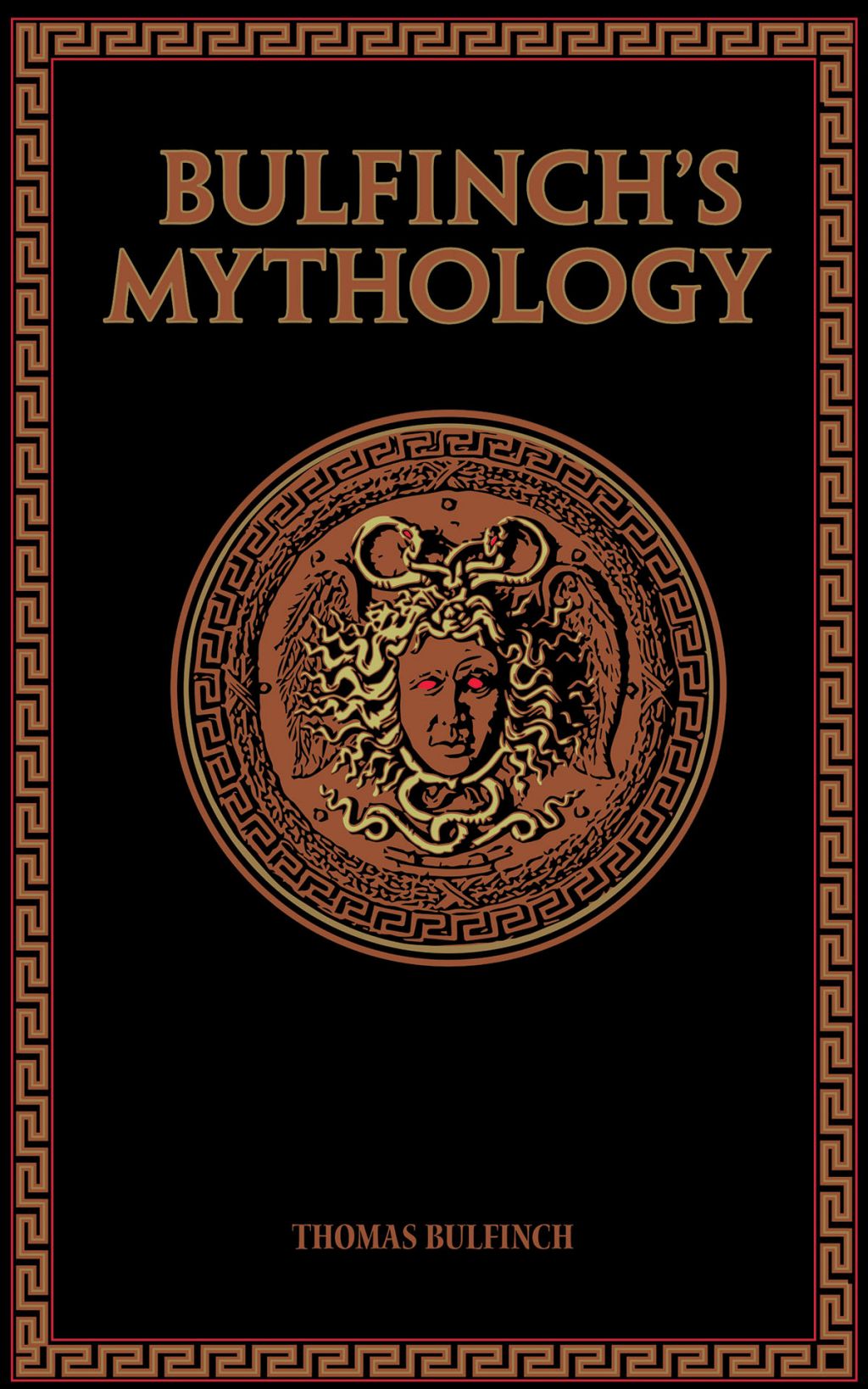
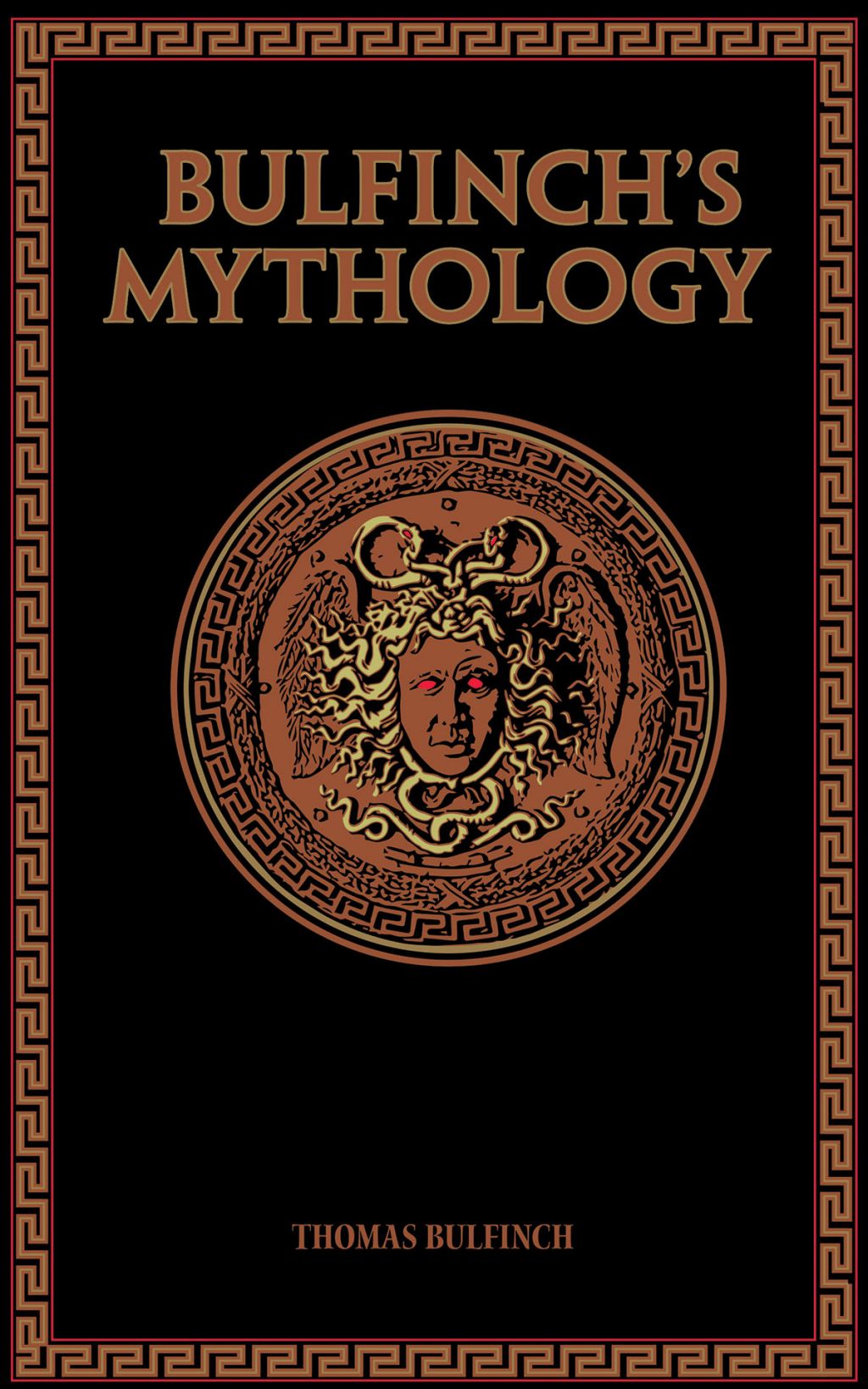
BULFINCH'S MYTHOLOGY, Chapter 21 Bacchus - Ariadne

BULFINCH'S MYTHOLOGY

THE AGE OF FABLE

OR STORIES OF GODS AND HEROES

by Thomas Bulfinch

[1855]

CHAPTER XXI

BACCHUS - ARIADNE

BACCHUS

BACCHUS was the son of Jupiter and Semele. Juno, to gratify her resentment against Semele, contrived a plan for her destruction. Assuming the form of Beroe, her aged nurse, she insinuated doubts whether it was indeed Jove himself who came as a lover. Heaving a sigh, she said, "I hope it will turn out so, but I can't help being afraid. People are not always what they pretend to be. If he is indeed Jove, make him give some proof of it. Ask him to come arrayed in all his splendours, such as he wears in heaven. That will put the matter beyond a doubt." Semele was persuaded to try the experiment. She asks a favour, without naming what it is. Jove gives his promise, and confirms it with the irrevocable oath, attesting the river Styx, terrible to the gods themselves. Then she made known her request. The god would have stopped her as she spake, but she was too quick for him. The words escaped, and he could neither unsay his promise nor her request. In deep distress he left her and returned to the upper regions. There he clothed himself in his splendours, not putting on all his terrors, as when he overthrew the giants, but what is known among the gods as his lesser panoply. Arrayed in this, he entered the chamber of Semele. Her mortal frame could not endure the splendours of the immortal radiance. She was consumed to ashes.

Jove took the infant Bacchus and gave him in charge to the Nysaean nymphs, who nourished his infancy and childhood, and for their care were rewarded by Jupiter by being placed, as the Hyades, among the stars. When Bacchus grew up he discovered the culture of the vine and the mode of extracting its precious juice; but Juno struck him with madness, and drove him forth a wanderer through various parts of the earth. In Phrygia the goddess Rhea cured him and taught him her religious rites, and he set out on a progress through Asia, teaching the people the cultivation of the vine. The most famous part of his wanderings is his expedition to India, which is said to have lasted several years. Returning in triumph, he undertook to introduce his worship into Greece, but was opposed by some princes, who dreaded its introduction on account of the disorder and madness it brought with it.

As he approached his native city Thebes, Pentheus the king, who had no respect for the new worship, forbade its rites to be performed. But when it was known that Bacchus was advancing, men and women, but chiefly the latter, young and old, poured forth to meet him and to join his triumphal march.

Mr. Longfellow in his "Drinking Song" thus describes the march of Bacchus:

"Fauns with youthful Bacchus follow;
Ivy crowns that brow, supernal
As the forehead of Apollo,
And possessing youth eternal.
"Round about him fair Bacchantes,
Bearing cymbals, flutes and thyrses,
Wild from Naxian groves of Zante's
Vineyards, sing delirious verses."

It was in vain Pentheus remonstrated, commanded and threatened. "Go," said he to his attendants, "seize this vagabond leader of the rout and bring him to me. I will soon make him confess his false claim of heavenly parentage and renounce his counterfeit worship." It was in vain his nearest friends and wisest counsellors remonstrated and begged him not to oppose the god. Their remonstrances only made him more violent.

But now the attendants returned whom he had despatched to seize Bacchus. They had been driven away by the Bacchanals, but had succeeded in taking one of them prisoner, whom, with his hands tied behind him, they brought before the king. Pentheus, beholding him with wrathful countenance, said "Fellow! you shall speedily be put to death, that your fate may be a warning to others; but though I grudge the delay of your punishment, speak, tell us who you are, and what are these new rites you presume to celebrate."

The prisoner, unterrified, responded, "My name is Acetes; my country is Maeonia; my parents were poor people, who had no fields or flocks to leave me, but they left me their fishing rods and nets and their fisherman's trade. This I followed for some time, till growing weary of remaining in one place, I learned the pilot's art and how to guide my course by the stars. It happened as I was sailing for Delos we touched at the island of Dia and went ashore. Next morning I sent the men for fresh water, and myself mounted the hill to observe the wind; when my men returned bringing with them a prize, as they thought, a boy of delicate appearance, whom they had found asleep. They judged he was a noble youth, perhaps a king's son, and they might get a liberal ransom for him. I observed his dress, his walk, his face, There was something in them which I felt sure was more than mortal. I said to my men, 'What god there is concealed in that form I know not, but some one there certainly is. Pardon us, gentle deity, for the violence we have done you, and give success to our undertakings.' Dictys, one of my best hands for climbing the mast and coming down by the ropes, and Melanthus, my steersman, and Epopeus, the leader of the sailor's cry, one and all exclaimed, 'Spare your prayers for us.' So blind is the lust of gain! When they proceeded to put him on board I resisted them. 'This ship shall not be profaned by such impiety,' said I. 'I have a greater share in her than any of you.' But Lycabas, a turbulent fellow, seized me by the throat and attempted to throw my overboard, and I scarcely saved myself by clinging to the ropes. The rest approved the deed.

"Then Bacchus (for it was indeed he), as if shaking off his drowsiness, exclaimed, 'What are you doing with me? What is this fighting about? Who brought me here? Where are you going to carry me?' One of them replied, 'Fear nothing; tell us where you wish to go and we will take you there.' 'Naxos is my home,' said Bacchus; 'take me there and you shall be well rewarded.' They promised so to do, and told me to pilot the ship to Naxos. Naxos lay to the right, and I was trimming the sails to carry us there, when some by signs and others by whispers signified to me their will that I should sail in the opposite direction, and take the boy to Egypt to sell him for a slave, I was confounded and said, 'Let some one else pilot the ship;' withdrawing myself from any further agency in their wickedness. They cursed me, and one of them, exclaiming, 'Don't flatter yourself that we depend on you for our safety,' took my place as pilot, and bore away from Naxos.

"Then the god, pretending that he had just become aware of their treachery, looked out over the sea and said in a voice of weeping, 'Sailors, these are not the shores you promised to take me to; yonder island is not my home. What have I done that you should treat me so? It is small glory you will gain by cheating a poor boy.' I wept to hear him, but the crew laughed at both of us, and sped the vessel fast over the sea. All at once- strange as it may seem, it is true,- the vessel stopped, in the mid sea, as fast as if it was fixed on the ground. The men, astonished, pulled at their oars, and spread more sail, trying to make progress by the aid of both, but all in vain. Ivy twined round the oars and hindered their motion, and clung to the sails, with heavy clusters of berries. A vine, laden with grapes, ran up the mast, and along the sides of the vessel. The sound of flutes was heard and the odour of fragrant wine spread all around. The god himself had a chaplet of vine leaves, and bore in his hand a spear wreathed with ivy. Tigers crouched at his feet, and forms of lynxes and spotted panthers played around him. The men were seized with terror or madness; some leaped overboard; others preparing to do the same beheld their companions in the water undergoing a change, their bodies becoming flattened and ending in a crooked tail. One exclaimed, 'What miracle is this!' and as he spoke his mouth widened, his nostrils expanded, and scales covered all his body. Another, endeavouring to pull the oar, felt his hands shrink up and presently to be no longer hands but fins; another, trying to raise his arms to a rope, found he had no arms, and curving his mutilated body jumped into the sea. What had been his legs became the two ends of a crescent-shaped tail. The whole crew became dolphins and swam about the ship, now upon the surface, now under it, scattering the spray, and spouting the water from their broad nostrils. Of twenty men I alone was left. Trembling with fear, the god cheered me. 'Fear not,' said he; 'steer towards Naxos.' I obeyed, and when we arrived there, I kindled the altars and celebrated the sacred rites of Bacchus."

Pentheus here exclaimed, "We have wasted time enough on this silly story. Take him away and have him executed without delay." Acetes was led away by the attendants and shut up fast in prison; but while they were getting ready the instruments of execution the prison doors came open of their own accord and the chains fell from his limbs, and when they looked for him he was nowhere to be found.

Pentheus would take no warning, but instead of sending others, determined to go himself to the scene of the solemnities. The mountain Citheron was all alive with worshippers, and the cries of the Bacchanals resounded on every side. The noise roused the anger of Pentheus as the sound of a trumpet does the fire of a war-horse. He penetrated through the wood and reached an open space where the chief scene of the orgies met his eyes. At the same moment the women saw him; and first among them his own mother, Agave, blinded by the god, cried out, "See there the wild boar, the hugest monster that prowls in these woods! Come on, sisters! I will be the first to strike the wild boar." The whole band rushed upon him, and while he now talks less arrogantly, now excuses himself, and now confesses his crime and implores pardon, they press upon him and wound him. In vain he cries to his aunts to protect him from his mother. Autonoe seized one arm, Ino the other, and between them he was torn to pieces, while his mother shouted, "Victory! Victory! we have done it; the glory is ours!"

So the worship of Bacchus was established in Greece.

There is an allusion to the story of Bacchus and the mariners in Milton's "Comus," at line 46. The story of Circe will be found in Chapter XXIX.

"Bacchus that first from out the purple grapes
Crushed the sweet poison of misused wine,
After the Tuscan mariners transformed,
Coasting the Tyrrhene shore as the winds listed
On Circe's island fell; (who knows not Circe,
The daughter of the Sun? whose charmed cup
Whoever tasted lost his upright shape,
And downward fen into a grovelling swine.)"

ARIADNE

We have seen in the story of Theseus how Ariadne, the daughter of King Minos, after helping Theseus to escape from the labyrinth, was carried by him to the island of Naxos and was left there asleep, while the ungrateful Theseus pursued his way home without her. Ariadne, on waking and finding herself deserted, abandoned herself to grief. But Venus took pity on her, and consoled her with the promise that she should have an immortal lover, instead of the mortal one she had lost.

The island where Ariadne was left was the favourite island of Bacchus, the same that he wished the Tyrrhenian mariners to carry him to, when they so treacherously attempted to make prize of him. As Ariadne sat lamenting her fate, Bacchus found her, consoled her, and made her his wife. As a marriage present he gave her a golden crown, enriched with gems, and when she died, he took her crown and threw it up into the sky. As it mounted the gems grew brighter and were turned into stars, and preserving its form Ariadne's crown remains fixed in the heavens as a constellation, between the kneeling Hercules and the man who holds the serpent.

Spenser alludes to Ariadne's crown, though he has made some mistakes in his mythology. It was at the wedding of Pirithous, and not Theseus, that the Centaurs and Lapithae quarrelled.

"Look how the crown which Ariadne wore
Upon her ivory forehead that same day
That Theseus her unto his bridal bore,
Then the bold Centaurs made that bloody fray
With the fierce Lapiths which did them dismay;
Being now placed in the firmament,
Through the bright heaven doth her beams display,
And is unto the stars an ornament,
Which round about her move in order excellent."

BULFINCH'S MYTHOLOGY, Chapter 20 Theseus - Daedalus

BULFINCH'S MYTHOLOGY

THE AGE OF FABLE

OR STORIES OF GODS AND HEROES

by Thomas Bulfinch

[1855]

CHAPTER XX

THESEUS - DAEDALUS - CASTOR AND POLLUX

THESEUS

THESEUS was the son of AEgeus, king of Athens, and of AEthra, daughter of the king of Troezen. He was brought up at Troezen, and when arrived at manhood was to proceed to Athens and present himself to his father. AEgeus on parting from AEthra, before the birth of his son, placed his sword and shoes under a large stone and directed her to send his son to him when he became strong enough to roll away the stone and take them from under it. When she thought the time had come, his mother led Theseus to the stone, and he removed it with ease and took the sword and shoes. As the roads were infested with robbers, his grandfather pressed him earnestly to take the shorter and safer way to his father's country- by sea; but the youth, feeling in himself the spirit and the soul of a hero, and eager to signalize himself like Hercules, with whose fame all Greece then rang, by destroying the evil-doers and monsters that oppressed the country, determined on the more perilous and adventurous journey by land.

His first day's journey brought him to Epidaurus, where dwelt a man named Periphetes, a son of Vulcan. This ferocious savage always went armed with a club of iron, and all travellers stood in terror of his violence. When he saw Theseus approach he assailed him, but speedily fell beneath the blows of the young hero, who took possession of his club and bore it ever afterwards as a memorial of his first victory.

Several similar contests with the petty tyrants and marauders of the country followed, in all of which Theseus was victorious. One of these evil-doers was called Procrustes, or the Stretcher. He had an iron bedstead, on which he used to tie all travellers who fell into his hands. If they were shorter than the bed, he stretched their limbs to make them fit it; if they were longer than the bed, he lopped off a portion. Theseus served him as he had served others.

Having overcome all the perils of the road, Theseus at length reached Athens, where new dangers awaited him. Medea, the sorceress, who had fled from Corinth after her separation from Jason, had become the wife of AEgeus, the father of Theseus. Knowing by her arts who he was, and fearing the loss of her influence with her husband if Theseus should be acknowledged as his son, she filled the mind of AEgeus with suspicions of the young stranger, and induced him to present him a cup of poison; but at the moment when Theseus stepped forward to take it, the sight of the sword which he wore discovered to his father who he was, and prevented the fatal draught. Medea, detected in her arts, fled once more from deserved punishment, and arrived in Asia, where the country afterwards called Media, received its name from her. Theseus was acknowledged by his father, and declared his successor.

The Athenians were at that time in deep affliction, on account of the tribute which they were forced to pay to Minos, king of Crete. This tribute consisted of seven youths and seven maidens, who were sent every year to be devoured by the Minotaur, a monster with a bull's body and a human head. It was exceedingly strong and fierce, and was kept in a labyrinth constructed by Daedalus, so artfully contrived that whoever was enclosed in it could by no means find his way out unassisted. Here the Minotaur roamed, and was fed with human victims.

Theseus resolved to deliver his countrymen from this calamity, or to die in the attempt. Accordingly, when the time of sending off the tribute came, and the youths and maidens were, according to custom, drawn by lot to be sent, he offered himself as one of the victims, in spite of the entreaties of his father. The ship departed under black sails, as usual, which Theseus promised his father to change for white, in case of his returning victorious. When they arrived in Crete, the youths and maidens were exhibited before Minos; and Ariadne, the daughter of the king, being present, became deeply enamoured of Theseus, by whom her love was readily returned. She furnished him with a sword, with which to encounter the Minotaur, and with a clue of thread by which he might find his way out of the labyrinth. He was successful, slew the Minotaur, escaped from the labyrinth, and taking Ariadne as the companion of his way, with his rescued companions sailed for Athens. On their way they stopped at the island of Naxos, where Theseus abandoned Ariadne, leaving her asleep.* His excuse for this ungrateful treatment of his benefactress was that Minerva appeared to him in a dream and commanded him to do so.

* One of the finest pieces of sculpture in Italy, the recumbent Ariadne of the Vatican, represents this incident. A copy is in the Athenaeum gallery, Boston.

On approaching the coast of Attica, Theseus forgot the signal appointed by his father, and neglected to raise the white sails, and the old king, thinking his son had perished, put an end to his own life. Theseus thus became king of Athens.

One of the most celebrated of the adventures of Theseus is his expedition against the Amazons. He assailed them before they had recovered from the attack of Hercules, and carried off their queen Antiope. The Amazons in their turn invaded the country of Athens and penetrated into the city itself; and the final battle in which Theseus overcame them was fought in the very midst of the city. This battle was one of the favourite subjects of the ancient sculptors, and is commemorated in several works of art that are still extant.

The friendship between Theseus and Pirithous was of a most intimate nature, yet it originated in the midst of arms. Pirithous had made an irruption into the plain of Marathon, and carried off the herds of the king of Athens. Theseus went to repel the plunderers. The moment Pirithous beheld him, he was seized with admiration; he stretched out his hand as a token of peace, and cried, "Be judge thyself- what satisfaction dost thou require?" "Thy friendship," replied the Athenian, and they swore inviolable fidelity. Their deeds corresponded to their professions, and they ever continued true brothers in arms. Each of them aspired to espouse a daughter of Jupiter. Theseus fixed his choice on Helen, then but a child, afterwards so celebrated as the cause of the Trojan war, and with the aid of his friend he carried her off. Pirithous aspired to the wife of the monarch of Erebus; and Theseus, though aware of the danger, accompanied the ambitious lover in his descent to the underworld. But Pluto seized and set them on an enchanted rock at his palace gate, where they remained till Hercules arrived and liberated Theseus, leaving Pirithous to his fate.

After the death of Antiope, Theseus married Phaedra, daughter of Minos, king of Crete. Phaedra saw in Hippolytus, the son of Theseus, a youth endowed with all the graces and virtues of his father, and of an age corresponding to her own. She loved him, but he repulsed her advances, and her love was changed to hate. She used her influence over her infatuated husband to cause him to be jealous of his son, and he imprecated the vengeance of Neptune upon him. As Hippolytus was one day driving his chariot along the shore, a sea-monster raised himself above the waters, and frightened the horses so that they ran away and dashed the chariot to pieces. Hippolytus was killed, but by Diana's assistance AEsculapius restored him to life. Diana removed Hippolytus from the power of his deluded father and false stepmother, and placed him in Italy under the protection of the nymph Egeria.

Theseus at length lost the favour of his people, and retired to the court of Lycomedes, king of Scyros, who at first received him kindly, but afterwards treacherously slew him. In a later age the Athenian general Cimon discovered the place where his remains were laid, and caused them to be removed to Athens, where they were deposited in a temple called the Theseum, erected in honour of the hero.

The queen of the Amazons whom Theseus espoused is by some called Hippolyta. That is the name she bears in Shakespeare's "Midsummer Night's Dream,"- the subject of which is the festivities attending the nuptials of Theseus and Hippolyta.

Mrs. Hemans has a poem on the ancient Greek tradition that the "Shade of Theseus" appeared strengthening his countrymen at the battle of Marathon.

Theseus is a semi-historical personage. It is recorded of him that he united the several tribes by whom the territory of Attica was then possessed into one state, of which Athens was the capital. In commemoration of this important event, he instituted the festival of Panathenaea, in honour of Minerva, the patron deity of Athens. This festival differed from the other Grecian games chiefly in two particulars. It was peculiar to the Athenians, and its chief feature was a solemn procession in which the Peplus, or sacred robe of Minerva, was carried to the Parthenon, and suspended be, fore the statue of the goddess. The Peplus was covered with embroidery, worked by select virgins of the noblest families in Athens. The procession consisted of persons of all ages and both sexes. The old men carried olive branches in their hands, and the young men bore arms. The young women carried baskets on their heads, containing the sacred utensils, cakes, and all things necessary for the sacrifices. The procession formed the subject of the bas-reliefs which embellished the outside of the temple of the Parthenon. A considerable portion of these sculptures is now in the British Museum among those known as the "Elgin marbles."

OLYMPIC AND OTHER GAMES

It seems not inappropriate to mention here the other celebrated national games of the Greeks. The first and most distinguished were the Olympic, founded, it was said, by Jupiter himself. They were celebrated at Olympia in Elis. Vast numbers of spectators flocked to them from every part of Greece, and from Asia, Africa and Sicily. They were repeated every fifth year in midsummer, and continued five days. They gave rise to the custom of reckoning time and dating events by Olympiads. The first Olympiad is generally considered as corresponding with the year 776 B.C. The Pythian games were celebrated in the vicinity of Delphi, the Isthmian on the Corinthian Isthmus, the Nemean at Nemea, a city of Argolis.

The exercises in these games were of five sorts: running, leaping, wrestling, throwing the quoit, and hurling the javelin, or boxing. Besides these exercises of bodily strength and agility there were contests in music, poetry and eloquence. Thus these games furnished poets, musicians and authors the best opportunities to present their productions to the public, and the fame of the victors was diffused far and wide.

DAEDALUS

The labyrinth from which Theseus escaped by means of the clew of Ariadne was built by Daedalus, a most skilful artificer. It was an edifice with numberless winding passages and turnings opening into one another, and seeming to have neither beginning nor end, like the river Maeander, which returns on itself, and flows now onward, now backward, in its course to the sea. Daedalus built the labyrinth for King Minos, but afterwards lost the favour of the king, and was shut up in a tower. He contrived to make his escape from his prison, but could not leave the island by sea, as the king kept strict watch on all the vessels, and permitted none to sail without being carefully searched. "Minos may control the land and sea," said Daedalus, "but not the regions of the air. I will try that way." So he set to work to fabricate wings for himself and his young son Icarus. He wrought feathers together, beginning with the smallest and adding larger, so as to form an increasing surface. The larger ones he secured with thread and the smaller with wax, and gave the whole a gentle curvature like the wings of a bird. Icarus, the boy, stood and looked on, sometimes running to gather up the feathers which the wind had blown away, and then handling the wax and working it over with his fingers, by his play impeding his father in his labours. When at last the work was done, the artist, waving his wings, found himself buoyed upward, and hung suspended, poising himself on the beaten air. He next equipped his son in the same manner and taught him how to fly, as a bird tempts her young ones from the lofty nest into the air. When all was prepared for flight he said, "Icarus, my son, I charge you to keep at a moderate height, for if you fly too low the damp will clog your wings, and if too high the heat will melt them. Keep near me and you will be safe." While he gave him these instructions and fitted the wings to his shoulders, the face of the father was wet with tears, and his hands trembled. He kissed the boy, not knowing that it was for the last time. Then rising on his wings, he flew off, encouraging him to follow, and looked back from his own flight to see how his son managed his wings. As they flew the ploughman stopped his work to gaze, aid the shepherd leaned on his staff and watched them, astonished at the sight, and thinking they were gods who could thus cleave the air.

They passed Samos and Delos on the left and Lebynthos on the right, when the boy, exulting in his career, began to leave the guidance of his companion and soar upward as if to reach heaven. The nearness of the blazing sun softened the wax which held the feathers together, and they came off. He fluttered with his arms, but no feathers remained to hold the air. While his mouth uttered cries to his father it was submerged in the blue waters of the sea which thenceforth was called by his name. His father cried, "Icarus, Icarus, where are you?" At last he saw the feathers floating on the water, and bitterly lamenting his own arts, he buried the body and called the land Icaria in memory of his child. Daedalus arrived safe in Sicily, where he built a temple to Apollo, and hung up his wings, an offering to the god.

Daedalus was so proud of his achievements that he could not bear the idea of a rival. His sister had placed her son Perdix under his charge to be taught the mechanical arts. He was an apt scholar and gave striking evidences of ingenuity. Walking on the seashore he picked up the spine of a fish. Imitating it, he took a piece of iron and notched it on the edge, and thus invented the saw. He, put two pieces of iron together, connecting them at one end with a rivet, and sharpening the other ends, and made a pair of compasses. Daedalus was so envious of his nephew's performances that he took an opportunity, when they were together one day on the top of a high tower to push him off. But Minerva, who favours ingenuity, saw him falling, and arrested his fate by changing him into a bird called after his name, the Partridge. This bird does not build his nest in the trees, nor take lofty flights, but nestles in the hedges, and mindful of his fall, avoids high places.

The death of Icarus is told in the following lines by Darwin:

"...with melting wax and loosened strings
Sunk hapless Icarus on unfaithful wings;
Headlong he rushed through the affrighted air,
With limbs distorted and dishevelled hair;
His scattered plumage danced upon the wave,
And sorrowing Nereids decked his watery grave;
O'er his pale corse their pearly sea-flowers shed,
And strewed with crimson moss his marble bed;
Struck in their coral towers the passing bell,
And wide in ocean tolled his echoing knell."

CASTOR AND POLLUX

Castor and Pollux were the offspring of Leda and the Swan, under which disguise Jupiter had concealed himself. Leda gave, birth to an egg from which sprang the twins. Helen, so famous afterwards as the cause of the Trojan war, was their sister.

When Theseus and his friend Pirithous had carried off Helen from Sparta, the youthful heroes, Castor and Pollux, with their followers, hastened to her rescue. Theseus was absent from Attica and the brothers were successful in recovering their sister.

Castor was famous for taming and managing horses, and Pollux for skill in boxing. They were united by the warmest affection and inseparable in all their enterprises. They accompanied the Argonautic expedition. During the voyage a storm arose, and Orpheus prayed to the Samothracian gods, and played on his harp, whereupon the storm ceased and stars appeared on the heads of the brothers. From this incident, Castor and Pollux came afterwards to be considered the patron deities of seamen and voyagers, and the lambent flames, which in certain states of the atmosphere play round the sails and masts of vessels, were called by their names.

After the Argonautic expedition, we find Castor and Pollux engaged in a war with Idas and Lynceus. Castor was slain, and Pollux, inconsolable for the loss of his brother, besought Jupiter to be permitted to give his own life as a ransom for him. Jupiter so far consented as to allow the two brothers to enjoy the boon of life alternately, passing one day under the earth and the next in the heavenly abodes. According to another form of the story, Jupiter rewarded the attachment of the brothers by placing them among the stars as Gemini the Twins.

They received divine honours under the name of Dioscuri (sons of Jove). They were believed to have appeared occasionally in later times, taking part with one side or the other, in hard-fought fields, and were said on such occasions to be mounted on magnificent white steeds. Thus in the early history of Rome they are said to have assisted the Romans at the battle of Lake Regillus, and after the victory a temple was erected in their honour on the spot where they appeared.

Macaulay, in his "Lays of Ancient Rome," thus alludes to the legend:

"So like they were, no mortal
Might one from other know;
White as snow their armour was,
Their steeds were white as snow.
Never on earthly anvil
Did such rare armour gleam,
And never did such gallant steeds
Drink of an earthly stream.
"Back comes the chief in triumph
Who in the hour of fight
Hath seen the great twin Brethren
In harness on his right.
Safe comes the ship to haven,
Through billows and through gales,
If once the great Twin Brethren
Sit shining on the sails."

BULFINCH'S MYTHOLOGY, Chapter 19 Hercules

BULFINCH'S MYTHOLOGY

THE AGE OF FABLE

OR STORIES OF GODS AND HEROES

by Thomas Bulfinch

[1855]

CHAPTER XIX

HERCULES - HEBE AND GANYMEDE

HERCULES

HERCULES was the son of Jupiter and Alcmena. As Juno was always hostile to the offspring of her husband by mortal mothers, she declared war against Hercules from his birth. She sent two serpents to destroy him as he lay in his cradle, but the precocious infant strangled them with his own hands. He was, however, by the arts of Juno rendered subject to Eurystheus and compelled to perform all his commands. Eurystheus enjoined upon him a succession of desperate adventures, which are called the "Twelve Labours of Hercules." The first was the fight with the Nemean lion. The valley of Nemea was infested by a terrible lion. Eurystheus ordered Hercules to bring him the skin of this monster. After using in vain his club and arrows against the lion, Hercules strangled the animal with his hands. He returned carrying the dead lion on his shoulders; but Eurystheus was so frightened at the sight of it and at this proof of the prodigious strength of the hero, that he ordered him to deliver the account of his exploits in future outside the town.

His next labour was the slaughter of the Hydra. This monster ravaged the country of Argos, and dwelt in a swamp near the well of Amymone. This well had been discovered by Amymone when the country was suffering from drought, and the story was that Neptune, who loved her, had permitted her to touch the rock with his trident, and a spring of three outlets burst forth. Here the Hydra took up his position, and Hercules was sent to destroy him. The Hydra had nine heads, of which the middle one was immortal. Hercules struck off its heads with his club, but in the place of the head knocked off, two new ones grew forth each time. At length with the assistance of his faithful servant Iolaus, he burned away the heads of the Hydra, and buried the ninth or immortal one under a huge rock.

Another labour was the cleaning of the Augean stables. Augeas, king of Elis, had a herd of three thousand oxen, whose stalls had not been cleansed for thirty years. Hercules brought the rivers Alpheus and Peneus through them, and cleansed them thoroughly in one day.

His next labour was of a more delicate kind. Admeta, the daughter of Eurystheus, longed to obtain the girdle of the queen of the Amazons, and Eurystheus ordered Hercules to go and get it. The Amazons were a nation of women. They were very warlike and held several flourishing cities. It was their custom to bring up only the female children; the boys were either sent away to the neighbouring nations or put to death. Hercules was accompanied by a number of volunteers, and after various adventures at last reached the country of the Amazons. Hippolyta, the queen, received him kindly, and consented to yield him her girdle, but Juno, taking the form of an Amazon, went and persuaded the rest that the strangers were carrying off their queen. They instantly armed and came in great numbers down to the ship. Hercules, thinking that Hippolyta, had acted treacherously, slew her, and taking her girdle made sail homewards.

Another task enjoined him was to bring to Eurystheus the oxen of Geryon, a monster with three bodies, who dwelt in the island of Erytheia (the red), so called because it lay at the west, under the rays of the setting sun. This description is thought to apply to Spain, of which Geryon was king. After traversing various countries, Hercules reached at length the frontiers of Libya and Europe, where he raised the two mountains of Calpe and Abyla, as monuments of his progress, or, according to another account, rent one mountain into two and left half on each side, forming the straits of Gibraltar, the two mountains being called the Pillars of Hercules. The oxen were guarded by the giant Eurytion and his two-headed dog, but Hercules killed the giant and his dog and brought away the oxen in safety to Eurystheus.

The most difficult labour of all was getting the golden apples of the Hesperides, for Hercules did not know where to find them. These were the apples which Juno had received at her wedding from the goddess of the Earth, and which she had intrusted to the keeping of the daughters of Hesperus, assisted by a watchful dragon. After various adventures Hercules arrived at Mount Atlas in Africa. Atlas was one of the Titans who had warred against the gods, and after they were subdued, Atlas was condemned to bear on his shoulders the weight of the heavens. He was the father of the Hesperides, and Hercules thought might, if any one could, find the apples and bring them to him. But how to send Atlas away from his post, or bear up the heavens while he was gone? Hercules took the burden on his own shoulders, and sent Atlas to seek the apples. He returned with them, and though somewhat reluctantly, took his burden upon his shoulders again, and let Hercules return with the apples to Eurystheus.

Milton, in his "Comus," makes the Hesperides the daughters of Hesperus and niece of Atlas:

"...amidst the gardens fair
Of Hesperus and his daughters three,
That sing about the golden tree."

The poets, led by the analogy of the lovely appearance of the western sky at sunset, viewed the west as a region of brightness and glory. Hence they placed in it the Isles of the Blest, the ruddy Isle Erytheia, on which the bright oxen of Geryon were pastured, and the Isle of the Hesperides. The apples are supposed by some to be the oranges of Spain, of which the Greeks had heard some obscure accounts.

A celebrated exploit of Hercules was his victory over Antaeus. Antaeus, the son of Terra, the Earth, was a mighty giant and wrestler, whose strength was invincible so long as he remained in contact with his mother Earth. He compelled all strangers who came to his country to wrestle with him, on condition that if conquered (as they all were) they should be put to death. Hercules encountered him, and finding that it was of no avail to throw him, for he always rose with renewed strength from every fall, he lifted him up from the earth and strangled him in the air.

Cacus was a huge giant, who inhabited a cave on Mount Aventine, and plundered the surrounding country. When Hercules was driving home the oxen of Geryon, Cacus stole part of the cattle, while the hero slept. That their footprints might not serve to show where they had been driven, be dragged them backward by their tails to his cave; so their tracks all seemed to show that they had gone in the opposite direction. Hercules was deceived by this stratagem, and would have failed to find his oxen, if it had not happened that in driving the remainder of the herd past the cave where the stolen ones were concealed, those within began to low, and were thus discovered. Cacus was slain by Hercules.

The last exploit we shall record was bringing Cerberus from the lower world. Hercules descended into Hades, accompanied by Mercury and Minerva. He obtained permission from Pluto to carry Cerberus to the upper air, provided he could do it without the use of weapons; and in spite of the monster's struggling, he seized him, held him fast, and carried him to Eurystheus, and afterwards brought him back again. When he was in Hades he obtained the liberty of Theseus, his admirer and imitator, who had been detained a prisoner there for an unsuccessful attempt to carry off Proserpine.

Hercules in a fit of madness killed his friend Iphitus, and was condemned for this offence to become the slave of Queen Omphale for three years. While in this service the hero's nature seemed changed. He lived effeminately, wearing at times the dress of a woman, and spinning wool with the hand-maidens of Omphale, while the queen wore his lion's skin. When this service was ended he married Dejanira and lived in peace with her three years. On one occasion as he was travelling with his wife, they came to a river, across which the Centaur Nessus carried travellers for a stated fee. Hercules himself forded the river, but gave Dejanira to Nessus to be carried across. Nessus attempted to run away with her, but Hercules heard her cries and shot an arrow into the heart of Nessus. The dying Centaur told Dejanira to take a portion of his blood and keep it, as it might be used as a charm to preserve the love of her husband.

Dejanira did so, and before long fancied she had occasion to use it. Hercules in one of his conquests had taken prisoner a fair maiden, named Iole, of whom he seemed more fond than Dejanira approved. When Hercules was about to offer sacrifices to the gods in honour of his victory, he sent to his wife for a white robe to use on the occasion. Dejanira, thinking it a good opportunity to try her love-spell, steeped the garment in the blood of Nessus. We are to suppose she took care to wash out all traces of it, but the magic power remained, and as soon as the garment became warm on the body of Hercules the poison penetrated into all his limbs and caused him the most intense agony. In his frenzy he seized Lichas, who had brought him the fatal robe, and hurled him into the sea. He wrenched off the garment, but it stuck to his flesh, and with it he tore away whole pieces of his body. In this state he embarked on board a ship and was conveyed home. Dejanira, on seeing what she had unwittingly done, hung herself. Hercules, prepared to die, ascended Mount OEta, where he built a funeral pile of trees, gave his bow and arrows to Philoctetes, and laid himself down on the pile, his head resting on his club, and his lion's skin spread over him. With a countenance as serene as if he were taking his place at a festal board he commanded Philoctetes to apply the torch. The flames spread apace and soon invested the whole mass.

Milton thus alludes to the frenzy of Hercules:

"As when Alcides* from OEchalia crowned
With conquest, felt the envenomed robe, and tore,
Through pain, up by the roots Thessalian pines
And Lichas from the top of OEta threw
Into the Euboic Sea."

* Alcides. a name of Hercules.

The gods themselves felt troubled at seeing the champion of the earth so brought to his end. But Jupiter with cheerful countenance thus addressed them: "I am pleased to see your concern, my princes, and am gratified to perceive that I am the ruler of a loyal people, and that my son enjoys your favour. For although your interest in him arises from his noble deeds, yet it is not the less gratifying to me. But now I say to you, Fear not. He who conquered all else is not to be conquered by those flames which you see blazing on Mount OEta. Only his mother's share in him can perish; what he derived from me is immortal. I shall take him, dead to earth, to the heavenly shores, and I require of you all to receive him kindly. If any of you feel grieved at his attaining this honour, yet no one can deny that he has deserved it." The gods all gave their assent; Juno only heard the closing words with some displeasure that she should be so particularly pointed at, yet not enough to make her regret the determination of her husband. So when the flames had consumed the mother's share of Hercules, the diviner part, instead of being injured thereby, seemed to start forth with new vigour, to assume a more lofty port and a more awful dignity. Jupiter enveloped him in a cloud, and took him up in a four-horse chariot to dwell among the stars. As he took his place in heaven, Atlas felt the added weight.

Juno, now reconciled to him, gave him her daughter Hebe in marriage.

The poet Schiller, in one of his pieces called the "Ideal and Life," illustrates the contrast between the practical and the imaginative in some beautiful stanzas, of which the last two may be thus translated:

"Deep degraded to a coward's slave,
Endless contests bore Alcides brave,
Through the thorny path of suffering led;
Slew the Hydra, crushed the lion's might,
Threw himself, to bring his friend to light,
Living, in the skiff that bears the dead.
All the torments, every toil of earth
Juno's hatred on him could impose,
Well he bore them, from his fated birth
To life's grandly mournful close.
"Till the god, the earthly part forsaken,
From the man in flames asunder taken,
Drank the heavenly ether's purer breath.
Joyous in the new unwonted lightness,
Soared he upwards to celestial brightness,
Earth's dark heavy burden lost in death.
High Olympus gives harmonious greeting
To the hall where reigns his sire adored;
Youth's bright goddess, with a blush at meeting,
Gives the nectar to her lord."

HEBE AND GANYMEDE

Hebe, the daughter of Juno, and goddess of youth, was cup-bearer to the gods. The usual story is that she resigned her office on becoming the wife of Hercules. But there is another statement which our countryman Crawford, the sculptor, has adopted in his group of Hebe and Ganymede, now in the Athenaeum gallery. According to this, Hebe was dismissed from her office in consequence of a fall which she met with one day when in attendance on the gods. Her successor was Ganymede, a Trojan boy, whom Jupiter, in the disguise of an eagle, seized and carried off from the midst of his play-fellows on Mount Ida, bore up to heaven, and installed in the vacant place.

Tennyson, in his "Palace of Art," describes among the decorations on the walls a picture representing this legend:

"There, too, flushed Ganymede, his rosy thigh
Half buried in the eagle's down,
Sole as a flying star shot through the sky
Above the pillared town."

And in Shelley's "Prometheus" Jupiter calls to his cup-bearer thus:

"Pour forth heaven's wine, Idaean Ganymede,
And let it fill the Daedal cups like fire."

The beautiful legend of the "Choice of Hercules" may be found in the "Tatler," No. 97.

BULFINCH'S MYTHOLOGY, Chapter 18 Meleager and Atalanta

BULFINCH'S MYTHOLOGY

THE AGE OF FABLE

OR STORIES OF GODS AND HEROES

by Thomas Bulfinch

[1855]

CHAPTER XVIII

MELEAGER AND ATALANTA

ONE of the heroes of the Argonautic expedition was Meleager, son of OEneus and Althea, king and queen of Calydon. Althea, when her son was born, beheld the three destinies, who as they spun their fatal thread, foretold that the life of the child should last no longer than a brand then burning upon the hearth. Althea seized and quenched the brand, and carefully preserved it for years, while Meleager grew to boyhood, youth and manhood. It chanced, then, that OEneus, as he offered sacrifices to the gods, omitted to pay due honours to Diana; and she, indignant at the neglect, sent a wild boar of enormous size to lay waste the fields of Calydon. Its eyes shone with blood and fire, its bristles stood like threatening spears, its tusks were like those of Indian elephants. The growing corn was trampled, the vines and olive trees laid waste, the flocks and herds were driven in wild confusion by the slaughtering foe. All common aid seemed vain; but Meleager called on the heroes of Greece to join in a bold hunt for the ravenous monster. Theseus and his friend Pirithous, Jason, Peleus, afterwards the father of Achilles, Telamon the father of Ajax, Nestor, then a youth, but who in his age bore arms with Achilles and Ajax in the Trojan war- these and many more joined in the enterprise. With them came Atalanta, the daughter of Iasius, king of Arcadia. A buckle of polished gold confined her vest, an ivory quiver hung on her left shoulder, and her left hand bore the bow. Her face blent feminine beauty with the best graces of martial youth. Meleager saw and loved.

But now already they were near the monster's lair. They stretched strong nets from tree to tree; they uncoupled their dogs, they tried to find the footprints of their quarry in the grass. From the wood was a descent to marshy grounds. Here the boar, as he lay among the reeds, heard the shouts of his pursuers, and rushed forth against them. One and another is thrown down and slain. Jason throws his spear, with a prayer to Diana for success; and the favouring goddess allows the weapon to touch, but not to wound, removing the steel point of the spear in its flight. Nestor, assailed, seeks and finds safety in the branches of a tree. Telamon rushes on, but stumbling at a projecting root, falls prone. But an arrow from Atalanta at length for the first time tastes the monster's blood. It is a slight wound, but Meleager sees and joyfully proclaims it. Anceus, excited to envy by the praise given to a female, loudly Proclaims his own valour, and defies alike the boar and the goddess who had sent it; but as he rushes on, the infuriated beast lays him low with a mortal wound. Theseus throws his lance, but it is turned aside by a projecting bough. The dart of Jason misses its object, and kills instead one of their own dogs. But Meleager, after one unsuccessful stroke, drives his spear into the monster's side, then rushes on and despatches him with repeated blows.

Then rose a shout from those around; they congratulated the conqueror, crowding to touch his hand. He, placing his foot upon the head of the slain boar, turned to Atalanta and bestowed on her the head and the rough hide which were the trophies of his success. But at this, envy excited the rest to strife. Plexippus and Toxeus, the brothers of Meleager's mother, beyond the rest opposed the gift, and snatched from the maiden the trophy she had received. Meleager, kindling with rage at the wrong done to himself, and still more at the insult offered to her whom he loved, forgot the claims of kindred, and plunged his sword into the offenders' hearts.

As Althea bore gifts of thankfulness to the temples for the victory of her son, the bodies of her murdered brothers met her sight. She shrieks, and beats her breast, and hastens to change the garments of rejoicing for those of mourning. But when the author of the deed is known, grief gives way to the stern desire of vengeance on her son. The fatal brand, which once she rescued from the flames, the brand which the destinies had linked with Meleager's life, she brings forth, and commands a fire to be prepared. Then four times she essays to place the brand upon the pile; four times draws back, shuddering at the thought of bringing destruction on her son. The feelings of the mother and the sister contend within her. Now she is pale at the thought of the proposed deed, now flushed again with anger at the act of her son. As a vessel, driven in one direction by the wind, and in the opposite by the tide, the mind of Althea hangs suspended in uncertainty. But now the sister prevails above the mother, and she begins as she holds the fatal wood: "Turn, ye Furies, goddesses of punishment! turn to behold the sacrifice I bring! Crime must atone for crime. Shall OEneus rejoice in his victor son, while the house of Thestius is desolate? But, alas! to what deed am I borne along? Brothers, forgive a mother's weakness! my hand fails me. He deserves death, but not that I should destroy him. But shall he then live, and triumph, and reign over Calydon, while you, my brothers, wander unavenged among the shades? No! thou hast lived by my gift; die, now, for thine own crime. Return the life which twice I gave thee, first at thy birth, again when I snatched this brand from the flames. O that thou hadst then died! Alas! evil is the conquest; but, brothers, ye have conquered." And, turning away her face, she threw the fatal wood upon the burning pile.

It gave, or seemed to give, a deadly groan. Meleager, absent and unknowing of the cause, felt a sudden pang. He burns, and only by courageous pride conquers the pain which destroys him. He mourns only that he perishes by a bloodless and unhonoured death. With his last breath he calls upon his aged father, his brother, and his fond sisters, upon his beloved Atalanta, and upon his mother, the unknown cause of his fate. The flames increase, and with them the pain of the hero. Now both subside; now both are quenched. The brand is ashes, and the life of Meleager is breathed forth to the wandering winds.

Althea, when the deed was done, laid violent hands upon herself. The sisters of Meleager mourned their brother with uncontrollable grief; till Diana, pitying the sorrows of the house that once had aroused her anger, turned them into birds.

ATALANTA.

The innocent cause of so much sorrow was a maiden whose face you might truly say was boyish for a girl, yet too girlish for a boy. Her fortune had been told, and it was to this effect: "Atalanta, do not marry; marriage will be your ruin." Terrified by this oracle, she fled the society of men, and devoted herself to the sports of the chase. To all suitors (for she had many) she imposed a condition which was generally effectual in relieving her of their persecutions- "I will be the prize of him who shall conquer me in the race; but death must be the penalty of all who try and fail." In spite of this hard condition some would try. Hippomenes was to be judge of the race. "Can it be possible that any will be so rash as to risk so much for a wife?" said he. But when he saw her lay aside her robe for the race, he changed his mind, and said, "Pardon me, youths, I knew not the prize you were competing for." As he surveyed them he wished them all to be beaten, and swelled with envy of any one that seemed at all likely to win. While such were his thoughts, the virgin darted forward. As she ran she looked more beautiful than ever. The breezes seemed to give wings to her feet; her hair flew over her shoulders, and the gay fringe of her garment fluttered behind her. A ruddy hue tinged the whiteness of her skin, such as a crimson curtain casts on a marble wall. All her competitors were distanced, and were put to death without mercy. Hippomenes, not daunted by this result, fixing his eyes on the virgin, said, "Why boast of beating those laggards? I offer myself for the contest." Atalanta looked at him with a pitying countenance, and hardly knew whether she would rather conquer him or not. "What god can tempt one so young and handsome to throw himself away? I pity him, not for his beauty (yet he is beautiful), but for his youth. I wish he would give up the race, or if he will be so mad, I hope he may outrun me." While she hesitates, revolving these thoughts, the spectators grow impatient for the race, and her father prompts her to prepare. Then Hippomenes addressed a prayer to Venus: "Help me, Venus, for you have led me on." Venus heard and was propitious.

In the garden of her temple, in her own island of Cyprus, is a tree with yellow leaves and yellow branches and golden fruit. Hence she gathered three golden apples, and unseen by any one else, gave them to Hippomenes, and told him how to use them. The signal is given; each starts from the goal and skims over the sand. So light their tread, you would almost have thought they might run over the river surface or over the waving grain without sinking. The cries of the spectators cheered Hippomenes,- "Now, now, do your best! haste, haste! you gain on her! relax not! one more effort!" It was doubtful whether the youth or the maiden heard these cries with the greater pleasure. But his breath began to fail him, his throat was dry, the goal yet far off. At that moment be threw down one of the golden apples. The virgin was all amazement. She stopped to pick it up. Hippomenes shot ahead. Shouts burst forth from all sides. She redoubled her efforts, and soon overtook him. Again he threw an apple. She stopped again, but again came up with him. The goal was near; one chance only remained. "Now, goddess," said he, "prosper your gift!" and threw the last apple off at one side. She looked at it, and hesitated; Venus impelled her to turn aside for it. She did so, and was vanquished. The youth carried off his prize.

But the lovers were so full of their own happiness that they forgot to pay due honour to Venus; and the goddess was provoked at their ingratitude. She caused them to give offence to Cybele. That powerful goddess was not to be insulted with impunity. She took from them their human form and turned them into animals of characters resembling their own: of the huntress-heroine, triumphing in the blood of her lovers, she made a lioness, and of her lord and master a lion, and yoked them to her car, where they are still to be seen in all representations, in statuary or painting, of the goddess Cybele.

Cybele is the Latin name of the goddess called by the Greeks Rhea and Ops. She was the wife of Cronos and mother of Zeus. In works of art she exhibits the matronly air which distinguishes Juno and Ceres. Sometimes she is veiled, and seated on a throne with lions at her side, at other times riding in a chariot drawn by lions. She wears a mural crown, that is, a crown whose rim is carved in the form of towers and battlements. Her priests were called Corybantes.

Byron, in describing the city of Venice, which is built on a low island in the Adriatic Sea, borrows an illustration from Cybele:

"She looks a sea-Cybele fresh from ocean,
Rising with her tiara of proud towers
At airy distance, with majestic motion,
A ruler of the waters and their powers."
Childe Harold, IV.

In Moore's "Rhymes on the Road," the poet, speaking of Alpine scenery, alludes to the story of Atalanta and Hippomenes thus:

"Even here, in this region of wonders, I find
That light-footed Fancy leaves Truth far behind,
Or at least, like Hippomenes, turns her astray
By the golden illusions he flings in her way."

BULFINCH'S MYTHOLOGY, Chapter 17 The Golden Fleece

BULFINCH'S MYTHOLOGY

THE AGE OF FABLE

OR STORIES OF GODS AND HEROES

by Thomas Bulfinch

[1855]

CHAPTER XVII

THE GOLDEN FLEECE - MEDEA

THE GOLDEN FLEECE

IN very ancient times there lived in Thessaly a king and queen name Athamas and Nephele. They had two children, a boy and a girl. After a time Athamas grew indifferent to his wife, put her away, and took another. Nephele suspected danger to her children from the influence of the step-mother, and took measures to send them out of her reach. Mercury assisted her, and gave her a ram with a golden fleece, on which she set the two children, trusting that the ram would convey them to a place of safety. The ram vaulted into the air with the children on his back, taking his course to the East, till when crossing the strait that divides Europe and Asia, the girl, whose name was Helle, fell from his back into the sea, which from her was called the Hellespont,- now the Dardanelles. The ram continued his career till he reached the kingdom of Colchis, on the eastern shore of the Black Sea, where he safely landed the boy Phryxus, who was hospitably received by AEetes, king of the country. Phryxus sacrificed the ram to Jupiter, and gave the Golden Fleece to AEetes, who placed it in a consecrated rove, under the care of a sleepless dragon.

There was another kingdom in Thessaly near to that of Athamas, and ruled over by a relative of his. The king AEson, being tired of the cares of government, surrendered his crown to his brother Pelias on condition that he should hold it only during the minority of Jason, the son of AEson. When Jason was grown up and came to demand the crown from his uncle, Pelias pretended to be willing to yield it, but at the same time suggested to the young man the glorious adventure of going in quest of the Golden Fleece, which it was well known was in the kingdom of Colchis, and was, as Pelias pretended, the rightful property of their family. Jason was pleased, with the thought and forthwith made preparations for the expedition. At that time the only species of navigation known to the Greeks consisted of small boats or canoes hollowed out from trunks of trees, so that when Jason employed Argus to build him a vessel capable of containing fifty men, it was considered a gigantic undertaking. It was accomplished, however, and the vessel named "Argo," from the name of the builder. Jason sent his invitation to all the adventurous young men of Greece, and soon found himself at the head of a band of bold youths, many of whom afterwards were renowned among the heroes and demigods of Greece. Hercules, Theseus, Orpheus, and Nestor were among them. They are called the Argonauts, from the name of their vessel.

The "Argo" with her crew of heroes of Thessaly and having touched at the Island of Lemnos, thence crossed to Mysia and thence to Thrace. Here they found the sage Phineus, and from him received instruction as to their future course. It seems the entrance of the Euxine Sea was impeded by two small rocky islands, which floated on the surface, and in their tossings and heavings occasionally came together, crushing and grinding to atoms any object that might be caught between them. They were called the Symplegades, or Clashing Islands. Phineus instructed the Argonauts how to pass this dangerous strait. When they reached the islands they let go a dove, which took her way between the rocks, and passed in safety, only losing some feathers of her tail. Jason and his men seized the favourable moment of the rebound, plied their oars with vigour, and passed safe through, though the islands closed behind them, and actually grazed their stern. They now rowed along the shore till they arrived at the eastern end of the sea, and landed at the kingdom of Colchis.

Jason made known his message to the Colchian king, AEetes, who consented to give tip the golden fleece if Jason would yoke to the plough two fire-breathing bulls with brazen feet, and sow the teeth of the dragon which Cadmus had slain, and from which it was well known that a crop of armed men would spring up, who would turn their weapons against their producer. Jason accepted the conditions, and a time was set for making the experiment. Previously, however, he found means to plead his cause to Medea, daughter of the king. He promised her marriage, and as they stood before the altar of Hecate, called the goddess to witness his oath. Medea yielded, and by her aid, for she was a potent sorceress, he was furnished with a charm, by which he could encounter safely the breath of the fire-breathing bulls and the weapons of the armed men.

At the time appointed, the people assembled at the grove of Mars, and the king assumed his royal seat, while the multitude covered the hill-sides. The brazen-footed bulls rushed in, breathing fire from their nostrils that burned up the herbage as they passed. The sound was like the roar of a furnace, and the smoke like that of water upon quick-lime. Jason advanced boldly to meet them. His friends, the chosen heroes of Greece, trembled to behold him. Regardless of the burning breath, he soothed their rage with his voice, patted their necks with fearless hand, and adroitly slipped over them the yoke, and compelled them to drag the plough. The Colchians were amazed; the Greeks shouted for joy. Jason next proceeded to sow the dragon's teeth and plough them in. And soon the crop of armed men sprang up, and, wonderful to relate! no sooner had they reached the surface than they began to brandish their weapons and rush upon Jason. The Greeks trembled for their hero, and even she who had provided him a way of safety and taught him how to use it, Medea herself, grew pale with fear. Jason for a time kept his assailants at bay with his sword and shield, till, finding their numbers overwhelming, he resorted to the charm which Medea had taught him, seized a stone and threw it in the midst of his foes. They immediately turned their arms against one another, and soon there was not one of the dragon's brood left alive. The Greeks embraced their hero, and Medea, if she dared, would have embraced him too.

It remained to lull to sleep the dragon that guarded the fleece, and this was done by scattering over him a few drops of a preparation which Medea had supplied. At the smell he relaxed his rage, stood for a moment motionless, then shut those great round eyes, that had never been known to shut before, and turned over on his side, fast asleep. Jason seized the fleece and with his friends and Medea accompanying, hastened to their vessel before AEetes the king could arrest their departure, and made the best of their way back to Thessaly, where they arrived safe, and Jason delivered the fleece to Pelias, and dedicated the "Argo" to Neptune. What became of the fleece afterwards we do not know, but perhaps it was found after all, like many other golden prizes, not worth the trouble it had cost to procure it.

This is one of those mythological tales, says a late writer, in which there is reason to believe that a substratum of truth exists, though overlaid by a mass of fiction. It probably was the first important maritime expedition, and like the first attempts of the kind of all nations, as we know from history, was probably of a half-piratical character. If rich spoils were the result it was enough to give rise to the idea of the golden fleece.

Another suggestion of a learned mythologist, Bryant, is that it is a corrupt tradition of the story of Noah and the ark. The name "Argo" seems to countenance this, and the incident of the dove is another confirmation.

Pope, in his "Ode on St. Cecilia's Day," thus celebrates the launching of the ship "Argo," and the power of the music of Orpheus, whom he calls the Thracian:

"So when the first bold vessel dared the seas,
High on the stern the Thracian raised his strain,
While Argo saw her kindred trees
Descend from Pelion to the main.
Transported demigods stood round,
And men grew heroes at the sound."

In Dyer's poem of "The Fleece" there is an account of the ship "Argo" and her crew, which gives a good picture of this primitive maritime adventure:

"From every region of AEgea's shore
The brave assembled; those illustrious twins
Castor and Pollux; Orpheus, tuneful bard;
Zetes and Calais, as the wind in speed;
Strong Hercules and many a chief renowned.
On deep Ioclos' sandy shore they thronged,
Gleaming in armour, ardent of exploits;
And soon, the laurel cord and the huge stone
Uplifting to the deck, unmoored the bark;
Whose keel of wondrous length the skilful hand
Of Argus fashioned for the proud attempt;
And in the extended keel a lofty mast
Upraised, and sails full swelling; to the chiefs
Unwonted objects. Now first, now they learned
Their bolder steerage over ocean wave,
Led by the golden stars, as Chiron's art
Had marked the sphere celestial," etc.

Hercules left the expedition at Mysia, for Hylas, a youth beloved by him, having gone for water, was laid hold of and kept by the nymphs of the spring, who were fascinated by his beauty. Hercules went in quest of the lad, and while he was absent the "Argo" put to sea and left him. Moore, in one of his songs, makes a beautiful allusion to this incident:

"When Hylas was sent with his urn to the fount,
Through fields of light and with heart full of play,
Light rambled the boy over meadow and mount,
And neglected his task for the flowers in the way.
"Thus many like me, who in youth should have tasted
The fountain that runs by Philosophy's shrine,
Their time with the flowers on the margin have wasted,
And left their light urns all as empty as mine."

MEDEA AND AESON

Amid the rejoicings for the recovery of the Golden Fleece, Jason felt that one thing was wanting, the presence of AEson, his father, who was prevented by his age and infirmities from taking part in them. Jason said to Medea, "My spouse, would that your arts, whose power I have seen so mighty for my aid, could do me one further service, take some years from my life and add them to my father's." Medea replied, "Not at such a cost shall it be done, but if my art avails me, his life shall be lengthened without abridging yours." The next full moon she issued forth alone, while all creatures slept; not a breath stirred the foliage, and all was still, To the stars she addressed her incantations, and to the moon; to Hecate,* the goddess of the under-world, and to Tellus the goddess of the earth, by whose power plants potent for enchantment are produced. She invoked the gods of the woods and caverns, of mountains and valleys, of lakes and rivers, of winds and vapours. While she spoke the stars shone brighter, and presently a chariot descended through the air, drawn by flying serpents. She ascended it, and borne aloft made her way to distant regions, where potent plants grew which she knew how to select for her purpose. Nine nights she employed in her search, and during that time came not within the doors of her palace nor under any roof, and shunned all intercourse with mortals.

* Hecate was a mysterious divinity sometimes identified with Diana and sometimes with Proserpine. As Diana represents the moonlight splendour of night, so Hecate represents its darkness and terrors. She was the goddess of sorcery and witchcraft, and was believed to wander by night along the earth, seen only by the dogs, whose barking told her approach.

She next erected two altars, the one to Hecate, the other to Hebe, the goddess of youth, and sacrificed a black sheep, pouring libations of milk and wine. She implored Pluto and his stolen bride that they would not hasten to take the old man's life. Then she directed that AEson should be led forth, and having thrown him into a deep sleep by a charm, had him laid on a bed of herbs, like one dead. Jason and all others were kept away from the place, that no profane eyes might look upon her mysteries. Then, with streaming hair, she thrice moved round the altars, dipped flaming twigs in the blood, and laid them thereon to burn. Meanwhile the cauldron with its contents was got ready. In it she put magic herbs, with seeds and flowers of acrid juice, stones from the distant east, and sand from the shore of all-surrounding ocean; hoar frost, gathered by moonlight, a screech owl's head and wings, and the entrails of a wolf. She added fragments of the shells of tortoises, and the liver of stags- animals tenacious of life- and the head and beak of a crow, that outlives nine generations of men. These with many other things "without a name" she boiled together for her purposed work, stirring them up with a dry olive branch; and behold! the branch when taken out instantly became green, and before long was covered with leaves and a plentiful growth of young olives; and as the liquor boiled and bubbled, and sometimes ran over, the grass wherever the sprinklings fell shot forth with a verdure like that of spring.

Seeing that all was ready, Medea cut the throat of the old man and let out all his blood, and poured into his mouth and into his wound the juices of her cauldron. As soon as he had completely imbibed them, his hair and beard laid by their whiteness and assumed the blackness of youth; his paleness and emaciation were gone; his veins were full of blood, his limbs of vigour and robustness. AEson is amazed at himself, and remembers that such as he now is, he was in his youthful days, forty years before.

Medea used her arts here for a good purpose, but not so in another instance, where she made them the instruments of revenge. Pelias, our readers will recollect, was the usurping uncle of Jason, and had kept him out of his kingdom. Yet he must have had some good qualities, for his daughters loved him, and when they saw what Medea had done for AEson, they wished her to do the same for their father. Medea pretended to consent, and prepared her cauldron as before. At her request an old sheep was brought and plunged into the cauldron. Very soon a bleating was heard in the kettle, and when the cover was removed, a lamb jumped forth and ran frisking away into the meadow. The daughters of Pelias saw the experiment with delight, and appointed a time for their father to undergo the same operation. But Medea prepared her cauldron for him in a very different way. She put in only water and a few simple herbs. In the night she with the sisters entered the bed chamber of the old king, while he and his guards slept soundly under the influence of a spell cast upon them by Medea. The daughters stood by the bedside with their weapons drawn, but hesitated to strike, till Medea chid their irresolution. Then turning away their faces, and giving random blows they smote him with their weapons. He, starting from his sleep, cried out, "My daughters, what are you doing? Will you kill your father?" Their hearts failed them and their weapons fell from their hands, but Medea struck him a fatal blow, and prevented his saying more.

Then they placed him in the cauldron, and Medea hastened to depart in her serpent-drawn chariot before they discovered her treachery or their vengeance would have been terrible. She escaped, however, but had little enjoyment of the fruits of her crime. Jason, for whom she had done so much, wishing to marry Creusa, princess of Corinth, put away Medea. She, enraged at his ingratitude, called on the gods for vengeance, sent a poisoned robe as a gift to the bride, and then killing her own children, and setting fire to the palace, mounted her serpent-drawn chariot and fled to Athens, where she married King AEgeus, the father of Theseus, and we shall meet her again when we come to the adventures of that hero.

The incantations of Medea will remind the reader of those of the witches in "Macbeth." The following lines are those which seem most strikingly to recall the ancient model:

"Round about the cauldron go;
In the poisoned entrails throw.
Fillet of a fenny snake
In the cauldron boil and bake;
Eye of newt and toe of frog,
Wool of bat and tongue of dog,
Adder's fork and blind-worm's sting,
Lizard's leg and howlet's wing;
Maw of ravening salt-sea shark,
Root of hemlock digged in the dark," etc.
Macbeth, Act IV. Scene I.

And again:

Macbeth.- What is't you do?
Witches.- A deed without a name.

There is another story of Medea almost too revolting for record even of a sorceress, a class of persons to whom both ancient and modern poets have been accustomed to attribute every degree of atrocity. In her flight from Colchis she had taken her young brother Absyrtus with her. Finding the pursuing vessels of AEetes gaining upon the Argonauts, she caused the lad to be killed and his limbs to be strewn over the sea. AEetes on reaching the place found these sorrowful traces of his murdered son; but while he tarried to collect the scattered fragments and bestow upon them an honourable interment, the Argonauts escaped.

In the poems of Campbell will be found a translation of one of the choruses of the tragedy of "Medea," where the poet Euripides has taken advantage of the occasion to pay a glowing tribute to Athens, his native city. It begins thus:

"O haggard queen! to Athens dost thou guide
Thy glowing chariot, steeped in kindred gore;
Or seek to hide thy damned parricide
Where peace and justice dwell for evermore?"

BULFINCH'S MYTHOLOGY, Chapter 16 Monsters and Giants

BULFINCH'S MYTHOLOGY

THE AGE OF FABLE

OR STORIES OF GODS AND HEROES

by Thomas Bulfinch

[1855]

CHAPTER XVI

MONSTERS AND GIANTS - SPHINX - PEGASUS AND CHIMAERA - CENTAURS - GRIFFIN AND PYGMIES

Monsters and Giants

MONSTERS, in the language of mythology, were beings of unnatural proportions or parts, usually regarded with terror, as possessing immense strength and ferocity, which they employed for the injury and annoyance of men. Some of them were supposed to combine the members of different animals; such were the Sphinx and Chimaera and to these all the terrible qualities of wild beasts were attributed, together with human sagacity and faculties. Others, as the giants, differed from men chiefly in their size; and in this particular we must recognize a wide distinction among them. The human giants, if so they may be called, such as the Cyclops, Antaeus, Orion, and others, must be supposed not to be altogether disproportioned to human beings, for they mingled in love and strife with them. But the super-human giants, who warred with the gods, were of vastly larger dimensions. Tityus, we are told, when stretched on the plain, covered nine acres, and Enceladus required the whole of Mount AEtna to be laid upon him to keep him down.

We have already spoken of the war which the giants waged against the gods, and of its result. While this war lasted the giants proved a formidable enemy. Some of them, like Briareus, had a hundred arms; others, like Typhon, breathed out fire. At one time they put the gods to such fear that they fled into Egypt and hid themselves under various forms. Jupiter took the form of a ram, whence he was afterwards worshipped in Egypt as the god Ammon, with curved horns. Apollo became a crow, Bacchus a goat, Diana a cat, Juno a cow, Venus a fish, Mercury a bird. At another time the giants attempted to climb up into heaven, and for that purpose took up the mountain Ossa and piled it on Pelion.* They were at last subdued by thunderbolts, which Minerva invented, and taught Vulcan and his Cyclops to make for Jupiter.

* See Proverbial Expressions, no. 5.

THE SPHINX

Laius, king of Thebes, was warned by an oracle that there was danger to his throne and life if his new-born son should be suffered to grow up. He therefore committed the child to the care of a herdsman with orders to destroy him; but the herdsman, moved with pity, yet not daring entirely to disobey, tied up the child by the feet and left him hanging to the branch of a tree. In this condition the infant was found by a peasant, who carried him to his master and mistress, by whom he was adopted and called OEdipus, or Swollen-foot.

Many years afterwards Laius being on his way to Delphi, accompanied only by one attendant, met in a narrow road a young man also driving in a chariot. On his refusal to leave the way at their command the attendant killed one of his horses, and the stranger, filled with rage, slew both Laius and his attendant. The young man was OEdipus who thus unknowingly became the slayer of his own father.

Shortly after this event the city of Thebes was afflicted with a monster which infested the highroad. It was called the Sphinx. It had the body of a lion and the upper part of a woman. It lay crouched on the top of a rock, and arrested all travellers who came that way, proposing to them a riddle, with the condition that those who could solve it should pass safe, but those who failed should be killed. Not one had yet succeeded in solving it, and all had been slain. OEdipus was not daunted by these alarming accounts, but boldly advanced to the trial. The Sphinx asked him, "What animal is that which in the morning goes on feet, at noon on two, and in the evening upon three?" Oedipus replied, "Man, who in childhood creeps on hands and knees, in manhood walks erect, and in old age with the aid of a staff." The Sphinx was so mortified at the solving of her riddle that she cast herself down from the rock and perished.

The gratitude of the people for their deliverance was so great that they made OEdipus their king, giving him in marriage their queen Jocasta. OEdipus, ignorant of his parentage, had already become the slayer of his father; in marrying the queen he became the husband of his mother. These horrors remained undiscovered, till at length Thebes was afflicted with famine and pestilence, and the oracle being consulted, the double crime of Oedipus came to light. Jocasta put an end to her own life, and Oedipus, seized with madness, tore out his eyes and wandered away from Thebes, dreaded and abandoned by all except his daughters, who faithfully adhered to him, till after a tedious period of miserable wandering he found the termination of his wretched life.

PEGASUS AND THE CHIMAERA

When Perseus cut off Medusa's head, the blood sinking into the earth produced the winged horse Pegasus. Minerva caught and tamed him and presented him to the Muses. The fountain Hippocrene, on the Muse's mountain Helicon, was opened by a kick from his hoof.

The Chimaera was a fearful monster, breathing fire. The fore part of its body was a compound of the lion and the goat, and the hind part a dragon's. It made great havoc in Lycia, so that the king, Iobates, sought for some hero to destroy it. At that time there arrived at his court a gallant young warrior, whose name was Bellerophon. He brought letters from Proetus, the son-in-law of Iobates, recommending Bellerophon in the warmest terms as an unconquerable hero, but added at the close a request to his father-in-law to put him to death. The reason was that Proetus was jealous of him, suspecting that his wife Antea looked with too much admiration on the young warrior. From this instance of Bellerophon being unconsciously the bearer of his own death warrant, the expression "Bellerophontic letters" arose, to describe any species of communication which a person is made the bearer of, containing matter prejudicial to himself.

Iobates, on perusing the letters, was puzzled what to do, not willing to violate the claims of hospitality, yet wishing to oblige his son-in-law. A lucky thought occurred to him, to send Bellerophon to combat with the Chimaera. Bellerophon accepted the proposal, but before proceeding to the combat consulted the soothsayer Polyidus, who advised him to procure if possible the horse Pegasus for the conflict. For this purpose he directed him to pass the night in the temple of Minerva. He did so, and as he slept Minerva came to him and gave him a golden bridle. When he awoke the bridle remained in his hand. Minerva also showed him Pegasus drinking at the well of Pirene, and at sight of the bridle the winged steed came willingly and suffered himself to be taken. Bellerophon mounted him, rose with him into the air, soon found the Chimaera, and gained an easy victory over the monster.

After the conquest of the Chimaera Bellerophon was exposed to further trials and labours by his unfriendly host, but by the aid of Pegasus he triumphed in them all, till at length Iobates, seeing that the hero was a special favourite of the gods, gave him his daughter in marriage and made him his successor on the throne. At last Bellerophon by his pride and presumption drew upon himself the anger of the gods; it is said he even attempted to fly up into heaven on his winged steed, but Jupiter sent a gadfly which stung Pegasus and made him throw his rider, who became lame and blind in consequence. After this Bellerophon wandered lonely through the Aleian field, avoiding the paths of men, and died miserably.

Milton alludes to Bellerophon in the beginning of the seventh book of "Paradise Lost":

"Descend from Heaven, Urania, by that name
If rightly thou art called, whose voice divine
Following, above the Olympian hill I soar,
Above the flight of Pegasean wing.
Upled by thee,
Into the Heaven of Heavens I have presumed,
An earthly guest, and drawn empyreal air
(Thy tempering); with like safety guided down
Return me to my native element;
Lest, from this flying steed unreined (as once
Bellerophon, though from a lower clime),
Dismounted, on the Aleian field I fall,
Erroneous there to wander and forlorn."

Young, in his "Night Thoughts," speaking of the sceptic, says:

"He whose blind thought futurity denies,
Unconscious bears, Bellerophon, like thee
His own indictment; he condemns himself.
Who reads his bosom reads immortal life,
Or nature there, imposing on her sons,
Has written fables; man was made a lie."
Vol. II., p. 12.

Pegasus, being the horse of the Muses, has always been at the service of the poets. Schiller tells a pretty story of his having been sold by a needy poet and put to the cart and the plough. He was not fit for such service, and his clownish master could make nothing of him. But a youth stepped forth and asked leave to try him. As soon as he was seated on his back the horse, which had appeared at first vicious, and afterwards spirit-broken, rose kingly, a spirit, a god, unfolded the splendour of his wings, and soared towards heaven. Our own poet Longfellow also records adventure of this famous steed in his "Pegasus in Pound."

Shakespeare alludes to Pegasus in "Henry IV.," where Vernon describes Prince Henry:

"I saw young Harry, with his beaver on,
His cuishes on this thighs, gallantly armed,
Rise from the ground like feathered Mercury,
And vaulted with such ease into his seat,
As if an angel dropped down from the clouds,
To turn and wind a fiery Pegasus,
And witch the world with noble horsemanship."

THE CENTAURS

These monsters were represented as men from the head to the loins, while the remainder of the body was that of a horse. The ancients were too fond of a horse to consider the union of his nature with man's as forming a very degraded compound, and accordingly the Centaur is the only one of the fancied monsters of antiquity to which any good traits are assigned. The Centaurs were admitted to the companionship of man, and at the marriage of Pirithous with Hippodamia they were among the guests. At the feast Eurytion, one of the Centaurs, becoming intoxicated with the wine, attempted to offer violence to the bride; the other Centaurs followed his example, and a dreadful conflict arose in which several of them were slain. This is the celebrated battle of the Lapithae and Centaurs, a favourite subject with the sculptors and poets of antiquity.

But not all the Centaurs were like the rude guests of Pirithous. Chiron was instructed by Apollo and Diana, and was renowned for his skill in hunting, medicine, music, and the art of prophecy. The most distinguished heroes of Grecian story were his pupils. Among the rest the infant AEsculapius was intrusted to his charge by Apollo, his father. When the sage returned to his home bearing the infant, his daughter Ocyrhoe came forth to meet him, and at sight of the child burst forth into a prophetic strain (for she was a prophetess), foretelling the glory that he was to achieve. AEsculapius when grown up became a renowned physician, and even in one instance succeeded in restoring the dead to life. Pluto resented this, and Jupiter, at his request, struck the bold physician with lightning, and killed him, but after his death received him into the number of the gods.

Chiron was the wisest and justest of all the Centaurs, and at his death Jupiter placed him among the stars as the constellation Sagittarius.

THE PYGMIES

The Pygmies were a nation of dwarfs, so called from a Greek word which means the cubit or measure of about thirteen inches, which was said to be the height of these people. They lived near the sources of the Nile, or according to others, in India. Homer tells us that the cranes used to migrate every winter to the Pygmies' country, and their appearance was the signal of bloody warfare to the puny inhabitants, who had to take up arms to defend their cornfields against the rapacious strangers. The Pygmies and their enemies the Cranes form the subject of several works of art.

Later writers tell of an army of Pygmies which finding Hercules asleep, made preparations to attack him, as if they were about to attack a city. But the hero, awaking, laughed at the little warriors, wrapped some of them up in his lion's skin, and carried them to Eurystheus.

Milton uses the Pygmies for a simile, "Paradise Lost," Book I.:

"...like that Pygmaean race
Beyond the Indian mount, of fairy elves
Whose midnight revels by a forest side,
Or fountain, some belated peasant sees
(Or dreams he sees), while overhead the moon
Sits arbitress, and nearer to the earth
Wheels her pale course; they on their mirth and dance
Intent, with jocund music charm his ear.
At once with joy and fear his heart rebounds."

THE GRIFFIN, OR GRYPHON

The Griffin is a monster with the body of a lion, the head and wings of an eagle, and back covered with feathers. Like birds it builds its nest, and instead of an egg lays an agate therein. It has long claws and talons of such a size that the people of that country make them into drinking-cups. India was assigned as the native country of the Griffins. They found gold in the mountains and built their nests of it, for which reason their nests were very tempting to the hunters, and they were forced to keep vigilant guard over them. Their instinct led them to know where buried treasures lay, and they did their best to keep plunderers at a distance. The Arimaspians, among whom the Griffins flourished, were a one-eyed people of Scythia.

Milton borrows a simile from the Griffins, "Paradise Lose," Book II.:

"As when a Gryphon through the wilderness
With winged course, o'er hill and moory dale,
Pursues the Arimaspian, who by stealth
Had from his wakeful custody purloined
The guarded gold," etc.

BULFINCH'S MYTHOLOGY, Chapter 15 The Graeae and Gorgons

BULFINCH'S MYTHOLOGY

THE AGE OF FABLE

OR STORIES OF GODS AND HEROES

by Thomas Bulfinch

[1855]

CHAPTER XV

THE GRAEAE AND GORGONS - PERSEUS - MEDUSA - ATLAS -ANDROMEDA

THE GRAEAE AND GORGONS

THE Graeae were three sisters who were gray-haired from their birth, whence their name. The Gorgons were monstrous females with huge teeth like those of swine, brazen claws, and snaky hair. None of these beings make much figure in mythology except Medusa, the Gorgon, whose story we shall next advert to. We mention them chiefly to introduce an ingenious theory of some modern writers, namely, that the Gorgons and Graeae were only personifications of the terrors of the sea, the former denoting the strong billows of the wide open main, and the latter the white-crested waves that dash against the rocks of the coast. Their names in Greek signify the above epithets.

PERSEUS AND MEDUSA

Perseus was the son of Jupiter and Danae. His grandfather Acrisius, alarmed by an oracle which had told him that his daughter's child would be the instrument of his death, caused the mother and child to be shut up in a chest and set adrift on the sea. The chest floated towards Seriphus, where it was found by a fisherman who conveyed the mother and infant to Polydectes, the king of the country, by whom they were treated with kindness. When Perseus was grown up Polydectes sent him to attempt the conquest of Medusa, a terrible monster who had laid waste the country. She was once a beautiful maiden whose hair was her chief glory but as she dared to vie in beauty with Minerva, the goddess deprived her of her charms and changed her beautiful ringlets into hissing serpents. She became a cruel monster of so frightful an aspect that no living thing could behold her without being turned into stone. All around the cavern where she dwelt might be seen the stony figures of men and animals which had chanced to catch a glimpse of her and had been petrified with the sight. Perseus, favoured by Minerva and Mercury, the former of whom lent him her shield and the latter his winged shoes, approached Medusa while she slept and taking care not to look directly at her, but guided by her image reflected in the bright shield which he bore, he cut off her head and gave it to Minerva, who fixed it in the middle of her AEgis.

Milton, in his "Comus," thus alludes to the AEgis:

"What thus snaky-headed Gorgon-shield
That wise Minerva wore, unconquered virgin,
Wherewith she freezed her foes to congealed stone,
But rigid looks of chaste austerity,
And noble grace that dashed brute violence
With sudden adoration and blank awe!"

Armstrong, the poet of the "Art of Preserving Health," thus describes the effect of frost upon the waters:

"Now blows the surly North and chills throughout
The stiffening regions, while by stronger charms
Than Circe e'er or fell Medea brewed,
Each brook that wont to prattle to its banks
Lies all bestilled and wedged betwixt its banks,
Nor moves the withered reeds...
The surges baited by the fierce North-east,
Tossing with fretful spleen their angry heads,
E'en in the foam of all their madness struck
To monumental ice.

. . . . . . . .

Such execution,
So stern, so sudden, wrought the grisly aspect
Of terrible Medusa,
When wandering through the woods she turned to stone
Their savage tenants; just as the foaming Lion
Sprang furious on his prey, her speedier power
Outran his haste,
And fixed in that fierce attitude he stands
Like Rage in marble!"- Imitations of Shakespeare.

PERSEUS AND ATLAS

After the slaughter of Medusa, Perseus, bearing with him the head of the Gorgon, flew far and wide, over land and sea. As night came on, he reached the western limit of the earth, where the sun goes down. Here he would gladly have rested till morning. It was the realm of King Atlas, whose bulk surpassed that of all other men. He was rich iii flocks and herds and had no neighbour or rival to dispute his state. But his chief pride was in his gardens whose fruit was of gold, hanging from golden branches, half hid with golden leaves. Perseus said to him, "I come as a guest. If you honour illustrious descent, I claim Jupiter for my father; if mighty deeds, I plead the conquest of the Gorgon. I seek rest and food." But Atlas remembered that an ancient prophecy had warned him that a son of Jove should one day rob him of His golden apples. So he answered, "Begone! or neither your false claims of glory nor parentage shall protect you;" and he attempted to thrust him out. Perseus, finding the giant too strong for him, said, "Since you value my friendship so little, deign to accept a present;" and turning his face away, he held up the Gorgon's head. Atlas, with all his bulk, was changed into stone. His beard and hair became forests, his arms and shoulders cliffs, his head a summit, and his bones rocks. Each part increased in bulk till be became a mountain, and (such was the pleasure of the gods) heaven with all its stars rests upon his shoulders.

THE SEA-MONSTER.

Perseus, continuing his flight, arrived at the country of the AEthiopians, of which Cepheus was king. Cassiopeia his queen, proud of her beauty, had dared to compare herself to the Sea-nymphs, which roused their indignation to such a degree that they sent a prodigious sea-monster to ravage the coast. To appease the deities, Cepheus was directed by the oracle to expose his daughter Andromeda to be devoured by the monster. As Perseus looked down from his aerial height he beheld the virgin chained to a rock, and waiting the approach of the serpent. She was so pale and motionless that if it had not been for her flowing tears and her hair that moved in the breeze, he would have taken her for a marble statue. He was so startled at the sight that he almost forgot to wave his wings. As he hovered over her he said, "O virgin, undeserving of those chains, but rather of such as bind fond lovers together, tell me, I beseech you, your name, and the name of your country, and why you are thus bound." At first she was silent from modesty, and, if she could, would have hid her face with her hands; but when he repeated his questions, for fear she might be thought guilty of some fault which she dared not tell, she disclosed her name And that of her country, and her mother's pride of beauty. Before she had done speaking, a sound was heard off upon the water, and the sea-monster appeared, with his head raised above the surface, cleaving the waves with his broad breast. The virgin shrieked, the father and mother who had now arrived at the scene, wretched both, but the mother more justly so, stood by, not able to afford protection, but only to pour forth lamentations and to embrace the victim. Then spoke Perseus; "There will be time enough for tears; this hour is all we have for rescue. My rank as the son of Jove and my renown as the slayer of the Gorgon might make me acceptable as a suitor; but I will try to win her by services rendered, if the gods will only be propitious. If she be rescued by my valour, I demand that she be my reward." The parents consent (how could they hesitate?) and promise a royal dowry with her.

And now the monster was within the range of a stone thrown by a skilful slinger, when with a sudden bound the youth soared into the air. As an eagle, when from his lofty flight he sees a serpent basking in the sun, pounces upon him and seizes him by the neck to prevent him from turning his head round and using his fangs, so the youth darted down upon the back of the monster and plunged his sword into its shoulder. Irritated by the wound, the monster raised himself into the air, then plunged into the depth; then, like a wild boar surrounded by a pack of barking dogs, turned swiftly from side to side, while the youth eluded its attacks by means of his wings. Wherever he can find a passage for his sword between the scales he makes a wound, piercing now the side, now the flank, as it slopes towards the tail. The brute spouts from his nostrils water mixed with blood. The wings of the hero are wet with it, and he dares no longer trust to them. Alighting on a rock which rose above the waves, and holding on by a projecting fragment, as the monster floated near he gave him a death stroke. The people who had gathered on the shore shouted so that the hills reechoed with the sound. The parents, transported with joy, embraced their future son-in-law, calling him their deliverer and the saviour of their house, and the virgin, both cause and reward of the contest, descended from the rock.

Cassiopeia was an AEthiopian, and consequently, in spite of her boasted beauty, black; at least so Milton seems to have thought, who alludes to this story in his "Penseroso," where he addresses Melancholy as the

"...goddess, sage and holy,
Whose saintly visage is too bright
To hit the sense of human sight,
And, therefore, to our weaker view,
O'erlaid with black, staid Wisdom's hue.
Black, but such as in esteem
Prince Memnon's sister might beseem.
Or that starred AEthiop queen that strove
To set her beauty's praise above
The sea-nymphs, and their powers offended."

Cassiopeia is called "the starred AEthiop, queen" because after her death she was placed among the stars, forming the constellation of that name. Though she attained this honour, yet the Sea-Nymphs, her old enemies, prevailed so far as to cause her to be placed in that part of the heaven near the pole, where every night she is half the time held with her head downward, to give her a lesson of humility.

Memnon was an AEthiopian prince, of whom we shall tell in a future chapter.

THE WEDDING FEAST

The joyful parents, with Perseus and Andromeda, repaired to the palace, where a banquet was spread for them, and all was joy and festivity. But suddenly a noise was heard of warlike clamour, and Phineus, the betrothed of the virgin, with a party of his adherents, burst in, demanding the maiden as his own. It was in vain that Cepheus remonstrated- "You should have claimed her when she lay bound to the rock, the monster's victim. The sentence of the gods dooming her to such a fate dissolved all engagements, as death itself would have done." Phineus made no reply, but hurled his javelin at Perseus, but it missed its mark and fell harmless. Perseus would have thrown his in turn, but the cowardly assailant ran and took shelter behind the altar. But his act was a signal for an onset by his hand upon the guests of Cepheus. They defended themselves and a general conflict ensued, the old king retreating from the scene after fruitless expostulations, calling the gods to witness that he was guiltless of this outrage on the rights of hospitality.

Perseus and his friends maintained for some time the unequal contest; but the numbers of the assailants were too great for them, and destruction seemed inevitable, when a sudden thought struck Perseus,- "I will make my enemy defend me." Then with a loud voice he exclaimed, "If I have any friend here let him turn away his eyes!" and held aloft the Gorgon's head. "Seek not to frighten us with your jugglery," said Thescelus, and raised his javelin in the act to throw, and became stone in the very attitude. Ampyx was about to plunge his sword into the body of a prostrate foe, but his arm stiffened and he could neither thrust forward nor withdraw it. Another, in the midst of a vociferous challenge, stopped, his mouth open, but no sound issuing. One of Perseus's friends, Aconteus, caught sight of the Gorgon and stiffened like the rest. Astyages struck him with his sword, but instead of wounding, it recoiled with a ringing noise.

Phineus beheld this dreadful result of his unjust aggression, and felt confounded. He called aloud to his friends, but got no answer; he touched them and found them stone. Falling on his knees and stretching out his hands to Perseus, but turning his head away, he begged for mercy. "Take all," said he, "give me but my life." "Base coward," said Perseus, "thus much I will grant you; no weapon shall touch you; moreover, you shall be preserved in my house as a memorial of these events." So saying, he held the Gorgon's head to the side where Phineus was looking, and in the very form which he knelt, with his hands outstretched and face averted, he became fixed immovably, a mass of stone!

The following allusion to Perseus is from Milman's "Samor":

"As 'mid the fabled Libyan bridal stood
Perseus in stern tranquillity of wrath,
Half stood, half floated on his ankle-plumes
Out-swelling, while the bright face on his shield
Looked into stone the raging fray; so rose,
But with no magic arms, wearing alone
Th' appalling and control of his firm look,
The Briton Samor; at his rising awe
Went abroad, and the riotous hall was mute."

BULFINCH'S MYTHOLOGY, Chapter 14 Minerva - Niobe

BULFINCH'S MYTHOLOGY

THE AGE OF FABLE

OR STORIES OF GODS AND HEROES

by Thomas Bulfinch

[1855]

CHAPTER XIV

MINERVA - NIOBE

MINERVA

MINERVA, the goddess of wisdom, was the daughter of Jupiter. She was said to have leaped forth from his brain, mature, and in complete armour. She presided over the useful and ornamental arts, both those of men- such as agriculture and navigation- and those of women,- spinning, weaving, and needlework. She was also a warlike divinity; but it was defensive war only that she patronized, and she had no sympathy with Mars's savage love of violence and bloodshed. Athens was her chosen seat, her own city, awarded to her as the prize of a contest with Neptune, who also aspired to it, The tale ran that in the reign of Cecrops, the first king of Athens, the two deities contended for the possession of the city. The gods decreed that it should be awarded to that one who produced the gift most useful to mortals. Neptune gave the horse; Minerva produced the olive. The gods gave judgment that the olive was the more useful of the two, and awarded the city to the goddess; and it was named after her, Athens, her name in Greek being Athene.

There was another contest, in which a mortal dared to come in competition with Minerva. That mortal was Arachne, a maiden who had attained such skill in the arts of weaving and embroidery that the nymphs themselves would leave their groves and fountains to come and gaze upon her work. It was not only beautiful when it was done, but beautiful also in the doing. To watch her, as she took the wool in its rude state and formed it into rolls, or separated it with her fingers and carded it till it looked as light and soft as a cloud, or twirled the spindle with skilful touch, or wove the web, or, after it was woven, adorned it with her needle, one would have said that Minerva herself had taught her. But this she denied, and could not bear to be thought a pupil even of a goddess. "Let Minerva try her skill with mine," said she; "if beaten I will pay the penalty." Minerva heard this and was displeased. She assumed the form of an old woman and went and gave Arachne some friendly advice. "I have had much experience," said she, "and I hope you will not despise my counsel. Challenge your fellow-mortals as you will, but do not compete with a goddess. On the contrary, I advise you to ask her forgiveness for what you have said, and as she is merciful perhaps she will pardon you." Arachne stopped her spinning and looked at the old dame with anger in her countenance. "Keep your counsel," said she, "for your daughters or handmaids; for my part I know what I say, and I stand to it. I am not afraid of the goddess; let her try her skill, if she dare venture." "She comes," said Minerva; and dropping her disguise stood confessed. The nymphs bent low in homage, and all the bystanders paid reverence. Arachne alone was unterrified. She blushed, indeed; a sudden colour dyed her cheek, and then she grew pale. But she stood to her resolve, and with a foolish conceit of her own skill rushed on her fate. Minerva forbore no longer nor interposed any further advice. They proceed to the contest. Each takes her station and attaches the web to the beam. Then the slender shuttle is passed in and out among the threads. The reed with its fine teeth strikes the woof into its place and compacts the web. Both work with speed; their skilful hands move rapidly, and the excitement of the contest makes the labour light. Wool of Tyrian dye is contrasted with that of other colours, shaded off into one another so adroitly that the joining deceives the eye. Like the bow, whose long arch tinges the heavens, formed by sunbeams reflected from the shower,* in which, where the colours meet they seem as one, but a little distance from the point of contact are wholly different.

* This correct description of the rainbow is literally translated from Ovid.

Minerva wrought on her web the scene of her contest with Neptune. Twelve of the heavenly powers are represented, Jupiter, with august gravity, sitting in the midst. Neptune, the ruler of the sea, holds his trident, and appears to have just smitten the earth, from which a horse has leaped forth. Minerva depicted herself with helmed head, her AEgis covering her breast. Such was the central circle; and in the four corners were represented incidents illustrating the displeasure of the gods at such presumptuous mortals as had dared to contend with them. These were meant as warnings to her rival to give up the contest before it was too late.

Arachne filled her web with subjects designedly chosen to exhibit the failings and errors of the gods. One scene represented Leda caressing the swan, under which form Jupiter had disguised himself; and another, Danae, in the brazen tower in which her father had imprisoned her, but where the god effected his entrance in the form of a golden shower. Still another depicted Europa deceived by Jupiter under the disguise of a bull. Encouraged by the tameness of the animal Europa ventured to mount his back, whereupon Jupiter advanced into the sea and swam with her to Crete, You would have thought it was a real bull, so naturally was it wrought, and so natural the water in which it swam. She seemed to look with longing eyes back upon the shore she was leaving, and to call to her companions for help. She appeared to shudder with terror at the sight of the heaving waves, and to draw back her feel, from the water.

Arachne filled her canvas with similar subjects, wonderfully well done, but strongly marking her presumption and impiety. Minerva could not forbear to admire, yet felt indignant at the insult. She struck the web with her shuttle and rent it in pieces; she then touched the forehead of Arachne and made her feel her guilt and shame. She could not endure it and went and hanged herself. Minerva pitied her as she saw her suspended by a rope. "Live," she said, "guilty woman! and that you may preserve the memory of this lesson, continue to hang, both you and your descendants, to all future times." She sprinkled her with the juices of aconite, and immediately her hair came off, and her nose and ears likewise. Her form shrank up, and her head grew smaller yet; her fingers cleaved to her side and served for legs. All the rest of her is body, out of which she spins her thread, often hanging suspended by it, in the same attitude as when Minerva touched her and transformed her into a spider.

Spenser tells the story of Arachne in his "Muiopotmos," adhering very closely to his master Ovid, but improving upon him in the conclusion of the story. The two stanzas which follow tell what was done after the goddess had depicted her creation of the olive tree:

"Amongst these leaves she made a Butterfly,
With excellent device and wondrous slight,
Fluttering among the olives wantonly,
That seemed to live, so like it was in sight;
The velvet nap which on his wings doth lie,
The silken down with which his back is dight,
His broad outstretched horns, his hairy thighs,
His glorious colours, and his glistening eyes."*
"Which when Arachne saw, as overlaid
And mastered with workmanship so rare,
She stood astonied long, ne aught gainsaid;
And with fast-fixed eyes on her did stare,
And by her silence, sign of one dismayed,
The victory did yield her as her share:
Yet did she inly fret and felly burn,
And all her blood to poisonous rancour turn."

* Sir James Mackintosh says of this, "Do you think that even a Chinese could paint the gay colours of a butterfly with more minute exactness than the following lines: 'The velvet nap,' etc.?"- Life, Vol. II. 246.

And so the metamorphosis is caused by Arachne's own mortification and vexation, and not by any direct act of the goddess.

The following specimen of old-fashioned gallantry is by Garrick:

"UPON A LADY'S EMBROIDERY
"Arachne once, as poets tell,
A goddess at her art defied,
And soon the daring mortal fell
The hapless victim of her pride.
"O, then beware Arachne's fate;
Be prudent, Chloe, and submit,
For you'll most surely meet her hate,
Who rival both her art and wit."

Tennyson, in his "Palace of Art," describing the works of art with which the palace was adorned, thus alludes to Europa:

"...sweet Europa's mantle blew unclasped
From off her shoulder, backward borne,
From one hand drooped a crocus, one hand grasped
The mild bull's golden horn."

In his "Princess" there is this allusion to Danae:

"Now lies the earth all Danae to the stars,
And all thy heart lies open unto me."

NIOBE

The fate of Arachne was noised abroad through all the country, and served as a warning to all presumptuous mortals not to compare themselves with the divinities. But one, and she a matron too, failed to learn the lesson of humility. It was Niobe, the queen of Thebes. She had indeed much to be proud of; but it was not her husband's fame, nor her own beauty, nor their great descent, nor the power of their kingdom that elated her. It was her children; and truly the happiest of mothers would Niobe have been if only she had not claimed to be so. It was on occasion of the annual celebration in honour of Latona and her offspring, Apollo and Diana,- when the people of Thebes were assembled, their brows crowned with laurel, bearing frankincense to the altars and paying their vows,- that Niobe appeared among the crowd. Her attire was splendid with gold and gems, and her aspect beautiful as the face of an angry woman can be. She stood and surveyed the people with haughty looks. "What folly," said she, "is this!- to prefer beings whom you never saw to those who stand before your eyes! Why should Latona be honoured with worship, and none be paid to me? My father was Tantalus, who was received as a guest at the table of the gods; my mother was a goddess. My husband built and rules this city, Thebes, and Phrygia is my paternal inheritance. Wherever I turn my eyes I survey the elements of my power; nor is my form and presence unworthy of a goddess. To all this let me add I have seven sons and seven daughters, and look for sons-in-law and daughters-in-law of pretensions worthy of my alliance. Have I not cause for pride? Will you prefer to me this Latona, the Titan's daughter, with her two children? I have seven times as many. Fortunate indeed am I, and fortunate I shall remain! Will any one deny this? My abundance is my security. I feel myself too strong for Fortune to subdue. She may take from me much; I shall still have much left. Were I to lose some of my children, I should hardly be left as poor as Latona with her two only. Away with you from these solemnities,- put off the laurel from your brows,- have done with this worship!" The people obeyed, and left the sacred services uncompleted.

The goddess was indignant. On the Cynthian mountain top where she dwelt she thus addressed her son and daughter: "My children, I who have been so proud of you both, and have been used to hold myself second to none of the goddesses except Juno alone, begin now to doubt whether I am indeed a goddess. I shall be deprived of my worship altogether unless you protect me." She was proceeding in this strain, but Apollo interrupted her. "Say no more," said he; "speech only delays punishment." So said Diana also. Darting through the air, veiled in clouds, they alighted on the towers of the city. Spread out before the gates was a broad plain, where the youth of the city pursued their warlike sports. The sons of Niobe were there with the rest,- some mounted on spirited horses richly caparisoned, some driving gay chariots, Ismenos, the first-born, as he guided his foaming steeds, struck with an arrow from above, cried out, "Ah me!" dropped the reins, and fell lifeless. Another, hearing the sound of the bow,- like the boatman who sees the storm gathering and makes all sail for the port,- gave the reins to his horses and attempted to escape. The inevitable arrow overtook him, as he fled. Two others, younger boys, just from their tasks, had gone to the playground to have a game of wrestling. As they stood breast to breast, one arrow pierced them both. They uttered a cry together, together cast a parting look around them, and together breathed their last. Alphenor, an elder brother, seeing them fall, hastened to the spot to render assistance, and fell stricken in the act of brotherly duty. One only was left, Ilioneus. He raised his arms to heaven to try whether prayer might not avail. "Spare me, ye gods!" he cried, addressing all, in his ignorance that all needed not his intercessions; and Apollo would have spared him, but the arrow had already left the string, and it was too late.

The terror of the people and grief of the attendants soon made Niobe acquainted with what had taken place. She could hardly think it possible; she was indignant that the gods had dared, and amazed that they had been able to do it. Her husband, Amphion, overwhelmed with the blow, destroyed himself. Alas! how different was this Niobe from her who had so lately driven away the people from the sacred rites, and held her stately course through the city, the envy of her friends, now the pity even of her foes! She knelt over the lifeless bodies, and kissed now one, now another of her dead sons. Raising her pallid arms to heaven, "Cruel Latona," said she, "feed full your rage with my anguish! Satiate your hard heart, while I follow to the grave my seven sons. Yet where is your triumph? Bereaved as I am, I am still richer than you, my conqueror." Scarce had she spoken, when the bow sounded and struck terror into all hearts except Niobe's alone. She was brave from excess of grief, The sisters stood in garments of mourning over the biers of their dead brothers. One fell, struck by an arrow, and died on the corpse she was bewailing. Another, attempting to console her mother, suddenly ceased to speak, and sank lifeless to the earth. A third tried to escape by flight, a fourth by concealment, another stood trembling, uncertain what course to take. Six were now dead, and only one remained, whom the mother held clasped in her arms, and covered as it were with her whole body. "Spare me one, and that the youngest! O spare me one of so many!" she cried; and while she spoke, that one fell dead. Desolate she sat, among sons, daughters, husband, all dead, and seemed torpid with grief. The breeze moved not her hair, no colour was on her cheek, her eyes glared fixed and immovable, there was no sign of life about her. Her very tongue cleaved to the roof of her mouth, and her veins ceased to convey the tide of life. Her neck bent not, her arms made no gesture, her foot no step. She was changed to stone, within and without. Yet tears continued to flow; and borne on a whirlwind to her native mountain, she still remains, a mass of rock, from which a trickling stream flows, the tribute of her never-ending grief.

The story of Niobe has furnished Byron with a fine illustration of the fallen condition of modern Rome:

"The Niobe of nations! there she stands,
Childless and crownless in her voiceless woe;
An empty urn within her withered hands,
Whose holy dust was scattered long ago;
The Scipios' tomb contains no ashes now:
The very sepulchres lie tenantless
Of their heroic dwellers; dost thou flow,
Old Tiber! through a marble wilderness?
Rise with thy yellow waves, and mantle her distress."
Childe Harold, IV. 79.

As an illustration of this story there is a celebrated statue in the imperial gallery of Florence. It is the principal figure of a group supposed to have been originally arranged in the pediment of a temple. The figure of the mother clasped by the arm of her terrified child is one of the most admired of the ancient statues. It ranks with the Laocoon and the Apollo among the masterpieces of art. The following is a translation of a Greek epigram supposed to relate to this statue:

"To stone the gods have changed her, but in vain;
The sculptor's art has made her breathe again."

Tragic as is the Story of Niobe, we cannot forbear to smile at the use Moore has made of it in "Rhymes on the Road":

"'Twas in his carriage the sublime
Sir Richard Blackmore used to rhyme,
And, if the wits don't do him wrong,
'Twixt death and epics passed his time,
Scribbling and killing all day long;
Like Phoebus in his car at ease,
Now warbling forth a lofty song,
Now murdering the young Niobes."

Sir Richard Blackmore was a physician, and at same time a very prolific and very tasteless poet, whose works are now forgotten, unless when recalled to mind by some wit like Moore for the sake of a joke.

BULFINCH'S MYTHOLOGY, Chapter 13 Nisus and Scylla

BULFINCH'S MYTHOLOGY

THE AGE OF FABLE

OR STORIES OF GODS AND HEROES

by Thomas Bulfinch

[1855]

CHAPTER XIII

NISUS AND SCYLLA - ECHO AND NARCISSUS - CLYTIE - HERO AND LEANDER

NISUS AND SCYLLA

MINOS, king of Crete, made war upon Megara. Nisus was king of Megara, and Scylla was his daughter. The siege had now lasted six months and the city still held out, for it was decreed by fate that it should not be taken so long as a certain purple lock, which glittered among the hair of King Nisus, remained on his head. There was a tower on the city walls, which overlooked the plain where Minos and his army were encamped. To this tower Scylla used to repair, and look abroad over the tents of the hostile army. The siege had lasted so long that she had learned to distinguish the persons of the leaders. Minos, in particular, excited her admiration. Arrayed in his helmet, and bearing his shield, she admired his graceful deportment; if he threw his javelin skill seemed combined with force in the discharge; if he drew his bow Apollo himself could not have done it more gracefully. But when he laid aside his helmet, and in his purple robes bestrode his white horse with its gay caparisons, and reined in its foaming mouth, the daughter of Nisus was hardly mistress of herself; she was almost frantic with admiration. She envied the weapon that he grasped, the reins that he held. She felt as if she could, if it were possible, go to him through the hostile ranks; she felt an impulse to cast herself down from the tower into the midst of his camp, or to open the gates to him, or to do anything else, so only it might gratify Minos. As she sat in the tower, she talked thus with herself: "I know not whether to rejoice or grieve at this sad war. I grieve that Minos is our enemy; but I rejoice at any cause that brings him to my sight. Perhaps he would be willing to grant us peace, and receive me as a hostage. I would fly down, if I could, and alight in his camp, and tell him that we yield ourselves to his mercy. But then, to betray my father! No! rather would I never see Minos again. And yet no doubt it is sometimes the best thing for a city to be conquered, when the conqueror is clement and generous. Minos certainly has right on his side. I think we shall be conquered; and if that must be the end of it, why should not love unbar the gates to him, instead of leaving it to be done by war? Better spare delay and slaughter if we can. And O if any one should wound or kill Minos! No one surely would have the heart to do it; yet ignorantly, not knowing him, one might. I will, I will surrender myself to him, with my country as a dowry, and so put an end to the war. But how? The gates are guarded, and my father keeps the keys; he only stands in my way. O that it might please the gods to take him away! But why ask the gods to do it? Another woman, loving as I do, would remove with her own hands whatever stood in the way of her love. And can any other woman dare more than I? I would encounter fire and sword to gain my object; but here there is no need of fire and sword. I only need my father's purple lock. More precious than gold to me, that will give me all I wish."

While she thus reasoned night came on, and soon the whole palace was buried in sleep. She entered her father's bedchamber and cut off the fatal lock; then passed out of the city and entered the enemy's camp. She demanded to be led to the king, and thus addressed him: "I am Scylla, the daughter of Nisus. I surrender to you my country and my father's house. I ask no reward but yourself: for love of you I have done it. See here the purple lock! With this I give you my father and his kingdom." She held out her hand with the fatal spoil. Minos shrunk back and refused to touch it. "The gods destroy thee, infamous woman," he exclaimed; "disgrace of our time! May neither earth nor sea yield thee a resting-place! Surely, my Crete, where Jove himself was cradled, shall not be polluted with such a monster!" Thus he said, and gave orders that equitable terms should be allowed to the conquered city, and that the fleet should immediately sail from the island.

Scylla was frantic. "Ungrateful man," she exclaimed, "is it thus you leave me?- me who have given you victory,- who have sacrificed for you parent and country! I am guilty, I confess, and deserve to die, but not by your hand." As the ships left the shore, she leaped into the water, and seizing the rudder of the one which carried Minos, she was borne along an unwelcome companion of their course. A sea-eagle soaring aloft,- it was her father who had been changed into that form,- seeing her, pounced down upon her, and struck her with his beak and claws. In terror she let go the ship and would have fallen into the water, but some pitying deity changed her into a bird. The sea-eagle still cherishes the old animosity; and whenever he espies her in his lofty flight you may see him dart down upon her, with beak and claws, to take vengeance for the ancient crime.

ECHO AND NARCISSUS

Echo was a beautiful nymph, fond of the woods and hills, where she devoted herself to woodland sports. She was a favourite of Diana, and attended her in the chase. But Echo had one failing; she was fond of talking, and whether in chat or argument, would have the last word. One day Juno was seeking her husband, who, she had reason to fear, was amusing himself among the nymphs. Echo by her talk contrived to detain the goddess till the nymphs made their escape. When Juno discovered it, she passed sentence upon Echo in these words: "You shall forfeit the use of that tongue with which you have cheated me, except for that one purpose you are so fond of- reply. You shall still have the last word, but no power to speak first."

This nymph saw Narcissus, a beautiful youth, as he pursued the chase upon the mountains. She loved him and followed his footsteps. O how she longed to address him in the softest accents, and win him to converse! but it was not in her power. She waited with impatience for him to speak first, and had her answer ready. One day the youth, being separated from his companions, shouted aloud, "Who's here?" Echo replied, "Here." Narcissus looked around, but seeing no one, called out, "Come." Echo answered, "Come." As no one came, Narcissus called again, "Why do you shun me?" Echo asked the same question. "Let us join one another," said the youth. The maid answered with all her heart in the same words, and hastened to the spot, ready to throw her arms about his neck. He started back, exclaiming, "Hands off! I would rather die than you should have me!" "Have me," said she; but it was all in vain. He left her, and she went to hide her blushes in the recesses of the woods. From that time forth she lived in caves and among mountain cliffs. Her form faded with grief, till at last all her flesh shrank away. Her bones were changed into rocks and there was nothing left of her but her voice. With that she is still ready to reply to any one who calls her, and keeps up her old habit of having the last word.

Narcissus's cruelty in this case was not the only instance. He shunned all the rest of the nymphs, as he had done poor Echo. One day a maiden who had in vain endeavoured to attract him uttered a prayer that he might some time or other feel what it was to love and meet no return of affection. The avenging goddess heard and granted the prayer.

There was a clear fountain, with water like silver, to which the shepherds never drove their flocks, nor the mountain goats resorted, nor any of the beasts of the forests; neither was it defaced with fallen leaves or branches; but the grass grew fresh around it, and the rocks sheltered it from the sun. Hither came one day the youth, fatigued with hunting, heated and thirsty. He stooped down to drink, and saw his own image in the water; he thought it was some beautiful water-spirit living in the fountain. He stood gazing with admiration at those bright eyes, those locks curled like the locks of Bacchus or Apollo, the rounded cheeks, the ivory neck, the parted lips, and the glow of health and exercise over all. He fell in love with himself. He brought his lips near to take a kiss; he plunged his arms in to embrace the beloved object. It fled at the touch, but returned again after a moment and renewed the fascination. He could not tear himself away; he lost all thought of food or rest. while he hovered over the brink of the fountain gazing upon his own image. He talked with the supposed spirit: "Why, beautiful being, do you shun me? Surely my face is not one to repel you. The nymphs love me, and you yourself look not indifferent upon me. When I stretch forth my arms you do the same; and you smile upon me and answer my beckonings with the like." His tears fell into the water and disturbed the image. As he saw it depart, he exclaimed, "Stay, I entreat you! Let me at least gaze upon you, if I may not touch you." With this, and much more of the same kind, he cherished the flame that consumed him, so that by degrees be lost his colour, his vigour, and the beauty which formerly had so charmed the nymph Echo. She kept near him, however, and when he exclaimed, "Alas! alas! she answered him with the same words. He pined away and died; and when his shade passed the Stygian river, it leaned over the boat to catch a look of itself in the waters. The nymphs mourned for him, especially the water-nymphs; and when they smote their breasts Echo smote hers also. They prepared a funeral pile and would have burned the body, but it was nowhere to be found; but in its place a flower, purple within, and surrounded with white leaves, which bears the name and preserves the memory of Narcissus.

Milton alludes to the story of Echo and Narcissus in the Lady's song in "Comus." She is seeking her brothers in the forest, and sings to attract their attention:

"Sweet Echo, sweetest nymph, that liv'st unseen
Within thy aery shell
By slow Meander's margent green,
And in the violet-embroidered vale,
Where the love-lorn nightingale
Nightly to thee her sad song mourneth well;
Canst thou not tell me of a gentle pair
That likest thy Narcissus are?
O, if thou have
Hid them in some flowery cave,
Tell me but where,
Sweet queen of parly, daughter of the sphere,
So may'st thou be translated to the skies,
And give resounding grace to all heaven's harmonies."

Milton has imitated the story of Narcissus in the account which he makes Eve give of the first sight of herself reflected in the fountain.

"That day I oft remember when from sleep
I first awaked, and found myself reposed
Under a shade on flowers, much wondering where
And what I was, whence thither brought, and how
Not distant far from thence a murmuring sound
Of waters issued from a cave, and spread
Into a liquid plain, then stood unmoved
Pure as the expanse of heaven; I tither went
With unexperienced thought, and laid me down
On the green bank, to look into the clear
Smooth lake that to me seemed another sky.
As I bent down to look, just opposite
A shape within the watery gleam appeared,
Bending to look on me. I started back;
It started back; but pleased I soon returned,
Pleased it returned as soon with answering looks
Of sympathy and love. There had I fixed
Mine eyes till now, and pined with vain desire,
Had not a voice thus warned me: 'What thou seest,
What there thou seest, fair creature, is thyself;" etc.
Paradise Lost, Book IV.

No one of the fables of antiquity has been oftener alluded to by the poets than that of Narcissus. Here are two epigrams which treat it in different ways. The first is by Goldsmith:

"ON A BEAUTIFUL YOUTH, STRUCK BLIND BY LIGHTNING.
"Sure 'twas by Providence designed
Rather in pity than in hate,
That he should be like Cupid blind,
To save him from Narcissus' fate."

The other is by Cowper:

"ON AN UGLY FELLOW.
"Beware, my friend, of crystal brook
Or fountain, lest that hideous hook,
Thy nose, thou chance to see;
Narcissus' fate would then be thine,
And self-detested thou would'st pine,
As self-enamoured he."

CLYTIE

Clytie was a water-nymph and in love with Apollo, who made her no return. So she pined away, sitting all day long upon the cold ground, with her unbound tresses streaming over her shoulders. Nine days she sat and tasted neither food nor drink, her own tears, and the chilly dew her only food. She gazed on the sun when he rose, and as he passed through his daily course to his setting; she saw no other object, her face turned constantly on him. At last, they say, her limbs rooted in the ground, her face became a flower,* which turns on its stem so as always to face the sun throughout its daily course; for it retains to that extent the feeling of the nymph from whom it sprang.

* The sunflower.

Hood, in his "Flowers," thus alludes to Clytie:

"I will not have the mad Clytie:
Whose head is turned by the sun;
The tulip is a courtly quean,
Whom therefore I will shun;
The cowslip is a country wench,
The violet is a nun;-
But I will woo the dainty rose,
The queen of every one."

The sunflower is a favourite emblem of constancy. Thus Moore uses it:

"The heart that has truly loved never forgets,
But as truly loves on to the close;
As the sunflower turns on her god when he sets
The same look that she turned when he rose."

HERO AND LEANDER

Leander was a youth of Abydos, a town of the Asian side of the strait which separates Asia and Europe. On the opposite shore, in the town of Sestos, lived the maiden Hero, a priestess of Venus. Leander loved her, and used to swim the strait nightly to enjoy the company of his mistress, guided by a torch which she reared upon the tower for the purpose. But one night a tempest arose and the sea was rough; his strength failed, and he was drowned. The waves bore his body to the European shore, where Hero became aware of his death, and in her despair cast herself down from the tower into the sea and perished.

The following sonnet is by Keats:

"ON A PICTURE OF LEANDER.
"Come hither all sweet Maidens soberly
Down looking aye, and with a chasten'd light
Hid in the fringes of your eyelids white,
And meekly let your fair hands joined be,
As if so gentle that ye could not see,
Untouch'd, a victim of your beauty bright,
Sinking away to his young spirit's night,
Sinking bewilder'd 'mid the dreary sea.
'Tis young Leander toiling to his death.
Nigh swooning he doth purse his weary lips
For Hero's cheek, and smiles against her smile.
O horrid dream! see how his body dips
Dead-heavy; arms and shoulders gleam awhile;
He's gone; up bubbles all his amorous breath!"

The story of Leander's swimming the Hellespont was looked upon as fabulous, and the feat considered impossible, till Lord Byron proved its possibility by performing it himself. In the "Bride of Abydos" he says,

"These limbs that buoyant wave hath borne."

The distance in the narrowest part is almost a mile, and there is a constant current setting out from the Sea of Marmora into the Archipelago. Since Byron's time the feat has been achieved by others; but it yet remains a test of strength and skill in the art of swimming sufficient. to give a wide and lasting celebrity to any one of our readers who may dare to make the attempt and succeed in accomplishing it.

In the beginning, of the second canto of the same poem, Byron thus alludes to this story:

"The winds are high on Helle's wave,
As on that night of stormiest water,
When Love, who sent, forgot to save
The young, the beautiful, the brave,
The lonely hope of Sestos' daughter.
O, when alone along the sky
The turret-torch was blazing high,
Though rising gale and breaking foam,
And shrieking sea-birds warned him home;
And clouds aloft and tides below,
With signs and sounds forbade to go,
He could not see, he would not hear
Or sound or sight foreboding fear.
His eye but saw that light of love,
The only star it hailed above;
His ear but rang with Hero's song,
'Ye waves, divide not lovers long.'
That tale is old, but love anew
May nerve young hearts to prove as true."

BULFINCH'S MYTHOLOGY, Chapter 12 Cadmus - The Myrmidons

BULFINCH'S MYTHOLOGY

THE AGE OF FABLE

OR STORIES OF GODS AND HEROES

by Thomas Bulfinch

[1855]

CHAPTER XII

CADMUS - THE MYRMIDONS

Cadmus

JUPITER, under the disguise of a bull, had carried away Europa, the daughter of Agenor, king of Phoenicia. Agenor commanded his son Cadmus to go in search of his sister, and not to return without her. Cadmus went and sought long and far for his sister, but could not find her, and not daring to return unsuccessful, consulted the oracle of Apollo to know what country he should settle in. The oracle informed him that he should find a cow in the field, and should follow her wherever she might wander, and where she stopped, should build a city and call it Thebes. Cadmus had hardly left the Castalian cave, from which the oracle was delivered, when he saw a young cow slowly walking before him. He followed her close, offering at the same time his prayers to Phoebus. The cow went on till she passed the shallow channel of Cephisus and came out into the plain of Panope. There she stood still, raising her broad forehead to the sky filled the air with her lowings. Cadmus gave thanks, and stooping down kissed the foreign soil, then lifting his eyes, greeted the surrounding mountains. Wishing to offer a sacrifice to Jupiter, he sent his servants to seek pure water for a libation. Near by there stood an ancient grove which had never been profaned by the axe, in the midst of which there was a cave, thick covered with the growth of bushes, its roof forming a low arch, from beneath which burst forth a fountain of purest water. In the cave lurked a horrid serpent with a crested head and scales glittering like gold. His eyes shone like fire, his body was swollen with venom, he vibrated a triple tongue, and showed a triple row of teeth. No sooner had the Tyrians dipped their pitchers in the fountain, and the in-gushing waters made a sound, than the glittering serpent raised his head out of the cave and uttered a fearful hiss. The vessels fell from their hands, the blood left their cheeks, they trembled in every limb. The serpent, twisting his scaly body in a huge coil, raised his head so as to overtop the tallest trees, and while the Tyrians from terror could neither fight nor fly, slew some with his fangs, others in his folds, and others with his poisonous breath.

Cadmus, having waited for the return of his men till midday, went in search of them. His covering was a lion's hide, and besides his Javelin he carried in his hand a lance, and in his breast a bold heart, a surer reliance than either. When he entered the wood and saw the lifeless bodies of his men, and the monster with his bloody jaws, he exclaimed, "O faithful friends, I will avenge you, or share your death." So saying he lifted a huge stone and threw it with all his force at the serpent. Such a block would have shaken the wall of a fortress, but it made no impression on the monster. Cadmus next threw his javelin, which met with better success, for it penetrated the serpent's scales, and pierced through to his entrails. Fierce with pain, the monster turned back his head to view the wound, and attempted to draw out the weapon with his mouth, but broke it off, leaving the iron point rankling in his flesh. His neck swelled with rage, bloody foam covered his jaws, and the breath of his nostrils poisoned the air around. Now he twisted himself into a circle, then stretched himself out on the ground like the trunk of a fallen tree. As he moved onward, Cadmus retreated before him, holding his spear opposite to the monster's opened jaws. The serpent snapped at the weapon and attempted to bite its iron point. At last Cadmus, watching his chance, thrust the spear at a moment when the animal's head thrown back came against the trunk of a tree, and so succeeded in pinning him to its side. His weight bent the tree as he struggled in the agonies of death.

While Cadmus stood over his conquered foe, contemplating its vast size, a voice was heard (from whence he knew not, but he heard it distinctly) commanding him to take the dragon's teeth and sow them in the earth. He obeyed. He made a furrow in the ground, and planted the teeth, destined to produce a crop of men. Scarce had he done so when the clods began to move, and the points of spears to appear above the surface. Next helmets with their nodding plumes came up, and next the shoulders and breasts and limbs of men with weapons, and in time a harvest of armed warriors. Cadmus, alarmed, prepared to encounter a new enemy, but one of them said to him, "Meddle not with our civil war." With that he who had spoken smote one of his earth-born brothers with a sword, and he himself fell pierced with an arrow from another. The latter fell victim to a fourth, and in like manner the whole crowd dealt with each other till all fell, slain with mutual wounds, except five survivors. One of these cast away his weapons and said, "Brothers, let us live in peace!" These five joined with Cadmus in building his city, to which they gave the name of Thebes.

Cadmus obtained in marriage Harmonia, the daughter of Venus. The gods left Olympus to honour the occasion with their presence, and Vulcan presented the bride with a necklace of surpassing brilliancy, his own workmanship. But a fatality hung over the family of Cadmus in consequence of his killing the serpent sacred to Mars. Semele and Ino, his daughters, and Actaeon and Pentheus, his grandchildren, all perished unhappily, and Cadmus and Harmonia quitted Thebes, now grown odious to them, and emigrated to the country of the Enchelians, who received them with honour and made Cadmus their king. But the misfortunes of their children still weighed upon their minds; and one day Cadmus exclaimed, "If a serpent's life is so dear to the gods, I would I were myself a serpent." No sooner had he uttered the words than he began to change his form. Harmonia beheld it and prayed to the gods to let her share his fate. Both became serpents. They live in the woods, but mindful of their origin, they neither avoid the presence of man nor do they ever injure any one.

There is a tradition that Cadmus introduced into Greece the letters of the alphabet which were invented by the Phoenicians. This is alluded to by Byron, where, addressing the modern Greeks, he says:

"You have the letters Cadmus gave,
Think you he meant them for a slave?"

Milton, describing the serpent which tempted Eve, is reminded of the serpents of the classical stories and says:

..."-pleasing was his shape,
And lovely: never since the serpent kind
Lovelier; not those that in Illyria changed
Hermione and Cadmus, nor the god
In Epidaurus."

For an explanation of the last allusion, see EPIDAURUS.

THE MYRMIDONS

The Myrmidons were the solders of Achilles, in the Trojan war. From them all zealous and unscrupulous followers of a political chief are called by that name, down to this day. But the origin of the Myrmidons would not give one the idea of a fierce and bloody race, but rather of a laborious and peaceful one.

Cephalus, king of Athens, arrived in the island of AEgina to seek assistance of his old friend and ally AEacus, the king, in his war with Minos, king of Crete. Cephalus was most kindly received, and the desired assistance readily promised. "I have people enough," said AEacus, "to protect myself and spare you such a force as you need." "I rejoice to see it," replied Cephalus, "and my wonder has been raised, I confess, to find such a host of youths as I see around me, all apparently of about the same age. Yet there are many individuals whom I previously knew, that I look for now in vain. What has become of them?" AEacus groaned, and replied with a voice of sadness, "I have been intending to tell you, and will now do so, without more delay, that you may see how from the saddest beginning a happy result sometimes flows. Those whom you formerly knew are now dust and ashes! A plague sent by angry Juno devastated the land. She hated it because it bore the name of one of her husband's female favourites. While the disease appeared to spring from natural causes we resisted it as we best might, by natural remedies; but it soon appeared that the pestilence was too powerful for our efforts, and we yielded. At the beginning the sky seemed to settle down upon the earth, and thick clouds shut in the heated air. For four months together a deadly south wind prevailed. The disorder affected the wells and springs; thousands of snakes crept over the land and shed their poison in the fountains. The force of the disease was first spent on the lower animals- dogs, cattle, sheep, and birds. The luckless ploughman wondered to see his oxen fall in the midst of their work, and lie helpless in the unfinished furrow. The wool fell from the bleating sheep, and their bodies pined away. The horse, once foremost in the race, contested the palm no more, but groaned at his stall and died an inglorious death. The wild boar forgot his rage, the stag his swiftness, the bears no longer attacked the herds. Everything languished; dead bodies lay in the roads, the fields, and the woods; the air was poisoned by them. I tell you what is hardly credible, but neither dogs nor birds would touch them, nor starving wolves. Their decay spread the infection. Next the disease attacked the country people, and then the dwellers in the city. At first the cheek was flushed, and the breath drawn with difficulty. The tongue grew rough and swelled, and the dry mouth stood open with its veins enlarged and gasped for the air. Men could not bear the heat of their clothes or their beds, but preferred to lie on the bare ground; and the ground did not cool them, but, on the contrary, they heated the spot where they lay. Nor could the physicians help, for the disease attacked them also, and the contact of the sick gave them infection, so that the most faithful were the first victims. At last all hope of relief vanished, and men learned to look upon death as the only deliverer from disease. Then they gave way to every inclination, and cared not to ask what was expedient, for nothing was expedient. All restraint laid aside, they crowded around the wells and fountains and drank till they died, without quenching thirst. Many had not strength to get away from the water, but died in the midst of the stream, and others would drink of it notwithstanding. Such was their weariness of their sick beds that some would creep forth, and if not strong enough to stand, would die on the ground. They seemed to hate their friends, and got away from their homes, as if, not knowing the cause of their sickness, they charged it on the place of their abode. Some were seen tottering along the road, as long as they could stand, while others sank on the earth, and turned their dying eyes around to take a last look, then closed them in death.

"What heart had I left me, during all this, or what ought I to have had, except to hate life and wish to be with my dead subjects? On all sides lay my people strewn like over-ripened apples beneath the tree, or acorns under the storm-shaken oak. You see yonder a temple on the height. It is sacred to Jupiter. O how many offered prayers there, husbands for wives, fathers for sons, and died in the very act of supplication! How often, while the priest made ready for sacrifice, the victim fell, struck down by disease without waiting for the blow. At length all reverence for sacred things was lost. Bodies were thrown: out unburied, wood was wanting for funeral piles, men fought with one another for the possession of them. Finally there were none left to mourn; sons and husbands, old men and youths, Perished alike unlamented.

"Standing before the altar I raised my eyes to heaven. 'O Jupiter,' I said, 'if thou art indeed my father, and art not ashamed of thy offspring, give me back my people, or take me also away!' At these words a clap of thunder was heard. 'I accept the omen,' I cried; 'O may it be a sign of a favourable disposition towards me!' By chance there grew by the place where I stood an oak with wide-spreading branches, sacred to Jupiter. I observed a troop of ants busy with their labour, carrying minute grains in their mouths and following one another in a line up the trunk of the tree. Observing their numbers with admiration, I said, 'Give me, O father, citizens as numerous as these, and replenish my empty city.' The tree shook and gave a rustling sound with its branches, though no wind agitated them. I trembled in every limb, yet I kissed the earth and the tree. I would not confess to myself that I hoped, yet I did hope. Night came on and sleep took possession of my frame oppressed with cares. The tree stood before me in my dreams, with its numerous branches all covered with living, moving creatures. It seemed to shake its limbs and throw down over the ground a multitude of those industrious grain-gathering animals, which appeared to gain in size, and grow larger and larger, and by and by to stand erect, lay aside their superfluous legs and their black colour, and finally to assume the human form. Then I awoke, and my first impulse was to chide the gods who had robbed me of a sweet vision and given me no reality in its place. Being still in the temple, my attention was caught by the sound of many voices without; a sound of late unusual to my ears. While I began to think I was yet dreaming, Telamon, my son, throwing open the temple gates, exclaimed: 'Father, approach, and behold things surpassing even your hopes!' I went forth; I saw a multitude of men such as I had seen in my dream, and they were passing in procession in the same manner. While I gazed with wonder and delight they approached, and kneeling hailed me as their king. I paid my vows to Jove, and proceeded to allot the vacant city to the new-born race, and to parcel out the fields among them. I called them Myrmidons, from the ant (myrmex) from which they sprang. You have seen these persons; their dispositions resemble those which they had in their former shape. They are a diligent and industrious race, eager to gain, and tenacious of their gains. Among them you may recruit your forces. They will follow you to the war, young in years and bold in heart."

This description of the plague is coped by Ovid from the account which Thucydides, the Greek historian, gives of the plague of Athens. The historian drew from life, and all the poets and writers of fiction since his day, when they have had occasion to describe a similar scene, have borrowed their details from him.

Subscribe to this RSS feed

Log in or create an account