log in
The Book of Jubilees

The Book of Jubilees (1030)

The Book of Jubilees

From The Apocrypha and Pseudepigrapha of the Old Testament

by R.H. Charles, Oxford: Clarendon Press,

1913.

Scanned and Edited by Joshua Williams, Northwest Nazarene College.


A page of the Book of Jubilees

jubilees-main

A page of the Ethiopic version of the apocryphal work known to ecclesiastical writers as the "Lesser Genesis," and the "Apocalypse of Moses" (British Museum MS. Orient. No. 485, Fol. 83b). Because each of the periods of time described in the book contains forty-nine to fifty years, the Ethiopians called it MAZHAFA K i.e. the "Book of Jubilees." The passage here reproducted describes the tale of Joseph in the 17th year of his age, his going down to Egypt, and his life in that country.


 See the video about Jubilees in 20 parts:


Children categories

The Book of Earths

The Book of Earths (36)

The Book of Earths

This is a compendium of theories of the shape of the Earth, along with a great deal of 'Earth Mystery' lore. Richly illustrated, the Book of Earths includes many unusual theories, including Columbus' idea that the Earth is literally pear-shaped, modern theories that the Earth was originally tetrahedral, and so on. Kenton also covers many traditional theories including the ancient Babylonians and Egyptians, Hindu and Buddhist cosmology, and those of the Peruvians, Aztecs and Mongols.


View items...
Compendium of World History

Compendium of World History (92)

COMPENDIUM OF WORLD HISTORY

by Dr. Herman L. Hoeh

A Dissertation Presented to The Faculty of the Ambassador College Graduate School of Education In Partial Fulfillment of the Requirements for the Degree Doctor of Philosophy

1963 1966, 1969 Edition

Note : I have published this book for educational purposes only. This publication will be removed on first request of the rightful owner's of the copyright. L.C.Geerts, earth-history.com


View items...
The Lost Lemuria

The Lost Lemuria (507)

THE LOST LEMURIA

BY W. SCOTT-ELLIOT

THE THEOSOPHICAL PUBLISHING HOUSE, LTD.; LONDON

[1904]

Scanned at sacred-texts.com, March 2004. John Bruno Hare, redactor. This text is in the public domain in the United States. These files may be used for any non-commercial purpose, provided this notice of attribution is left intact.

View items...
The Sacred theory of the Earth

The Sacred theory of the Earth (191)

THE SACRED THEORY OF THE EARTH

Containing an Account
OF THE
Original of the Earth
AND OF ALL THE

GENERAL CHANGES

Which it hath already undergone

OR

IS TO UNDERGO

Till the CONSUMMATION of all Things

by Thomas Burnet

The Second Edition,

LONDON

Printed by R. Norton, for Walter Kettilby, at the Biƒhops-Head in St. Paul's Church-Yard

[1691]

Thomas Burnet, born 1635 deceased 1715

NOTICE OF ATTRIBUTION

Scanned at sacred-texts.com, July 2005. Proofed and formatted by John Bruno Hare. This text is in the public domain worldwide. These files may be used for any non-commercial purpose provided this notice of attribution accompanies all copies.

Frontispiece
Click to enlarge
Frontispiece

Title Page
Click to enlarge
Title Page


View items...
The Syrian Goddess

The Syrian Goddess (153)

Astarte Syriaca (1875-1877), by Dante Gabriel Rossetti (Public Domain Image)

Click to enlarge)

The Syrian Goddess

De Dea Syria, by Lucian of Samosata

by Herbert A. Strong and John Garstang

[1913]


View items...

Book 1 Chapter 10, REALIZATION

A DWELLER ON TWO PLANETS

OR

THE DIVIDING OF THE WAY

BY PHYLOS THE THIBETAN

The First Book

CHAPTER X

REALIZATION

The government was accustomed to keep systematic track of the more prominent Xioqeni to whom it gave free tuition but the supervision was never irksome, indeed, was scarcely felt to be maintained by those under this paternal surveillance. Those who, besides being bright and studious, were approaching the last years of the collegiate sep-term were admitted to those sessions of the Council of Ninety not of an executive or secret character. There were some especial favorites who, being bound by strict vows, were not excluded from any meetings of the. councilors. Not one of the many thousand students but esteemed even the lesser privilege most valuable, for beside the honor conferred the lessons in statecraft were of incalculable advantage.

In the latter half of my fourth year of attendance there came to me one Prince Menax, who desired to know whether I would accept the position of Secretary of Records, a position which gave opportunity to become familiar with every detail of Poseid government. He spoke:

"It is a very important trust indeed, but one which I am happy to offer thee, because that thou art capable of filling it to the satisfaction of the council. It will bring thee into close contact with the Rai and all the princes; also it will clothe thee with some degree of authority. What sayest thou?"

"Prince Menax, I am aware that, this is a very great honor. But may I ask why thou hast given so great opportunity to one who supposes himself almost a stranger to thee?"

"Because, Zailm Numinos, I have thought thee worthy; now do I give thee all chance to prove it true. Thou art no stranger to me, if I be much of one to thee; I feel a trust in thee; wilt thou not prove it well founded?"

"I will."

"Then hold up thy right hand to the blazing Incal, and by that sublime symbol declare that in no case wilt thou reveal aught that taketh place in secret session; nothing of the doings in the Hall of Laws."

This vow I took and, in taking it, was bound by an oath inviolable in the eyes of all Poseidi. Thus I became one of the seven non-official, unenfranchised secretaries, who were entrusted with the writing of special reports and the care of many important state documents. Surely this was no small distinction to confer on one out of nine thousand Xioqeni and a man, as yet, unenfranchised in a nation of three hundred million people. If, in some sort, I owed it to merit, yet I was not more worthy than a hundred other of my fellow-students.

It was due fully as much to personal popularity with the powers that were, a popularity, however, which had not been mine had I not in all things shown the same solid determination which had governed my actions on the lone pitach of Rhok, the great mountain.

Prince Menax continued, saying:

"I would have thee attend at my palace this night, it being convenient, as I have somewhat to say unto thee. I would prove to thee thine error in believing thyself unknown to me, merely because thou art one of a large concourse of Xioqeni, each in pursuit of knowledge. I do know thee. From me, and not, as thou hast always imagined, from thy Xioql (chief preceptor) did the invitation issue to thee to attend the sessions of the councils-in-ordinary. The Astiki (princes of the realm) are always much interested in deserving Xioqeni; hence the reason of many little duties falling to thee for execution. But I will not say more at present, as I hinder thy studies. Remember then, the appointed eighth hour."

Menax held the highest ministerial office of all the Astiki, being premier and, in short, the Rai's chief adviser. My opinion of myself rose in degree when I felt that I was held in such high favor; but it rendered me full of gratitude and not self-conceit; it was true self-esteem, not vanity.

Although this was not my first visit to the palace of this prince, I could by no means claim familiarity with the interior of his astikithlon.

Winding my best green silk turban about my head and sticking in it a pin set with gray quartz, through which ran veins of green copper, thus denoting my social rank, I stepped to the naim and called for a city vailx as thou wouldst call for a cab. The vessel soon came, and though small in size was ample for the conveyance of two, or even four, passengers. Bidding my mother good night, I was soon speeding on my way, and the conductor leaving me to my own company I sat listening to the furious patter of the torrents of rain which rendered the night inclement in the extreme.

The palace of Menax was not far distant from the inner quay of the moat where that great canal nearest approached my suburban home, not indeed, ten miles away, and therefore the aerial trip consumed only about the same number of minutes ere the bottom of the vailx grated a little upon the broad marble floor of the vailx-court, announcing arrival at my destination.

A sentry came up to demand my business and, having learned it, a servitor was summoned to escort me into the presence of Menax.

A number of officers of the prince's suite were in the great apartment, sedulously engaged in doing nothing in particular, an occupation in which they were aided by several ladies resident at the palace. Prince Menax himself was lying at length on a divan drawn up in front of a grate full of pieces of some refractory substance heated by the universal force.

As the attendant conducted me before the prince and prior to my presence being announced, I had time sufficient to enable me to notice a group of officers and ladies, gathered about a woman of such exceeding grace and beauty that even her evident sorrow and distress, together with the distance of the corner where she sat, could not wholly conceal it. Her attire, her features and complexion denoted that she was other than a daughter of Poseid, inasmuch as she had not their dark eyes, dark hair and clear, but distinctly reddish complexion. She who sorrowed, and was in distress, was the reverse of all this, as nearly as my hasty glance could discern, at the distance between us.

Menax said, in salutation:

"Thou'rt welcome. 'Tis well. Be seated. The night is tempestuous, but I know thee well; having promised, thou art come."

He was silent for several moments, and gazed steadily into the glowing grate; then said: "Zailm, wilt thou attend and take part in the competition in Xio in the nine days given to the annual examination of Xioqeni?"

"I have so intended, my Astika."

"Thou art privileged to waive examination until the last year of the sep-term."

"Verily that is so in all Xioqeni?"

"I approve most emphatically of thy determination. i did after that way myself, when I was a student. I hope that thou wilt pass, that thou mayest be joyful at thy success, though it shall not shorten thy years of study. But after the examination, then what? Thou wilt have a month wherein to do as thou shalt fancy. Would that I had thirty-three days' respite from my duties!" Menax paused in meditation, and resumed:

"Zailm, hast thou any preferred plan for the occupation of that vacation?"

"None, my prince."

"None? 'Tis well. Would it please thee to do me a service, and go into a far country in fulfilling the kindness? The brief duty completed, thou mayest remain there such time as thou desirest, or go whither fancy may beckon."

I was not averse to doing as he desired, and as the duty took me to a land barely mentioned hitherto, the account of my long-ago vacation trip may be prefaced by a description of Suernis, now called Hindustan, and Necropan or Egypt, the most civilized nations not under Poseid supremacy.

When nations seek to make religion absolutely dominant in their affairs, the result is sure to be fraught with disaster. The theocratic policy of the Israelites was a case in point and, as the reader will ere long perceive, Suernis and Necropan were examples yet earlier in the history of the world. And the reason is, not that religion is a failure; the force of this record of my life must convey the truth that I think nothing is better than pure religion undefiled. No, the reason why a successful theocracy can not permanently thrive is that the attention of the promoters must be given to things spiritual to render the spiritual successful, and the things of God's Kingdom can never be the things of earth. Not, at least, until man is fully developed in his sixth or psychic principle, has become purified, by the fire of the Spirit, from all taint of animality.

Suernis and Necropan were possessed of a civilization which I now perceive to have been peer with our own, though so different. But because it possessed scarcely a salient point in common with that of Poseid, therefore the people of the latter country regarded it with a sort of scorn 1 when discussing it amongst themselves. But they were very respectful in their demeanor towards these people, for reasons that shall presently appear.

The differences in the two coeval civilizations lay in the fact, that while Poseidi tended to the cultivation of the mechanical arts, to sciences having to do with material things, and were content to accept without question the religion of their ancestors, the Suerni and Necropani paid but little heed to anything not mainly occult and of religious significance--practical. principles truly, occult laws having a bearing on materiality--but none the less were they careless of material objects except in so far as the proper maintenance of life was concerned. Their rule of life was summed in the principle of taking no heed of the life about them, but neglecting the present they strove after the future. The vital principle of Poseid was to extend her dominion over natural things. There were those who philosophized over the spirit of the times, Poseid theorists, and these drew a prognostic picture of Atlantean destiny. They pointed out the fact that our splendid physical triumphs, our arts, sciences and progress, absolutely depended on the utilization of occult power drawn from the Night-Side of nature. Then this fact was put side by side with the fact that the mysterious powers of the Suerni and Necropani owed their existence to this same occult realm, and the conclusion was that in time we also would grow careless of material progress and devote our energy to occult studies. Their forebodings were extremely gloomy in consequence; yet, while the people listened respectfully, the failure of these prophets to suggest a remedy rendered them in some degree objects of secret contempt. Any one who shall find fault with an existing state of affairs and be confessedly unable to substitute a better, is sure to meet with public ridicule.

We, as Poseidi, knew that the mysterious nations across the waters were possessed of abilities which virtually dwarfed our attainments, such as our power to traverse the aerial or marine depths, our swift cars, our sub-surface sea ships. No, they did not boast such conveniences, but they had no need of them to carry on the course of their lives and, therefore, as we supposed, no desire for such apparatus. Perhaps our scorn was more affected than real. for in our more sober thought we acknowledged, with no small admiration, their supremacy.

What though we could speak with, and see, and hear., and be seen by those with whom we wished to communicate, and this at any distance and without, wires, but over the magnetic currents of the globe? Truly, we never knew the pangs of separation from our friends; we could attend to the demands of commerce, and transport our armies in war times with a dispatch which could pass around the world in a day; all this as long is our mechanical and electrical contrivances were at hand. But what availed all this splendid ability? Shut one of the most learned Xioqui in a dungeon, and all his knowledge would be as naught; he could not, deprived in such a way of implements or agencies, hope to see, to hear or to escape without external aid. His marvelous capabilities were, dependent upon the creation of his intellect. Not so with Suern or with Necropan. How to hinder one of these people, no Poseida knew. Shut in a dungeon, he would arise and go forth like Saul of Tarsus; he could see to any distance, and this without a naim; hear equally without a naim; go through the midst of foes, and be seen by none of them. What, then, availed our attainments if opposed to those of Suernis and Necropan? Of what use our instruments of war even against such a people, a single man of whom, looking with eyes wherein glittered the terrible light of a will power exerted to hurl in retribution the unseen forces of the Night-Side, could cause our foemen to wither as green leaves before the hot breath of fire? Were missiles of value here? Of use, when the person at whom they were aimed could arrest them in their lightning path, and make them fall as thistle-down at his feet? What, even, was the value of explosives, more awful than nitroglycerin, dropped from vailx poised miles above in the blue vault of heaven? None whatever; for the enemy, with prescient gaze and perfect control of Night-Side forces we knew not of, could arrest the falling destroyer, and instead of suffering harm could annihilate that high ship and its living load. A burned child fears the fire, and in times past we bad sought to conquer these nations, and failed disastrously. Repulse was all they sought to effect, and successful over us in this, we had been left to go in peace.

As the years stretched into centuries, our ways likewise became those of defense only, never offensive any more, and owing to this change on the part of Poseid, friendly relations arose between the three nations.

Atla had learned at last so much of the secret as to wield magnetic forces for the destruction of its foes, and had dispensed with missiles, projectiles, and explosives as agents of defense. But the knowledge of the Suerni was still greater. Greater because our magnetic destroyers spread death only over restricted areas circumjacent to the operator; theirs operated at any desired point, however distant. Ours struck indiscriminately at all things in the fated district; at things inanimate, as well as animate; at men, whether foes or friends; at animals, at trees--all were doomed. Their agencies went out under control, and struck at the heart of the opposing force, not destroying life unnecessarily; nor even molesting any of the enemy except the generals and directors of their forces.

Of all these facts concerning the Suerni, I had long before learned. Prince Menax asked me that I oblige him by going on a mission to that people. I had never seen the land of Suern and, having a desire to do so, felt well pleased that it was to be gratified. After consenting to do as requested, I asked the prince concerning the proposed duty, saying "If Zo Astika will tell his son what is required, he will satisfy a growing curiosity.

"Even so will I do," answered the prince. "It is desired to send unto the Rai of Suern a present in acknowledgment of certain gifts sent by him to Rai Gwauxln. While there can be but small doubt that these gifts were sent to induce our acceptance of seven score women, prisoners of war, who seem to be much in the way of Rai Ernon of Suern, nevertheless we cannot regard it as necessary to throw us a sop, and while the women will be allowed to remain, or go whither they will so that they go not where forbidden by Suern, we choose to regard the gift of gems and of gold as a gift, and make due return for it. So saith the council in quorum assembled. It seems that these women are members of certain strong forces of foolish invaders whose country lies far to the west of Suern. These people very unwisely made war upon the terrible Suerni. They had never experienced, nor beheld exerted, the wrath wherewith Incal arms His children of Suern, a wrath which moweth its foes as the scythe of the reaper layeth the grass. Now, Ernon hath a fertile country, and these ignorant savages longed to possess it, wherefore they sent unto the Rai of Suern a challenge of war. To this Ernon replied that he would not make fight; that those who sought him with spears and with bows, and came arrayed in armor, would find him, and therefor be sorrowful, inasmuch as Yeovah, as the Suerni are pleased to name Him whom we called Incal, would protect him and his people of Suern, and this without strife and bloodshed. Thereupon the barbarians returned derisive language, and declared that they would come upon his land and destroy his people with the sword. So they gathered a numerous army, even ten score thousand fighting men, and many camp followers, and these, led by a dauntless Astiki, swept east by South to devastate the realm of Suern. But wait; there is in this room one who can doubtless tell more than I, and tell it better. "Mailzis!" addressing his body servant, "conduct hither yon fair stranger.'

Mailzis obeying, the foreign woman whom I had seen as I entered the apartment of the prince arose in an easy, graceful manner which commanded my admiration. Arranging her attire in a not at all hasty way--quite, in fact, the reverse of one obeying a superior--approached Menax. Arising deferentially, the prince said, "Lady art thou minded to recount to me that which thou hast told to my sovereign? I know that thy narration is vastly interesting."

During these remarks the stranger had looked not at the prince, but at me. Her eyes had been riveted on my face, not boldly, but intently, though obviously quite unaware of the fixity of her gaze. None the less there was such a magnetic power in it that I was compelled to look away, strangely abashed by the glance, but feeling that yet it followed me, although I saw it not. It occurred to me that the fact of the lady's reply being couched in the Poseid language was indicative of her possession of a good education.

"If, Astika," said she, "it be a pleasure to thee that I do this that thou askest, it is also one to me. It is also much of a pleasure to me to repeat it to the youth thou favorest. I would, however, that the maid, thy daughter, were not here," she added, sotto voce, with a glance of antagonism toward Anzimee, who sat near us, engaged in perusing a book, apparently, but, as I fancied, not in reality. This jealous undertone was not heard by Menax, though Anzimee heard it, and presently arose and left the apartment in. consequence. This action I regretted, and the cause of it I resented, as the Saldu quickly saw, and because of it bit her lip with vexation.

"It cannot be agreeable to stand; wilt thou seat thyself at my right hand, and thou, Zailm, change thy seat, also, and be at my left?" said Menax, reseating himself on the divan.

When this arrangement had been made, we were ready to listen to the recital. At this moment the valet, Mailzis, respectfully approached and, being asked his wish, said:

"It is the desire of thine officers and of the ladies of the astikithlon to be also present at the narration."

"Their wish is granted; bring also the naim, and place it near us, that the editor of the Records may take account, too."

Availing themselves of his permission, the petitioners were soon grouped about us, some on low seats, others, higher officers, more familiar with their prince, stretched themselves on side and elbow in front of Menax upon the rich velvet rugs on the marble floor.

Footnotes

1 It hath been ever thus; the seed sown in the Acre whereof the corners am marked by posts of which the first hath but one side, the second five sides, the third six sides, but the fourth again only five, hath ever been scorned by man. That seed groweth a tree seventeen-branched. So was Suern. In another day it would be watered by Poseid; later it must be in Poseid. Yet again this would be after it was pruned by its Sower. Then it must grow till the day's end, and become great in the next day. But greatest at the end of that day. I have spoken a riddle that whoso unfoldeth it proveth him of the Tree I have spoken, and filled with deathlessness. Hear, O Israel! Seek, O Manasseh, and Ephraim, seek! Land of the Starry Flag, open thine eyes, and thou, too, O Mother land!

Book 1 Chapter 9, CURING CRIME

A DWELLER ON TWO PLANETS

OR

THE DIVIDING OF THE WAY

BY PHYLOS THE THIBETAN

The First Book

CHAPTER IX

CURING CRIME

During the subsequent four years after my strange meeting with the tall and straight, white-haired old man who had prophesied concerning me, events, one after another shaped themselves in harmony with his forecast. In all that time we never met, indeed I met him but once more before my death.

Before going further I must recall and finally dismiss from the scene the partners in my gold mine and also the one who bought the gold, knowing the act to be unlawful.

Several months had elapsed since the interview with Rai Gwauxln in his private apartments, when a youth wearing an orange-hued turban and upon its front a gold-mounted garnet pin, denoting him to be a guard in the imperial service, entered the geology room in the Xioquithlon and going to the instructor-in-chief, spoke in a low tone. Rapping on his desk for attention from the ninety or more students in session in the minerals class, the chief asked if a Xioqene named Zailm Numinos was present.

I arose in my place in response to the question.

"Come forward."

The other Xioqeni looked interestedly on, as I went up, not without some trepidation, for I well knew what service was represented by the messenger, and there seemed to be a sternness in the tones of the instructor not at all pleasant.

"This courier desires that thou wilt go with him before the Rai, who has so commanded. He is at the Tribune, of the Criminal Court, and thou art needed as a witness."

Remembering what the Rai had said, I was considerably reassured by the import of the words addressed to me, and no longer specially apprehensive, went as required. Arrived at the Court of the Tribunes, I saw my mining partners there in custody, along with the incriminated purchaser of the gold. The judge of the court sat on the judicial divan on its raised platform, and by his side sat, in simple dignity, Gwauxln, Rai of the greatest nation of the earth; but he was nevertheless studiously observant of the fact that the judge was, as such, entitled to the place of first rank while in the hall. Several spectators were in the seats provided for the public in the auditorium.

There could be but one verdict concerning the malefactors, "Guilty as charged," This opinion was reached very quickly, and by the culprits admitted to be a just one. Immediately, an officer took the prisoners into another part of the building, where was a well-lighted apartment, fitted with various portable and stationary instruments. He was accompanied by all persons present.

A chair with a head-clasp rest, and with other rests, clasps and straps for the limbs and body of the occupant, stood in the center of the room. A guardsman seated and firmly strapped one of the prisoners in the chair. This preliminary attended to, a Xioqa approached bearing in his hands a small instrument of which, from its general appearance, I knew the nature to be magnetic. He placed the two poles of this in the hands of the condemned man, and after a brief manipulation a slight, purring sound was heard from the instrument. Immediately the prisoner's eyes closed and his every appearance indicated profound stupor; he was in fact magnetically anesthetized. Then the operator carefully felt all over the head of the unconscious man, and this examination concluded, ordered the attendant to shave the entire cranium. When this order had been obeyed, he made a blue mark upon the shaven surface in front and above the ears. Feeling further, he made the Poseid numeral phylos-chapter-1-09 (or 2) above and a very little back of each ear. These operations done, he gave his attention to the spectators, but, on being spoken to by Rai Gwauxln, he paused long enough from making his proposed address to the audience to call me to his side from where I stood outside the railing. Then he spoke:
"In the prisoner I find that the predominant, most positive faculties are those which I have marked one and two; these are, number one, a grasping desire to acquire property, and his disposition is to do all things secretly, as may be seen from the exceeding prominence of the organs of secretivness. While the skull does not extend upwards very high, but at number two is very wide between the ears, I should infer that here we have a very acquisitive individual, lacking conscientiousness and spirituality, and therefore the moral nature, almost wholly. As he has also a very destructive temperament, we have withal a very dangerous character, one which I marvel has so managed as not ere this to have exposed himself to this office for correction. Why any one should hesitate, even voluntarily, to undergo corrective treatment causes me much wonder. It is something, I suppose, explicable on the theory that one on the low moral plane of this poor fellow is unable to see the advantage of being on any higher plane, but is able to see the immediate advantages due to the pursuit of nefarious methods. He is, in short, a man who would not hesitate at the commission of murder, could he see any immediate gain in it, and be wholly oblivious of after consequences. Is this true, Zo Rai?"

"It is," replied the emperor.

"My diagnosis of the case," continued the Xioqa, "having been confirmed by so high an authority, I will now apply the cure."

He summoned an attendant, who wheeled out another magnetic apparatus contained in a heavy metal case. Having placed this in a satisfactory condition of activity, the Xioqa next applied its positive pole to that place on the head of the patient marked by the figure one, and the other pole he placed at the back of the neck. He then took out his timepiece and laid it on the metal case of the instrument, near a dial the pointer of which he adjusted. All was then still, except the low-toned conversation in various parts of the room, during the ensuing half hour. At the end of this time the Xioqa arose from his seat and changed the positive pole to the other side of the head, where the duplicate figure was marked. Then again a half-hour's quiet, broken only by the exit of some of the spectators and the entrance of others. When the half hour had again elapsed, the operator changed the pole to the place marked "two." This time only half an hour was given to both sides of the head. I had been told by the emperor to remain. He bad only stayed a few moments after the beginning of the operation which was not new to him. At the end of the work on the first man be was taken from under the influence of the magnetic anesthetizer by merely reversing the poles of the instrument at a second application. The Xioqa lectured upon the theme afforded by the operation while the first patient was being removed. To the considerable audience that had, by this time, assembled, he said:

"You have seen the treatment of those mental qualities which tended through their predominance to warp his moral nature, something but partially developed. The process has been partially to atrophy the vascular channels supplying that portion of the brain where are located the organs of greed and of destruction. But mark well this point, after all is said, the soul is superior to the physical brain, and it is in the soul, the nature of the man, in which these criminal tendencies inhere-the brain and other organs being the seat of psychic expression--the business office, so to speak. Hence, merely to have mechanically hypnotized this subject would not accomplish our purpose. Hypnotizing is an indrawing, and the cerebral blood-vessels contract and become partially bloodless; indeed, they may become fatally empty; this art is a very dangerous one. But the opposite effect is produced in aphaism (Poseid equivalent for the modern word "mesmerism"). The brain is filled with blood, and the reversion of the instrument cessated the hypnotic and initiated the aphaic process. It is at this moment that the mind of the operator may assume control of the mind of the subject, and suggest to the erring soul a permanent cessation of the error. This man has been so treated, doubly treated, since not only has the blood supply been partially cut off which went to those organs where was the seat of his weakness, but with my will I have impressed his soul to cease its sin, and I have supplied it with a work to execute which will have a counter action. He may be slightly ill for a few days, but his tendencies to sin will be gone. It requires a superior mind, which has gone wrong in several directions. to make a successful evil-doer, and where the lower nature, chiefly a perverted sex-nature predominates, there will be found the criminal. Atla has no debauchees, for if a person show such disposition, the State takes the wayward one in hand and operates upon the proper organs. But I need not dilate upon these subjects any further."

The first man having been taken away to receive careful nursing, the next of my whilom partners was placed in the chair. Examination of the cerebral development revealed that he was more weak than wicked; an habitual prevaricator, and of libertine tendencies: one whose skull was mostly behind and above the ears. I need not pause to describe his treatment; it was on the lines of the other; mesmeric suggestion was the chief cure.

As I went to my home that evening, I resolved to add the science of prophylactic penology to my chosen curriculum. I did so. By practice of the knowledge of men then acquired I interfered with the karma of not a few individuals but, as the result has proven, the interference was in no case injurious, so that I have not to-day to answer for any harm done. I have sometimes wished that I had submitted myself for treatment at the hands of the State, for it would at least have prevented the commission of errors which have wrought much misery, to me, and to others by me. That I did not, is as well, not only on the principle that in our Father's kingdom whatever is, is best, but also because no one can in any way whatever, shirk the responsibilities inbound in character by the karma of all preceding incarnations. To have so submitted myself for correction would have been an evasion of the ordeal, a sort of cowardly attempt similar to the act of the self-murderer who seeks to avoid trouble on earth by suicide, and who in every ease escapes nothing, not one jot nor tittle of the law of God. Instead, he piles his miseries and penalties mountains higher and prolongs through inexorable karma, and other earthly incarnations, his anguish. Thus it is with those who die by self-destruction; but those who die by unavoidable causes involuntarily, are not visited by such penalties. So the Poseid culprits who could in no wise avoid the treatment were benefited, whereas for me voluntary submission would have sown dragon's teeth for my pathway. Penalties, observe, concern not those who know and, knowing, do God's will.

Book 1 Chapter 8, A GRAVE PROPHECY

A DWELLER ON TWO PLANETS

OR

THE DIVIDING OF THE WAY

BY PHYLOS THE THIBETAN

The First Book

CHAPTER VIII

A GRAVE PROPHECY

It was about the first hour of the first day in the fifth month which had passed since. I began attendance at the Xioquithlon, and as it was the week of Bazix, it was consequently the thirtieth week of the year, and near its close, there being but three weeks left in B. C. 11,160.

With the Poseidi, the. day, as the reader has seen, commenced at meridian, making twelve o'clock till one, the first hour. From this hour in the last day of each week until the end of the twenty-fourth hour in the following, or first day in the next week, all business was suspended, and the time devoted to religious worship, such observances being enforced by the most rigid of all laws, custom. To-day, A. D. 1886, there are those who argue that if a man is engaged all the week at sedentary labor, on Sunday he is obtaining natural recreation by going zealously into athletic sports, or upon a fatiguing excursion. But I submit, that as the body is the externality of the soul, therefore, as the soul is, so will be the body also. Ergo: if the soul is of God, then to return to the Father as often as possible is to he re-created, or rested, or refreshed. Perhaps not indoors.; no, rather amidst His works, but ever with unartificial, natural thoughts of Him uppermost. Hence, I am today not less in favor of Sabbath observance, whether it be the seventh day or any other of the seven days of the week, as now constituted, or the eleventh and first, as in Atla. Still, I shall not argue my preferences, and will only make a restatement of the well-known physiological law that a periodic day of rest is necessary to health, happiness and spirituality. In Atla any person was free to employ the morning hours even of the eleventh day in any manner most agreeable, whether at work or playful relaxation. With the first hour, however, an enormous and very sweet-toned bell pealed forth with an intense, reverberant boom, two strokes, paused a moment, then rang four tunes more. Thereupon all occupations ceased, and religious worship commenced. On the following day the great bell struck again, and throughout the length and breadth of a great continent other bells pealed synchronously. It was even so in the populous colonies of Umaur and Incalia, the difference in time being calculated, and one man in the great temple of Incal in Caiphul attended to this sweetly solemn duty. Then the season of worship was over, and the rest of the Inclut (first day) was devoted to recreations of every sort. This is not to be construed that the worship was of a gloomy nature, or severe; not so, nor was it continued through the night, any further than that every light allowed during that interval was rendered carmine red by blending the atomic speed of the odic force, so that it was the element of light and that of strontium combined, this being done at the odic depots.

About the third hour after the Sun-day had ceased, a peculiar event occurred in my Poseid existence. As I walked leisurely homeward, not yet having summoned a vailx, but proceeding under the dreamy calmness of the influence produced by the music of a choice concert given to the public in the Agacoe gardens, I met a stately old man, also on foot. I had often met him on former occasions and, by his wine-colored turban, knew him for a prince. Upon meeting him now, the current of my thought was altered, and I determined not to go home at once, but to remain in the city for a time, perhaps all night. Just as I came to this determination., the older man smiled, but without stopping went on his way. I then noticed that much as he resembled the prince I had in mind, he was not that person, and it must have been an illusion, for the turban of this man was pure white, not tinted. And somehow I felt that he had wished to speak to me, but for some reason had not. If I should happen there later in the day, I might meet him again and learn what he had to say.

Pondering these thoughts I went into a cafe in one of the grotto-tunnels, where an avenue pierced a hill, and after ordering a luncheon, waited for it to be served. During the dispatch of the refection, a xioqene, or student with whom I had become friendly, strolled in, bent on the same errand. The repast over, we proceeded to the moat, where we took a water-sailer held for hire by a poor man who made his living from the rental of these craft to those who liked this seldom-indulged pleasure; the common mode of conveyance was by vailx. The breeze being fresh, we sailed out into the ocean through the exit-flow of the Nomis river, the great river which made a complete circuit of the city, traversing the moat and then emptying into the ocean. On account of this extended trip I was unable to be again on the avenue until after nightfall. When I neared the spot where my meeting had occurred with the white-turbaned stranger, this time in a car, which I checked from running overfast, I saw his commanding figure standing in full view in the bright light of the tropic moon. It was quite a part of my expectations thus to see him, and this time I inclined my head in courteous recognition. As I did so the stranger said:

"Stop! I would speak with thee, lad, with thee alone."

Almost mechanically I nearly stopped the car, in obedience to his gesture to descend, and setting its lever so that the vehicle would move at about the pace of a slow walk, I let it go, knowing that if no one took advantage of the paid carriage, it soon would reach some station, and there be stopped automatically. When I stood before the priest, as I judged him to be, he said:

"Thy name, I understand, is Zailm Numinos?"

"truly it is."

"I have seen thee ofttimes, and am informed concerning thee. Thou hast a laudable, will to excel and to attain high honors among men. Thou art yet a boy, but in a fair way to succeed as a man, as success is commonly counted. A boy thou, conscientious at present, regarded with favor by thy sovereign. Thou shalt succeed, and shalt come into places of high honor and profit, and continue well thought of by all thy fellowmen. Yet thou shalt not live the full term allotted to man on earth. In thy shorter period shall come to thee a knowledge of love. Thou shalt experience the purest affection man is capable of feeling for woman. Yet, notwithstanding this, thy love shall not be a love crowned in this life period. And thou shalt love again, wherefore thou shalt weep because of it. Thou shalt work some good in the world but, alas, much evil also. And because of an overshadowing destiny, unto thee shall come much sorrow. By thee unto another shall deep misery of anguish come, and unto the uttermost shalt thou pay therefor, nor come out thence until thou hast done so. Yet, behold not in this life shall much be required of thee. When thou thinkest least to do sin, then shall thy foot stumble, and thou shalt commit a sin which shall be unto thee a pursuing fate, inexorable. Even now, in the days of thine innocence, thou art treading upon the steps of thy destiny. Alas! that it is so. Once thou earnest near to the realization of thy death, and death is but the least portion which shall overtake thee; but thou didst awake and flee out of the caverns of the burning mountain unto safety. Yet at last thou shalt pass into Navazzamin, the world of departed souls, and lo! I say unto thee thou shalt perish in a cavern. Me, even me, shalt thou behold as the last living being upon whom thy Poseid eyes shall ever rest. But I shall not seem then as now, and thou wilt not know me for the one who shall smite the evildoer who will then have enticed thee to thy doom. I have said. May peace be with thee."

Much I marveled at first to hear these words, thinking that perhaps the speaker was one escaped from the Nossinithlon (literally the "Home for Moonstruck" or crazy persons), and this despite the introductory circumstances under which we had met. But as he continued speaking I knew that this was an erroneous judgment. Finally, amazed, I gazed on the ground, knowing not what to think and filled with an indefinable fearsomeness. As he ceased utterance, and bade me peace, I raised my eyes to look him in the face, to find to my bewilderment that not a soul was in sight, but that I stood alone in the great plaza surrounding a fountain whose jet seemed like molten silver in the moonlight. Dumbfounded, I looked about on every side. Had I been dreaming? Certainly not. Were the words of the mysterious stranger true, or false? Time will satisfy thy curiosity, my reader, as it did mine.

Book 1 Chapter 7, CONTAIN THYSELF

A DWELLER ON TWO PLANETS

OR

THE DIVIDING OF THE WAY

BY PHYLOS THE THIBETAN

The First Book

CHAPTER VII

CONTAIN THYSELF

It was in the time of the annual respite from study that I made my advent to the capital city. In this vacation the, Xioqua and the Incala participated, the majority seeking their homes first, for a season, but generally soon returning to the capital, in order to enjoy the special pleasures of the resting time. But some went over the ocean to Umaur, or to Incalia, that is, South or North America, respectively; others went only to the more distant provinces in Atl itself.

Thus far the reader has had to guess what sort of religion the worship of Incal was; it may even have been inferred that Poseidi were polytheists, from my reference to the various gods of this and that title, class or grade. Truly, I have said that we believed in Incal, and symbolized him as the Sun-God. But the sun itself was an emblem. To assert that we, despite our enlightenment, adored the orb of day, would he as absurd as to say that the Christians adore the cross of the crucifixion for itself; in both cases it is the attached significance that caused the sun, and causes the cross, to be held in any sort of regard.

The Atlantides were given to personification of the principles of nature and of the objects of the earth, seas and skies; but this was purely a result of the national love of poetry, and could be mainly traced to the favor which popular fancy had accorded to a chronological epic history of Poseid, wherein the chief men and women figured as heroes and heroines. The powers of nature, such as wind, rain, lightning, heat and cold, and all kindred phenomena were gods of various degree, while the germinal principal of life, the destroying one of death, and other of life's greater mysteries, were characterized as the greater gods; but each and all were but offspring of the Most High Incal. It was an epic related in metrical measure and rhyme, constituting a poem whose every line exhibited the master touch of genius. Its authorship was lost in the night of time. It was supposedly the work, however, of a Son of the Solitude. There was an addendum embracing later events and epochs, but it was a markedly inferior work, and was not valued as highly as the body of the poem.

As a fact, the worship of Incal never included anything other than the adoration of God as a spiritual entity, and the "gods" had no portion in the religious services held on the two Sundays of each week, that is, the eleventh and the first days, for with the Poseidi a week consisted of eleven days, just as a month comprised three weeks, and a year eleven months, with one or more "leap-year" days at its end, as the exigencies of the solar calendar might require, these days being a regularly recurring holiday season, as New Year's Day is now. That so many gods and goddesses seem to have been venerated was due to the national influence of the epic history spoken of, and it was but a habit of mind to speak of them at all.

In our monotheism we differed little from the religion dominating the Hebraic civilization; we recognized no divine trinity, nor any Christ-spirit, neither any savior except the endeavor to do the best we knew in the sight of Incal. We considered all mankind as the sons of God, not any one mysteriously conceived person as solely His son. Miracle was an impossible thing, for all things we deemed rationally referable to uncontravenable law. But the Poseidi did believe that Incal had once lived in human form upon the earth, and had cast off the gross body of the world to assume that of unfettered spirit. He had in that time created mankind and, as the Poseidi were evolutionists, that word, "mankind," embraced all the lower animals too. In course of time beings of the genus homo were evolved, one man and one woman, and then Incal had placed woman spiritually highest and above man, a position which she had lost through an attempt to enjoy a fruit which grew on the Tree of Life in the Garden of Heaven. But in doing this she had, according to the legend, disobeyed Incal, who had said that His highest, most progressed children should not enjoy this fruit, for whosoever did should surely die, because no mortal being could have immortal life and also reproduce its kind. The legend read: "I have said unto my creatures, attain perfection and study it evermore, and such is endless life. But whoso enjoyeth this tree, can not contain self."

The form of punishment meted out was the rationalistic, as the woman's attempt was to attain forbidden pleasures and she did not, uninstructed, know how. Her hand slipped from its grasp on the fruit and its side was torn out, so that its seed dropped on the earth and became flint-stones, while the fruit, still adhered to the tree, and became of the likeness of a great fiery serpent, whereof the breath scorched the hands of the culprit. Feeling the pain, she let go her hold on the Tree of Life, falling prone upon the earth and never fully recovering from the injury. Thus man became the superior being through the development of his nature by the necessity he was under of preserving his mate and himself from the cold and kindred conditions which came along with the flint-stones. (The last Glacial or Ice-age). Having fallen back into these material conditions, reproduction of species was a necessity once more, and so the law of continence supposedly commanded by Incal was broken. Death thus entered again into the sum of human reckoning and, until the Word be observed, no man could know a deathless condition. CONTAIN THYSELF! On this dependeth all knowledge; no occult law is so great as this. Use all things of this world as abusing none. (I. Cor. vii., 31).

Such was the popular belief regarding the creation of human kind by Incal. The higher priests held to a religion which was virtually Essenianism, although for obvious reasons the populace were not aware of this fact. The date of this fabled occurrence was theologically supposed to have been preceded at least 9 thousand centuries, and some semi-authorities set it at even a more extended period than that.

Incal, the Father of Life, was not supposed to punish His children except that He made the laws of nature self-executive, His immanent, will, and if any one transgressed these the guilt was inexorably punished by nature, it being impossible to set in motion a cause without a consequent effect; if the cause was good, so also was the consequence. And in this they were undeviatingly correct; no mediator can avert for us the results of our misdeeds. The Poseid nation believed in a heaven of good effects for those who put good causes into operation, and there was a region filled with bad effects for the wicked; the two places were adjacent, and those who were neither wholly good, nor wholly had, were supposed to live on a middle territory, so to speak. But, both of these post-vital conditions were included in the Shadow Land, as the word "Navazzamin" may be translated, literally, "A country of departed souls."

Though the religion of Incal was one based on cause. and effect, nevertheless a slight inconsistency appeared in the more or less prevalent belief that He was supposed to reward the very good.

To-day, my friend, thou standest on the threshold of a new unfoldment. The religion of to-day is even yet tinctured by this concept of an omnipotent, but man-like, Creator, heritage of a dead antiquity. But thou art living in the final years of am old Human Cycle, the Sixth. While I choose not at present to explain what this means, I will do so ere I bid thee God's peace. But I will say that humanity's new conception of the Eternal Cause will be more lofty, more sublime, purer, wider and more of an approach to boundlessness, than anything of which the long gone aeons of time have ever dreamed. Christ is indeed risen and cometh unto His own, who ere long shall know Him as no exoteric man hath ever known Him. And, knowing Him, they shall know the things of the Father and do them, because it is written, "I go unto my Father."

GLORIA IN EXCELSIS!

Faith shall soon be knowledge. Belief shall be twin with science, and the Word shall blaze as a sun of glorious new meaning, for true religion means "I bind together."

RESURGAM CHRISTOS

phylos-chapter-1-07
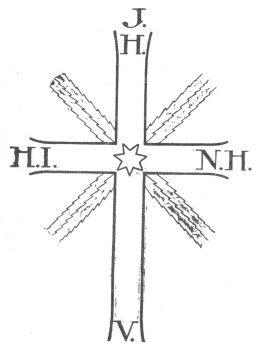
"Close Not the Ends of My Cross."

The Exoteric Church hath closed the ends of His Cross. Wherefore they are exoteric, and shall not ever be esoteric until they open the ends of that Four-Way Path. Open thine eyes and thine ears.

Book 1 Chapter 6, NO GOOD THING CAN EVER PERISH

A DWELLER ON TWO PLANETS

OR

THE DIVIDING OF THE WAY

BY PHYLOS THE THIBETAN

The First Book

CHAPTER VI

NO GOOD THING CAN EVER PERISH

As antedating the reign of Rai Gwauxln, attention is called to a period of time embracing four thousand three hundred and forty years, inclusive of the main events of Poseid history. This interval, notwithstanding its long duration, had been singularly free from internecine wars, and, while not wholly unmarked by martial events, was certainly more peaceful than any subsequent world-epoch of equal length occurring within the one hundred and twenty centuries whose lapse furnishes the incidents of this history.

At the initial date of the period referred to, the Poseidi, a powerful, numerous race of mountaineers, semi-civilized at best, but of splendid physique, had swept down "like the wolf " and had, in many sanguinary contests, finally conquered the pastoral people of the plains, the Atlantides. The war was long and fierce, consuming years in its duration. The admirable valor of the hill-tribes found almost its equal in the desperate courage of their primitive foe; one body of combatants fought for fife and, like the Sabines, for the preservation of their women against capture by mate-seeking tribes, while the other warred for conquest and, like the Romans, for wives. It was superior strategy which finally gave victory to the Poseid hosts.

As time went on, racial coalition obliterated all distinctions, so that the union resulted in producing earth's greatest nation. Inconsequential civil wars had several times made a change of political complexion, so that Poseid had seen itself governed by absolute autocrats, by oligarchic and by the theocratic rule, by masculine and by feminine rulers, and at last by a republican monarchial system, of which Rai Gwauxln was the head, when I lived as Zailm, in Atlantis.

Gwauxln was of a long line of honorable ancestors, and his house had several times furnished successful candidates whom the people had placed on the throne, during the seven centuries that the present political system had ruled.

Such is the synopsis of the history of Poseid which I gathered from a volume drawn from the Agacoe library. I might relate other scenes, other features, of that long historic period, and show how Poseid came to found great colonies in North and South America, and in those three great remnants of Lemuria, of which Australia is but the one-third left to the world by that cataclysm which sunk Atlantis; also of how Atl founded certain large colonies in eastern Europe at an age when there was no western Europe, and in parts of Asia and Africa. But I will not do so here, although by and by reference will be made to our Umauran possessions, when such reference is relevant to the subject-matter of this history.

Fatigued with late reading in the absorbing history, I arose and went out into the quiet ravine in which our abode was situated, and my tired eyes rested upon a scene which in the glorious moonlight was one of fairy-like beauty.

In the bed of the ravine, quite near, was a miniature lake, but none the less a lake in seeming, because it was in fact only a good-sized pond. Bits of shore, then steep banks, flower-hidden; the song of the nossuri, and the calls of various other birds and furry-folk of the night-time, intermingled with the soft plash of falling water, the voice of the cascade which fed this lacustrine gem. Somewhere out of the night came the sound of flutes and harps and viols in harmony, rising in swelling cadence or lulling with dreamy languor, as the light breeze rose or fell. Over all shimmered the silvery rays of Nosses, round as a shield in her soft brilliancy, and oh! so beautiful! Presently, I turned from the lake, and looked down the ravine along which a few people were yet moving, despite the lateness of the hour, the fourteenth since the beginning of the day at meridian. Here and there the gleaming white rays of householders' lamps were observable, shining from underneath some seeming ledge, revealing the presence of quaint windows or doorways. But not on these did I gaze over long. I could not, with the wonderful Maxt, the greatest tower of human construction in the world, rising in the perspective. In the very mouth of the canon it seemed to ascend, with nothing between itself and me to interfere with the view. Although apparently near, it was in truth over a mile away from my dwelling.

In this year A. D., 1886, chemists count the process costly which produces the metal, aluminum. In that day, forces arising from the Night-Side rendered inexpensive the production of any metal which might be found in nature, either native, or as an ore. As it might be done to-day didst thou but know how, and that day is not far off when thou wilt again uncover the knowledge, so, in that time, we transmuted clay, first raising its atomic speed so that it became white light of a pale illuminating power and then reducing it to the, so to speak, chemical "mile-post" of aluminum, and this at a cost not nearly so great as in this modern day it takes to get iron from its ores. The mines of native metals, as gold, silver, copper, and so on, were valuable then, as now, requiring no processing save smelting. But a metal which might be obtained from any ledge of slate rock, or a bed of clay, was so inexpensive as to be the chief base metal in use.

Of aluminum was the giant tower of the Maxt constructed. I could see its base from where I stood, an enormous cube of masonry, then the superstructural round shaft of solid metal of the tower proper, a dully white, tapering column, lit by lunar rays. From base upward, my gaze traveled until it rested on the top, an apical point nearly three thousand feet in height. Entranced by this crowning triumph of the scene, I gazed at the heaven-piercing shaft; sentinel over the garden city, warding off the lightnings, when the lord of thunder was abroad; and all my thought was of its grandeur, and its majestic beauty.

"How often, oh, how often,
In the days that have gone by-"

I have stood and gazed on some scene of loveliness, or of sublimity--handiwork of God, or possibly of man--God in man! And, as I have looked, my soul sang with praise, and my breath was the breath of inspiration. Always in such an experience, the soul, be it that of man or beast, takes an advance step. However much a soul may be steeped in sin or misery, synonymous terms, an inspiration breaks over it, and bears away a little of its sordidness, a little of its pain and fever.

So, therefore, the glories and marvels of Atlantis the Great were not in vain. Thou and I, reader, lived then, and before then. The glories of those long-dead centuries seen by us have lived enshrined in our souls, and made us much, aye, most, of what we are, influenced our acts, soothed us with their beauty. What, then, though the forms of the dim, mysterious past are effaced from all existence save in the record of the great book of life, the soul? Their influence lives, and forever. Shall we not, then, strive that our labors may ennoble, may live in soul and in spirit, and be looked back upon by ourselves and others, even as I, here, look back upon the record of my dead, but ever-living, past? It is a great joy thus to have attained the eminences of the spirit which enable me to scan the history of lives from which I passed through the portal of the grave; lives which now I am returned to gaze upon through the eyes of a different personality, a personality strung, greatest one of a chain, like pearls upon a thread, teaching me I AM I! Smoky, some of these pearls; black, others, or white or pink, aye, some are even red! Could tears add to their number, I would have more.; oh! so many more, for the white ones are so few, and the smoky, the black and the red, so many. But my pearl of great price is my last life. Of white is it, and by my Master was it cut cruciform. When He gave it me, He said, "It is done." Verily so! It marks the junction of finity with infinity. So is it the period set to all time, for me, save I elect.

Book 1 Chapter 5, LIFE IN CAIPHUL

A DWELLER ON TWO PLANETS

OR

THE DIVIDING OF THE WAY

BY PHYLOS THE THIBETAN

The First Book

CHAPTER V

LIFE IN CAIPHUL

The new life presented very many novelties to my mother and myself, coming into the midst of urban environments from the mountains, as we had so recently done.

After learning more about its conveniences, I very readily harmonized myself with the new requirements. My attire I altered to suit the city styles, while my bearing being reserved, I was enabled to appear at case, an appearance supported in continually increasing degree by the fact that I steadily gained in self command.

The indoor life of a student, when I had enrolled myself for attendance at the Xioquithlon, proved so enervating to one accustomed to unhampered freedom, that I found myself obliged to follow some scheme which would afford me needed exercise.

After some thought, together with fortuitous information which I gained, I went to the District Superintendent of the Department of Soils and Tillage, and requested that official to show me some piece of land which I might cultivate, not necessarily for profit, but for exercise, telling him that I was a student.

The Superintendent, with official indifference, laid before me a platted map of the lands adjacent to Caiphul.

In speaking of distances I have consulted the probable convenience of my readers, and used feet, yards, miles, and so on, as nominal quantities. I refer to this now, remembering that our system of measurements was founded on a principle similar to the modem Gallic or metric system. But its unit was not the ten-millionth part of the terrestrial quadrant. Instead, it originated from the great Rai of the Maxin Laws. As previously remarked, this monarch had introduced all conceivable reforms, and among others was this of replacing with a uniform system of measurements the clumsier, though not wholly unscientific, method previously in use. The circumference of the earth at the equator, as determined by astronomers, had served as a basis, just as the modern metric system of a fraction of the quadrature of the earth's north and south polar division does to-day. But this standard was not regarded with unfailing confidence; it was feared some error had crept into the original calculation, and while if it had the rod of gold used as a register would have served all purposes, being unchangeable, still such is the human wish to be as perfect as possible, that, as I have said, the fear of an error annihilated confidence. Every man who chose to do so set up a private standard, based on any scheme which suited himself, a condition of things which led to deplorable fraud throughout the empire.

The Rai of the Maxin instituted a system so admirable that it was immediately accepted as absolute authority, more especially as no man doubted that it came from Incal.

The Rai had a vessel constructed of material which underwent the smallest known contraction or expansion under the influence of cold or heat. This vessel was interiorly a perfect hollow cube, of the exact size of the Maxin-Stone. A massive tube was also made of the same substance, some four inches in interior diameter. Into the cubic vessel was poured precisely enough distilled water, of a temperature of 398 Fahr., to fill it, and leave no bubble of air within the hollow. This water was then drawn off through a faucet into the tubular vessel, the same low temperature being carefully maintained. The exact height of the water was then graven on a rod of the same metal of which the vessels were made. The next step was to heat the water to 211.95 Fahr., both this and the other process being performed at the sea level on a uniform summer day. Under the heat, the water expanded in an appreciable degree, and the almost boiling point was marked as in the other instance, and the difference on the rod between the two graven lines was made the unit of lineal measurement, from which all other measures were derived, that of weight being the weight of the hollow cube full of water at 398 Fahr. I use the Fahrenheit thermometrical scale because to thee our Poseid scale would be Pardon this digression, since it reveals another of the phases of life in that long-past age.

To return to the Superintendent's office. This person, having laid before me a map of unrented areas--it will be remembered that there was no owner of land except the government--turned to other business, leaving me to study the plat at pleasure. Running my eye over the printed descriptions, I found that a tract of about five acres, on a part of which was an old orchard of various kinds of fruit trees, was to be had at a distance of some eight "vens", (nearly the same number of miles) from the city, but farther up the peninsula. Its former tenant had leased it for a period of fifty years, but by reason of his death the property was left vacant, and was consequently again for disposition.

The fact that students were often hard pressed for means on which to live was taken into account by the government, which in all of its dealings with this class allowed better terms than were accorded to any other social division.

The property under consideration attracted me from its description, viz., "An area of approximately eight ven-nines (five acres) with a dwelling of four rooms, spring water piped over the house; one ven-nine devoted to garden flowers, and six to fruit trees fifteen years of age. Terms (with all conveniences) to students-one half of the fruit crop, and all perfume flowers grown, delivered to the Agent of Soils and Tillage Department. To other persons than students, four tekas per month (ten dollars and twenty-three cents). Not leased for less than one year.

I concluded to lease the place, for I learned that "all conveniences" meant vailx transportation, telephotic (naim) service, and a caloriveyant instrument, which latter would save fuel, energy to be converted into heat for cooking and other purposes being transmitted by the "Navaza," a range of material forces denominated in these thy modem days "earth-currents," but also including those of the higher ether, a range which ye shall yet find and utilize as did Atl, for are ye not Poseid returned? I have said it. Ye lived then; ye live now. Ye used all these forces then; ye shall ere long use them all again.

Having decided to take the property shown me, I so stated to the official, whereupon he furnished me with a blank contract, helping me to fill it out properly. As a glimpse into that long-fled epoch, I give a copy of this leasehold:

"I, ............................. year., of age, of the ........... sex, and by occupation a ........., do covenant with the Department of Soils to lease block ............ in district ............ described as follows: ....................... And I do agree to take ..................... this for ........... years, the same being smiled upon by the Most High Incal."

I took the place for a term of eight years, expecting to he a resident of Caiphul during at least that period of time as a student of the Xioquithlon.

It seemed no small thing that I could have conveyance by vailx from my leasehold to the Xioquithlon, and thus enjoy a daily trip through the air. Vailx, like the modern cab, might be sent (or by telephone, and respond for service in a short time after the call.

It was customary with all newcomers in the city to make a visit to the Agacoe palace and gardens m early as might be convenient after their arrival. Two hours in each week the Rai (emperor) sat in the reception hall, and during these two hours visitors thronged the corridors and passed in double ranks before the throne. After this ceremony, all who chore were free to wander unrestricted through the gardens, visit the menagerie, where every known species of animal was kept, or to go through the grand museum or the royal library. With many it was a pleasurable custom frequently to spend the day at Agacoe, on which occasions lunches were brought and a quiet picnic held under the great trees beside fountain, lake or cataract.

I must now return to that time when my mother and myself were wholly unfamiliar with city usages, in order that the reader may accompany us through scenes of novelty. Let us begin with the visit to Agacoe.

An acquaintance, at that moment gained, guided us to the palace, taking us with himself in a car into which he ushered us. At this time these cars were a novelty to me, and consequently their manipulation became a subject upon which to inform myself.

Our friend took a small coin from his purse and dropped it into an aperture in a glass-fronted box at one end of the car, The coin could not miss falling in such a way as to rest in the bottom of a glass cylinder, a very little greater in diameter than the money itself. Two metal points which projected into the lower end of the cylinder, but did not approach each other nearer than a quarter of an inch, were in the bottom of the tube. When the coin fell upon these a little bell rang, and our friend then raised a lever in the carriage, which lever had a lock-bar over it until the bell rang. This bar had, With the closing of the circuit by the coin, automatically slipped back, at the same time ringing a bell as above noted, thus releasing the lever. When the latter was raised the car moved suddenly but easily out of the station. It swung from its over head rail, only the peripheries of its large suspensory wheels being visible, for together with their axles they were mostly hidden by a long metal case which extended from one wheel to the other, and within which, a low, humming whirr could be beard, a sound produced by the mechanism of the motory apparatus. The plan of making the passenger do duty as engineer and conductor also was a good one, seeing that the processes required so little knowledge or trouble. As we left the car at the main entrance depot below Agacoe terrace, our friend replaced the lever, the bell rang again, the coin dropped from sight into a strong box underneath, and the vehicle was ready for other passengers. At the grand entrance, a gate which was a marvel of architectural beauty, our friend bade us adieu, entered a car which hung from another track, and was soon disappearing at lightning speed to some yet more distant destination. Glancing at the directory. which hung above that particular line, I saw that it bore the legend in Poseid characters, "Aagak mnoiinc sus," that is "City Front and Grand Canal," to make a free translation. Wishing to inform myself concerning our friendly guide, I asked some one who had interestedly watched the arrival of our little party, who the gentleman was. The reply given was:

"A, great preacher, who foretells the destruction of this continent, and bids all men so to live that they will not fear to meet One who, he says, is the Son of Incal, who shall come upon the earth in days yet very far off. He says that this Son of God shall be the Savior of mankind, but that many shall not know Him until He shall have been put to death. Twelve shall know Him, but one of them will deny Him in the hour of His last peril. Indeed, it is a subject of very exceeding interest, albeit one I do not very well understand; yet as Rai Gwauxln, In-be good to him! showeth this preacher all favor, and saith of him, 'He speaketh verities,' therefore is he attentively received by every one."

Reader, even in that far past age of the world truth was dawning, and this, in the morning of the cycle, was a first ray of the bright sun of Christianity, the orb which even yet is not arisen in the fullness of its glory. I had that morning ridden in the same car with the first prophet who announced the coming of our Lord Jesus Christ, exhorting all of his hearers so to live that their souls might be turned as virgin soil to the rising Sun of Truth, and thereby be made ready to receive the Master when, after the death of their then possessed corporeal bodies, they had returned to earth from Devachan as reincarnated souls. Sowing the seed by the wayside! It fell on me when at a somewhat later period I heard the prophet speak in impassioned eloquence to the specially assembled Xioquithli (students). I know it fell on fallow soil, when I compare my life now with the lives past; yet, for long, the seed lay dormant, and while it did so the bitter experiences of sin and error arose and swept my life outward on a wave of scorching fire, which required another incarnation to heal the scars it left.

As we stood beneath the portal at the grand entrance to Agacoe, we, unsophisticated mountaineers! could not know, when a uniformed guide accosted us, that the emperor, on his throne half a mile distant, was in that same moment perfectly aware of our personal appearance and also of the very words we used and our tones.

To me the soldier said:

"And thou, whence comest, and what is thy name?"

"I am called Zailm Numinos, and come from Querdno Aru."

"This visit--is it thy first, or hast thou previously been here?"

"Not ere this; neither I, nor my parent here by my side."

"So! I will provide thee a conductor. Thou wilt find him at yonder gateway. One more question, an' it please thee; thy mission in Caiphul?"

"I am come to study xioq in the Inithlon; my mother doth purpose to keep our house."

"'Tis well. Thou mayest go."

This colloquy occurred at the great portal giving entrance to the terrace above. The sentry sat behind a richly wrought gate. of bronze metal and gold, very slight, but all sufficient to bar unwelcomed progress. At his back was a large mirror in the heavy arch of the portal. This reflector was suspended by two burnished copper rods in such a manner as to prevent it from touching the side of the niche at any point. Could I have looked behind it, I would have seen an arrangement of metallic cords much resembling those of a piano, together with much other mechanism which at the time would have meant nothing to my untutored mind. How was I to suspect that this brightly polished metal sheet in which, as in a calm lake, the whole interior of the archway was reflected, was an ingenious automatic messenger? That some one of the myriad wires behind it was vibrant to every possible inflection of the voice, or to any sound whatever, and that when I spoke every briefest sound I uttered was sped along the natural earth-currents which sprang from nature's Night-Side responsive to the control of man, and heard by the Rai on his throne. No more did I dream that, simultaneously with this telltale, our imaged reflection was likewise conveyed to the same august presence. But such were the facts.

A few steps brought us to an inner gate made of fenestrated iron plates which, upon the pressing of a button at the side, arose between standards to give beneath. At this point we found the guide whom the guard had provided. I deemed his silence in indication of gruffness, not knowing that he had received orders, ere we came unto him, which directed him to conduct us to the royal presence, and needed from us no repetition of our wishes. His quiet remark, "I understand," when I began to tell him what we desired, prevented more words on my part, for I felt a sense of injured pride at his reserve, so different from the freedom of my mountain associates; and there were so many of these haughty city people! I determined to give this man a lesson, and considered how I might best let him know that I thought his manner overbearingly out of place for one in his station. That he already possessed all necessary information concerning us I did not imagine, since, if the distance from his post to the other gate was not great, it was obviously too far for our low-spoken tones to have been heard. The unsuspected mirror had done its work here also, although we knew it not.

"Come," said this haughty fellow, "I will conduct thyself and mother."

"Mother!" I thought. "How does the fellow know that, one so fair and so young looking is my mother? She might be my sister, or even my wife, for might he knows to the contrary." The supposed presumption of the man nettled me, for I was proud not only of my mother's youthful appearance, but also of my own fondly fancied mature looks; I had not infrequently been told that I looked seven or eight years older than I really was. Bad the foolishness of such a pride in my personal appearance been fairly presented to me, instead of feeling an ill-defined resentment at a seeming presumption, I would have laughed at its absurdity, and put it aside as unworthy of one having such high-aimed ambition. As it was, it merely resulted in stiffness of demeanor as a retaliation for the imagined over-bearance, and, mostly to my own detriment, caused somewhat of an obliviousness to sights and surroundings I had better have noted at the time. Though I did not laugh then, by reason of the obtuse view caused by my ignorance, I have laughed, since, as I looked back over the record of the past. So many thousand years as have since elapsed may make it seem laughter at long range, but, "'Tis better late than never," fitly applies here!

We seated ourselves as directed, in a car of lighter build than those used on the public avenues, and also of a different shape. It was not until we were fairly in motion that I realized how absolutely different was its construction and propulsive method. Well used as I wished to appear to all these novel things, I gave a telltale start when the conductor touched a lever and the vehicle rose into the air like a soap-bubble, steadied itself, and then darted up the incline to the edge of the level ground surrounding the palace. Here we left the cigar-shaped vehicle and entered a car which ran upon rails. When we were again in motion, we made a half circuit of the building, and then shot across the plateau directly into the dark, yawning mouth of one of the great stone serpents. Instead of ascending at the same angle as did the body of the reptile, our car glided along on a horizontal plane. As we entered, a sudden illumination lit up the gloom where an instant previous all had been darkness. From this pleasant surprise my attention was attracted to the brilliancy of the walls about us, which seemed to flame with red, blue, green, yellow and all other tinted flashes of fire, so that I can find no simile more fitting than comparison to the sunlit dews on the myriad webs of morning lawn-spiders. I forgot my own haughtiness, and asked concerning the cause of this dazzling effect, and was answered that the mansions had finished the walls with a mortar in which colored grains of glass had been incorporated.

In the midst of our admiration our horizontal progress ceased, and I saw that we were at the bottom of a sort of well, around the sides of which the track coiled in upward spirals until it seemed to cease just beneath a ceiling vaguely visible from the light cast upward by ourselves as we swiftly circled the incline. As we came directly beneath the ceiling a sweet toned bell rang twice, and immediately afterward the entire ceiling slid noiselessly aside, allowing our carriage to pass through. Behind us the well again closed automatically and we found ourselves in a splendid apartment, of which the size was not apparent, owing to the many swinging screens of carmine silk, the royal color, as well as to the foliage plants, which made miniature sylvan vistas. The flowers and song-birds, the fountains and perfumed air, with the cool shade after its heat outside, for we had not been long enough in the elevator-well to become cool, all made what seemed here a paradise. The ceiling of this great room was visible only here and there, being in most places hidden by petulant vines. Through all this harmony of vision, trembling in the air. over, under, around about were sounding entrancing musical cadences, to which, as to an inspiration, the birds replied in rivaling chorus. In and out, amongst this edenic scene of color, sound and scent, past choice statues and fairy, graceful fountains, our car glided with a noiseless speed which front its even motion aided the illusion that we remained still, and all the vision of delight shifted about us as about a center. And this was a marriage of art and of science; from their union sprang the fair dream, a triumph of human skill and knowledge!

In every direction cars were coming, going, or at rest, containing people dressed as for a gala day, the various distinguishing colors of their turbans denoting their social rank. Poseid, like other countries then and since, had its social castes, as the governmental, the literati and ecclesiastics, the artisans, a limited military, which served it as a police and sanitary corps, and so on through the usual familiar list. The apparel of all classes was fashioned in the same general style, until it came to the headdress--all of the people wore turbans--which article of raiment differed in color according to caste. Thus, the turban of the Sovereign was of pure carmine-hued silk; of the councilors, a wine red, and of lesser officials, a pale pink. The turbans of the soldiery were deep orange for the ranks, and lemon chrome for the officers. Pure white marked the priesthood, and gray the scientific, the literary and artistic classes. Blue distinguished the artisans, mechanics and laborers, while, green denoted all who, for any reason, either immaturity or educational lack, did not enjoy the right of suffrage. Notwithstanding that these caste indices were strictly adhered to, they resulted in good, rather than otherwise, for caste conceits did not find place among those who wore any color but green, since dignity of labor was a feeling of such vigor that there was no envy of one class by another. As for those who perforce wore the green, those who did so because of not. having come to their years of majority would grow out of the color, while those who lacked sufficient education to entitle them to another hue, felt the stigma attaching to their grade to be a reason for extra efforts to attain a more honorable station in life.

While I hid been studying the various topics presented for thought, our ear was deftly made to avoid collision with that of a lady who came swiftly onwards, apparently heedless of her course. while she was putting in place a loose end of her gray turban, showing as she did so the flashing rays from it ruby, a gem that only royalty might wear. Our car wheeled into an augmenting procession of carriages and presently carried its into it second apartment. But, the royal maiden of the gray turban and ruby--my thoughts were still with her! How radiant was her beauty! 'Twas my first sight of the Princess Anzimee--but I must not anticipate!

Th, apartment into which we were now come was smaller than the one we had just left, but yet of no mean extent. Everything here was of brilliant, flashing carmine, except an elevation in the center of the room. This was of circular black marble steps, or small terraces, the top, which was twelve feet across, being surmounted by a dais of some dark wood, upholstered in black velvet.

It should here be remarked that black was a representative hue and included the symbolism of all colors, thus denoting, as used on the throne, that he who sat there belonged to every class; and this was the fact, since Rai Gwauxln was not only sovereign and chief of the army, one of the high priests, a literate, scientist, artist and musician, but was also well acquainted with the duties of artisans and machinists.

In front of the silver railing which surrounded the throne our carriage stopped out to one side of the moving line, obedient to a gesture of the emperor. The guide bade us alight and, opening a little gate directed us to ascend the steps of the dais to the feet of the Rai. My heart beat fast as I obeyed, and though pale with causeless trepidation, I had myself well enough under control to offer the support of my arm to my mother, and I think I never walked more proudly erect in my life. At the top of the steps we knelt and waited the command to rise again, nor had we long to wait.

As we arose Rai Gwauxln said quietly:

"Zailm, thou art young for a student so ambitious as I know thee to be."

"If it please thee to have me so, I am happy," I made reply.

"Hast thou learned what the primary schools for the young have to teach? For this must be ere thou couldst gain admission to the Inithlon."

"I have done even so, Rai."

"May it please thee, Zailm, to confide to me what studies thou dost chiefly prefer?"

"Zo Rai, I count it an high honor to speak. Of my own fancy I have not chosen any studies. Yet, I do not doubt that Incal hath Himself ordered my preference, indicating geology above all else. Also He hath given me a natural disposition, which, if I consult, points that I study languages and literature. I am not yet decided, but think well of these branches of xioq. But geology He directed through a wild experience."

"Thou dost interest me, lad. Yet this is an hour of state duties, and I must not neglect my people who come before me to pay respects to their monarch. Take, therefore, this pass, and at the fourth hour come again to the portal at which thou didst enter into Agacoe. I bid thee welcome."

I took the present and on my way down the steps of the marble terrace saw that It bore the inscription, "Rai's presence. Permit bearer."

We had with us a packet of dates and pastries and were therefore under no necessity of leaving the gardens for luncheon. Our guide took us again in charge, and after learning that we desired to remain within the grounds about the palace, threaded our conveyance through the mazes of the building once more, letting us out of the carriage beside one of the pillars of the peristyle. From the point where we alighted, and where we parted from the guide, I looked about to ascertain the direction of the grand entrance, and seeing that it was in the east, I escorted my mother to a seat under the side of a giant deodar, or, as they were called in after centuries, "Cedars of Lebanon." On a bough over head sat a mockingbird, or, as we call them, a "nossuri," signifying "songster of the moonlight," in reference to the habit of these lovely, gray-coated birds to fill all the still, moonlit air of night with their wondrous melody. Not that they do not sing by day; indeed, the bird was even then singing, but the naming these "nossuri," from "nosses" (the moon) and "surada" (I sing), was a distinctive Poseid ornithological term.

At the appointed hour we went to the place designated and, presenting the passport, were shown into a conveyance, and after again ascending the eminence the guide ushered us, into a small apartment of most luxurious appointments. By a table almost hidden by books sat the Rai, listening to a well-modulated voice which was relating the latest news of the day, but the owner of which was not visible. The Rai turned as the usher announced us, dismissed the servitor, and bade us a fair eventide. Then he turned to a case shaped something like that pleasing instrument, the modern music box, and turned a key in it with a soft snap. On the instant the voice of the unseen speaker ceased in the middle of a word, and I knew as we complied with our sovereign's request to be seated that I had for the first time heard one of the vocal news-records of which I had so frequently read.

During the ensuing hour I related the story of my life, its hopes, sorrows, triumphs and ambitions, in answer to the questions of the genial yet not seemingly old man to whom any living person might pay homage and suffer no loss of dignity, because his regal courtesy showed how very manly a king or how kingly a man might be.

I told how each new fact had but added to my appetite for yet greater knowledge. Then I recounted the experiences of my trip to the summit of Rhok, a recital interrupted as I made mention of the name of the mountain. "Rhok!" exclaimed the imperial listener, "dost thou mean to tell me that thou didst ascend that awful height, in the night, alone, a mountain which all our maps assert to be inaccessible except to vailx? Perchance, Zo Rai, that the only route was known to but a few of us mountaineers; I have read that it was thought inaccessible; but--" I hesitated, whereat the Rai said, quickly:

"Yea, speak-! 'Twas to judge. of thee that I have listened to thy recital, for well do I know all thou hast told me. I could have told it ere thou didst, and can tell all the rest thou wilt say; I have desired to hear thee to judge of thee; thy story I have known ever since I saw thee first. I am a Son of the Solitude," he added. I was silent, for the thought abashed me--that he already knew all. Seeing this, he said: "Go on, my son. Tell me all; I wish it from thy lips, for I am interested in thee for thyself."

Thereupon I resumed the interrupted narration, and described my rendition of homage to Incal, and the petition for His aid; His quick granting of my prayer; then of the eruption of the volcano and the peril in which it had placed me. At this the Rai remarked: "Then thou wert eye-witness to that outburst of the terrene forces? I have been told that it wrought great local changes, and that there is now a lake of extensive size where before none was, at the foot of Rhok; it is nine vens across."

I was still unsophisticated enough not only to be curious as to whether the Rai had seen the eruption, for I did not understand the significance of his being a Son of the Solitude, and as to his knowing about all my adventures, though I did not doubt that to be a fact, I took it to be due to, a keen judgment of possibilities that, this knowledge was his, but as an addition to my unsophistication I asked the Rai if he had seen these things.

"Artless youth!" said the Monarch, smiling, "I do not often find so frank a person! Thou art indeed a son of the mountains! But thou wilt not long remain thus, I fear me, in this thy present environment! I will answer thy question even as thou askest. Know, then, that no large convulsion of nature can occur that is not immediately automatically recorded, both as to its approximate extent, and its location, and a photic exhibition of every portion of the affected locality shown forth afresh from instant to instant. All I had in this case to do to see this depiction was to go into the proper office, which is in this building, and there the whole scene was before me quite as vividly as it could have been to thee, for I was able to see the outburst, and also to hear it, by means of the naim. Truly, what I saw lacked one element which doubtless made it a little more vivid to thee than to me, that of bodily peril; but as to me this element was nil--thou wilt some day know why--therefore the scene lacked for me no element that mere presence could have added."

I marvelled greatly to learn of such instrumentalities concerning which Rai Gwauxln had informed me, and pondered with delight the prospect that I also might some day personally know and have access to them. The Rai resumed:

"Thou saidst that thou didst find treasure of native gold in two separate places. Didst thou ever seek to recover that which thou didst obtain before the eruption occurred? No? It matters little. Zailm, it is said that ignorance of the law is not valid excuse for its infraction."

The demeanor of the Rai had become one of great gravity, and I felt a foreboding not at all agreeable.

"Still, I Pan convinced that thou didst know nothing of the involved violation of the statutes when thou didst fail to report the finding of the. treasure. I shall not, therefore, punish thee. "But, here the emperor paused, lost in thought, while I, not till then aware that I had done anything wrong in the view of the law, paled so visibly with apprehension that Gwauxln smiled a little, and said:

"But they who now work this mine, and they who receive the gold-dust and ore shall not so escape. With them it is conscious crime, made worse in that they not only ignore the statute but do also defraud thee. Of thee I will require only so much expiation as may be in demanding their names of thee."

This command I perforce obeyed, yet thought with regret of the wives and children of the culprits. Innocent these; must they suffer likewise with the real transgressors? The Rai seemed to know my thought; or if he did not, he at least spoke in accord, asking:

"Have then, these men wives, families?"

"Yes, it is true!" I replied, so earnestly that once again the monarch smiled and, encouraged, I begged him to be lenient for the sake of the innocent.

"Knowest thou aught of our punitive system, Zailm?"

"Very little, Zo Rai; I have heard that no malefactor ever comes from the hand of justice without being better, but I imagine the treatment to he very severe."

"As to severity, no. And as to the other, if men are made better who have erred, so they will not be apt to again err, would not that redound to the advantage of the families of the criminals? Behold I will have these men brought before the proper tribunal, and thou shalt see the process of reformation. Methinks thou wilt thereafter desire to learn anatomy and the science of reformatory punishment, as an addition to thine other studies in Xio. Furthermore, I assure thee that thou shalt in no case suffer confiscation of that mine, but shalt possess it; and if thou wilt give it to the national treasury, while thou art a student thou shalt in no wise feel a lack of money. Afterward, when the years of study have passed over thy head, if thou art successful as a student, lo! then will I make thee superintendent of that mine. And if thou dost so use as to prove thyself faithful over its few things, I will make thee master over many things. I have spoken."

Rai Gwauxln touched a service-button, whereupon an attendant entered, to the guidance of whom he entrusted myself and mother, bidding us: "Incal's peace be with you both."

So ended an audience which influenced the course of the years and bent life's great twig, making me feel a proud consciousness of being a repository of the trust of a revered friend, a consciousness which has ever proven most patent in this world of trials and temptations.

Book 1 Chapter 4, "AXTE INCAL, AXTUCE MUN"

A DWELLER ON TWO PLANETS

OR

THE DIVIDING OF THE WAY

BY PHYLOS THE THIBETAN

The First Book

CHAPTER IV

"AXTE INCAL, AXTUCE MUN"

In their consideration of natural laws, the philosophers of Poseid had come to the conclusive hypothesis and working theory that the material universe was not a complex entity but in its primality extremely simple. The glorious truth, "Incal malixetho," was clear to them, that is, that "Incal (God) is immanent in Nature." To this they appended, "Axte Incal, axtuce mun," "To know God is to know all worlds whatever." After centuries of experimentations, recording of phenomena, deductions, analyzing and synthetizing, these students had arrived at the final proposition that the universe--not here dwelling on their wondrous astronomical knowledge--was, with all its varied phenomena, created and continuously kept in operation by two primal force-principles. Briefly stated, these basic facts were that matter and dynamic energy (which were Incal made externally manifest) could readily account for all things else. This conception held that only One Substance existed and but One Energy, the one being Incal externalized and the other His Life in action in His Body. 1 This One Substance assumed many forms under the action of variant degrees of dynamic force. Because it was the basic principle of all natural and a psychic, but not of spiritual, phenomena, allow here a postulate with which not a few of my friends will find themselves at least partially familiar, perhaps wholly so. Commencing with dynamic energy as first sensibly manifest in the example furnished by simple vibration, the Poseid position may be outlined as follows: A very low rate of vibration may be felt; an increase of rate heard. For example, first we feel the pulsing of a harp-string, and then if the rate of vibration be increased we hear its sound. But substances of other sorts, able to endure greater vibratory impulses, manifest under more intense action, following sound, first heat, then light. Now again, light varies in color. The first color produced is red, and thence, by a constantly augmenting vibratile energy, orange, yellow, green, blue, indigo, violet, each spectrum-band being due to an exact and definite increase in the number of the vibrations. Succeeding the violet, further augmentation gives pure white, more gives a gray, then more extinguishes light, replacing it with electricity, and so on through an ever-increasing voltage until the realm of vital or psychic force is attained. This may truly be regarded as going inward from those manifestations of nature, of Incal or God, or the Creator, which are external; as going toward the internal from externality. A very brief study will show thee that the laws of the physical world continue inward to their spiritual source; that they are, truly, but prolongations the one of the other. But, ere entering into the realm of vibration, whose doorkeeper is sound, we find that the One Substance vibrates in variant, but definite, dynamic degree, and that thence arise each and all of the diverse forms of matter; in short, the difference between any given substances, as gold and silver, iron and lead, sugar and sand, is not one of matter, but of dynamic degree solely. Do I weary thee, my friend? Bear yet a little longer, I pray thee, for it is an important matter. In this dynamic affection the degree is no loose limitation, for if the vibratile rate be a shade variant, lower or higher than in any special material which may be under notice, the variation will be different in appearance and in its chemical nature; thus to proper substantial entities definite if enormous vibrations per second may be imparted, and the resulting substance (for light is substantial) is, say, red light, 2 but if one-eighth greater it will be orange, and if more or less, then the resultant must inevitably be a reddish orange, or a yellowish, respectively. It thus appears that certain definite degrees exist as plainly as mileposts, and that these major degrees are absolute. In other words, the One Substance is not as readily kept between these greater definitions as upon them, a fact which explains the tendency of composites, or intermediate affections, to decompose into the definite or simple elements; chemical compounds are not as stable as chemical primaries. The modern "wave theory," that sound, heat, light and correlatives are but forms of force, is only half correct; they are this, but they are more also. They are, in brief, affections of the One Substance by specific degrees of the One Energy, and except that the rate of this affection is vastly greater in the case of electricity than in that of lead or gold, there is no difference between these widely diverse appearing things. This is the energy by the Rosicrucians named "Fire," that which gives entrance to that. mysterious realm of nature penetrated only by the adept thaumaturgist, magician. Call these students it whose will all nature bends obedient, by whatever name best, please, thee, only bearing ever in mind that the real Magian never speaks of self or works, and is not known by his fellows to be what he is, save an accident hath revealed the secret. To this membership belonged He at whose command the winds and the waves were stayed on tempestuous Galilee. But He spoke not of Himself. Of that sublime brotherhood I will relate much ere long. No better proof is needed that all the variant manifestations are but variants of the odic force, the Rosicrucian "Fire," than this: offer resistance to an electric current, thereby reducing or diverting it against an opposing force, and thou hast light; oppose to this (are) light a combustible obstruction, and flame results. So mightest thou go on to the discovery soon to be made by the world of science, that light, all light, of the sun, or from any source, can he made to yield sound; upon this discovery hinge some of the most astounding inventions that thine age hath even dreamed of in its visions. But the primal discovery in this wonderful link, first of the sequence, will be the greatest of all, and so heralded. And this will be warranted, for the fact that it will be but a reincarnate unfoldment will not diminish its importance to mankind, nor the credit of its rediscoverer. In brief, the truths of our Father's Kingdom are eternal; have ever been, will ever be existent, and only the discoverers themselves will be new to the fact. The fact not being a new one in itself, nor new even to the world, but only to this age of it. Poseid knew that light gives out sound when correctly resisted. It knew that magnetism gives rise to electricity in the same manner and for the same reason. Thus, the loadstone exhibits magnetism; revolve it in the field of a dynamo and so cut the current and pile it upon itself, so to speak, and electricity develops. So, resist this and light appears; this, and heat comes; again resisted properly, and sound results, then next energy appears as pulsing motion. But these various processes may be "short-circuited" and all of the intermediate phenomena cut out.

Have I been wearisome in this discourse? If so, and I suspect that I have, the reward is at hand.

The Poseidi found that in the realm beyond magnetism were yet other forces, superior and more intense of pulsation, forces operated by the mind. And Mind is of our Father, and is the constantly creating source of all things whatsoever. Were the perpetual vis a tergo of divine creation to cease for one instant, in that instant the Universe would cease to exist. Now wilt thou see the sublime beauty of the Atlan postulate not long since repeated: "Incal malixetho. Axte Incal, axtuce mun." For down from His heights, marking the descent by "forcefalls" as a river marks declivities fin its bed by cataracts, comes this supreme power; comes far, oh! very far, adown its course to the cascades of magnetism, electricity, light, heat, sound, motion--and far off where the bed of this Divine stream becomes nearly level, exhibits those little ripples of material differentiation which thou termest chemical elements, insisting on there being sixty-three, when there is but One. From this knowledge came all the wondrous triumphs of that old age, and one by one they are emerging to-day after their long oblivion, till to-morrow they shall awake in crowds, and press to rediscovery by threes and fours, and then by platoons and companies and legions, till all the treasures of Poseid shall be again on earth, in air, and sea. O, bright to-morrow of time, and fortunate thou who shalt open thine eyes upon it and its marvels. And yet, although so fortunate, still shalt thou find it well behooves thee to temper all things by the spirit, and not to let the match of physical discovery outstrip the advance of the soul. O, sad shall be found any day wherein man approacheth the arcane treasury of his Father from the side of the blind physical eye; for if by this the whole world shall be gained, what shall it profit if it lose the soul?

Having thus acquired insight into a new realm, if it be new to thee, let me ask, and answer thou me: How explainest thou these two great phenomena, heat and light? They are not easy to explain; cold and darkness are not merely the absence of heat and light.

Having given the basis thereof, now will I show a new philosophy:

I have said that the Atlans recognized Nature in its entirety to be Deity externalized. Their philosophy asserted that force moved, not in straight fines but in circles, that is, so as always to return into itself. If the dynamism operating the universe acts in circular progression, it follows that an infinity of increase in vibration possible to One Substance would be an untenable concept. There must be a point in the circle where extremes meet and run the round again, and this we find between cathodicity and magnetism. As vibration brought substance into the realm of light, it must carry it out. It does so. It conveys it into what the Poseidi termed "Navaz, the Night-Side of Nature," where duality becomes manifest, cold opposing heat, darkness light, and where positive polarity opposes negative, all things antipodal. Cold is as much a substantial entity as heat, and darkness as light. There is a prism of seven colors in each white ray of light; there is also a septuple prism of black entities in the blackest gloom--the night is as pregnant as the day.

The Poseid investigator thus became cognizant of wondrous forces of nature which he might bend to the uses of mankind. The secret was out, the discovery being that attraction of gravitation, the law of weight, had set over against it the "repulsion by levitation"; that the first belonged to the Light-Side of Nature, and the second to Navaz, the Night-Side; that vibration governed the darkness and the cold. Thus Poseid, like Job of old, knew the path to the. house of darkness, and the treasures of the hail (cold). Through this wisdom Atlantis found it possible to adjust weight (positiveness) to lack of weight (negativeness) so evenly that no "tug of war" was manifest. This achievement meant much. It meant aerial navigation without wings or unwieldy gas-reservoirs, through taking advantage of repulsion by levitation opposed in overmatching strength to the attraction of gravitation. That vibration of the One Substance governed and composed all realms was a discovery which solved the problem of the conveyance of images of light, pictures of forms, as well as of sound and heat, just as the telephone thou knowest so well conveys images of sound, only In Poseid no wires or other sensible material connection was required in the use, at whatever distance, of either telephones or telephotes, nor even in caloriveyance, that is, heat-conduction.

To digress a little, it is to the employment of these and the higher forces of the night-side that seemingly magic feats of occult adepts, from the Man of Nazareth down to the least Yogi, are indebted for their possibility.

And now, let me close this chapter by saying that when modern science shall have seen its way to the acceptance of the Poseidonic knowledge herein outlined, physical nature will no longer posses any hidden recess, any penetralia, for the scientific investigator. Not earth, air, the depth of the seas nor those of interstellar space will hold secrets from that man who approaches from the Godward side, as did Poseid. I do not say that Atl knew the very all; it knew more than this day has yet uncovered, but not all. Yet, the search commenced then by them might be continued now by thee, for America, my people, thou wert of Atlantis. Of either, I can sing, "My country, 'tis of thee."

Footnotes

1 NOTE--As, in its outgoing impulse the Created draws away from the Creator it looks back to its origin and notes its progression-marks, that is, its multiplied realizations of its increasing separation from its Source. The greater this separateness, the greater the field (Matter) wherein these points appear, because the divine element in the Created has noted more points, or in other things, more material objects as being between it and its source. Only when we look back at these things we have sensed these thought-forms of God, do we perceive matter, for when we look forward to reunion with Him, matter disappears, giving place to Spirit.

2 NOTE--Redlight is stated to occur at 395,000,000,000,000 vibrations of that "ether" which by Phylos is termed the last form of matter below where matter ceases and mind begins. And the highest visible light vibration is placed at 790,000,000,000,000. So says science. But Phylos says: "Vastly higher than the high purple range where light ceases ordinarily to be visible, the One Substance again vibrates visibly. As a synchronous harp-string that responds to key of low C, for example, struck on another harp, will also respond to every C in the whole register, be it low, or middle or high, so the One Substance responds at 831,000,000,000,000; at, again, the next octave of vibration, and again at the next, where it becomes visible as the fatal Unfed Light, called in Atla the "Maxin," and again, by the Tchin as the "Vis Mortuus."

Book 1 Chapter 3, FAITH IS KNOWLEDGE ALSO, AND IT GIVETH TO REMOVING MOUNTAINS

A DWELLER ON TWO PLANETS

OR

THE DIVIDING OF THE WAY

BY PHYLOS THE THIBETAN

The First Book

CHAPTER III

FAITH IS KNOWLEDGE ALSO, AND IT GIVETH TO REMOVING MOUNTAINS

There is a saying, whose origin is dim through lapse of time, to the effect that "Knowledge is power." Within well-defined limits this is a verity. If behind the knowledge lies the requisite energy to realize its benefits, then only is it a true saying.

In order to exercise command over nature and her forces, the would-be operator must have perfect comprehension of the natural laws involved. It is the degree of attainment in this knowledge which marks the less or greater ability of the performer, and those who have acquired the profoundest understanding of the Law (Lex Magnum) are masters whose powers seem so marvelous as to be magical. Uninitiated minds are absolutely alarmed by their incomprehensible manifestations. On every side of me when I came from my mountain home to my metropolitan abode I found inexplicable wonders, but natural dignity saved me from appearing ignorant. Little by little was I to acquire familiarity with my environment, and thereby gain a knowledge of the things which have been referred to since I first mentioned the exchange of country life for urban surroundings. But these attainments of pleasing authority over nature demanded a special course. That course of study had not yet been determined upon by me, prior to my introduction to the city, for it seemed that the part of wisdom was to concentrate my energies upon specialties and not to scatter force by attempting generalities. To this end I determined to live for a more or less extended period without seeking admission to the Xioquithlon, and resolved to devote the interim to observation. I had been an extensive reader of books, which I obtained from the public library in the district where my mountain home had been. From these I had gained no inconsiderable understanding of social polity. The fact that there were but ninety-one elective offices in the gift of the people, while there were almost three hundred millions of Poseidi in Atl and her colonies, and according to a late census which I had seen, thirty-seven, nearly thirty-eight, millions of electors held First Degree diplomas, thus entitling them to hold elective offices, disposed me to think it extremely improbable that such a high preferment would ever fall to my lot. But if I could scarcely expect a ministerial office, I yet felt that I might, if I fitted myself therefor by gaining a prime diploma, attain to a high political level and hold an appointive position, and some of these were almost equally as honorable as a councilorship. What special subjects should I concentrate Upon? Geological research was very attractive to me, and by its numerous branches offered wide and alluring fields of opportunity. Then again, philology was almost as much so; my ability to acquire foreign languages was not inconsiderable, as I had found from studying a little volume descriptive of a land known as Suernis, a strange country, and of the language of which many examples were given; these I had without effort learned perfectly from once reading.

Several months of city residence at length found me determined to acquire all the geological knowledge that I could, for it was a study which I believed Incal had directed me to make, as also a knowledge of mines and of practical mineralogy. As co-efficients I purposed thoroughly to ground myself in synthetic and analytical literature, not alone of my native Poseid, but also that of the Suerni and Necropanic languages. Thus have I named the three greatest nations of pre-Noachian (pre-Nepthian) times. One of these nations was effaced from the earth, but the other two have, after terrible vicissitudes, survived till today; of them I will speak later.

The reasons which induced me to choose the curriculum which I have mentioned were, that as a geologist and coordinate scientist I hoped to make new discoveries of value, and to place them in book form before the world, at least before the Poseid peoples, who esteemed themselves most of the world, and end scarcely to be attained otherwise than by this course of study. The influence which I hoped to gain through such publications might lead to my becoming Superintendent-General of Mines, a political place not second to any other appointive office. There certainly would be other studies required of me if I entered the race for a prime diploma, but the ones cited were the most agreeable and would constitute my chief aspiration. As an aside, I may remark that those studies then selected, and afterwards mastered, led my nature to assume a bent which resulted, not many yews ago, in my becoming a mine-owner in the State of California-and a successful one, too. It so much more firmly fixed my linguistic leanings that, while a citizen of the United States of America, I was a master not alone of my native tongue, but also of thirteen other modern languages, such as French, German and Spanish, Chinese, several dialectal varieties of Hindustanie, and Sanskrit as a sort, of mental relaxation. Please not to regard this confession as due to boastfulness; it is not. I but make it in order to show thee, my friend, that thine own powers are not matters of heritage only, but recollected acquirements from some one, or it may be of all of thy past lives; also to give thee a hint of profit, to wit: that studies to-day undertaken, no matter how near to the evening of thy days, will surely bear fruit, not alone in thy present earth life, but in the experiences of subsequent incarnations also. We see with all we have seen, we do with all we have done, and we think with all we have thought. Verbum sat sapienti.

In the next chapter I purpose devoting some pages to a consideration of physical science, as understood by the Poseidi; more especially will I refer to the prime principles upon which it was based, inasmuch as neglect, to do this would necessitate the taking of many statements ex cathedra which otherwise might be clearly understood at the moment.

Book 1 Chapter 2, CAIPHULl

A DWELLER ON TWO PLANETS

OR

THE DIVIDING OF THE WAY

BY PHYLOS THE THIBETAN

The First Book

CHAPTER II

CAIPHUL

The Atlantean people lived under a government having the character of a limited monarchy. Its official system recognized an emperor (whose position was an elective one, and not in any sense hereditary) and his ministers, known by a name signifying "The Council of Ninety," and also known as "Princes of the Realm." All of these officers had a life-tenure in office, except in cases of malfeasance, which term was strictly defined and its provisions severely enforced; and from the operation of the law relating thereto, no exaltation of position was sufficient to secure exemption for offenders. No governmental positions were made elective, with the exception of one ecclesiastical office, and lesser positions in the public service were made appointive in all cases, the appointees being held to strict account by the appointing power, emperor or prince, who, for the use of this power was responsible to the people for the conduct of his placeholders. However, it is not the scheme of this chapter to discuss Poseid politics, but to describe the ministerial and monarchical palaces with which the nation furnished its elected officers, one for each prince, but for the emperor, three. In the main, the description of one of these buildings, both within and without, typifies that of any or all of the others, just as in the United States of America and other modern lands a governmental edifice is easily known to be such, by its general architectural features. A description therefore of one palace will serve a double purpose, that of presenting an idea of the most notable residence in the great Atlantean empire, since I will describe the main palace of the emperor; and, secondly, that of illustrating the prevailing style of governmental architecture in the period during which I resided in Poseid. Imagine, if it please thee, an elevation approximating fifteen feet in height,, ten times that figure in width, and that fifty times its height represents its length. External to the plane dimensions, on each of the four sides of the platform, which was of hewn blocks of porphyry, an easy flight of steps led from the lawns up to the top of the elevation. On the sides, these steps were divided into fifteen sections, while on the ends the divisions were only three, each being divided into lengths of fifty feet. Between the two sections nearest the corners each division consisted of a deep quadrangular recess, into and around which the stairs ran in uninterrupted continuity. The next, or third section, was separated from those on either side by a sculptured serpent of huge size, fashioned from sandstone and as faithful to life as art could make it. The heads of these immobile reptiles rested on the green sward in front of the stairs, while the bodies lay in full relief upon the staircases and reaching the top of the platform, wound about the massive columns which supported the pediments of the verandas of the superstructural palace erected upon the platform described, columns which formed a most imposing peristyle between the broad verandas and the steps. The succeeding division was a quadrangle in the steps, and the next, another serpent, and so around the building. It is hoped that this description is sufficiently perspicuous to give an idea of the tremendous parallelogram, encompassed with steps, guarded by monstrous ornamental, as well as useful, serpent forms, religious emblems, signifying not alone wisdom but also the appearance of a fiery serpent in the skies of the ancient earth, initiating the event of the separation of Man from God. Alternating with these forms were the recesses, relieving what would otherwise have been severely straight and wearisome lines. Surmounting this was the first story of the palace proper, its reptile-entwined peristyle holding aloft great veranda roofs, whereon were enormous vases holding earth to nourish all kinds of tropical plants, shrubs and many small varieties of trees, a luxuriant garden which perfumed the air, already cooled by numerous fountains playing in the midst. Above the first story, with its flower-filled porticos, arose another tier of apartments, surrounded by open galleries, the floors of which were formed by the roofs of those beneath. The third and highest tier of apartments had no verandas, although on all sides it had promenades, formed by the roof of the portico beneath. The same wild luxuriance of flowers and foliage rendered the stories of equal attractiveness. In all, song birds and birds of plumage were welcome guests, uncaged, but tame because they never received harm. Attendants, with blowguns to project noiseless darts, quietly destroyed all predatory species, as also they did-those which, having neither song powers, vivid coloring of plumage, nor the useful habits of insectivora to commend them, were therefore undesirable. Springing from the main roof of the palace arose graceful spires and towers, while the many jutting apartments, angles and groined arches, flying buttresses, cornices and multifarious architectural effects prevented any apparent heaviness in the design. Around the largest of the towers there extended from bottom to top a winding staircase, conducting to the rail-enclosed space on its summit, one hundred feet above the aluminum sheathing or roofing-plates of the palace. Agacoe palace was unique in the possession of this tower, differing thus from all other ministerial edifices. It may be explained that the tower had been erected as a memorial of the departure of a fair princess from the loving care of her imperial husband into Navazzamin, the shadowy land of departed souls, some centuries before my day. Such was the Agacoe palace. Its uppermost floor was in use as a great governmental museum; the middle was devoted to offices of the chief government officials, while the first flat was magnificently arranged and furnished for occupancy as the emperor's private residence. As not uninteresting, it may be noted that the yawning mouths of the stone serpents recently described served as doorways (of the usual size) to certain apartments in the basement, a fact which gives an accurate idea of the enormous size of these lithic saurians. The monsters were made with an eye to artistic proportion; their bodies were of carved gray, red or yellow sandstone, their eyes of sard, carnelian, jasper or other colored silicious stone, while fangs for their yawning mouths were made from gleaming white quartz, set on each side of the entranceway.

So much sawed and hewn stone forces the modern mind to wonder if the Atlanteans obtained the finished product through the unremitting toil of slaves, in which case we must have been a barbarous people, whose political autonomy was ever menaced by the uplifting forces of the social volcano which slavery always creates, or else we possessed peculiarly efficient stone-cutting machinery. This latter is the correct assumption, for our machinery for that purpose, like an almost infinite variety of other implements for every sort of service, was our pride amongst the nations. Let me here make an assertion, not for argument but to be understood in the light of subsequent chapters, namely, that if we as Atlanteans had not possessed this wide range of mechanical inventions and the inventive talent which gave us these triumphs, then neither would ye of this modern day have possession of a like creative ability, nor of any of the results of such genius. It may be that thou canst not understand the connection between the two ages and races whilst conning this statement; but as thou shalt draw nearer to the close of this history thy mind will recur to it with the fullness of comprehension.

Trusting that the effort has been successful to depict by words the appearance of Atlantean governmental edifices, let us next obtain an idea of the Caiphalian promontory, whereon was enthroned Caiphul, the Royal City, the greatest of that ancient day, within the limits of which resided a population of two million souls, unencompassed by walled fortifications. Indeed, none of the cities of that age were girt about with walls, and in this respect they differed from the cities and towns known to later historical epochs. To call my records of this Poseidic age history, is not exceeding fact, since what I relate in these pages is history derived from the astral-light records. Nevertheless, it precedes the histories handed down in manuscript, papyrus rolls and rock-inscriptions by many centuries, seeing that Poseid was no longer known in the earth when history's first pages were chronicled by the earliest historian using papyrus; nay, nor even yet earlier, when the sculptors of the obelisks of Egypt and the rock-inscribers of the temples cut pictorial histories in enduring granite. No longer known was Poseid, for it is to-day approaching nine thousand years since the waters of the ocean engulfed our fair land and left no sign, not even so much as was left of those two cities hidden away beneath lava and ashes and for sixteen centuries of the Christian era thought never to have had existence. Excavators dug away the scoriae from Pompeii, but from Caiphul no man can turn aside the floods of the Atlantic and reveal what no more exists, for were every day a century it were even so nearly three months of such lengthy days since the dread fiat of GOD went forth unto the waters:

"Cover the land, so that the all-beholding sun shall see it no more in all his course."

And it was so.

In preceding pages the promontory of Caiphul was described as reaching out into the ocean from the Caiphalian plain and as visible from a great distance at night because of the glow of light from the capital. For three hundred miles westward from Numea the peninsula projected outwards from the plain, averaging almost to its extreme cape. a breadth of fifty Miles and rising much like the chalk-cliffs of England directly from the ocean to a height of nearly one hundred feet to reach a plain almost floor-like in its evenness. On the point of this great peninsula was Caiphul or "Atlan, Queen of the Wave." Beautiful, peaceful, with its wide spreading gardens of tropical loveliness,

"Where a leaf never fades in the still, blooming bowers, And the bee banquets on thro' a whole year of flowers,"

its broad avenues shaded by great trees, its artificial hills, the largest surmounted by governmental palaces, and pierced and terraced by, the avenues which radiated from the city-center like spokes in a wheel. Fifty miles these ran in one direction, while at right angles from them, traversing the breadth of the peninsula, forty miles in length, were the shortest avenues. Thus lay, like a splendid dream, this, the proudest city of that ancient world.

At no point did Caiphul approach the ocean nearer than five miles. Though it had no walls, around the whole city extended a huge moat, three-quarters of a mile broad by an average of sixty feet in depth and supplied by the waters of the Atlantic. On the north side, a great canal entered the moat-a canal in which the outflowing waters of a large river, the Nomis, created an outgoing current of considerable swiftness. A current was thus naturally made to cause suction through the entire circle of the moat, of which the ocean supply entered at an ingress on the south side. In this manner efflux into the sea of all the drainage of the artificial circular island on which stood the city was allowed. Immense pumping engines forced fresh ocean water through large stone pipes and conduits all over the city, flushing the drains, furnishing motive power for all requisite purposes, for electric fighting and electric services of vast variety--but enough. Electric service? Electric power? Indeed we had deepest knowledge of this motor-force of the universe; we used it in countless ways which have yet to be rediscovered in this modern world of ours, and ways, too, which are every day coming more and more into recollection as men and women of that past age reincarnate in this.

It is not strange that thou art incredulous, my friend, when I speak of these inventions which thou hast considered the special property of to-day; but I speak from a knowledge born of experience, seeing that I lived then, and live now; lived not only in Poseid twelve thousand years ago, but also in the United States of America, before, during and after the War of the Secession.

We drew our electrical energies partly from the waves beating the ocean shores, more largely from the rise and fall of the tides; from mountain torrents and from chemicals; but chiefly from what might aptly be termed the "Night-Side of Nature." High-grade explosives were known to us, but our employment of them was of much wider range than thine. If thou couldst cause them substances gradually to yield up their vast imprisoned force without fear of an explosion, thinkest thou that thy machinery would long be propelled by clumsy, because ponderous, steam or electric engines? If a great steamship could dispense with its coal-bins and boilers and, instead have dynamite in an absolutely safe compound form yielding, from what a man could carry in a handbag, force sufficient to drive the ship from England to America, or to send a train six thousand miles, how long wouldst thou see steam enginery? Yet this was a power, and a least valued, one at that, which we--possibly you; certainly I--knew in the, Atlantean life. It will be again with thee, because Our Race in coming again from devachan to earth.

But not alone this resource of power was ours; indeed, it was our forces of the Night-Side as an alcohol-vapor motor is to thy steam-engine. The Night-Side forces--what are they? At this place I will answer only by a counter-question, namely: The force of Nature, of gravitation, of the sun, of light, whence is it? If thou wilt answer me, "It is of God," so then will I make answer that, likewise, Man is the Heir of the Father, and whatsoever is His, is also the Son's. If Incal is impelled by God, the Son shall find how his Father doeth this thing, and shall presently do likewise again, even as Man so once in Poseid. But greater things than these which we did might ye do; ye are now, ye were then; ye are Poseid returned, and on a higher plane!

The original object for which the great moat encircling the capital was excavated, had, since long centuries, been fulfilled. That purpose was purely maritime, in the days when ships had been used as carriers, before the later general use of aerial vessels; and it had served this purpose in such stead as to win for Caiphul its proud title "Sovereign of the Seas," a name retained even when the original uses of its moat had become a matter of history. When the better means of transportation had supplanted the old, then the ships, which for ten centuries bad graced all the seas and waterways of the globe, had been suffered to decay or had been converted to other uses. Only, a few sails now roved the waters, and those were merely pleasure craft belonging to novelty-loving people of leisure, who thus indulged their taste for sport.

This radical change was, however, no reason why the masonry quays of the one hundred and forty miles, more or less, of the moat should be allowed to go to destruction. This would have entailed the loss of valuable property through the encroachment of the unchecked waters, as well as the deterioration of the sanitary system of the city, besides which such a course would have destroyed the beauty of the moat and its environments. Therefore, in all of the seven centuries since we ceased to employ marine transportation, no sign of weakness had been suffered to menace this great length of masonry.

A marked feature of Caiphul was the wealth and rare beauty of its trees and tropical shrubbery, lining the avenues, covering the multitudinous palace-crowned hills, many of which had been constructed to rise two or even three hundred feet above the level of the plain. Trees and shrubs and plants, vines and flowers, annuals and perennials, filled the mimic canyons, gorges, defiles and levels which it had delighted the art-loving Poseidi to create. They covered the slopes, twined the miniature cliffs, the walls of buildings, and hid even the greater part of the steps which led a wide-sweeping banks to the edges of the moat, overlaying everything like a glorious verdant garment.

Perhaps the reader is beginning to wonder where all the people lived. Truly the query is well timed, and the answer will, I trust, prove interesting.

In the work of altering the configuration of the surface of the great promontory from that of a plain to the more beautiful variations of hills and their intervening depressions, the scheme pursued had been to make keyed-shells of rock, of enormous strength, in the form of terraces, and leaving arched passages wherever the avenues intersected such elevations, to fill in the interiors then remaining with a concrete of clay, rubble and cement carefully tamped. The exteriors were thereafter covered with rich soil on the levels and. terraced for the support of vegetable life of all kinds. These elevations covered many square miles of the level once existent, leaving little that remained as plane surface except the avenues, and not all of these, inasmuch an quite a number of the thoroughfares ascended the rise between the hills or followed the ascending bed of some canyon until they reached the ridge at the head of the latter. They then penetrated the divide and debouched upon the opposite side through an arched way, wherein tubes of crystal, absolutely exhausted of air, gave a continuous light derived from the "Night-Side" forces. The vertical faces and inclinations of the terraces, as well as the sides of the canyons, were made into rooms of varied and ample size. The entrances to these, and to the windows, were concealed under mimic hedges of rock, over which clambered vines and rock-loving plants, thus removing from view the stiff ugliness of the metallic casings underneath. These apartments were arranged in artistic suites for the accommodation of families. The metal sheathing with which they were lined prevented moisture within, while their position under the surface insured an even degree of temperature at all at seasons of the year. As these residences were designed and built by the government, the ownership was vested in the same power and the tenants acquired leasehold from the Minister of Public Buildings. The rental was merely nominal and only sufficient to keep the property in repair, furnish the expenses of the incandescent lighting and heating service, the water supply, and the salaries of the necessary officials to attend to these duties. All of this cost not above ten or fifteen per cent of an ordinarily skilled mechanic's wages. The mention of so much detail may be pardoned. for, were it omitted, only & vague and unsatisfactory conception of life in this antediluvian age would be acquired by the reader.

The great charm of thew residences lay in the fact of their retired situations, which prevented the dismal appearance of masses of angular houses, an effect of extreme ugliness seen in our modern days, but seldom, or never, in our Atlantean, cities. The result of this arrangement was that, to a beholder, looking from any high elevation, the city would have been conspicuous, to one accustomed to the modern atrocities of stone, brick or wood,. chiefly, for the absence of sky-piercing piles separated by narrow, dark, treeless and too often filthy tunnels, miscalled streets.. Here a hill, and there another and yet another until the eye counted them by score--there were, one hundred, and nineteen in all; here a lake, or there a. cliff with a lake, or wooded park at its foot; gorges of mimic grandeur, little forests, so regularly irregular; cascades and tumbling torrents, fed from the inexhaustible supply of fresh water belonging to the city, their banks and shores covered with those plants, trees, and shrubs that love contiguity to abundant water. Such, dear friends, would have been the scene presented to thine eyes, couldst thou have gazed on Caiphul with me; perchance thou didst. And yet, Caiphul was not devoid of houses built much after the modern fashion, for the city franchise to build neat mansions here and there in situations and styles calculated to add to the beauty of the scene was a privilege of which any one of means might avail himself, under official approval. Many did so. Museums of art, edifices for histrionic entertainment and other structures not designed for habitation were also in tasteful numbers.

I found, in going about the city, that the avenues, in certain instances, seemed to come to an abrupt termination in some grotto, whose interior was usually hung with stalactites pendent from the roof. Perhaps a slight turn occurred from the straight course, and thus prevented one from seeing through the grotto. In these places, shaded, high-tension, airless cylinder lamps cast a soft glow throughout the interior, making a moonlight effect very pleasing to one who came in from the brightness of the sunlight.

While, in the majority of cases, our people were accomplished equestrians, this mode of travel was not used except for physical culture and grace, electric transit being provided by the government. Indeed, the social reformers of these days of the Christian nineteenth century would have been in their ideal land had they been Caiphalians, and this because the government pursued the paternalistic principle so systematically as to have vested in itself the ownership of all the land, methods of public transit, and communications, in a word, all property, The system was a most beneficent one, which no Poseida wanted to see disused or supplemented by any other. Did a citizen desire, a vailx (airship) for any use, he applied to the proper officials, who were on duty at numerous vailx-yards throughout the city. Or, to cultivate the land, he applied to the department of Soils and Tillage. Perhaps it was desired to manufacture some product; the machinery was for lease at the nominal rate necessary to meet working expenses and the salary of the officers overseeing that portion of the public property. Let these samples suffice. Enough, that no political harmony exists in this modern time of the world like that which sprang from this paternalism on the part of our elected officials. Governmental paternalism is a thing regarded with jealousy and semi-alarm by modem republics. But it is to-day a different quality from what it was then. Ours was a paternalism closely watched and duly checked by the suffragists of the nation, and its life was essentially exponent of true socialistic principles.

I have not even now been so precise in details as to explain many of the most peculiar adjustments maintained between the political parent and its children, nor between labor and capital. But neither can I do so in these pages with any degree of propriety, because this is not a plea for readoption, in this age of the world, of methods pursued in that remote period. Yet, this much I can say, not inappropriately at this juncture, that Poseid had not in my day, the modem, yet also very ancient, annoyance of labor strikes, blocking capital and enterprise, starving the artisan, and causing more suffering on the part of the poor than such annoyances can ever bring to the doors of the rich. The secret of this immunity was not far to seek in a nation whose government was the voice of those people who possessed sufficient education to wield the power of franchise, and this, too, regardless of sex, because inborn in our national life was this principle: "An educational measuring-rod for every voter; the sex of the suffragist in immaterial." In such a nation, and under such a government, it were strange indeed if industrial inharmonies could long disturb social polity. The broad principle of equity between employer and employee governed in Poseid; it mattered not what a person did for another person, but the whole equation hinged on this question: Was some service performed by one person for another? If so, the fact that the service was or was not accomplished by physical labor counted for nothing. It might be equally a service deserving compensation whether it was a physical or a purely intellectual service; nor was it held to be important whether the employer represented (me or more individuals or the employee one or more people.

Our local enactments on the subject of industrial equity were complete and rather voluminous. While I care not to give in detail a reproduction of what may be termed labor law, a few excerpts are worthy of place. It will be well to preface these with a short history of their enactment, and thus show how, in that olden time, labor troubles quite similar, and fully as menacing to peace and order as any modern industrial upheaval, were finally and equitably settled.

On the "Maxin-Stone," to which legal code reference in full is made in the proper place, was found this vital seed of settlement of the fearful menace embroiling labor and capital, to wit:

"What time those who work for hire shall be oppressed, and shall rise in wrath to destroy their oppressor--lo! let their hand be stayed, that they shall obey Me. I say unto them: Harm not the person or the property of any man, not even though by that man -they be oppressed. For are not all brothers and sisters? Are not all children of one Father, even the nameless Creator? But this I command: That they destroy oppression. Shall things, which are less than man, rule over and oppress their masters? Seek diligently my meaning."

The students of ethics interpreted this command to mean that the oppressed industrial classes should not harm the oppressing capitalists nor their property. The rich classes were perhaps as much victims of circumstances as the poorer people; the remedy lay, not in blind anarchy, but in eradicating conditions. This was easy, if properly attempted. The oppressed were as a thousand to one of the oppressor. The majority of them held the elective franchise, and it was determined that, as the government was the people's servant, the proper method was to deal with the question at the polls, and not to employ violence against the rich. Therefore the call went forth amongst all the people to vote on the adoption of a code of industrial regulations and to vote its respectful submission to the Rai. Of the many articles and sections, I shall insert only those that are pertinent to modem times and troubles, so that if these selections are not articled and sectioned in consecution the reason is obvious.

EXCERPTS FROM THE POSEID LABOR LAWS.

"No employer shall demand of any employee any service outside of legal hours of work without extra remuneration."

"Sec. 4. These hours shall not be less nor more than nine in number for physical labor in any period of twenty-four hours; nor less nor more than eight hours for sedentary employments chiefly requiring intellectual exertion."

This statute allowed the two parties to a labor contract to arrange to suit themselves when the working hours were to begin or end, with reference to the first hour of the day, namely, the modern noon hour. In regard to wage matters, the law was very clear. It held that as mankind was. selfish by nature, that is, the lower nature, that he would operate on a basis of self-aggrandizement, the modern doctrine of "laissez-nous faire." Hence if be should not be actuated by the sense of duty to his fellowman to treat that man right, when right was not dictated by might, then the law must compel him to be. fair. It is in this that the modern Anglo-Saxon world, which is Poseid (and Suern) reincarnating, shows one mark of the slow but sure upward progress begotten of time; proves that although man moves, as does all else, sensate and insensate, in a circle, yet that circle is like a screw-thread, ever progressing around and around, but each time moving on a higher plane. Poseid must be compelled by its advanced minds to do what is fair towards the weak. America and Europe are growing willing to do rightly, fairly, because it is the part of duty. Thus we behold modern employers often doing of free will what the ancient Poseid did because of law, namely, sharing profits with their employees.

The law then having gone to the lawmakers, the suffragists decreed that the government should establish a Department of Commissary, the duties of which should be to collect all statistics concerning the food products of commerce, also concerning all textile fabrics necessary for clothing and, in brief, all articles necessary for the proper social maintenance of individuals. On these statistical reports was to be founded an estimate of the cost of all such necessaries, amongst which books were reckoned as mental food, and the cost of these things for a year was calculated. Upon this calculation, day's wages were estimated by dividing the annual cost into the number of days. This rate was decided anew every ninety days, as the cost of the chief staples was found to fluctuate, hence the rate was not wholly stable, and the wages of any given three months' term might probably differ from those of any previous quarter.

Let me quote:

"See. VII, Art. V. Employers shall divide the gross profits of business operations upon the following plan: The wage, salary or emolument of each employee shall be paid in the sum directed by the quarterly estimate of living cost determined by the Department of Commissary. From the remainder, the amount of six parts in each hundred on the capital invested shall be set aside. This increment shall be and represent the employer's net profits. From the remaining income the running expenses shall be deducted, and of any sum thereafter remaining, one-half shall be invested to provide annuities for sick or disabled, or assurance for the dependents of deceased employees. The remaining half shall be periodically distributed amongst the employees on. the basis of their various compensations.

"See. VIII, Art. V. The whole of a body of employees is only equal to the Superintendent thereof. The Superintendent is equal to all the underlings. Hence, employers, when not themselves managers of the business, shall pay to managers a salary equal to the combined wages of the subordinates."

Truly, these labor laws and other matters have a modern sound. But civilization in all ages, among all nations, is wont to express itself in ways which, if modern language be used to describe them, will seem almost identical; so that in ancient Atl and in modem America the term "strike" may be properly used to designate a labor revolt; the same principle characterizes all other phases; for from age to age the world makes but slow progress, and is to-day not as far advanced in its present sub-cycle, nor as civilized, as it was in olden Poseid. This may seem a hard saying, but it will presently be understood.

Such, in the main, were the chief features of the industrial world in Poseid. The old-time strikes and riots out of which these laws were born disappeared and peace took its sway. The change was beneficent, indeed, yet always the strong looked to see how they might evade the law, and though they did not succeed to a harmful extent, still the wish on their part entered the sum of karma. So when the modem world of the Christian epoch came to the eighteenth and nineteenth centuries, particularly the last named, then began the reincarnation of this Poseid era, and for a time the tendency to oppression again came uppermost. But overriding this tendency now faintly appears the willingness to do right for the sake of right, which, as applied to industrial matters, has of very, very recent years been manifested--a sign of the evening afterglow of the last day, now near striking its last hour, telling of a spent age. I particularly refer to the greater willingness of man to treat his fellow rightly, without being forced thereto by legal enactments. Truly, it is, as yet, only done because it is found to pay; but it would never have been found to pay if the reincarnated rightwardness had not induced experiments in profit-sharing to be made, in hopes of exterminating the strike iniquity and with the idea of harmonizing society to be active in doing as it would be done by. Finally, strange and paradoxical as it may appear, this betterment is the direct child of the old-time rights extorted by might in Poseid, and to-day, reincarnated offspring of reincarnated oppression, as in Atlantis oppression sprang reincarnate from the grave of other ages gone before, previous to the wondrous memorial of Gizeh. But to more than mention this here would be to trench upon work given unto another by the Messiah; therefore only a hint can I give now, but more later. Suffice it then, that those were ages when man was struggling, with scarcely perceptible upward motion, from our fallen ancestry. Glory be to our Father that His children surely, if slowly, are by devious ways climbing His heights; many are their falls, but they shall rise again, not suffering the enemy to triumph.

It may be a seemingly inopportune intrusion, but I must here briefly describe the electro-odic transit system of Caiphul, and the other cities, towns and villages scattered throughout the empire and its colonies. The description is of the local transit-carriages only. On each side of every avenue was a broad tessellated pavement for pedestrians. A line of massive, bottomless stone vases in which throve ornamental shrubs and foliage plants stood upon the curb, and on either side of these was a metal rail, placed at a height of about nine feet, and supported upon davits similar to those from which ship-boats are swung. At regular distances other rails crossed these main runners, rails capable of being raised or lowered to form a switch-junction, a simple lever effecting this process. These rails served as cross streets, there being in comparatively few instances any paved street underneath the rails on any but the great radiate avenues. On the maps of the City Department of Transit these main and cross rails looked like the web of a garden spider. For each transit-district there were multitudes of carriages, having aut-odic mechanism, whereby they were made to speed at tremendous swiftness with their passengers; but collisions could not occur, as the conveying rods formed a double-track system.

Book 1 Chapter 1, ATLANTIS, QUEEN OF THE WAVE.

A DWELLER ON TWO PLANETS

OR

THE DIVIDING OF THE WAY

BY PHYLOS THE THIBETAN

The First Book

CHAPTER I.

ATLANTIS, QUEEN OF THE WAVE.

"Why not?" I asked myself, pausing amidst the snow on the mountain, there so far above the sea that the Storm King was ever supreme, even while summer reigned below. "Am I not an Atlan, a Poseid, and is not that name synonymous with freedom, honor, power? Is not this, my native land, the most glorious beneath the sun? Beneath Incal?" Again I queried:--"Why not, aye, why not strive to become one amongst the foremost in my proud country?"

"Poseid is the Queen of the Sea, yea, and of the world also, since all nations pay tribute of praise and commerce to us--all emulate us. To rule in Poseid, then, is not that virtually to rule over all the earth? Therefore will I strive to grasp thc prize, and I will do it, too! And thou, O pale, cold moon, bear witness of my resolve"--I cried aloud, raising my hands to heaven--"And ye also, ye glittering diamonds of the sky."

If resolute effort could insure success, I usually achieved whatever end I determined to attain. So there I made my vows at a great height above the ocean, and above the plain which stretched away westward two thousand miles to Caiphul, the Royal City. So high was it, that all about and below me lay peaks and mountain ranges, vast in themselves, but dwarfed beside the apex whereon I stood.

All around me lay the eternal snows; but what cared I? So filled with the new resolve was my mind--the resolve to become a power in the land of my nativity--that I heeded not the cold. Indeed, I scarce knew that the air about me was cold, was chill as that of the Arctic fields of the remote north.

Many obstacles would have to be surmounted in the accomplishment of this design--for truly, what was I at that moment?

Only a mountaineer's son, poor, fatherless; but, the Fates be praised! not motherless! At thought of her, my mother, miles away, down where the perennial forests waved, where snow seldom fell; while I stood on the storm-kissed summit, alone with the night and my thoughts--at the thought of my mother my eyes grew moist, for I was only a boy, and often a sad enough one, when the hardships which she endured arose to mind. Such reflections were but added incentives to my ambition to do and to be.

Once more my thoughts dwelt on the difficulties I must encounter in my struggle for success, fame and power.

Atlantis, or Poseid, was an empire whose subjects enjoyed the freedom allowed by the most limited monarchical rule, The general law of official succession presented to every male subject a chance for preferment to office. Even the emperor held an elective position, as also did his ministers, the Council of Ninety, or Princes of the Realm--offices analagous to those of the Secretarial Portfolios of the American Republic--its veritable successor. If death claimed the occupant of the throne, or any of the councillors, the elective franchise came into activity, but not otherwise, barring dismissal for rnalfeasance in office, a penalty which, if incurred by him, not even the emperor was exempt from suffering.

The possession of the elective power was vested in the two great social divisions, which embraced all classes of people, of either sex. The great underlying principle of the Poseid political fabric might be said to have been "an educational measuring-rod for every ballot-holder, but the sex of the holder, no one's business."

The two major social branches were known by the distinctive names of "Incala" and "Xioqua," or, respectively, the priesthood and scientists.

Do my readers ask where that open opportunity for every subject could be in a system which excluded the artisans, tradespeople, and military, if they happened not to be of the enfranchised classes? Every person had the option of entering either the College of Sciences, or that of Incal, or both.

Nor was race, color or sex considered, the only prerequisite being that the candidate for admission must be sixteen years of age, and the possessor of a good education obtained in the common schools, or at some of the lesser seats of collegiate learning, as the Xioquithlon in the capital city of some one of the Poseid States, as at Numea, Terna, Idosa, Corosa, or even at Marzeus' lower college, Marzeus being the principal art-manufacturing center of Atl. Seven years was the allotted term of study at the Great Xioquithlon, ten months in each year, divided into two sub-terms of five months each, devoted to active work, and one month allowed for recreation, half of it between each session. Any student might compete in the annual examination exercises, held at the end of the year or just preceding the vernal equinox. That we recognized the natural law of mental limitation will be obvious from the fact that the course of study was purely optional, the aspirant being at liberty to select as many, or as few topics as were agreeable, with this necessary proviso:--that only possessors of diplomas of the first class could be candidates for even the humblest official position. These certificates were evidence of a grade of acquirement which embraced a range of topical knowledge too great to be mentioned, otherwise than inferentially, as the reader proceeds. The second-grade diploma did mot confer political prestige, except in the matter of carrying with it the voting privilege, although if a person neither cared to be an office holder, nor to vote, the right to instruction in any educational branch was none the less a gratuitous privilege. Those, however, who only aspired to a limited education, with the purpose of more successfully pursuing a given business, as tuition in mineralogy by an intending miner, agriculture by a farmer, or botany by an ambitious gardener--had no voice in the government. While the number of those unambitious ones was not small, none the less the stimulus of obtaining political prestige was so great that not above one in a dozen of the adult population was without at least a secondary diploma, while fully one-third had first-grade certificates. It was owing to this, that the electors found no scarcity of material for filling all elective positions under the government.

Some uncertainty is possibly left in the mind of the reader as to what constituted the difference between priestly and scientific suffragists. The only essential difference was that the curriculum at the Incalithlon, or College of Priests, embraced, in addition to every high-grade feature taught at the Xioquithlon, also the study of a wide range of occult phenomena, anthropological and sociological themes, to the end that graduates in the sciences might have the opportunity of fitting themselves to minister to any want, which men of less erudition and less comprehension of the great underlying laws of life might experience, in any phase or condition. The Incalithlon was in fact the very highest, most complete institution of learning which the world knew then, or--pardon what may seem to be, but is not, Atlan conceit--has known since; and for that matter, will know for centuries to come. As such an exalted educational institution, students within its halls must needs possess extra zeal and determined willpower in order to pursue, and secure graduation certificates from its board of examiners. Few indeed had found life extended enough to enable them to acquire such a diploma; possibly not one in five hundred of those who made honorable exit from the Xioquithlon--itself an institution not second to the modern Cornell University.

As I pondered, there amidst those mountain snows, I decided not to attempt too much, but a Xioqua I determined to be, if any possible chance existed; although I scarcely hoped for the possession of the eminence conferred by the title of Incala, I vowed that I would make an opportunity to compete for the other, if no occasion presented otherwise. To obtain the proud distinction would require, in addition to arduous study, the possession of ample pecuniary means to furnish the expense of living, and the maintenance, at its highest, of an unfaltering energy of purpose. Whence could I hope to obtain all this? The gods were believed to help the needy. If I, a lad of not yet seventeen summers, who had a mother looking to me for support and the necesaries of life, with nothing that could aid me to attain my aspirations except native energy and will, might not be placed in that category, then who were the needy? Methinks there should be no more evidence of dependence necessary, and it were indeed proper in the gods to extend aid.

Filled with such reflections as these, I climbed yet higher towards the top of the sky-piercing peak, near the apex of which I stood, for the dawn was not far distant, and I must be. on the highest stone to greet Incal (the sun) when He conquered Navaz, else He--chief of all the manifest signs of the great and only true God, whose name He bore, whose shield He was--might not favorably regard my prayer. No, He must see that the supplicating youth spared no pains to do Him honor, because it was for this purpose only that I had climbed alone, amidst these solitudes, up that trackless steep of snow, beneath the starry dome of the skies.

"Is there," I asked myself, "a more glorious belief than this which my country-folk hold? Are not all Poseidi worshipers of the Great God--the one true Deity--who is typified by the blazing sun? There can be nothing more sacred and holy." So spake the boy whose maturing mind had grasped the really inspiring exoteric religion, but who knew of none other, deeper and more sublime, nor was he to learn of it in the days of Atla.

As the first glance of light from behind His shield stole through the dark abyss of night, I threw myself prone in the summit snows, where I must remain until the God of Light was entirely victorious over Navaz. Triumphant at last I Then I arose, and making a final profound obeisance, retraced my steps down that fearful declivity of ice, and snow, and barren rock, the latter black and cruelly sharp, thrusting its ridges through the icy coat, showing the ribs of the mountain which stood, one of the peerless peaks of the globe, thirteen thousand feet above the level of the sea.

For two days all my efforts had been to reach that frigid summit and cast myself, a living offering, on its lofty altar, thus to honor my God. I wondered if He had heard and noted me. If He had, did He care? Did He care enough to direct His vice-regent, God of the mountain, to aid me? To the latter, without knowing why, I looked, hoping in what may seem a blind fatuity, for him to reveal a treasure of some sort, or--

What is that dull metallic glint in the rock whose heart my. iron-shod alpenstock had lain bare to the rays of the morning sun? Gold! O Incal! It is so! Yellow, precious gold!

"O Incal," I cried, repeating His name, "be thou praised for returning answer so quickly to Thy humble petitioner!"

Down in the snow I knelt, uncovering my head out of gratitude to the God of All Being, the Most High, whose shield, the sun poured forth his glorious rays. Then I looked again on the treasure. Ah, what a store of wealth was there!

As the quartz rock splintered beneath my excited strokes, the precious metal held it together, so thickly did it vein its matrix. Sharp edges of the flinty stone cut my hands, so that the blood flowed from half a dozen places, and as I grasped the icy quartz which did the deed, my bleeding hands froze fast upon it-a union of blood and treasure! No matter! and I tore them loose, unheeding the pain, so much was I excited.

"O Incal," I exclaimed, "Thou are good to Thy child in so liberally bestowing the treasure which shall enable a realization of his resolution, ere the heart hath opportunity to grow faint through long-deferred hope."

I loaded into my capacious pockets all that I could stagger under, selecting the richest and most valuable pieces of the gold quartz. How should I mark the spot, how find it again? To a born mountaineer this was no hard task, and was soon accomplished. Then onward, downward, homeward, joyfully I swung, with light heart, if heavy load. Over these mountains, indeed not two miles from the base of my treasure peak, wound the emperor's highway to the great ocean, hundreds, of miles away on the other side of the Caiphalian plains. This causeway once reached, the most fatiguing part of the trip would be over, although but one-fifth of the entire route would yet have been traversed.

To give some idea of the difficulties encountered in scaling or descending this giant mountain, I must remark that the final five-thousand feet of the ascent could be made by only one tortuous route. A narrow gorge, a mere volcanic fissure, afforded foothold of the most precarious character, all other parts of the peak being insurmountable cliffs. This meager support existed for the first one thousand feet. Above this point the cleft ceased. Near its upper end a small cave existed, rather higher than a man's stature, and capable of holding perhaps twenty people. In the farther end of this rocky room was a hole--a crack wider horizontally than in the perpendicular. Entering this crevice by crawling, serpent-fashion, the venturesome explorer would find that for several hundred paces he must needs descend a rather sharp incline, albeit the crevice in the first dozen steps so widened, or heightened, that a more or less upright posture could be assumed. From the end of its descending course it twisted and again increased in size so as to form a tunnel, ascending by tortuous windings, its walls affording sufficient support to make the climbing safe, although pursued upward at an angle of about forty degrees, while in some parts an even greater degree of perpendicularity marked the passage. In this way an upward climb of thirty odd hundreds of feet was accomplished, the sinuosities of the route greatly increasing the distance covered in a vertical rise. This, reader, was the sole method of reaching the summit of the highest mountain of Poseid, or Atlantis, as thou callest the island-continent.

Arduous as was its passage, there was more than enough room in this dry old chimney, or water-course, whichever it was, Chimney it certainly had been, originally, though now water-worn to such an extent as to render the idea of its igneous formation, de novo, merely conjectural. At one part of its course this long hole widened into a vast cavern. This led away at right angles from the chimney, and down, down, until far in the bowels of the mountain--thousands of feet it seemed in the dread darkness--he who ventured so far found himself on the brink of a vast abyss, which had no visible side except that on which he stood; beyond this, further progress was impossible except for winged things, as bats, and bats were there none in that awful depth.

No sound came back from its frightful chasm, no brightness of torches had ever revealed its other shore--nought was there but a sea of eternal inky blackness. Yet here were no terrors for me; rather a fascination. While others may have known of the place, I had never found a companion with enough temerity to brave the unknown, and stand by my side on the horrid brink, where I had stood, not once only but several times in days gone by. Three times I had been there, impelled by curiosity. On the third occasion I had leaned over the edge to seek a possible further descent, when the stone upon which I was--a huge basaltic block--loosened from its place, fell, and I barely escaped with my life. I fell, and for several minutes sounds of its descent came echoing back to where I stood; my torch went with it, and far adown the depths its sparks gleamed like fire-flies as it struck projecting points of the rock, ere it finally disappeared. I was left in that deep darkness, weak from my great peril, to make my way up and out-if I could. If not, then to fail and die. But I succeeded. Thenceforth I had no curiosity to explore that unknown gulf. Through the chimney which led past the upper end of this abyssmal cavern--between the upper end of the outer fissure in the cliff and the summit's side, five, or six hundred feet below the apex of the mountain--I had been many times; often had I been over the spot where a chance blow of my staff revealed the golden treasure, yet never found the precious store until I had asked Incal for it, urged by the pressing burden of my necessities. Is it strange that I felt absolute faith in the religious belief of my people?

It was into the dark chimney that I had to go when I left the snowy summit--out of the sunlight and fresh air, into dense blackness, and a slightly sulphurous atmosphere, but if I left the morning brightness, I also left the fearful cold of the external air, for inside the tunnel, if dark, it was warm.

At last, I came into the small room at the head of the thousand-foot crevice which would take me to the easier slopes of the lower and middle third of the mountain. In that room I paused. Should I return for another load of auriferous rock? Or should I go directly on my homeward way? At length I turned and retraced my steps. With the noon hour I stood once more beside my treasure spot. Then down again with my second load, till the weary toil ceased almost--for I was standing then at the entrance to the great cavern, four hundred feet from the little room at the head of the outer crevice--four hundred feet of pretty steep climbing. After a moment's pause I resumed the short but sharp ascent, and was soon in the little room, with only a dozen feet at most between myself and the free air. Sinuous, the long tunnel was, considered as a whole, yet it had some passages as straight, as if cut by tools along a line. The four hundred feet, more or less, which separated the room where I stayed my steps, from the entrance proper of the cavern, was such a straight stretch, and perhaps on that account as difficult to traverse as any part of the whole tunnel. Indeed it would have been impossible, except for its rough sides affording some slight foothold. Had the place been light, instead of filled with the blackness of darkness, I could have seen directly into the cavern from the apartment in which I was resting. The warm air induced me to sit or rather lie down at this point, even though I could not see, and so, as I rested there, I ate a handful of dates and sipped a little of the melted snow-water which my water-skin contained. Then I stretched myself out to sleep in the warm air.

flow long I slept I did not know, but the awakening--ah! the terror of it! Blasts of air so hot as to almost scorch, swept over and past me, laden with stifling fumes, and sending back a hoarse murmur as they rushed up the passage to the summit. Howling, groaning noises came up on the fervid breath from the abyss, mingled with the sound of tremendous explosions and deafening reports. Above all other causes for terror was a glow of red light reflected from the walk of the cavern, into which I found I could look with unobstructed freedom, and through whose depths shone flashes of red and green and blue, and every other color and tint, gases on fire, For a time, fright held me fast, so that without power to move I remained gazing into the awful hell of the blazing elements, I knew that the light and heat, both momentarily increasing, and the stifling vapors, the noise and the quivering of the mountain, all pointed but one and the same meaning--active volcanic eruption. At last, the spell which numbed my senses was broken by my catching sight of a spurt of molten lava which dashed up the intervening passage, projected a number of feet therein by an explosion within the cavern behind, Then I rose up and fled--fled across the floor of the little room and crawled with insane energy of haste through the horizontal entrance, which seemed never so low as that moment! I had forgotten that I carried gold in my pockets, and the fact only came back when I felt the retarding weight of the precious rock. But with the exertion to escape came a certain degree of calmness, and the restored presence of mind bade me not throw away the treasure. Reflection convinced me that the danger, although impending, was probably not immediate. So that I again crawled back into the little room and taking a sack which I had left there, filled it with all the ore I could carry. I undid a leather thong from my waist--a cord forty feet long--and looping one end to a point of rock, at the upper end of the crevice, I lowered the sack to the other extremity of the small cord, and then climbed down after it. Shaking the loop from the rock above, I repeated the performance again and again as I descended. In this way I reached the bottom of the crevice with the larger portion of my two loads of ore. From this point onwards my route my along the crest of a rocky ridge, not very wide, but sufficiently so to form an easy path.

I had just started along this ridge when I looked back over the way I had come. At that instant, a shock of earthquake occurred that almost sufficed to throw me to the ground, and out of the little cave, where I had slept, shot a puff of smoke, followed by a red gleam--lava. Downwards it splashed, a fiery cascade, and a most glorious sight in the gathering darkness, for the sun was not yet set. The entire mountain was west of the ridge on which I stood, and it being near night, my position was in deep shadow.

Out along the ridge I fled, leaving my sack of gold and much that was in my pockets in the safest place that I could choose, high above the bottom of the gorge, along which the. lava must flow. At a safe distance I paused for rest arid scanned the fiery torrent leaping down the gorge, now some distance away On my right, but in plain sight. "At least," thought I, "I have as much gold-rock--more metal than rock, it appears--left in my pockets yet, as I shall find myself well able to carry, now that the strength, born of excitement, is fled. So that even if I get not that I left behind, I have a great store of wealth. Therefore, Incal be praised!" How entirely inadequate to meet the expenses of seven years at college--and that college at the capital of the nation, where expenses were higher than elsewhere--were the twenty pounds, approximately, of gold-quartz, my inexperience could not tell me. That it was a greater treasure than I had ever possessed in my life, or even seen at one time, was an undeniable fact; therefore I was content.

A belief in an overruling Providence is necessary to most, indeed to all men, the sole difference being that men of widest knowledge require a Deity of power more nearly approaching infinity than do those of lesser experience; so those who realize the boundlessness of life, recognize a God of whom their conceptions are projected almost to omnipotence, compared to the conceptions which satisfy the ordinary human mind. Whether, then, the deity worshipped be a stone or a wooden idol, some inanimate form, or a Supreme Spirit of androgynous nature, it matters little. Those Beings--who order the course of events, executing the karmic law of the Eternal God, see the faith in mortal hearts, and suffer not that that law shall ever take its course in sternness, untempered by mercy. If trust in the idol, or the animate "god," or in the Supreme Spirit of God, should be allowed to perish because of the withering forces of sorrow and despair, then would human goodness tremble for safety and for continuation of its being. Such a catastrophe could not harmonize with God, hence, under the law, can never be allowed.

So with my belief in Incal, a belief shared by my country-people. Incal was a purely spiritual conception, and aside from the Eternal Cause, which no mind of any age of the world can sanely doubt, was existent only in the minds of his worshippers. And the faith was a noble one, one that tended to high morality, nourishing faith, hope and charity. What then though the personal Incal, symbolized by the shield of the blazing sun, was inexistent except in the brains of men? Our Poseid concept stood for us in the place of the Spirit of Life, Parent of all. That was enough to insure observance of the principles which it was supposed pleased Him best.

Surely the angels of the Most High Uncreated God, ministering then, as now, to the children of the Father, looked on the belief as it lay enshrined in my heart, and in the hearts of my fellowmen and women, and said, as they ministered: "Be it unto thee according to thy faith." The angels, beholding the hope that was in me too excel among men, had chastened me with fear as I fled from the burning mountain, but there came no disaster.

Onward I ran, as speedily as the nature of the path would permit. I had life and gold; wherefore I praised Incal as I went. And the Spirit of Life was merciful, for I was not to know how insufficient for my needs was my treasure until the sting of disappointment was removed because of having found a more abundant provision. For several miles my course lay along the knife-edged back of the ridge. In many places awful gulfs yawned beside the path, so near that I had need of my hands to aid my feet. Sometimes these cliffs extended along both sides of the trail, forming it into a narrow parapet. I was grateful for small mercies and thanked Incal that the god of the mountain bestirred himself not in the form of earth-throes while I was in those perilous situations. At a distance of three miles from the starting place my, path led me along the brink of a frightful precipice, while above reared the wall of a second cliff. Only the light of the burning mountain now illumined my steps. Here it, was that, as I climbed cautiously downward towards the basaltic brink, a heavy shock threw me upon my knees and almost sent me into the gulf. An instant later a dull boom filled the air with an insistent intensity of sound, and I looked back in affright. A huge spout of fiery smoke was rushing skywards, mingled with stones large enough to be seen at the distance I was from the spot. Below the brink where I clung, an awful grinding and crashing was going on; the earth trembled fearfully, and repeated shocks caused me to grasp the rock., in desperate fear of being thrown over the edge. Off there in front, the gorge which lay at my feet once skirted other ridges and spurs of the peak. Once, for a while, these ridge., and spurs had been; now they were not! I gazed upon a scene of awful and confusing turmoil, lit by the volcanic glare just sufficiently to be perceptible. The solid hills and rocks seemed tossing and unstable as the waters of the ocean and they rose and fell in a horrid swell, grinding and crashing in genuine pandemonium. Over all, volcanic ashes sifted in a thick, ceaseless shower, while dust and volcanic vapors filled the air and hung like a funeral pall over a seemingly perishing world.

Finally the mad uproar and sickening motion ceased; only the steady glow from the still-flowing lava and an occasional throe of earthquake telling the Plutonic tale. But I remained lying on the ledge, faint and ill. Gradually the lava stopped running, and the light went out; the shocks came only at long intervals, and a peace as of death filled all the region, while the silent gray ashes sifted down, covering the stricken land. Darkness reigned. I think I must, for a time, have been unconscious, for when I stirred I was aware of a sharp pain in my head; putting up my hand I felt a warm, wet oozing from a place which smarted at the touch. I felt about and found a jagged stone which had fallen from the cliff above and struck me. Further motion proved the wound was not serious, and I sat up. Already the dawn was coming and, faint with pain, hunger and cold, I again lay down to await broad day.

What a different scene rising Incal shone upon, in place of that of the previous morn! When I looked at the, proud peak, the red light of the sun showed that one full half of it had been riven away and swallowed up in "some mysterious cavern." Aye, truly,

"Mountains rear to heaven their head in their bald and blackened cliffs,
And bow their tall heads to the plain."

Nearer by, where other ridges had been, and where the awful reeling of the cliffs had occurred, right at my feet, indeed, no more was any rocky spire, nor peak, nor cliff there forever! Instead was a great lake of steaming water, whose thither shores were veiled by the softly settling ashes and clouds of steam condensed by the cold air a fine misty rain, the weeping of the stricken globe over its recent agony! Hushed, was all the noise; quieted, the trembling; ceased, the fervid streaming of the lava.

That part of the ridge where I had lain had escaped, for the most part, the general rending. But even it had suffered, so that the path ahead of me, which I had been accustomed to travel in my trips to the peak, was gone, a huge block of probably thousands of tons weight having slidden into the pit below, making absolute erasure of the path, which had crossed that very place. I sought another and, in climbing about in the dull light, came to a part of the ridge which lay on the far side from the sun, which, as yet, was not more than two perilously narrow ledges, lakes of hot water below, impassable steeps overhead, suddenly a dull red bar of light shone athwart my course! Looking for its source, I saw that the light streamed through a wide crack in the beetling cliff above. The bottom of this crack was not far below me and, instead of becoming narrowed out, had a floor as wide as any part of the fissure, as if all above that point had been forcibly slidden, or "faulted," to one side undoubtedly the real explanation. I lowered myself to the level of this floor and, finding the crevice sufficiently wide, stepped into it, heedless of the fact that at any moment fresh convulsions of the volcano might close the cleft and crush me as between the faces of a vise. I did think of this possibility but, Poseid-like, put aside fear by reflecting that I was trusting in Incal, who would do whatever was good for me.

The stricken cliff showed, here and there, veins of quartz with porphyritic sheaves, forming ledges running through the granite masses. Clear to the top, this narrow cleft extended, and though really some two or three feet wide, its height made it appear very narrow. As I paused, filled with delight at the idea that on both sides of me my eyes rested on virgin rock never exposed to the gaze of any man since earth began, I noticed that which set my pulses bounding with wild joy--right by my side, but a little in front, was a vein of yellow, ocherous-looking rock in which I saw many maculations of whitish, harder rock, which appearance was due to quartz bodies torn apart by the same shock which formed the cleft. These maculae were thickly dotted with nuggets of native gold and with argent mineral. The ductility of the precious metals was exhibited in curious effects, the gold and silver being drawn out from the smoothly fractured surface into wires, which in some cases were a number of inches long. Again the faintness of hunger left me, and the pain of my aching head-wound was temporarily forgotten, as I chanted a hymn of gratitude to my God. Gone was the towering peak; destroyed was the sole route of access to the lofty summit which man's foot might traverse; but here, after the war of the subterranean fires was over, here was a greater treasure, nearer home, easier to reach--the excitement of joy was too great a strain on my nerves, already so weak, and I fainted! But youth is elastic and the health of those who are without vices wonderfully buoyant. I soon recovered consciousness and was wise enough to make my way home without stopping to waste further strength, knowing that my mountaineering instinct would be an infallible guide to my subsequent return.

I felt, in taking counsel of my mother, that her belief that I could not work the mine alone was based on actuality. But whom should I trust to aid me and take an honest share of the wealth so obtained as, recompense?

Enough, is it not, that I found the necessary help? Certain professed friends entered into a co-partnership with me and, for the privilege of retaining the remainder of the proceeds, allowed me one-third of the profits, agreeing to do this without requiring any labor from me; and, with some demur, also agreeing to my demand that no part of the ownership should be vested in anybody but myself. I caused them to sign a paper to that effect and to seal it with the most inviolable sign possible in Poseid, namely, to make their signatures with their own blood. We all three did thus. So much formality I insisted upon for the reason that the suspicion was irrepressible that these men proposed to claim that they themselves were the discoverers of the treasure, and that I had, per consequence, no right to any of it. To-day I know that this was the case. I know that the proviso in the contract declaring that the whole mine which they, my partners, worked in the then current year was the inalienable property of Zailm Numinos, was all that prevented the intended robbery. This stipulation made no reference to the discoverer, as such, but did state in incontrovertible terms that in the possessor of that name was vested the title to the property. I would have had, in the event of a difference arising between us, no necessity to prove how I became owner of the mine; no claim that some person other than myself was the discoverer would avail the would-be defrauders, for whosoever was the first to find the lode, the fact remained that I was the owner, and possession in this event meant every advantage through the law. At least, so it seemed to my ignorance. My associates were not so ignorant. They knew that the contract was worthless because executed in violation of the law. The day came when I knew all. I knew in later times that the laws of Poseid made every mine a tithepayer to the empire, and that a mine worked without acknowledgment of this legal lien was liable to confiscation. It was apparent, also, that if my partners had not allowed themselves to be swayed by avariciousness into keeping secret the whole agreement, and also by working in the mine, thus rendering themselves participators in an infraction of the law, that they would have become the legally recognized owners, simply through furnishing information concerning my acts to the nearest governmental agent. But I did not know these things at the time and the other two thought it discretion to keep silence, for the reason that they were not aware of anything excepting the fact that they were violation statutory enactments of no seeming importance. Thus was the secret kept for a later revealment.

The means having been forthcoming, the removal of my residence from the country to the city of the Rai was next in order. Our farewell to the old mountain home and our installment in the new one in Caiphul will be passed over in silence.

Subscribe to this RSS feed

Log in or create an account