log in
Website Items

Website Items (1257)

Children categories

The Book of the Bee

The Book of the Bee (19)

THE BOOK OF THE BEE

THE SYRIAC TEXT

EDITED FROM THE MANUSCRIPTS IN LONDON, OXFORD, AND MUNICH

WITH AN ENGLISH TRANSLATION

BY ERNEST A. WALLIS BUDGE, M.A.

LATE SCHOLAR OF CHRIST'S COLLEGE, CAMBRIDGE, AND TYRWHITT SCHOLAR ASSISTANT IN THE DEPARTMENT OF EGYPTIAN AND ASSYRIAN ANTIQUITIES, BRITISH MUSEUM

OXFORD AT THE CLARENDON PRESS 1886.


View items...
The Book of the Cave of Treasures

The Book of the Cave of Treasures (32)

THE BOOK OF THE CAVE OF TREASURES

A HISTORY OF THE PATRIARCHS AND THE KINGS
THEIR SUCCESSORS FROM THE CREATION
TO THE CRUCIFIXION OF CHRIST

TRANSLATED FROM THE SYRIAC TEXT OF THE
BRITISH MUSEUM MS. ADD. 25875

BY

SIR E. A. WALLIS BUDGE, KT.

M.A., LITT.D. (CAMBRIDGE), M.A., D.LITT. (OXFORD),
D.LIT. (DURHAM), F.S.A.
SOMETIME KEEPER OF EGYPTIAN AND ASSYIRIAN ANTIQUITIES, BRITISH MUSEUM;
CORRESPONDING MEMBER OF THE ACADEMY OF SCIENCES, LISBON; AND
CORRESPONDING MEMBER OF THE PHILOSOPHICAL SOCIETY OF AMERICA
With 16 plates and 8 illustrations in the text

LONDON
THE RELIGIOUS TRACT SOCIETY

MANCHESTER, MADRID, LISBON, BUDAPEST

1927


Front piece

Imdugud, in Imgig, the lion-headed eagle of Ningirsu, the great god of Lagash

cave-00-front

Sumerian relief in copper on wood representing Imdugud, or Imgig, the lion-headed eagle of Ningirsu, the great god of Lagash, grasping two stags by their tails. It is probable that it was originally placed over the door of the temple of Nin-khursag or Damgalnun at the head of the stairway leading on to the temple platform. This remarkable monument was made about 3100 B.C., and was discovered by Dr. H. R. Hall in 1919 at Tall al-`Ub, a sanctuary at "Ur of the Chaldees" in Lower Babylonia. It is now in the British Museum (No. 114308).


View items...
The Book of Enoch

The Book of Enoch (6)

The Book of Enoch

 A page of the Book of Enoch

enoch-index

A page of the Ethiopic text of the "Book of Enoch" (British Museum MS. Orient. No. 485, Fol. 83b) containing a description of one of Enoch's visits to heaven, and how the archangel Michael took him by the hand and showed him the mysteries of heaven.


From The Apocrypha and Pseudepigrapha of the Old Testament R.H. Charles Oxford: The Clarendon Press


View items...
The Forgotten Books of Eden

The Forgotten Books of Eden (34)

THE FORGOTTEN BOOKS OF EDEN

 Translated in the late 1800's

by

Dr. S. C. Malan and Dr. E. Trumpp.

Translated into King James English from both the Arabic version and the Ethiopic version which was then published in The Forgotten Books of Eden in 1927 by The World Publishing Company.

In 1995, the text was extracted from a copy of The Forgotten Books of Eden and converted to electronic form by Dennis Hawkins.


View items...
The Book of Jasher

The Book of Jasher (93)

The Book of Jasher

Referred to in Joshua and Second Samuel

Faithfully Translated

FROM THE ORIGINAL HEBREW INTO ENGLISH

SALT LAKE CITY: PUBLISHED BY J.H. PARRY & COMPANY 1887.


NOTE : According to some sources, this book was once the original start of the Bible. Originally translated from Hebrew in A.D. 800, "The Book of Jasher" was suppressed, then rediscovered in 1829 when it was once again suppressed. Reemerged again, in his preface Alcuin writes the reference to Jasher in 2 Samuel authenticates this book .

The root of the first book of Jasher must be written BEFORE the time of Joshua and Samuel in the Bible because both books refers to the book of Jasher.

"Is not this written in the Book of Jasher?"--Joshua, 10,13.

"Behold it is written in the Book of Jasher."--II. Samuel, 1,18


View items...
The Book of Jubilees

The Book of Jubilees (1030)

The Book of Jubilees

From The Apocrypha and Pseudepigrapha of the Old Testament

by R.H. Charles, Oxford: Clarendon Press,

1913.

Scanned and Edited by Joshua Williams, Northwest Nazarene College.


A page of the Book of Jubilees

jubilees-main

A page of the Ethiopic version of the apocryphal work known to ecclesiastical writers as the "Lesser Genesis," and the "Apocalypse of Moses" (British Museum MS. Orient. No. 485, Fol. 83b). Because each of the periods of time described in the book contains forty-nine to fifty years, the Ethiopians called it MAZHAFA K i.e. the "Book of Jubilees." The passage here reproducted describes the tale of Joseph in the 17th year of his age, his going down to Egypt, and his life in that country.


 See the video about Jubilees in 20 parts:

{youtube}Kq_0-D5UnxM{/youtube}
View items...
The Kebra Nagast

The Kebra Nagast (25)

The QUEEN of SHEBA
AND HER ONLY SON
MENYELEK

being

THE 'BOOK OF THE GLORY OF KINGS'

(KEBRA NAGAST)

A WORK WHICH IS ALIKE THE TRADITIONAL HISTORY OF THE ESTABLISH- MENT OF THE RELIGION OF THE HEBREWS IN ETHIOPIA, AND THE PATENT OF SOVEREIGNTY WHICH IS NOW UNIVERSALLY ACCEPTED IN ABYSSINIA AS THE SYMBOL OF THE DIVINE AUTHORITY TO RULE WHICH THE KINGS OF THE SOLOMONIC LINE CLAIMED TO HAVE RECEIVED THROUGH THEIR DESCENT FROM THE HOUSE OF DAVID

Translated from the Ethiopic

by SIR E. A. WALLIS BUDGE M.A., LITT.D., D.LITT., LIT.D. F.S.A.

Sometime Scholar of Christ's College, Cambridge Tyrwhitt Hebrew Scholar, and Keeper of the Department of Egyptian and Assyrian Antiqui- ties in the British Museum.

WITH THIRTY-TWO PLATES

MCMXXXII

OXFORD UNIVERSITY PRESS LONDON : HUMPHREY MILFORD

{Reduced to HTML by Christopher M. Weimer, September 2002}

 
View items...
The Book of Abraham

The Book of Abraham (10)

THE BOOK OF ABRAHAM

ITS AUTHENTICITY ESTABLISHED AS A DIVINE AND ANCIENT RECORD

WITH COPIOUS REFERENCES TO ANCIENT AND MODERN AUTHORITIES

BY ELDER GEO. REYNOLDS.

1879 SALT LAKE CITY, UTAH

DESERET NEWS PRINTING AND PUBLISHING ESTABLISHMENT.


View items...
The Writings of Abraham

The Writings of Abraham (2)

The Writings of Abraham

from the papyri found in Egypt 1831


View items...

The Book of the Dead, The Legend of Osiris

THE BOOK OF THE DEAD

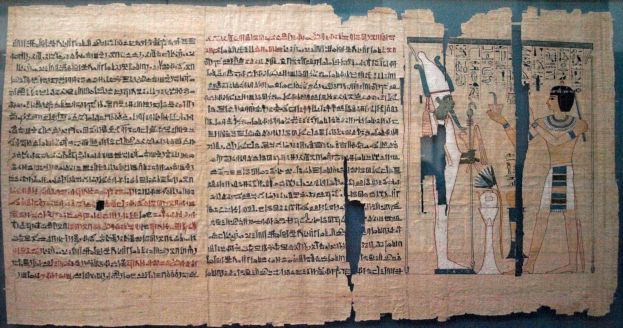
The Papyrus of Ani

by

E. A. WALLIS BUDGE

Late keeper of Assyrian and Egyptian Antiquities
in the British Museum

[1895]

THE LEGEND OF OSIRIS.

The main features of the Egyptian religion constant.

The chief features of the Egyptian religion remained unchanged from the Vth and VIth dynasties down to the period when the Egyptians embraced Christianity, after the preaching of St. Mark the Apostle in Alexandria, A.D. 69, so firmly had the early beliefs taken possession of the Egyptian mind; and the Christians in Egypt, or Copts as they are commonly called, the racial descendants of the ancient Egyptians, seem never to have succeeded in divesting themselves of the superstitious and weird mythological conceptions which they inherited from their heathen ancestors. It is not necessary here to repeat the proofs, of this fact which M. Amineau has brought together,[1] or to adduce evidence from the lives of the saints, martyrs and ascetics; but it is of interest to note in passing that the translators of the New Testament into Coptic rendered the Greek {Greek a!'dhs} by ###, amenti, the name which the ancient Egyptians gave to the abode of man after death,[3] and that the Copts peopled it with beings whose prototypes are found on the ancient monuments.

Persistence of the legend of Osiris and the belief in the resurrection.

The chief gods mentioned in the pyramid texts are identical with those whose names are given on tomb, coffin and papyrus in the latest dynasties; and if the names of the great cosmic gods, such as Ptah and Khnemu, are of rare occurrence, it should be remembered that the gods of the dead must naturally occupy the chief place in this literature which concerns the dead. Furthermore, we find that the doctrine of eternal life and of the resurrection of a glorified or transformed body, based upon the ancient story of the resurrection of Osiris after a cruel death and horrible mutilation, inflicted by the powers of evil, was the same in all periods, and that the legends of the most ancient times were accepted without material alteration or addition in the texts of the later dynasties.

[1. Le Christianisme chez les anciens Coptes, in Revue des Religions, t, xiv., Paris, 1886, PP, 308-45

2. I.e., ###.

3. See St. Matthew xi., 23; Acts ii., 27, etc.]

Plutarch's version of the legend.

The story of Osiris is nowhere found in a connected form in Egyptian literature, but everywhere, and in texts of all periods, the life, sufferings, death and resurrection of Osiris are accepted as facts universally admitted. Greek writers have preserved in their works traditions concerning this god, and to Plutarch in particular we owe an important version of the legend as current in his day. It is clear that in some points he errs, but this was excusable in dealing with a series of traditions already some four thousand years old.[1] According to this writer the goddess Rhea [Nut], the wife of Helios [Ra], was beloved by Kronos [Seb]. When Helios discovered the intrigue, he cursed his wife and declared that she should not be delivered of her child in any month or in any year. Then the god Hermes, who also loved Rhea, played at tables with Selene and won from her the seventieth part of each day of the year, which, added together, made five whole days. These he joined to the three hundred and sixty days of which the year then consisted.[2] Upon the first of these five days was Osiris brought forth;[3] and at the moment of his birth a voice was heard to proclaim that the lord of creation was born. In course of time he became king of Egypt, and devoted himself to civilizing his subjects and to teaching them the craft of the husbandman; he established a code of laws and bade men worship the gods. Having made Egypt peaceful and flourishing, he set out to instruct the other nations of the world. During his absence his wife Isis so well ruled the state that Typhon [Set], the evil one, could do no harm to the realm of Osiris. When Osiris came again, Typhon plotted with seventy-two comrades, and with Aso, the queen of Ethiopia, to slay him; and secretly got the measure of the body of Osiris, and made ready a fair chest, which was brought into his banqueting hall when Osiris was present together with other guests. By a ruse Osiris was induced to lie down in the chest, which was immediately closed by Typhon and his fellow conspirators, who conveyed it to the Tanaitic mouth of the Nile.[4] These things happened on the seventeenth day of

[1. For the text see De Iside et Osiride, ed. Didot (Scripta Moralia, t. iii., pp. 429-69), xii. ff.

2. The days are called in hieroglyphics ###, "the five additional days of the year," e?pago'menai!hme'rai pe'nte; see Brugsch, Thesaurus Inscriptionum Aegytiacarum, Abt. ii. (Kalendarische Inschriften), Leipzig, 1883, pp. 479, 480; Brugsch, Aegyptologie, p. 361 Chabas, Le Cendrier, Paris (no date), p. 99 ff.

3. Osiris was born on the first day, Horus on the second, Set on the third, Isis on the fourth, and Nephthys on the fifth; the first, third, and fifth of these days were considered unlucky by the Egyptians.

4. The mouths of the Nile are discussed and described by Strabo, XVII., i., 18 (ed. Didot, p. 681) and by Diodorus, I., 33, 7 (ed. Didot, p. 26).]

Plutarch's version.

the month Hathor,[1] when Osiris was in the twenty-eighth year either of his reign or of his age. The first to know of what had happened were the Pans and Satyrs, who dwelt hard by Panopolis; and finally the news was brought to Isis at Coptos, whereupon she cut off a lock of hair[2] and put on mourning apparel. She then set out in deep grief to find her husband's body, and in the course of her wanderings she discovered that Osiris had been united with her sister Nephthys, and that Anubis, the offspring of the union, had been exposed by his mother as soon as born. Isis tracked him by the help of dogs, and bred him up to be her guard and attendant. Soon after she learned that the chest had been carried by the sea to Byblos, where it had been gently laid by the waves among the branches of a tamarisk tree ({Greek e?pei'khj tini`}), which in a very short time had grown to a magnificent size and had enclosed the chest within its trunk. The king of the country, admiring the tree, cut it down and made a pillar for the roof of his house of that part which contained the body of Osiris. When Isis heard of this she went to Byblos, and, gaining admittance to the palace through the report of the royal maidens, she was made nurse to one of the king's sons, Instead of nursing the child in the ordinary way, Isis gave him her finger to suck, and each night she put him into the fire to consume his mortal parts, changing herself the while into a swallow and bemoaning her fate. But the queen once happened to see her son in flames, and cried out, and thus deprived him of immortality. Then Isis told the queen her story and begged for the pillar which supported the roof. This she cut open, and took out the chest and her husband's body,[3] and her lamentations were so terrible that one of the royal children died of fright. She then brought the

[1. In the Calendar in the fourth Sallier papyrus (No. 10,184) this day is marked triply unlucky, and it is said that great lamentation by Isis and Nephthys took place for Un-nefer (Osiris) thereon. See Chabas, Le Calendrier, p. 50. Here we have Plutarch's statement supported by documentary evidence. Some very interesting details concerning the festivals of Osiris in the month Choiak are given by Loret in Recueil de Travaux, t. iii., p. 43 ff; t. iv., p. 21 ff.; and t. v., p. 85 ff. The various mysteries which took place thereat are minutely described.

2 On the cutting of the hair as a sign of mourning, see W. Robertson Smith, The Religion of the Semites, p. 395; and for other beliefs about the hair see Tylor, Primitive Culture, vo1. ii., p. 364, and Fraser, Golden Bough, pp. 193-208.

3 The story continues that Isis then wrapped the pillar in fine linen and anointed it with oil, and restored it to the queen. Plutarch adds that the piece of wood is, to this day, preserved in the temple of Isis, and worshipped by the people of Byblos. Prof. Robertson Smith suggests (Religion of the Semites, p. 175) that the rite of draping and anointing a sacred stump supplies the answer to the unsolved question of the nature of the ritual practices connected with the Ashera. That some sort of drapery belonged to the Ashera is clear from 2 Kings xxiii., 7. See also Tylor, Primitive Culture, vol. ii., p. 150; and Fraser, Golden Bough, vol. i., p. 304 ff.]

Plutarch's version.

chest by ship to Egypt, where she opened it and embraced the body of her husband, weeping bitterly. Then she sought her son Horus in Buto, in Lower Egypt, first having hidden the chest in a secret place. But Typhon, one night hunting by the light of the moon, found the chest, and, recognizing the body, tore it into fourteen pieces, which he scattered up and down throughout the land. When Isis heard of this she took a boat made of papyrus[1]--a plant abhorred by crocodiles--and sailing about she gathered the fragments of Osiris's body.[2] Wherever she found one, there she built a tomb. But now Horus had grown up, and being encouraged to the use of arms by Osiris, who returned from the other world, he went out to do battle with Typhon, the murderer of his father. The fight lasted many days, and Typhon was made captive. But Isis, to whom the care of the prisoner was given, so far from aiding her son Horus, set Typhon at liberty. Horus in his rage tore from her head the royal diadem; but Thoth gave her a helmet in the shape of a cow's head. In two other battles fought between Horus and Typhon, Horus was the victor.[3]

[1. The ark of "bulrushes" was, no doubt, intended to preserve the child Moses from crocodiles.

2. {Greek Mo'non de` tw^n merw^u tou^ O?si'ridos th`n I?^sin ou`x e`urei^n to` ai?doi^n e`u`s ga`r ei's to`n potamo`n r!ifh^nai kai` geu'sasi to'n te lepidwto`n au`tou^ kai` to`n fa'gron kai` to`n o?ksu'rugxon. k.t.l.}. By the festival celebrated by the Egyptians in honour of the model of the lost member of Osiris, we are probably to understand the public performance of the ceremony of "setting up the Tet in Tattu", which we know took place on the last day of the month Choiak; see Loret, Les Fes d'Osiris au mois de Khoiak (Recueil de Travaux, t. iv., p. 32, 87); Plutarch, De Iside, xviii.

3. An account of the battle is also given in the IVth Sallier papyrus, wherein we are told that it took place on the 26th day of the month Thoth. Horus and Set fought in the form of two men, but they afterwards changed themselves into two bears, and they passed three days and three nights in this form. Victory inclined now to one side, and now to the other, and the heart of Isis suffered bitterly. When Horus saw that she loosed the fetters which he had laid upon Set, he became like a "raging panther of the south with fury," and she fled before him; but he pursued her, and cut off her head, which Thoth transformed by his words of magical power and set upon her body again in the form of that of a cow. In the calendars the 26th day of Thoth was marked triply deadly. See Chabas, Le Calendrier, p. 28 ff.]

Identity of the deceased with Osiris.

This is the story of the sufferings and death of Osiris as told by Plutarch. Osiris was the god through whose sufferings and death the Egyptian hoped that his body might rise again in some transformed or glorified shape, and to him who had conquered death and had become the king of the other world the Egyptian appealed in prayer for eternal life through his victory and power. In every funeral inscription known to us, from the pyramid texts down to the roughly written prayers upon coffins of the Roman period, what is done for Osiris is done also for the deceased, the state and condition of Osiris are the state and condition of the deceased; in a word, the deceased is identified with Osiris. If Osiris liveth for ever, the deceased will live for ever; if Osiris dieth, then will the deceased perish.[1]

[1. The origin of Plutarch's story of the death of Osiris, and the Egyptian conception of his nature and attributes, may be gathered from the following very remarkable hymn. (The text is given by Ledrain, Les Monuments yptiens de la Bibliothue Nationale, Paris, 1879, pll. xxi-xxvii. A French translation of it was published, with notes, by Chabas, in Revue Archlogique, Paris, 1857, t. xiv., p. 65 ff.; and an English version was given in Records of the Past, 1st series, vol. iv., p. 99 ff. The stele upon which it is found belongs to the early part of the XVIIIth dynasty, by which is meant the period before the reign of Amenophis IV.; this is proved by the fact that the name of the god Amen has been cut out of it, an act of vandalism which can only have been perpetrated in the fanatical reign of Amenophis IV.):

Hymn to Osiris.

"(1) Hail to thee, Osiris, lord of eternity, king of the gods, thou who hast many names, thou disposer of created things, thou who hast hidden forms in the temples, thou sacred one, thou KA who dwellest in Tattu, thou mighty (2) one in Sekhem, thou lord to whom invocations are made in Anti, thou who art over the offerings in Annu, thou lord who makest inquisition in two-fold right and truth, thou hidden soul, the lord of Qerert, thou who disposest affairs in the city of the White Wall, thou soul of Ra, thou very body of Ra who restest in (3) Suten-henen, thou to whom adorations are made in the region of Nart, thou who makest the soul to rise, thou lord of the Great House in Khemennu, thou mighty of terror in Shas-hetep, thou lord of eternity, thou chief of Abtu, thou who sittest upon thy throne in Ta-tchesert, thou whose name is established in the mouths of (4) men, thou unformed matter of the world, thou god Tum, thou who providest with food the ka's who are with the company of the gods, thou perfect khu among khu's, thou provider of the waters of Nu, thou giver of the wind, thou producer of the wind of the evening from thy nostrils for the satisfaction of thy heart. Thou makest (5) plants to grow at thy desire, thou givest birth to . . . . . . . ; to thee are obedient the stars in the heights, and thou openest the mighty gates. Thou art the lord to whom hymns of praise are sung in the southern heaven, and unto thee are adorations paid in the northern heaven. The never setting stars (6) are before thy face, and they are thy thrones, even as also are those that never rest. An offering cometh to thee by the command of Seb. The company of the gods adoreth thee, the stars of the tuat bow to the earth in adoration before thee, [all] domains pay homage to thee, and the ends of the earth offer entreaty and supplication. When those who are among the holy ones (7) see thee they tremble at thee, and the whole world giveth praise unto thee when it meeteth thy majesty. Thou art a glorious sahu among the sahu's, upon thee hath dignity been conferred, thy dominion is eternal, O thou beautiful Form of the company of the gods; thou gracious one who art beloved by him that (8) seeth thee. Thou settest thy fear in all the world, and through love for thee all proclaim thy name before that of all other gods. Unto thee are offerings made by all mankind, O thou lord to whom commemorations are made, both in heaven and in earth. Many are the shouts of joy that rise to thee at the Uak[*] festival, and cries of delight ascend to thee from the (9) whole world with one voice. Thou art the chief and prince of thy brethren, thou art the prince of the company of the gods, thou stablishest right and truth everywhere, thou placest thy son upon thy throne, thou art the object of praise of thy father Seb, and of the love of thy mother Nut. Thou art exceeding mighty, thou overthrowest those who oppose thee, thou art mighty of hand, and thou slaughterest thine (10) enemy. Thou settest thy fear in thy foe, thou removest his boundaries, thy heart is fixed, and thy feet are watchful. Thou art the heir of Seb and the sovereign of all the earth;

[* This festival took place on the 17th and 18th days of the month Thoth; see Brugsch, Kalendarische Inschriften, p. 235.]

Seb hath seen thy glorious power, and hath commanded thee to direct the (11) universe for ever and ever by thy hand.

"Thou hast made this earth by thy hand, and the waters thereof, and the wind thereof, the herb thereof, all the cattle thereof, all the winged fowl thereof, all the fish thereof, all the creeping things thereof, and all the four-footed beasts thereof. (12) O thou son of Nut, the whole world is gratified when thou ascendest thy father's throne like Ra. Thou shinest in the horizon, thou sendest forth thy light into the darkness, thou makest the darkness light with thy double plume, and thou floodest the world with light like the (13) Disk at break of day. Thy diadem pierceth heaven and becometh a brother unto the stars, O thou form of every god. Thou art gracious in command and in speech, thou art the favoured one of the great company of the gods, and thou art the greatly beloved one of the lesser company of the gods.

"Thy sister put forth her protecting power for thee, she scattered abroad those who were her enemies, (14) she drove back evil hap, she pronounced mighty words of power, she made cunning her tongue, and her words failed not. The glorious Isis was perfect in command and in speech, and she avenged her brother. She sought him without ceasing, (15) she wandered round and round the earth uttering cries of pain, and she rested[*] not until she had found him. She overshadowed him with her feathers, she made wind with her wings, and she uttered cries at the burial of her brother. (16) She raised up the prostrate form of him whose heart was still, she took from. him of his essence, she conceived and brought forth a child,[+] she suckled it in secret (?) and none knew the place thereof; and the arm of the child hath waxed strong in the great house of Seb. (17) The company of the gods rejoiceth and is glad at the coming of Osiris's son Horus, and firm of heart and triumphant is the son of Isis, the heir of Osiris."[++]

[*. Literally, "she alighted not,"; the whole passage here justifies Plutarch's statement (De Iside Osiride, 16) concerning Isis: {Greek Au?th`n de` genome'nhn xelido'na tu~j ki'oni peripi'tesi kai` hnei~n}.

+. Compare Plutarch, op. cit., 19: {Greek T`hn d' I?'sin th`n teleuth`n e`ks O?si'ridos suggenome'nou tekei~n h?li'to'mhnon kai` a?snh~ toi~s ka'twn gui'ois to`n A?rpokra'thn}.

++. The remainder of the hymn refers to Horus.]]

Osiris invested with the attributes of Ra.

Later in the XVIIIth, or early in the XIXth dynasty, we find Osiris called "the king of eternity, the lord of everlastingness, who traverseth millions of years in the duration of his life, the firstborn son of the womb of Nut, begotten of Seb, the prince of gods and men, the god of gods, the king of kings, the lord of lords, the prince of princes, the governor of the world, from the womb of Nut, whose existence is for everlasting,[1] Unnefer of many forms and of many attributes, Tmu in Annu, the lord of Akert,[2] the only one, the lord of the land on each side of the celestial Nile."[3]

In the XXVIth dynasty and later there grew up a class of literature

[1. For the text see the papyrus of Ani, pl. ii., and pl. xxxvi., 1. 2.

2. I.e., the underworld.

3. neb atebui; see Ani, pl. xix., 1. 9.]

Osiris the god of the resurrection.

represented by such works as "The Book of Respirations,"[1] "The Lamentations of Isis and Nephthys,"[2] "The Festival Songs of Isis and Nephthys,"[3] "The Litanies of Seker,"[4] and the like, the hymns and prayers of which are addressed to Osiris rather as the god of the dead and type of the resurrection[5] than as the successor of the great cosmic god Tmu-Ra. He is called "the soul that liveth again,"[6] "the being who becometh a child again," "the firstborn son of unformed matter, the lord of multitudes of aspects and forms, the lord of time and bestower of years, the lord of life for all eternity."[7] He is the "giver of life from the beginning;"[8] "life springs up to us from his destruction,"[9] and the germ which proceeds from him engenders life in both the dead and the living.[10]

[1. ###. The text of this work, transcribed into hieroglyphics, was published, with a Latin translation, by Brugsch, under the title, Sai an Sinsin sive Aber Metempsychosis veterum Aegyptiorum, Berlin, 1851; and an English translation of the same work, but made from a Paris MS., was given by p. J. de Horrack in Records of the Past, 1st series, vol., iv., p. 121 ff. See also Birch, Facsimiles of Two Papyri, London, 1863, p. 3; Devia, Catalogue des MSS. yptiens, Paris, 1874, pp. 130 ff., where several copies of this work are described.

2. The hieratic text of this work is published with a French translation by p. J. de Horrack, Les Lamentations d'Isis et de Nephthys, Paris, 1886.

3. A hieroglyphic transcript of these works, with an English translation, was given in Archogia, vol. iii., London, 1891.

4. What Devia says with reference to the Book of Respirations applies to the whole class: "Toutefois, on remarque dans cet rit une tendance la doctrine de la rurrection du corps plus marqu que dans les compositions antieures" (Catalogue, p. 13).

5. ###. Festival Songs, iv., 33.

6. ###. Ibid., viii., 21, ix., 8.

7. Litanies of Seker, col. xviii.

8. ###. Festival Songs, vi., 1.

9. ###. Ibid., iii., 18.

10. ###. Ibid., ix., 26.]

The Book of the Dead, Contents

THE BOOK OF THE DEAD

The Papyrus of Ani

by

E. A. WALLIS BUDGE

Late keeper of Assyrian and Egyptian Antiquities
in the British Museum

[1895]

CONTENTS.

PREFACE

INTRODUCTION

THE VERSIONS OF THE BOOK OF THE DEAD

THE LEGEND OF OSIRIS

THE DOCTRINE OF ETERNAL LIFE

EGYPTIAN IDEAS OF GOD

THE ABODE OF THE BLESSED

THE GODS OF THE BOOK OF THE DEAD

GEOGRAPHICAL AND MYTHOLOGICAL PLACES

FUNERAL CEREMONIES

THE PAPYRUS OF ANI

TABLE OF CHAPTERS

THE HIEROGLYPHIC TEXT OF THE PAPYRUS OF ANI, WITH INTERLINEAR TRANSLITERATION AND WORD FOR WORD TRANSLATION

TRANSLATION

BIBLIOGRAPHY

The Book of the Dead, Preface

THE BOOK OF THE DEAD

The Papyrus of Ani

by

E. A. WALLIS BUDGE

Late keeper of Assyrian and Egyptian Antiquities
in the British Museum

[1895]

PREFACE.

The Papyrus of Ani, which was acquired by the Trustees of the British Museum in the year 1888, is the largest, the most perfect, the best preserved, and the best illuminated of all the papyri which date from the second half of the XVIIIth dynasty (about B.C. 1500 to 1400). Its rare vignettes, and hymns, and chapters, and its descriptive and introductory rubrics render it of unique importance for the study of the Book of the Dead, and it takes a high place among the authoritative texts of the Theban version of that remarkable work. Although it contains less than one-half of the chapters which are commonly assigned to that version, we may conclude that Ani's exalted official position as Chancellor of the ecclesiastical revenues and endowments of Abydos and Thebes would have ensured a selection of such chapters as would suffice for his spiritual welfare in the future life. We may therefore regard the Papyrus of Ani as typical of the funeral book in vogue among the Theban nobles of his time.

The first edition of the Facsimile of the Papyrus was issued in 1890, and was accompanied by a valuable Introduction by Mr. Le Page Renouf, then Keeper of the Department of Egyptian and Assyrian Antiquities. But, in order to satisfy a widely expressed demand for a translation of the text, the present volume has been prepared to be issued with the second edition of the Facsimile. It contains the hieroglyphic text of the Papyrus with interlinear transliteration and word for word translation, a full description of the vignettes, and a running translation; and in the Introduction an attempt has been made to illustrate from native Egyptian sources the religious views of the wonderful people who more than five thousand years ago proclaimed the resurrection of a spiritual body and the immortality of the soul.

The passages which supply omissions, and vignettes which contain important variations either in subject matter or arrangement, as well as supplementary texts which appear in the appendixes, have been, as far as possible, drawn from other contemporary papyri in the British Museum.

The second edition of the Facsimile has been executed by Mr. F. C. Price.

E. A. WALLIS BUDGE.

BRITISH MUSEUM.

January 25, 1895.

Myths of Babylonia and AssyriaIndex: S-Z

INDEX S - Z

Saliva, Isis serpent formed from, 45 ; magical qualities of, 46 .

Samaria, building of, 405 ; murder of Jezebel in, 410 ; Assyrians capture, 455 ; "ten tribes" deported, 455 ; Babylonians settled in, 456 .

Sammu-rammat (sammu-ram-mat), Queen of Assyria, as Semiramis, 417 , 437 , 438 ; a Babylonian, 418 ; high status of, 419 ; relation to Adad-nirari IV, 419 , 420 ; innovations of, 421 ; mother worship and, 423 , 436 ; Queen Nakia like, 470 , 471 .

Samsu-iluna (s-sil-a), King, son of Hammurabi, slays Rim-Sin, 249 ; Kassites appear in reign of, 255 ; Erech and Ur restored by, 256 .

Sandan (sd), the god, 261 ; Agni and Melkarth and, 346 ; winged disk of, 348 . Also rendered Sandes.

Sandstorms, the Babylonian, 24 .

Sap of plants, vitalized by water of life, 45 .

Sarah, Abraham's wife, 16 .

Saraswati (să-răswă-tee), wife of Brahma, 101 .

Sardanapalus (sar-dan-a-pālus), palace burning of, 350 ; Ashur-bani-pal and, 486 , 487 , 488 .

Sargon of Akkad, as Patriarch, xxxiii ; the Patriarch-Tammuz myth of, 91 , 437 ; humble origin of, 125 ; legend of like Indian Karna story, 126 ; empire of, 127 ; Enlil-bani of Isin like, 133 ; Gilgamesh legend and, 171 , 172 ; Sargon II an incarnation of, 462 .

Sargon II, King of Assyria, excavations at city of, xx ; "Lost Ten Tribes" deported by, 455 ; Merodach Baladan revolt, 457 ; Syrian revolts against, 458 , 459 ; tribute from Piru of Mutsri, 458 ; Piru and Pharaoh, 458 n.; Isaiah warns Ahaz regarding, 459 ; Hittites and, 460 ; Urartu crippled by, 460 , 461 ; Merodach Baladan ejected by, 462 ; Messianic pretensions of, 462 ; Dur-Sharrukin built by, 463 ; deities worshipped by, 463 ; assassination of, 463 , 464 .

Saturn, the planet, Horus as, 300 , 302 ; in sun and moon group, 301 ; Ninip (Nirig) as, 301 ; as ghost of elder god, 302 ; month of, 305 ; the "black", 314 , 315 ; in astrology, 318 .

Satyrs, the dance of at Babylon, 114 , 333 .

Saul, the ephod ceremony, 213 , 214 ; cremation of, 350 .

Saushatar (sa-shat), King of Mitanni, Assyria subdued by, 279 , 280 .

Sayce, Professor, on Dagon-Dagan problem, 32 ; on Daonus and Tammuz, 83 ; on Hittite chronology, 264 ; on star worship, 317 ; on the goat god, 332 , 333 ; Hittite winged disk, 347 , 348 , 428 .

Sceaf or Scef, "the sheaf", Tammuz and the Germanic myth of, 91 , 92 , 93 , 210 .

Schliemann, pottery finds by, 263 .

Schools, in Hammurabi Age, 251 .

Scorpion man and wife, in Gilgamesh epic, 177 , 178 .

Scotland, the sea god of, 33 ; spitting customs in, 47 ; the "Great Mother" in, a demon, 64 ; return of dead dreaded in, 70 ; "calling back" belief in, 70 n.; south-west wind a hag like Babylonian, 73 ; fairies and elves of, 80 , 186 ; Tammuz-Diarmid myth of, 85 ; Diarmid a love god of, 87 ; the eternal goddess of, 101 ; "the Yellow Muilearteach" of, 151 ; slain by Finn as Merodach slays Tiamat, 151 ; great eel story of, 152 ; mother-monster Sumerian lore in, 153 ; giant lore of, 164 , 317 ; Etana-like eagle myth of, 167 , 168 ; John Barleycorn, the Icelandic god Barleycorn and Nimrod, 170 , 170 n., 171 ; water of life myths of, 186 , 187 ; dark tunnel stories of, 189 ; Pictish customs in, 212 ; the Gunna, 213 ; seers and bull skin ceremony, 213 ; folk cures in, 232 , 233 ; pig as the devil in, 293 ; May day solar belief in, 348 ; the "seven sleepers" in, 394 ; "death thraw" belief, 427 n.; doves and ravens, 429 ; pigeon lore in, 431 .

Scott, Sir Walter, the Taghairm ceremony, 213 .

Scyld. See Sceaf.

Scythians, raids of in Western Asia, 461 ; Esarhaddon and, 472 ; fall of Nineveh, 488 .

Sea demon, Ea as a, 62 .

Sea fire, 50 , 51 .

Sea giants, the Babylonian, 34 .

Sea goddess, Ea's spouse as, and earth lady, 34 .

Sea gods, Ea, Dagon, Poseidon, Neptune, Shony, and Njord as, 33 .

"Sea Lady", the, Sabitu, in Gilgamesh epic, 178 , 179 ; Germanic hag and, 184 , 185 ; the Indian Maya like, 188 .

Sea of Death, in Gilgamesh epic, 178 et seq.

Sealand, Dynasty of in Hammurabi Age, 257 ; in Kassite Age, 274 , 275 .

Seasonal changes, evil spirits cause, 65 .

Seasons, the, of Babylonia, 23 , 24 .

Sebek (sebek), Egyptian crocodile god, as a weeping deity, 29 .

Sekhet (sekhet), the Egyptian goddess, Ishtar and, 57 .

Seleucid Period, Lagash occupied in, 243 .

Seleucus I, 498 .

Seleukeia, rival city to Babylon, 498 .

"Self power", xxxiii; conception of in stage of Naturalism, 291 ; the "world soul" conception, 304 ; Anu a form of, 328 ; the "world soul", 328 ; gods as phases of, 329 ; stars as phases of, 331 .

Semiramis (sem-ira-mis), Queen, as founder of Nineveh, 277 ; Queen Sammu-rammat as, 417 ; mother worship and, 423 , 434 ; birth legend like Shakuntala's, 423 , 424 ; as representative of mother goddess, 425 ; buildings and mounds of, 425 , 426 ; Persian connection, 427 , 433 ; dove symbol of, 431 , 432 ; origin of legend of, 437 , 438 ; Urartu and, 441 ; Queen Nakia and, 471 ; wife of Cambyses like, 496 . See Sammu-rammat.

Semites, Akkadians were, 2 ; the racial blend of, 9 et seq.; influence of on Sumerian gods, 135 , 136 , 137 .

Sennacherib (sen-ner-ib ), King of Assyria, 463 ; wars of in Elam and Asia Minor, 464 ; Ionians deported to Nineveh by, 464 ; Merodach Baladan's second reign, 465 ; army of destroyed by "angel of the Lord", 466 , 467 ; death of Merodach Baladan, 468 ; destruction of Babylon by, 468 , 469 ; murder of, 470 ; Nakia, Babylonian wife of, 471 .

Sergi, Professor, on Syrian and Asia Minor races, 11 , 267 .

Serpent, Isis makes from saliva of Ra, 45 ; in group of seven spirits, 63 ; the world, 150 ; dragon as, 157 , 158 ; totemic theory, 293 , 296 ; in Crete, 430 .

Serpent charms, as fertility and birth charms, 150 , 165 .

Serpent worship, 77 .

Serpents, the mother of, in Zu bird myth, 74 , 75 ; the Babylonian and Egyptian, 74 -76 , 150 .

Sesostris (se-sōstris), Hittite god identified with, 441 ; Semiramis and, 426 . Set, as boar demon, 46 , 85 , 293 ; as the dragon, 156 ; as thunder god, 261 .

Seti I (setee), of Egypt, struggle of with Hittites, 364 .

Seven, the demons in groups of, 34 . "Sevenfold One", 298 ; constellations as, 300 et seq.; Tammuz as, 304 , 317 .

"Seven sleepers", the, 394 .

Seven spirits, the, dragon, &c., in, 63 ; the daughters of Anu, 68 ; the sexless, 71 .

Shabaka (shk, King of Egypt, the Biblical So and, 454 n.

Shakespeare, "Jack" the fairy, 66 ; Tiamat-like imagery in, 151 ; "sea devils", 152 ; grave inscription of, 214 , 215 ; astrology references, 324 , 325 .

Shakuntala (shă-koonta-l), birth legend of like Semiramis's, 423 , 424 ; Persian eagle legend and, 493 .

Shallum (shl), revolt of at Samaria, 449 .

Shalmaneser I (sh-m-e-ser), of Assyria, a great conqueror, 363 ; western and northern expansion, 366 ; Kalkhi capital of, 367 .

Shalmaneser III, referred to in Bible, 401 ; attacks on Aramns and Hittites, 407 ; Ahab of Israel fights against, 407 ; authority of in Babylonia, 408 , 409 ; defeat of Hazael of Damascus, 411 ; tribute from Jehu of Israel, 411 , 412 ; conquests of, 414 ; revolt of son against, 414 ; death of, 415 ; Babylonian culture, 422 ; library of at Kalkhi, 422 .

Shalmaneser IV, of Assyria, reign of, 439 ; Urartu wars of, 442 . Shalmaneser V, imprisons Hoshea of Israel, 454 , 455 .

Shamash (shash), Semitic name of sun god, 40 ; Babbar Sumerian name of, 54 , 240 ; Mitra and Varuna and, 54 ; as god of destiny, 55 ; Mithra and, 55 . 56 ; sun as "boat of the sky", 56 , 57 ; consort and attendants of, 57 , 100 ; local importance of, 58 ; in eagle and serpent myths, 75 , 76 ; in demon war, 76 ; development of, 132 ; in Gilgamesh legend, 172 et seq.; as an abstract deity, 240 , 241 ; oracle of pleads for Merodach, 272 ; month of, 305 ; as the "high head", 334 ; "water sun" of, 334 ; the wheel symbol of, 347 ; Aramns destroy temple of, 445 ; worshipped by Esarhaddon, 471 ; oracle of and Ashur-bani-pal, 481 ; Nabonidus and, 492 .

Shamash-shum-ukin (shamash-shumin), King of Babylon, 471 , 476 , 480 ; restoration of Merodach, 480 , 481 ; revolt of against Ashur-bani-pal, 484 ; burns himself in palace, 485 .

Shamshi-Adad VII (shamshi-adad), King of Assyria, 414 ; civil war, 415 ; conquests of, 415 , 416 ; culture in reign of, 423 ; rise of Urartu, 440 .

Sh, the god. See Anshar.

Sh Apsi, "King of the Deep", Ea as, 28 , 29 .

"Shar Kishshe", "King of the World", Assyrian title, 363 , 370 .

Sharduris III (shardris), of Urartu, routed by Tiglath-pileser IV, 446 , 447 .

Shaving customs, significance of, 4 ; of Arabians and Libyans, &c., 9 ; why Sumerian gods were bearded, 135 -137 .

Shedu (shādu), the destroying bull, 65 ; as household fairy, 77 .

Sheep, skin of in graves, 213 .

Shepherd, the divine, Tammuz as, 53 .

Sheshonk (shishak), Pharaoh of Egypt, alliance with Solomon, 388 ; Hebrews spoiled by, 391 , 402 .

Shinar, the Biblical, 111 , 247 ; Amraphel (Hammurabi) of, 131 .

Shishak. See Sheshonk.

Shivă, the Indian god, Bel Enlil like, 38 ; the Sumerian Ninip like, 53 ; Osiris and Ra like, 63 ; in "dying Indra" myth, 10 l.

Shony (shonee), sea god of Scottish Hebrides, 33 .

Sh the Egyptian god, created from saliva, 46 .

Shubari (shu-bi) tribes, 284 .

Shurippak or Shurruppak, city of, in flood legend, 190 , 191 , 243 .

Shushan. See Susa.

Siberia, elves of, 105 ; "calling back" of ghosts in, 69 , 70 .

Sidon, conspiracy against Nebuchadrezzar II, 491 ; tribute of to Adad-nirari IV, 439 ; Tyre and, 388 , 392 ; Israel an ally of, 406 ; in league against Esarhaddon, 472 ; destruction of, 473 .

Siegfried (seegfreed), "birds of Fate" sang to, 65 ; the "Regin" dragon, 156 , 164 .

Signs of the Zodiac. See Zodiac.

Sigurd (seegoord), link with Merodach as dragon slayer, 147 n.; the "Fafner" dragon, 156 , 164 .

Sin, desert of, called after moon god, 52 .

Sin, the moon god, 51 , 52 ; consort and children of, 53 ; Shamash, Mitra, and Varuna chastise, 54 , 55 ; in demon war, 76 , 77 ; as father of Isis, 100 ; as form of Merodach, 160 ; month of, 305 ; Ashur worshipped with, 353 ; Nabonidus as worshipper of, 494 . See Moonand Nannar.

Sinai, mountains of, called after moon god, 52 .

Sin-iksha (sin-iksha), King of Isin, 133 .

Sin-magir (sin-mir), King of Isin, 133 .

Sin-muballit (sin-mblit), King, father of Hammurabi, 132 , 242 ; struggle of with Elamites, 243 .

Sin-shar-ishkun, last King of Assyria, 487 .

Sippar (sippar), sun god chief deity of, 40 ; a famous priestly teacher of, 42 ; goddess of assists Merodach to create mankind, 148 ; rise of sun cult of, 240 ; first Amoritic king of, 241 ; Esarhaddon plunders, 472 .

Sirius, the star, Teutonic giant as, 295 ; goddess Isis as, 296 .

Skull forms, language and, 3 ; of Mongolian, Ural-Altaic, and Mediterranean peoples, 3 , 4 ; Kurdish and Armenian treatment, 4 , 5 ; of early Egyptians and Sumerians, 7 et seq.; Pallithic still survive, 8 ; persistence of, 8 ; broad heads in Western Asia, Egypt, and India, 8 , 9 ; the Semitic, 10 .

Sky, conception of "Self Power" of, 292 ; god of, 31 ; goddesses of, 36 , 37 . Sleeper, the divine, Angus, the Irish, and Tammuz, 90 .

Sleepers, the seven, the Indras as, 101 ; Thomas the Rhymer, Finn, Napoleon, and Skobeleff as, 164 ; as spirits of fertility, 164 ; Tammuz and, 210 .

Smith, Professor Elliot, on Sumerian origins, 7 ; on origin of Semites, 10 ; on conquest by Akkadians of Sumerians, 12 ; on first use of copper, 12 ; on early Egyptian invasion of "broad heads", 263 , 264 .

Smith, George, career and discoveries of, xxi -xxiii ; "Descent of Ishtar", 95 et seq.

Smith, Professor Robertson, on Atargatis legend, 28 ; on life-blood beliefs, 47 ; on agricultural weeping ceremony, 83 .

Snakes, doves and, Cretan goddess and, 430 .

So, King of Egypt, Shabaka and other kings and, 454 , 454 n.

Sokar, a composite monster god, 135 .

Sokar (sok), Egyptian lord of fear, 63 .

Solomon, King, ally of Egypt and Tyre, 388 , 389 ; sea trade of with India, 389 , 390 ; Babylonia during period of, 391 ; Judah and Israel separated after death of, 401 , 402 .

Soma (sōmă), source of inspiration, 45 .

Song of the Sea Lady, in Gilgamesh epic, 178 , 179 .

"Soul of the land", river Euphrates as the, 23 .

Souls, carried to Hades by eagle, 168 .

Spells on water, 44 ; layers of punished, 233 .

Spinning, in Late Stone Age, 14 .

Spirits, "air" and "breath" as, 48 , 49 ; gods evolved from, 60 ; the good and evil, 58 , 63 , 77 , 78 , 236 ; the Gorgons, 159 ; periodic liberation of, 65 ; the "calling back" belief, 69 , 70 ; penetrate everywhere, 72 ; of luck and fate, 77 , 236 ; elves, Ribhus, and Burkans as, 105 .

Spitting customs, in Asia, Africa, and Europe, 46 , 47 .

Spring sun, the, Tammuz as god of, 53 .

Sri, the Indian eternal mother, 101 .

Stars, the, great beauty of in Babylonia, 24 ; "Will-o-the-wisps" as, 67 ; Zu bird and, 74 ; Merodach fixes Signs of the Zodiac, 147 ; the "stations" of Enlil and Ea, 147 ; animals and myths of the, 289 ; in various local mythologies, 290 ; the "host of heaven", 294 ; as totems, 295 ; as ghosts, 295 , 304 ; in mythologies of Teutons, Aryo-Indians, Greeks, Egyptians, &c., 295 , 296 , 319 , 320 ; star of Osiris, 296 ; Ishtar myths, 295 , 299 ; Merodach as Regulus and Capella, 299 ; bi-sexual deities and the, 299 ; early association of Isis with, 300 ; three for each month, 307 , 308 , 309 ; the "divinities of council", 309 ; the doctrine of mythical Ages and, 310 et seq.; popular worship of, 317 ; as "birth-ruling divinities", 318 ; spirits of associated with gods, 318 ; in Indian Vedas and "Forest Books", 318 ; Biblical references to, 324 ; literary references to, 325 ; Anshar as the Pole star, 330 ; Isaiah and Polar star myth, 331 ; Polar star as "the kid", 333 ; in Ashur ring symbol, 344 .

Steer, moon god as the, 52 , 135 .

Stone Age, the Late, pottery of in Turkestan, Elam, Asia Minor, and Europe, 5 ; origin of agriculture in, 6 ; in Palestine, 10 ; racial blending in Egypt in, 11 ; civilization in, 13 et seq.; refined faces of men of, 15 .

Stone worship, moon worship and, 52 ; Ninip the bull god and, 53 .

Storm demons, the Babylonian Shutu and Adapa legend, 72 , 73 ; the European, 72 , 73 . See Wind hags.

Strabo, on Babylonian works of Alexander, 498 ; on Semiramis legend, 425 .

Straw girdle, a birth charm, 165 .

Subbi-luliuma (sbi-lu-li-a), Hittite king, conquests of, 283 , 363 .

Sumer, or Sumeria (shoomer and sum-āri-a), its racial and geographical significance, 1 ; early name of Kengi, 2 ; agriculture in at earliest period, 6 ; culture of indigenous, 6 , 7 ; women's high social status in, 16 , 17 ; Eridu a seaport of, 22 ; surplus products and trade of, 25 ; gods of like Egyptian, 26 , 36 , 37 ; modes of thought and habits of life in, 51 ; the Great Mother Tiamat of, 106 ; early history of, 109 et seq.; principal cities of, 110 ; the "plain of Shinar", 111 ; why gods of were bearded, 135 , 136 , 137 ; burial customs of like early Egyptian, 211 , 214 ; cities of destroyed in Hammurabi Age, 243 ; the Biblical Shinar is, 247 ; stars in primitive religion of, 289 ; Naturalism and the Zi, 291 ; sculpture of compared with Assyrian, 401 .

Sumerian goddesses, racial origin of, 105 .

Sumerians, characteristics of, 2 ; Akkadians adopted culture of, 2 , 3 ; unlike the Chinese, 3 ; Mongolian affinities of doubtful, 3 ; language of agglutinative like those of Chinese, Turks, Magyars, Finns, and Basques, 3 ; Ural-Altaic racial theory, 4 ; shaving customs of, 5 ; of Mediterranean or Brown Race, 7 ; congeners of prehistoric Europeans, 9 ; Arabs and Egyptians and, 9 , 10 ; conquered by Akkadians, 12 ; survival of culture and language of, 13 ; in early Copper Age, 12 , 13 ; pious records of kings of, 112 ; how history of is being restored, 113 ; the earliest dates, 114 ; end of political power of, 217 ; as early astronomers, 300 .

Sums-abum (sumu-abum), early Amoritic king, 241 .

Sumu-la-ilu (su-mula-ilu), early King of Hammurabi Age, 241 ; capture of Kish by, 241 , 242 ; Assyrian king claims descent from, 419 .

Sun, origin of in sea fire, 50 , 51 ; seasonal worship of, 53 , 240 ; Mitra and Varuna as regulators of, 54 ; as "boat of the sky", 56 ; as a planet, 301 ; as bridegroom, 306 , 306 n.; in astrology, 318 ; the "man in" the, 335 , 336 .

Sun, god of, Ninip, Nirig, and Nergal as, 53 , 54 , 303 ; Babbar as, 54 ; as Judge of living and dead, 54 ; as seer of secret sin, 54 , 55 ; links between Shamash, Mitra, and Varuna, 54 , 55 ; Ninip and Nin-Girsu, and Babbar and Shamash, 132 ; Tammuz as, 158 ; forms of, 297 , 298 ; Horus as the, 300 ; as offspring and spouse of moon, 301 ; Orion as a manifestation of, 305 ; animals identified with, 329 , 330 ; symbols of, 335 , 336 .

Sundial, a Babylonian invention, 323 ; of Ahaz, 323 .

Sun god, Shamash as, 40 ; centres of, 40 . See Shamash.

Sun goddess, the Babylonian and Hittite, 57 .

Surpanakha (s-pănăk-h, the Indian demon, like Lilith, 67 .

Susa, prehistoric pottery of, 5 ; capital of Elam, 111 ; Hammurabi Code discovered at, 222 ; burning of Persian palace at, 497 .

Sutarna II (stn, King of Mitanni, 283 ; deposed by rival, 284 .

Sutekh (sekh), as tribal god, 156 ; as dragon slayer, 157 ; Hittite thunder and fertility god and, 261 .

Suti (si), the, Aramn robbers, 285 , 359 , 360 ; settled in Asia Minor, 461 .

Svipdag, Gilgamesh and, 184 , 185 . Swan, Irish love god as, 428 n.; love messenger in India, 429 .

Swan maidens, as lovers, 68 .

Swine, offerings of to sea god, 33 ; demons enter, 71 ; sacrificed to Tammuz, 85 ; associated with Osiris, 85 ; Gaelic Hag's herd of, 87 ; sacrifice of to cure disease, 236 ; Ninip as boar god, 302 .

Symbolism, forehead symbol of Apis bull and Sumerian goat, 334 ; "high heads": Anshar, Anu, Enlil, Ea, Merodach, Nergal, and Shamash, 334 ; symbols of "high heads", 334 ; the "world spine" and "world tree", 334 ; the "water sun" of Shamash, 334 ; Ashur's winged disks or "wheels", 334 et seq.; "man in the sun" in Assyria, Egypt, and India, 335 , 336 ; Blake's "double vision", 336 ; the arrow symbol, 337 ; "shuttle" of Neith a thunder-bolt, 337 n.; Assyria the cedar, 340 , 341 ; Isaiah and Ezekiel use Babylonian and Assyrian, 341 ; the eagle, 343 , 344 ; Ezekiel's wheels and four-faced cherubs, 344 et seq.; wheels or disks of Hittites, Indians, &c., 347 , 348 ; the double axe, 348 ; the Ashur arrow, 351 , 352 ; the "dot within the circle" and egg thorn, 352 .

Syria, broad heads in, 8 ; early races in, 11 ; supposed invasion of by Lugal-zaggisi, 125 ; Sargon of Akkad's empire in, 127 ; hill god of, 136 ; sheepskin burials in, 213 ; culture of higher than Egypt at end of Hyksos Age, 275 .

Tabal (ta-b), Hittite Cilician kingdom of, 395 ; Shalmaneser III subdues king of, 414 ; Sargon II conquers, 460 , 461 ; Biblical reference to, 464 ; tribute from to Ashur-bani-pal, 483 .

Tablets of Destiny, the, Zu bird steals, 74 ; Tiamat gives to Kingu in Creation legend, 141 , 145 ; Merodach takes from Kingu, 146 ; Ninip receives, 158 .

Taharka (tharka), King of Egypt, in anti-Assyrian revolt, 465 ; intrigues against Esarhaddon, 471 ; Esarhaddon's invasion of Egypt, 475 ; flight of, 475 , 476 ; death of, 482 .

Tammuz, Osiris and, xxxi, 81 ; variations of myths of; xxxii; blood of in river, 47 , 48 ; as the shepherd and spring sun, 53 ; spends winter in Hades, 53 ; links with Mithra, 55 , 94 ; son of Ea, 82 ; Belit-sheri, sister of; 98 ; Ishtar, mother and lover of, 10 l; worship of among Hebrews, 82 , 106 , 107 ; as "the man of sorrows", 88 ; "the true and faithful son", 93 ; as the patriarch, 82 ; Sargon of Akkad myth and, 91 ; links with Adonis, Attis, Diarmid, and pre-Hellenic deities, 83 , 84 ; blood of in river, 85 ; kid and sucking pig of, 85 ; as "steer of heaven", 85 ; Nin-shach, boar god, as slayer of, 86 ; Ishtar laments for, 86 ; month of wailings for, 87 -89 ; why Ishtar deserted, 99 , 103 ; as the love god, 87 ; dies with vegetation, &c., 87 , 88 ; sacred cedar of; 88 ; in gloomy Hades, 89 ; return of like Frode (Frey), 95 ; as the slumbering corn child, 89 , 90 , 91 ; Teutonic Scyld or Sceaf and, 92 , 93 ; Frey, Hermod, and Heimdal like, 93 ; as world guardian and demon-slayer like Heimdal and Agni, 94 ; as the healer like Khonsu, 94 ; Ishtar visits Hades for, 96 , 97 , 98 ; refusal to leave Hades, 98 ; like Kingu in Tiamat myth, 106 ; Nin-Girsu, or En-Mersi, of Lagash a form of, 116 , 120 ; Nina and Belitsheri and, 117 ; Sargon myth like Indian Karna story, 126 , 437 ; Zamama, Merodach, Ninip and, 53 , 126 , 158 , 241 , 302 , 305 ; as elder god, 159 ; Etana and Gilgamesh and, 164 ; as patriarch and sleeper, 164 ; eagle of, 120 , 168 ; Nimrod myth, 170 ; John Barleycorn and, 170 ; Gilgamesh and, 171 , 172 , 210 ; in Gilgamesh epic, 176 ; Nebo and, 303 , 435 ; Adonis slain by boar god of war, 304 ; planetary deities and, 301 , 304 ; forms of like Horus, 305 ; astral links with Merodach and Attis, 305 ; Ashur and, 337 , 340 , 348 ; identified with Nusku, &c., 354 ; as Anshar, En Mersi, and Nin-Girsu, 333 ; doves and, 428 n.

Tanutamon (tnuton), Ethiopian king, Assyrians expelled from Memphis by, 482 , 483 ; defeat of, 483 .

Tarku (tk, Asia Minor thunder god, 35 , 57 , 261 , 395 .

Tarsus, Hittite city of, 395 .

Tashmit (thmit), spouse of Nebo, 436 ; creatrix and, 437 .

Taylor, J. E., xx .

Tears, agricultural weeping ceremonies, 82 et seq.

Tears of deities, the fertilizing, 29 ; the creative, 45 , 46 .

Tefnut (tefnut), the Egyptian goddess, created from saliva, 46 .

Tell-el-Amarna letters, historical evidence from, 280 et seq.; Assyrian king's letter, 284 , 285 .

Tello (tello), Lagash site, 120 ; archaic forms of gods, 135 ; mound of, Lagash site, 243 .

Temples, the houses of gods, 60 .

Teshub or Teshup (teshub), thunder god of Armenia, 261 ; as a Mitannian god, 269 1 in Tell-el-Amarna letters, 282 , 395 .

Teutonic sea-fire belief, 51 .

Thebes, sack of by Assyrians, 483 .

Theodoric (toydrik orthē-odo-rik), the Goth, myths of, 164 .

Thomas the Rhymer, as a "sleeper", 164 .

Thompson, R. Campbell, 34 , 39 , 72 , 76 , 234 , 235 , 238 , 239 .

Thor, Ramman and Dadu or Hadad as, 57 ; Dietrich as, 74 , 164 ; the hammer of, 238 ; deities that link with, 261 ; the goat and, 333 , 334 ; Ashur, Tammuz, and Indra and, 340 .

Thorkill (thōrkill), the Germanic, Gilgamesh and, 185 .

Thoth (thōth or tā-hootee), the Egyptian god, as chief of Ennead, 36 ; curative saliva of, 46 ; Sumerian moon god like, 301 .

Thothmes III (thōthmes), of Egypt, wars against Mitanni, 275 ; correspondence of with Assyrian king, 276 , 279 .

Thunder god, Ramman, Hadad or Dadu, and Enlil as, 35 , 57 ; Indra as, 35 ; Dietrich as Thor, 74 ; in Babylonian Zu and Indian Garuda myths, 74 , 75 , 169 ; in demon war, 76 ; Merodach as, 144 ; Hercules as, 171 ; horn and hammer of, 238 ; the Hittite, 260 ; the Amorite, Mitannian, Kassite, and Aryan, 261 ; Ptah of Egypt a, 263 , 264 .

Thunder goddess, the Egyptian Neith a, 337 n.

Thunderstone, weapon of Merodach and Ramman, 144 , 159 , 160 .

Tiamat (tia-mat), like Egyptian Nut, 37 ; in group of early deities, 64 ; the "brood" of, 64 , 65 ; as Great Mother, 106 ; in Creation legend, 138 ; plots with Apsu and Mummu, 139 ; as Avenger of Apsu, 140 ; exalts Kingu, 141 ; Anu and Ea fears, 142 ; Merodach goes against, 144 ; slaying of, 146 ; Merodach divides "Ku-pu" of, 147 ; the dragon's heart, 147 n.; body of forms sky and earth, 147 ; followers of "fallen gods", 150 ; as origin of good and evil, 150 ; beneficent forms of, 150 ; as the dragon of the deep, 151 ; Gaelic sea monster and, 151 ; Alexander the Great sees, 151 ; the Scottish "eel" and, 151 ; "brood of" in Beowulf, 151 ; vulnerable part of, 153 ; Ishtar and, 157 ; the Gorgons and, 159 ; in Germanic legend, 202 ; grave demons and, 215 ; reference to by Damascius, 328 . (Also rendered "Tiawath". )

Tiana (ti-ani), Hittite city of, 395 .

Tibni, revolt of in Israel, 405 .

Tidal (tidal), Saga on Hittite connections of, 264 , 265 ; Tudhula of the Hittites as, 247 , 248 .

Tiglath-pileser I (tiglath pi-lesur), of Assyria, 382 ; conquests of, 383 , 384

Tiglath-pileser IV, the Biblical "Pul", 444 ; Babylonian campaign of, 445 , 446 ; Sharduris of Urartu defeated by, 446 , 447 ; Israel, Damascus, and Tyre pay tribute to, 449 ; destruction of Urarti capital, 450 ; appeal of Ahaz to, 451 , 452 ; Israel punished by, 453 ; Babylon welcomes, 453 ; triumphs of, 454 .

Tigris, the river, 22 ; as "the bestower of blessings", 23 ; rise and fall and length of, 24 .

Tiy, Queen, in Tell-el-Amarna letters, 283 ; Semiramis like, 418 ; Aton and Mut worship, 419 ; mother worship and, 423 .

Toothache, Babylonian cure of, 234 , 235 .

Totems, the bear, 164 ; mountains, trees, and animals as, 292 , 293 ; surnames and, 293 ; the fish of Ea and, 294 ; eating the in Egypt, 295 ; doves, snakes, crocodiles, &c., as, 432 , 433 ; Persian eagle, 493 .

Trade routes, Babylonia and Assyria struggle for, 286 ; the ancient, 356 ; Baghdad and other railways following, 357 ; ancient Powers struggled to control, 358 ; Babylon's route to Egypt, 359 ; Arabian desert route opened, 360 ; route abandoned, 361 ; Elam's caravan roads, 361 ; struggle for Mesopotamia, 361 et seq.; Babylon's trade with China, Egypt, &c., 371 , 372 .

Transmigration of souls, 315 .

"Tree of Life", Professor Sayce on the Babylonian, 39 .

Tree worship, Tammuz, Adonis and Osiris and, 88 ; Ashur and, 339 ; Ezekiel on Assyria's tree, 340 , 341 .

Trees, in Babylonia, 24 , 25 ; sap as the "blood" of, 47 ; as totems, 291 , 293 .

Trident, the lightning, weapon of Merodach, 144 .

Tritons, the, 33 .

Tudhula (thl, a Hittite king, identified with Biblical Tidal, 247 , 248 ; forms of name of, 264 , 265 .

Tukulti-Ninip I (tu-kulti-ninip), of Assyria, 368 , 369 .

Tukulti-Ninip III, 396 .

Tunnel, the dark, in Gilgamesh epic, 178 ; Germanic land of darkness, 185 ; in Alexander the Great myth, 185 , 186 ; in Indian legends, 187 , 188 ; in Scottish folk tales, 189 .

Turkestan, early civilization of and the Sumerian, 5 ; did agriculture originate in? 6 ; prehistoric painted pottery in, 263 .

Turkey, great Powers and, 357 ; language of and Sumerian, 3 .

Turks, of Ural-Altaic stock, 4 .

Tushratta (thrat-ta), King of Mitanni, 280 ; correspondence of with Egyptian kings, 282 et seq.; murder of, 283 .

Twin goddesses, Ishtar and Belitsheri, 98 , 99 ; Isis and Nepthys, 99 .

Tyr, the Germanic god, mother of a demon, 64 .

Tyre, relations with Sidon and Hebrews, 388 , 389 , 392 ; tribute of to Adad-nirari IV, 439 ; gifts from to Tiglath-pileser IV, 449 ; King Luli and Assyria, 465 ; Esarhaddon and, 474 , 475 ; tribute from to Ashur-bani-pal, 483 ; conspiracy against Nebuchadrezzar II, 491 , 492 .

Tyrol, the demon lover of, 68 ; wind hags of, 74 .

Uazit (ooaz-it), Egyptian serpent goddess, 150 .

Umma (oomma), city of, Lagash and, 118 ; captured by Eannatum, 118 ; crushing defeat of by Entemena, 119 , 120 ; king of destroys Lagash, 123 , 124 .

Ur, Nannar, moon god of, 40 ; the moon god Baal of, 51 ; antiquity of, 52 ; Lagash king sways, 119 ; empire of, 130 ; moon god of supreme, 130 ; Abraham migrates from, 131 , 245 ; revolt of with Larsa against Isin, 132 ; moon god of in Kish, 241 ; under Elamite kings of Larsa in Hammurabi Age, 242 ; Abraham's migration from, 245 ; Chaldns and, 391 ; revolt against Ashur-bani-pal, 484 ; Nabonidus and, 492 .

Ura (oora), god of disease, 77 .

Ural-Altaic stock, Turks and Finns of, Sumerians and, 4 .

Urartu (-art, combines with Phrygians and Hittites against Sargon II, 460 ; as vassal state of Assyria, 461 ; rise of kingdom of, 395 ; god and culture of, 440 ; Adad-nirari and, 440 ; ethnics of, 440 n.; capital of, 441 ; Sharduris of routed by Tiglath-pileser IV, 446 , 447 , 450 ; alliance with Hittites against Sargon II, 460 ; as vassal state of Assyria, 461 ; Cimmerians and Scythians raid, 461 , 464 ; Sennacherib's murderers escape to, 470 ; in Esarhaddon's reign, 472 ; Assyrian alliance with, 473 , 486 ; Cyaxares king of, 493 .

Uri (i), early name of Akkad, 2 .

Ur-Nina (-nin, King of Lagash, 116 ; gods worshipped by, 116 , 117 ; famous plague of, 117 , 118 .

Ur-Ninip (-ninip), King of Isin, 132 ; mysterious death of, 133 .

Uruk (uk). See Erech.

Urukagina (-u-kagin-a), King of Lagash, first reformer in history, 121 ; taxes and temple fees reduced by, 122 , 210 , 211 ; fall of, 123 , 124 .

Urumush (mush), Akkadian emperor, 127 .

Utu (, Sumerian name of sun god, 55 .

Valentine, St., mating day of, 430 .

Vărună, the Indian god, links with Ea-Oannes, 31 , 34 ; sea fire of, 50 , 51 ; Shamash the sun god and, 54 ; association of with rain, 55 ; Sumerian links with, 55 , 56 ; worshippers of buried dead, 56 ; no human beings in Paradise of, 209 ; attire of deities in Paradise of, 212 ; the goat and, 333 .

Vasolt, Tyrolese storm demon, 74 .

Vayu (vu), Indian wind god, 35 .

Vedas (vaydăs), astronomy of the, 318 .

Venus, the goddess, 17 , 296 ; lovers of, 102 .

Venus, the planet, Ishtar as, 296 ; female at sunset and male at sunrise, 299 ; in sun and moon group, 301 ; rays of as beard, 301 ; as the "Proclaimer", 314 ; connection of with moon, 314 ; in astrology, 318 , 324 .

Vestal virgins, 228 , 229 .

Vishnu (vishnoo), the Indian god, like Ea, 27 ; Ea like, 38 ; eagle giant as vehicle of, 75 ; Sri or Lakshmi wife of, 101 ; sleep of on world serpent, 150 ; eagle and, 169 , 347 .

"Vital spark", the, fire as, 49 .

Voice, the pure, in Sumerian spell, 46 .

Vulture, as deity of fertility, 429 , 430 ; the Persian eagle legend and, 493 ; goddess of Egypt, 168 ; as protectors of Shakuntala, 423 , 424 .

Wales, pig as the devil in, 293 .

Warad Sin, struggle of with Babylon, 217 ; the Biblical Arioch, 247 , 248 .

Warka. See Erech.

Water, control and distribution of in Babylonia, 23 , 24 ; corn deities and, 33 ; essence of life in, 44 , 45 , 51 .

Water gods and demons, 27 et seq.

Water of Life, Gilgamesh's quest of, 177 et seq.; in Alexander the Great myth, 186 ; in Koranlegend, 186 ; in Gaelic legends, 186 , 187 ; in Indian legends, 187 , 210 .

Waxen figures, in folk cures, 234 .

Weapons in graves, 212 .

Weaving, in Late Stone Age, 14 .

Weeping ceremonies, the agricultural, 82 et seq.; the Egyptian god Rem, 29 .

Wells, worship of, 44 .

Westminster Abbey, Long Meg and, 156 .

Wheel of Life, the, Ashur, 334 et seq.; Ezekiel's references to, 344 et seq.; in Babylonian, Indian, Persian, and Hittite mythologies, 346 -348 ; in Indian mythology, 346 , 347 ; the sun and the, 348 ; "dot within the circle" and egg thorn, 352 ; Ahura Mazda's, 355 .

Wife of Merodach, 221 ; Amon's wife, 221 .

Wild Huntsmen, the, Asiatic gods as, 35 , 64 .

"Will-o-the-wisp", the Babylonian and European, 66 , 67 .

Winckler, Dr. Hugo, Semitic migrations, 10 ; on Mitannian origins, 268 , 269 ; Boghaz-K tablets found by, 280 , 367 .

Wind, the south-west, demon of in Babylonia and Europe, 72 , 73 .

Wind gods, Vayu, Enlil, Ramman, &c., as, 35 .

Wind hags, Babylonia Shutu, Scottish Annie, English Annis, Irish Anu, 73 ; Icelandic Angerboda, 73 ; Tyrolese "wind brewers", 74 ; Artemis as one of the, 104 .

Winds, the seven, as servants of Merodach, 145 .

Wine seller who became queen, 114 , 115 ; the female, 229 .

Wolf, Nergal-Mars as the, 303 . Women, as rulers in Egypt and Babylonia, 16 , 17 ; treatment of in early times, 15 ; Nomads oppressors of, 16 ; exalted by Mediterranean peoples, 16 ; Sumerian laws regarding, 16 , 17 ; the Sumerian language of, 17 ; in goddess worship, 106 -108 ; social status of, 108 ; position of in Hammurabi Code, 224 et seq.; the marriage market, 224 , 225 ; drink traffic monopolized by, 229 .

World hill, in Babylonian, Indian, and Egyptian mythologies, 332 .

World serpent, in Eur-Asian Mythologies, 151 .

World Soul, the Brahmanic, 304 , 328 , 329 .

"World spike", star called, 332 .

"World spine", the, 332 ; the "world tree" and, 334 ; Ashur standard as, 335 .

World tree, symbol of "world spine", 334

Worm, the, dragon as, 151 ; the legend of the, 234 , 235 .

Wryneck, goddess and the, 427 n.

Xerxes, Merodach's temple pillaged by, 497 .

Y the Hebrew, Ea as, 31 .

Yama (yămă), Osiris and Gilgamesh and, xxxii ; Mitra and, 56 ; eagle as, 169 ; Gilgamesh and, 200 ; the Paradise of, 209 .

Yngve, the Germanic patriarch, 93 .

Yăs, the Indian doctrine of, Babylonian origin of, 310 et seq.

Zabium (zabi-um), king in Hammurabi Age, 242 .

Zachariah, King of Israel, 449 .

Zamama (zma), god of Kish, Tammuz traits of, 126 ; identified with Merodach, 241 .

Zambia (zbi-a), King of Isin, 133 . Zedekiah, King of Judah, conspiracy against Babylonia, 490 ; punishment of, 491 ; the captivity, 491 .

Zerpanitum(zār-pnit-um), mother goddess, 100 ; as "Lady of the Abyss", 160 ; as Aruru, 160 ; Persian goddess and, 496 .

Zeus (to rhyme with mouse), the god, as sea-god's brother, 33 ; in Adonis myth, 90 ; an imported god, 105 ; in father and son myth, 158 ; eagle of, 168 ; deities that link with, 261 ; the "Great Bear" myth and, 296 .

Zi (zee), the Sumerian manifestation of life, 291 ; "Sige the mother" as Ziku, 328 n.

Zimri, revolt of in Israel, 405 .

Zodiac, Signs of the, 147 , 301 , 305 ; Babylonian origin of, 306 ; Hittites, Phnicians, and Greeks and, 306 ; stars of as "Divinities of Council", 309 ; division of, 307 ; the fields of Ea, Anu, and Bel, 307 ; three stars for each month, 307 -309 ; the lunar in various countries, 309 ; when signs of were fixed, 322 .

Zbird, Garuda eagle and, xxvi ; myth of, 74 .

Zuzu (z, King of Opis, captured by Eannatum of Lagash, 119 .

Myths of Babylonia and Assyria, Index: M-R

INDEX M - R

Ma, the goddess, serpent form of, 76 ; Tiamat and, 150 ; goddess of Comana, 267 .

Magic and poetry, 236 et seq.

Magician, the great, Ea as, 38 .

Magyars, language of and the Sumerian, 3 .

Mahabharata, the (măhha″rătă), 67 , 68 ; the various Indras in, 10 t; Karna myth in, 126 ; eagle myth, 166 ; Bhima like Gilgamesh in, 187 ; Naturalism and Totemism in, 291 , 292 , 293 ; the "wheel of life" in, 346 -347 ; the Shakuntala legend in, 423 , 424 .

Mama (m, the mother goddess, 57 , 267 ; as Creatrix, 100 .

Man, creation of, 38 ; Ea desired, 148 ; Merodach sheds blood for, 148 ; Berosus legend, 148 , 149 , 150 .

Man bull, the winged, 65 .

Manasseh, King of Judah, idolatries of, 473 ; legend of Isaiah's end, 474 ; captivity of, 474 ; Ashur-bani-pal and, 486 .

Manishtusu (m-ish-t, successor of Sargon I, empire of, 127 .

Mannai (mnai), state of, 473 , 486 .

Manu (mănoo), the Indian patriarch, like Babylonian Noah, 27 ; the fish and flood myth, 27 , 28 , 196 .

Mara (ma), the European demon of nightmare, 69 .

Marduk (mduk). See Merodach.

Marduk-balatsu-ikbi (marduk-balatsik-bi), King of Babylonia, defeat of by Shamshi-Adad VII, 415 , 416 .

Marduk-bel-usate (marduk-bel-se), revolt of in Babylonia, 408 , 409 .

Marduk-zakir-shum (marduk-zkir-sh), King of Babylonia, 408 ; a vassal of Assyria, 409 .

Mari (mi), king of Damascus, as the Biblical Ben Hadad III, 438 , 439 .

Marriage contracts, in Hammurabi code, 225 et seq.

Marriage market of Babylon, the, 224 , 225 .

Marriage of deities, the Hittite, 268 . Mars, Horus as, 300 , 304 ; month of, 305 ; as "bronze fish stone", 314 ; the Gaulish mule god as, 316 ; in astrology, 318 .

Mars, Nergal, wolf planet of pestilence, as, 301 , 303 , 316 .

Mars, the planet, boar slayer of Adonis as, 87 ; in sun and moon group, 301 .

Maruts (măroots), the Indian, like Anu's demons, 34 , 64 .

Mashi (mhi), the mountain of, in Gilgamesh epic, 177 , 178 .

Maspero, Professor, on antiquity of Hittites, 264 ; on Assyrian colonists, 456 .

"Masters, the", Burial earth and air spirits, 105 .

Mati-ilu (mati-il, of Agusi, relations of with Assyria and Urartu, 443 , 446 , 447 ; overthrow of by Tiglath-pileser IV.

Mattiuza (mat-ti-a), King of Mitanni, flight of, 283 ; as Hittite vassal, 284 .

May Day, fire ceremonies of, 50 .

Mead, of the gods, 45 ; blood as, 48 ; eagle steals, 74 .

Measurer, the, moon as, 52 .

Medes, III; in Hammurabi Age, 244 ; Sargon II and, 460 ; Ashur-bani-pal and, 486 ; and fall of Nineveh, 488 ; Scythians and, 472 , 488 ; alliance of with Lydia, 494 ; Cyrus as King of, 493 .

Mediterranean Race, the, Basques a variation of, 3 ; Sumerians and proto-Egyptians of, 7 , 8 ; Cretans of, 8 ; Ripley traces in Asia, 8 , 9 , 11 ; in Africa and Europe, 9 ; "cradle" of, 39 ; Tammuz-Adonis myth and, 85 ; mother worship and status of women in, 104 , 105 , 108 , 420 et seq.; in Hittite confederacy, 266 ; the Biblical Cushites and Hamites and, 276 .

Medusa, Tiamat and, 159 .

Meg, Long. See Long Meg.

Melkarth (melkth), children sacrificed to, 171 ; Hercules and, 348 ; burning of, 349 .

Memphis (memphis), Assyrians fight Ethiopians at, 475 , 483 .

Men, in worship of mother goddess, 107 , 108 .

Menahem (menhem), King of Israel, pays tribute to Assyria, 449 .

Meneptah (men-ētor mene-t, King of Egypt, relations of with Hittites, 378 ; sea raiders defeated by, 378 , 379 .

Menuas (men), King of Urartu, 440 ; conquests of, 441 .

Mercury, the planet; in sun and moon group, 301 ; Nebo as, 301 , 302 ; month of, 305 ; the "face voice of light", 314 ; "lapis lazuli" star, 314 ; the Gaulish boar god as, 316 , 317 ; in astrology, 318 .

Mermaids, the Babylonian, 34 .

Mermer (mermer), a name of Nebo and Ramman, 303 .

Merodach (merō-dach), the god: creation of mankind, xxix , 148 ; Damkina and, 34 ; Enlil as older Bel than, 35 ; Ea and, 38 ; water of life belief, 44 ; Nusku as messenger of, 50 ; in demon war, 77 ; brothers and sister of, 82 ; Zamama of Kish and, 126 ; rise of, 134 ; Anshar's appeal to in Creation legend, 142 ; the avenger, 143 ; proclaimed king of the gods, 144 ; weapons and steeds of, 145 ; Tiamat slain, and brood of captured by, 146 ; eats "Ku-pu" of Tiamat, 147 , 147 n., 153 ; forms earth and sky, 147 , 328 ; creates stars of Zodiac, 147 ; lunar and solar decrees of, 148 ; other deities and, 34 , 35 , 38 , 149 , 158 , 159 , 298 , 299 , 303 , 316 , 336 , 337 , 348 , 354 , 420 ; hymn to, 149 , 150 , 161 ; as Tammuz, 158 ; Osiris and, 159 , 298 , 354 ; Perseus and, 159 ; Nimrod and, 167 , 277 , 343 ; temple of, 221 ; Hammurabi Age kings and, 241 -242 , 252 ; Hittites carry off image of, 261 , 262 , 269 , 272 ; Kassites and, 272 , 274 , 372 ; complex character of, 298 , 299 ; stars of, 296 , 299 , 300 , 305 ; Jupiter form of as sun ghost, 305 ; Nebo and, 303 , 435 ; month of, 305 ; goddesses and, 221 , 299 , 316 , 420 ; world hill and, 332 ; as "high head", 334 ; Ashur and, 336 , 337 , 348 , 354 ; image at Asshur, 468 , 469 ; restoration of, 481 , 482 ; ceremony of "taking hands" of, 480 , 481 ; Cyrus and, 493 , 495 ; Ahura Mazda and, 496 ; Darius I and, 497 ; Xerxes pillages temple of, 497 ; Alexander the Great and, 497 ; late worship of, 498 .

Merodach Baladan (mero-dach balad-an), King of Babylon, 457 ; second reign of, 465 ; death of, 468 ; sons of and Esarhaddon, 471 .

Mesopotamia, present-day racial types in, 8 ; Assyria and Babylonia struggle to control, 286 , 381 , 382 , 384 ; under Kassites, 358 , 360 , 361 ; atrocities of Ashur-natsir-pal III in, 397 .

Messenger of gods, Sumerian Nusku and India Agni as, 50 ; Papsukel as, 97 ; Gaga as, 143 .

Metals, the northern Mesopotamia, 25 .

Mexico, the terrible mother ghost of, 69 .

Meyer, Professor Kuno, 101 , 102 .

Micah, the prophet, 405 , 406 .

Mice, the golden, Dagon offering of, 32 , 33 ; gods as, 41 ; as destroyers of Sennacherib's army, 466 .

Midas (mīdas), King of Phrygia, Sargon II and, 460 , 462 .

Migrations, earliest from Arabia and Asia Minor, 10 , 11 , 12 ; the Canaanitic or Amorite, 217 ; Median and Iranian, 244 ; the Phnician, 244 , 245 ; of Abraham and Lot, 245 , 246 ; of Hittites to Palestine, 246 ; prehistoric pottery evidence of, 263 ; cults and, 338 ; Aramn, 359 , 360 , 376 -378 ; Achn, 376 -378 ; the Moslem, 377 ; the "Bedouin peril", 392 ; effects of on old empires, 393 .

Milky Way, the, 309 .

Millet, husks of in Egyptian pre-Dynastic bodies, 6 .

Minerva, Neith and, 337 .

Mitanni (mi-tni), Mitra, Indra, &c., gods of, 55 , 269 ; rise of kingdom of, 268 ; Kurds descendants of people of, 270 ; Egypt and, 270 , 271 , 279 , 282 , 358 , 359 ; Kassites and Hyksos and, 270 , 271 , 273 ; Assyria subject to, 270 , 279 ; Merodach's image in, 272 ; in Tell-el-Amarna letters, 281 ; conquered by Hittites, 283 , 284 ; cultural influence of, 316 ; Assyria occupies, 367 .

Mithra (mithr, the Persian god; attributes of, 54 , 55 ; Sumerian gods and, 55 , 56 ; eagle as, 168 , 169 ; Ashur and, 338 ; Cambyses sacrifices Apis bull to, 495 .

Mitra (mitră), Aryo-Indian god, Sham-ash and, 54 ; association of with rain, 55 ; Sumerians and, 55 , 56 ; identified with Yama, 56 , 201 ; links with Agni and Tammuz, 94 ; in Mitanni, 55 , 269 .

Moab, Judah and, 402 .

Mohammed, spitting custom of, 46 .

Moisture of life, gods and, 45 .

Moloch, the god, fire ceremony and, 50 ; children sacrificed to, 171 .

Money, spat on to ensure increase, 47 .

Mongolians, the, Sumerians unlike, 3 , 4 ; elves of, 105 ; Hittites and, 265 , 266 .

Monotheism, in Creation legend, 149 ; Babylonia, 160 , 161 .

Mons Meg, 156 .

Moon, the, water worship and worship of, 45 , 51 ; Nannar (Sin), god of, 40 ; origin of in sea fire, 50 , 51 ; as source of fertility and growth, 52 ; consort and family of, 53 ; Mitra and Varuna as regulators of, 54 ; goblet of, 75 ; in demon war, 76 ; devoured by pig demon, 85 ; god of as father of Isis, 100 ; bi-sexual deity of, 161 , 299 , 301 ; as a planet, 30 ,; forms of god of, 297 , 298 ; Venus and, 314 ; in astrology, 318 ; the "four quarters of", 323 , 324 . See Nannarand Sin.

Moon goddess, the, 53 .

Moses, in Koranwater of life story, 186 .

Mother, the Great, agriculturists and, xxx; as source of food supply, xxxii; destroying goddesses as, 57 ; Tiamat as, 64 , 106 , 140 , 157 ; the serpent as, 74 -76 ; the Gaelic Hag as, 87 ; Ishtar as, 100 , 157 ; Nut of Egypt as, 100 , 106 ; the Aryo-Indian Sri-Lakshmi as, 101 ; lovers of die yearly, 101 et seq.; human sacrifices to, 104 ; worship of in Jerusalem, 106 ; women as offerers to, 106 -108 ; Kish queen and, 114 ; Lagash form of, 116 ; lions, deer, and wild goats of, 120 ; at creation of mankind, 148 ; as star Sirius, 296 ; Semiramis legend and, 436 , 437 . See Mother Worship.

Mother demons, in Sumerian and Anglo-Scottish folk tales, 153 ; Neolithic origin of, 156 .

Mother ghost, the terrible, in Western Asia, India, and Mexico, 69 ; Buriats plead with, 69 , 70 .

"Mother of Mendes", the, Egyptian fish and corn deity, 29 ; Nina and, 117 .

"Mother right", Hittites and, 418 ; Darius I succeeds through, 496 .

Mother worship, in Mediterranean racial areas, 104 , 105 ; in Semiramis Age, 417 et seq.; Queen Tiy and, 434 ; goddesses as mother, wife, and daughter of god, 436 ; Sargon 11 and, 463 ; Esarhaddon and, 471 ; Ashur-bani-pal and, 486 ; Artaxerxes promotes, 497 .

Mothers, the twin, Isis and Nepthys as, 99 .

Moulton, Professor, on Indian conception of conscience, 54 ; on Mithraism, 201 .

Mountain gods, Enlil and the, 35 .

"Mountain of the West", Olympus as, 332 ; temples as symbols of, 332 . Mountains, as totems, 291 , 292 .

Mouse, god as a, 296 .

Mulla, Gaulish mule god, as Mars, 316 .

Mulla (mla), the "Will-o-the-wisp", 66 et seq.

Mler, Max, on lunar chronology, 312 .

Mummu (mm, plots with Apsu and Tiamat, 139 , 140 ; overcome by Ea, 140 , 142 .

Mummu-Tiamat, or Tiawath. See Tiamat.

Mursil (msil), King of Hittites, 364 ; conquests of Egypt, 364 .

Music, magical origin of, 238 .

Muski (mooshkee), overlords of Hittites, 380 ; Hittites freed from yoke of, 386 ; Thraco-Phrygian kingdom of, 395 ; Assyrians fight with, 397 ; the Biblical Meshech, 464 .

M, Egyptian cult of, 105 , 418 ; Aton and, 419 .

Mutallu (ml, Hittite king, wars of with Rameses II, 365 , 366 . Mysticism, the "lord of many existences" 297 , 299 ; Osiris as father, husband, son, &c., 297 ; Babylonian and Egyptian, 297 , 298 ; forms of Horus, 300 , 304 ; "world soul" conception, 304 ; father and son gods identical, 304 , 305 ; Anshar and Anu and "self power", 328 ; Ashur and Brahma, 328 .

Nabonidus (na-bonid-us), King of Babylonia, religious innovations of, 492 , 493 ; relations with Cyrus, 494 , 495 .

No-pol-sar, King of Babylon, 487 ; alliance of with Medes, 488 ; fall of Nineveh, 488 ; Cyaxares the ally of, 493 .

Nabu (n. See Nebo.

Nabu-aplu-iddin (nabu-ap-lu-iddin), King of Babylon, 408 .

Nabu-naid, King of Babylonia. See Nabonidus.

Nadab (nadab), King of Israel, 403 .

Nahum, the doom of Nineveh, 477 , 478 , 488 .

Nakia, queen mother of Esarhaddon, 470 ; reigns in absence of Esarhaddon, 472 ; coronation of Ashur-bani-pal, 480 .

Namtar (ntar), demon of disease, smites Ishtar in Hades, 97 .

Nana (n, goddess of Erech, 124 , 125 ; statue of 163 5 years in Elam, 485 .

Nannar (nnar), moon god, origin of name of, 52 ; consort and children of, 53 ; as father of Isis, 100 ; as a bi-sexual deity, 161 , 299 ; cult of in Kish, 241 ; as bull of heaven, 334 ; Ishtar and, 436 . See Moonand Sin.

Naram-Sin (nam-sin), King of Akkad, famous stele of, 128 ; great empire of, 129 ; pigtails worn by enemies of, 265 .

Naturalism, xxxiii ; the conception of "self power", 291 ; Sumerian and Indian beliefs, 291 , 292 , 304 , 328 , 329 ; Totemism and, 293 et seq.; various co-existing forms of deities, 297 .

Navigation, Sumerians and, 2 .

Nebo (nābo) protector of Ashur-bani-pal's library, xxii , xxiii , 303 ; as Mercury, the messenger, 302 Merodach and Ea and, 303 , 435 , 436 ; as Mermer-Ramman, 303 ; month of, 305 ; Semiramis inscription, 419 , 422 ; mother worship and, 434 ; spouse of, 436 ; small Kalkhi temple of, 487 .

Nebuchadrezzar I (ne-bchad-rezzar) of Babylonia, 380 ; conquests of, 381 ; power of, 382 .

Nebuchadrezzar II, Hanging Gardens of, 220 , 489 ; fiery furnace of, 349 ; monotheistic hymn of, 479 ; Egyptians routed by, 489 ; King of Judah captured by, 490 ; takes Jews captive, 491 , 492 .

Necho, the Pharaoh, Asiatic campaigns of, 489 ; rout of by Nebuchadrezzar, 489 , 490 .

Necho of Sais, Assyrian governor in Egypt, 475 ; Ashur-bani-pal and, 482 ; slain by Ethiopians, 483 .

Neheb-Kau (neheb-k), Egyptian serpent goddess, 150 .

Nehemiah in the Susan palace, 111 ; restoration of Jews, 496 .

Neith, Egyptian cult of, 101 ; her arrows of fertility, 337 ; "shuttle" of a thunderbolt, 337 n.

Neolithic Age. Sec Stone Age, the Late.

Neolithic folk tales, 156 .

Nepthys (nepthys) mourning for Osiris, 83 ; laments with Isis for Osiris, 99 ; as joint mother of Osiris, 99 ; as serpent goddess, 150 .

Neptune, connection of with Ea, Dagon, &c., 33 ; the horn of, 238 .

Nereids (nērē-ids), the, 33 ; the Babylonian, 34 ; as demon lovers, 68 .

Nergal (nerg), solar god of disease, 53 ; as King of Hades, 53 , 54 ; Yama and, 56 ; as Destroyer, 62 , 63 , 303 ; like Teutonic Beli, 95 ; as form of Merodach, 160 ; conflict with Eresh-ki-gal, 205 ; as planet Mars, 303 ; Horus and Ares and, 304 ; like Agni, 304 ; Osiris and Tammuz and, 304 ; month of, 305 as "high head", 334 ; worship of in Samaria, 455 .

Nergal-shar-utsur (s), King of Babylonia, 492 .

Nidaba (nida-ba), goddess of Lugal-zaggisi, 124 .

Nightmare, Babylonian demon of, 68 , 69 .

Nimrod, eagle myth regarding, 167 ; agricultural myth of, 170 ; John Barleycorn and, 170 , 170 n.; the Biblical "mighty hunter", 276 ; as Ni-Marad (Merodach), 277 , 343 ; the fires of, 350 ; Asshur and, 354 .

Nimrud. See Kalkhi.

Nina (nina), the fish goddess, Ishtar as, 100 ; at Lagash, 117 , 118 , 327 ; Derceto and Atargatis and, 277 ; goddess of Nineveh, 327 , 423 ; creatrix and, 437 ; Persian Anahita and, 496 .

Nineveh, excavations at, xix ; called after Nina, fish goddess, 100 , 423 ; King Ninus and, 424 ; Biblical reference to origin of, 276 , 277 ; Semiramis legend of origin of, 277 ; plundered by King of Mitanni, 280 ; observatory at, 321 ; Ashur and, 354 ; palace of Ashur-natsir-pal III at, 399 Ionians deported from Cilicia to, 464 as Babylon's rival, 469 Esarhaddon's Ashur temple at, 476 ; Nahum's prophecy, 477 , 478 ; Ashur-bani-pal's palace and library at, 487 ; fall of, 488 ; Scythian legend, 488 .

Nin-Girsu (nin-girsu), the god of Lagash, Ninip and Tammuz and, 53 , 115 , 116 , 333 ; Ur-Nina and, 117 , 118 ; Urukagina, the reformer, and, 121 et seq.; famous silver vase from temple of, 120 ; lion-headed eagle of, 120 ; Gudea's temple to, 130 ; Shamash and Babbar and, 132 ; development of, 135 ; eagle of, 168 ; Merodach and Zamama and, 126 , 241 .

Ninip (ninip, or Ninib), as Nirig and destroying sun, 53 ; Zamama identified with, 126 ; during Isin Dynasty, 132 ; in flood legend, 190 et seq.; father and son myth, 158 , 302 ; as bull god and boar god, 302 , 334 ; month of, 305 ; the boar and, 315 ; as Kronos and Saturn, as elder and younger Horus, 316 .

Nin-shach, Babylonian boar god, 86 .

Nin-sun, as destroying goddess, 57 , 100 .

Nint the Babylonian serpent mother, 76 ; Tiamat and, 150 .

Ninus, king, legendary founder of Nineveh, 277 , 424 ; Semiramis and, 424 , 425 .

Ninyas, son of Semiramis, 426 .

Nippur (nippur), Enlil god of, 35 ; Ninip the Destroyer advances against, 53 ; Ramman, Hadad or Dadu and, 57 ; Ur-Nina and, 116 , 117 ; Lugal-zaggisi and, 124 ; Ur moon god at, 130 ; Ea's temple at, 131 ; Isin kings from, 132 , 133 ; Kassites showed preference for, 218 ; observatory at, 321 ; Kheber (Chebar) canal near, 344 .

Nirig (nirig), as Ninip and destroying sun, 53 . See Ninip.

Nisroch, the Biblical, Ashur as, 343 , 470 .

Njord (nyerd), the Eddic sea god, 33 .

Noah, the Babylonian, 27 .

N the Egyptian god, the crocodile as, 29 ; Sumerian form of, 36 , 37 ; vaguer than Nut, 106 .

Nudimmud (nim-m). See Ea.

Nk the god, as fire deity, 49 , 50 , 51 ; as messenger of gods, 50 , 53 ; connection of with sea fire, 50 , 51 ; association of with sun and moon gods, 50 , 353 ; identified with Nirig and Tammuz, 354 .

Nut (nooit), the Egyptian goddess, 36 ; Tiamat as, 37 ; as mother of Osiris, 101 ; Nu vaguer than, 106 .

Oak, Saul buried under, 350 ; association of with thunder gods, 350 .

Oannes (ō-nes), as Ea, 27 , 30 .

Odin (ōdin), 64 ; lovers of wife of, 103 ; Gilgamesh and, 184 , 185 the mythical Ages and, 202 ; Paradise of like Indra's, 209 .

Olympus, the Babylonian, 332 .

Omri, King of Israel, 405 .

Opener, the, Horus as, 302 . See Apuatu and Patriarch.

Opis, Kish swayed by, 114 ; King of captured by Eannatum of Lagash, 119 ; Entemena's sack of, 120 .

Ops, 103 .

Orion, the Constellation, as form of Osiris, 297 ; Nin-Girsu and Tammuz as, 301 ; as form of the sun, 305 .

Orion, the Greek giant, origin of, 45 .

Osiris (ō-sīris), Tammuz cult and cult of, xxxi , 81 . Yama and Gilgamesh and, xxxii ; as god of the Nile, 33 ; creative tears of, 45 ; as a "dangerous god", 63 ; as patriarch, 52 , 82 , 83 , 84 , 86 , 90 ; weeping for, 83 , twin goddesses mourn for, 99 ; Adonis myth, 83 , 84 ; origin of, 84 ; blood of in Nile, 85 ; swine associated with, 85 ; as the lunar babe, 89 ; as child, husband, brother, and father of Isis, &c., 99 , 297 ; as son with two mothers, 99 ; Nut as mother of, 101 ; Paradise of, 209 ; fusion of Ptah with Seb and, 264 ; Isis star and, 296 ; the grave of, 296 ; makes Isis a male, 299 ; Nergal and, 304 ; in star lore, 315 ; backbone symbol of world mountain, 332 ; Merodach and Ashur and, 354 .

Osiris-Sokar, Merodach like, 299 .

Owl, as ghost of sorrowful mother, 65 ; Arabian belief regarding, 70 ; reference to in Isaiah, 114 .

Ox, the wild, in eagle and serpent myth, 75 , 76 .

Pallithic Age, skull forms of in France, 8 ; Palestine in, 10 .

Palestine, early races in, 10 ; Pallithic finds in, 10 ; cave dwellers of, 10 , 11 ; in empire of Naram Sin, 129 ; Abraham's wanderings in, 245 ; tribes he found in, 245 , 246 ; Elamites in, 247 , 248 , 249 ; Necho's campaigns in, 489 .

Pan, Ea-bani and, 135 ; the pipes of, 238 .

Pantheon, the National, during Isin Dynasty, 132 .

Pap-sukal (pap-sal), messenger of gods, rescues Ishtar from Hades, 97 .

Paradise, childless ghosts excluded from, 71 ; the Indian, Germanic, and Egyptian, 209 ; Babylonian beliefs, 210 . See Hades.

Patesi (pate-si), priest king, 1 . Patriarch, the, Apuatu as, xxxii ; Sargon of Akkad as, xxxiii , 91 ; Yama as, xxxii , 56 , 200 ; Osiris and Tammuz as, xxxii, 82 , 86 , 90 , 297 ; Scyld or Sceaf as, 92 ; Yngve, Frey, Hermod, and Heimdal as, 93 ; the mythical "sleepers" and, 164 ; Nimrod as, 170 , 277 , 354 ; Gilgamesh as, xxxii , 200 ; Mitra as, 201 ; the Biblical Asshur, 276 , 327 , 354 ; King Ninus of Nineveh and, 424 , 425 ; the Persian and Cyrus, 493 .

Paul, Mars hill sermon of, 59 , 60 .

Pekah, King of Israel, 450 , 451 ; Assyrian king overthrows, 453 .

Pelasgians, the, Sumerian kinship with, 9 ; Achns and, 393 .

Pennsylvania, University of, expedition of, xxiv .

Penrith, "Long Meg's" stone circle near, 156 .

Persephone (per-sefon-ē), the Babylonian, 53 ; as lover of Adonis, 90 .

Perseus, legend of, 152 ; the Babylonian, 159 , 164 .

Persia, fire worship in, 50 ; Yama of India and Gilgamesh, and Yima of, 200 , 201 ; the mythical Ages of, 202 ; eagle symbol of great god of, 347 , 493 ; Ashur cult and, 355 ; Britain and Russia in, 357 ; Cyrus King of, 493 ; religion of and Babylonian influence, 496 .

Persian Gulf, early Sumerians traded on, 2 ; Eridu once a port on, 22 .

Petrie, Professor Flinders, dating of, xv , 212 ; alien pottery in Egypt found by, 263 ; on Egypt's culture debt to Syria, 275 .

Pharaoh, "Piru" theory, 458 , 458 n.

Philistines, the, their god Dagon, 32 , 33 ; "way of" an ancient trade route, 357 ; invasion of Palestine by, 379 ; as overlords of Hebrews, 379 , 380 ; Hittites and, 386 ; civilization of, 387 , 403 , 405 ; as vassals of Damascus, 414 ; tribute from to Assyria, 439 .

Phnicians, Baau, mother goddess of, 150 ; traditional racial cradle of, 244 ; appearance of on Mediterranean coast, 245 ; Melkarth, god of, 346 ; as allies of Hebrews, 388 .

Phrygia, thunder god of, 261 ; Cybele and Attis of, 267 ; Muski and, 395 ; King Midas of, 460 ; Cimmerians overrun, 472 ; Lydia absorbs, 494 .

Picts, why they painted themselves, 212 .

Pig, demon in, 71 ; sacrificed to Tammuz, 85 ; associated with Osiris, 85 ; sacrifice of to cure disease, 236 ; totemic significance of, 293 ; as the devil in Egypt and Britain, 293 ; Ninip as boar god, 302 .

Pigeons. See Doves.

Pillar worship, "world tree" and "world spine", 334 .

Pinches, Professor, on Ea, Ya or Jah, and Dagan, 31 ; on Babylonian "Will-o-the-wisp", 66 ; on Babylonian boar god, 86 ; on flocks of Tammuz, 93 ; on Creation hymn, 149 , 150 ; on Babylonian monotheism, 160 ; on names of Hammurabi, Tidal, &c., 248 ; on Merodach as Nimrod, 277 ; on Nebo and Ramman, 303 ; on Ashur worship, 352 , 353 ; on Nusku and Tammuz, 353 , 354 ; on Ashur, Merodach, and Osiris, 354 ; on the sacred doves, 427 .

Pir-na-pishtim, the Babylonian Noah, 27 ; sun god and, 55 ; Gilgamesh's journey to island of, 177 , 178 , 180 ; revelation of, 181 , 182 ; the flood legend of, 190 et seq.; the Indian Yama and, 200 ; the Persian Yima and, 201 .

Planets, deities identified with, 296 ; Merodach as Jupiter and Mercury, 299 ; Venus female at sunset and male at sunrise, 299 ; when gods were first associated with, 300 ; Horus identified with three, 300 ; the seven included sun and moon, 301 ; Jupiter as "bull of light", 301 ; the "bearded Aphrodite" and Ishtar, 301 ; Ninip (Nirig) and Horus as Saturn, 302 ; Nebo and Merodach as Mercury, 303 ; Nergal and Horus as Mars, 303 , 304 ; in doctrine of mythical Ages, 313 et seq.; the Babylonian and Greek, 316 ; in astrology, 318 .

Plant of Birth, Etana's quest for, 164 .

Plant of Life, Gilgamesh's quest for, 164 , 177 .

Plato, the dance of the stars, 333 .

Pleiades (plīa-dēz), the. See Constellations.

Pleistocene (plīsto-sēn) Age, the, Palestinian races of, 10 .

Pliny, on the "Will-o-the-wisp", 67 .

Plutarch, the Osirian bull myth, 89 ; on Babylonian astrology, 318 .

Poetry, magical origin of, 236 et seq.

Poets, inspired by sacred mead, 45 .

Polar star, as "world spike", 332 ; Lucifer as, 331 , 332 .

Pork, tabooed by races, 293 .

Poseidon (pō-sīdon), 64 , 105 .

Postal arrangements, in Hammurabi Age, 251 .

Pottery, linking specimens of in Turkestan, Elam, Asia Minor, and Southern Europe, 5 , 263 .

Prajapati (prăjăti), the Indian god, creative tears of, 45 .

Preservers, the, mother goddesses as, 100 .

Priests, En-we-dur-an-ki of Sippar, 42 ; the sorcerer's spell, 46 ; Dudu of Lagash, 120 ; as rulers of Lagash, 121 ; and burial ceremonies, 208 , 209 ; fees of cut down by reformer, 210 , 211 ; as patrons of culture, 287 , 288 , 289 .

Pritha (preeth, mother of Indian Karna, 126 .

Prophecy, blood-drinking ceremony and, 48 ; breath of Apis bull and, 49 .

Prophets, clothing of, 213 , 214 .

Psamtik (samtik), Pharaoh of Egypt under Assyrians, 483 ; throws off Assyrian yoke, 486 .

Ptah (t, the Egyptian god, Ea compared to, 30 ; cult of and mother worshippers, 105 ; deities that link with, 263 , 264 .

P, Assyrian king called in Bible, 444 .

Pumpelly expedition, Turkestan discoveries of, 5 , 6 , 263 .

Punt, the land of, as "cradle" of Mediterranean race, 39 .

Purusha (p-hă), the Indian chaos giant, 429 .

Quarters, the four. See Four quarters.

Queen of Heaven, the, Ishtar as, 81 ; descent of to Hades, 95 et seq.; Bau-Gula as, 116 ; Etana and eagle legend and, 166 ; Ashur worshipped like, 352 ; Jehu worshipped, 412 , 421 .

Queen of Kish, the legendary Azag-Bau, 114 ; humble origin of, 115 .

Ra (rorrā), the Egyptian god, as chief of nine gods, 36 ; creative tears of, 45 , 334 ; creative saliva of, 46 ; the "Eye" of blinded and cured, 46 ; as a destroyer, 63 ; in flood legend, 197 ; Paradise of, 209 ; Osiris and, 297 ; as old man, 314 ; as cat, ass, bull, ram, and crocodile, 329 .

Races, languages and, 3 ; the Sumerian problem, 3 ; shaving customs of, 4 ; the Semitic blend, 10 ; culture promoted by fusion of, 42 ; god and goddess cults and, 105 . See Armenoids, Mongolians, Mediterranean Race, Semites, Sumerians.

Rain gods, Enlil, Ramman, Indra, &c., as, 35 , 57 ; Mitra and Varuna as, 55 .

Rainy season in Babylonia, 24 .

Ram, sun god as, 329 ; Osiris as, 85 .

Ră, the Indian demi-god, demon lover of, 67 ; colour of, 186 .

Rana(ra-ayăn-ă), the, 67 ; eagle myth in, 166 .

Rameses I (re-sēz orra-mēsēs), Hittites and, 364 .

Rameses II, of Egypt, wars of in Syria, 365 ; the Hittite treaty, 366 ; Hittites aided by Aramns against, 378 .

Rameses III, sea raiders scattered by, 379 ; Philistines and, 379 .

Ramman (rm), the atmospheric and thunder god, 57 ; in Zu bird myth, 74 ; in demon war, 76 ; a hill god, 136 ; Merodach and, 159 , 160 ; in flood legend, 192 et seq.; deities that link with, 261 ; called Mermer like Nebo, 303 ; month of, 309 .

Rams, offered to sea god, 33 .

Rassam, Hormuzd, x , xxiii .

Ravens, demons enter the, 71 ; in folk cures, 234 ; as unlucky birds, 429 .

Rawlinson, Sir Henry, xx , xxi .

Rebekah, Hittite daughters-in-law of, 266 , 267 .

Reed hut, Ea revelation to Pir-napishtim in, 190 , 191 ; and reeds in graves, 213 .

Reformer, the first historic, Urukagina of Lagash, 121 et seq.

Rehoboam (rē-ho-bōam), subject to Egypt, 402 .

Rem, the Egyptian god of fish and corn, 29 .

Rephaim (rephā-im), the, Hittites and, II, 12 .

Rezin, King of Damascus, 449 ; Pekah plots with, 451 ; Tiglath-pileser IV and, 453 .

Rhea, 103 .

Rhone, the river, dragon of, 152 .

Ribhus (ribh), the elves of India, 105 .

Ridgeway, Professor, on the Achns, 377 .

Rim-Anum (rim-anum), revolt of in Hammurabi Age, 242 .

Rimmon (rimmon), Enlil, Tarku, &c., as, 35 , 57 , 395 .

Rim-Sin, struggle of with Babylon, 217 ; Hammurabi reduces power of, 249 ; put to death by Samsu-iluna, 249 , 256 .

Rimush. See Urumush.

Ripley, Professor W. Z., on Mediterranean racial types in Asia, 8 .

Risley, Mr., on Naturalism in India, 291 .

Rivers, worship of, 44 ; life principle in, 48 ; created by Merodach, 149 ,

Robin Goodfellow, the Babylonian, 66 .

Roman burial customs, 207 .

Rome, the death eagle of, 169 .

Rose Garden, the Wonderful, 68 .

Rossetti, Dante Gabriel, the Lilith sonnet, 67 .

Rudra (roodr, the Indian god, 64 .

Rusas (r), King of Urartu, Sargon II routs, 460 , 461 .

Russia, the double-headed eagle of, 168 ; Persian and Armenian questions, 357 .

Russian Turkestan, early civilization of and the Sumerian, 5 .

Next: S-Z

Myths of Babylonia and Assyria, Index: H-L

INDEX H - L

Hadad, Ramman as, 57 , 261 , 411 .

Haddon, Dr., Achn racial affinities, 377 .

Hades, Ishtar receives water of life in, 44 ; Tammuz spends winter in, 53 , 98 ; Indian "land of fathers", 56 ; land of no return, 58 ; descent of Ishtar to, 95 et seq.; "Island of the Blessed", 180 et seq.; Babylonian conception of, 203 ; the Celtic, 203 ; the Greek, Germanic, Indian, and Egyptian, 204 ; the grave as, 206 ; the Japanese, 206 ; the Roman, 207 ; Babylonian king and queen of. See Nergaland Eresh-ki-gal.

Hags, of storm, marsh and mountain as primitive goddesses: the Scottish, 64 , 87 ; the Babylonian, 68 , 71 , 72 , 73 , 185 ; the Germanic, 72 , 73 , 95 . See Annie, Annis, Beowulf, Mothers, and Tiamat.

Hair, evidence from early graves and sculptures, 4 , 9 , 10 .

Hamath, Hittite city of, 395 ; Israel overcomes, 449 ; Ilu-bi-di, the smith king of, 457 , 458 .

Hamites, Biblical reference to, 276 .

Hammurabi (hmri), Dagan as creator of, 31 ; Sin-muballit father of, 133 ; pantheon of, 134 , 254 ; the Biblical Amraphel, 131 , 246 , 247 ; "Khammurabi" and "Ammurapi" forms of, 247 , 248 ; Rim Sin, the Elamite, and, 249 ; character of, 249 -255 ; god Nebo ignored by, 303 ; legal code of, 2 , 222 , 223 et seq.

Hammurabi Dynasty, the, Amorites and, 217 , 218 ; early Amorite kings of Sippar, 241 , 242 ; schools and correspondence during, 252 ; Kassites first appear during, 255 ; Sealand Dynasty in, 257 ; late kings of, 257 , 258 ; Hittite raid at close of, 258 -260 ; Assyria during, 279 , 419 ; astronomy in, 300 .

Hanuman (hănu-m), the Indian monkey god, Bhima and, 187 ; like Gilgamesh, 188 , 189 .

Hapi (hi), Nile god, a bi-sexual deity, 161 .

Haran, Abraham's migration from Ur to, 131 , 245 ; Ashur and Sin worshipped at, 353 ; Nabonidus's temple to Sin at, 494 .

Harper, Professor, 321 .

Harvest deities, fish forms of, 29 , 32 ; river and ocean gods as, 33 ; the pre-Hellenic, 84 ; the Egyptian, 85 .

Harvest moon, the, crops ripened by, 52 .

Hathor (hhor), the fish goddess and, 29 ; Ishtar and, 57 , 99 .

Hathor-Sekhet, the destroyer, 157 , 197 .

Hatshepsut (hat-shepsoot), Queen of Egypt, 16 ; Sumerian queen earlier than, 115 .

Hatti (hti), dominant tribe of Hittites, 246 ; of Armenoid race, 262 ; as Great Father worshippers, 260 ; Mitannians and, 269 .

Hattusil I (hat-toosil), King of Hittites, 283 .

Hattusil II, Hittite king, Egyptian treaty, 366 ; influence of in Babylonia, 364 , 368 ; marriage treaty with Amorite king, 418 .

Hawes, Mr., on Cretan chronology, xxv ; Cretan racial types, 8 .

Hawk, demons enter the, 71 .

Hazael (hazā-el), King of Damascus, 410 ; Shalmaneser III defeats, 411 ; Israel oppressed by, 412 .

Heaven, Queen of, Hebrews offer cakes to, 106 ; women prominent in worship of, 106 , 107 .

Hebrews, in Canaan, 379 ; Philistines as overlords of, 379 , 380 , 386 , 387 ; as allies of Egypt and Tyre, 388 ; under David and Solomon, 388 , 389 ; Pharaoh Sheshonk plunders, 391 ; kingdoms of Judah and Israel, 401 et seq.; in late Assyrian period, 448 et seq. See Israeland Judah.

Heimdal (hīmdal), as patriarch and world guardian, 93 ; Tammuz and Agni like, 94 ; Nin-Girsu of Lagash like, 116 .

Hercules, Gilgamesh and, 41 , 164 , 172 ; as dragon slayer, 152 ; eagle as soul of, 170 , 349 ; burning of, 171 ; of Cilicia and deities that link with, 261 ; Merodach and, 316 ; Ashur and, 336 ; astral arrow of, 337 ; Melkarth and, 348 .

Hermes (hermēz), Nebo as, 303 .

Hermod (hermod), the Germanic Patriarch, 93 ; Gilgamesh and, 184 .

Herodotus, on Babylonian harvests, 21 , 22 ; on Babylonian burial customs, 214 ; description of Babylon, 219 et seq.; on Babylonian marriage market, 224 , 225 ; on doctors and folk cures, 231 , 232 ; on origin of Nineveh, 277 ; on Egyptian Totemism, 293 , 432 ; on pre-Hellenic beliefs, 317 ; on Semiramis legend, 425 ; on fall of Assyria, 488 .

Heth, children of, Hittites as, 246 .

Hezekiah (hez-e-kīah), 21 , 340 ; Merodach-Balad conspiracy, 465 ; destruction of Assyrian army, 466 , 467 ; Esarhaddon and, 471 , 472 .

Hierapolis, Atargatis goddess of, 267 .

"High Heads", symbols and "world spine", 332 ; Anshar, Anu, Enlil, Ea, Merodach, Nergal, and Shamash as, 334 .

Hindus, Mediterranean race represented among, 8 .

Hipparchus, the Greek astronomer, discoveries of, 320 , 321 .

Hiram, King of Tyre, as Solomon's ally, 388 , 389 .

Hit, the bitumen wells of, 25 .

Hittites, the father worshippers among, xxx , 420 ; racial types in confederacy of, 11 , 12 , 246 , 265 , 266 ; double-headed eagle of, 168 ; in ethnics of Jerusalem, 246 ; Hebrews, dealings with, 246 , 266 , 267 ; earliest references to in Egypt and Babylonia, 258 , 259 , 264 ; prehistoric culture of, 263 ; thunder god of and linking deities, 261 , 268 ; Merodach carried off by, 261 ; fusion of god and goddess cults by, 267 , 268 ; relations with Mitannians and Kassites, 270 -272 , 282 , 358 ; Subbi-luliuma, the conqueror, 283 ; conquest of Mitanni, 284 ; Babylonian culture passed to Greece by, 306 , 316 ; the winged disk of, 347 , 348 ; Ashur cult and, 355 ; Syria after expansion of, 363 ; King Mursil, 364 ; influence of in Egypt and Babylonia, 364 ; wars of Seti I and Rameses II against, 364 , 365 ; alliance with Egypt, 366 ; early struggle with Assyria, 367 , 368 ; Muski as overlords of, 380 ; Nebuchadrezzar I defeats, 381 ; late period of Empire of, 386 ; city-states of Hamath and Carchemish, 395 ; Shalmaneser III and, 414 ; "mother right among", 418 ; connection of with Urartu, 440 n.; combination against Sargon II, 459 , 460 ; Biblical reference to Tabal and Meshech, 464 .

Horse, sea god as a, 33 ; demons enter the, 71 ; domesticated in Turkestan, 271 ; introduction of to Babylonia and Egypt, 270 , 271 ; sacrificed by Aryo-Indian and Buriats, 271 , 309 ; constellation of, 309 .

Horus (horus), god of Egypt, creative tears of, 45 ; as the sun, Saturn, Jupiter, and Mars, 300 , 304 ; the "elder" and "younger", 302 ; as the "opener", 304 ; "world soul" conception and, 304 ; has many forms like Tammuz, 305 ; Ninip and, 316 ; "winged disk" of, 336 ; the eagle and, 343 .

Hoshea (ho-shea), King of Israel, 453 , 454 .

Host of heaven, 305 .

Hotherus (hotherus), Gilgamesh and, 184 , 185 .

"House of Clay", the grave called, 56 ; 206 -208 .

Hraesvelgur (hrāsvel-gur), Icelandic wind demon, 72 .

Human sacrifices, the May Day, 50 . "Husband of his mother", xxxii ; in Sumerian, Indian, and Egyptian mythologies, 106 , 304 , 305 ; Kingu becomes lover of Tiamat, 106 ; sun as offspring and spouse of the moon, 301 ; Adad-nirari IV as, 420 . See Father and son conflict.

Hydra, as Dragon, 152 .

Hyksos (hiksos), Egypt invaded by, 259 ; Mitannians and, 270 ; horse introduced into Egypt by, 271 ; theories regarding, 271 ; trading relations of with Crete and Persia, 273 ; period of expulsion of, 275 .

Iberians, the, Sumerians and Egyptians congeners of, 9 ; goddesses of, 105 ; folk tales of, 156 .

Ibis, demons enter the, 71 .

Iceland, wind hag of, 73 ; Barleycorn a god of, 170 n.

Idols, spirit of god or demon in, 61 ; gods of taken prisoners, 62 .

Idun (eedoon),Germanic goddess, lovers of, 102 .

Igigi (igig-i), spirits of heaven, 34 , 149 .

Ilu-bidi, smith king of Hamath, 457 , 458 .

Immortality, quest of Gilgamesh, 177 ; Song of the Sea Lady, 178 , 179 ; Lay of the Harper, 179 ; Pir-napishtim and Gilgamesh, 181 et seq.; Ea-bani's revelation, 183 -184 ; no Babylonian Paradise, 203 , 210 , 211 ; Brahmans ask Alexander the Great for, 208 ; Egyptian Ra and Osirian doctrines, 209 .

India, Sumerian myths in, xxvi , xxvii ; Mediterranean race in, 7 ; Brahma-Vishnu and Ea, 27 ; Babylonian flood myth in, 27 , 28 , 196 ; demons of and the Babylonian, 34 ; mother ghost in, 69 ; Garuda eagle and Sumerian Zu bird, 74 , 75 , 165 -169 , 330 ; wedding bracelet of and Ishtar's, 98 , 98 n.; eternal "mothers" and "dying gods" in, 101 ; Ribhus the "elves" of, 105 ; fairies of, 294 ; Gilgamesh myth in, 187 -189 ; Babylonian culture in, 199 , 200 , 313 ; face paint of gods in, 211 ; jungle-dwellers' conception of "Self Power", 291 , 304 ; star myths of, 296 ; early astronomers of, 300 ; lunar zodiac of, 309 ; constellations identified before planets in, 318 ; horse sacrifice in, 309 ; sun and moon marriages in, 306 ; doctrine of World's Ages in, 310 et seq.; "finger counting" at prayer in, 311 n.; deities connected with goat in, 333 ; "man in the eye" belief, 335 , 336 ; cult of "late invaders" of, 338 ; fire cult in, 346 ; Solomon's trade with, 389 , 390 ; Jehoshaphat's fleet, 408 ; swans as love messengers in, 429 .

"Indo-Europeans", Mitannians as, 269 , 270 .

Indra (indră), god of India, a world artisan like Ea and Ptah, 30 ; Anu's messengers like Maruts of, 34 ; Enlil and, 35 ; Ramman, Hadad, Thor, &c., and, 57 , 261 , 340 ; in Garuda myth, 74 , 75 ; dies annually like Tammuz, 101 ; various forms of, 101 ; as slayer of father, 158 , 302 ; eagle as, 169 ; Paradise of like Odin's, 209 ; thunder horn of, 238 .

Insects, gods as, 296 .

Inspiration, derived from sacred juice, 45 ; from drinking blood, 48 ; from incense and breath of Apis bull, 49 . Inundation, the Babylonian, 24 . Inverness, the "sleeper" and fairy mound of, 164 .

Ionians, deported from Cilicia to Nineveh, 464 .

Iranian sun god, Sumerians and, 55 , 56 .

Ireland, the corn god and river goddess of, 33 , 238 ; spitting customs in, 47 ; "calling back" of souls in, 70 , 70 n.; Anu a wind hag, 73 ; Tammuz-Diarmid myth in, 85 , 87 ; Angus, the love god of, 90 , 238 , 428 n.; the eternal goddess of, 101 , 102 , 268 ; the "morch" (worm) of, 151 ; flood legend of, 196 ; the Hades of, 203 ; pig as devil in, 293 ; doctrine of world's ages in, 310 et seq.; origin of culture of, 315 , 316 ; giant gods of, 317 ; pigeon lore in, 431 .

Iron, in northern Mesopotamia, 25 ; used in folk cures, 236 .

Irrigation, in early Sumeria, 23 , 39 .

Isaac, forbids Jacob to marry a Hittite, 266 .

Isaiah, 2 ,; doom of Babylonia, 113 , 499 ; "Worm" of, the dragon, 151 ; use of Babylonian symbolism by, 331 , 341 ; "satyrs" referred to by, 333 ; on Assyria the Destroyer, 340 ; on Tophet, 350 ; reference to Jerusalem's water supply, 451 ; warns Ahaz, 459 ; destruction of Sennacherib's army, 466 ; tradition of murder of, 474 .

Ishbi-Urra (ishbi-oorra), King of Isin, 132 .

Ishtar (ishtar), Isis cult and, xxxi ; hymn to, 18 -20 ; Beltu and, 36 ; water of life given to, 44 ; as earth goddess, 53 ; identical with Hathor, 57 ; in demon war, 76 ; as "Queen of Heaven", 81 , 106 , 107 ; lamentation of for Tammuz, 86 , 88 , 98 ; in Sargon of Akkad myth, 91 ; descent of to Hades poem, 95 et seq.; magical ornaments of, 96 ; punishment of, 96 , 97 ; rescue of, 98 ; Belit-sheri associated with, 98 ; as love goddess, 99 ; temple women of, 99 , 106 , 107 ; absorbs other goddesses, 100 , 117 , 277 , 496 ; as daughter of Ann and Nannar, 100 ; as mother of Tammuz, 100 ; the lovers of, 103 , 126 , 174 -176 ; like Tiamat, 106 ; under Isin Dynasty, 132 ; links with Indian and Egyptian goddesses, 157 ; Damkina and, 160 ; as a bi-sexual deity, 161 ; in Etana legend, 166 ; in Gilgamesh legend, 172 -177 ; in flood legend, 193 , 194 ; Frey's bride and, 204 ; threat to raise dead, 213 ; fish goddesses and, 117 , 277 ; Nineveh image of sent to Egypt, 280 ; star of, 295 ; changes star forms with Merodach, 299 ; month of, 305 ; wheel symbol of, 347 ; Nineveh temple of destroyed, 363 ; worshipped by Nebuchadrezzar I, 382 ; cult of in Assyria, 420 ; Semiramis and, 425 ; as a Fate, 433 ; moon god and, 436 ; Creatrix and, 437 ; worshipped by Sargon II, 463 ; worshipped by Esarhaddon, 471 ; Persian goddess and, 496 .

Ishtarate (ish-tar-e), "Ishtars", goddesses in general called, too.

Isin, Dynasty of, 131 ; early kings of, 132 et seq.; last kings of, 133 ; sun worship and, 240 ; Dynasty of Pashe, 380 .

Isis (īsis), goddess of Egypt, Ishtar cult and, xxxi ; fish goddess and, 29 ; as Nile goddess, 33 ; creative tears of, 45 ; mourning of for Osiris, 83 , 99 ; as daughter, wife, sister, and mother of Osiris, 99 ; as corn goddess, 90 ; as serpent goddess, 150 ; as bi-sexual deity, 161 ; male form of, 299 ; the star of, 296 , 300 ; address of to different forms of Osiris, 297 .

"Island of the Blessed", in Gilgamesh epic, 180 et seq.; the Greek and Celtic, 203 .

Israel, first Egyptian reference to, 379 ; subject to Damascus, 396 ; separation of from Judah, 401 et seq.; Abijah's victory over, 402 , 403 ; first conflict with Assyria, 407 ; tribute to Shalmaneser III, 411 , 412 ; Assyria as "saviour" of, 414 , 438 , 439 ; goddess cult in, 421 ; Aramns and mother worship in, 434 ; war with Judah, 448 ; Tiglath-pileser harries, 453 ; the lost ten tribes, 455 , 456 .

"Jack and Jill", the Sumerian lunar, 53 .

"Jack with a Lantern", the Babylonian, 66 .

Jacob, personal ornaments as charms to, 211 ; marriage of, 266 .

Jah, the Hebrew, Ea as, 31 ; Dagon as, 31 ; as dragon slayer, 157 ; monotheism, 160 .

Japan, the Hades of, 206 .

Jastrow, Professor, on Ea, 29 , 30 , 435 ; on culture and racial fusion, 42 ; on fire and water ceremonies, 51 ; on moon names, 52 ; on female conservatism, 107 , 179 , 180 ; on burial customs, 208 ; on Nebo, 303 , 435 ; on Greek and Babylonian astrology and astronomy, 319 et seq.; on Anshar, Ashir, and Ashur, 354 .

Jehoahaz (je-hōa-haz), King of Judah, 414 ; Necho deposes, 489 .

Jehoash (je-hōash), King of Israel, 448 , 449 .

Jehoiachin (je-hoia-chin), King of Judah, carried to Babylon, 490 .

Jehoiakim (je-hoia-kim), King of Judah, 489 , 490 , 492 .

Jehoram (je-hōram), King of Judah, no burning at grave of, 350 .

Jehoshaphat (je-hosha-phat), King of Judah, 407 ; navy of wrecked, 408 .

Jehu (jeh, King of Israel, Elisha calls, 409 , 410 ; tribute to Shalmaneser III, 411 , 412 ; mother worship in reign of, 421 , 434 .

Jeremiah, liver as seat of life, 48 ; on mother worship, 106 , 107 , 421 ; Pharaoh Necho, 489 .

Jeremias, Dr. Alfred, on precession of equinoxes, 320 n.

Jeroboam (jer-o-bōam), revolt of, 402 ; Abijah defeats, 402 , 403 ; an ally of Assyria, 449 .

Jerusalem, the "new", xvii ; Pallithic collection at, 10 ; "dragon well" at, 152 ; "father" of Amorite, "mother" of Hittite, 246 ; eclipse record from, 323 ; "Queen of Heaven" worshipped in, 421 ; wall of destroyed by Jehoash, 449 ; new wall and water supply of, 451 ; siege of by Sennacherib, 465 , 466 ; Assyrian ambassador visits, 471 , 472 ; sack of by Nebuchadrezzar II, 490 , 491 ; Cyrus and rebuilding of, 496 ; return of captives to, 496 .

Jewellery, the magic, Ishtar's, 96 , 98 .

Jewish type, Akkadians of, 1 , 2 ; Arabs not of, 9 ; the racial blend which produced, 10 et seq.

Jews, Cyrus welcomed in Babylon by, 495 ; return of to Jerusalem, 496 .

Jezebel (jeze-bel), Queen, 406 ; murder of, 410 .

Jinn, the Arabian, 78 .

Joash (jōash), King of Judah, concealment of in childhood, 413 ; coronation of, 413 , 414 .

Johns, Mr., on Aryans in early Assyria, 278 , 279 .

Joram (jōram), King of Israel, 408 , 409 ; Jehu murders, 410 .

Josiah (jō-sīah), King of Judah, Necho and, 489 .

Jotham (jōtham), King of Judah, 451 .

Judah, subject to Damascus, 396 ; separation of from Israel, 401 at seq.; Edom revolts against, 409 ; defeated by Israel, 448 ; Damascus and Israel plot against, 451 ; Ahaz appeals to Assyria, 452 ; Sennacherib deports prisoners from, 463 ; in Esarhaddon's reign, 474 ; Pharaoh Necho in, 489 ; the Captivity, 491 ; return of captives, 496 .

Jupiter, the planet, Ramman and Hadad as, 57 ; Merodach creates, 147 ; Merodach as, 296 ; Horus as, 300 , 302 ; associated with sun and moon, 301 ; as ghost of sun, 305 ; as "bull of light", 301 ; Nin- Girsu (Tammuz) as, 301 ; month of, 305 ; Attis as, 305 ; as "face voice of light" and "star of bronze", 314 , 315 ; in astrology, 318 .

Jupiter-Amon, 317 .

Jupiter-Belus, Merodach as, 221 , 317 .

Kadashman-Kharbe (kad-hman-khbe), King of Babylon, grandson of Ashur-uballit, 284 , 285 ; opens Arabian desert trade route, 360 ; murder of, 361 .

Kadesh (kesh), goddesses that link with, 268 .

Kali (kee), the Indian goddess, goat sacrificed to, 48 .

Kalkhi (kkhi), excavations at, xix , xx ; capital of Shalmaneser I, 367 ; head-quarters of Ashur-natsir-pal III, 398 ; description of, 399 , 400 ; library at, 422 , 470 ; religious revolt at, 422 ; Sargon II and, 463 ; temple to Nebo at, 487 .

Karduniash (kar-dooni-ash), Babylonia called, 273 .

Karna (kărnă), Indian hero: like Sargon of Akkad, 126 .

Ksites, Nippur as capital of, 218 ; in Hammurabi Age, 255 ; as agriculturists, 256 ; Aryans associated with, 270 ; Mitannians, Hyksos and, 270 , 271 , 272 , 273 ; Babylonia consolidated by, 274 , 393 ; early Assyrian kings and, 279 ; in Tell-el-Amarna letters, 281 ; and Mesopotamian question, 358 ; Arabian desert trade route, 360 ; dynasty of ends, 370 , 371 ; Sennacherib and the mountain, 464 .

Keats, John, 112 ; "La Belle Dame Sans Merci" and Ishtar, 174 .

Kengi (kengi), early name of Sumer, 2 .

Khammurabi (kham-mri), 247 . See Hammurabi.

Khani (khi). See Mitanni.

Kharri (khri), Mitannians called; perhaps "Arya", 269 .

Khatti. See Hattiand Hittites.

Kheta. See Hittites.

Khnumu (knoomoo), the Egyptian god, Ea compared to, 30 .

Khonsu (konsoo), Tammuz a healer like, 90 , 94 .

Kid, sacrificed to Tammuz, 85 , 333 ; star called by Arabs, 333 .

King, L. W., Creation tablets, xxiv , 29 ; 211 ; on "Cuthean Legend of Creation", 215 , 216 ; on seven gods as one, 298 ; on Sennacherib's sack of Babylon, 469 .

Kings, worship of, in Hammurabi Age, 242 , 257 , 258 ; burning of, 350 , 351 ; Ashur's association with, 352 .

Kingu (kingoo), in Creation Legend, as son and lover of Tiamat, 106 ; stirs Tiamat to avenge Apsu, 140 ; exalted by Tiamat, 140 ; overcome by Merodach, 145 , 146 .

Kish, early dynasty of, 114 ; legendary queen of, 114 , 115 ; Entemena's sack of, 120 ; Sargon and, 125 , 126 ; goddess of, 126 , 127 ; kings and gods of, 241 .

Kishar (kesh), the god, in group of elder deities, 37 , 138 .

Kneph, the Egyptian air god, 49 .

Koran(kōr), Etana eagle myth in, 166 , 167 ; Nimrod agricultural myth in, 170 ; water of life legend in, 186 ; Abraham and Nimrod's pyre, 349 .

Kudur Mabug (k mab), Elamite King of Sumer, 242 , 243 ; the Biblical Chedor-laomer, 247 , 248 .

Kuiri (k-ri), early name of Akkad, 2 .

Kurds (koords), the, use of cradle board by, 4 , 5 ; of Mediterranean race, 8 ;

Mitannians as ancestors of, 270 , 283 .

Kurigalzu II (ki-gz, King of Babylonia, 285 .

Kurigalzu III, Kassite king, wars with Elam and Assyria, 362 .

Ka and Kh See Cuthah.

Kutu (k, the men of, 128 , 264 . See Gutium.

Labartu (la-bt, the, a mountain hag, 68 ; as a luck spirit, 77 .

Labashi-Marduk (laba-shi-mard), King of Babylonia, 492 .

"La Belle Dame Sans Merci", Ishtar as, 174 , 175 .

Lachamu (lach-, goddess, in Creation legend, 37 , 138 , 143 .

Lachmu (lachm, god, in Creation legend, 37 , 138 , 143 .

Lagash (lash), city of, early rulers of, 115 et seq.; deities of, 116 -118 ; relations with Umma, 118 -120 ; site of at Tello, 120 ; revolution in, 120 ; Urukagina, the reformer of, 121 -124 ; sack of, 124 ; Gudea, King of, 129 ; sculptures, buildings, and trade of, 130 ; bearded god of, 135 , 136 ; burning of in Hammurabi Age, 243 . Also Shir-pl

Lakshmi (lăkshmee), the Indian eternal mother, 101 .

Lamassu (lamas-s, the winged bull, 65 .

Lamb, the sacrificed, inspiration from blood of, 48 .

Land laws, in early Sumeria, 26 ; of Babylonia, 229 , 230 .

Lang, Andrew, on Cronos, 64 ; on father and son myth, 158 ; on Greek star lore, 319 .

Langdon, Dr., Sumerian psalms, 98 et seq.; on Ninip and Enlil, 158 ; on doves and goddesses, 428 .

Language, race and, 3 ; Sumerians-, Chinese, Turks, Magyars, Finns, and Basques compared, 3 .

Larsa (ls, sun god chief deity of, 40 ; revolt against Isin, 132 ; Rim-Sin, king of, 133 ; rise of sun cult of, 240 ; Elamite kings of, 242 ; the Biblical Ellasar, 247 ; Nabonidus and, 492 .

Laurin (lawreen), the Germanic elfin lover, 68 .

Law courts, in Hammurabi Age, 223 .

Layard, Sir A. H., discoveries of, xix et seq.; Ashur symbols, 343 ; description of Kalkhi, 399 -401 .

"Lay of the Harper", the Sumerian "Song of the Sea Lady" and, 178 , 179 .

Lead, in northern Mesopotamia, 25 .

Lebanon, Gudea of Lagash gets timber from, 130 .

Leicestershire wind hag, 73 .

Library, Shalmaneser III founded at Kalkhi, 422 .

Libyans, the, shaving customs of, 9 .

Life, the water of, 44 , 45 ; the plant of, 44 ; blood and sap and, 45 ; liver as seat of, 48 ; habits of and modes of thought, 51 .

Light on head, Merodach's, 145 .

Lila or Lilu, the demon, 67 .

Lilith, "Adam's first wife", 67 ; Indian Surpanaka like, 67 .

Linen, manufactured in prehistoric Egypt, 14 .

Lion god, Nergal as the, 54 .

Lions, associated with mother goddess, 120 .

Liver, the, as seat of life, 48 ; dragon's vulnerable part, 153 .

Loftus, W. K., xx .

Loki, the Germanic god, taunts goddesses regarding lovers, 102 , 103 ; god Barleycorn and, 170 .

"Long Meg", the English giantess, 155 , 156 ; "Long Tom" and, 156 . "Long Tom", the giant, guns called, 156 .

Love charms and love lyrics, 238 .

Love goddess, Ishtar as, 99 , 175 , 176 ; the inconstancy of, 99 et seq., 102 , 103 , 104 .

Lovers, the demon, 67 , 68 .

Lucian (looshyan), Semiramis legend, 425 .

Lucifer, Babylonian king as, 331 .

Luck, spitting to secure, 46 et seq.; spirits of, 77 .

Lugal-zaggisi (lal-zaggi-si), King of Umma, sack of Lagash by, 123 , 124 ; gods of, 124 ; Kish captured by, 124 ; Erech capital of empire of, 124 , 125 ; supposed invasion of Syria by, 125 .

Lulubu (lb, mountaineers, 128 .

Lunar chronology, solar chronology preceded by, 312 ; "Four Quarters", 323 , 324 .

Lunar zodiac, the original, 309 .

Lycia, god had wife in, 221 .

Lydia, emissaries from to Ashurbanipal, 483 ; helps Egypt against Assyria, 486 ; alliance with Egypt against Cyrus, 494 .

Next: M-R

Myths of Babylonia and Assyria, Index: A-C

INDEX A - C

Vowel Sounds:-- as in palm; ā, as in late; ăalmost like uin fur; e, like ain fate; ē, as in he; i, as ein me; ī, as in sigh; ō, as in shore; as in pull; u, as in sun; ȳ, as in dye.

Ā , Sumerian names of moon, 301 ; Ea as, 31 .

, the goddess, consort of Shamash, 57 , 100 .

A, Egyptian name of moon, 301 .

Abijah (a-bījah), King of Judah, 402 , 403 .

Abraham, 12 ; the Isaac sacrifice, 50 ; period of migration from Ur, 131 , 245 ; association of with Amorites, 246 ; conflict with Amraphel (Hammurabi) and his allies, 246 , 247 ; Babylonian monotheism in age of, 160 ; Nimrod and in Koran, 166 , 167 , 349 , 350 .

Achns (a-kēans), the Celts and, 377 ; in Crete and Egypt, 378 ; Pelasgians and, 393 ; the Cyprian and Assyria, 484 .

Achenian (a-ke-menian), Cyrus called an, 493 ; Darius I claims to be an, 496 . See Akhamanish.

Adad (), deities that link with, 35 , 57 , 261 , 395 ; in demon war, 76 .

Adad-nirari I (-ni-ri), of Assyria, 362 , 363 .

Adad-nirari III, 396 .

Adad-nirari IV, King of Assyria, Babylonian influence in court of, 419 ; as "husband of his mother", 420 ; innovations of, 421 ; Kalkhi library, 422 ; "synchronistic history", 423 ; Nebo worship, 435 ,436 ; as "saviour" of Israel, 438 , 439 ; Urartu problem, 439 , 440 .

Adad-nirari V, 442 .

Adad-shum-utsur (ad-sh-sur), King of Babylonia, as overlord of Assyria. 270 .

Adam, "first wife" of a demon, 67 ; the shining jewel of, 185 .

Adapa (p, the Babylonian Thor, 72 , 73 .

Addu (d, as form of Merodach, 160 .

Adonis (dōnis), Tammuz and myth of, 83 , 84 ; antiquity of myth of, 84 ; blood of in river, 85 ; the boat or chest of, 90 , 103 ; "the Garden of", 171 , 172 ; slain by boar, 294 , 304 .

Afghans, skull forms of, 8 .

Ages, the mythical, Tammuz as ruler of one of the, 83 , 84 ; Greek flood legend and, 195 , 196 ; the Indian and Celtic, 196 ; in American myths, 198 ; Babylonian and Indian links, 199 ; in Persian and Germanic mythologies, 202 , 203 ; various systems compared, 310 et seq.

Agni (ăgnee), Indian fire and fertility god, 49 ; Nusku and, 50 ; links with Tammuz, 94 ; eagle as, 168 , 169 ; Nergal and, 304 ; the goat and, 333 ; Melkarth and, 346 .

Agriculture, mother worship and, xxix , xxx ; cults of Osiris-Isis and Tammuz- Ishtar, xxxi; early Sumerians and, 2 ; in Turkestan and Egypt, 6 ; early civilizations and, 14 ; Herodotus on Babylonian, 21 , 22 ; irrigation and river floods, 23 , 24 , 26 ; deities and water supply, 33 ; Tammuz-Adonis myth, 85 ; weeping ceremonies, 82 et seq.; Nimrod myth, 170 ; demand for harvesters in Babylonia, 256 .

Agum (), Kassite kings named, 272 et seq.

Agum the Great, Kassite king, recovers from Mitanni Merodach and his spouse, 272 .

Ahab, King of Israel, 405 -407 , 408 , 473 . Ahaz, King of Judah, fire ceremony practised by, 50 ; sundial of and eclipse record, 323 , 450 ; relations with Assyria, 452 , 453 , 459 .

Ahaziah (a-ha-zīah), King of Israel, 408 -410 .

AhMăzda, eagle and ring symbol of, 347 ; Ashur and, 355 ; Cambyses and, 495 ; identified with Merodach, 496 ; reform of cult of, 497 .

Air of Life, Breath and spirit as, 48 , 49 .

Akhamanish (a-khmănish), the Persian Patriarch, 493 ; Germanic Mannus and Indian Manu and, 493 ; eagle and, 493 .

Akhenaton (a-khen-on), foreign correspondence of, 280 et seq.; Assyrian King's relations with, 285 ; Aton cult of, 338 , 422 ; attitude of to mother worship, 418 , 419 .

Akkad (akkad). Its racial and geographical significance, 1 ; early name of Uri or Kiuri, 2 ; early history of; 109 et seq.

Akkad, City of, Sargon of, 125 et seq.; Naram-Sin and, 128 , 129 ; in Hammurabi Age, 256 ; observatory at, 321 . Also rendered Agad

Akkadians, characteristics of, 2 ; culture of Sumerian, 2 , 3 , 13 ; the conquerors of Sumerians, 12 .

u, moon as the "measurer" 301 .

Akurgal (kgal), King of Lagash, son of Ur-Nina, 118 .

Alban, the British ancestral giant, 42 .

Aleppo (a-leppo), Hadad worshipped at, 411 .

Alexander the Great, Southern Babylonia in age of, 22 , 23 ; his vision of Tiamat, 151 ; myths of, 164 ; the eagle and, 167 ; Gilgamesh and, 172 ; water of life, 185 , 186 ; Brahmans and, 207 , 208 ; welcomed in Babylon, 497 ; Pantheon of, 497 ; death of, 498 .

Algebra, Brahmans formulated, 289 .

Allatu (allt. See Eresh-ki-gal.

Alu (, the, tempest and nightmare demon, 65 , 68 , 69 .

Alytes, King of Lydia, war against Medes, 494 ; Median marriage alliance, 494 .

Ĵm the mother goddess, 57 , 100 .

Amaziah, King of Judah, 448 , 449 .

Amel-marduk (el-mduk), "Evil Merodach", King of Babylon, 492 .

Amenhotep III (men-hōtep) of Egypt, 280 ; Tushratta's appeals to, 282 .

Amon, wife of, 221 ; the "world soul" belief and, 329 .

Amorites, Land of. See Amurru.

Amorites, Sargon of Akkad and, 125 -127 ; in pre-Hammurabi Age, 217 ; Sun cult favoured by in Babylon, 240 ; Moon cult of in Kish, 241 ; blend of in Jerusalem, 246 ; raids of, 256 ; as allies of Hittites, 284 , 363 , 364 ; Philistines and, 380 ; "mother right" amongst, 418 .

Amphitrite, the sea goddess, 33 . Amraphel (ra-phel), the Biblical, identified with Hammurabi, 131 , 246 , 247 .

Amurru (am-r, land of Amorites, 127 ; Sargon and Naram Sin in, 127 -129 ; Gudea of Lagash trades with, 130 ; Elamite overlordship of, 248 .

Amurru, the god called, Merodach and Adad-Ramman and, 316 .

Anahita (ana-hita), Persian goddess, identified with Nina-Ishtar, 496 .

Anakim, "sons of Anak", the Hittites and, 11 , 12 .

Anatu (an-, consort of Anu, 138 . Anau, Turkestan, civilization of and the Sumerian, 5 ; votive statuettes found at, 5 .

Ancestral totems, annual sacrifice of, 294 ; in Babylonia and China, 295 .

Andromeda (an-drome-da), legend of, 152 .

Angus, the Irish love god, 90 , 238 .

Animal forms of gods, 134 , 135 .

Animism, xxxiii ; spirit groups and gods, 35 , 294 et seq.; fairies and elves relics of, 79 , 80 ; stars and planets as ghosts, 295 , 304 ; star worship, 317 ; Pelasgian gods as Fates, 317 .

"Annie, Gentle", the Scottish wind hag, 73 .

Annis, Black, Leicester wind hag, 73 , 101 .

Anshan, Province of, Sargon of Akkad conquers, 127 ; Cyrus, King of, 493

Anshar, the god, in group of elder deities, 37 ; Anu becomes like, 124 ; in Creation legend, 138 et seq.; Ashur a form of, 326 , 354 ; as "Assoros", 328 ; as night sky god, 328 ; identified with Polar star, 330 , 331 ; as astral Satyr (goat-man), 333 ; Tammuz and, 333 ; his six divinities of council, 334 .

Anthat (that), goddesses that link with, 268 .

Anthropomorphic gods, the Sumerian, 134 -136 .

Anu (, god of the sky, demons as messengers of, 34 , 77 ; in early triad, 35 , 36 ; among early gods, 37 ; Brahma and, 38 ; links with Mithra, 55 ; other gods and, 53 , 57 ; as father of demons, 63 ; solar and lunar attributes of, 53 , 55 ; wind spirits and, 72 , 73 , 74 ; in demon war, 76 ; as father of Isis, 100 ; Ur-Nina and, 116 ; as father of Enlil, 124 ; as form of Anshar, 125 , 328 ; high priest of and moon god, 130 ; during Isin Dynasty, 132 ; in Creation legend, 138 et seq.; Merodach directs decrees of, 149 ; Etana and eagle in heaven of, 166 ; in Gilgamesh legend, 173 et seq.; in Deluge legend, 190 et seq.; planetary gods and, 304 ; zodiacal "field of", 307 ; the star spirits and, 318 ; as Anos, 328 ; as the "high head", 334 ; Sargon II and, 463 .

Anzan. See Anshan.

Apep (ep), the Egyptian serpent demon, 46 , 156 .

Aphrodite (af-rō-dītē), boar lover of slays Adonis, 87 ; lovers of, 103 ; the "bearded" form of, 267 , 301 ; birds and plants sacred to, 427 ; as a fate, 427 , 433 ; legends attached to, 437 .

Apil-Sin (il-sin), King, grandfather of Hammurabi, 242 .

Apis bull (pis), inspiration from breath of, 49 ; Cambyses sacrifices to Mithra, 495 .

Apsu-Rishtu (apsrisht, god of the deep, like Egyptian Nu, 37 , 64 ; as enemy of the gods, 38 ; Tiamat and, 106 ; in Creation legend, 138 et seq.; reference to by Damascius, 328 .

Apuatu (p-t (Osiris) as the Patriarch, xxxii .

Arabia, moon worship in, 52 ; owl a mother ghost in, 70 ; in Zu bird myth, 74 , 75 ; invaded by Naram Sin, 129 ; Etana myth in, 166 , 167 ; water of life myth, 186 ; Sargon 11 and kings of, 458 ; Sennacherib in, 466 .

Arabians, the, of Mediterranean race, 7 ; Semites of Jewish type and, 7 , 10 ; prehistoric migrations of, 11 , 12 .

Arad Ea (-ad-e, "ferryman" of Hades water, 34 ; Gilgamesh crosses sea of death with, 180 et seq.

Aramns, migrations of, 359 ; called "Suti", "Achlame", "Arimi" "Khabiri", and "Syrians", 360 ; Assyria and the, 367 ; as allies of Hittites, 377 , 378 ; state of Damascus founded by, 390 ; Ashur-natsir-pal III and, 398 , 399 ; "mother worship" and, 434 ; as opponents of sun worship, 445 ; settled in Asia Minor, 461 .

Archer, the Astral, Ashur, Gilgamesh, and Hercules as, 336 , 337 ; robed with feathers, 344 ; Ashur and San-dan as, 352 .

Ardat Lili (ardat li-li), a demon lover, 68 .

Ardys, King of Lydia, Assyria helps, 486 .

Ares, Greek war god, as boar slayer of Adonis, 87 , 304 .

Argistis I (argist-is), King of Urartu, campaigns of, 441 , 442 , or, Argistes.

Argistis II of Urartu, raids of Cimmerians and Scythians, 461 .

Arioch (i-ok), the Biblical, Warad-Sin as, 247 , 248 .

Arithmetic, finger counting in Babylonia and India, 310 ; development of, 312 . Ark, in flood legend, 191 et seq.

Arles money, Babylonian farm labourers received, 256 .

Armenia, Thunder god of, 261 , 395 ; goddess Anaitis in, 267 . See Urartu.

Armenians, the use of cradle board by, 4 , 5 ; ancestors of, 283 .

Armenoid Race, the, in Semitic blend, 10 ; in Asia Minor, Syria, and Europe, 11 , 262 ; traces of in prehistoric Egypt, 11 , 263 , 264 ; in Palestine, 12 ; culture of, 315 .

Arnold, Edwin, xxii .

Arpad (pad) in reign of Tiglath-pileser IV, 446 , 447 .

Arrow, a symbol of lightning and fertility, 337 ; Ashur's and the goddess Neith's, 337 n. See Archer, the Astral.

Art, magical origin of, 288 .

Artaxerxes, 497 .

Artemis (te-mis), the goddess, lovers slain by, 104 ; as wind hag, 104 ; the "Great Bear" myth and, 296 .

Artisan gods, Ea, Ptah, Khnumu, and Indra as, 30 .

Aruru (arr, the mother goddess, 100 , 160 , 420 ; assists Merodach to create mankind, 148 ; in Gilgamesh legend, 172 et seq.

Aryans (āri-ans), Mitannians as, 269 , 270 ; Kassites and, 270 .

Asa, King of Judah, burning at grave of, 350 ; images destroyed by, 403 ; appeal for aid to Damascus, 404 ; death of, 407 .

Asari (si), Merodach as, and Osiris, 159 .

Ashdod, Cyprian King of, 458 , 459 .

Ashtoreth (h-tōreth), Ishtar and, 100 ; lovers of, 103 ; goddesses that link with, 267 ; worship of at Samaria, 439 ; also rendered Ashta-roth.

Ashur (hur), Asura theory, 278 ; as Aushar, "water field", the "Holy One", and Anshar, 326 ; the Biblical patriarch, 327 ; "Ashir" and Cappadocia, 327 ; Brahma and, 328 ; as Creator, 329 ; bull, eagle, and lion identified with, 330 ; connected with sun, Regulus, Arcturus, and Orion, 331 ; King and, 331 ; Isaiah's parable, 331 ; as bull of heaven, 334 ; winged disk or "wheel" of, 334 , 335 ; standard of as "world spine", 335 ; the archer in "wheel", 335 ; despiritualization theory, 335 , 336 ; the solar archer as Merodach, Hercules, and Gilgamesh, 336 ; the arrow of, 337 ; Babylonian deities and, 337 ; Babylonian and Persian influences, 338 ; as god of fertility, &c., 339 ; Assyrian civilization reflected by, 340 ; as corn god and war god, 340 ; the Biblical Nisroch, 341 ; the eagle and, 343 ; Ezekiel's references to life wheel, 344 et seq.; fire cult and, 346 ; Indian wheel symbol, 346 , 347 ; Persian wheel or disk, 347 ; wheels of Shamash and Ishtar, 347 ; the Egyptian Ankh, 347 ; Hittite winged disk, 347 , 348 ; Sandan and, 347 , 348 ; Attis and, 348 ; son of Ea like Merodach, 348 ; aided by fires and sacrifices, 351 ; disk a symbol of life, fertility, &c., 351 ; the lightning arrow, 352 ; temples of and worship of, 352 ; close association of with kings, 352 , 353 ; association of with moon god, 353 ; astral phase of, 354 ; Jastrow's view, 354 ; Pinches on Merodach and Osiris links, 354 ; as patriarch, corn god, &c., 354 , 355 ; spouse of, 355 ; a Baal, 355 ; earthquake destroys temple of, 363 ; Shalmaneser I obtains treasure for, 366 ; Esarhaddon builds temple to, 476 ; Sennacherib murdered in temple of, 470 ; Ahura Mazda and, 496 . See Asshur, the Biblical Patriarch.

Ashur-bani-pal (hur-bi-pal), discovery of library of, xxii , xxiii ; doctors and, 231 , 232 ; worship of Ashur and Sin, 353 ; Merodach restored to Babylon by, 48 r, 482 ; Egyptian campaign, 482 ; sack of Thebes, 483 ; emissaries from Gyges of Lydia visit, 483 ; Shamash-shum-ukin's revolt against, 484 ; suicide of Shamash-shum-ukin, 485 ; Lydia aided by, 486 ; Sardanapalus legend, 486 ; the Biblical "Asnapper", 487 ; palace of, 487 .

Ashur-dan I, of Assyria, 370 .

Ashur-dan III, reign of, 442 .

Ashur-danin-apli (ashur-dan-inapli), revolt of in Assyria, 414 , 415 .

Ashur-elit-ilani (ashur-elit-il-a ni), King of Assyria, 487 , 488 .

Ashur-natsir-pal I (ashur-natsir-pal) of Assyria, 369 .

Ashur-natsir-pal III, his "reign of terror", 396 ; conquests and atrocities of, 397 , 398 ; Babylonians over-awed by, 399 ; death of, 401 .

Ashur-nirari IV (ashur-ni-ri), last king of Assyria's "Middle Empire", 442 , 443 .

Ashur-uballit (ashur-u-b-lit), King of Assyria, Egypt and, 28 ,, 282 , 285 ; conquests of, 284 ; grandson of as King of Babylon, 284 ; Arabian desert trade route, 360 .

Asia Minor, hill god of, 136 ; prehistoric alien pottery in, 263 .

Ass, the sun god as, 329 ; in Lagash chariot, 330 .

"Ass of the East", horse called in Babylonia, 270 .

shur, City of, Ashur the god of, 277 ; Mitanni king plunders, 280 ; imported beliefs in, 327 ; Biblical reference to, 339 ; development of god of, 355 ; Merodach's statue deported to, 469 .

shur, the Biblical Patriarch of Assyria, 276 , 277 , 327 . See Ashur.

Assyria, excavations in, xix et seq.; Amorite migration to, 217 ; Hammurabi kings as overlords of, 419 ; Thothmes III corresponds with king of, 276 ; Biblical reference to rise of, 276 , 277 ; Aryan names of early kings of, 278 ; Mitanni kings as overlords of, 279 , 280 ; Semitized by Amorites, 279 ; in Tell-el-Amarna letters, 281 , 282 ; rise of after fall of Mitanni, 284 ; struggles with Babylonia for Mesopotamia, 284 -286 ; 361 et seq.; the national god, Ashur, 326 et seq.; Isaiah's reference to, 340 ; Egyptians and Hittites allied against, 366 , 368 ; Old Empire Kings, 366 et seq.; Babylonia controls, 370 ; character of, 372 -375 ; periods of history of, 375 ; at close of Kassite period, 380 ; end of Old Empire, 386 ; Second Empire of, 391 et seq.; sculpture of and Sumerian, 401 ; mother worship in, 420 et seq.; Urartu's struggle with, 440 -442 ; end of Second Empire, 443 ; Third Empire, 444 et seq.; Egypt becomes a province of, 475 et seq.; last king of, 487 ; fall of Nineveh, 488 ; Cyaxares rules over, 493 .

Astarte (as-tte), lovers of, 103 ; animals of on Lagash vase, 120 ; goddesses that link with, 267 ; Semiramis and, 425 .

Astrology, basal idea in Babylonian, 317 ; Babylonian and Grecian, 318 et seq.; literary references to, 325 .

Astrology and astronomy, 287 et seq. See Stars, Planets, and Constellations.

Astronomers, eclipses foretold by in late Assyrian period, 321 , 322 .

Astronomy, Merodach fixes stars, &c., in Creation legend, 147 , 148 ; discovery that moon is lit by sun, 148 n.; Mythical Ages and, 310 et seq.; theory of Greek origin of, 319 et seq.; precession of the equinoxes, 320 , 320 n.; Assyro-Babylonian observatories, 320 -322 ; Hittites pass Babylonian discoveries to Europe, 316 ; in late Assyrian and neo-Babylonian period, 479 , 480 .

Astyages (as-tya-jēz), King of the Medes, Cyrus displaces, 493 ; wife of a Lydian princess, 494 .

Asura fire (ă-shoora), in the sea, 50 , 51 .

Atargatis (--gis), the goddess, legend of origin of, 28 ; as a bi-sexual deity, 267 ; Derceto and, 277 , 426 , 427 ; Nina and, 277 , 278 .

Ate (e), mother goddess of Cilicia, 267 .

Athaliah (ath-a-līah), Queen, of Judah, 409 ; reign of, 413 ; Joash crowned, 413 ; soldiers slay, 413 , 414 .

Athena (hena), indigenous goddess of Athens, 105 ; goat and, 337 .

Athens, imported gods in, 105 .

Atmospheric deities, Enlil, Indra, Ram-man, &c., as, 35 ; "air of life" from, 48 , 49 .

Aton, Akhenaton's god, the goddess Mut and, 419 , 422 .

Attis (tis), the Phrygian god, Tammuz and, 84 ; death of, 87 ; as lover of Cybele, 103 , 104 ; deities that link with, 267 ; as Jupiter, 305 ; Ashur and, 354 -355 ; symbols of, 348 .

-A Jah as Ea, 31 .

Australia, star myths in, 296 , 300 .

Axe, the double, symbol of god, 348 .

Azag-Bau (ag b), legendary queen of Kish, 114 ; humble origin of, 115 .

Azariah (az-a-rīah), King of Judah, 449 .

Baal, the moon god as, 51 ; shadowy spouse of, 100 ; Ashur as, 355 ; worship of the Phnician in Israel, 406 .

Baal-dagon, the god, symbols of, 32 .

Bsha, King of Israel, 403 ; Damascus aids Judah against, 404 , 405 .

B- the Phnician mother goddess, 150 .

Babbar (bbar), sun god, 125 ; Nin Girsu and, 132 ; of Sippar, 240 . See Shamash.

Babylon, in early Christian literature, xvii; German excavations at, xxiv; Isaiah foretells doom of, 113 , 114 , 478 ; sack of by Gutium, 129 ; political rise of, 217 et seq.; early history of, 218 ; Greek descriptions of late city of, 219 et seq.; "hanging gardens" of, 220 ; date of existing ruins of, 222 ; marriage market of, 224 , 225 ; sun worship in, 240 ; the London of Western Asia, 253 ; return of Merodach from Mitanni to, 272 ; observatory at, 321 ; destruction of by Sennacherib, 468 , 469 ; restored by Esarhaddon, 471 ; Ashur-bani-pal restores Merodach to, 481 , 482 ; Shamash-sum-ukin's revolt in, 484 , 485 ; Belshazzar's feast in, 494 , 495 ; under the Persians, 496 ; Xerxes pillages Merodach's temple in, 497 ; Alexander the Great in, 497 , 498 ; under empire of Seleucid 498 ; slow death of, 498 , 499 .

Babylonia, excavations in, xix et seq.; religion of, xxviii , xxxi ; debt of modern world to, xxxv ; early divisions of, 1 et seq.; harvests of, 21 , 22 ; the two seasons of, 23 , 24 ; rise of empire of; 133 ; Amorite migration into, 217 ; Golden Age of, 253 ; Hittite invasion of, 259 ; Tell-el-Amarna letters and, 281 ; early struggles with Assyria, 284 -286 ; star myths of, 290 et seq.; ancestor worship in, 295 ; beginning of arithmetic in, 310 et seq.; Kassites and Mesopotamia, 358 , 359 , 361 et seq.; Arabian desert route, 360 ; influence of Hittites in, 364 , 366 , 368 ; Assyria controlled by, 370 ; Kassite dynasty ends, 370 -371 ; compared with Assyria, 371 -375 ; Tiglath-pileser I and, 385 ; Ashur-natsir-pal III overawes, 399 ; Shamshi-Adad VII subdues, 414 , 415 ; Tiglath-pileser IV, the "Pulu" of, 444 -446 ; Esarhaddon and, 471 -476 ; Neo-Babylonian Age, 478 et seq.; Alexander the Great and, 497 .

Baghdad railway, following ancient trade route, 357 , 357 n.

Balder, the Germanic god, Gilgamesh and, 184 ; new age of, 202 , 203 .

Bneb-tettu, Egyptian god, 29 .

Barley, husks of in Egyptian pre-Dynastic bodies, 6 .

Barleycorn, John, Nimrod and Icelandic god Barleycorn and, 170 , 171 .

Barque of Ra, sun as and the Babylonian "boat", 56 , 57 .

Basques, the, language of and the Sumerian, 3 ; shaving customs of, 4 .

Bt, the Egyptian serpent mother, 76 .

Ba, the Egyptian tale of, 85 .

Bats, ghosts as, 65 .

Battle, the Everlasting, 65 .

Bau (b), mother goddess, 100 ; Gula and Ishtar and, 116 ; in Kish, 114 , 126 , 127 ; associated with Nin-Girsu, 115 , 116 ; Tiamat and, 150 ; doves and, 428 ; creatrix and, 437 .

Bear, as a clan totem, 164 .

Bearded gods, the Sumerian, 135 , 136 , 137 ; Egyptian customs, 136 .

"Beare, the Old Woman of", as the eternal goddess, 101 , 102 .

Behistun, rock inscription at, xx .

Bel, the, Merodach as, 34 ; Enlil as the "elder", 35 ; demons as "beloved sons" of, 63 ; Zu bird strives to he, 74 ; in demon war, 77 ; as son of Ea, 139 ; decapitated to create mankind, 148 ; Etana visits heaven of, 166 ; in Gilgamesh legend, 172 ; in flood legend, 190 et seq.; Zodiacal "field" of; 307 ; Sargon II and the "elder", 463 .

Bel-Kap-K King of Babylonia, as overlord of Assyria, 419 .

Bel-nirari (bel-ni-ri), King of Assyria, 285 , 286 .

Bel-shum-iddin, last Kassite king, 371 .

Beli (bāle), "the Howler", enemy of Germanic corn god, 95 .

Belit-sheri (bel-it-sheri), sister of Tammuz, in Hades, 98 , 117 .

Belshazzar, King of Babylon, over-throw of, 494 , 495 .

Beltane Day, fire ceremony of, 50 .

Beltu (bālt, the goddess, 36 , 100 .

Ben-hadad I, King of Damascus, as overlord of Judah and Israel, 404 . Ben-hadad II, Ahab defeats twice, 406 , 407 ; murder of by Hazael, 410 . Ben-hadad III, Assyrians overcome, 438 , 439 .

Beowulf(bā-ō-wf), brood of Cain in, 80 ; Scyld myth, 92 , 93 ; sea monsters, 152 ; mother-monster in like Sumerian and Scottish, 154 , 155 .

Ber, "lord of the wild boar", Ninip as, 302 .

Berosus, 27 , 30 , 83 , 148 , 164 , 170 , 198 , 466 , 470 , 492 .

Bhima (bheema), the Indian, like Gilgamesh and Hercules, 187 .

Birds, as ghosts and fates, 65 ; owl as mother's ghost, 70 ; demons enter the, 71 ; Sumerian Zu bird and Indian Garuda, 74 , 75 , 168 , 169 ; in Germanic legends, 147 n.; as symbols of fertility, 169 ; birth eagle, 168 , 169 , 171 ; imitation of and musical culture, 238 ; associated with goddesses, 423 et seq.; fairies as, 429 . See Doves, Eagle, Raven, Swan, Vulture, Wry-neck.

Birth, magical aid for, 165 ; straw girdles, serpent skins, eagle stones, and magi-cal plant, 165 .

Bi-sexual deities, Nannar, moon god; Ishtar, Isis, and Hapi as, 161 , Nina and Atargatis as, 277 , 278 ; Merodach and Ishtar change forms, 299 ; Venus both male and female, 299 ; mother body of moon father, 299 ; Isis as a male, 299 .

Bitumen, Mesopotamian wells of, 25 . Blake, W., double vision, 336 .

Blood, as vehicle of life, 45 , 47 , 48 ; inspiration from, 48 ; corn stalks as, 55 ; sap of trees as, 47 .

Boann (bō), Irish river and corn goddess, 33 .

Boar, offered to sea god, 33 ; demon Set as, 85 ; Babylonian Ninshach as, 86 ; Adonis slayer as, 86 , 87 ; Attis slain by, 87 ; Diarmid slain by, 87 ; the Irish "green boar", 87 ; the Totemic theory, 293 , 294 ; Ninip-Ber as lord of the wild, 302 ; Nergal as, 304 ; Ares as, 304 ; Ninip and Set as, 315 ; the Gaulish boar god and Mercury, 316 , 317 .

Boghaz-K (bog-h-ke), prehistoric pottery at, 5 ; Hittite capital, 262 ; mythological sculptures near, 268 ; Winckler cuneiform tablets from, 280 , 367 .

Bones, why taken from graves, 214 ; Shakespeare's curse, 215 .

Borsippa (borsip-pa), observatory at, 321 .

Botta, P. C., excavations of, xix , xx .

Bracelet, the wedding, Ishtar's, 98 ; the Hindu, 98 n.

Brahm the Indian god, like Ea, 27 ; Anu and, 38 ; wife of, 101 ; eagle as, 169 ; Ashur and, 328 .

Brmans, algebra formulated by, 289 ; Assyrian teachers and, 352 .

Breath of Apis bull, inspiration from, 49 .

Britain, the ancestral giant of, 42 ; Tammuz myth in, 85 ; birth girdles in, 165 ; "Island of the Blessed" of, 203 ; in Egypt and Persia, 357 .

Brood of Tiamat, in Creation legend, 141 .

Brown, Robert, on Babylonian culture in India, 199 , 200 , 308 , 309 , 310 , 318 , 322 .

Brown Race, the. See Mediterranean Race.

Buddha (bhă), Babylonian teachers like, 42 .

Budge, E. Wallis, on oldest companies of Babylonian and Egyptian gods, 36 , 37 .

Bull, offered to sea god, 33 ; Ninip as the, 53 , 302 , 334 ; of Mithra, 55 ; the winged, 41 , 65 ; Osiris as, 85 , 89 , 99 ; Tammuz as, 85 ; Attis and the, 89 ; Enlil as, 159 ; of Ishtar in Gilgamesh myth, 176 ; seers wrapped in skin of, 213 ; Horus as, 301 , 302 ; as sky god, 329 ; Ashur as, 334 ; the lunar, 135 , 334 .

Burial customs, cremation ceremony, 49 , 50 , 350 ; "house of clay", 56 ; "houses" and charms for dead, 206 , 207 , 212 ; Pallithic and Neolithic, 207 ; the Egyptian, 209 ; religious need for ceremonies, 208 , 209 ; Sumerian like early Egyptian, 211 , 214 ; priestly fees, 210 , 211 ; food, fish-hooks and weapons in graves, 212 ; why dead were clothed, 213 ; honey in coffins, 214 ; disturbance of bones, 214 , 215 ; burnings at Hebrew graves, 350 , 351 .

Buriats, the, "calling back" of ghosts by, 69 , 70 ; earth and air elves of, 105 .

Burkans (boorkans), "the masters", spirits or elves of Siberians, 105 .

Burnaburiash I (bna-bi-ash), Kassite king, 274 .

Burns, Robert, 72 ; the John Barleycorn myth, 170 .

Burrows, Professor, Cretan snake and dove goddess, 430 .

Byron, star lore, 325 .

Cailleach (kyăk), the Gaelic, a wind hag, 73 ; as eternal goddess, 101 .

Calah (kah), the Biblical. See Kalkhi.

Calendar, the early Egyptian, 14 ; the Babylonian, 305 .

Cambyses (kam-bīsēz), as King of Babylon, 495 ; sacrifice of Apis bull to Mithra by, 495 ; wife of a Semiramis, 496 .

Canaan, Abraham arrives in, 245 ; tribes in, 245 , 246 ; Elamite conquest of, 247 , 248 , 249 ; first reference to Israelites in, 379 .

Canaanites, Hittites identified with, 266 .

Canals of Ancient Babylonia, 22 , 23 .

Cappadocia, Cimmerians in, 472 .

Captivity, the Hebrew, Chebar river (Kheber canal) at Nippur, 344 .

Carchemish (kke-mish), German railway bridge and Hittite wall at, 357 n.; Hittite city state of, 395 ; revolt of, 461 ; Nebuchadrezzar defeats Pharaoh Necho at, 489 .

Caria (ki-, assists Lydia against Cimmerians, 484 ; mercenaries from in Egypt, 486 .

Cat, sun god as, 329 .

Caucasus, the, skull forms in, 8 .

Cave dwellers, the Palestinian, 10 .

Celtic goddesses, of Iberian origin, 105 .

Celtic water demon myths, 28 .

Celts, Achns and, 377 .

Ceres (sē-rēz), 103 .

Chaldns, Babylonian priests called, 222 , 497 ; in Hammurabi Age, 257 ; history of, 390 ; Aramns and, 390 ; Judah's relations with, 408 ; Merodach Baladan King of, 457 et seq.; revolt of against Esarhaddon, 471 ; revolt of against Ashur-bani-pal, 484 ; Nabo-polassar King of Babylon, 487 .

Charms, the burial, 206 ; ornaments as, 211 ; the metrical and poetic development, 237 --9 .

Chedor-laomer (chedor-l-mer), the Biblical, 247 , 248 .

Chellean (shelle-an) flints, in Palestine, 10 .

Cherubs, the four-faced, 344 .

Child god, Tammuz and Osiris as the, 89 , 90 ; Sargon of Akkad as, 91 ; Germanic Scyld or Sceaf as, 92 , 93 .

Children, stolen by hags and fairies, 68 ; in mother worship, 107 , 108 .

China, spitting customs in, 47 ; dragons of, 152 ; ancestor worship in, 295 .

Chinese, language of and the Sumerian, 3 .

Chronology, inflated dating and Berlin system, xxiv , xxv .

Cilicia, thunder god of, 261 ; Ate, goddess of, 267 ; Hittite Kingdom of, 395 ; Ionians in, 464 ; in anti-Assyrian league, 473 ; Ashur-bani-pal expels Cimmerians from, 484 , 486 .

Cimmerians, raids of in Asia Minor, 461 , 464 ; Esarhaddon and, 472 ; Gyges of Lydia and, 483 , 484 , 486 ; Lydians break power of, 486 .

Clans, Totemic names and symbols of, 293 .

Clepsydra, a Babylonian invention, 323 .

Clothing, magical significance of, 212 ; the reed mats and sheepskins in graves, 213 ; the bull skin, 213 ; the ephod and prophet's mantle, 213 , 214 .

Comana (kō-ma), Hittite city of, 395 .

Constellations, the Zu bird, 74 ; why animal forms were adopted, 289 ; the "Great Bear" in various mythologies, 295 , 296 , 309 ; the Pleiades, 296 , 297 ; Pisces as "fish of Ea", 296 ; the "sevenfold one", 298 , 300 : Merodach's forms, 299 ; Castor and Pollux myths in Australia, Africa, and Greece, 300 ; Tammuz and Orion, 301 ; months controlled by, 305 ; signs of Zodiac, 305 ; Babylonian and modern signs, 308 ; the central, northern, and southern, 309 ; "Fish of the Canal" and "the Horse", 309 ; the "Milky Way", 309 ; identified before planets, 318 ; Biblical and literary references to, 324 , 325 ; the "Arrow", "Eagle", "Vulture", "Swan", and "Lyra", 336 , 337 .

Copper, Age of in Palestine, 11 ; first use of, 12 ; in Northern Mesopotamia, 25 ; Gudea of Lagash takes from Elam, 130 .

Corn child god, Tammuz and Osiris as, 89 , 90 ; Sargon as, 91 ; the Germanic Scyld or Scef, 92 , 93 , 94 ; Frey and Heimdal as, 94 .

Corn Deities, as river and fish gods and goddesses, 29 , 32 , 33 .

Corn god, moon god as, 52 ; Mithra as, 55 ; the thunder god as, 57 , 340 ; Tammuz and Osiris as, 81 et seq.; Khonsu as, go; Frey and Agni as, 94 ; fed with sacrificed children, 171 .

Corn goddess, Isis as, 90 ; fish goddess as, 117 .

Cow goddesses, Isis, Nepthys, and Hathor as, 99 , 329 .

Creation, local character of Babylonian conception, xxix; of mankind at Eridu, 38 ; legend of, 134 , 138 et seq.; night as parent of day, 330 .

Creative tears, 45 et seq.

Creator gods, Ea and Ptah as, 30 ; eagle god as, 169 .

Creatress, the goddess Mania as, 57 ; Aruru as, 100 , 148 ; forms of, 437 .

Cremation, traces of in Gezer caves, 11 ; the ceremony of, 49 ; not Persian or Sumerian, 50 ; in European Bronze Age, 316 ; Saul burned, 350 ; Sardanapalus legend, 350 .

Crete, chronology of, xv , 114 ; no temples, xxxi ; women's s high social status in, 16 ; Dagon's connection with, 33 ; prehistoric pottery in, 263 Hyksos trade with, 273 ; Achns invade, 376 , 377 ; Philistine raiders from, 379 ; dove and snake sacred in, 430 ; dove goddess not Babylonian, 433 , 434 .

Crocodile god of Egypt, 29 ; sun god as, 329 .

Crsus of Lydia, Cyrus defeats, 494 .

Cromarty, the south-west wind hag or, 73 .

Cronos, as the Destroyer, 64 ; Ninip and Set and, 315 .

Cuneiform writing, earliest use of, 7 .

Cushites, Biblical reference to, 276 .

Cuthah (khah), Nergal, god of, 54 ; annual fires at, 170 ; the Underworld city of, 205 ; demon legend of, 215 , 216 ; men of in Samaria, 455 , 456 .

"Cuthean Legend of Creation", 215 , 216 .

Cyaxares (sy-ax-es), Median King, Nineveh captured by, 488 ; ally of Nabopolassar, 493 .

Cybele (ky-bele), Attis lover of, 103 , 104 , 267 .

Cyprus, dove goddess not Babylonian, 433 , 434 ; dove goddess of, 426 , 427 , 433 , 434 ; Ashur-bani-pal and, 484 .

Cyrus, Merodach calls, 493 ; the Patriarch of, 493 ; the eagle tribe of, 493 ; Astyages defeated by, 493 ; Egypto-Lydian alliance against, 494 ; Nabonidus and, 494 ; Crsus of Lydia overthrown by, 494 ; fall of Babylon, 494 , 495 ; the King of Babylonia, 495 ; welcomed by Jews, 495 ; rebuilding of Jerusalem temple, 496 .

Next: D-G

Myths of Babylonia and Assyria, Index: D-G

INDEX D - G

Dadu (d, Ramman as, 57 .

Dagan (dan), the Babylonian, identical with Ea, 31 ; Nippur temple of, 131 ; under Isin Dynasty, 132 .

Dagda (dagda), the Irish corn god, 33 , 238 .

Dagon (dagon), Jah and Ea as, 31 ; Dagan and, 31 , 32 ; as a fish and corn deity, 32 ; Baal-dagon and, 32 ; offering of mice to, 32 , 33 .

Daguna (dna), Dagon and Dagan and, 31 .

Daityas (daityăs), the Indian, like Babylonian demons, 34 .

Damascius, on Babylonian deities, 328 .

Damascus, Aramn state of, 390 ; Israel and Judah subject to, 395 , 396 ; Asa's appeal to, 404 ; conflict with Assyria, 407 ; Judah and Israel allied against, 408 ; murder of Ben-hadad II, 410 ; Palestine subject to, 414 ; Israel overcomes, 449 ; conquered by Adad-nirari IV, 438 , 439 .

Damik-ilishu (dam-ik-il-ish, last king of Isin Dynasty, 133 .

Damkina (damki-na), wife of Ea, 33 , 34 ; demon attendants of, 63 ; as mother of Ea, 105 ; as mother of Enlil, 139 ; Zerpanitumand, 160 ; association of with moon, 436 ; creatrix and, 437 .

Damu (d, the fairy goddess of dreams, 77 , 78 .

Danavas (dăvas), the Indian, like Babylonian demons, 34 .

Dancing, the constellations, 333 .

Danes, harvest god as patriarch of, 92 .

Daniel, Nebuchadrezzar's "fiery furnace", 349 .

Danu (dn, the Irish goddess, 268 .

Daonus or Daos, the shepherd, Tammuz as, 83 , 86 .

Darius I, claims to be Achenian, 496 ; plots against Merodach cult, 497 .

Darius II, death of at Babylon, 497 .

Darius III, Alexander the Great overthrows, 497 .

Dasa (dă), the Indian, as "foreign devil", 67 .

Dasyu (dhyoo), the Indian, as "foreign devil", 67 .

Date palm, in Babylonia, 25 .

David, the ephod used by, 213 , 214 , 388 .

Dead, the, Nergal lord of, 56 ; ghosts of searching for food, 70 , 71 ; Osiris lord of, 86 ; charms, weapons, and food for, 206 ; "houses" of, 206 -208 ; spirits of as warriors and fishermen, 212 .

Death, eagle of, 168 ; the Roman, 169 ; Hercules and, 170 .

Death, the sea of, in Gilgamesh epic, 178 et seq.

Death, the stream of, 56 .

Deer, associated with Lagash goddess, 120 .

Deities, the local, 43 , 44 ; food and water required by, 44 ; the mead of, 45 ; early groups of in Egypt and Sumeria, 105 , 106 ; made drunk at banquet, 144 .

Deluge Legend, Smith translates, xxii. . See Flood Legends.

Demeter (de-meter), the goddess, Poseidon as lover of, 33 , 103 .

Demons, the Babylonian Ocean, 34 ; gods as, 35 , 62 , 135 ; Enlil lord of, 35 , 63 ; Tiamat and Apsu as, 37 , 38 , 64 ; Tiamat's brood, 140 , 141 , 214 , 215 ; "ceremonies of riddance", 58 ; as sources of misfortune, 60 ; in images, 61 ; the winged bull, &c., 65 ; the "will-o-the-wisp", 66 , 67 ; Anu as father of, 63 , 68 ; as lovers, 67 , 68 ; Adam's first wife Lilith, 67 ; ghosts as, 69 , 215 ; penetrate everywhere, 71 , 72 ; as pigs, horses, goats, &c., 71 ; Set pig of Egypt, 85 ; as wind hags, 72 , 73 ; the Zu bird, 74 ; Indian eagle, 166 ; association of with gods, 76 ; the serpent mother one of the, 74 -76 ; the Jinn, 78 ; as composite monsters, 79 ; the Teutonic Beli, 95 ; in mythology and folk lore, 151 et seq.; the Gorgons, 159 ; King of Cuthah's battle against, 214 , 215 ; disease germs as, 234 .

De Morgan, pottery finds by, 263 .

Derceto (der-keto), fish goddess, Semiramis and, 277 , 418 , 423 ; mermaid form of, 426 ; Atargatis legend, 426 , 427 ; dove symbol of, 432 ; legends attached to, 437 .

De Sarzec, M., xxiii .

"Descent of Ishtar", poem, 95 et seq.

Destroyer, the, "World Mother" as, xxx , 100 ; Ninip as, 53 ; goddess Nin-sun as, 57 ; Enlil and Nergal as, 62 , 63 , 303 ; Egyptian and Indian deities as, 63 , 85 , 157 , 336 ; Cronos as, 64 ; "Shedu" bull as, 65 ; Set boar as, 85 ; Babylonian boar god as, 86 ; eagle as, 168 , 169 ; "winged disk" as, 336 ; sun as, 336 ; Thor, Ashur, Tammuz, and Indra each as, 340 .

Diarmid, the Celtic, Tammuz-Adonis and, 84 , 87 ; water of life myth, 186 , 187 ; Totemic boar and, 293 .

Dietrich (dētrēch: 'ch' as in loch) as the thunder god, 74 , 164 .

Diodorus, on Babylonian star lore, 309 .

Disease, Nergal the god of, 53 , 54 ; goddess of, 77 ; demons of, 60 , 63 , 77 .

Divorce, in Babylonia, 227 .

Doctors, laws regarding, 230 , 231 ; Herodotus on, 231 ; Assyrian king and, 231 , 232 .

Doves, goddesses and, 418 ; Semiramis protected after birth by, 424 ; goddess of Cyprus and, 426 ; Aphrodite and, 427 ; Ishtar and Gula and, 427 , 428 ; associated with temples and homes, 428 ; in Gilgamesh epic, 428 ; deities identified with, 429 ; ravens and, 429 ; sacred at Mycen 430 ; snakes and in Crete, 430 ; sacred among Semites and Hittites, 430 ; Egyptian lovers and, 431 ; pigeon lore in England, Ireland, and Scotland, 431 ; fish and, 432 ; Totemic theory, 432 et seq.; antiquity of veneration of, 433 , 434 ; sacrificed in Israel, 439 ; the Persian eagle legend and, 493 .

Dragon, the, of Babylon, 62 ; in group of seven spirits, 63 ; Tiamat as the female, 38 , 64 ; Tiamat as ocean, 15 , as "fire drake", "worm", &c., 151 ; "Ku-pu" of Tiamat, 147 ; heart of, 147 n.; liver vulnerable part of, 153 ; the male, 156 (see Apsu); Biblical references to, 114 , 157 , 158 ; Eur-Asian variations of myth of, 151 , 152 ; well of at Jerusalem, 152 ; the Egyptian, 156 ; Sutekh as slayer of, 157 ; Merodach as slayer of (see Merodach).

Drake, the Fire, the Babylonian, 66 , 67 ; dragon as, 151 .

Dreams, the fairy goddess of, 77 , 78 .

Drink traffic, women monopolized in Babylonia, 229 .

Drinking customs, religious aspect of, 45 ; inspiration from blood, 48 ; the gods drunk at Anshar's banquet, 144 .

Dungi (dgi), King of Ur, 130 ; daughters of as rulers, 130 ; an Ea worshipper, 131 .

Dyaus (rhymes with "mouse"), displaced by Indra, 302 .

Dying gods, the eternal goddess and the, 101 et seq.; death a change of form, 305 .

Ea (ā, god of the deep, Ashurbanipal and, xxii , xxiii ; a typical Babylonian god, xxviii , xxix , 27 ; Oannes and, 27 , 30 ; as world artisan like Ptah and Indra, 30 ; connection of with sea and Euphrates, 28 , 29 , 39 ; as sea-demon, 62 ; names of, 30 , 39 , as fish and corn god, 32 ; Dagon, Poseidon, Neptune, Frey, Shony, &c., and, 31 , 33 ; Dagon and Dagan, 31 ; Ea as Dagan at Nippur, 131 ; as Ya, or Jah, of Hebrews, 31 ; fish of, 294 ; Indian Varuna and, 31 , 34 , 209 ; wife of as earth lady, 33 ; wife of as mother, 105 ; Anu and, 34 ; Enlil and, 35 ; demons of, 35 , 63 ; in early triad, 36 , 37 , 463 ; Indian Vishnu and, 38 ; as dragon slayer, 38 , 140 , 153 , 157 ; Adapa, son of, a demon slayer, 72 , 73 ; in demon war, 77 ; as "great magician", 38 , 46 ; moon god and, 40 , 50 , 51 , 53 ; solar attributes of, 50 , 51 , 53 ; food supply and, 43 ; beliefs connected with, 44 ; Nusku as messenger of, 50 ; Nebo a form of, 303 , 435 ; gods that link with, 57 , 58 ; as form of Anshar, 125 ; family of including Merodach and Tammuz, 72 , 73 , 82 ; daughter of, 117 ; Merodach supplants, 158 ; Enlil as son of, 139 ; Ashur as son of, 348 ; planetary gods and, 304 ; worshipped at Lagash, 116 ; earliest form of, 134 ; under Isin Dynasty, 132 ; in Creation legend, 138 et seq.; astral "field" of, 147 , 307 ; constellations and, 296 ; Merodach directs decrees of, 149 ; Etana and eagle visit heaven of, 166 ; in flood legend, 190 et seq.; as Aos, 328 ; the goat and, 333 ; as "high head", 334 ; Sargon II and, 463 .

Ea-bani (ābi), 41 , 42 ; ghost of as "wind gust", 48 , 49 ; goat demi-god, 135 ; lured from the wilds, 173 ; as ally of Gilgamesh, 174 ; Ishtar's wooing, 174 , 175 ; slaying of Ishtar's bull, 176 ; death of, 176 , 177 ; ghost of invoked by Gilgamesh, 183 , 184 .

Eagle, the, Sumerian Zu bird and Indian Garuda eagle, 74 , 75 , 165 , 166 , 168 , 169 , 330 , 346 , 347 ; the lion headed as Nin-Girsu (Tammuz), 120 , 135 ; in Etana myth, 165 ; in Nimrod myth, 166 , 167 ; in Alexander the Great legend, 167 ; in Scottish folk tale, 167 , 168 ; as soul carrier, 168 ; Roman Emperor's soul and, 169 ; Hercules and, 170 , 349 ; Gilgamesh protected at birth by, 171 ; Persian patriarch protected at birth by, 493 ; the Totemic theory, 293 , 493 ; wheel of life and, 346 , 347 ; Ashur and Horus and, 343 ; wings of on Ashur disk, 351 , 352 .

Eagle stone, as a birth charm, 165 .

Eagle tribe, the ancient, 493 .

Eannatum (ā-num), King of Lagash, a great conqueror, 118 , 119 ; rules Ur and Erech, 119 ; works of, 119 ; mound burial in period of, 214 .

Earth children, elves and dwarfs as, 292 , 292 n.

Earth spirits, males among father worshippers, 105 ; the Egyptian, Teutonic, Aryan, and Siberian, 105 ; elves and fairies as, 294 , 295 .

Earth worship, moon and stone worship and, 52 .

Ecclesiastes, "Lay of the Harper", "Song of the Sea Lady" and, 179 , 180 .

Ecke (eck-ā), Tyrolese storm demon, 74 .

Eclipse foretold by Assyrian and Babylonian astronomers, 321 , 322 ; the Ahaz sundial record, 323 ; Babylonian records of, 324 ; in reign of Ashur-dan III, 442 .

Ecliptic, when divided, 322 .

Edinburgh, the giant Arthur of, 164 .

Edom, Judah and, 402 , 409 , 448 ; tribute from to Assyria, 439 .

Education, in Hammurabi Age, 251 .

Egg, the, goddess Atargatis born of, 28 , 426 ; thorn as life in, 352 .

Egypt, agricultural festivals in, xxxi ; debt of modern world to, xxxv ; prehistoric agriculture in, 6 ; Mediterranean race in, 7 ; early shaving customs, 5 , 9 , 10 ; theory copper first used in, 12 ; social status of women in, 16 ; early gods of and Sumerian, 26 , 36 , 37 ; creative tears of deities of; 45 ; lunar worship in, 52 ; god and goddess cults in, 105 ; Great Mother Nut of, 166 ; at dawn of Sumerian history, 114 ; bearded deities of, 136 ; dragon of, 156 ; "Lay of Harper" and Sumerian "Song of Sea Lady", 178 , 179 ; flood legend of, 197 ; feast of dead in, 206 ; burial customs and Sumerian, 209 -214 ; Hyksos invasion and Hittite raid on Babylon, 259 ; culture debt of to Syria, 275 ; prehistoric Armenoid invasion of, 11 , 263 ; prehistoric black foreign pottery, 263 ; Totemism in, 292 -295 , 432 -433 ; Syrian empire of lost, 284 ; fairies and elves of, 294 ; Pharaoh displaces gods in, 295 ; doctrine of mythical ages in, 315 ; the phoenix, 330 ; the "man in the sun", 336 : Neith as a thunder goddess, 337 , 337 n.; Ankh symbol, 347 ; influence of Hittites in, 364 ; wars with Hittites, 365 , 366 ; Cretans and sea raiders, 378 ; Hebrews and, 388 ; "mother right" in, 418 ; sacred pigeons in, 428 ; fosters revolt against Sargon II, 457 ; Pharaoh and Piru of Mutsri, 458 and n.; Sennacherib defeats army of, 465 ; intrigues against Assyria, 465 , 471 ; as Assyrian province, 475 ; Ashur-bani-pal and, 482 , 484 ; Assyrian yoke shaken off, 486 ; Scythians on frontier of, 488 ; after Assyria's fall, 489 ; Hophra plots against Nebuchadnezzar II, 491 .

Elah, King of Israel, 405 .

Elam, prehistoric pottery of, 5 , 263 ; copper from, 130 ; British influence in, 357 ; caravan routes of, 361 .

Elamites, relations with early Sumerians, 111 ; defeated by Eannatum of Lagash, 118 ; raid on Lagash by, 121 ; Sargon of Akkad defeats, 127 ; Ur dynasty overthrown by, 131 ; in Hammurabi Age, 217 ; conquests of Warad-Sin and Rim-Sin, 217 ; King Sin-muballit's struggle with, 242 , 243 ; Medes and, 244 ; King of and Abraham, 247 ; in Syria, 247 ; driven from Babylonia, 249 ; in Kassite period, 274 , 370 , 380 , 381 ; connection of with early Assyria, 278 ; struggle for trade expansion, 361 et seq.; Babylonian raid, 369 ; during Solomon period, 391 ; Esarhaddon and, 472 ; Ashur-bani-pal subdues, 484 , 485 .

Elisha, call of Jehu, 409 , 410 ; call of Hazael, 410 , 411 .

Elves, the Babylonian, 67 ; as lovers, 68 ; origin of conception of, 79 , 80 , 292 ; like Indian Ribhus and Siberian "masters" 105 ; the European, Egyptian, and Indian, 294 ; human bargains with, 294 , 295 .

Enannatum I (en-an-num) of Lagash, defeats Umma force, 119 .

Enannatum II, King of Lagash, last of Ur-Nina's line, 120 .

England, the ancestral giant of, 42 ; spitting customs in, 47 ; return of dead dreaded in, 70 , 70 n.; Black Annis, the wind hag, 73 , 101 ; fairies and elves of, 80 , 186 ; the "fire drake" of, 151 ; "Long Meg" a hag of, 156 ; "Long Tom" a giant of, 156 ; pigeon lore in, 431 .

Enki (ānki), "lord of the world", Ea as, 31 . See Ea.

Enlil, god of Nippur and elder Bel, lord of demons, 35 ; spouse of, 36 ; in early group of deities, 37 ; like Indian Shiva, 38 ; deities that link with, 35 , 57 , 271 , 272 ; as destroyer, 62 , 63 ; "fates" as sons of, 80 ; Ur Nina worshipped, 116 ; as son of Ann, 124 ; as son of Ea, 139 ; Ninip as son and father of, 53 , 158 , 302 ; during Isis Dynasty, 132 ; astral "field" of, 147 ; Merodach directs decrees of, 149 ; as corn god, 159 ; monotheism of cult of, 161 ; temple of as "world house", 35 , 332 ; as bull and "high head", 334 ; Etana in heaven of, 166 ; also rendered Ellil. See Bel.

Enlil-bani (enlil-bi), King of Isin, a usurper like Sargon, 133 .

En-Mersi (en-mersi), a form of Tammuz, 116 .

Enneads, the Babylonian and Egyptian, 36 .

Entemena (en-temen-a), King of Lagash, Umma subdued by, 119 , 120 ; famous silver vase of, 120 ; worshipped as a god, 257 , 258 .

Ephod, the, used by David, 213 , 214 .

Ephron the Hittite, 12 .

Equinoxes, precession of, where law of discovered: Greece or Babylonia? 320 , 320 n., 322 .

Erech, Ann god of, 34 ; gods of become flies and mice, 41 ; destroying sun goddess of, 57 ; Ur-Nina and, 116 ; under Lagash, 119 ; an ancient capital, 124 , 125 ; rise of after Akkad, 129 ; moon god at, 130 ; in Gilgamesh epic, 172 et seq.; in revolt against Ashur-bani-pal, 484 ; Nabonidus and, 492 .

Eresh-ki-gal (eresh-kig), goddess of death, 53 ; Nergal husband and conqueror of, 53 , 54 , 204 , 205 , 303 ; as a Norn, 77 ; "Fates" as sons of, So; as wife of Enlil, 80 ; Germanic hag like, 95 ; punishment of Ishtar by, 96 , 97 ; as destroyer, 100 .

Eridu (eri-d, once a seaport, 22 , 25 , 38 ; Ea the god of, 27 ; sanctity of, 38 , 39 .

Eros, Greek love god, 90 .

E-sagila (e-si-la), Merodach's temple, 221 ; Hammurabi and, 252 ; in Kassite Age, 274 ; as symbol of world hill, 332 ; sacked by Sennacherib, 468 ; gods of Ur, Erech, Larsa, and Eridu in, 492 , 493 ; Xerxes pillages, 497 ; Alexander the Great repairs, 497 ; decay of, 498 .

Esarhaddon (esar-haddon), character of, 470 ; Babylonian wife of, 471 ; Egypto-Syrian league against, 471 , 472 ; Queen Nakia regent of, 472 ; alliance with Urartu, 473 ; sack of Sidon, 473 ; Manasseh's revolt, 474 ; invasion of Egypt, 475 ; revolt in Assyria, 476 ; successors chosen by, 476 ; death of, 476 .

Esau, Hittite wives of; 266 .

Etana (e-t, Zu bird myth and, 74 -76 ; quest of the "Plant of Birth", 164 , 165 ; flight with eagle to heavens, 165 , 166 .

Eternal goddess, the, husbands of die annually, 101 et seq.

Ethnology, folk beliefs and, xxvi .

Euphrates, the river, 22 ; as "the soul of the land", 23 ; rise and fall of, 24 ; as the creator, 29 .

Europe, lunar worship in, 52 ; Armenoid invasion of, 264 .

Evans, Sir Arthur, pottery finds by, 263 .

Evil eye, the, 235 , 236 .

"Evil Merodach", King of Babylon, 492 .

Evolution, in Babylonian religion, xxxiv .

Ezekiel, on fire-worshipping ceremony, 50 ; Tammuz weeping, 82 ; on ethnics of Jerusalem, 246 ; on Hittite characteristics, 266 ; Assyria the cedar, 340 , 341 ; the wheel of life symbol, 344 et seq.

Ezra, return of Jewish captives with, 496 .

Face paint, for the dead, 206 ; why used for dead, living, and gods, 212 .

Fafner dragon, 156 .

Fairies, the Babylonian, 67 ; origin of, 79 , 80 ; green like other spirits, 186 ; the European, Egyptian, and Indian, 294 ; human bargains with, 294 , 295 ; birds as, 429 .

Farm labourers, scarcity of in Babylonia, 256 .

Farnell, Dr., on pre-Hellenic religion, 104 ; on racial gods in Greece, 105 .

Fates, the birds as, 65 ,147 n., 427 n.,430 ; as servants of Anu, 77 ; moon as chief of the, 301 ; oldest deities as, 317 ; on St. Valentine's Day, 430 ; Aphrodite and Ishtar as, 433 .

Father, the Great, Anu as, 38 ; Ramman-Hadad as, 57 ; Apsu, the chaos demon as, 64 ; Osiris as, 99 ; shadowy spouse of, Too; nomadic people and, 105 ; worshipped by Hatti, xxx , 268 , 420 .

Father and son conflict; younger god displaces elder, Ninip and Enlil, Merodach and Ea, Indra and Dyaus myths, 158 ; Osiris and Horus, 159 ; in astral myths, 302 , 303 , 304 , 305 , 348 .

Feast of Dead, 206 .

Fig tree, in Babylonia, 25 :

Finger counting, in Babylonia and India, 311 et seq.

Finn-mac-Coul (finnmac-cool), as hero and god, 87 , 87 n., 88 n.; as mother monster slayer, 153 , 154 ; Beowulf and, 155 ; as a "sleeper", 164 , 394 ; water of life myth, 186 , 187 .

Finns, language of and the Sumerians, 3 ; of Ural-Altaic stock, 4 .

Fire, as vital principle, 50 , 51 ; fire and water ceremonies, 50 , 51 ; the ever-lasting fire in the sea, 50 , 51 ; the Babylonian "Will-o-the-wisp", 66 ; Eagle and, 169 ; the May Day, 348 ; ceremony of riddance, 349 ; Babylonian burnings, 348 ; Nimrod's pyre, 349 , 350 ; Tophet, 350 ; royal burnings in Israel and Judah, 350 , 351 .

Fire drake, the Babylonian, 66 , 151 .

Fire gods, the Babylonian and Indian, 49 .

First born, sacrifice of, 50 .

Fish deities, Sumerian Ea and Indian Brahma and Vishnu as, 27 , 28 ; in Eur-Asian legends, 28 ; Sumerian and Egyptian, 29 ; connection of with corn, 29 , 32 ; goddess of Lagash, 117 ; Western Asian fish goddesses, 277 , 418 , 423 , 426 ; dove symbol of, 431 , 432 ; Totemism and, 294 .

Flies, gods turn to, 41 .

Flood legend, the Babylonian, 24 , 55 , 190 et seq.; the Greek, 195 ; the Indian, xxvi , 196 ; the Irish, 196 ; the Egyptian, 197 ; the American, 197 , 198 ; the Biblical, 198 , 199 .

Folk cures, the ancient, 6 ,, 231 , 232 -234 .

Folk lore, mythology and, xxv , xxxiv , 42 , 151 et seq., 189 ; ethnology in, xxvi .

Food of death, 44 .

Food of the gods, 44 .

Food supply, religion and the, 42 , 43 .

"Foreign devils", the Babylonian and Indian, 67 .

Four quarters, the, in astronomy, 307 ; lunar divisions, 323 .

Fowl, inspiration from blood of, 48 .

France, skull forms in Dordogne valley, 8 ; Syrian railways of, 357 .

Frazer, Professor, xxv; "homogeneity of beliefs", xxvi; Adonis garden, 171 , 172 ; Hercules and Melkarth, 348 ; on Semiramis legend, 424 , 425 .

Frey (frī), the Germanic patriarch and corn god, 33 , 93 , 94 ; links with Tammuz myth, 95 , 116 , 204 .

Freyja (frīya), the Germanic eternal goddess, 102 ; lovers of, 102 .

Frigg, Germanic goddess, lovers of, 103 .

Frode (frōdē). See Frey.

Gabriel, Abraham rescued from Nimrod's pyre by, 349 , 350 .

Gaga (ga), messenger of Anshar, 143 .

Gallu (gl, as "foreign devil", 65 -67 .

Gandash (gdash), Kassite king, 271 .

Ganga (găng, the Indian goddess, as king's lover, 68 .

"Garden of Adonis", 171 , 172 .

Gardens, the Hanging, of Babylon, 220 .

Garstang, Professor, on fall of Hatti and god cult, 268 ; on Totemic Adonis boar, 293 , 294 ; Hittite Sandan disk, 348 .

Garuda (găr-oodă), Indian eagle god, Zu bird and, xxvi; myth of, 74 , 75 ; Etana eagle and, 165 ; sons of, 166 ; identified with Agni, Brahma, Indra, Yama, &c., t68 , 169 ; wheel of life and, 346 , 347 .

Gauls, Hittite raiders like the, 261 ; gods of and the Babylonian, 316 , 317 . Germ theory, anticipated by Babylonians, 61 , 234 .

Germany, double-headed eagle of, 168 ; the Baghdad railway, 357 .

Gezer cave dwellings, 10 ; cremation practised in, 11 .

Ghosts, "wind gusts" as, 48 , 49 ; associated with demons, 60 , 215 , 216 ; as birds, 65 ; as death bringers, 69 , 295 ; the terrible mothers, 69 ; where dreaded and where invoked, 69 , 70 ; Babylonian "night prowlers", 70 ; food required by, 70 , 212 , 213 ; Ishtar's threat to raise, 215 ; King of Cuthah and, 215 , 216 ; as "Fates" and enemies of the living, 295 ; worship of, 295 ; Orion and Jupiter as, 305 .

Giants, the British Alban, 42 ; the Babylonian, 71 ; graves of, 296 .

Gibil (gibil), fire god, Nusku and, 353 .

Gilgamesh (gilgmesh), the Babylonian Hercules, 41 ; revelation of ghost to, 48 , 49 , 183 , 184 ; quest of, 164 ; birth legend of, 171 ; eagle rescues, 171 ; lord of Erech, 172 ; coming of Ea-bani, 173 ; Ishtar's fatal love of, 174 ; "La Belle Dame Sans Merci", 174 , 175 ; Ishtar spurned by, 99 , 176 ; Ishtar's bull slain, 176 ; death of Ea-bani, 176 ; quest of Water of Life and Plant of Life, 177 ; the mountain tunnel and Sea of Death, 178 ; song of the Sea Lady, 178 , 179 ; reaches Pir-napishtim's island, 180 ; ancestor's revelation to and magic food, 182 ; plant of life, 183 ; Earth Lion robs, 183 ; Germanic gods and heroes and, 184 , 185 ; flood legend revealed to, 190 et seq.; Tammuz and, 210 ; Ashur and, 336 ; Persian eagle and, 493 .

Gillies, Dr. Cameron, on Scottish folk cures, 232 , 233 .

Gira (gira), the god, 42 .

Girru (girr, the fire god, 49 .

Gish B, the fire god, 49 .

Goat, inspiration from blood of, 48 ; demons enter the, 71 ; on Lagash vase, 120 ; the six-headed, 332 ; the satyr or astral goat man, 333 ; the white kid of Tammuz, 85 , 333 ; the Arabic "kid" star, 333 ; associated with Anshar, Agni, Varuna, Ea, and Thor, 329 , 333 , 334 ; forehead symbol of like Apis symbol, 334 ; Minerva's shield has skin of, 337 .

Goblin, the Babylonian, 66 .

God, the Dead, grave of Osiris, 296 ; also alive and in various forms, 297 . God cult, fusion of with goddess cult, 105 .

Goddesses, at once mothers, wives, and daughters of gods, 99 , 101 , 436 ; husbands of die annually, 101 et seq.; lovers of various, 102 ; of Mediterranean racial tribes, 105 ; Ishtar as "La Belle Dame Sans Merci", 174 -176 ; the Semiramis legend, 417 et seq.

Gods, Babylonian and Egyptian groups, 36 , 37 ; the younger and elder, 149 ; why Sumerian were bearded, 135 -137 .

Goodspeed, Professor, on early astronomy, 321 , 322 .

Gorgons, the, Tiamat and, 159 .

Graves, charms and weapons in, 206 ; as houses of dead, 206 , 208 ; of gods and giants, 296 .

Great Mother, the, forms of, 36 ; Hittite and Sumerian forms, 267 ; Anaitis, Ate, Cybele, Ishtar, Isis, Astarte, Ashtoreth, and Atargatis, 267 ; Kadesh, Anthat, and Danu, 268 .

Greece, spitting customs in, 46 , 47 ; blood drinking in, 48 ; wanton goddesses of, 104 ; imported gods in, 105 ; dragon myths of, 151 , 152 ; eagle connected with birth and death in, 168 ; flood legend of, 195 , 196 ; "Island of Blessed", 203 ; star myths of, 300 ; Babylonian culture reached through Hittites, 306 ; doctrine of world's ages, 310 et seq.; pre-Hellenic beliefs in, 84 , 104 , 317 ; astrology in, 318 et seq.; astronomy in, 316 , 319 et seq.; in pre-Phrygian period, 386 ; fusion of races in, 393 .

Greeks of Cilicia, Ashur-bani-pal and, 484 . See Ionians.

Green, a supernatural colour, 186 .

"Grey Eyebrows", a Gaelic hag, 87 ; myth of, 101 .

Gudea (ge-a), King of Lagash, sculptures, buildings, and trade of, xxiii , 129 , 130 ; bearded gods of, 136 .

Gula (gool, mother goddess, 100 ; Bau and, 116 ; feast of, 476 .

Gungunu (gg-, King of Ur, 132 .

Guns, called after giants "Long Meg" and "Long Tom", 156 .

Gutium (gium), northern mountaineers, 128 , 129 , 264 ; demons and, 307 .

Gyges (gȳjes), King of Lydia, emissaries of visit Nineveh, 483 , 486 .

Next: H-L

Myths of Babylon and Assyria: Chapter XX. The Last Days of Assyria and Babylonia

CHAPTER XX

The Last Days of Assyria and Babylonia

Doom of Nineveh and Babylon--Babylonian Monotheism--Ashur-banipal and his Brother, King of Babylon--Ceremony of "Taking the Hands of Bel"--Merodach restored to E-sagila--Assyrian Invasion of Egypt and Sack of Thebes--Lydia's Appeal to Assyria--Elam subdued--Revolt of Babylon--Death of Babylonian King--Sack of Susa--Psamtik of Egypt--Cimmerians crushed--Ashur-bani-pal's Literary Activities--The Sardanapalus Legend--Last Kings of Assyria--Fall of Nineveh--The New Babylonian Empire--Necho of Egypt expelled from Syria--King Jehoaikin of Judah deposed--Zedekiah's Revolt and Punishment--Fall of Jerusalem and Hebrew Captivity--Jeremiah laments over Jerusalem--Babylonia's Last Independent King--Rise of Cyrus the Conqueror--The Persian Patriarch and Eagle Legend--Cyrus conquers Lydia--Fall of Babylon--Jews return to Judah--Babylon from Cyrus to Alexander the Great.

THE burden of Nineveh . . . The Lord is slow to anger, and great in power, and will not at all acquit the wicked: the Lord hath his way in the whirlwind and in the storm, and the clouds are the dust of his feet. He rebuketh the sea, and maketh it dry, and drieth up all the rivers: Bashan languisheth, and Carmel, and the flower of Lebanon languisheth. . . . He that dasheth in pieces is come up before thy face. . . . The gates of the rivers shall be opened, and the palace shall be dissolved. And Huzzab shall be led away captive, she shall be brought up, and her maids shall lead her as with the voice of doves, tabering upon their breasts. . . . Draw thee waters for the siege, fortify thy strong holds: go into clay, and tread the morter, make strong the brick-kiln. There shall the fire devour thee; the sword shall cut thee off. . . . Thy shepherds slumber, O king of Assyria: thy nobles shall dwell in the dust: thy people is scattered upon the mountains, and no man gathereth them. There is no healing of thy bruise; thy wound is grievous: all that hear the bruit of thee shall clap the hands over thee: for upon whom hath not thy wickedness passed continually?1

The doom of Babylon was also foretold:

Bel boweth down, Nebo stoopeth. . . . Come down, and sit in the dust, O virgin daughter of Babylon, sit on the ground: there is no throne, O daughter of the Chaldeans. . . . Stand now with thine enchantments, and with the multitude of thy sorceries, wherein thou hast laboured from thy youth; if so be thou shalt be able to profit, if so be thou mayest prevail. Thou art wearied in the multitude of thy counsels. Let now the astrologers, the star-gazers, the monthly prognosticators, stand up, and save thee from these things that shall come upon thee. Behold, they shall be as stubble; the fire shall burn them. . . . Thus shall they be unto thee with whom thou hast laboured, even thy merchants, from thy youth: they shall wander every one to his quarter; none shall save thee.2

Against a gloomy background, dark and ominous as a thundercloud, we have revealed in the last century of Mesopotamian glory the splendour of Assyria and the beauty of Babylon. The ancient civilizations ripened quickly before the end came. Kings still revelled in pomp and luxury. Cities resounded with "the noise of a whip, and the noise of the rattling of the wheels, and of the pransing horses, and of the jumping chariots. The horseman lifteth up both the bright sword and the glittering spear. . . . The valiant men are in scarlet."3 But the minds of cultured men were more deeply occupied than ever with the mysteries of life and creation. In the libraries, the temples, and observatories, philosophers and scientists were shattering the unsubstantial fabric of immemorial superstition; they attained to higher conceptions of the duties and responsibilities of mankind; they conceived of divine love and divine guidance; they discovered, like Wordsworth, that the soul has--
An obscure sense
Of possible sublimity, whereto
With growing faculties she doth aspire.

One of the last kings of Babylon, Nebuchadrezzar, recorded a prayer which reveals the loftiness of religious thought and feeling attained by men to whom graven images were no longer worthy of adoration and reverence--men whose god was not made by human hands--
O eternal prince! Lord of all being!
As for the king whom thou lovest, and
Whose name thou hast proclaimed
As was pleasing to thee,
Do thou lead aright his life,
Guide him in a straight path.
I am the prince, obedient to thee,
The creature of thy hand;
Thou hast created me, and
With dominion over all people
Thou hast entrusted me.
According to thy grace, O Lord,
Which thou dost bestow on
All people,
Cause me to love thy supreme dominion,
And create in my heart
The worship of thy godhead
And grant whatever is pleasing to thee,
Because thou hast fashioned my life.1

The "star-gazers" had become scientists, and foretold eclipses: in every sphere of intellectual activity great men were sifting out truth from the debris of superstition. It seemed as if Babylon and Assyria were about to cross the threshold of a new age, when their doom was sounded and their power was shattered for ever. Nineveh perished with dramatic suddenness: Babylon died of "senile decay".

When, in 668 B.C., intelligence reached Nineveh that Esarhaddon had passed away, on the march through Egypt, the arrangements which he had made for the succession were carried out smoothly and quickly. Nakia, the queen mother, was acting as regent, and completed her lifework by issuing a proclamation exhorting all loyal subjects and vassals to obey the new rulers, her grandsons, Ashur-bani-pal, Emperor of Assyria, and Shamash-shum-ukin, King of Babylon. Peace prevailed in the capital, and there was little or no friction throughout the provinces: new rulers were appointed to administer the States of Arvad and Ammon, but there were no changes elsewhere.

Babylon welcomed its new king--a Babylonian by birth and the son of a Babylonian princess. The ancient kingdom rejoiced that it was no longer to be ruled as a province; its ancient dignities and privileges were being partially restored. But one great and deep-seated grievance remained. The god Merodach was still a captive in the temple of Ashur. No king could reign aright if Merodach were not restored to E-sagila. Indeed he could not be regarded as the lord of the land until he had "taken the hands of Bel".

The ceremony of taking the god's hands was an act of homage. When it was consummated the king became the steward or vassal of Merodach, and every day he appeared before the divine one to receive instructions and worship him. The welfare of the whole kingdom depended on the manner in which the king acted towards the god. If Merodach was satisfied with the king he sent blessings to the land; if he was angry he sent calamities.

A pious and faithful monarch was therefore the protector of the people.

This close association of the king with the god gave the priests great influence in Babylon. They were the power behind the throne. The destinies of the royal house were placed in their hands; they could strengthen the position of a royal monarch, or cause him to be deposed if he did not satisfy their demands. A king who reigned over Babylon without the priestly party on his side occupied an insecure position. Nor could he secure the co-operation of the priests unless the image of the god was placed in the temple. Where king was, there Merodach had to he also.

Shamash-shum-ukin pleaded with his royal brother and overlord to restore Bel Merodach to Babylon. Ashur-bani-pal hesitated for a time; he was unwilling to occupy a less dignified position, as the representative of Ashur, than his distinguished predecessor, in his relation to the southern kingdom. At length, however, he was prevailed upon to consult the oracle of Shamash, the solar lawgiver, the revealer of destiny. The god was accordingly asked if Shamash-shum-ukin could "take the hands of Bel" in Ashur's temple, and then proceed to Babylon as his representative. In response, the priests of Shamash informed the emperor that Bel Merodach could not exercise sway as sovereign lord so long as he remained a prisoner in a city which was not his own.

Ashur-bani-pal accepted the verdict, and then visited Ashur's temple to plead with Bel Merodach to return to Babylon. "Let thy thoughts", he cried, "dwell in Babylon, which in thy wrath thou didst bring to naught. Let thy face be turned towards E-sagila, thy lofty and divine temple. Return to the city thou hast deserted for a house unworthy of thee. O Merodach! lord of the gods, issue thou the command to return again to Babylon."

Thus did Ashur-bani-pal make pious and dignified submission to the will of the priests. A favourable response was, of course, received from Merodach when addressed by the emperor, and the god's image was carried back to E-sagila, accompanied by a strong force. Ashur-bani-pal and Shamash-shum-ukin led the procession of priests and soldiers, and elaborate ceremonials were ob-served at each city they passed, the local gods being carried forth to do homage to Merodach.

Babylon welcomed the deity who was thus restored to his temple after the lapse of about a quarter of a century, and the priests celebrated with unconcealed satisfaction and pride the ceremony at which Shamash-shum-ukin "took the hands of Bel". The public rejoicings were conducted on an elaborate scale. Babylon believed that a new era of prosperity had been inaugurated, and the priests and nobles looked forward to the day when the kingdom would once again become free and independent and powerful.

Ashur-bani-pal (668-626 B.C.) made arrangements to complete his father's designs regarding Egypt. His Tartan continued the campaign, and Taharka, as has been stated, was driven from Memphis. The beaten Pharaoh returned to Ethiopia and did not again attempt to expel the Assyrians. He died in 666 B.C. It was found that some of the petty kings of Lower Egypt had been intriguing with Taharka, and their cities were severely dealt with. Necho of Sais had to be arrested, among others, but was pardoned after he appeared before Ashur-bani-pal, and sent back to Egypt as the Assyrian governor.

Tanutamon, a son of Pharaoh Shabaka, succeeded Taharka, and in 663 B.C. marched northward from Thebes with a strong army. He captured Memphis. It is believed Necho was slain, and Herodotus relates that his son Psamtik took refuge in Syria. In 661 B.C. Ashur-bani-pal's army swept through Lower Egypt and expelled the Ethiopians. Tanutamon fled southward, but on this occasion the Assyrians followed up their success, and besieged and captured Thebes, which they sacked. Its nobles were slain or taken captive. According to the prophet Nahum, who refers to Thebes as No (Nu-Amon = city of Amon), "her young children also were dashed in pieces at the top of all the streets: and they (the Assyrians) cast lots for her honourable men, and all her great men were bound in chains".1 Thebes never again recovered its prestige. Its treasures were transported to Nineveh. The Ethiopian supremacy in Egypt was finally extinguished, and Psamtik, son of Necho, who was appointed the Pharaoh, began to reign as the vassal of Assyria.

When the kings on the seacoasts of Palestine and Asia Minor found that they could no longer look to Egypt for help, they resigned themselves to the inevitable, and ceased to intrigue against Assyria. Gifts were sent to Ashur-bani-pal by the kings of Arvad, Tyre, Tarsus, and Tabal. The Arvad ruler, however, was displaced, and his son set on his throne. But the most extraordinary development was the visit to Nineveh of emissaries from Gyges, king of Lydia, who figures in the legends of Greece. This monarch had been harassed by the Cimmerians after they accomplished the fall of Midas of Phrygia in 676 B.C., and he sought the help of Ashur-bani-pal. It is not known whether the Assyrians operated against the Cimmerians in Tabal, but, as Gyges did not send tribute, it would appear that he held his own with the aid of mercenaries from the State of Caria in south-western Asia Minor. The Greeks of Cilicia, and the Achns and Phnicians of Cyprus remained faithful to Assyria.

Elam gave trouble in 665 B.C. by raiding Akkad, but the Assyrian army repulsed the invaders at Dur-ilu and pushed on to Susa. The Elamites received a crushing defeat in a battle on the banks of the River Ula. King Teumman was slain, and a son of the King of Urtagu was placed on his throne. Elam thus came under Assyrian sway.

The most surprising and sensational conspiracy against Ashur-bani-pal was fomented by his brother Shamash-shum-ukin of Babylon, after the two had co-operated peacefully for fifteen years. No doubt the priestly party at E-sagila were deeply concerned in the movement, and the king may have been strongly influenced by the fact that Babylonia was at the time suffering from severe depression caused by a series of poor harvests. Merodach, according to the priests, was angry; it was probably argued that he was punishing the people because they had not thrown off the yoke of Assyria.

The temple treasures of Babylon were freely drawn upon to purchase the allegiance of allies. Ere Ashur-bani-pal had any knowledge of the conspiracy his brother had won over several governors in Babylonia, the Chaldns, Aramns and Elamites, and many petty kings in Palestine and Syria: even Egypt and Libya were prepared to help him. When, however, the faithful governor of Ur was approached, he communicated with his superior at Erech, who promptly informed Ashur-bani-pal of the great conspiracy. The intelligence reached Nineveh like a bolt from the blue. The emperor's heart was filled with sorrow and anguish. In after-time he lamented in an inscription that his "faithless brother" forgot the favours he had shown him. "Outwardly with his lips he spoke friendly things, while inwardly his heart plotted murder."

In 652 B.C. Shamash-shum-ukin precipitated the crisis by forbidding Ashur-bani-pal to make offerings to the gods in the cities of Babylonia. He thus declared his independence.

War broke out simultaneously. Ur and Erech were besieged and captured by the Chaldns, and an Elamite army marched to the aid of the King of Babylon, but it was withdrawn before long on account of the unsettled political conditions at home. The Assyrian armies swept through Babylonia, and the Chaldns in the south were completely subjugated before Babylon was captured. That great commercial metropolis was closely besieged for three years, and was starved into submission. When the Assyrians were entering the city gates a sensational happening occurred. Shamash-shum-ukin, the rebel king, shut himself up in his palace and set fire to it, and perished there amidst the flames with his wife and children, his slaves and all his treasures. Ashur-bani-pal was in 647 B.C. proclaimed King Kandalanu1 of Babylon, and reigned over it until his death in 626 B.C.

Elam was severely dealt with. That unhappy country was terribly devastated by Assyrian troops, who besieged and captured Susa, which was pillaged and wrecked. It was recorded afterwards as a great triumph of this campaign that the statue of Nana of Erech, which had been carried off by Elamites 1635 years previously, was recovered and restored to the ancient Sumerian city. Elam's power of resistance was finally extinguished, and the country fell a ready prey to the Medes and Persians, who soon entered into possession of it. Thus, by destroying a buffer State, Ashur-bani-pal strengthened the hands of the people who were destined twenty years after his death to destroy the Empire of Assyria.

The western allies of Babylon were also dealt with, and it may be that at this time Manasseh of Judah was taken to Babylon (2 Chronicles, xxxiii, 11), where, however, he was forgiven. The Medes and the Mannai in the north-west were visited and subdued, and a new alliance was formed with the dying State of Urartu.

Psamtik of Egypt had thrown off the yoke of Assyria, and with the assistance of Carian mercenaries received from his ally, Gyges, king of Lydia, extended his sway southward. He made peace with Ethiopia by marrying a princess of its royal line. Gyges must have weakened his army by thus assisting Psamtik, for he was severely defeated and slain by the Cimmerians. His son, Ardys, appealed to Assyria for help. Ashur-bani-pal dispatched an army to Cilicia. The joint operations of Assyria and Lydia resulted in the extinction of the kingdom of the Cimmerians about 645 B.C.

The records of Ashur-bani-pal cease after 640 B.C., so that we are unable to follow the events of his reign during its last fourteen years. Apparently peace prevailed everywhere. The great monarch, who was a pronounced adherent of the goddess cults, appears to have given himself up to a life of indulgence and inactivity. Under the name Sardanapalus he went down to tradition as a sensual Oriental monarch who lived in great pomp and luxury, and perished in his burning palace when the Medes revolted against him. It is evident, however, that the memory of more than one monarch contributed to the Sardanapalus legend, for Ashur-bani-pal had lain nearly twenty years in his grave before the siege of Nineveh took place.

ASHUR-BANI-PAL RECLINING IN A BOWER<br> <i>Marble Slab from Kouyunjik (Nineveh); now in British Museum</i>.<br> Photo. Mansell
Click to enlarge

ASHUR-BANI-PAL RECLINING IN A BOWER
Marble Slab from Kouyunjik (Nineveh); now in British Museum.
Photo. Mansell

In the Bible he is referred to as "the great and noble Asnapper", and he appears to have been the emperor who settled the Babylonian, Elamite, and other colonists "in the cities of Samaria".1

He erected at Nineveh a magnificent palace, which was decorated on a lavish scale. The sculptures are the finest productions of Assyrian art, and embrace a wide variety of subjects--battle scenes, hunting scenes, and elaborate Court and temple ceremonies. Realism is combined with a delicacy of touch and a degree of originality which raises the artistic productions of the period to the front rank among the artistic triumphs of antiquity.

Ashur-bani-pal boasted of the thorough education which he had received from the tutors of his illustrious father, Esarhaddon. In his palace he kept a magnificent library. It contained thousands of clay tablets on which were inscribed and translated the classics of Babylonia. To the scholarly zeal of this cultured monarch is due the preservation of the Babylonian story of creation, the Gilgamesh and Etana legends, and other literary and religious products of remote antiquity. Most of the literary tablets in the British Museum were taken from Ashur-bani-pal's library.

There are no Assyrian records of the reigns of Ashur-bani-pal's two sons, Ashur-etil-ilani--who erected a small palace and reconstructed the temple to Nebo at Kalkhi--and Sin-shar-ishkun, who is supposed to have perished in Nineveh. Apparently Ashur-etil-ilani reigned for at least six years, and was succeeded by his brother.

A year after Ashur-bani-pal died, Nabopolassar, who was probably a Chaldn, was proclaimed king at Babylon. According to Babylonian legend he was an Assyrian general who had been sent southward with an army to oppose the advance of invaders from the sea. Nabopolassar's sway at first was confined to Babylon and Borsippa, but he strengthened himself by forming an offensive and defensive alliance with the Median king, whose daughter he had married to his son Nebuchadrezzar. He strengthened the fortifications of Babylon, rebuilt the temple of Merodach, which had been destroyed by Ashur-bani-pal, and waged war successfully against the Assyrians and their allies in Mesopotamia.

About 606 B.C. Nineveh fell, and Sin-shar-ishkun may have burned himself there in his palace, like his uncle, Shamash-shum-ukin of Babylon, and the legendary Sardanapalus. It is not certain, however, whether the Scythians or the Medes were the successful besiegers of the great Assyrian capital. "Woe to the bloody city! it is all full of lies and robbery", Nahum had cried. ". . . The gates of the rivers shall be opened, and the palace shall be dissolved. . . . Take ye the spoil of silver, take the spoil of gold. . . . Behold, I am against thee, saith the Lord of hosts."1

According to Herodotus, an army of Medes under Cyaxares had defeated the Assyrians and were besieging Nineveh when the Scythians overran Media. Cyaxares raised the siege and went against them, but was defeated. Then the Scythians swept across Assyria and Mesopotamia, and penetrated to the Delta frontier of Egypt. Psamtik ransomed his kingdom with handsome gifts. At length, however, Cyaxares had the Scythian leaders slain at a banquet, and then besieged and captured Nineveh.

Assyria was completely overthrown. Those of its nobles and priests who escaped the sword no doubt escaped to Babylonia. Some may have found refuge also in Palestine and Egypt.

Necho, the second Pharaoh of the Twenty-sixth Egyptian Dynasty, did not hesitate to take advantage of Assyria's fall. In 609 B.C. he proceeded to recover the long-lost Asiatic possessions of Egypt, and operated with an army and fleet. Gaza and Askalon were captured. Josiah, the grandson of Manasseh, was King of Judah. "In his days Pharaoh-nechoh king of Egypt went up against the king of Assyria to the river Euphrates: and king Josiah went against him; and he (Necho) slew him at Megiddo."1 His son, Jehoahaz, succeeded him, but was deposed three months later by Necho, who placed another son of Josiah, named Eliakim, on the throne, "and turned his name to Jehoiakim".2 The people were heavily taxed to pay tribute to the Pharaoh.

When Necho pushed northward towards the Euphrates he was met by a Babylonian army under command of Prince Nebuchadrezzar.3 The Egyptians were routed at Carchemish in 60s B.C. (Jeremiah, xvi, 2).

In 604 B.C. Nabopolassar died, and the famous Nebuchadrezzar II ascended the throne of Babylon. He lived to be one of its greatest kings, and reigned for over forty years. It was he who built the city described by Herodotus (pp. 219 et seq.), and constructed its outer wall, which enclosed so large an area that no army could invest it. Merodach's temple was decorated with greater magnificence than ever before. The great palace and hanging gardens were erected by this mighty monarch, who no doubt attracted to the city large numbers of the skilled artisans who had fled from Nineveh. He also restored temples at other cities, and made generous gifts to the priests. Captives were drafted into Babylonia from various lands, and employed cleaning out the canals and as farm labourers.

The trade and industries of Babylon flourished greatly, and Nebuchadrezzar's soldiers took speedy vengeance on roving bands which infested the caravan roads. "The king of Egypt", after his crushing defeat at Carchemish, "came not again any more out of his land: for the king of Babylon had taken from the river of Egypt unto the river Euphrates all that pertained to the king of Egypt."1 Jehoiakim of Judah remained faithful to Necho until he was made a prisoner by Nebuchadrezzar, who "bound him in fetters to carry him to Babylon".2 He was afterwards sent back to Jerusalem. "And Jehoiakim became his (Nebuchadrezzar's) servant three years: then he turned and rebelled against him."3

Bands of Chaldns, Syrians, Moabites, and Ammonites were harassing the frontiers of Judah, and it seemed to the king as if the Babylonian power had collapsed. Nebuchadrezzar hastened westward and scattered the raiders before him. Jehoiakim died, and his son Jehoiachan, a youth of eighteen years, succeeded him. Nebuchadrezzar laid siege to Jerusalem, and the young king submitted to him and was carried off to Babylon, with "all the princes, and all the mighty men of valour, even ten thousand captives, and all the craftsmen and smiths: none remained save the poorest sort of the people of the land".4 Nebuchadrezzar had need of warriors and work-men.

Zedekiah was placed on the throne of Judah as an Assyrian vassal. He remained faithful for a few years, but at length began to conspire with Tyre and Sidon, Moab, Edom, and Ammon in favour of Egyptian suzerainty. Pharaoh Hophra (Apries), the fourth king of the Twenty-sixth Dynasty, took active steps to assist the conspirators, and "Zedekiah rebelled against the king of Babylon".1

Nebuchadrezzar led a strong army through Mesopotamia, and divided it at Riblah, on the Orontes River. One part of it descended upon Judah and captured Lachish and Azekah. Jerusalem was able to hold out for about eighteen months. Then "the famine was sore in the city, so that there was no bread for the people of the land. Then the city was broken up, and all the men of war fled, and went forth out of the city by night by way of the gate between the two walls, which was by the king's garden." Zedekiah attempted to escape, but was captured and carried before Nebuchadrezzar, who was at Riblah, in the land of Hamath.

And the king of Babylon slew the sons of Zedekiah before his eyes. . . . Then he put out the eyes of Zedekiah; and the king of Babylon bound him in chains and carried him to Babylon and put him in prison till the day of his death.2

The majority of the Jews were deported to Babylonia, where they were employed as farm labourers. Some rose to occupy important official positions. A remnant escaped to Egypt with Jeremiah.

Jerusalem was plundered and desolated. The Assyrians "burned the house of the Lord and the king's house, and all the houses of Jerusalem", and "brake down all the walls of Jerusalem round about". Jeremiah lamented:

How doth the city sit solitary, that was full of people! how is she become as a widow! she that was great among the nations, and

princess among the provinces, how is she become tributary! She weepeth sore in the night, and her tears are on her cheeks: among all her lovers she hath none to comfort her: all her friends have dealt treacherously with her, they are become her enemies.

Judah is gone into captivity because of affliction, and because of great servitude: she dwelleth among the heathen, she findeth no rest: all her persecutors overtook her between the straits. . . .

Jerusalem remembered in the days of her affliction and of her miseries all her pleasant things that she had in the days of old. . . .1

Tyre was besieged, but was not captured. Its king, however, arranged terms of peace with Nebuchadrezzar.

Amel-Marduk, the "Evil Merodach" of the Bible, the next king of Babylon, reigned for a little over two years. He released Jehoiachin from prison, and allowed him to live in the royal palace.2 Berosus relates that Amel-Marduk lived a dissipated life, and was slain by his brother-in-law, Nergal-shar-utsur, who reigned two years (559-6 B.C.). Labashi-Marduk, son of Nergal-shar-utsur, followed with a reign of nine months. He was deposed by the priests. Then a Babylonian prince named Nabunaid (Nabonidus) was set on the throne. He was the last independent king of Babylonia. His son Belshazzar appears to have acted as regent during the latter part of the reign.

Nabonidus engaged himself actively during his reign (556-540 B.C.) in restoring temples. He entirely reconstructed the house of Shamash, the sun god, at Sippar, and, towards the end of his reign, the house of Sin, the moon god, at Haran. The latter building had been destroyed by the Medes.

The religious innovations of Nabonidus made him exceedingly unpopular throughout Babylonia, for he carried away the gods of Ur, Erech, Larsa, and Eridu, and had them placed in E-sagila. Merodach and his priests were displeased: the prestige of the great god was threatened by the policy adopted by Nabonidus. As an inscription composed after the fall of Babylon sets forth, Merodach "gazed over the surrounding lands . . . looking for a righteous prince, one after his own heart, who should take his hands. . . . He called by name Cyrus."

Cyrus was a petty king of the shrunken Elamite province of Anshan, which had been conquered by the Persians. He claimed to be an Achenian--that is a descendant of the semi-mythical Akhamanish (the Achenes of the Greeks), a Persian patriarch who resembled the Aryo-Indian Manu and the Germanic Mannus. Akhamanish was reputed to have been fed and protected in childhood by an eagle--the sacred eagle which cast its shadow on born rulers. Probably this eagle was remotely Totemic, and the Achenians were descendants of an ancient eagle tribe. Gilgamesh was protected by an eagle, as we have seen, as the Aryo-Indian Shakuntala was by vultures and Semiramis by doves. The legends regarding the birth and boyhood of Cyrus resemble those related regarding Sargon of Akkad and the Indian Karna and Krishna.

Cyrus acknowledged as his overlord Astyages, king of the Medes. He revolted against Astyages, whom he defeated and took prisoner. Thereafter he was proclaimed King of the Medes and Persians, who were kindred peoples of Indo-European speech. The father of Astyages was Cyaxares, the ally of Nabopolassar of Babylon. When this powerful king captured Nineveh he entered into possession of the northern part of the Assyrian Empire, which extended westward into Asia Minor to the frontier of the Lydian kingdom; he also possessed himself of Urartu (Armenia). Lydia had, after the collapse of the Cimmerian power, absorbed Phrygia, and its ambitious king, Alyattes, waged war against the Medes. At length, owing to the good offices of Nebuchadrezzar of Babylon and Syennesis of Cilicia, the Medes and Lydians made peace in 585 B.C. Astyages then married a daughter of the Lydian ruler.

When Cyrus overthrew Cyaxares, king of the Medes, Crsus, king of Lydia, formed an alliance against him with Amasis, king of Egypt, and Nabonidus, king of Babylon. The latter was at first friendly to Cyrus, who had attacked Cyaxares when he was advancing on Babylon to dispute Nabonidus's claim to the throne, and perhaps to win it for a descendant of Nebuchadrezzar, his father's ally. It was after the fall of the Median Dynasty that Nabonidus undertook the restoration of the moon god's temple at Haran.

Cyrus advanced westward against Crsus of Lydia before that monarch could receive assistance from the intriguing but pleasure-loving Amasis of Egypt; he defeated and overthrew him, and seized his kingdom (547--546 B.C.). Then, having established himself as supreme ruler in Asia Minor, he began to operate against Babylonia. In 539 B.C. Belshazzar was defeated near Opis. Sippar fell soon afterwards. Cyrus's general, Gobryas, then advanced upon Babylon, where Belshazzar deemed himself safe. One night, in the month of Tammuz--

Belshazzar the king made a great feast to a thousand of his lords, and drank wine before the thousand. Belshazzar, whiles he tasted the wine, commanded to bring the golden and silver vessels which his father Nebuchadnezzar had taken out of the temple which was in Jerusalem; that the king, and his princes, his wives, and his concubines, might drink therein. . . . They drank wine, and praised the gods of gold, and of silver, of brass, of iron, of wood, and of stone. . . . In that night was Belshazzar the king of the Chaldeans slain.1

PERSIANS BRINGING CHARIOTS, RINGS, AND WREATHS<br> <i>Bas-relief from Persepolis: now in the British Museum</i>.<br> Photo. Mansell
Click to enlarge

PERSIANS BRINGING CHARIOTS, RINGS, AND WREATHS
Bas-relief from Persepolis: now in the British Museum.
Photo. Mansell

On the 16th of Tammuz the investing army under Gobryas entered Babylon, the gates having been opened by friends within the city. Some think that the Jews favoured the cause of Cyrus. It is quite as possible, however, that the priests of Merodach had a secret understanding with the great Achenian, the "King of kings".

A few days afterwards Cyrus arrived at Babylon. Belshazzar had been slain, but Nabonidus still lived, and he was deported to Carmania. Perfect order prevailed throughout the city, which was firmly policed by the Persian soldiers, and there was no looting. Cyrus was welcomed as a deliverer by the priesthood. He "took the hands" of Bel Merodach at E-sagila, and was proclaimed "King of the world, King of Babylon, King of Sumer and Akkad, and King of the Four Quarters".

Cyrus appointed his son Cambyses as governor of Babylon. Although a worshipper of Ahura-Mazda and Mithra, Cambyses appears to have conciliated the priesthood. When he became king, and swept through Egypt, he was remembered as the madman who in a fit of passion slew a sacred Apis bull. It is possible, however, that he performed what he considered to be a pious act: he may have sacrificed the bull to Mithra.

The Jews also welcomed Cyrus. They yearned for their native land.

By the rivers of Babylon, there we sat down, yea, we wept, when we remembered Zion. We hanged our harps upon the willows in the midst thereof. For there they that carried us away captive required of us a song; and they that wasted us required of us mirth, saying, Sing us one of the songs of Zion. How shall we sing the Lord's song in a strange land? If I forget thee, O

Jerusalem, let my right hand forget her cunning. If I do not remember thee, let my tongue cleave to the roof of my mouth; if I prefer not Jerusalem above my chief joy.1

Cyrus heard with compassion the cry of the captives.

Now in the first year of Cyrus king of Persia, that the word of the Lord by the mouth of Jeremiah might be fulfilled, the Lord stirred up the spirit of Cyrus king of Persia, that he made a proclamation throughout all his kingdom, and put it also in writing, saying, Thus saith Cyrus king of Persia, The Lord God of heaven hath given me all kingdoms of the earth; and he hath charged me to build him an house at Jerusalem, which is in Judah. Who is there among you of all his people? his God be with him, and let him go up to Jerusalem, which is in Judah, and build the house of the Lord God of Israel (he is the God) which is in Jerusalem.2

In 538 B.C. the first party of Jews who were set free saw through tears the hills of home, and hastened their steps to reach Mount Zion. Fifty years later Ezra led back another party of the faithful. The work of restoring Jerusalem was undertaken by Nehemiah in 445 B.C.

The trade of Babylon flourished under the Persians, and the influence of its culture spread far and wide. Persian religion was infused with new doctrines, and their deities were given stellar attributes. Ahura-Mazda became identified with Bel Merodach, as, perhaps, he had previously been with Ashur, and the goddess Anahita absorbed the attributes of Nina, Ishtar, Zerpanitum, and other Babylonian "mother deities".

Another "Semiramis" came into prominence. This was the wife and sister of Cambyses. After Cambyses died she married Darius I, who, like Cyrus, claimed to be an Achenian. He had to overthrow a pretender, but submitted to the demands of the orthodox Persian party to purify the Ahura-Mazda religion of its Babylonian innovations. Frequent revolts in Babylon had afterwards to be suppressed. The Merodach priesthood apparently suffered loss of prestige at Court. According to Herodotus, Darius plotted to carry away from E-sagila a great statue of Bel "twelve cubits high and entirely of solid gold". He, however, was afraid "to lay his hands upon it". Xerxes, son of Darius (485-465 B.C.), punished Babylon for revolting, when intelligence reached them of his disasters in Greece, by pillaging and partly destroying the temple. "He killed the priest who forbade him to move the statue, and took it away."1 The city lost its vassal king, and was put under the control of a governor. It, however, regained some of its ancient glory after the burning of Susa palace, for the later Persian monarchs resided in it. Darius II died at Babylon, and Artaxerxes II promoted in the city the worship of Anaitis.

When Darius III, the last Persian emperor, was overthrown by Alexander the Great in 331 B.C., Babylon welcomed the Macedonian conqueror as it had welcomed Cyrus. Alexander was impressed by the wisdom and accomplishments of the astrologers and priests, who had become known as "Chaldns", and added Bel Merodach to his extraordinary pantheon, which already included Amon of Egypt, Melkarth, and Jehovah. Impressed by the antiquity and magnificence of Babylon, he resolved to make it the capital of his world-wide empire, and there he received ambassadors from countries as far east as India and as far west as Gaul.

The canals of Babylonia were surveyed, and building operations on a vast scale planned out. No fewer than ten thousand men were engaged working for two months reconstructing and decorating the temple of Merodach, which towered to a height of 607 feet. It looked as if Babylon were about to rise to a position of splendour unequalled in its history, when Alexander fell sick, after attending a banquet, and died on an evening of golden splendour sometime in June of 323 B.C.

One can imagine the feelings of the Babylonian priests and astrologers as they spent the last few nights of the emperor's life reading "the omens of the air"--taking note of wind and shadow, moon and stars and planets, seeking for a sign, but unable to discover one favourable. Their hopes of Babylonian glory were suspended in the balance, and they perished completely when the young emperor passed away in the thirty-third year of his life. For four days and four nights the citizens mourned in silence for Alexander and for Babylon.

The ancient city fell into decay under the empire of the Seleucid Seleucus I had been governor of Babylon, and after the break-up of Alexander's empire he returned to the ancient metropolis as a conqueror. "None of the persons who succeeded Alexander", Strabo wrote, "attended to the undertaking at Babylon"--the reconstruction of Merodach's temple. "Other works were neglected, and the city was dilapidated partly by the Persians and partly by time and through the indifference of the Greeks, particularly after Seleucus Nicator fortified Seleukeia on the Tigris."1

Seleucus drafted to the city which bore his name the great bulk of the inhabitants of Babylon. The remnant which was left behind continued to worship Merodach and other gods after the walls had crumbled and the great temple began to tumble down. Babylon died slowly, but at length the words of the Hebrew prophet were fulfilled:

The cormorant and the bittern shall possess it; the owl also and the raven shall dwell in it. . . . They shall call the nobles thereof to the kingdom, but none shall be there, and all her princes shall be nothing. And thorns shall come up in her palaces, nettles and brambles in the fortresses thereof: and it shall be an habitation of dragons, and a court for owls. The wild beasts of the desert shall also meet with the wild beasts of the island, and the satyr shall cry to his fellow: the screech owl also shall rest there, and find for herself a place of rest.1

Footnotes

478:1 Nahum, i, ii, and iii.
478:2 Isaiah, xivi, 1; xlvii, 1-15.
478:3 Nahum, iii, 2, 3; ii, 3.
479:1 Goodspeed's A History of the Babylonians and Assyrians, p. 348.
483:1 Nahum, iii, 8-11.
485:1 Ptolemy's Kineladanus.
487:1 Ezra, iv, 10.
488:1 Nahum, iii and ii.
489:1 2 Kings, xxiii, 29.
489:2 Ibid., 33-5.
489:3 Nebuchadrezzar is more correct than Nebuchadnezzar.
490:1 2 Kings, xxiv, 7.
490:2 2 Chronicles, xxxvi, 6.
490:3 2 Kings, xxiv, 1.
490:4 2 Kings, xxiv, 8-15.
491:1 Jeremiah, lii, 3.
491:2 Jeremiah, lii, 4-11.
492:1 The Lamentations of Jeremiah, i, 1-7.
492:2 Jeremiah, lii, 31-4.
495:1 Daniel, v, 1 et seq.
496:1 Psalms, cxxxvii, 1-6.
496:2 Ezra, i, 1-3.
497:1 Herodotus, i, 183; Strabo, xvi, 1, 5; and Arrian, vii, 17.
498:1 Strabo, xvi, 1-5.
499:1 Isaiah, xxxiv, 11-4.
Next: A-C

Myths of Babylon and Assyria: Chapter XIX. Assyria's Age of Splendour

CHAPTER XIX

Assyria's Age of Splendour

Tiglath-pileser IV, the Biblical Pul--Babylonian Campaign--Urartian Ambitions in North Syria--Battle of Two Kings and Flight of Sharduris--Conquest of Syro-Cappadocian States--Hebrew History from Jehu to Menahem--Israel subject to Assyria--Urartu's Power broken--Ahaz 's Appeal to Assyria--Damascus and Israel subdued--Babylonia united to Assyria--Shalmaneser and Hoshea--Sargon deports the "Lost Ten Tribes"--Merodach Baladan King of Babylonia--Egyptian Army of Allies routed--Ahaz and Isaiah--Frontier Campaigns--Merodach Baladan overthrown--Sennacherib and the Hittite States--Merodach Baladan's second and brief Reign--Hezekiah and Sennacherib--Destruction of Assyrian Army--Sack of Babylon--Esarhaddon--A Second Semiramis--Raids of Elamites, Cimmerians, Scythians, and Medes--Sack of Sidon--Manasseh and Isaiah's Fate--Esarhaddon conquers Lower Egypt--Revolt of Assyrian Nobles--Ashurbanipal.

WE now enter upon the last and most brilliant phase of Assyrian civilization--the period of the Third or New Empire during which flourished Tiglath-pileser IV, the mighty conqueror; the Shalmaneser of the Bible; "Sargon the Later", who transported the "lost ten tribes" of Israel; Sennacherib, the destroyer of Babylon, and Esarhaddon, who made Lower Egypt an Assyrian province. We also meet with notable figures of Biblical fame, in-chiding Ahaz, Hezekiah, Isaiah, and the idolatrous Manasseh.

Tiglath-pileser IV, who deposed Ashur-nirari IV, was known to the Babylonians as Pulu, which, some think, was a term of contempt signifying "wild animal". In the Bible he is referred to as Pul, Tiglath-pilneser, and Tiglath-pileser.1 He came to the Assyrian throne towards the end of April in 745 B.C. and reigned until 727 B.C. We know nothing regarding his origin, but it seems clear that he was not of royal descent. He appears to have been a popular leader of the revolt against Ashur-nirari, who, like certain of his predecessors, had pronounced pro-Babylonian tendencies. It is significant to note in this connection that the new king was an unswerving adherent of the cult of Ashur, by the adherents of which he was probably strongly supported.

Tiglath-pileser combined in equal measure those qualities of generalship and statesmanship which were necessary for the reorganization of the Assyrian state and the revival of its military prestige. At the beginning of his reign there was much social discontent and suffering. The national exchequer had been exhausted by the loss of tribute from revolting provinces, trade was paralysed, and the industries were in a languishing condition. Plundering bands of Aramns were menacing the western frontiers and had overrun part of northern Babylonia. New political confederacies in Syria kept the north-west regions in a constant state of unrest, and the now powerful Urartian kingdom was threatening the Syro-Cappadocian states as if its rulers had dreams of building up a great world empire on the ruins of that of Assyria.

Tiglath-pileser first paid attention to Babylonia, and extinguished the resistance of the Aramns in Akkad. He appears to have been welcomed by Nabonassar, who became his vassal, and he offered sacrifices in the cities of Babylon, Sippar, Cuthah, and Nippur. Sippar had been occupied by Aramns, as on a previous occasion when they destroyed the temple of the sun god Shamash which was restored by Nabu-aplu-iddina of Babylon.

Tiglath-pileser did not overrun Chald, but he destroyed its capital, Sarrabanu, and impaled King Nabu-ushabshi. He proclaimed himself "King of Sumer and Akkad" and "King of the Four Quarters". The frontier states of Elam and Media were visited and subdued.

Having disposed of the Aramns and other raiders, the Assyrian monarch had next to deal with his most powerful rival, Urartu. Argistis I had been succeeded by Sharduris III, who had formed an alliance with the north Mesopotamian king, Mati-ilu of Agusi, on whom Ashur-nirari had reposed his faith. Ere long Sharduris pressed southward from Malatia and compelled the north Syrian Hittite states, including Carchemish, to acknowledge his suzerainty. A struggle then ensued between Urartu and Assyria for the possession of the Syro-Cappadocian states.

At this time the reputation of Tiglath-pileser hung in the balance. If he failed in his attack on Urartu, his prestige would vanish at home and abroad and Sharduris might, after establishing himself in northern Syria, invade Assyria and compel its allegiance.

Two courses lay before Tiglath-pileser. He could either cross the mountains and invade Urartu, or strike at his rival in north Syria, where the influence of Assyria had been completely extinguished. The latter appeared to him to be the most feasible and judicious procedure, for if he succeeded in expelling the invaders he would at the same time compel the allegiance of the rebellious Hittite states.

In the spring of 743 B.C. Tiglath-pileser led his army across the Euphrates and reached Arpad without meeting with any resistance. The city appears to have opened its gates to him although it was in the kingdom of Mati-ilu, who acknowledged Urartian sway.

TIGLATH-PILESER IV IN HIS CHARIOT<br> Photo. Mansell
Click to enlarge

TIGLATH-PILESER IV IN HIS CHARIOT
Photo. Mansell

Its foreign garrison was slaughtered. Well might Sharduris exclaim, in the words of the prophet, "Where is the king of Arpad? where are the gods of Arpad?"1

Leaving Arpad, Tiglath-pileser advanced to meet Sharduris, who was apparently hastening southward to attack the Assyrians in the rear. Tiglath-pileser, however, crossed the Euphrates and, moving northward, delivered an unexpected attack on the Urartian army in Qummukh. A fierce battle ensued, and one of its dramatic incidents was a single combat between the rival kings. The tide of battle flowed in Assyria's favour, and when evening was falling the chariots and cavalry of Urartu were thrown into confusion. An attempt was made to capture King Sharduris, who leapt from his chariot and made hasty escape on horseback, hotly pursued in the gathering darkness by an Assyrian contingent of cavalry. Not until "the bridge of the Euphrates" was reached was the exciting night chase abandoned.

Tiglath-pileser had achieved an overwhelming victory against an army superior to his own in numbers. Over 70,000 of the enemy were slain or taken captive, while the Urartian camp with its stores and horses and followers fell into the hands of the triumphant Assyrians. Tiglath-pileser burned the royal tent and throne as an offering to Ashur, and carried Sharduris's bed to the temple of the goddess of Nineveh, whither he returned to prepare a new plan of campaign against his northern rival.

Despite the blow dealt against Urartu, Assyria did not immediately regain possession of north Syria. The shifty Mati-ilu either cherished the hope that Sharduris would recover strength and again invade north Syria, or that he might himself establish an empire in that region. Tiglath-pileser had therefore to march westward again.

For three years he conducted vigorous campaigns in "the western land", where he met with vigorous resistance. In 740 B.C. Arpad was captured and Mati-ilu deposed and probably put to death. Two years later Kullani and Hamath fell, and the districts which they controlled were included in the Assyrian empire and governed by Crown officials.

Once again the Hebrews came into contact with Assyria. The Dynasty of Jehu had come to an end by this time. Its fall may not have been unconnected with the trend of events in Assyria during the closing years of the Middle Empire.

Supported by Assyria, the kings of Israel had become powerful and haughty. Jehoash, the grandson of Jehu, had achieved successes in conflict with Damascus. In Judah the unstable Amaziah, son of Joash, was strong enough to lay a heavy hand on Edom, and flushed with triumph then resolved to readjust his relations with his overlord, the king of Israel. Accordingly he sent a communication to Jehoash which contained some proposal regarding their political relations, concluding with the offer or challenge, "Come, let us look one another in the face". A contemptuous answer was returned.

Jehoash the king of Israel sent to Amaziah king of Judah, saying, The thistle that was in Lebanon sent to the cedar that was in Lebanon, saying, Give thy daughter to my son to wife: and there passed by a wild beast that was in Lebanon, and trode down the thistle. Thou hast indeed smitten Edom, and thine heart hath lifted thee up: glory of this, and tarry at home, for why shouldest thou meddle to thy hurt, that thou shouldest fall, even thou, and Judah with thee?

But Amaziah would not hear. Therefore Jehoash king of Israel went up; and he and Amaziah king of Judah looked one another in the face at Beth-shemesh [city of Shamash, the sun god], which belongeth to Judah. And Judah was put to the worse before Israel; and they fled every man to their tents.

Jehoash afterwards destroyed a large portion of the wall of Jerusalem and plundered the temple and palace, returning home to Samaria with rich booty and hostages.1 Judah thus remained a vassal state of Israel's.

Jeroboam, son of Jehoash, had a long and prosperous reign. About 773 B.C. he appears to have co-operated with Assyria and conquered Damascus and Hamath. His son Zachariah, the last king of the Jehu Dynasty of Israel, came to the throne in 740 B.C. towards the close of the reign of Azariah, son of Amaziah, king of Judah. Six months afterwards he was assassinated by Shallum. This usurper held sway at Samaria for only a month. "For Menahem the son of Gadi went up from Tirzah, and came to Samaria, and smote Shallum the son of Jabesh in Samaria, and slew him, and reigned in his stead."2

Tiglath-pileser was operating successfully in middle Syria when he had dealings with, among others, "Menihimme (Menahem) of the city of the Samarians", who paid tribute. No resistance was possible on the part of Menahem, the usurper, who was probably ready to welcome the Assyrian conqueror, so that, by arranging an alliance, he might secure his own position. The Biblical reference is as follows: "And Pul the king of Assyria came against the land: and Menahem gave Pul a thousand talents of silver, that his hand might be with him to confirm the kingdom in his hand. And Menahem exacted the money of Israel, even of all the mighty men of wealth, of each man fifty shekels of silver, to give to the king of Assyria. So the king of Assyria turned back, and stayed not there in the land."3 Rezin of Damascus, Hiram of Tyre, and Zabibi, queen of the Arabians, also sent gifts to Tiglath-pileser at this time (738 B.C.). Aramn revolts on the borders of Elam were suppressed by Assyrian governors, and large numbers of the inhabitants were transported to various places in Syria.

Tiglath-pileser next operated against the Median and other hill tribes in the north-east. In 735 B.C. he invaded Urartu, the great Armenian state which had threatened the supremacy of Assyria in north Syria and Cappadocia. King Sharduris was unable to protect his frontier or hamper the progress of the advancing army, which penetrated to his capital. Dhuspas was soon captured, but Sharduris took refuge in his rocky citadel which he and his predecessors had laboured to render impregnable. There he was able to defy the might of Assyria, for the fortress could he approached on the western side alone by a narrow path between high walls and towers, so that only a small force could find room to operate against the numerous garrison.

Tiglath-pileser had to content himself by devastating the city on the plain and the neighbouring villages. He overthrew buildings, destroyed orchards, and transported to Nineveh those of the inhabitants he had not put to the sword, with all the live stock he could lay hands on. Thus was Urartu crippled and humiliated: it never regained its former prestige among the northern states.

In the following year Tiglath-pileser returned to Syria. The circumstances which made this expedition necessary are of special interest on account of its Biblical associations. Menahem, king of Israel, had died, and was succeeded by his son Pekahiah. "But Pekah the son of Remaliah, a captain of his, conspired against him and smote him in Samaria, in the palace of the king's house, . . . and he killed him, and reigned in his room."1 When Pekah was on the throne, Ahaz began to reign over Judah.

Judah had taken advantage of the disturbed conditions in Israel to assert its independence. The walls of Jerusalem were repaired by Jotham, father of Ahaz, and a tunnel constructed to supply it with water. Isaiah refers to this tunnel: "Go forth and meet Ahaz . . . at the end of the conduit of the upper pool in the highway of the fuller's field" (Isaiah, vii, 3).

Pekah had to deal with a powerful party in Israel which favoured the re-establishment of David's kingdom in Palestine. Their most prominent leader was the prophet Amos, whose eloquent exhortations were couched in no uncertain terms. He condemned Israel for its idolatries, and cried:

For thus saith the Lord unto the house of Israel, Seek ye me and ye shall live. . . . Have ye offered unto me sacrifices and offerings in the wilderness forty years, O house of Israel? But ye have borne the tabernacle of your Moloch and Chiun your images, the star of your god, which ye made to yourselves.1

Pekah sought to extinguish the orthodox party's movement by subduing Judah. So he plotted with Rezin, king of Damascus. Amos prophesied,

Thus saith the Lord. . . . I will send a fire into the house of Hazael, which will devour the palaces of Ben-hadad. I will break also the bar of Damascus . . . and the people of Syria shall go into captivity unto Kir. . . . The remnant of the Philistines shall perish.

Tyre, Edom, and Ammon would also be punished.2

Judah was completely isolated by the allies who acknowledged the suzerainty of Damascus. Soon after Ahaz came to the throne he found himself hemmed in on every side by adversaries who desired to accomplish his fall. "At that time Rezin, king of Syria, and Pekah . . . came up to Jerusalem to war: and they besieged Ahaz, but could not overcome him."1 Judah, however, was overrun; the city of Elath was captured and restored to Edom, while the Philistines were liberated from the control of Jerusalem.

Isaiah visited Ahaz and said,

Take heed, and be quiet; fear not, neither be faint-hearted for the two tails of these smoking firebrands, for the fierce anger of Rezin with Syria, and of the son of Remaliah. Because Syria, Ephraim, and the son of Remaliah, have taken evil counsel against thee, saying, Let us go up against Judah, and vex it, and let us make a breach therein for us, and set a king in the midst of it, even the son of Tabeal: Thus saith the Lord God, It shall not stand, neither shall it come to pass.2

The unstable Ahaz had sought assistance from the Baal, and "made his son to pass through the fire, according to the abominations of the heathen".3 Then he resolved to purchase the sympathy of one of the great Powers. There was no hope of assistance from "the fly that is in the uttermost part of the rivers of Egypt", for the Ethiopian Pharaohs had not yet conquered the Delta region, so he turned to "the bee that is in the land of Assyria".4 Assyria was the last resource of the king of Judah.

So Ahaz sent messengers to Tiglath-pileser king of Assyria, saying, I am thy servant and thy son: come up and save me out of the hand of Syria and out of the hand of the king of Israel, which rise up against me. And Ahaz took the silver and gold that was found in the house of the Lord, and in the treasures of the king's house, and sent it for a present to the king of Assyria.

And the king of Assyria hearkened unto him: for the king of Assyria went up against Damascus, and took it, and carried the people of it captive to Kir5 and slew Rezin.6

Tiglath-pileser recorded that Rezin took refuge in his city like "a mouse". Israel was also dealt with.

In the days of Pekah king of Israel came Tiglath-pileser king of Assyria, and took Ijon and Abel-beth-maachah, and Janoah and Kedesh, and Hazor, and Gilead, and Galilee, all the land of Naphtali, and carried them captive to Assyria. And Hoshea the son of Elah made a conspiracy against Pekah the son of Remaliah, and smote him, and slew him, and reigned in his stead.1

Tiglath-pileser recorded: "They overthrew Paqaha (Pekah), their king, and placed Ausia (Hoshea) over them". He swept through Israel "like a hurricane". The Philistines and the Arabians of the desert were also subdued. Tribute was sent to the Assyrian monarch by Phoenicia, Moab, Ammon, and Edom. It was a proud day for Ahaz when he paid a visit to Tiglath-pileser at Damascus.2 An Assyrian governor was appointed to rule over Syria and its subject states.

Babylon next claimed the attention of Tiglath-pileser. Nabonassar had died and was succeeded by his son Nabu-nadin-zeri, who, after reigning for two years, was slain in a rebellion. The throne was then seized by Nabu-shum-ukin, but in less than two months this usurper was assassinated and the Chaldns had one of their chiefs, Ukinzer, proclaimed king (732 B.C.).

When the Assyrian king returned from Syria in 731 B.C. he invaded Babylonia. He was met with a stubborn resistance. Ukinzer took refuge in his capital, Shapia, which held out successfully, although the surrounding country was ravaged and despoiled. Two years afterwards Tiglath-pileser returned, captured Shapia, and restored peace throughout Babylonia. He was welcomed in Babylon, which opened its gates to him, and he had himself proclaimed king of Sumer and Akkad. The Chaldns paid tribute.

Tiglath-pileser had now reached the height of his ambition. He had not only extended his empire in the west from Cappadocia to the river of Egypt, crippled Urartu and pacified his eastern frontier, but brought Assyria into close union with Babylonia, the mother land, the home of culture and the land of the ancient gods. He did not live long, however, to enjoy his final triumph, for he died a little over twelve months after he "took the hands of Bel (Merodach)" at Babylon.

He was succeeded by Shalmaneser V (727-722 B.C.), who may have been his son, but this is not quite certain. Little is known regarding his brief reign. In 725 B.C. he led an expedition to Syria and Phoenicia. Several of the vassal peoples had revolted when they heard of the death of Tiglath-pileser. These included the Phnicians, the Philistines, and the Israelites who were intriguing with either Egypt or Mutsri.

Apparently Hoshea, king of Israel, pretended when the Assyrians entered his country that he remained friendly. Shalmaneser, however, was well informed, and made Hoshea a prisoner. Samaria closed its gates against him although their king had been dispatched to Assyria.

The Biblical account of the campaign is as follows: "Against him (Hoshea) came up Shalmaneser king of Assyria; and Hoshea became his servant, and gave him presents. And the king of Assyria found conspiracy in Hoshea: for he had sent messengers to So king of Egypt,1 and brought no present to the king of Assyria, as he had done year by year; therefore the king of Assyria shut him up and bound him in prison.

"Then the king of Assyria came up throughout all the land, and went up to Samaria, and besieged it three years."1

Shalmaneser died before Samaria was captured, and may have been assassinated. The next Assyrian monarch, Sargon II (722-705 B.C.), was not related to either of his two predecessors. He is referred to by Isaiah,2 and is the Arkeanos of Ptolemy. He was the Assyrian monarch who deported the "Lost Ten Tribes".

"In the ninth year of Hoshea" (and the first of Sargon) "the king of Assyria took Samaria, and carried Israel away into Assyria, and placed them in Halah and in Habor by the river of Gozan, and in the cities of the Medes."3 In all, according to Sargon's record, "27,290 people dwelling in the midst of it (Samaria) I carried off".

They (the Israelites) left all the commandments of the Lord their God, and made them molten images, even two calves, and made a grove, and worshipped all the host of heaven (the stars), and served Baal. And they caused their sons and their daughters to pass through the fire, and used divination and enchantments, and sold themselves to do evil in the sight of the Lord, to provoke him to anger. Therefore the Lord was very angry with Israel, and removed them out of his sight: there was none left but the tribe of Judah only.

And the king of Assyria brought men from Babylon, and from Cuthah, and from Ava, and from Hamath, and from Sepharvaim, and placed them in the cities of Samaria instead of the children of Israel: and they possessed Samaria, and dwelt in the cities thereof. . . . And the men of Babylon made Succoth-benoth, and the men of Cuth (Cuthah) made Nergal, and the men of Hamath made

Ashima, and the Avites made Nibhaz and Tartak, and the Sepharites burnt their children in fire to Adram-melech and Anam-melech, the gods of Sepharvaim.

A number of the new settlers were slain by lions, and the king of Assyria ordered that a Samaritan priest should be sent to "teach them the manner of the God of the land". This man was evidently an orthodox Hebrew, for he taught them "how they should fear the Lord. . . . So they feared the Lord", but also "served their own gods . . . their graven images".1

There is no evidence to suggest that the "Ten Lost Tribes", "regarding whom so many nonsensical theories have been formed", were not ultimately absorbed by the peoples among whom they settled between Mesopotamia and the Median Highlands.2 The various sections must have soon lost touch with one another. They were not united like the Jews (the people of Judah), who were transported to Babylonia a century and a half later, by a common religious bond, for although a few remained faithful to Abraham's God, the majority of the Israelites worshipped either the Baal or the Queen of Heaven.

The Assyrian policy of transporting the rebellious inhabitants of one part of their empire to another was intended to break their national spirit and compel them to become good and faithful subjects amongst the aliens, who must have disliked them. "The colonists," says Professor Maspero, "exposed to the same hatred as the original Assyrian conquerors, soon forgot to look upon the latter as the oppressors of all, and, allowing their present grudge to efface the memory of past injuries, did not hesitate to make common cause with them.

COLOSSAL WINGED AND HUMAN-HEADED BULL AND MYTHOLOGICAL BEING<br> <i>From doorway in Palace of Sargon at Khorsabad: now in British Museum</i>.<br> Photo. Mansell

COLOSSAL WINGED AND HUMAN-HEADED BULL AND MYTHOLOGICAL BEING
From doorway in Palace of Sargon at Khorsabad: now in British Museum.
Photo. Mansell

In time of peace the (Assyrian) governor did his best to protect them against molestation on the part of the natives, and in return for this they rallied round him whenever the latter threatened to get out of hand, and helped him to stifle the revolt, or hold it in check until the arrival of reinforcements. Thanks to their help, the empire was consolidated and maintained without too many violent outbreaks in regions far removed from the capital, and beyond the immediate reach of the sovereign."1

While Sargon was absent in the west, a revolt broke out in Babylonia. A Chaldn king, Merodach Baladan III, had allied himself with the Elamites, and occupied Babylon. A battle was fought at Dur-ilu and the Elamites retreated. Although Sargon swept triumphantly through the land, he had to leave his rival, the tyrannous Chaldn, in possession of the capital, and he reigned there for over eleven years.

Trouble was brewing in Syria. It was apparently fostered by an Egyptian king--probably Bocchoris of Sais, the sole Pharaoh so far as can be ascertained of the Twenty-fourth Dynasty, who had allied himself with the local dynasts of Lower Egypt and apparently sought to extend his sway into Asia, the Ethiopians being supreme in Upper Egypt. An alliance had been formed to cast off the yoke of Assyria. The city states involved Arpad, Simirra, Damascus, Samaria, and Gaza. Hanno of Gaza had fled to Egypt after Tiglath-pileser came to the relief of Judah and broke up the league of conspirators by capturing Damascus, and punishing Samaria, Gaza, and other cities. His return in Sargon's reign was evidently connected with the new rising in which he took part. The throne of Hamath had been seized by an adventurer, named Ilu-bidi, a smith. The Philistines of Ashdod and the Arabians being strongly pro-Egyptian in tendency, were willing sympathizers and helpers against the hated Assyrians.

Sargon appeared in the west with a strong army before the allies had matured their plans. He met the smith king of Hamath in battle at Qarqar, and, having defeated him, had him skinned alive. Then he marched southward. At Rapiki (Raphia) he routed an army of allies. Shabi (? So), the Tartan (commander-in-chief) of Piru1 (Pharaoh), King of Mutsri (an Arabian state confused, perhaps, with Misraim = Egypt), escaped "like to a shepherd whose sheep have been taken". Piru and other two southern kings, Samsi and Itamara, afterwards paid tribute to Sargon. Hanno of Gaza was transported to Asshur.

In 715 B.C. Sargon, according to his records, appeared with his army in Arabia, and received gifts in token of homage from Piru of Mutsri, Samsi of Aribi, and Itamara of Saba.

Four years later a revolt broke out in Ashdod which was, it would appear, directly due to the influence of Shabaka, the Ethiopian Pharaoh, who had deposed Bocchoris of Sais. Another league was about to be formed against Assyria. King Azuri of Ashdod had been deposed because of his Egyptian sympathies by the Assyrian governor, and his brother Akhimiti was placed on the throne. The citizens, however, overthrew Akhimiti, and an adventurer from Cyprus was proclaimed king (711 B.C.).

It would appear that advances were made by the anti-Assyrians to Ahaz of Judah. That monarch was placed in a difficult position. He knew that if the allies succeeded in stamping out Assyrian authority in Syria and Palestine they would certainly depose him, but if on the other hand he joined them and Assyria triumphed, its emperor would show him small mercy. As Babylon defied Sargon and received the active support of Elam, and there were rumours of risings in the north, it must have seemed to the western kings as if the Assyrian empire was likely once again to go to pieces.

Fortunately for Ahaz he had a wise counsellor at this time in the great statesman and prophet, the scholarly Isaiah. The Lord spake by Isaiah saying, "Go and loose the sackcloth from off thy loins, and put off thy shoe from thy foot. And he did so, walking naked and barefoot. And the Lord said, Like as my servant Isaiah hath walked naked and barefoot three years for a sign and wonder upon Egypt and upon Ethiopia; so shall the king of Assyria lead away the Egyptians prisoners. . . . And they (the allies) shall be afraid and ashamed of Ethiopia their expectation, and of Egypt their glory."1

Isaiah warned Ahaz against joining the league, "in the year that Tartan2 came unto Ashdod (when Sargon the king of Assyria sent him)". The Tartan "fought against Ashdod and took it".3 According to Sargon's record the Pretender of Ashdod fled to Arabia, where he was seized by an Arabian chief and delivered up to Assyria. The pro-Egyptian party in Palestine went under a cloud for a period thereafter.

Before Sargon could deal with Merodach Baladan of Babylon, he found it necessary to pursue the arduous task of breaking up a powerful league which had been formed against him in the north. The Syro-Cappadocian Hittite states, including Tabal in Asia Minor and Carchemish in north Syria, were combining for the last time against Assyria, supported by Mita (Midas), king of the Muski-Phrygians, and Rusas, son of Sharduris III, king of Urartu.

Urartu had recovered somewhat from the disasters which it had suffered at the hands of Tiglath-pileser, and was winning back portions of its lost territory on the north-east frontier of Assyria. A buffer state had been formed in that area by Tiglath-pileser, who had assisted the king of the Mannai to weld together the hill tribes-men between Lake Van and Lake Urmia into an organized nation. Iranzu, its ruler, remained faithful to Assyria and consequently became involved in war with Rusas of Urartu, who either captured or won over several cities of the Mannai. Iranzu was succeeded by his son Aza, and this king was so pronounced a pro-Assyrian that his pro-Urartian subjects assassinated him and set on the throne Bagdatti of Umildish.

Soon after Sargon began his operations in the north he captured Bagdatti and had him skinned alive. The flag of revolt, however, was kept flying by his brother, Ullusunu, but ere long this ambitious man found it prudent to submit to Sargon on condition that he would retain the throne as a faithful Assyrian vassal. His sudden change of policy appears to have been due to the steady advance of the Median tribes into the territory of the Mannai. Sargon conducted a vigorous and successful campaign against the raiders, and extended Ullusunu's area of control.

The way was now clear to Urartu. In 714 B.C. Sargon attacked the revolting king of Zikirtu, who was supported by an army led by Rusas, his overlord. A fierce battle was fought in which the Assyrians achieved a great victory. King Rusas fled, and when he found that the Assyrians pressed home their triumph by laying waste the country before them, he committed suicide, according to the Assyrian records, although those of Urartu indicate that he subsequently took part in the struggle against Sargon. The Armenian peoples were compelled to acknowledge the suzerainty of Assyria, and the conqueror received gifts from various tribes between Lake Van and the Caspian Sea, and along the frontiers from Lake Van towards the south-east as far as the borders of Elam.

Rusas of Urartu was succeeded by Argistes II, who reigned over a shrunken kingdom. He intrigued with neighbouring states against Assyria, but was closely watched. Ere long he found himself caught between two fires. During his reign the notorious Cimmerians and Scythians displayed much activity in the north and raided his territory.

The pressure of fresh infusions of Thraco-Phrygian tribes into western Asia Minor had stirred Midas of the Muski to co-operate with the Urartian power in an attempt to stamp out Assyrian influence in Cilicia, Cappadocia, and north Syria. A revolt in Tabal in 718 B.C. was extinguished by Sargon, but in the following year evidences were forthcoming of a more serious and wide-spread rising. Pisiris, king of Carchemish, threw off the Assyrian yoke. Before, however, his allies could hasten to his assistance he was overcome by the vigilant Sargon, who deported a large proportion of the city's inhabitants and incorporated it in an Assyrian province. Tabal revolted in 713 B.C. and was similarly dealt with. In 712 B.C. Milid had to be overcome. The inhabitants were transported, and "Suti" Aramn peoples settled in their homes. The king of Commagene, having remained faithful, received large extensions of territory. Finally in 709 B.C. Midas of the Muski-Phrygians was compelled to acknowledge the suzerainty of Assyria. The northern confederacy was thus completely worsted and broken up. Tribute was paid by many peoples, including the rulers of Cyprus.

Sargon was now able to deal with Babylonia, which for about twelve years had been ruled by Merodach Baladan, who oppressed the people and set at defiance ancient laws by seizing private estates and transferring them to his Chaldn kinsmen. He still received the active support of Elam.

Sargon's first move was to interpose his army between those of the Babylonians and Elamites. Pushing southward, he subdued the Aramns on the eastern banks of the Tigris, and drove the Elamites into the mountains. Then he invaded middle Babylonia from the east. Merodach Baladan hastily evacuated Babylon, and, moving southward, succeeded in evading Sargon's army. Finding Elam was unable to help him, he took refuge in the Chaldn capital, Bit Jakin, in southern Babylonia.

Sargon was visited by the priests of Babylon and Borsippa, and hailed as the saviour of the ancient kingdom. He was afterwards proclaimed king at E-sagila, where he "took the hands of Bel". Then having expelled the Aramns from Sippar, he hastened southward, attacked Bit Jakin and captured it. Merodach Baladan escaped into Elam. The whole of Chald was subdued.

Thus "Sargon the Later" entered at length into full possession of the empire of Sargon of Akkad. In Babylonia he posed as an incarnation of his ancient namesake, and had similarly Messianic pretensions which were no doubt inspired by the Babylonian priesthood. Under him Assyria attained its highest degree of splendour.

He recorded proudly not only his great conquests but also his works of public utility: he restored ancient cities, irrigated vast tracts of country, fostered trade, and promoted the industries. Like the pious Pharaohs of Egypt he boasted that he fed the hungry and protected the weak against the strong.

Sargon found time during his strenuous career as a conqueror to lay out and build a new city, called Dur-Sharrukin, "the burgh of Sargon", to the north of Nineveh. It was completed before he undertook the Babylonian campaign. The new palace was occupied in 708 B.C. Previous to that period he had resided principally at Kalkhi, in the restored palace of Ashur-natsir-pal III.

He was a worshipper of many gods. Although he claimed to have restored the supremacy of Asshur "which had come to an end", he not only adored Ashur but also revived the ancient triad of Anu, Bel, and Ea, and fostered the growth of the immemorial "mother-cult" of Ishtar. Before he died he appointed one of his sons, Sennacherib, viceroy of the northern portion of the empire. He was either assassinated at a military review or in some frontier war. As much is suggested by the following entry in an eponym list.
Eponymy of Upahhir-belu, prefect of the city of Amedu . . .
According to the oracle of the Kulummite(s) . . .
A soldier (entered) the camp of the king of Assyria (and killed him?), month Ab, day 12th, Sennacherib (sat on the throne).1

The fact that Sennacherib lamented his father's sins suggests that the old king had in some manner offended the priesthood. Perhaps, like some of the Middle Empire monarchs, he succumbed to the influence of Babylon during the closing years of his life. It is stated that "he was not buried in his house", which suggests that the customary religious rites were denied him, and that his lost soul was supposed to be a wanderer which had to eat offal and drink impure water like the ghost of a pauper or a criminal.

The task which lay before Sennacherib (705-680 B.C.) was to maintain the unity of the great empire of his distinguished father. He waged minor wars against the Kassite and Illipi tribes on the Elamite border, and the Muski and Hittite tribes in Cappadocia and Cilicia. The Kassites, however, were no longer of any importance, and the Hittite power had been extinguished, for ere the states could recover from the blows dealt by the Assyrians the Cimmerian hordes ravaged their territory. Urartu was also overrun by the fierce barbarians from the north. It was one of these last visits of the Assyrians to Tabal of the Hittites and the land of the Muski (Meshech) which the Hebrew prophet referred to in after-time when he exclaimed:

Asshur is there and all her company: his graves are about him: all of them slain, fallen by the sword. . . . There is Meshech, Tubal, and all her multitude: her graves are round about him: all of them uncircumcised, slain by the sword, though they caused their terror in the land of the living. . . . (Ezekiel, xxxii.)

Sennacherib found that Ionians had settled in Cilicia, and he deported large numbers of them to Nineveh. The metal and ivory work at Nineveh show traces of Greek influence after this period.

A great conspiracy was fomented in several states against Sennacherib when the intelligence of Sargon's death was bruited abroad. Egypt was concerned in it. Taharka (the Biblical Tirhakah1 ), the last Pharaoh of the Ethiopian Dynasty, had dreams of re-establishing Egyptian supremacy in Palestine and Syria, and leagued himself with Luli, king of Tyre, Hezekiah, king of Judah, and others. Merodach Baladan, the Chaldn king, whom Sargon had deposed, supported by Elamites and Aramns, was also a party to the conspiracy. "At that time Merodach Baladan, the son of Baladan, king of Babylon, sent letters and a present to Hezekiah . . . And Hezekiah was glad of them."2

Merodach Baladan again seized the throne of Babylon. Sargon's son, who had been appointed governor, was murdered and a pretender sat on the throne for a brief period, but Merodach Baladan thrust him aside and reigned for nine months, during which period he busied himself by encouraging the kings of Judah and Tyre to revolt. Sennacherib invaded Babylonia with a strong army, deposed Merodach Baladan, routed the Chaldns and Aramns, and appointed as vassal king Bel-ibni, a native prince, who remained faithful to Assyria for about three years.

In 707 B.C. Sennacherib appeared in the west. When he approached Tyre, Luli, the king, fled to Cyprus. The city was not captured, but much of its territory was ceded to the king of Sidon. Askalon was afterwards reduced. At Eltekeh Sennacherib came into conflict with an army of allies, including Ethiopian, Egyptian, and Arabian Mutsri forces, which he routed. Then he captured a number of cities in Judah and transported 200,150 people. He was unable, however, to enter Jerusalem, in which Hezekiah was compelled to remain "like a bird in a cage". It appears that Hezekiah "bought off" the Assyrians on this occasion with gifts of gold and silver and jewels, costly furniture, musicians, and female slaves.

In 689 B.C. Sennacherib found it necessary to penetrate Arabia. Apparently another conspiracy was brewing, for Hezekiah again revolted. On his return from the south--according to Berosus he had been in Egypt--the Assyrian king marched against the king of Judah.

And when Hezekiah saw that Sennacherib was come, and that he was purposed to fight against Jerusalem, he took counsel with the princes and his mighty men to stop the waters of the fountains which were without the city: and they did help him. . . . Why should the kings of Assyria come and find much water?

Sennacherib sent messengers to Jerusalem to attempt to stir up the people against Hezekiah. C1 He wrote also letters to rail on the Lord God of Israel, and to speak against him, saying, As the gods of the nations of other lands have not delivered their people out of mine hand, so shall not the God of Hezekiah deliver his people out of mine hand."1

Hezekiah sent his servants to Isaiah, who was in Jerusalem at the time, and the prophet said to them:

Thus shall ye say to your master. Thus saith the Lord, Be not afraid of the words which thou hast heard, with which the servants of the king of Assyria have blasphemed me. Behold, I will send a blast upon him, and he shall hear a rumour, and shall return to his own land; and I will cause him to fall by the sword in his own land.2

According to Berosus, the Babylonian priestly historian, the camp of Sennacherib was visited in the night by swarms of field mice which ate up the quivers and bows and the (leather) handles of shields. Next morning the army fled.

The Biblical account of the disaster is as follows:

And it came to pass that night, that the angel of the Lord went out, and smote the camp of the Assyrians an hundred and four score and five thousand: and when they arose early in the morning, behold, they were all dead corpses. So Sennacherib king of Assyria departed, and went and returned and dwelt at Nineveh.1

A pestilence may have broken out in the camp, the infection, perhaps, having been carried by field mice. Byron's imagination was stirred by the vision of the broken army of Assyria.
The Assyrian came down like a wolf on the fold,
And his cohorts were gleaming with purple and gold;
And the sheen of their spears was like stars of the sea,
When the blue wave rolls nightly on deep Galilee.

Like the leaves of the forest when summer is green,
That host with their banners at sunset were seen;
Like the leaves of the forest when autumn hath blown,
That host on the morrow lay withered and strown.

For the Angel of Death spread his wings on the blast,
And breathed on the face of the foe as he passed;
And the eyes of the sleepers waxed deadly and chill,
And their hearts but once heaved--and forever grew still!

And there lay the steed with his nostril all wide,
But through it there rolled not the breath of his pride;
And the foam of his gasping lay white on the turf,
And cold as the spray of the rock-beating surf.

And there lay the rider distorted and pale,
With the dew on his brow, and the rust on his mail;
And the tents were all silent--the banners alone--
The lances uplifted--the trumpet unblown.

And the widows of Asshur are loud in their wail,
And the idols are broke in the temple of Baal;
And the might of the Gentile, unsmote by the sword,
Hath melted like snow in the glance of the Lord.

Before this disaster occurred Sennacherib had to invade Babylonia again, for the vassal king, Bel-ibni, had allied himself with the Chaldns and raised the standard of revolt. The city of Babylon was besieged and captured, and its unfaithful king deported with a number of nobles to Assyria. Old Merodach Baladan was concerned in the plot and took refuge on the Elamite coast, where the Chaldns had formed a colony. He died soon afterwards.

Sennacherib operated in southern Babylonia and invaded Elam. But ere he could return to Assyria he was opposed by a strong army of allies, including Babylonians, Chaldns, Aramns, Elamites, and Persians, led by Samunu, son of Merodach Baladan. A desperate battle was fought. Although Sennacherib claimed a victory, he was unable to follow it up. This was in 692 B.C. A Chaldn named Mushezib-Merodach seized the Babylonian throne.

In 691 B.C. Sennacherib again struck a blow for Babylonia, but was unable to depose Mushezib-Merodach. His opportunity came, however, in 689 B.C. Elam had been crippled by raids of the men of Parsua (Persia), and was unable to co-operate with the Chaldn king of Babylon. Sennacherib captured the great commercial metropolis, took Mushezib-Merodach prisoner, and dispatched him to Nineveh. Then he wreaked his vengeance on Babylon. For several days the Assyrian soldiers looted the houses and temples, and slaughtered the inhabitants without mercy. E-sagila was robbed of its treasures, images of deities were either broken in pieces or sent to Nineveh: the statue of Bel-Merodach was dispatched to Asshur so that he might take his place among the gods who were vassals of Ashur.

ASSAULT ON THE CITY OF . . .ALAMMU (? JERUSALEM) BY THE ASSYRIANS UNDER SENNACHERIB<br> The besieging archers are protected by wicker screens<br> <i>Marble Slab from Kouyunjik (Nineveh): now in British Museum</i>.<br> Photo. Mansell

ASSAULT ON THE CITY OF . . .ALAMMU (? JERUSALEM) BY THE ASSYRIANS UNDER SENNACHERIB
The besieging archers are protected by wicker screens
Marble Slab from Kouyunjik (Nineveh): now in British Museum.
Photo. Mansell

"The city and its houses," Sennacherib recorded, "from foundation to roof; I destroyed them, I demolished them, I burned them with fire; walls, gateways, sacred chapels, and the towers of earth and tiles, I laid them low and cast them into the Arakhtu."1

"So thorough was Sennacherib's destruction of the city in 689 B.C.," writes Mr. King, "that after several years of work, Dr. Koldewey concluded that all traces of earlier buildings had been destroyed on that occasion. More recently some remains of earlier strata have been recognized, and contract-tablets have been found which date from the period of the First Dynasty. Moreover, a number of earlier pot-burials have been unearthed, but a careful examination of the greater part of the ruins has added little to our knowledge of this most famous city before the Neo-Babylonian period."2

It is possible that Sennacherib desired to supplant Babylon as a commercial metropolis by Nineveh. He extended and fortified that city, surrounding it with two walls protected by moats. According to Diodorus, the walls were a hundred feet high and about fifty feet wide. Excavators have found that at the gates they were about a hundred feet in breadth. The water supply of the city was ensured by the construction of dams and canals, and strong quays were erected to prevent flooding. Sennacherib repaired a lofty platform which was isolated by a canal, and erected upon it his great palace. On another platform he had an arsenal built.

Sennacherib's palace was the most magnificent building of its kind ever erected by an Assyrian emperor. It was lavishly decorated, and its bas-reliefs display native art at its highest pitch of excellence. The literary remains of the time also give indication of the growth of culture: the inscriptions are distinguished by their prose style. It is evident that men of culture and refinement were numerous in Assyria. The royal library of Kalkhi received many additions during the reign of the destroyer of Babylon.

Like his father, Sennacherib died a violent death. According to the Babylonian Chronicle he was slain in a revolt by his son "on the twentieth day of Tebet" (680 B.C.). The revolt continued from the "20th of Tebet" (early in January) until the 2nd day of Adar (the middle of February). On the 18th of Adar, Esarhaddon, son of Sennacherib, was proclaimed king.

Berosus states that Sennacherib was murdered by two of his sons, but Esarhaddon was not one of the conspirators. The Biblical reference is as follows: "Sennacherib . . . dwelt at Nineveh. And it came to pass, as he was worshipping in the house of Nisroch (?Ashur) his god, that Adrammelech and Sharezer (Ashur-shar-etir) his sons smote him with the sword: and they escaped into the land of Armenia (Urartu). And Esarhaddon his son reigned in his stead." Ashur-shar-etir appears to have been the claimant to the throne.

Esarhaddon (680-668 B.C.) was a man of different type from his father. He adopted towards vassal states a policy of conciliation, and did much to secure peace within the empire by his magnanimous treatment of rebel kings who had been intimidated by their neighbours and forced to entwine themselves in the meshes of intrigue. His wars were directed mainly to secure the protection of outlying provinces against aggressive raiders.

The monarch was strongly influenced by his mother, Nakia, a Babylonian princess who appears to have been as distinguished a lady as the famous Sammu-rammat. Indeed, it is possible that traditions regarding her contributed to the Semiramis legends. But it was not only due to her that Esarhaddon espoused the cause of the pro-Babylonian party. He appears to be identical with the Axerdes of Berosus, who ruled over the southern kingdom for eight years. Apparently he had been appointed governor by Sennacherib after the destruction of Babylon, and it may be that during his term of office in Babylonia he was attracted by its ethical ideals, and developed those traits of character which distinguished him from his father and grandfather. He married a Babylonian princess, and one of his sons, Shamash-shum-ukin, was born in a Babylonian palace, probably at Sippar. He was a worshipper of the mother goddess Ishtar of Nineveh and Ishtar of Arbela, and of Shamash, as well as of the national god Ashur.

As soon as Esarhaddon came to the throne he undertook the restoration of Babylon, to which many of the inhabitants were drifting back. In three years the city resumed its pre-eminent position as a trading and industrial centre. Withal, he won the hearts of the natives by expelling Chaldns from the private estates which they had seized during the Merodach-Baladan regime, and restoring them to the rightful heirs.

A Chaldn revolt was inevitable. Two of Merodach Baladan's sons gave trouble in the south, but were routed in battle. One fled to Elam, where he was assassinated; the other sued for peace, and was accepted by the diplomatic Esarhaddon as a vassal king.

Egypt was intriguing in the west. Its Ethiopian king, Taharka (the Biblical Tirhakah) had stirred up Hezekiah to revolt during Sennacherib's reign. An Assyrian ambassador who had visited Jerusalem "heard say concerning Tirhakah. . . . He sent messengers to Hezekiah saying . . . Let not thy God, in whom thou trustest, deceive thee saying, Jerusalem shall not be given into the hand of the king of Assyria. Behold, thou hast heard what the kings of Assyria have done to all lands by destroying them utterly; and shalt thou be delivered? Have the gods of the nations delivered them which my fathers have destroyed, as Gozan, and Haran, and Rezeph, and the children of Eden which were in Telassar? Where is the king of Hamath, and the king of Arphad, and the king of the city of Sepharvaim, Hena, and Ivah?"1 Sidon was a party to the pro-Egyptian league which had been formed in Palestine and Syria.

Early in his reign Esarhaddon conducted military operations in the west, and during his absence the queen-mother Nakia held the reins of government. The Elamites regarded this innovation as a sign of weakness, and invaded Babylon. Sippar was plundered, and its gods carried away. The Assyrian governors, however, ultimately repulsed the Elamite king, who was deposed soon after he returned home. His son, who succeeded him, restored the stolen gods, and cultivated good relations with Esarhaddon. There was great unrest in Elam at this period: it suffered greatly from the inroads of Median and Persian pastoral fighting folk.

In the north the Cimmerians and Scythians, who were constantly warring against Urartu, and against each other, had spread themselves westward and east. Esarhaddon drove Cimmerian invaders out of Cappadocia, and they swamped Phrygia.

The Scythian peril on the north-east frontier was, however, of more pronounced character. The fierce mountaineers had allied themselves with Median tribes and overrun the buffer State of the Mannai. Both Urartu and Assyria were sufferers from the brigandage of these allies. Esarhaddon's generals, however, were able to deal with the situation, and one of the notable results of the pacification of the north-eastern area was the conclusion of an alliance with Urartu.

The most serious situation with which the emperor had to deal was in the west. The King of Sidon, who had been so greatly favoured by Sennacherib, had espoused the Egyptian cause. He allied himself with the King of Cilicia, who, however, was unable to help him much. Sidon was besieged and captured; the royal allies escaped, but a few years later were caught and beheaded. The famous seaport was destroyed, and its vast treasures deported to Assyria (about 676 B.C.). Esarhaddon replaced it by a new city called Kar-Esarhaddon, which formed the nucleus of the new Sidon.

It is believed that Judah and other disaffected States were dealt with about this time. Manasseh had succeeded Hezekiah at Jerusalem when but a boy of twelve years. He appears to have come under the influence of heathen teachers.

For he built up again the high places which Hezekiah his father had destroyed; and he reared up altars for Baal, and made a grove, as did Ahab king of Israel; and worshipped all the host of heaven, and served them. . . . And he built altars for all the host of heaven in the two courts of the house of the Lord. And he made his son pass through the fire, and observed times, and used enchantments, and dealt with familiar spirits and wizards: he wrought much wickedness in the sight of the Lord, to provoke him to anger. And he set a graven image of the grove that he had made in the house, of which the Lord said to David, and to Solomon his son, In this house, and in Jerusalem, which I have chosen out of all tribes of Israel, will I put my name for ever.1

Isaiah ceased to prophesy after Manasseh came to the throne. According to Rabbinic traditions he was seized by his enemies and enclosed in the hollow trunk of a tree, which was sawn through. Other orthodox teachers appear to have been slain also. "Manasseh shed innocent blood very much, till he had filled Jerusalem from one end to another."1 It is possible that there is a reference to Isaiah's fate in an early Christian lament regarding the persecutions of the faithful: "Others had trial of cruel mockings and scourgings, yea, moreover of bonds and imprisonment: they were stoned, they were sawn asunder, were tempted, were slain with the sword".2 There is no Assyrian evidence regarding the captivity of Manasseh. "Wherefore the Lord brought upon them (the people of Judah) the captains of the host of the king of Assyria, which took Manasseh among the thorns, and bound him with fetters, and carried him to Babylon. And when he was in affliction, he besought the Lord his God, and humbled himself greatly before the God of his fathers, and prayed unto him: and he was intreated of him, and heard his supplication, and brought him again to Jerusalem into his kingdom."3 It was, however, in keeping with the policy of Esarhaddon to deal in this manner with an erring vassal. The Assyrian records include Manasseh of Judah (Menas of the city of Yaudu) with the kings of Edom, Moab, Ammon, Tyre, Ashdod, Gaza, Byblos, &c., and "twenty-two kings of Khatti" as payers of tribute to Esarhaddon, their overlord. Hazael of Arabia was conciliated by having restored to him his gods which Sennacherib had carried away.

Egypt continued to intrigue against Assyria, and Esarhaddon resolved to deal effectively with Taharka, the last Ethiopian Pharaoh. In 674 B.C. he invaded Egypt, but suffered a reverse and had to retreat. Tyre revolted soon afterwards (673 B.C.).

Esarhaddon, however, made elaborate preparations for his next campaign. In 671 B.C. he went westward with a much more powerful army. A detachment advanced to Tyre and invested it. The main force meanwhile pushed on, crossed the Delta frontier, and swept victoriously as far south as Memphis, where Taharka suffered a crushing defeat. That great Egyptian metropolis was then occupied and plundered by the soldiers of Esarhaddon. Lower Egypt became an Assyrian province; the various petty kings, including Necho of Sais, had set over them Assyrian governors. Tyre was also captured.

When he returned home Esarhaddon erected at the Syro-Cappadocian city of Singirli1 a statue of victory, which is now in the Berlin museum. On this memorial the Assyrian "King of the kings of Egypt" is depicted as a giant. With one hand he pours out an oblation to a god; in the other he grasps his sceptre and two cords attached to rings, which pierce the lips of dwarfish figures representing the Pharaoh Taharka of Egypt and the unfaithful King of Tyre.

In 668 B.C. Taharka, who had fled to Napata in Ethiopia, returned to Upper Egypt, and began to stir up revolts. Esarhaddon planned out another expedition, so that he might shatter the last vestige of power possessed by his rival. But before he left home he found it necessary to set his kingdom in order.

During his absence from home the old Assyrian party, who disliked the emperor because of Babylonian sympathies, had been intriguing regarding the succession to the throne. According to the Babylonian Chronicle, "the king remained in Assyria" during 669 B.C., "and he slew with the sword many noble men". Ashur-bani-pal was evidently concerned in the conspiracy, and it is significant to find that he pleaded on behalf of certain of the conspirators. The crown prince Sinidinabal was dead: perhaps he had been assassinated.

At the feast of the goddess Gula (identical with Bau, consort of Ninip), towards the end of April in 668 B.C., Esarhaddon divided his empire between two of his sons. Ashur-bani-pal was selected to be King of Assyria, and Shamash-shum-ukin to be King of Babylon and the vassal of Ashur-banipal. Other sons received important priestly appointments.

Soon after these arrangements were completed Esarhaddon, who was suffering from bad health, set out for Egypt. He died towards the end of October, and the early incidents of his campaign were included in the records of Ashur-bani-pal's reign. Taharka was defeated at Memphis, and retreated southward to Thebes.

So passed away the man who has been eulogized as "the noblest and most sympathetic figure among the Assyrian kings". There was certainly much which was attractive in his character. He inaugurated many social reforms, and appears to have held in check his overbearing nobles. Trade flourished during his reign. He did not undertake the erection of a new city, like his father, but won the gratitude of the priesthood by his activities as a builder and restorer of temples. He founded a new "house of Ashur" at Nineveh, and reconstructed several temples in Babylonia. His son Ashur-bani-pal was the last great Assyrian ruler.

Footnotes

445:1 2 Kings, xv, 19 and 29; 2 Chronicles, xxviii, 20.
447:1 2 Kings, xviii, 34 and xix, 13.
449:1 2 Kings, xiv, 1-14.
<449:2 2 Kings, xv, 1-14.
449:3 2 Kings, xv, 19, 20.
450:1 2 Kings, xv, 25.
451:1 Amos, v.
451:2 Amos, i.
452:1 2 Kings, xvi, 5.
452:2 Isaiah, vii, 3-7.
452:3 2 Kings, xv, 3.
452:4 Isaiah, vii, s 8.
452:5 Kir was probably on the borders of Elam.
452:6 2 Kings, xvi, 7-9.
453:1 2 Kings, xv, 29, 30.
453:2 2 Kings, xvi, 10.
454:1 In the Hebrew text this monarch is called Sua, Seveh, and So, says Maspero. The Assyrian texts refer to him as Sebek, Shibahi, Shab &c. He has been identified with Pharaoh Shabaka of the Twenty-fifth Egyptian Dynasty; that monarch may have been a petty king before he founded his Dynasty. Another theory is that he was Seve, king of Mutsri, and still another that he was a petty king of an Egyptian state in the Delta and not Shabaka.
455:1 2 Kings, xvii, 3-5.
<455:2 Isaiah, xx, 1.
455:3 2 Kings, xvii, 6.
456:1 2 Kings, xvii, 16-41.
456:2 The people carried away would not be the whole of the inhabitants--only, one would suppose, the more important personages, enough to make up the number 27,290 given above.
457:1 Passing of the Empires, pp. 200-1.
458:1 Those who, like Breasted, identify "Piru of Mutsri" with "Pharaoh of Egypt" adopt the view that Bocchoris of Sais paid tribute to Sargon. Piru, however, is subsequently referred to with two Arabian kings as tribute payers to Sargon apparently after Lower Egypt had come under the sway of Shabaka, the first king of the Ethiopian or Twenty-fifth Dynasty.
459:1 Isaiah, xx, 2-5.
459:2 Commander-in-chief.
459:3 Isaiah, xx, 1.
463:1 The Old Testament in the Light of the Historical Records and Legends of Assyria and Babylonia, T. G. Pinches, p. 392.
465:1 Isaiah, xxxvii, 9.
465:2 Isaiah, xxxix, 1, 2.
466:1 2 Chronicles, xxxii, 9-17.
466:2 2 Kings, xix, 6, 7.
467:1 2 Kings, xix, 35, 36.
469:1 Smith-Sayce, History of Sennacherib, pp. 132-5.
469:2 A History of Sumer and Akkad, p. 37.
472:1 Isaiah, xxxvii, 8-13.
473:1 2 Kings, xxi, 3-7.
474:1 2 Kings, xxi, 16.
474:2 Hebrews, xi, 36, 37.
474:3 2 Chronicles, xxxiii, 11-3. It may be that Manasseh was taken to Babylon during Ashur-bani-pal's reign. See next chapter .
475:1 Pronounce gas in gem.
Next: Chapter XX. The Last Days of Assyria and Babylonia

Subscribe to this RSS feed

Log in or create an account