log in
LC Geerts

LC Geerts

Website URL:

The Book of the Dead, Plate 14

THE BOOK OF THE DEAD

The Papyrus of Ani

by

E. A. WALLIS BUDGE

Late keeper of Assyrian and Egyptian Antiquities
in the British Museum

[1895]

PLATE XIV.

Vignette: The gods Osiris, Isis, and Ap-uat, and the TET.

Text [CHAPTER XVIII.]: The great godlike rulers who are in Abtu are Osiris, Isis, and Ap-uat.

"Hail, Thoth, who madest Osiris victorious over his enemies, make thou the Osiris Ani, the scribe and teller of the sacred offerings of all the gods, to be victorious over his enemies in the presence of the godlike rulers who judge the dead, on the night of the condemnation of those who are to be blotted out."

Vignette: The gods Thoth, Osiris, Anubis, and Astennu.

Text: The great godlike rulers in the judgment of the dead are Thoth, Osiris, Anubis, and Astennu. Now the "condemnation of those who are to be blotted out" is the withholding of that which is so needful to the souls of the children of impotent revolt.

"Hail, Thoth, who madest Osiris victorious over his enemies, make thou the Osiris, the scribe Ani (triumphant!), to be victorious over his enemies in the presence of the great godlike rulers, on the festival of the breaking and turning up of the earth in Tattu, on the night of the breaking and turning up of the earth in their blood and of making Osiris to be victorious over his enemies."

Vignette: The three gods of the festival of breaking up the earth in Tattu.

Text: When the fiends of Set come and change themselves into beasts, the great godlike rulers, on the festival of the breaking and turning up of the earth in Tattu, slay them in the presence of the gods therein, and their blood floweth among them as they are smitten down. These things are allowed to be done by them by the judgment of those who are in Tattu.

"Hail, Thoth, who madest Osiris victorious over his enemies, make thou the Osiris Ani to be victorious over his enemies in the presence of the godlike rulers (4) who are in Naarutef, on the night of him who concealeth himself in divers forms, even Osiris."

Vignette: The gods Ra, Osiris, Shu, and Bebi, dog-headed.

Text: The great godlike rulers who are in Naarutef are Ra, Osiris, Shu, and Bebi. Now the night of him who concealeth himself in divers forms, even Osiris," is when the thigh [and the head], and the heel, and the leg, are brought nigh unto the coffin of Osiris Un-nefer.

"Hail, Thoth, who madest Osiris victorious (3) over his enemies, make thou the Osiris Ani (triumphant before Osiris) victorious over his enemies in the presence of the great godlike rulers who are in Re-stau, on the night when Anubis lay with his arms and his hands over the things behind Osiris, and it when Horus was made to triumph over his enemies."

Vignette: The gods Horus, Osiris, Isis, and . . . . (?)

Text: The great godlike rulers in Re-stau are Horus, Osiris, and Isis. The heart of Osiris rejoiceth, and the heart of Horus is glad; and therefore are the east and the west at peace.

"Hail Thoth, who madest Osiris victorious over his enemies, make thou the Osiris Ani, the scribe and teller of the divine offerings of all the gods, to triumph over his enemies in the presence of the ten companies of great godlike rulers who are with Ra and with Osiris and with every god and goddess in the presence of Neb-er-tcher. He hath destroyed his enemies, and he hath destroyed every evil thing belonging unto him."

Rubric: This chapter being recited, the deceased shall come forth by day, purified after death, and [he shall make all] the forms or transformations) which his heart shall dictate. Now if this chapter be recited over him, he shall come forth upon earth, he shall escape from every fire; and none of the foul things which appertain unto him shall encompass him for everlasting and for ever and for ever.

The Book of the Dead, Plate 13

THE BOOK OF THE DEAD

The Papyrus of Ani

by

E. A. WALLIS BUDGE

Late keeper of Assyrian and Egyptian Antiquities
in the British Museum

[1895]

PLATE XIII.

Vignettes (Upper register): A pylon, or gateway, surmounted by the feathers of Maat and ur wearing disks. (Lower register): A pylon, surmounted by Anubis and an utchat.

Text [CHAPTER XVIII.]: [" Hail Thoth, who madest Osiris victorious over his enemies, make thou Osiris [the scribe Ani] to be victorious over his enemies, as thou didst make Osiris victorious over his enemies' in the presence of the godlike rulers who are with Ra and Osiris in Annu, on the night of 'the things for the night,' and on the night of battle, and on the shackling of the fiends, and on the day of the destruction of Neb-er-tcher."]

Vignette: The gods Tmu, Shut Tefnut, Osiris, and Thoth.

Text: The great godlike rulers in Annu are Tmu, Shu, Tefnut [Osiris, and Thoth], and the shackling of the Sebau signifieth the destruction of the fiends of Set when he worketh evil a second time.

"Hail, Thoth, who madest Osiris victorious over his enemies, make thou the Osiris Ani to be victorious over his enemies in the presence of the great divine beings who are in Tattu, on the night of making the Tat to stand up in Tattu."

Vignette: The gods Osiris, Isis, Nephthys, and Horus.

Text: The great godlike rulers in Tattu are Osiris, Isis, Nephthys, and Horus, the avenger of his father. Now the "night of making the Tat to stand Up in Tattu" signifieth [the lifting up of] the arm and shoulder of Osiris, lord of Sekhem; and these gods stand behind Osiris [to protect him] even as the swathings; which clothe him.

"Hail, Thoth, who madest Osiris victorious over his enemies, make thou the Osiris Ani triumphant over his enemies in the presence of the great godlike rulers who are in Sekhem, on the night of the things of the night [festival] in Sekhem."

Vignette: The gods Osiris and Horus, two utchats upon pylons, and the god Thoth.

Text: The great godlike rulers who are in Sekhem are Horus, who is without sight, and Thoth, who is with the godlike rulers in Naarerutf. Now the "night of the things of the night festival in Sekhem" signifieth the light of the rising sun on the coffin of Osiris.

"Hail, Thoth, who madest Osiris victorious over his enemies, make thou the Osiris Ani triumphant over his enemies in the presence of the great godlike rulers in Pe and Tep, on the night of setting up the columns of Horus, and of making him to be established the heir of the things which belonged to his father."

Vignette: The gods Horus, Isis, Mestha and Hapi.

Text: The great divine rulers who are in Pe and Tep are Horus, Isis, Mestha, and Hapi. Now setting up the columns of Horus [signifieth] the command given by Set unto his followers: "Set up columns upon it."

"Hail, Thoth, who madest Osiris victorious over his enemies, make thou the Osiris-Ani triumphant over his enemies in the presence of the great godlike it rulers in . . . . Rekhit, on the night when Isis lay down to keep watch in It order to make lamentation for her brother Osiris."

Vignette: The gods Isis, Horus, Anubis, Mesthi, and Thoth.

Text: The great godlike rulers who are in. . . . Rekhit are Isis, Horus, and Mestha.

"Hail, Thoth, who madest Osiris victorious over his enemies, make thou the Osiris, the scribe Ani (triumphant in peace!), to be victorious over his enemies in the presence of the great godlike ones who are in Abtu, on the night of the god Naker, at the separation of the wicked dead, at the judgment of spirits made just, and at the arising of joy in Tenu."

The Book of the Dead, Plates 11 - 12

THE BOOK OF THE DEAD

The Papyrus of Ani

by

E. A. WALLIS BUDGE

Late keeper of Assyrian and Egyptian Antiquities
in the British Museum

[1895]

PLATES XI. AND XII.

Vignette I.: Ani and his wife Thuthu approaching the first Arit, the cornice of which is ornamented with ### i.e., emblems of power, life, and stability. At the entrance sit three gods, the first having the head of a hare, the second the head of a serpent, and the third the head of a crocodile. The first holds an ear of corn (?), and each of the others a knife.

Text [CHAPTER CXLVII.]: THE FIRST ARIT. The name of the doorkeeper is Sekhet-hra-asht-aru; the name of the watcher is Meti-heh (?); the name of the herald is Ha-kheru.

[WORDS TO BE SPOKEN WHEN OSIRIS COMETH TO THE FIRST ARIT IN AMENTA.] Saith Ani, triumphant, when he cometh to the first Arit: "I am the mighty one who createth his own light. I have come unto thee, O Osiris, and, purified from that which defileth thee, I adore thee. Lead on; name not the name of Re-stau unto me. Homage to thee, O Osiris, in thy might and in thy strength in Re-stau. Rise up and conquer, O Osiris, in Abtu. Thou goest round about heaven, thou sailest in the presence of Ra, thou seest all the beings who have knowledge. Hail Ra, who circlest in [the sky]. Verily I say [unto thee], O Osiris, I am a godlike ruler. Let me not be driven hence nor from the wall of burning coals. [I have] opened the way in Re-stau; I have eased the pain of Osiris; [I have] embraced that which the balance I hath weighed; [I have] made a path for him in the great valley, it and [he] maketh a path. Osiris shineth(?)."

Vignette II.: The second Arit, guarded by three gods; the first of whom has the head of a lion, the second the head of a man, and the third the head of a dog. Each one holds a knife.

Text: THE SECOND ARIT. The name of the doorkeeper is Un-hat; the name of the watcher is Seqet-hra; the name of the herald is Uset.

Saith Osiris Ani, when he cometh unto this Arit; "He sitteth to do his heart's desire, and he weigheth words as the second of Thoth. The strength of Thoth humbleth the hidden Maata gods who feed upon Maat throughout the years [of their lives]. I make offerings at the moment when [he] passeth on his way; I pass on and enter on the way; Grant thou that I may pass through and that I may gain sight of Ra together with those who make offerings."

Vignette III.: The third Arit, guarded by three gods; the first with the head of a jackal, the second the head of a dog, and the third the head of a serpent. The first holds an ear of corn (?), and each of the others a knife.

Text: THE THIRD ARIT. The name of the doorkeeper is Qeq-hauau-ent-pehui; the name of the watcher is Se-res-hra; the name of the herald is Aaa.

Saith Osiris Ani, [when he cometh to this Arit]: "I am hidden [in] the great deep, [I am] the judge of the Rehui. I have come and I have done away with the offences of Osiris. I am building up the standing place which cometh forth from his urerit (?) crown. I have done his business in Abtu, I have opened the way in Re-stau, I have eased the pain which was in Osiris. I have made straight his standing place, and I have made [his] path. He shineth in Re-stau."

Vignette IV.: The fourth Arit, guarded by three gods; the first with the head of a man, the second the head of a hawk, and the third the head of a lion. The first holds an ear of corn and each of the others a knife.

Text: THE FOURTH ARIT. The name of the doorkeeper is Khesef-hra-asht-kheru; the name of the watcher is Seres-tepu; the name of the herald is Khesef-At.[8]

Saith Osiris, the scribe Ani, triumphant, [when he cometh to this Arit]: "I am the [mighty] bull, the son of the ancestress of Osiris. O grant ye that his father, the lord of his godlike companions, may bear witness for him. Here the guilty are weighed in judgment. I have brought unto his nostrils eternal life. I am the son of Osiris, I have made the way, I have passed thereover into Neter-khert."

PLATE XII.--Vignette V.: The fifth Arit, guarded by three gods; the first with the head of a hawk, the second the head of a man, and the third the head of a snake. Each holds a knife.

Text: THE FIFTH ARIT. The name of the doorkeeper is Ankh-f-em-fent;[1] the name of the watcher is Shabu; the name of the herald is Teb-hra-keha-kheft.

Saith Osiris, the scribe Ani, triumphant, [when he cometh to this Arit]: I have brought unto thee the bones of thy jaws in Re-stau, I have brought thee thy backbone in Annu, gathering together all thy members there. I have driven back Apep for thee. I have poured water upon the wounds; I have made a path among you. I am the Ancient One among the gods. I have made the offering of Osiris, who hath triumphed with victory, gathering his bones and bringing together all his limbs."

Vignette VI.: The sixth Arit, guarded by three gods; the first with the head of a jackal, and the second and third the head of a dog. The first holds an ear of corn (?), and each of the others a knife.

Text: THE SIXTH ARIT. The name of the doorkeeper is Atek-au-kehaq-kheru;[4] the name of the watcher is An-hri; the name of the herald is Ates-hra.

Saith Osiris, the scribe Ani, [when he cometh to this Arit]: "I have come daily, I have come daily. I have made the way; I have passed along that which was created by Anubis. I am the lord of the urerit crown . . . . . . . magical words. I, the avenger of right and truth, have avenged his eye. I have swathed the eye of Osiris, [I have] made the way]; Osiris Ani hath passed along [it] with you . . . . . . . .

Vignette VII.: The seventh Arit, guarded by three gods; the first with the head of a hare, the second the head of a lion, and the third the head of a man. The first and second hold a knife, and the third an ear of corn (?).

Text: THE SEVENTH ARIT. The name of the doorkeeper is Sekhem-Matenu-sen; the name Of the watcher is Aa-maa-kheru, and the name of the herald is Khesef-khemi.

Saith Osiris, [the scribe] Ani, [when he cometh to this Arit]: "I have come unto thee, O Osiris, who art cleansed of [thine] impurities. Thou goest round about heaven, thou seest Ra, thou seest the beings who have knowledge. Hail Only One! behold, thou art in the sektet boat, He goeth round the horizon of heaven. I speak what I will unto his body; it waxeth strong and it cometh to life, as he spake. Thou turnest back his face. Prosper thou for -me all the ways [which lead] unto thee!"

Vignette I.: Ani and his wife Thuthu, with hands raised in adoration, approaching the first Sebkhet or Pylon, which is guarded by a bird-headed deity wearing a disk on his head, and sitting in a shrine the cornice of which is decorated with khakeru ornaments.

Text: [CHAPTER CXLVI.] THE FIRST PYLON. WORDS TO BE SPOKEN WHEN [ANI] COMETH UNTO THE FIRST PYLON. Saith Osiris Ani, triumphant: "Lo, the lady of terrors, with lofty walls, the sovereign lady, the mistress of destruction, who uttereth the words which drive back the destroyers, who delivereth from destruction him that travelleth along the way. The name of the doorkeeper is Neruit."

Vignette II.: The second Pylon, which is guarded by a lion-headed deity seated in a shrine, upon the top of which is a serpent.

Text: WORDS TO BE SPOKEN WHEN [ANI] COMETH UNTO THE SECOND PYLON. Saith Osiris, the scribe Ani, triumphant: "Lo, the lady of heaven, the mistress of the world, who devoureth with fire, the lady of mortals; how much greater is she than all men! The name of the doorkeeper is Mes-Ptah."

Vignette III.: The third Pylon, which is guarded by a man-headed deity seated in a shrine, the upper part of which is ornamented with the two utchats and the emblems of the orbit of the sun and of water.

Text: WORDS TO BE SPOKEN WHEN [ANI] COMETH UNTO THE THIRD PYLON OF THE HOUSE OF OSIRIS. Saith the scribe Ani, triumphant: "Lo, the lady of the altar, the mighty one to whom offerings are made, the beloved (?) of every god, who saileth up to Abtu. The name of the doorkeeper is Sebaq."

Vignette IV.: The fourth Pylon, which is guarded by a cow-headed deity seated in a shrine, the cornice of which is ornamented with ur wearing disks.

Text: WORDS TO BE SPOKEN WHEN [ANI] COMETH UNTO THE FOURTH PYLON. Saith Osiris, the scribe Ani, [triumphant]: "Lo, she who prevaileth with knives, mistress of the world, destroyer of the foes of the Still-Heart, she who decreeth the escape of the needy from evil hap. The name of the doorkeeper is Nekau."

Vignette V.: The fifth Pylon, which is guarded by the hippopotamus deity, with her fore-feet resting upon the buckle, the emblem of protection, seated in a shrine, the cornice of which is ornamented with ###, emblematic of flames of fire.

Text: WORDS TO BE SPOKEN WHEN [ANI] COMETH UNTO THE FIFTH PYLON. Saith Osiris, the scribe Ani, triumphant: "Lo, the flame, the lady of breath (?) for the nostrils; one may not advance to entreat her shall not come into her presence. The name of the doorkeeper is Hentet-Arqiu."

Vignette VI.: The sixth Pylon, which is guarded by a deity in the form of a man holding a knife and a besom and seated in a shrine, above which is a serpent.

Text: WORDS TO BE SPOKEN WHEN [ANI] COMETH UNTO THE SIXTH PYLON. Saith Osiris, the scribe Ani, triumphant: "Lo, the lady of light, the mighty one, to whom men cry aloud; man knoweth neither her breadth nor her height; there was never found her like from the beginning (?). There is a serpent thereover whose size is not known; it was born in the presence of the Still-Heart. The name of the doorkeeper is Semati."

Vignette VII.: The seventh Pylon, which is guarded by a ram-headed deity holding a besom and seated in a shrine, the cornice of which is decorated with khakeru ornaments.

Text: WORDS TO BE SPOKEN WHEN [ANI] COMETH UNTO THE SEVENTH PYLON. Saith Osiris, the scribe Ani, triumphant: "Lo, the robe which doth clothe the feeble one (i.e., the deceased), weeping for what it loveth and shroudeth. The name of the doorkeeper is Sakti-f."

Vignette VIII.: The eighth Pylon, which is guarded by a hawk wearing the crowns of the North and South, seated on a sepulchral chest with closed doors; before him is a besom, and behind him is the utchat. Above the shrine are two human-headed hawks, emblems of the souls of Ra and Osiris, and two emblems of life.

Text: WORDS TO BE SPOKEN WHEN [ANI] COMETH UNTO THE EIGHTH PYLON. Saith Osiris, the scribe Ani, triumphant: "Lo, the blazing fire, the flame whereof cannot be quenched, with tongues of flame which reach afar, the slaughtering one, the irresistible, through which one may not pass by reason of the hurt which it doeth. The name of the doorkeeper is Khu-tchet-f."

Vignette IX: The ninth Pylon, which is guarded by a lion-headed deity wearing a disk and holding a besom, seated in a shrine, the cornice of which is ornamented with ur wearing disks.

Text: WORDS TO BE SPOKEN WHEN [ANI] COMETH UNTO THE NINTH PYLON. Saith Osiris Ani, triumphant: "Lo, she who is chiefest, the lady of strength, who giveth quiet of heart to her lord. Her girth is three hundred and fifty measures; she is clothed with mother-of-emerald of the south; and she raiseth up the godlike form and clotheth the feeble one The name of the doorkeeper is Ari-su-tchesef."

Vignette X.: The tenth Pylon, which is guarded by a ram-headed deity wearing the atef crown and holding a besom, seated in a shrine, upon the top of which are two serpents.

Text: WORDS TO BE SPOKEN WHEN [ANI] COMETH UNTO THE TENTH PYLON. Saith Osiris Ani, [triumphant]: "Lo, she who is loud of voice, she who causeth those to cry who entreat her, the fearful one who terrifieth, who feareth none that are therein. The name of the doorkeeper is Sekhen-ur."

Appendix

The several "texts" of the next eleven Pylons are wanting in this papyrus. Translations of them are here given as they are found in a papyrus published by Naville, Todtenbuch, Bd. I., 131. 161, 162. It will be observed that the names of the doorkeepers are wanting, and also that each text, except in the case of the twenty-first Pylon, ends with words which refer to the examination of the dead at each gate.

THE ELEVENTH PYLON. "Lo, she who repeateth slaughter, the burner up of fiends, It she who is terrible at every gateway, who rejoiceth on the day of darkness. She judgeth the feeble swathed one."

THE TWELFTH PYLON. "Lo, the invoker of the two lands, who destroyeth with flashings and with fire those who come, the lady of splendour, who obeyeth her lord daily. She judgeth the feeble swathed one."

THE THIRTEENTH PYLON. "Lo, Isis, who hath stretched forth her hands and arms over it, and hath made Hapi to shine in his hidden place. She judgeth the feeble swathed one."

THE FOURTEENTH PYLON. "Lo, the lady of the knife, who danceth in blood; she maketh [the festival of] the god Hak on the day of judgment. She judgeth the feeble swathed one."

THE FIFTEENTH PYLON. "Lo, the Bloody Soul, who searcheth out and putteth to the test, who maketh inquiry and scrutiny, who cometh forth by night, and doth fetter the Fiend in his lair; may her hands be given to the Still-Heart in his hour, and may she make him to advance and come forth unto her. She judgeth the feeble swathed one."

THE SIXTEENTH PYLON. Saith Osiris, when he cometh unto this pylon: "Lo, the Terrible one, the lady of the rain storm, who planteth ruin in the souls of men, the devourer of the dead bodies of mankind, the orderer and creator of slaughters, who cometh forth. She judgeth the feeble swathed one."

THE SEVENTEENTH PYLON. "Lo, the Hewer-in-pieces in blood, . . . . . . the lady of flame. She judgeth the feeble swathed one."

THE EIGHTEENTH PYLON. "Lo, the Lover of fire, the purifier of sinners (?), the lover of slaughter, the chief of those who adore, the lady of the temple, the slaughterer of the fiends in the night. She judgeth the feeble bandaged one."

THE NINETEENTH PYLON. "Lo, the Dispenser of light while she liveth, the mistress of flames, the lady of the strength and of the writings of Ptah himself. She maketh trial of the swathings of Pa-an."

THE TWENTIETH PYLON. "Lo, she who is within the cavern of her lord, Clother is her name; she hideth what she hath made, she carrieth away hearts and greedily drinketh water. She judgeth the feeble swathed one."

THE TWENTY-FIRST PYLON. "Lo, the knife which cutteth when [its name] is uttered, and slayeth those who advance towards its flames. It hath secret plots and counsels." In the late recensions of the Book of the Dead, the text referring to the twenty-first Pylon reads:--

(71) "Hail," saith Horus, "O twenty-first pylon of the Still-Heart. I have made the way, I know thee, I know thy name, I know the name of the goddess who guardeth thee: 'Sword that smiteth at the utterance of its [own] name, the unknown (?) goddess with back-turned face, the overthrower of those who draw nigh unto her flame' is her name. Thou keepest the secret things of the avenger of the god whom thou guardest, and his name is Amem. He maketh it to come to pass that the persea trees grow not, that the acacia trees bring not forth, and that copper is not begotten in the mountain. The godlike beings of this pylon are seven gods. Tchen or At is the name of the one at (?) the door; Hetep-mes is the name of the second one; Mes-Sep is the name of the third one Utch-re is the name of the fourth one; "Ap-uat is the name of the fifth one; Beq is the name of the sixth one; Anubis is the name of the seventh one."

"I have made the way. I am Amsu-Horus, the avenger of his father, the heir of his father Un-nefer. I have come and I have overthrown all foes of my father Osiris. I have come day by day with victory, doing myself the worship of the god, in the house of his father Tmu, lord of Annu, triumphant in the southern sky. I have done what is right and true to him that hath made right and truth; I have made the Haker festival for the lord thereof; I have led the way in the festival; I have made offerings of cakes to the lords of the altars; and I have brought offerings and oblations, and cakes and ale, and oxen and ducks, to my father Osiris Un-nefer. I rise up in order that my soul may be made one wholly; I cause the bennu bird to come forth at [my] words. I have come daily into the holy house to make offerings of incense. I have brought garments of byssus. I have set forth on the lake in the boat. I have made Osiris, the overlord of the netherworld, to be victorious over his enemies; and I have carried away all his foes to the place of slaughter in the East; they shall never come forth from the durance of the god Seb therein. I have made those who stand up against Ra to be still, and [I have] made him to be victorious. I have come even as a scribe, and I have made all things plain. I have caused the god to have the power of his legs. I have come into the house of him that is upon his hill, and I have seen him that is ruler in the sacred hall. I have gone into Re-stau; I have hidden myself, and I have found out the way; I have travelled unto An-rutf. I have clothed those who are naked. I have sailed up to Abtu; I have praised the gods Hu and Sau. I have entered into the house of Astes, I have made supplication to the gods Khati and Sekhet in the house of Neith," or, as others say, "the rulers. I have entered into Re-stau; I have hidden myself, and I have found out the way; I have travelled unto An-rutf. I have clothed him who was naked. I have sailed up to Abtu; I have glorified Hu and Sau. I have received my crown at my rising, and I have power to sit upon my throne, upon the throne of my father and of the great company of the gods. I have adored the meskhen of Ta-sert. My mouth uttereth words with right and with truth. I have drowned the serpent Akhekh. I have come into the great hall which giveth strength unto the limbs; and it hath been granted to me to sail along in the boat of Hai. The fragrance of anti unguent ariseth from the hair of him who hath knowledge. I have entered into the house of Astes, and I have made supplication to the gods Khati and Sekhet within the House of the Prince. I have arrived as a favoured one in Tattu."

Vignette [CHAPTER XVIII.--INTRODUCTION] (Upper register): The priest An-maut-f, who has on the right side of his head the lock of Heru-pa-khrat, or Horus the Child, and who wears a leopard's skin, introducing Ani and his wife to the gods whose names are given in Plates XIII. and XIV.

Text: An-maut-f saith: "I have come unto you, O mighty and godlike rulers who are in heaven and in earth and under the earth; and I have brought unto you Osiris Ani. He hath not sinned against any of the gods. Grant ye that he may be with you for all time."

The adoration of Osiris, lord of Re-stau, and of the great company of the gods who are in the netherworld beside Osiris, the scribe Ani, who saith: "Homage to thee, O ruler of Amenta, Unnefer within Abtu! I have come unto thee, and my heart holdeth right and truth. There is no sin in my body; nor have I lied wilfully, nor have I done aught with a false heart. Grant thou to me food in the tomb, and that I may come into [thy] presence at the altar of the lords of right and truth, and that I may enter into and come forth from the netherworld (my soul not being turned back), and that I may behold the face of the Sun, and that I may behold the Moon for ever and ever."

Vignette (Lower register): The priest Se-mer-f who has on the right side of his head the lock of Heru-pa-khrat and wears a leopard's skin, introducing Ani and his wife to the gods whose names are given in Plates XIII. and XIV.

Text: Se-mer-f saith I have come unto you, O godlike rulers who are in Re-stau, and I have brought unto you Osiris Ani. Grant ye [to him], as to the followers of Horus, cakes and water, and air, and a homestead in Sekhet-Hetep."[l]

The adoration of Osiris, the lord of everlastingness, and of all the godlike rulers of Re-stau, by Osiris, [the scribe Ani], who saith: "Homage to thee, O king of Amenta, prince of Akert, I have come unto thee. I know thy ways, I am furnished with the forms which thou takest in the underworld. Grant thou to me a place in the underworld near unto the lords of right and truth. May my homestead be abiding in Sekhet-hetep, and may I receive cakes in thy presence."

The Book of the Dead, Plates 7 - 10

THE BOOK OF THE DEAD

The Papyrus of Ani

by

E. A. WALLIS BUDGE

Late keeper of Assyrian and Egyptian Antiquities
in the British Museum

[1895]

PLATES VII.-X.

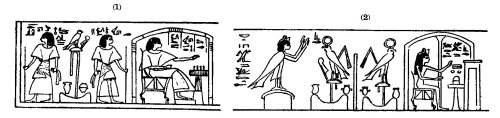
Vignette: The vignette of these plates, forming one composition, runs along the top of the text. The subjects are:-

Plate VII. i. Ani and his wife in the seh hall; he is moving a piece on a draught-board (to illustrate lines 3 and 4 of the text).

2. The souls of Ani and his wife standing upon a pylon-shaped building. The hieroglyphics by the side of Ani's soul read ba en Ausar, "the soul of Osiris."
bodead-plate-07-10

3. A table of offerings, upon which are laid a libation vase, plants, and lotus flowers.

4. Two lions seated back to back and supporting the horizon, over which extends the sky. The lion on the right is called Sef, i.e., "Yesterday," and that on the left Tuau, i.e., "Tomorrow" (to illustrate lines 13-16).

5. The bennu bird, and a table of offerings (to illustrate lines 26-30).

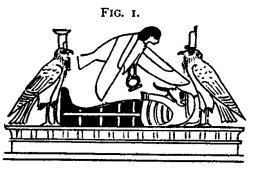
6. The mummy of Ani lying on a bier within a funereal shrine; the head and foot are Nephthys and Isis in the form of hawks. Beneath the bier are vases painted to imitate variegated marble or glass, a funereal box, Ani's palette, etc.

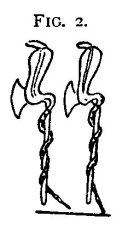
Plate VIII. I. The god Heh "Millions of years," wearing the emblem of "years" ( upon his head, and holding a similar object in his right hand; he is kneeling and extends his left hand over a pool (?) in which is an eye (to illustrate line 46).
bodead-plate-07-10

bodead-plate-07-10

2. The god Uatch-ura, "Great Green Water," with each hand extended over a pool; that under his right hand is called She en hesmen, "Pool of Natron," and that under his left hand She en Maaat, "Pool of Nitre or Salt" (to illustrate lines 47-50).

3. A pylon with doors, called Re-stau, "Gate of the funereal passages" (to illustrate lines 56-58).

4. The utchat facing to the left above a pylon (to illustrate line 73).

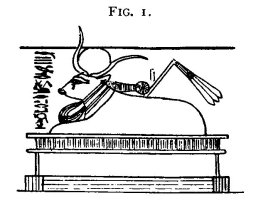
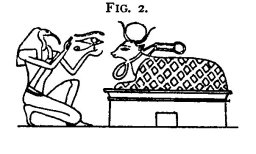
5. The cow (Fig. 1) Mehurt maat Ra, "Mehurt, the eye of Ra," with a flail and having on her head a disk and horns and round her neck the collar and menat (to illustrate lines 75-79).
bodead-plate-07-10

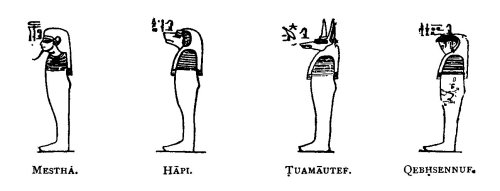
6. A funereal chest from which emerge the head of Ra, and his two arms and hands, each holding the emblem of life. The chest, which is called aat Abtu, "the district of Abydos," or the "burial place of the East," has upon its side figures of the four children of Horus who protect the intestines of Osiris or the deceased. On the right stand Tuamautef and Qebhsennuf, and on the left Mestha and Hapi (to illustrate lines 82, 83).
bodead-plate-07-10

bodead-plate-07-10

Plate IX. 1. Figures of three gods who, together with Mestha, Hapi, Tuamautef, and Qebhsennuf, are the "seven shining ones" referred to, in line 99. Their names are: Maa-atef-f, Kheri-beq-f, and Heru-khent-maati.

2. The god Anpu (Anubis), jackal-headed.

3. Figures of seven gods, whose names are Netchehnetcheh, Aaqetqet, Khenti-heh-f, Ami-unnut-f, Tesher-maa,, Bes-maa-em-kerh, and An-em-hru (to illustrate lines 99-106).

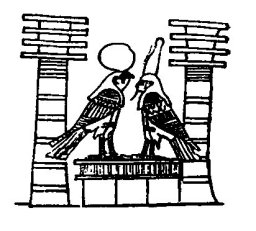
4. The soul of Ra, and the soul of Osiris in the form of a human-headed bird wearing the crown conversing in Tattu a scene of very rare occurrence, and illustrating lines 111, 112.
bodead-plate-07-10

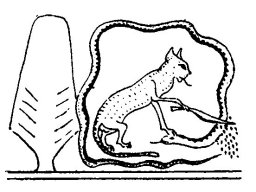
Plate X. I. The Cat, i.e., the Sun, which dwelleth by the persea tree in Heliopolis, cutting off the head of the serpent Apepi, emblematic of his enemies.

2. Three seated deities holding knives. They are probably Sau, Horus of Sekhem, and Nefer-Tmu.

3. Ani and his wife Thuthu, who holds a sistrum, kneeling in adoration before the god Khepera, beetle-headed, who is seated in the boat of the rising sun (to illustrate lines 116 ff.).

4. Two apes, emblematic of Isis and Nephthys (to illustrate lines 124, 125).

5. The god Tmu, seated within the Sun-disk in the boat of the setting sun, facing a table of offerings.

6. The god Rehu, in the form of a lion (to illustrate line 133).

7. The serpent Uatchit, the lady of flame, a symbol of the eye of Ra, coiled round a lotus flower. Above is the emblem of fire.

Text: [Chapter XVII.] HERE BEGIN THE PRAISES AND GLORIFYINGS OF COMING OUT FROM AND GOING INTO THE GLORIOUS NETER-KHERT IN THE BEAUTIFUL AMENTA, OF COMING OUT BY DAY IN ALL THE FORMS OF EXISTENCE WHICH

[1. Compare the following variant from a papyrus in Dublin. In the papyrus of Hunefer, before the scene of the Cat cutting off Apepi's head, is one in which the deceased is represented kneeling in adoration before five ram-headed gods, whose names are Ra, Shu, Tefnut, Seb and Ba-[neb]-Tattu.
bodead-plate-07-10

2. Pierret renders, rurrection des mes." See Le Livre des Morts, p. 53.

3. Some copies read, "to be with the followers of Osiris, and to feed upon the food of Un-nefer, to come forth by day"; and others, "may I drink water at the sources of the streams, and be among the followers of Un-nefer; may I see the disk every morning." For the texts, see Naville, Todtenbuch, Bd. II., Bl. 29.]

PLEASE HIM (i.e., THE DECEASED), OF PLAYING AT DRAUGHTS' AND SITTING IN THE SEH HALL, AND OF COMING FORTH AS A LIVING SOUL. Behold Osiris, the scribe Ani, after he hath come to his haven [of rest]. That which hath been done upon earth [by Ani] being blessed, all the words of the god Tmu come to pass. "I am the god Tmu in [my] rising; I am the only One. I came into existence in Nu. I am Ra who rose in the beginning. [He hath ruled that which he made.]"

Who then is this? It is Ra who rose for the first time in the city of Suten-henen [crowned] as a king in [his] rising. The pillars of Shu were not as yet created, when he was upon the high place of him who is in Khemennu.

"I am the great god who gave birth to himself, even Nu, [who] created his name Paut Neteru as god."

Who then is this? It is Ra, the creator of the name[s] of his limbs, which came into being in the form of the gods in the train of Ra.

"I am he who is not driven back among the gods."

Who then is this? It is Tmu in his disk, or (as others say), It is Ra in his rising in the eastern horizon of heaven.

"I am Yesterday; I know Tomorrow."

Who then is this? Yesterday is Osiris, and Tomorrow is Ra, on the day when he shall destroy the enemies of Neb-er-tcher, and when he shall stablish as prince and ruler his son Horus, or (as others say), on the day when we commemorate the festival of the meeting of the dead Osiris with his father Ra, and when the battle of the gods was fought in which Osiris, lord of Amentet, was the leader.

What then is this? It is Amentet, [that is to say] the creation of the souls of the gods when Osiris was leader in Set-Amentet; or (as others say), Amentet is that which Ra hath given unto me; when any god cometh, he doth arise and doeth battle for it.

"I know the god who dwelleth therein."

Who then is this? It is Osiris," or (as others say), Ra is his name, even Ra the self-created.

"I am the bennu bird which is in Annu, and I am the keeper of the volume of the book of things which are and of things which shall be."

Who then is this? It is Osiris, or (as others say), It is his dead body, or (as others say), It is his filth. The things which are are and the things which shall be are his dead body; or (as others say), They are eternity and everlastingness. Eternity is the day, and everlastingness is the night.

"I am the god Amsu in his coming-forth; may his two plumes be set upon my head."

Who then is this? Amsu is Horus, the avenger of his father, and his coming-forth is his birth. The plumes upon his head are Isis and Nephthys when they go forth to set themselves there, even as his protectors, and they provide that which his head lacketh, or (as others say), They are the two exceeding great ur which are upon the head of their father Tmu, or (as others say), His two eyes are the two plumes.

"Osiris Ani, the scribe of all the holy offerings, riseth up in his place in triumph; he cometh into his city."

What then is this? It is the horizon of his father Tmu.

"1 have made an end of my shortcomings, and I have put away my faults."

What then is this? It is the cutting off of the corruptible in the body of Osiris, the scribe Ani, triumphant before all the gods; and all his faults are driven out.

What then is this? It is the purification [of Osiris] on the day of his birth.

"I am purified in my exceeding great double nest[5] which is in Suten henen, (44) on the day of the offerings of the followers of the great god who is therein."

What then is this? "Millions of years" is the name of the one [nest], (46) "Green Lake"[1] is the name of the other; a pool of natron, and a pool of nitre (47); or (as others say), "The Traverser of Millions of Years" is the name of the one, "Great Green Lake" (48) is the name of the other; or (as others say), " The Begetter of Millions of Years" is the name of the one, "Green Lake" is (49) the name of the other. Now as concerning the great god who is in it, it is Ra himself. (50)

"I pass over the way, I know the head of the Pool of Maata."

What then is this? It is Re-stau; that is to say, it is the underworld on the south of Naarut-f, and it is the northern door of the tomb.

Now as concerning She-Maaat, it is Abtu; or (as others say), It is the road by which his father Tmu travelleth when he goeth to Sekhet-Aaru, which bringeth forth the food and nourishment of the gods behind the shrine. Now the Gate of Sert is the gate of the pillars of Shu, the northern gate of the underworld; or (as others say), It is the two leaves of the door through which the god Tmu passeth when he goeth forth in the eastern horizon of heaven.

"O ye gods who are in the presence (of Osiris), grant me your arms, for I am the god who shall come into being among you."

What then is this? It is the drops of blood which fell from Ra when he went forth to cut himself. They sprang into being as the gods Hu and Sa, who are in the following of Ra and who accompany Tmu daily and every day.

"I, Osiris, Ani the scribe, triumphant, have filled up for thee the utchat after it was darkened on the day of the combat of the Two Fighters."

What then is this? It is the day on which Horus fought with Set, who cast filth in the face of Horus, and when Horus destroyed the powers of Set. Thoth did this with his own hand.

"I lift the hair[-cloud] when there are storms in the sky."

What then is this? It is the right eye of Ra, which raged against [Set] when he sent it forth. Thoth raiseth up the hair[-cloud], and bringeth the eye alive, and whole, and sound, and without defect to [its] lord; or (as others say), It is the eye of Ra when it is sick and when it weepeth for its fellow eye; then Thoth standeth up to cleanse it.

"I behold Ra who was born yesterday from the buttocks of the cow Meh-urt; his strength is my strength, and my strength is his strength."

What then is this? It is the water of heaven, or (as others say), It is the image of the eye of Ra in the morning at his daily birth. Meh-urt is the eye of Ra. Therefore Osiris, the scribe Ani, triumphant, [is] a great one among the gods who are in the train of Horus. The words are] spoken for him that loveth his lord.

What then is this? [i.e., who are these gods?] Mestha, Hapi Tuamautef, and Qebhsennuf.

"Homage to you, O ye lords of right and truth, and ye holy ones who [stand] behind Osiris, who utterly do away with sins and crime, and [ye] who are in the following of the goddess Hetep-se-khus, grant that I may come unto you. Destroy ye all the faults which are within me, even as ye did for the seven Shining Ones who are among the followers of their lord Sepa. Anubis appointed their place on the day [when was said], 'Come therefore thither.'"

What then is this? These lords of right and truth are Thoth and Astes, lord of Amenta. The holy ones who stand behind Osiris, even Mestha, Hapi, Tuamautef, and Qebhsennuf, are they who are behind the Thigh in the northern sky. They who do away with sins and crime and who are in the following of the goddess Hetep-se-khus are the god Sebek in the waters. The goddess Hetep-se-khus is the eye of Ra, or (as others say), It is the flame which followeth after Osiris to burn up the souls of his foes. As concerning all the faults which are in Osiris, the scribe of the holy offerings of all the gods, Ani, triumphant, [they are all that he hath done against the lords of eternity] since he came forth from his mother's womb. As concerning the seven Shining Ones, even Mestha, Hapi, Tuamautef, Qebhsennuf, Maa-atef-f, Kheri-beq-f, and Horus-Khenti-maa, Anubis appointed them protectors of the body of Osiris, or (as others say), [set them] behind the place of purification of Osiris; or (as others say), Those seven glorious ones are Netcheh-netcheh, Aqet-qet, An-erta-nef-bes-f-khenti-heh-f, Aq-her-unnut-f, Tesher-maa-ammi -het-Anes, Ubes-hra-per-em-khet khet, and Maa -em-qerh-an-nef-em-hru. The chief of the holy ones who minister in his chamber is Horus, the avenger of his father. As to the day [upon which was said] " Come therefore thither," it concerneth the words, "Come then thither," which Ra spake unto Osiris. Lo, may this be decreed for me in Amentet.

"I am the soul which dwelleth in the two tchafi."

What then is this? It is Osiris [when] he goeth into Tattu and findeth there the soul of Ra; there the one god embraceth the other, and souls spring into being within the two tchafi.

["I am the Cat which fought (?) by the Persea tree hard by in Annu, on the night when the foes of Neb-er-tcher were destroyed."]

What then is this? The male cat is Ra himself, and he is called Maau by reason of the speech of the god Sa [who said] concerning him: "He is like (maau) unto that which he hath made, and his name became Maau"; or (as others say), It is Shu who maketh over the possessions of Seb to Osiris. As to the fight (?) by the Persea tree hard by, in Annu, it concerneth the children of impotent revolt when justice is wrought on them for what they have done. As to [the words] "that night of the battle," they concern the inroad [of the children of impotent revolt] into the eastern part of heaven, whereupon there arose a battle in heaven and in all the earth.

"O thou who art in the egg (i.e., Ra), who shinest from thy disk and risest in thy horizon, and dost shine like gold above the sky, like unto whom there is none among the gods, who sailest over the pillars of Shu (i.e., the ether), who givest blasts of fire from thy mouth, [who makest the two lands bright with thy radiance, deliver] the faithful worshippers from the god whose forms are hidden, whose eyebrows are like unto the two arms of the balance on the night of the reckoning of destruction."

Who then is this? It is An-a-f, the god who bringeth his arm. As concerning [the words] "that night of the reckoning of destruction," it is the night of the burning of the damned, and of the overthrow of the wicked at [the sacred] block, and of the slaughter of souls.

Who then is this? It is Nemu, the headsman of Osiris; or (as others say), It is Apep when he riseth up with one head bearing maat (i.e., right and truth) [upon it]; or (as others say), It is Horus when he riseth up with two heads, whereof the one beareth maat and the other wickedness. He bestoweth wickedness on him that worketh wickedness, and maat on him that followeth after righteousness and truth; or (as others say), It is the great Horus who dwelleth in [Se] khem; or (as others say), It is Thoth; or (as others say), It is Nefer-Tmu, [or] Sept, who doth thwart the course of the foes of Neb-er-tcher.

"Deliver me from the Watchers who bear slaughtering knives, and who have cruel fingers, and who slay those who are in the following of Osiris. May they never overcome me, may I never fall under their knives."

"What then is this? It is Anubis, and it is Horus in the form of Khent-en-maa; or (as others say), It is the Divine Rulers who thwart the works of their [weapons]; it is the chiefs of the sheniu chamber.

"May their knives never get the mastery over me, may I never fall under their instruments of cruelty, for I know their names, and I know the being Matchet Who is among them in the house of Osiris, shooting rays of light from [his] eye, but he himself is unseen. He goeth round about heaven robed in the flame of his mouth, commanding Hapi, but remaining himself unseen. May I be strong upon earth before Ra, may I come happily into haven in the presence of Osiris. Let not your offerings be hurtful to me, O ye who preside over your altars, for I am among those who follow after Neb-er-tcher according to the writings of Khepera. I fly as a hawk, I cackle as a goose; I ever slay, even as the serpent goddess Nehebka."

What then is this? They who preside at the altars are the similitude of the eye of Ra and the similitude of the eye of Horus.

"O Ra-Tmu, lord of the Great House, prince, life, strength and health of all the gods, deliver thou [me] from the god whose face is like unto that of a dog, whose brows are as those of a man, and who feedeth upon the dead, who watcheth at the Bight of the Fiery Lake, and who devoureth the bodies of the dead and swalloweth hearts, and who shooteth forth filth, but he himself remaineth unseen."

Who then is this? "Devourer for millions of years" is his name, and he dwelleth in the Lake of Unt. As concerning the Fiery Lake, it is that which is in Anrutf, hard by the Shenit chamber. The unclean man who would walk thereover doth fall down among the knives; or (as others say), His name is "Mathes,"[2] and he is the watcher of the door of Amenta; or (as others say), His name is "Heri-sep-f."

"Hail, Lord of terror, chief of the lands of the North and South, lord of the red glow, who preparest the slaughter-block, and who dost feed upon the inward parts!"

Who then is this? The guardian of the Bight of Amenta.

What then is this? It is the heart of Osiris, which is the devourer of all slaughtered things. The urerit crown hath been given unto him with swellings of the heart as lord of Suten-henen.

What then is this? He to whom hath been given the urerit crown with swellings of-the heart as lord of Suten-henen is Osiris. He was bidden to rule among the gods on the day of the union of earth with earth in the presence of Neb-er-tcher.

What then is this? He that was bidden to rule among the gods is [Horus] the son of Isis, who was appointed to rule in the place of his father Osiris. As to the day of the union of earth with earth, it is the mingling of earth with earth in the coffin of Osiris, the Soul that liveth in Suten-henen, the giver of meat and drink, the destroyer of wrong, and the guide of the everlasting paths.

Who then is this? It is Ra himself.

"Deliver thou [me] from the great god who carrieth away souls, and who devoureth filth and eateth dirt, the guardian of the darkness [who himself " liveth] in the light. They who are in misery fear him."

As concerning the souls within the tchafi [they are those which are] with the god who carrieth away the soul, who eateth hearts, and who feedeth upon offal, the guardian of the darkness who is within the seker boat; they who live in crime fear him.

Who then is this? It is Suti, or (as others say), It is Smam-ur, the soul of Seb.

"Hail, Khepera in thy boat, the twofold company of the gods is thy body. Deliver thou Osiris Ani, triumphant, from the watchers who give judgment, who have been appointed by Neb-er-tcher to protect him and to fasten the fetters on his foes, and who slaughter in the shambles; there is no escape from their grasp. May they never stab me with their knives, may I never fall helpless in their chambers of torture. Never have the things which the gods hate been done by me, for I am pure within the Mesqet. Cakes of saffron have been brought unto him in Tanenet."

Who then is this? It is Khepera in his boat. It is Ra himself. The watchers who give judgment are the apes Isis and Nephthys. The things which the gods hate are wickedness and falsehood; and he who passeth through the place of purification within the Mesqet is Anubis, who is behind the chest which holdeth the inward parts of Osiris.

He to whom saffron cakes have been brought in Tanenet is Osiris; or (as others say), The saffron cakes in Tanenet are heaven and earth, or (as others say), They are Shu, strengthener of the two lands in Suten-henen. The saffron cakes are the eye of Horus; and Tanenet is the grave of Osiris.

Tmu hath built thy house, and the two-fold Lion-god hath founded thy habitation; lo! drugs are brought, and Horus purifieth and Set strengtheneth, and Set purifieth and Horus strengtheneth.

"The Osiris, the scribe Ani, triumphant before Osiris, hath come into the land, and hath possessed it with his feet. He is Tmu, and he is in the city."

"Turn thou back, O Rehu, whose mouth shineth, whose head moveth, turn thou back from before his strength"; or (as others say), Turn thou back from him who keepeth watch and is unseen. "The Osiris Ani is safely guarded. He is Isis, and he is found with [her] hair spread over him. I shake it out over his brow. He was conceived in Isis and begotten in Nephthys; and they cut off from him the things which should be cut off."

Fear followeth after thee, terror is upon thine arms. Thou art embraced for millions of years in the arms [of the nations]; mortals go round about thee. Thou smitest down the mediators of thy foes, and thou seizest the arms of the powers of darkness. The two sisters (i.e., Isis and Nephthys) are given to thee for thy delight. Thou hast created that which is in Kheraba, and that which is in Annu. Every god feareth thee, for thou art exceeding great and terrible; thou [avengest] every god on the man that curseth him, and thou shootest out arrows . . . . . . . . Thou livest according to thy will; thou art Uatchit, the Lady of Flame. Evil cometh among those who set themselves up against thee.

What then is this? The hidden in form, granted of Menhu, is the name of the tomb. He seeth [what is] in [his] hand, is the name of the shrine, or (as others say), the name of the block. Now he whose mouth shineth and whose head moveth is a limb of Osiris, or (as others say), of Ra. Thou spreadest thy hair and I shake it out over his brow is spoken concerning Isis, who hideth in her hair and draweth her hair over her. Uatchi, the Lady of Flames, is the eye of Ra.

Subscribe to this RSS feed

Log in or create an account