log in
LC Geerts

LC Geerts

Website URL:

Book 1 Chapter 18, LE GRAND VOYAGE

A DWELLER ON TWO PLANETS

OR

THE DIVIDING OF THE WAY

BY PHYLOS THE THIBETAN

The First Book

CHAPTER XVIII

LE GRAND VOYAGE

Rai Gwauxln directed me to attend at Agacoe ere resuming my vacation trip, although it was all arranged previously to the funeral of Ernon that my action in Suern was to his satisfaction.

When I obeyed the Rai, which was almost immediately, for we were all ready to resume our journey, Gwauxln, in the presence of his ministers of state affairs, tendered me the position of Suzerain over the land of Suern. I was vastly surprised, yet felt that I might accept and in conducting the affairs of that country render good service. But the fact that I was yet an undergraduate at the Xioquithlon made me hesitate. At last I spoke, saying:

"Zo Rai, I am sensible thou hast done thy servant a great honor. Nevertheless, my liege, feeling that I have not thus far acquired the full knowledge I desire, being yet but a Xioqene, I ask thy permission to refuse the office."

Gwauxln smiled, and said:

"Even so. But the governor thou didst appoint shall execute thy duties for the three years intervening--the four years, I would say, since I would not that thou shouldst study at all this year--and thereafter thou shalt legally assume active duties. I have an object in this besides mere form; I believe that that man who hath an object, a direct goal, in view, is more likely to win success than one without. It is a good stimulus. I do therefore appoint thee Suzerain over Suernis, and dismiss thee to thy journey of pleasureable recreation with thy friends as soon as thou shalt sign thy name to this document. That is well written, though thy hand shakes a little because of thy nervousness. Be calm." This last he said as, trembling slightly, I wrote the desired signature.

Once more we were on our travels.

Anzimee, the elf, persisted in calling me "My Lord Zailm" when she had learned the story of my imminent suzerain duties.

Our course was again eastward, although now farther south, for we did not propose to visit Suernis this time, but intended to proceed instead to our American colonies, as in the original route we had planned to do after leaving Suernis.

We crossed equatorial Necropan (Africa), then the Indian Ocean and the present East Indies, but then colonies of Suern called Uz, then onward above the wide Pacific, still eastward.

"Umaur! the coast of Umaur!" was the cry that called our little company to the windows to look at a dark, serrate line that bounded the eastern horizon. It was the distant range of the Andes, appearing almost on a level with our vailx, which, two miles high above the ocean, shot towards the hazy, black line. Below was the broad mirror of the blue Pacific, apparently waveless because so far beneath us.

Umaur, land of the Incas in a far later day. Umaur, where in eight centuries more they must find a refuge who should be so fortunately fated as to escape from Poseid, ere, "Queen of the World" no more, she sank beneath the waves of the, Atlantic. Eight centuries, whose lapse would see the proud Atlantean become so corrupt that his soul no more reflected the wisdom of the Night-Side because, the calmness of morality being fled, the key to nature's Penetralia would have been lost, and with it his dominion over the air and the depths of the sea. Alas, poor Atl!

But Umaur lay ahead of us, and ignorant of the misdeeds-to-be of our national posterity, we in our vailx stood gazing on the coast we were so rapidly approaching, and commented upon its majestic mountain ranges as seen through the telescopes. 1 Here we beheld a land where, after thousands of years, the conquering Castilians would come, led by Pizarro, and find a race under the rule of Incas, a name preserved through the many centuries from the day when their remotest ancestors fled from sunken Poseid, calling themselves "Children of the Sun."

Umaur was the region of the quarries of Poseid and of many of its rich mines of mineral wealth. Here, too, were vast plantations, and east of the mountains were regularly planted groves of the rubber tree, the genuine Siphonia Elastica of botany. Here also flourished the Cinchonas, as well as many other trees now indigenous to South America, colonized plants from Poseid. Until planted abroad by Atlanteans these vegetable treasures never grew outside of Poseid, and to-day the wild forests of peculiar South American trees and shrubs are the direct descendents of our regularly cultivated farm and plantation products in Umaur.

phylos-chapter-1-18
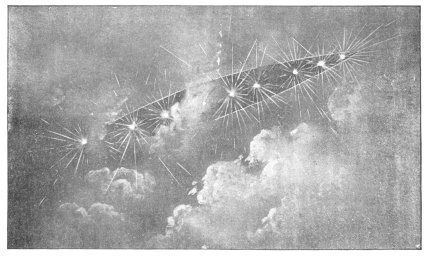
AERIAL-SUBMARINE VESSEL, ENTERING THE WATER

In that olden time the Amazon river ran within dykes across the continent, and the trackless sylvas of Brazil were then drained areas of tilled soil, such as the adjacent territory of the Mississippi is to-day. Some day this river, "Father of Waters," in the north, will sweep unresisted, undyked, across the lowland, which, even now, its surface is above in altitude. It will do this, because these things are certain to be in the mutations of the coming centuries. It will do this, also, because history repeats itself; think not that thou shalt inherit, reincarnate the glories of Atl, and escape its shadows. All things move in cycles, but the circle is that of the screw-thread, ever around and around on a higher plane each time. But that time when these things shall come to pass, and no man be able to say nay, is yet far away on the horizon of time future, as far as is the grand recession of the Amazon on the horizon of the past.

From the great orchards and plantations and homes of Umaur, in the north of that continent, to the desert wilds of its southern parts, where one day trouble was to overwhelm me--and thence north along the eastern coasts, we took our way, leaving the doings of the millions of our colonists, the Umauri, to the imagination of the reader.

Successively we came to the Isthmus of Panama, then over four hundred miles in breadth; to Mexico (South Incalia) and to the immense plains of the Mississippi. These latter formed the great cattle lands whence Poseid drew most of its supplies of flesh-foods, and where, when the modem world discovered it, enormous herds of wild progeny of our ancient stock roamed at will. Buffalo, elk, bear, deer and mountain sheep, all offspring of the remotest ages. I regret to see them so wantonly slaughtered as they are; surely so old a stock might be spared.

To these broad valleys were to come, in later centuries, invading hordes in boats, and over the far northern isthmus where now are only vestiges of its former existence, the Aleutian Islands. They came from Asia, then, as now, to a large extent the home of semi-barbarians, except where the sway of Suernis had extended a civilizing influence by sending out the tribes which, in a later day, were to occupy so large a niche in history under the name of the Semitic ram. But the barbarians who went into Incalia, occupying the North American plains and lake regions--a future age should come which would find these hordes gone from the earth forever; and, later still, curious people digging from archaeological remains would say: "Here lived the moundbuilders."

Still farther north than this, in the present "lake region," were large copper mines, whence we obtained much of our copper, and some silver and other metals. A cold region was this, far colder than it is to-day, for it lay in the edge of the retreating forces of the glacial epoch, an epoch not over until much more recently than geologists have hitherto thought and even still think.

To the west lay what in early American days were called the "great plains." But in the days of Poseid they had a far different appearance from that which they bear to-day. Not then arid, nor very sparsely inhabited, though vastly colder in winter, owing to the nearness of the vast glaciers of the north. The Nevada lakes were not then mere dried up beds of borax and soda, nor the "Great Salt Lake" of Utah a bitter, brackish body of water of its present comparatively small size. All takes were large bodies of fresh water and the "Great Salt Lake" was an inland sea of fresh floods, bearing icebergs from the glaciers on its northern shores. Arizona, that treasure-house of the geologist, had its now marvelous desert covered with the waters of "Miti," as we called the great inland sea of that region. Verdure was on all the slopes of all the hundreds of square miles not covered with lovely bodies of water. On the shores of Miti was a considerable population, and one city of no small size, colonists all, from Atl.

Reader, dost thou remember a promise given in previous pages, wherein I looked forward to a treat in scenic depiction, saying it was from another pen than mine? I redeem it now, for already the geologist is after me for having declared Arizona the scene of a lake or inland sea so vast as Miti, and so recently as twelve thousand years ago. I am reminded that he has decided from evidence afforded by erosion and weathering of the rocks in that amazing region, that while the Arizona desert was undoubtedly a lake or a seabed since the paleozoic time when it was the site of a shallow ocean, nevertheless that lake was certainly "of an age older than the Pliocene, being probably in the Cretaceous epoch." My friend, no. Those gorges and stupendous canons are not merely the gradual product of time and water and weather. Per contra, they are of sudden formation, the rending and cracking apart of the strata in a similar, but on a far more vast scale than the volcanic outburst at Pitach Rhok, described in the first chapter of this history. The Arizona wonders and the gorge of the "'Grand Canon of the Colorado" were the result of an awful dance of the solid crust of the globe. Even now the lava beds of the rectangle between the parallels 32 deg. and 34 deg. north latitude and 107 deg. to 110 deg. longitude west from Greenwich, in the Mt. Taylor and Mt. San Francisco region, have few parallels on earth as regards size. All over this hideous work of destruction, when the sea Miti had fled away into Ixla (Gulf of California) the rains and torrents of eleven thousand winter seasons, and the desiccating, powdering influences of as, many torrid summers have smoothed and chiseled and wrought the ruptured, ragged surfaces into yet more fantastic shapes, and claimed the whole work as its own, denying the hand of Pluto as the major worker. And the geologist seems to have admitted the claim, and placed the lake time far back, in order to allow a sufficient term for the execution of the gigantic work. And it is not so, for I saw that lake, only twelve thousand years ago. But now for the literary treat; it is taken from a very modern pen, but it is so faithfully descriptive of the appearance of the region to-day that I desire to enjoy its perusal with my readers. The words are those of Major J. W. Powell, U. S. Army:

"The canon walls are buttressed on a grand scale, and deep alcoves are excavated; rocky crags crown the cliffs, and the river rolls below. * * * The sun shone in splendor on the vermilion walls, shading into green and gray where the rocks were lichened over; the river filled the channel from wall to wall. and the canon opened like a beautiful gateway to glory.

But at evening, when the sun was going down and the shadows were settling in the canon, the vermilion gleams and roseate hues, blended with tints of green and gray, slowly changed to brown above, and black shadows crept over below-then it seemed the shadowy portal to a region of gloom. Lying down we looked straight aloft through the canon cleft and saw that only a little of the blue heaven appeared overhead--a crescent of dark blue sky with but two or three constellations peering down upon us. I did not sleep for some time, as the excitement of the day had not worn off. Soon I saw a bright star that seemed to rest on the very verge of the cliffs overhead. Slowly it seemed to float from its resting place on the rocks, out over the canon. At first it appeared like a jewel set in the brink of the cliff, but as it moved out I almost wondered that it did not fall. In fact, it did seem to descend in a gentle curve, as though the sky, in which the stars were set, was spread across the canon, resting on either wall, and swayed down by its own weight. The star appeared to be really in the canon, so high were the battlemented walls. The morning sun was shining in splendor on their painted faces. The salient angles were as if on fire, and the retreating angles buried in shade; the rocks, red and brown, blazed from their setting of deep gloom below, but above all was vermilion fire. The light above, made more brilliant by the bright-tinted rocks, and the shadows below, made more gloomy by the somber shades of sunlessness, increased the apparent depth of the awful canons, and it seemed a long, long way up to the world of sunshine--and was a mile!"

Even the wide waters of the Miti, set about with towering peaks in the olden days, beautiful as a dream, were not more grand and glorious than these awful gorges come to take their place.

From the city of Tolta, on the shores of Miti, our vailx arose and sped away north, across the lake Ui (Great Salt) to its northwestern shore, hundreds of miles distant. On this far shore arose three lofty peaks, covered with snow, the Pitachi Ui, from which the lake at their feet took its name. On the tallest of these had stood, perhaps for five centuries, a building made of heavy slabs of granite. It had originally been erected for the double purpose of worship of Incal and astronomical calculations, but was used in my day as a monastery. There was no path up the peak, and the sole means of access was by vailx.

In the neighborhood of twenty years ago, more or less, counting from this Anno Domini 1886, an intrepid American explorer discovered the famous Yellowstone region, and while on the same expedition went as far west as the Three Tetons, in Idaho. 2 These mountain triplets were the Pitachi Ui, of Atl. Professor Hayden, having arrived at the base of these lofty peaks, succeeded, after indefatigable toil, in reaching the top of the greater peak, and made the first ascent known to modern times. On its top he found a roofless structure of granite slabs, within which, he said, "the granite detritus, was of a depth indicating that for eleven thousand years it had been undisturbed." His inference was that this period had elapsed since the construction of the granite walls. Well, the professor was right, as I happen to know. He was examining a structure made by Poseid hands one hundred and twenty-seven and a half centuries ago, and it was because Professor Hayden was once a Poseida and held a position under the Atlan Government, as an attache of the government body of scientists stationed at Pitachi Ui, that he was karmically attracted to return to the scene of his labors long ago. Perhaps knowledge of this fact would have increased the interest he felt in the Three Tetons.

Our vailx alighted upon the ledge without the temple of Ui just as nightfall came on. It was very cold there, so far north, and at such an altitude. But the priests within the heavy, well-built edifice never suffered cold, for Atla, drawing upon Navaz, had Night-Side forces at its call. The primary cause of our visit was our desire to pay devotion to Incal as He arose next morning. All night the brilliant beams of light from our ruby-colored lanterns flashed the tidings, to such Poseidi as might look our way, that a royal vailx was in the region. Next morning after sunrise our vessel lifted and departed for the east, that we might visit our copper mines in the present Lake Superior region. We were conducted in electric trams through the labyrinths of galleries and tunnels. When we were about to leave, the government overseer of the mines presented each of our company with various articles of tempered copper. To me he gave an instrument, similar to the modern pocket-knife, which I retained to the day of my death, and always valued highly on account of its extra fine temper, which kept a keen edge, good enough to shave with, and rarely required to be sharpened. The Poseidi were adepts in this now lost art of copper tempering. In return I gave the overseer a nugget of native gold. He asked me whence it came, and when I told him, remarked:

"Any specimen from the famous mine at Pitach Rhok will be highly prized by an old miner like thy servant, more especially as it is presented by the discoverer of the mine himself."

Thus had the mine, found by me when an obscure lad, returned riches to the pick and shovel which had rendered it famed throughout the civilized world.

After taking counsel among ourselves, we decided not to make the farther northern trip, for every one of us had seen the Arctic icefields at least once, while some of us had been there several times. Instead, we concluded to remain in Incalia for a week longer, and spend the eleven days thereof in visiting, more at our leisure, the great territory where, although of course we did not know it, the Anglo-Saxon was one day to found the glorious American Union. History is said to repeat itself; I believe it does. Certainly races follow in the track of preceding races, and as the most important and populous part of all the North American colonies of Poseid had its habitat west of the great chain now known as the Rocky Mountains, so also the grandeur of America will be upheld by the western and southwestern States of the American Union.

Man likes pleasant places to live in; he likes those lands where Mother Nature is amiable and laughs with abundant harvests upon slight provocation; man likes to live in a fruit-land, and where shall he find anything more to his mind than this same southwest and west of the Incalia of yore? Along the ocean shore and back to the Sierra Nevada mountains is the region where, under Poseid dominion, lay a province not second in beauty to the lake region along the shores of Miti. And it bar, retained its fair charm, while that of the other has given place to drifting sands and cactus and the mesquite, and has tenantry of the Moloch lizards, rattlesnakes and prairie dogs. It is no more the

"Union of lakes and union of lands" that it was in that olden time.

When we finally left Incalia, that we might return home to Caiphul, the last of our colonial lands visible was the coast of Maine, for we journeyed eastward, then south.

For change we decided to forsake the realms of the air for those of the deep where the shark is king. Like all vailx of the class to which it belonged, ours was constructed for both aerial and submarine service, the plates of the sliding deck and the other movable parts of the hull being capable of very close approximation by means of setscrews and rubber washers.

To settle straight down into the ocean would be too much like a landing on terra firma. But being at a height of two miles, more or less, the conductor was directed to gradually reduce the repulsion current, thus diminishing our buoyancy so as to bring us into the water ten miles distant from where the slant commenced. He was further ordered to do this while maintaining a speed which would, though very slow for a vailx, be really swift, that is, he was to cover ten miles in as many minutes.

When we struck the water at this rate of progress the shock which the entering needle experienced was sufficiently great to cause its inmates to stagger, and little exclamations were made by the ladies.

As soon as we entered the water the repulsion was made nil, and its opposite, a degree of attraction greater than that of water to the terrestrial center of gravity, was set up, whereby we were enabled to sink to a considerable depth, despite the air contained in the vessel. The lights outside the windows were started, our speed modified to suit the element, and then we all gathered in the salon by the windows, darkness within and the waters lit without, enabling us to see curious tribes of Neptune which crowded about the strange illumination in their midst.

While thus engaged and while listening to the delighted words of an enthusiastic ichthyologist, I heard a familiar voice in the darkness. I knew it for that of my father Menax, and accordingly went to the naim. He could not see me because I stood in darkness, but I could see him in the great mirror, for at home he was in the light and his image was so transmitted, so that I saw not only himself, but his immediate surroundings, just as a person outside a lighted window at night beholds everybody and thing in the interior, himself unseen.

"My son," said the prince, "thou shouldst not have allowed thy love of novelty to cause thee to act so unwisely as thou didst in entering the ocean at even the slow rate of a ven (mile) per minute. I fear that thou hast a vein of reckless daring in thy nature which will some day bring thee misfortune. Incal punishes the reckless by allowing His broken laws to exact their own penalty. Be cautious, Zailm, be cautious!"

After the submarine experiences had become tedious, the opposite course of a rapid but graduated augmentation of repulsion was imparted to our vailx--a procedure not dangerous, as the other had really been--and soon our long spindle shot out of the water like some great bubble, then rose to where the raz, or repulse indicator, was set for its government, only a few hundred feet above the surface of the ocean. There, putting aside the closed deck, we sat in the bright sunshine and enjoyed the pleasant ocean breeze, which blew in the same southern direction in which we were going. Desiring to reach home by the next day, when the afternoon grew cool we closed the deck, arose high in the heavens so as to lessen atmospheric resistance and made the quickest speed we could towards the south. This, I should remark, was not nearly so great--as either an eastern or western course would have allowed. Thus, traveling either due east or due west, we could proceed at the rate of a degree of longitude every four minutes. But north or south we cut the earth's currents, and just in proportion as a vailx-course deviated from east to west, in that proportion was its speed lessened, until going due north or south we could only travel at the comparatively slow rate of some hundred miles each hour.

We saw that if we traveled home by the straight course, we would not reach Caiphul under two days, and, having set our desires on reaching it by the next morning, the prospective delay was so tedious that we decided to run in on an angle. That is, we would head our vailx: southeast for the Necropan coast, thence southwest for Caiphul, and though the extra distance would be several thousand miles, the increased speed attained would allow us to reach our destination in time to take our breakfast at home.

Beautiful Caiphul,
There's no place like thee;
Queen of Atlantis
And Queen of the Sea.

Footnotes

1 NOTE--When thy science shall, like Poseid, approach Nature from its Godward side; when, instead of ascending to that key-force of all Nature, the Odic force, from a synthesizing of environing phenomena, thou shalt look from Odicity adown all the river of Energy, then wilt thou have all that Poseid had (being thyself Poseid returned), even its vailx, its naim, and its telescopes. Not such crude instruments as thine are, were the telescopes of Atl. Not the most remote star which sends a beam of faintest light across the depths of space, but that star could be brought so near to us in seeming, that had so minute an organism as a leaf been lying on the "ground" of the star, it were visible to our eyes. Dost thou refuse credence? Con this proposition: that light in not alone a reflection or refraction of force from a substance, but is a prolongation of every substantial form, for as much as only One Substance exists, though many are the dynamic variations thereof, these are mistaken by thee for different substances. There is but ONE SUBSTANCE: Light from Arcturus, let us say, is the prolonged substance of that star. Machine-made electricity is, per contra, unimpressed, formless force. One can be made to reinforce the other--the Formless to acquire the image of the Formed. Dost now see principle of our telescopes? Thy mind jumps far to the van, and I hear thee ask, 'Is Mars inhabited? Is Jupiter? Is Saturn, Venus?" Ah! my friend, I will not answer yea or nay, for when the Poseid view of Nature reappears on earth, thou wilt KNOW. Seek and ye shall find; but seek correctly. Walk the cruciform Way.

2 The Three Tetons we situated in northwestern Wyoming, but Wyoming as a territory was not in existence at the time referred to, haying been formed in 1868 from parts of Idaho, Dakota and Utah. A small part of Yellowstone Park is in Idaho.--Kings Hand-book of United States.

Book 1 Chapter 17, RAI NI INCAL--ASHES TO ASHES

A DWELLER ON TWO PLANETS

OR

THE DIVIDING OF THE WAY

BY PHYLOS THE THIBETAN

The First Book

CHAPTER XVII

RAI NI INCAL--ASHES TO ASHES

On a bier in front of the Holy Seat, by the eastern face of the Maxin-Stone in the Incalithlon, lay all that was of the earth, earthy of Ernon of Suernis. In the triangle were gathered a few witnesses asked by Rai Gwauxln to be present, and over all shone the mysterious light which required no fuel, nor for its tall taper any human keeper. High above, hung the white stalactite ceiling, casting down from its many points the radiance of the lights which no one could see from below.

"Close his eyes, his work is done."

Beside the restful form stood Mainin, the Incaliz, his hand on the shoulder of the dead Rai. After the mighty organ had sounded a mournful requiem, Mainin made the funeral speech, saying:

"Once more has a most noble soul known earth. How hath it treated him who gave his life to the service of its children? Verily, Suerna, thou hast done a deed which shall clothe thee in sackcloth and ashes for aye! Ernon, my brother, Son of the Solitude, we bid thee adieu in great sorrow of soul; sorrow not for thee, for thou art at rest; but for us left behind. It shall be until many years ere we know thee again incarnate. As for this, thy poor clay, over it we will say final words, for it hath done its work and is committed to Navazzamin. Ernon, brother, peace be with thee evermore."

Again the mighty organ played in solemn sadness, and while attendants raised the bier upon the cube of the Maxin, the Incaliz raised his hands to heaven and said:

"Unto Incal this soul, unto earth this clay."

The body, bound with light bands to the bier, was raised with it to an erect posture, trembled a moment in that position, and fell forward into the Maxin. There was no flame, no smoke, not even ash left behind the instantaneous disappearance of body and bed.

The funeral was over. As we who abode in Caiphul turned to depart, we. saw that which no man then living had ever before beheld in the Incalithlon. Back of us, in the auditorium, stood groups of grey-habited men, cowled like monks of Rome. There seemed great numbers of them, collected in groups of seven or eight amongst the maze of stalagmite pillars which supported the roof. As we gazed, these men faded slowly from sight, until over four score of Caiphalians seemed indeed small in number in the vast hall where so recently had been hundreds of Incaleni, Sons of the Solitude in astral form, gathered at the funeral of their brother. Yea, verily, had the Sons come to witness the impressive ceremony where all that was mortal of their dead fellow was restored to the keeping of the elements of nature.

"But no man knows that sepulcher,
And no man saw it e'er,
For the angels of God upturned the sod
And laid the dead man there."

Book 1 Chapter 16, THE VOYAGE TO SUERN

A DWELLER ON TWO PLANETS

OR

THE DIVIDING OF THE WAY

BY PHYLOS THE THIBETAN

The First Book

CHAPTER XVI

THE VOYAGE TO SUERN

Before us lay a pleasure trip during which we should travel many thousands of miles. We proceeded slowly when we came above the base of the huge bulk of Pitach Rhok, the mighty mountain, and ascended somewhat, so that we should be on a level with its high point. When at the place, nothing would suit the company except a stop on the summit, and together we all placed foot in the snows on the pitach, which thing was done chiefly to please Anzimee, who said that the place was very interesting on account of what had there happened to me.

Then, again, we were under way, descending from the higher altitudes in order to better view the thickly inhabited, though mountainous, country beneath us, between Pitach Rhok and east Poseid.

At the approach of sunset a dull roar arose to the ear, and soon the long white shore of old ocean flashed beneath a moment, and in a little time was fax behind, with the waters, lead color in the twilight, beneath, behind, before and on both sides, no land in sight, and over one thousand miles east the country of Necropan. Without going at a full rate of speed, we could not expect to be above that land in less than two or three hours. But as it would be dark ere reaching it, we slackened speed to an hundred and fifty miles per hour, closed the deck and went into the salon, where incandescent lamps lit up the darkening night-glooms.

A trip by vailx could never prove so monotonous as a journey in even the fastest of ocean steamships so often is to-day. The variety of scenery, the wide views possible, for altitude was dependent wholly on pleasure, the external cold being unheeded by people who sat in a parlor warmed by means from Navaz and furnished with air of the proper density by the same Night-Side forces--all this tended to prevent ennui. Then too, the rapid transit changed the aspect of things beneath so fast that the spectator looking back-wards gazed upon a dissolving view. As an aside, the currents derived from the Night-Side of Nature permitted the attainment of the same speed as that of the diurnal rotation of the earth, e. g.: supposing we were at an altitude of ten miles, and the time the instant of the sun's meridian; at that meridian moment we could remain indefinitely, bows on, while the earth revolved beneath, at approximately seventeen miles every minute. Or, the reverse direction keys could be set, and our vailx would speed away from where it was meridian on the surface beneath, at the same almost frightful rate, frightful to one unused to it, as my reader is now, but one day will not be, if, as I hope, he or she will live to see vailxi rediscovered. Nor need the life be a very long one ere then.

While we had such preventives of ennui, we lacked not commoner means of enjoyment. We had our naima, in the mirrors and vibrators of which our friends, however distant, could appear in image of form and of voice, lifesized and with undiminished vocal volume. The salons of the great passenger vailxa had libraries, musical instruments, and potted plants, amongst the flowers of which birds similar to the modern domestic canary darted about.

At about the tenth hour it was reported that Necropan was beneath, and at this surprising information, because at the speed I had ordered, we should have been at least six hours longer in coming to that country, I enquired of the vailxman his reason for increasing speed without orders. No good reason being given, I severely reprimanded the conductor, and ordered that a descent be made to terra firma, in order that we might travel by day over the Wasted Land, as our word Sattamund may be translated, which is the Sahara desert of to-day. This great wade some of our party had never seen, and to allow them the privilege we settled down to spend the night on an elevated ridge, high enough to be above malarious influences, for we were near where modern Liberia lies.

"The proud bird--The Condor of the Andes,
That can sail thro' heaven's unfathomable depths,
Or brave the fury of the northern hurricane
And bathe his plumage in the Thunder's home,
Furls his broad wings at nightfall, and sinks down
To rest upon his mountain crag.

Though we called it Sattamund, or the Wasted Land, yet it was not such an and region then as it is now. Water, if not as abundant as it was in Poseid, was abundant enough to give a wealth of tropical trees of the hardier sorts, sufficient at least to hide the nakedness of the slopes and hills of that old seabed. There were even a few saline lakes there, broad and blue, and it was around these that the population was centered. But the same dread catastrophe that overtook fair Poseid laid its terrible hand upon Necropan, and its beauty of verdure went out from the land, because the geological changes withdrew all the water from the surface, and hid it so that only artesian augers could find it. The same mighty throe rent the rocks through and through in Southwest Incalia, and to-day there is in that arid region scenery most fantastic, weird past the power of my pen to describe, where flows the Rio Gila, the Colorado, and Colorado Chiquita. But I will reserve the description, and when it is given it shall be in other words than mine, so that thou and I, my friend, shall together have the pleasure of enjoying a fine word-painting.

In Poseid and Suern, and wherever civilization extended its scepter, it was the universal law, and mankind's pleasure to obey the heavenly mandate which the general accordance with the solar life spirit taught us required the planting, instead of careless rejection, of O seeds of goodly flower or fruit, for shade, for beauty, for utility, wherever it chanced that a favorable spot offered, either in the habitats of man or in the untrodden wilderness. Indeed, in such trips as our party was then taking, it was a matter of religious significance to take great quantities of seeds and to scatter them from the vailx-decks at nightfall, both as an offering to Incal, as His sublime symbol set in the west, and also that the dews of night might insure germination, and this ceremony was also held to be an acknowledgment of the Goddess of Increase, Zania. Thus the wilds came to bloom as the rose; and to-day the world is heritor of that sowing of seed; the indigenous cereals, the wheat, for the origin of which many ingenious but insufficient theories have been put forth, and the varieties of palms that make the tropics famed for the grace of their cocoas and dates, and every genera of the Chamaerops. And these things are because man, woman and child found pleasure in that olden time in "planting seed by the wayside." Go thou and do likewise, that the waste places may become full of beauty and be a joy forever. All hail to Arbor Days, which fulfill the injunction of Christ; they will surely make a return, and some an hundred fold. A small pocket now and then will hold many a seed for planting, and though thou heedest not its sort, so that it be goodly, yet the Father hath said, "It shall bring forth after its kind."

THE STORM

The morning dawned clear and cloudless and was altogether so delightful that we essayed scarcely any forward progress, moving slowly in order that the deck might be uncovered and the company allowed to sit out in the fresh air and warm sunshine.

Down below, a couple of thousand feet at most, we saw, through good glasses, various forms of . human, animal, bird and plant life; and sounds came up to us in drowsy, musical monotone, as our vailx hovered above. Towards evening the winds began to blow, rendering it unpleasant to remain so near the ground. The repulse-keys were set, and presently we were so high in the air that all about our now closed ship were cirrus clouds, clouds of hail held aloft by the uprushing of the winds, severe enough to have been dangerous had our vessel been propelled by wings or fans or gas reservoirs. But as we derived from Nature's Night-Side or, in Poseid phrase, from Navaz, our forces for propulsion as well m for repulsion, or levitation, therefore our long, white, aerial spindles feared no storm, however severe.

As the windows, being frosted over, obscured our view, and as the night promised furious weather, we had recourse to books, music and to conversation with one another, and, through the naim, with our friends at home in faraway Poseid. No authority had Murus (Boreas) over the currents from Navaz. The evening had not far advanced when it was suggested that the storm would most likely be heavier, and the wind wilder nearer the earth, and so the repulse-keys were set to a fixed degree, making nearer approach to the ground than was desirable impossible as an accidental occurrence. We might, if it were generally agreeable, take advantage of our privilege and enjoy the sensation of being in the midst of the storm, ourselves safe and under full speed,

"And brave the fury of the Northern hurricane."

The partial novelty might make us sleep better, when, the evening passed, we should have gone to our staterooms. I, therefore, approved the plan, and gave orders to the conductor to descend to a height of about twenty-five hundred feet. Down we dropped. Our lights were made low in order to produce a partial gloom, the better to enjoy the full fierceness of the tempest, and we sat near the windows where we could hear, if not see. To the eye, naught would have appeared outside save entire blackness; to the ear, the loud beating of the rain upon the metal shutters was plainly, delightfully apparent. Against the sharp points of prow and stem the wind howled and shrieked like an army of demons. At times when the vailx was struck, broadside by some counterblast, it would careen and tremble, but it kept on its way, determined as a thing of life. The experience was enjoyable, if not entirely novel, for it spoke to us of the power of man over matter, and taught us of the things of God, Incal to us, Master of all things and of ourselves, who by Him had this authority over the elements.

When the sensation had become monotonous the lights were increased to proper brightness; again we turned to books and games and music, as we once more sought the upper regions of the atmosphere, which were quieter compared with those of the half-mile plane.

Anzimee and a girl companion sat apart from the rest of the company in a retreat formed of flowering vines draped across one corner of the main salon. In a short time she came from her nook to where I sat, wrapped in meditative obliviousness. Touching my shoulder as she came close, she said:

"Zailm, thou dost sing; it would please me if thou wouldst take thy lute and come to where Thirtil and myself have chosen seats, and sing to us."

She bent over my shoulder, blushing slightly, looking so altogether lovely that I simply sat and gazed in silent appreciation of her beauty.

"Come, Zailm, wilt thou?"

I arose promptly enough when I saw a shade of disappointment cross her face, as she interpreted my silence to mean unwillingness, and I said:

"Lo, Anzimee, I am but too pleased to comply, but how could I move?"

Unsuspiciously, she asked:

"Move? and why not?"

"Hast thou ever seen a bright bumming bird," I replied, "which, poised at a flower beside thee, kept thee still, almost afraid to breathe, lest it be alarmed to flight? Even so I could not move, lest--"

"There, there now! If I were not used to reading one's earnestness or other emotions in the eyes, I would say thou art a sad flatterer. But, come."

"What shall I sing, little friend?" I asked of Thirtil, a demure, sweet little maiden, an art student, half-serious, half-frivolous in temperament.

"Oh, dost ask me? Well, something, something," with a mischievous glance at Anzimee, "from thy heart!" she laughingly replied.

Anzimee blushed, but made no other sign, merely dropping her long lashes as I looked at her, while I said, "Truly! Then from my heart-this" (a popular favorite, by the way):

"Ere the heart can know its own,
Ere the doubts of life are o'er,
Love in our hearts must have grown
To the heights of heaven's shore.
Truly, love is sought in vain
In other place than in the heart;
True love always hath its pain,
When from purity we part.
May we cease from every strife,
While in lovely verse enshrining
Incal's blessing in our life;
With His peace it e'er entwining.
So is melody divine,
When the music of the soul;
'Tis betrothing thine and mine,
While the centuries unroll.
Yet our hearts are young and gay,
Seeking ever fairest bowers
Where shall bloom from day to day,
All the beauty of the flowers.
There is one of all the rest,
That alone for me is blooming;
Deep the tendrils in my breast,
Find forever their entombing.
Shall I pluck it while in bloom,
Ready for the gardener's gleaning?
Could I take forever home
What, unto me, is no dreaming?
Yea, beloved, we shall rejoice
In His blessing evermore;
List'ning to the gentle voice,
That as One--we do adore."

Thus it was within the vailx, song and pleasure; without was the storm, risen up after us. Into the teeth of the furious gale plunged our long spindle, giving no sign exteriorly, even had any one been there to see, of the light and warmth, laughter and song, of the human freight and songbirds within its staunch shell, amidst the flowers, a drifting bit of the tropics, safe from boreal blasts. No sign, save only the gleam of the crimson fore and aft lights.

phylos-chapter-1-16

While the others retired for the night to their various state rooms, I remained in the vacated salon until the announcement was made to me that we were above Suernis. No landing could be made, however, in the face of a gale blowing eighty miles an hour, such an attempt would have resulted in being dashed to pieces the instant we reached the ground.

In order that we might be wholly out of the range of the influence of the storm, I gave directions to rise above the level of the disturbance, if such a region of calm existed within reach, and there set the keys so as to stop all propulsion. Receiving this order, the conductor augmented the repulsion force by means of the levers of degree, and we rose steadily up, up, up--above the clouds, above the rush of the hurricane, into a clear, calm atmosphere, intensely cold, almost thirteen miles from the earth's surface. Could we have had a view unobstructed by stormclouds, we were just about high enough to afford us a horizon of three hundred and fifty miles. Soon after this order I went to my room to bed. With the morning the storm had not decreased in fury; and occasional flurries in the air above us proved that the storm-area on the surface must be of vast extent. The cold outside was too intense to consider, even for an instant, the opening of the deck; the sky was almost black in the depth of its blueness; the sun, shorn of much of its dazzling brightness, appeared strangely dim, and the stars were visible. The steady motion of the air-dispensers as their wheels and pistons worked to maintain the interior air at a normal pressure was painfully apparent in the awful stillness, while the fizz of the air escaping through the fine crevices around the windows and edges of the deck made such a noise that I ordered the setscrews tightened and the ventilator pipes opened. Had the frost not hindered vision through the windows and, with the clouds, prevented a view of the earth's surface, a sight most peculiar would have been presented. The view toward the extended horizon would have made the apparent union of earth and sky seem almost on a level with us; but directly beneath, the fun separation from the solid globe would have seemed, not like a ball but like a huge bowl, ornamented with landscape scenes in its interior. As, however, we could not see, our songs, our reading, and our conversation went on, whilst the very faint beams of Incal, coming through the frosted glass, were supplemented by the some knowledge which gave us heat and air and position, to defy the cold and the rarefaction and gravitation--knowledge of Navaz.

At home in Poseid there was no storm, but Menax, at the naim, told us that the weather office anticipated one, the one of which we at that moment awaited the abatement. We waited until the sun set in the west and came in sight in the east twice.

Several times the Saldu appeared at the end of the salon, seeming in the mirror of the naim as real and present as if, in verity, a third of the globe did not separate us. Once, only, she spoke, and then in a whisper to me, as, I stood near the naim:

"When, my lord, wilt thou be at home? A month? 'Tis long, 'tis long!"

A report of even the smallest events of our trip was furnished the news office, and was printed upon the discs of the public vocaligraphs, to use a word of modem sound, and long before any landing was effected by us on the soil of Suernis our fellow countrymen were acquainted with the story of our enforced suspension between heaven and earth while biding the abatement of the storm. Speaking of the vocaligraph leads me to remark that the social superstructure of Poseid was maintained upon the broad basis of equitable laws laid down by the great Rai of the Maxin-time through the influence of free speech as made and molded by church and school, and expressed through the millions of vocaligraphs the three rendering secure the integral homes which, aggregated, formed the nation.

At last the storm king withdrew his forces and the time had come for our descent. Down we swept from the vault of heaven, into Ganje, capital city of Suern.

Hast thou ever been in the ancient and long-deserted city of Petra of Seir? That very peculiar city at the foot of Mount Hor, a city hollowed from the living rock? Quite likely not, for the followers of Mahomet make it hard to visit the place. But if thou hast read thereof, then thou hast some idea of Ganje, in old Suerna, built in the cliffs of the river banks.

Such details as embrace the manner of our reception are too trivial to fill this record. Suffice it that it was suited to the friendly international relations of Suern and Poseid, and to my station and rank as a high deputy. Rai Ernon was far less interested in the vase and in the other gifts of gold and gems, than in the captive Saldani whom the tokens commemorated, particularly in the Saldu, Lolix the Rainu. I was startled at the monarch's close knowledge of the whole affair in all its details, and of my sickness and other incidents which were not matters of public note; but I betrayed no such feeling, since it was but momentary and passed as soon as recollection of Ernon's wonderful occult powers came to me.

Speaking of the Saldui, but especially of Lolix, he said:

"I did not send the Chaldeans unto Gwauxln as objects of lust, neither as a retributive punishment, that by exile from their native Chaldea they might atone to Suern for their fathers, sons, brothers, or husbands who worked harm to Suernis. No, doubtless they were not more blameable than is a tiger which hath a similarly destructive nature, but by the laws of Yeovah we find that ignorance of the law never exempts a wrongdoer from penalty. Law says in regard to sin: 'Thou shalt not.' And the penalty lies alongside, inexorably, and is dealt out unsparingly for disobedience. Law, therefore, appears not to be retributive, but educational. Having felt the punishment, no one, either man or animal, is apt to try the error twice out of curiosity. Nature makes no penalty easy, saying: 'When thou hast learned, then the punishment shall be more severe.' If a babe fell over a cliff, its death would be the result, though its innocence knew nothing of sin, just as surely as a knowing man might meet the same fate deliberately. Now the Chaldean women needed to learn that conquest, bloodshed and pillage is a sin. The Chaldean nation needed a lesson also. It received it, in the death of its prize soldiery. But such examples need finish; a diamond in the rough is surely a diamond, but how much doth the lapidary increase its beauty and value! Not to release unto them those women was to that nation what the faceting is to a gem. Thinkest thou not that I am right?"

"Even so, Rai," I responded.

For several days we remained in the capital, and during this time were escorted over it by no less a person than Rai Ernon himself.

It was a strange people, the Suerni. The elder people seemed never to smile, not because they were engaged in occult study, but because they were filled with wrath.

On every countenance seemed to rest a perpetual expression of anger. Why, I pondered, should this thing be? Is it a result of the magical abilities they possess? By what seems to us of Poseid mere fiat of will these people appear to transcend human powers and set at naught the immutable laws of nature, though it can not be said that Incal has not limited them as surely as He has limited our chemists and physicists. The Suerni never lift their hands in manual labor, they sit at the breakfast or the supper table without having previously put upon it anything to eat, or elsewhere prepared a repast; they bow their heads in apparent prayer, and then, lifting up their eyes, begin to eat of what has mysteriously come before them--of wholesome viands, of nuts, of all manner of fruits, and of tender, succulent vegetables! But meat they eat not, nor much that is not the finished product of its source, containing in itself the germ for future life. Hath Incal exempted them from His fiat as Creator of the world, which all men suffer, "In the sweat of thy face shalt thou eat bread?" It is less onerous, certainly, on those who walk His paths, or even those who partly do so, and whose rule of life is continence. Such are more powerful, have occult powers that no eater of meats can ever hope to attain, but surely they are not wholly exempt; it must be somewhat toilsome to perform such magic feats as these. None ever got something for nothing. These people gaze upon the foes who come to menace them in their homes--and they are not!

"It passed o'er
The battle plain, where sword and spear and shield
Flashed in the light of midday--and the strength
Of serried hosts is shivered, and the grass,
Green from the soil of carnage, waves above
The crushed and moldering skeleton."

What Poseida could do these things? Rai Gwauxln, Incaliz Mainin, but no more, at least none known to the public even by repute. But no man of all Atl had ever witnessed much display of such power on the part of either, and with the masses it was mere repute. I was favored beyond most Atlanteans in this respect.

I noticed in our visits in and about the capital a thing which cast a shadow over me,, that his people did not love Ernon, however much they respected him and feared his power. That the Rai was aware of my knowledge of this dislike was obvious from his conversation.

"Ours is a peculiar people, prince," he said to me. "During many years, centuries even, it hath had to reign over it rulers come from the Sons of the Solitude. Each and every one hath striven to train his subjects so as to fit some future generation for initiation, as an entire people, into the mysteries of the Night-Side of Nature, deeper than thy people of Poseid have ever dreamed of going. To this end moral codes have been insisted upon as a coefficient of tuition in operative magic. But the endeavor hath never produced the end sought; only here and there hath an individual arisen and progressed; soon every one of these hath fled away from the less energetic people and gone to the solitudes, to become one of the 'Sons' of whom thou mayst have heard; generically we term these students' 'sons; specifically we would have to refer to them as 'sons' or 'daughters,' for sex is no bar to occult study."

It had long been a matter of interest to me to learn all I could of this band of Nature students, Incalenes, as they were sometimes called, from Incal, God, and "ene," to study. Thousands of years later, in the time of Jesus of Nazareth, these were called "Essenes." But Atla, which possessed such a wealth of literature, had, with a single exception, no books on the subject. In that exception, a little volume printed in ancient Poseidonic, the details were very meager; yet its perusal had been of great interest to me. As I now listened to Rai Ernon, my interest was reawakened, and I thought I might one day become a candidate for admission to the order, if--but that "if" was of a large size. If the study renders the student so wrathful in soul as I see the Suerni are, then I will have nothing to do with it. The seed was planted, however, and grew a little when I learned that the angry gloom was not due to occult study, except in the sense that the lower nature was rebellious against the purity of the study and cast up the mud of anger, rendering turbid the clear waters of the soul. It grew still more when the Rai remarked later on that "the girl Anzimee would one day be an Incalenu." But the growth was not great in that olden time; it was reserved for a life to come, when: decades upon decades of centuries had flown, till now!

The Rai continued: "Ye of Poseid dip a little into the Night-Side, and behold! out of it ye gather forces which open the penetralia of the sea, and of the air, and subject the earth. 'Tis well. But ye require physical apparatus; without it ye are nothing powerful. Those, versed in occult wisdom need no apparatus. That is the difference between Poseid and Suernis. The human mind is a link between the soul and the physical. Every higher force controls all those lower. The mind operates through odic force, which is higher than any speed of physical nature; hence controls all nature, nor needeth apparatus.

"Now I, and my brother 'Sons' before me, have striven to teach the Suerni the laws which govern the operation of this force. Through this knowledge Yeovah leadeth His children, strength. Hand in hand with this knowledge are physical acts, powers that come early in the study. So far have they gone, hut will no farther go.

"Morality aids serenity of soul; hence it is profitable to the Incalene, above all things, to be moral. But man is an animal in his corporeal self, and the passions thereof are pleasant. Love is of twofold nature: love of God and of the Spirit, pure and undefiled, and love of sex, which may likewise be pure, though if the dominion of the animal in man be over it, and so not so that of the human, it shall cause the man to sin, for then it is lust. I have sought that the Suerni may know the law,, that they maybe the masters, not the creatures, of circumstance. But because they know a few things of magic, and in the greater feats were aided by the 'Sons' dwelling amongst them, lo, they are content. And behold! they rebel against punishment on account of the lustful nature they do indulge, and curse me mightily because I exact obedience to the law, and penalty for the infraction thereof; and they curse my brother 'Sons' who do aid me, therefore is their wrath which it hath so troubled thee to witness. My people do things strange in thy sight, O Poseida, yet have no -wisdom why it is so, and work their wonders heedless of Yeovah. Wherefore they are a brood of sorcerers, and do not work white magic, which is beneficent, but black magic, which is sorcery. It shall work them exceeding woe. I would, O Zailm of Poseid, have taught these my people faith, hope, knowledge and charity, which same make pure religion undefiled. Have I not done well? Gwauxln, my brother, have I not done well?"

Rai Ernon was sitting in the salon of the vailx, and now addressed Gwauxln of Poseid, whom I saw in the naim as I looked around.

"Verily thou hast even so, my brother," said Gwauxln.

For some moments the noble ruler was silent, and I could see teardrops falling occasionally from beneath his closed eyelids. Then he opened his eyes and began a most touching apostrophe to, and in some sort against, his people.

"Oh, Suernis, Suernis! I have given up my life for thee!

I have striven to lead thee into Espeid (Eden) to teach thee of its beauties, and thou wouldst not! I have tried to make thee van of all nations and thy name synonym with justice and mercy and love of God, and how hast thou requited me? I would be as a father to thee, and thou didst curse me in thy heart! Keener than knives is ingratitude! I would have led thee to the heights of glory, but thou wouldst rather lie in wallow of ignorance, like swine, content to do what are marvels to other people, but thyself all ignorant of their import. Thou art an infidel, ingrate race, believing not in Yeovah, content to live by the little thou knowest, too slothful to learn, more ungrateful to Yeovah than to thy Rai! O, Suernis, Suernis, thou hast cast me off and made my heart to bleed! I go. From thy midst the 'Sons' go also, a mournful band of disappointed men. And thou shalt become few where thou art many, a derision before men and a prey to the Chaldeans; yea, thou shalt dwindle and shalt wait until the centuries--even ninety centuries, are fled into eternity. And in that day thou shalt suffer until the time of him who shall be called Moses. And of them it shall be said, 'They are the seed of Abraham.' And behold, even as now the Spirit of God is abroad in the land, immanent in the Sons of the Solitude, and ye do mock It, so in a remote day shall His spirit become manifest and shall incarnate as the Christ, and so shall the perfect human glow with the Spirit, and become First of the Sons of God. Yet shalt thou even then know Him not, but shalt crucify Him; and thy punishment shall go down the ages until that Spirit comes again in the hearts of those who do follow Him, and finds thee scattered to the four winds! Thus shalt thou be punished! From now until then shalt thou earn thy bread by the sweat of thy face. Thou shalt no more have the regal power of defense, lest thou use it for offense. I will no more restrain thee. My people, oh, my people! Ungrateful! I forgive thee, for thou canst not know how I love thee! I go. Oh! Suernis, Suernis, Suernis!"

At the last word the noble ruler's voice lowered to a murmur, and he buried his tearful face in his hands and sat bowed in silent grief, except for a sigh of sorrow which once or twice he uttered. Several Suerni had heard his words, and these now left the vailx very quietly and went to the city.

"Rai ni Incal."

I turned to the naim as these words were uttered, and noted that a great shade of sadness rested upon the face of our own Rai, Gwauxln, as he looked upon Ernon--like himself, an Adept Son.

"Rai ni Incal, mo navazzamindi su," which being translated, is, "To Incal the Rai; to the country of departed spirits he is gone!"

Startled I looked around at the Suern Rai, who still sat silent as before, in the same position. I spoke to him, yet he gave no sign. Then I bent and gazed through his fingers into his fine gray eyes. They were set, indeed, and the breath of life was fled. Yea, verily, he had gone, even when he said "I go."

"Come unto me, Zailm," commanded Gwauxln.

I went to the naim and stood waiting.

"Are thy friends all within the vailx?"

"Even so, Zo Rai."

"Take then thy guards and seek the palace of Rai Ernon. Call upon his ministers to come before thee and tell them that their Rai is deceased. Tell them that thou wilt take his body in charge and carry it unto Poseid. Amongst the ministers are two elderly men and sedate; these are Sons. They are of that body of disappointed men who go forth from Suernis according to the words of Ernon. These two will know that thou speakest truth when thou sayest that Ernon of Suern hath left his Raina in my hands to govern as I shall decide is most wise. But the others will not know and the Sons will leave to thee the telling of the facts. Great shall be the anger of them that are not Sons, so that they shall try to destroy thee by their terrible power, disliking to be told that they are deposed from authority. Nevertheless, this do and fear not; be of good cheer, for how shall a serpent bite if it hath lost its fangs?"

When, according to these orders, I had the court before me, I spoke as directed by the Rai. It was received with a courteous smile by the two who by their demeanor I recognized as the Sons of the Solitude. But by the others great anger was shown.

"What! and thou, Poseida, offerest us such indignity? Our Rai is dead? We are pleased! But we, not thou, will attend to the funeral rites. As to the government of Suern, we laugh with scorn! Begone! We are our own masters. Leave us our ruler, and thou, dog, leave this country!"

For reply I repeated with emphasis the assertion of my authority. I confess to having felt an inward fear when the brow of one of these never-smiling men clouded with intense anger, as he pointed his finger at me, and said:

"Then die!"

I did not outwardly shrink, though half expecting to perish on the spot. Neither did I feel any death tremor, though the menace, ever before fatal, was not withdrawn. Gradually the minister's fury gave place to surprise, and he dropped his arm, gazing at me in amazement. I ordered my guards to manacle and take him to the vailx. Then I said:

"Suern, thy power is fled. Thus said Ernon. He hath said that henceforth thou shalt earn thy bread by the sweat of thy face. Over this country Poseid shall rule. I, special envoy of Gwauxln VII, Rai of Poseid, do depose all ye that are here from rulership, except those two who offered not scorn but courtesy. While they remain, which will not be long, I will make them governors over Suern. I have spoken."

Indeed, I had spoken, and that, to so great an extent, unauthorizedly. I was in an agony of doubt lest Rai Gwauxln should rebuke me. But I would not reveal my real weakness to these ingrates. Instead, I took a roll of parchment and wrote from memory the form of commission of governors of provinces in Atla, appointing one of the Incaleni to the office. This I sealed with my name as envoy extraordinary, following that of Gwauxln as Rai, using red ink, for which I sent a messenger to Anzimee at the vailx. My reason for appointing one of the Sons as Governor was that only one would serve. The other chose to ask passage to Caiphul in my vailx. Then, giving the Governor his commission, a document which he received with the remark, "Thou art a man, indeed, not longer a boy;"--words which, though so kindly meant, fell on heedless ears at the time, for as I made my return to the vailx I felt actually heartsick at what I feared had been the acme of indiscretion on my part. I called for Rai Gwauxln, and when he responded I told him what I had done. He looked grave, and said merely the words:

"Come home."

Imagine now my distress. Not reprimanded, nor commended, but without any explanatory clue whatever, I was ordered home. Then it was that I sought Anzimee, and having found her in her stateroom I told her all the story. Our Rai was known to be one who could be severe in his punishments, although these took the form of disgrace meted out, as public dismissal from office for being unworthy of trust. Anzimee was very pale, but said hopeful words:

"Zailm, I see not but that thou didst right well. And yet, why was our uncle so gravely reticent? Let me give thee a potion; lie here on this couch, and take what I give thee."

She poured a few drops of some bitter drug, put in a little water, and handed the cup to me to drink from. Ten minutes later I was asleep.

Then she left the room and, as I afterwards learned, called her royal uncle to the instrument, where she laid the case before him. He was troubled at the effect of his words upon me, an effect. not intended, as he told her, and one which would never have occurred if he had not at that time been engaged in solving the very abstruse political problem presented by the new aspect of affairs through the decease of Rai Ernon. What further he said was: "Be not worried because Zailm is called home for no purpose of punishment, since I am well satisfied and called him for quite another reason."

I slept for hours, and when I at last awakened, Anzimee, sitting beside me, told me all that Gwauxln had said. As it was then nearly night, I concluded to go to my own room and prepare for the evening repast. On the way I met the Son who was going to Caiphul with us. To this person it seemed a great novelty to travel as he was then doing, although his remarks on the subject were few.

It was, as I reflected upon it, something of a novelty to be piercing the air at the rate of seventeen miles each minute, a mile above the earth. I tried to fancy how it would seem to one like my passenger to be doing this thing; but after five years of familiarity with it as a means of travel, I had poor success in attaining a sense of his feelings concerning the experience.

As we traveled westward the sun seemed to remain as it was when we left Ganje, for its speed, or that of the earth, rather, was the same as our own. We had been on the way for five hours and had covered considerably over half of the distance home, the whole journey being something like seven thousand miles. The remaining two thousand miles would occupy some three hours for transit, a length of time which seemed to my impatient desire so long, that I paced the floor of the salon in very fretfulness. I have seen, since the days of Poseid, a time when a vastly slower progress would have seemed swift, but then the past had a veil obscuring it so that comparison was impossible--

"Man never is, but always to be blest."

Book 1 Chapter 15, A MATERNAL DESERTION

A DWELLER ON TWO PLANETS

OR

THE DIVIDING OF THE WAY

BY PHYLOS THE THIBETAN

The First Book

CHAPTER XV

A MATERNAL DESERTION

On leaving my farm home that morning, I had told my mother all that had transpired, and said that she should have an escort to the palace, whither, after my recent change of fortune, I expected her to go and live, in accordance with the instructions of Menax.

What an anomalous position was this. Here was I, son by adoption of one of the Imperial Princes, and by virtue of being recognized brother of his daughter, Anzimee, I was a nephew of my sister's uncle, Rai Gwauxln. Yet my mother. was not related to any of these royalties, and had seen none of them, except the Rai, often enough to enable her to be sure of recognition should she meet them again. But I rejoiced when I thought of the opportunities she would presently have of more intimate acquaintanceship.

Having sent the promised excort for her, what was my surprise on returning to the palace, at learning from my father that instead of coming she had sent a message in writing. I hastily broke the seal and read, in her fine Poseidic chirography, the simple command:

"Zailm, come to me.

PREZZA NUMINOS."

I went. Somehow an icy feeling of apprehension was about my heart, a presentiment of something harrowing. When I arrived at the house, my mother, looking, as I thought, rather pale, said:

"My son, I cannot go to the palace. I have no desire to do so. I am overjoyed at thy success in life; live then, in thy high place. I may not go with thee. Thou art easy in the midst of noble society, I could never be so. Perhaps thou wilt say that for me thou wilt give it up and remain with me. Do not do so. Lest thou feel thus, it is best that thou shouldst endure the pain of knowledge now rather than hereafter. Listen: I have cared for thee during the years of infancy and boyhood, and seen thee arrive at man's estate. Thou needest not this care now. I will go back to the home of the mountains."

"Mother, talk not so!" I interrupted.

"Hear me through, Zailm! I will go back to the mountains with my husband, he whom thou knowest not, a good man, a lover ere I married thy father, and whom, having wedded this morning, the notice of it hath doubtless by this time been published abroad. An Incala who came past very opportunely, performed the simple ceremony. My other husband, thy father, I loved not, but did detest, for it was a marriage arranged by my parents against my will, but alas! with my consent, fool that I was to give it! Thou art the fruit of that union, and to me came unwished. For thy father was disliked, abhorred, but dying, left you heritor, not of my dislike, that were too unjust, but, must I say it?--an object of indifference. I have not been a lacking mother, for, as a matter of pride, I concealed my feelings. In a way I even love thee; I love my friends; 'tis nothing deeper. I have now to bid thee good-bye, having said which it is necessary to--"

I heard no more, for I had fallen unconscious upon the floor. Was this the mother I had idolized? For whom I had striven so hard in the earlier years and later, in Caiphul, ere a new object to work for arose and led me thenceforth with greater determination in the form of a double ideal, love of mother and love of Anzimee" O Incal! My God! O my God!

At last I came out of the horrid dream into which, without regaining consciousness after my swoon, I had passed, a heated nightmare of brain fever.

"Mother!"

As I uttered the loved word, Astika Menax, who sat by my bedside, turned away, his eyes brimming with tears.

"Nay, Zailm, be not troubled! Thou hast been ill near unto death with brain fever these two weeks. I will tell thee all, to-morrow, perhaps. Thou camest very close to going to await me in the Shadowy Land; but not long wouldst thou have had to wait, my light, for it would have been but a little while ere I rejoined thee, lad!"

The story is not long. My mother, being told that good care should aid her in nursing me, said that she would not remain at all, as she doubted not that the skilled care of Menax's private physician could do as well, or better, for me than she. Wherefore she had gone with her husband to their mountain home. From the hour in which Menax told me this, at the cost of much pain to himself, the subject was dropped, and never again referred to by any one.

Once, when I went near to the place of my birth, and sent a messenger to ask if I was welcome, he came back to my vailx and said that a man met him at the door. To him the message was given, and he said: "Say to thy master that my wife bids him come." I went, but could see that she would rather I had not come. She gave me her hand, but did not offer to kiss me, as a mother is wont to do. Her manner--but spare me details of this last meeting and last time I ever saw my Poseid mother. She acted wisely in not going to the palace, constituted as she was; it is a painful subject; let it be dropped.

As soon as my health permitted me to go on my mission to Suernis, which was not until the new year had begun at the Xioquithlon, from attendance at which the Xiorain forbade me until the next year, Prince Menax took me to his private office.

"The Xiorain has ordered wisely," said Menax. "Oh! these younger minds, they are full of promise for the future! No scheme was ever better than this in which the students govern themselves, and on all questions concerning educational matters, even to the distribution and use of the educational funds provided by the government and the selection of tutors, their word is law."

On the table in Menax's office stood a lovely vase of malleable glass, into which, while fused, powder of gold, silver and other colored metals were mixed, together with certain chemicals which rendered the whole of various degrees of translucency, from nearly opaque to perfect transparency, the various range affecting the metals as well as the glass, and appearing in different parts of the same object. The beauty was not second to the value of the costly product. Menax pointed to the tall vase, and I read upon it this inscription, formed with rubies:

"To Ernon, Rai of Suern, I, Gwauxln, Rai of Poseid, return this in token of thy appreciation of the Poseidi."

If any reader desires to see a facsimile of the original legend in Poseid chirography, the desire is here granted:

phylos-chapter-1-15

Turning from the vase, I asked:

"When shall I go upon this mission, my father?"

"As early as health and convenience permit, Zailm."

"Then be it the day after the morrow."

"'Tis well. Take any company thou mayst choose. There are none who cannot get leave of absence from the Xiorain, I think, shouldst thou wish fellow students for companions; at least they can probably obtain a vacation of a month, and thou wilt scarcely care to stay longer than thirty-three days. Take also this signet ring, whereby I delegate thee my deputy, being confident of thy discretion in its use; its powers are those of Minister of Foreign Business. And take escort of courtiers, also."

To this I replied that I would not take a retinue, such as a staff of officers, since from the story of Astiku Lolix, I judged Rai Ernon to be one who would look with scorn upon such a useless appanage. This pleased Menax greatly, and he proudly said:

"Zailm, thy language pleases me! I see thou art wisely politic, and dost consider well the probable idiosyncrasies of those with whom thou hast dealings."

During my illness Anzimee had shown much solicitude, and as I learned from the regular nurses, all the while I was outside the realm of consciousness, she had permitted no one else to care for me except when she was utterly fatigued, and not long then. As I convalesced, her presence was not bestowed upon me except at intervals. I took advantage of one of these visits to let her know that I was aware of her kindness during my delirium. She flushed, then said:

"Thou knowest that I am studying the science of therapy; what better chance to experiment could an eager student have than thou didst furnish me?"

"Yea, verily," I answered, but felt that there was a deeper reason than the experimental proclivity, and that the indulgence in the latter was extremely, lovingly cautious!

To Anzimee I outlined a plan for getting the greatest possible amount of pleasure from my trip, after the state business at Ganje, the capital city of Suernis, should have been attended to. It was three years since I had been away from Caiphul to any greater distance than going to Marzeus involved. I showed her the route I purposed to take; together we scanned the map, and I pointed out that from Caiphul on the extreme western cape of Poseid, my course would be east by north across the continent, the intervening ocean beyond it and between that point and further land. Then still on east across the country of Necropan, which country, now called Egypt, Abyssinia, etc., then embraced the entire continent of Africa, one government similar to that of Suern, and was inhabited by a people of kindred powers, but not nearly so far advanced.

Africa was then not more than half its present size, while Suernis, which also embraced all of Asia, was much different from what it is to-day, but was a name more distinctive of the peninsula of Hindustan. Leaving Necropan, the route would be across the sea to India, or, as we knew the names, across the "Waters of Light" (in reference to their phosphorescence) to Suernis. From Ganje, capital of Suernis, our course was still eastward across the Pacific ocean, as it is now named, to our colonies in America, called "Incalia" by us, because in that far antipodal land, the Sun, Incal, was fabled as making his bed by that epic heretofore mentioned as the basis of Atlan folklore.

From Southern Incalia, (modern Sonora) I intended to go northwards and skim hastily over the desolate ice-fields of the arctic regions. What is now Idaho and Montana, Dakota, Minnesota, and the Dominion of Canada were then covered with vast glaciers, the rear-guard of the glacial epoch, which was slowly retreating, very slowly, even in so late a day, geologically speaking, as the days of Atl, reluctant to end its frigid reign. The trip could thus be made to afford novel and pleasing contrasts-tropical, semi-tropical, temperate and frigid.

"Would our father object to my going also, Zailm?" asked Anzimee, wistfully. "I have not been away from Caiphul in five years.

"Indeed, no, little girl. He bade me invite whomsoever should please me, and I know of no person who doth please me more than thou. I have already asked a goodly company of our common friends."

So Anzimee went also. When everything was arranged, our party consisted of nearly a score of young people congenial to, each other, a couple of officers of the staff of Menax, with the necessary servitors and conveniences for a month's absence. Our vailx was of the middle traffic-size, these vessels being made in four standard lengths: number one, about twenty-five feet; number two, eighty feet; number three, something like one hundred and fifty-five feet, while the largest was yet two hundred feet longer than the third size. These long spindles were in fact round, hollow needles of aluminum, formed of an outer and an inner shell between which were many thousands of double T braces, an arrangement productive of intense rigidity and strength. All the partitions made other braces of additional resistant force. From amidships the vessels tapered toward either end to sharp points. Most vailxi were provided with an arrangement allowing, when desired, an open promenade deck at one end. Windows of crystal, of enormous resistant strength, were in rows like portholes along the sides, a few on top, and others set in the floor, thus affording a view in all directions. I might mention that the vailx which I had selected for our vacation trip was fifteen feet and seven inches in its greatest diameter.

At the appointed time (the first hour of the third day, as agreed with Menax) my invited guests assembled at the palace, from the roof of which we were to take our departure. How careful I was of my lovely sister, and how proud of her beauty.

The princess Lolix, whom we had ever treated as a guest at Menaxithlon, came up to the platform where the ship lay, curious to see our preparations for departure. It seemed ever new to her to behold an aerial vessel leave terra firma. Not that anything of her wonder was expressed; she made it a point of pride to appear surprised at nothing, however novel or marvelous it might really be to her experience. Indeed, hers was a calm, even temperament, not easily aroused. I had not, in the five or six weeks since hearing her story, again seen her exhibit so much of any sort of emotion as she had that evening when I had observed that my attentions to Anzimee disturbed the Saldu, and I knew that the effect must be deep because of her inability to keep its appearance wholly secret. Considering that we were bound for Suernis, Lolix was not invited to go, as she otherwise might have been. But I did not forget to bid her a cordial and respectful farewell.

The current keys were set, and, just as the vailx trembled slightly ere leaving the roof, Menax sprang upon the deck, thereby considerably astonishing me, for I had no idea that he intended accompanying us. In reality he did not, but to. all questions he preserved a smiling silence.

Long as was our silver-white spindle, we had soon risen so high as to make us seem a mere speck to people on the earth beneath. Then for half an hour we flew at moderate speed through the high abyss, when a young lady called attention to an approaching vailx, following in our wake. Prince Menax, seated in a deck chair by my side, looked over the rail at the surface, more than two miles beneath, then he drew his heavy fur cape more closely about his shoulders, looked back over the hundred miles, more or less, of our course already covered in the half hour, and remarked that the other vailx was rapidly gaming on us.

"Shall I give orders to the vailx-man to increase speed, that we may enjoy a race?" I asked of the company, which clad in arctic clothing, was occupying the passing time in sightseeing round about us on the open deck.

"Nay, not so, my son," said Menax.

I said no more, for it at that moment dawned upon me that the pursuer followed us by the prince's order.

Menax now arose, bade the company good-bye and a pleasant trip, and then, Anzimee having arisen also, he put his arm about her and came back to me. As I stood up he passed his disengaged arm around me and thus we stood for some moments. Then releasing us, he ordered the two deckmen to throw grapples across to the other vessel, which at that moment grated alongside. The next instant he stepped on board the other vailx and signed to loose grapples. Thus we parted, high above the green earth, two miles beneath, he to return, we to go onwards.

Subscribe to this RSS feed

Log in or create an account