log in
LC Geerts

LC Geerts

Website URL:

Book 1 Chapter 10, REALIZATION

A DWELLER ON TWO PLANETS

OR

THE DIVIDING OF THE WAY

BY PHYLOS THE THIBETAN

The First Book

CHAPTER X

REALIZATION

The government was accustomed to keep systematic track of the more prominent Xioqeni to whom it gave free tuition but the supervision was never irksome, indeed, was scarcely felt to be maintained by those under this paternal surveillance. Those who, besides being bright and studious, were approaching the last years of the collegiate sep-term were admitted to those sessions of the Council of Ninety not of an executive or secret character. There were some especial favorites who, being bound by strict vows, were not excluded from any meetings of the. councilors. Not one of the many thousand students but esteemed even the lesser privilege most valuable, for beside the honor conferred the lessons in statecraft were of incalculable advantage.

In the latter half of my fourth year of attendance there came to me one Prince Menax, who desired to know whether I would accept the position of Secretary of Records, a position which gave opportunity to become familiar with every detail of Poseid government. He spoke:

"It is a very important trust indeed, but one which I am happy to offer thee, because that thou art capable of filling it to the satisfaction of the council. It will bring thee into close contact with the Rai and all the princes; also it will clothe thee with some degree of authority. What sayest thou?"

"Prince Menax, I am aware that, this is a very great honor. But may I ask why thou hast given so great opportunity to one who supposes himself almost a stranger to thee?"

"Because, Zailm Numinos, I have thought thee worthy; now do I give thee all chance to prove it true. Thou art no stranger to me, if I be much of one to thee; I feel a trust in thee; wilt thou not prove it well founded?"

"I will."

"Then hold up thy right hand to the blazing Incal, and by that sublime symbol declare that in no case wilt thou reveal aught that taketh place in secret session; nothing of the doings in the Hall of Laws."

This vow I took and, in taking it, was bound by an oath inviolable in the eyes of all Poseidi. Thus I became one of the seven non-official, unenfranchised secretaries, who were entrusted with the writing of special reports and the care of many important state documents. Surely this was no small distinction to confer on one out of nine thousand Xioqeni and a man, as yet, unenfranchised in a nation of three hundred million people. If, in some sort, I owed it to merit, yet I was not more worthy than a hundred other of my fellow-students.

It was due fully as much to personal popularity with the powers that were, a popularity, however, which had not been mine had I not in all things shown the same solid determination which had governed my actions on the lone pitach of Rhok, the great mountain.

Prince Menax continued, saying:

"I would have thee attend at my palace this night, it being convenient, as I have somewhat to say unto thee. I would prove to thee thine error in believing thyself unknown to me, merely because thou art one of a large concourse of Xioqeni, each in pursuit of knowledge. I do know thee. From me, and not, as thou hast always imagined, from thy Xioql (chief preceptor) did the invitation issue to thee to attend the sessions of the councils-in-ordinary. The Astiki (princes of the realm) are always much interested in deserving Xioqeni; hence the reason of many little duties falling to thee for execution. But I will not say more at present, as I hinder thy studies. Remember then, the appointed eighth hour."

Menax held the highest ministerial office of all the Astiki, being premier and, in short, the Rai's chief adviser. My opinion of myself rose in degree when I felt that I was held in such high favor; but it rendered me full of gratitude and not self-conceit; it was true self-esteem, not vanity.

Although this was not my first visit to the palace of this prince, I could by no means claim familiarity with the interior of his astikithlon.

Winding my best green silk turban about my head and sticking in it a pin set with gray quartz, through which ran veins of green copper, thus denoting my social rank, I stepped to the naim and called for a city vailx as thou wouldst call for a cab. The vessel soon came, and though small in size was ample for the conveyance of two, or even four, passengers. Bidding my mother good night, I was soon speeding on my way, and the conductor leaving me to my own company I sat listening to the furious patter of the torrents of rain which rendered the night inclement in the extreme.

The palace of Menax was not far distant from the inner quay of the moat where that great canal nearest approached my suburban home, not indeed, ten miles away, and therefore the aerial trip consumed only about the same number of minutes ere the bottom of the vailx grated a little upon the broad marble floor of the vailx-court, announcing arrival at my destination.

A sentry came up to demand my business and, having learned it, a servitor was summoned to escort me into the presence of Menax.

A number of officers of the prince's suite were in the great apartment, sedulously engaged in doing nothing in particular, an occupation in which they were aided by several ladies resident at the palace. Prince Menax himself was lying at length on a divan drawn up in front of a grate full of pieces of some refractory substance heated by the universal force.

As the attendant conducted me before the prince and prior to my presence being announced, I had time sufficient to enable me to notice a group of officers and ladies, gathered about a woman of such exceeding grace and beauty that even her evident sorrow and distress, together with the distance of the corner where she sat, could not wholly conceal it. Her attire, her features and complexion denoted that she was other than a daughter of Poseid, inasmuch as she had not their dark eyes, dark hair and clear, but distinctly reddish complexion. She who sorrowed, and was in distress, was the reverse of all this, as nearly as my hasty glance could discern, at the distance between us.

Menax said, in salutation:

"Thou'rt welcome. 'Tis well. Be seated. The night is tempestuous, but I know thee well; having promised, thou art come."

He was silent for several moments, and gazed steadily into the glowing grate; then said: "Zailm, wilt thou attend and take part in the competition in Xio in the nine days given to the annual examination of Xioqeni?"

"I have so intended, my Astika."

"Thou art privileged to waive examination until the last year of the sep-term."

"Verily that is so in all Xioqeni?"

"I approve most emphatically of thy determination. i did after that way myself, when I was a student. I hope that thou wilt pass, that thou mayest be joyful at thy success, though it shall not shorten thy years of study. But after the examination, then what? Thou wilt have a month wherein to do as thou shalt fancy. Would that I had thirty-three days' respite from my duties!" Menax paused in meditation, and resumed:

"Zailm, hast thou any preferred plan for the occupation of that vacation?"

"None, my prince."

"None? 'Tis well. Would it please thee to do me a service, and go into a far country in fulfilling the kindness? The brief duty completed, thou mayest remain there such time as thou desirest, or go whither fancy may beckon."

I was not averse to doing as he desired, and as the duty took me to a land barely mentioned hitherto, the account of my long-ago vacation trip may be prefaced by a description of Suernis, now called Hindustan, and Necropan or Egypt, the most civilized nations not under Poseid supremacy.

When nations seek to make religion absolutely dominant in their affairs, the result is sure to be fraught with disaster. The theocratic policy of the Israelites was a case in point and, as the reader will ere long perceive, Suernis and Necropan were examples yet earlier in the history of the world. And the reason is, not that religion is a failure; the force of this record of my life must convey the truth that I think nothing is better than pure religion undefiled. No, the reason why a successful theocracy can not permanently thrive is that the attention of the promoters must be given to things spiritual to render the spiritual successful, and the things of God's Kingdom can never be the things of earth. Not, at least, until man is fully developed in his sixth or psychic principle, has become purified, by the fire of the Spirit, from all taint of animality.

Suernis and Necropan were possessed of a civilization which I now perceive to have been peer with our own, though so different. But because it possessed scarcely a salient point in common with that of Poseid, therefore the people of the latter country regarded it with a sort of scorn 1 when discussing it amongst themselves. But they were very respectful in their demeanor towards these people, for reasons that shall presently appear.

The differences in the two coeval civilizations lay in the fact, that while Poseidi tended to the cultivation of the mechanical arts, to sciences having to do with material things, and were content to accept without question the religion of their ancestors, the Suerni and Necropani paid but little heed to anything not mainly occult and of religious significance--practical. principles truly, occult laws having a bearing on materiality--but none the less were they careless of material objects except in so far as the proper maintenance of life was concerned. Their rule of life was summed in the principle of taking no heed of the life about them, but neglecting the present they strove after the future. The vital principle of Poseid was to extend her dominion over natural things. There were those who philosophized over the spirit of the times, Poseid theorists, and these drew a prognostic picture of Atlantean destiny. They pointed out the fact that our splendid physical triumphs, our arts, sciences and progress, absolutely depended on the utilization of occult power drawn from the Night-Side of nature. Then this fact was put side by side with the fact that the mysterious powers of the Suerni and Necropani owed their existence to this same occult realm, and the conclusion was that in time we also would grow careless of material progress and devote our energy to occult studies. Their forebodings were extremely gloomy in consequence; yet, while the people listened respectfully, the failure of these prophets to suggest a remedy rendered them in some degree objects of secret contempt. Any one who shall find fault with an existing state of affairs and be confessedly unable to substitute a better, is sure to meet with public ridicule.

We, as Poseidi, knew that the mysterious nations across the waters were possessed of abilities which virtually dwarfed our attainments, such as our power to traverse the aerial or marine depths, our swift cars, our sub-surface sea ships. No, they did not boast such conveniences, but they had no need of them to carry on the course of their lives and, therefore, as we supposed, no desire for such apparatus. Perhaps our scorn was more affected than real. for in our more sober thought we acknowledged, with no small admiration, their supremacy.

What though we could speak with, and see, and hear., and be seen by those with whom we wished to communicate, and this at any distance and without, wires, but over the magnetic currents of the globe? Truly, we never knew the pangs of separation from our friends; we could attend to the demands of commerce, and transport our armies in war times with a dispatch which could pass around the world in a day; all this as long is our mechanical and electrical contrivances were at hand. But what availed all this splendid ability? Shut one of the most learned Xioqui in a dungeon, and all his knowledge would be as naught; he could not, deprived in such a way of implements or agencies, hope to see, to hear or to escape without external aid. His marvelous capabilities were, dependent upon the creation of his intellect. Not so with Suern or with Necropan. How to hinder one of these people, no Poseida knew. Shut in a dungeon, he would arise and go forth like Saul of Tarsus; he could see to any distance, and this without a naim; hear equally without a naim; go through the midst of foes, and be seen by none of them. What, then, availed our attainments if opposed to those of Suernis and Necropan? Of what use our instruments of war even against such a people, a single man of whom, looking with eyes wherein glittered the terrible light of a will power exerted to hurl in retribution the unseen forces of the Night-Side, could cause our foemen to wither as green leaves before the hot breath of fire? Were missiles of value here? Of use, when the person at whom they were aimed could arrest them in their lightning path, and make them fall as thistle-down at his feet? What, even, was the value of explosives, more awful than nitroglycerin, dropped from vailx poised miles above in the blue vault of heaven? None whatever; for the enemy, with prescient gaze and perfect control of Night-Side forces we knew not of, could arrest the falling destroyer, and instead of suffering harm could annihilate that high ship and its living load. A burned child fears the fire, and in times past we bad sought to conquer these nations, and failed disastrously. Repulse was all they sought to effect, and successful over us in this, we had been left to go in peace.

As the years stretched into centuries, our ways likewise became those of defense only, never offensive any more, and owing to this change on the part of Poseid, friendly relations arose between the three nations.

Atla had learned at last so much of the secret as to wield magnetic forces for the destruction of its foes, and had dispensed with missiles, projectiles, and explosives as agents of defense. But the knowledge of the Suerni was still greater. Greater because our magnetic destroyers spread death only over restricted areas circumjacent to the operator; theirs operated at any desired point, however distant. Ours struck indiscriminately at all things in the fated district; at things inanimate, as well as animate; at men, whether foes or friends; at animals, at trees--all were doomed. Their agencies went out under control, and struck at the heart of the opposing force, not destroying life unnecessarily; nor even molesting any of the enemy except the generals and directors of their forces.

Of all these facts concerning the Suerni, I had long before learned. Prince Menax asked me that I oblige him by going on a mission to that people. I had never seen the land of Suern and, having a desire to do so, felt well pleased that it was to be gratified. After consenting to do as requested, I asked the prince concerning the proposed duty, saying "If Zo Astika will tell his son what is required, he will satisfy a growing curiosity.

"Even so will I do," answered the prince. "It is desired to send unto the Rai of Suern a present in acknowledgment of certain gifts sent by him to Rai Gwauxln. While there can be but small doubt that these gifts were sent to induce our acceptance of seven score women, prisoners of war, who seem to be much in the way of Rai Ernon of Suern, nevertheless we cannot regard it as necessary to throw us a sop, and while the women will be allowed to remain, or go whither they will so that they go not where forbidden by Suern, we choose to regard the gift of gems and of gold as a gift, and make due return for it. So saith the council in quorum assembled. It seems that these women are members of certain strong forces of foolish invaders whose country lies far to the west of Suern. These people very unwisely made war upon the terrible Suerni. They had never experienced, nor beheld exerted, the wrath wherewith Incal arms His children of Suern, a wrath which moweth its foes as the scythe of the reaper layeth the grass. Now, Ernon hath a fertile country, and these ignorant savages longed to possess it, wherefore they sent unto the Rai of Suern a challenge of war. To this Ernon replied that he would not make fight; that those who sought him with spears and with bows, and came arrayed in armor, would find him, and therefor be sorrowful, inasmuch as Yeovah, as the Suerni are pleased to name Him whom we called Incal, would protect him and his people of Suern, and this without strife and bloodshed. Thereupon the barbarians returned derisive language, and declared that they would come upon his land and destroy his people with the sword. So they gathered a numerous army, even ten score thousand fighting men, and many camp followers, and these, led by a dauntless Astiki, swept east by South to devastate the realm of Suern. But wait; there is in this room one who can doubtless tell more than I, and tell it better. "Mailzis!" addressing his body servant, "conduct hither yon fair stranger.'

Mailzis obeying, the foreign woman whom I had seen as I entered the apartment of the prince arose in an easy, graceful manner which commanded my admiration. Arranging her attire in a not at all hasty way--quite, in fact, the reverse of one obeying a superior--approached Menax. Arising deferentially, the prince said, "Lady art thou minded to recount to me that which thou hast told to my sovereign? I know that thy narration is vastly interesting."

During these remarks the stranger had looked not at the prince, but at me. Her eyes had been riveted on my face, not boldly, but intently, though obviously quite unaware of the fixity of her gaze. None the less there was such a magnetic power in it that I was compelled to look away, strangely abashed by the glance, but feeling that yet it followed me, although I saw it not. It occurred to me that the fact of the lady's reply being couched in the Poseid language was indicative of her possession of a good education.

"If, Astika," said she, "it be a pleasure to thee that I do this that thou askest, it is also one to me. It is also much of a pleasure to me to repeat it to the youth thou favorest. I would, however, that the maid, thy daughter, were not here," she added, sotto voce, with a glance of antagonism toward Anzimee, who sat near us, engaged in perusing a book, apparently, but, as I fancied, not in reality. This jealous undertone was not heard by Menax, though Anzimee heard it, and presently arose and left the apartment in. consequence. This action I regretted, and the cause of it I resented, as the Saldu quickly saw, and because of it bit her lip with vexation.

"It cannot be agreeable to stand; wilt thou seat thyself at my right hand, and thou, Zailm, change thy seat, also, and be at my left?" said Menax, reseating himself on the divan.

When this arrangement had been made, we were ready to listen to the recital. At this moment the valet, Mailzis, respectfully approached and, being asked his wish, said:

"It is the desire of thine officers and of the ladies of the astikithlon to be also present at the narration."

"Their wish is granted; bring also the naim, and place it near us, that the editor of the Records may take account, too."

Availing themselves of his permission, the petitioners were soon grouped about us, some on low seats, others, higher officers, more familiar with their prince, stretched themselves on side and elbow in front of Menax upon the rich velvet rugs on the marble floor.

Footnotes

1 It hath been ever thus; the seed sown in the Acre whereof the corners am marked by posts of which the first hath but one side, the second five sides, the third six sides, but the fourth again only five, hath ever been scorned by man. That seed groweth a tree seventeen-branched. So was Suern. In another day it would be watered by Poseid; later it must be in Poseid. Yet again this would be after it was pruned by its Sower. Then it must grow till the day's end, and become great in the next day. But greatest at the end of that day. I have spoken a riddle that whoso unfoldeth it proveth him of the Tree I have spoken, and filled with deathlessness. Hear, O Israel! Seek, O Manasseh, and Ephraim, seek! Land of the Starry Flag, open thine eyes, and thou, too, O Mother land!

Book 1 Chapter 9, CURING CRIME

A DWELLER ON TWO PLANETS

OR

THE DIVIDING OF THE WAY

BY PHYLOS THE THIBETAN

The First Book

CHAPTER IX

CURING CRIME

During the subsequent four years after my strange meeting with the tall and straight, white-haired old man who had prophesied concerning me, events, one after another shaped themselves in harmony with his forecast. In all that time we never met, indeed I met him but once more before my death.

Before going further I must recall and finally dismiss from the scene the partners in my gold mine and also the one who bought the gold, knowing the act to be unlawful.

Several months had elapsed since the interview with Rai Gwauxln in his private apartments, when a youth wearing an orange-hued turban and upon its front a gold-mounted garnet pin, denoting him to be a guard in the imperial service, entered the geology room in the Xioquithlon and going to the instructor-in-chief, spoke in a low tone. Rapping on his desk for attention from the ninety or more students in session in the minerals class, the chief asked if a Xioqene named Zailm Numinos was present.

I arose in my place in response to the question.

"Come forward."

The other Xioqeni looked interestedly on, as I went up, not without some trepidation, for I well knew what service was represented by the messenger, and there seemed to be a sternness in the tones of the instructor not at all pleasant.

"This courier desires that thou wilt go with him before the Rai, who has so commanded. He is at the Tribune, of the Criminal Court, and thou art needed as a witness."

Remembering what the Rai had said, I was considerably reassured by the import of the words addressed to me, and no longer specially apprehensive, went as required. Arrived at the Court of the Tribunes, I saw my mining partners there in custody, along with the incriminated purchaser of the gold. The judge of the court sat on the judicial divan on its raised platform, and by his side sat, in simple dignity, Gwauxln, Rai of the greatest nation of the earth; but he was nevertheless studiously observant of the fact that the judge was, as such, entitled to the place of first rank while in the hall. Several spectators were in the seats provided for the public in the auditorium.

There could be but one verdict concerning the malefactors, "Guilty as charged," This opinion was reached very quickly, and by the culprits admitted to be a just one. Immediately, an officer took the prisoners into another part of the building, where was a well-lighted apartment, fitted with various portable and stationary instruments. He was accompanied by all persons present.

A chair with a head-clasp rest, and with other rests, clasps and straps for the limbs and body of the occupant, stood in the center of the room. A guardsman seated and firmly strapped one of the prisoners in the chair. This preliminary attended to, a Xioqa approached bearing in his hands a small instrument of which, from its general appearance, I knew the nature to be magnetic. He placed the two poles of this in the hands of the condemned man, and after a brief manipulation a slight, purring sound was heard from the instrument. Immediately the prisoner's eyes closed and his every appearance indicated profound stupor; he was in fact magnetically anesthetized. Then the operator carefully felt all over the head of the unconscious man, and this examination concluded, ordered the attendant to shave the entire cranium. When this order had been obeyed, he made a blue mark upon the shaven surface in front and above the ears. Feeling further, he made the Poseid numeral phylos-chapter-1-09 (or 2) above and a very little back of each ear. These operations done, he gave his attention to the spectators, but, on being spoken to by Rai Gwauxln, he paused long enough from making his proposed address to the audience to call me to his side from where I stood outside the railing. Then he spoke:
"In the prisoner I find that the predominant, most positive faculties are those which I have marked one and two; these are, number one, a grasping desire to acquire property, and his disposition is to do all things secretly, as may be seen from the exceeding prominence of the organs of secretivness. While the skull does not extend upwards very high, but at number two is very wide between the ears, I should infer that here we have a very acquisitive individual, lacking conscientiousness and spirituality, and therefore the moral nature, almost wholly. As he has also a very destructive temperament, we have withal a very dangerous character, one which I marvel has so managed as not ere this to have exposed himself to this office for correction. Why any one should hesitate, even voluntarily, to undergo corrective treatment causes me much wonder. It is something, I suppose, explicable on the theory that one on the low moral plane of this poor fellow is unable to see the advantage of being on any higher plane, but is able to see the immediate advantages due to the pursuit of nefarious methods. He is, in short, a man who would not hesitate at the commission of murder, could he see any immediate gain in it, and be wholly oblivious of after consequences. Is this true, Zo Rai?"

"It is," replied the emperor.

"My diagnosis of the case," continued the Xioqa, "having been confirmed by so high an authority, I will now apply the cure."

He summoned an attendant, who wheeled out another magnetic apparatus contained in a heavy metal case. Having placed this in a satisfactory condition of activity, the Xioqa next applied its positive pole to that place on the head of the patient marked by the figure one, and the other pole he placed at the back of the neck. He then took out his timepiece and laid it on the metal case of the instrument, near a dial the pointer of which he adjusted. All was then still, except the low-toned conversation in various parts of the room, during the ensuing half hour. At the end of this time the Xioqa arose from his seat and changed the positive pole to the other side of the head, where the duplicate figure was marked. Then again a half-hour's quiet, broken only by the exit of some of the spectators and the entrance of others. When the half hour had again elapsed, the operator changed the pole to the place marked "two." This time only half an hour was given to both sides of the head. I had been told by the emperor to remain. He bad only stayed a few moments after the beginning of the operation which was not new to him. At the end of the work on the first man be was taken from under the influence of the magnetic anesthetizer by merely reversing the poles of the instrument at a second application. The Xioqa lectured upon the theme afforded by the operation while the first patient was being removed. To the considerable audience that had, by this time, assembled, he said:

"You have seen the treatment of those mental qualities which tended through their predominance to warp his moral nature, something but partially developed. The process has been partially to atrophy the vascular channels supplying that portion of the brain where are located the organs of greed and of destruction. But mark well this point, after all is said, the soul is superior to the physical brain, and it is in the soul, the nature of the man, in which these criminal tendencies inhere-the brain and other organs being the seat of psychic expression--the business office, so to speak. Hence, merely to have mechanically hypnotized this subject would not accomplish our purpose. Hypnotizing is an indrawing, and the cerebral blood-vessels contract and become partially bloodless; indeed, they may become fatally empty; this art is a very dangerous one. But the opposite effect is produced in aphaism (Poseid equivalent for the modern word "mesmerism"). The brain is filled with blood, and the reversion of the instrument cessated the hypnotic and initiated the aphaic process. It is at this moment that the mind of the operator may assume control of the mind of the subject, and suggest to the erring soul a permanent cessation of the error. This man has been so treated, doubly treated, since not only has the blood supply been partially cut off which went to those organs where was the seat of his weakness, but with my will I have impressed his soul to cease its sin, and I have supplied it with a work to execute which will have a counter action. He may be slightly ill for a few days, but his tendencies to sin will be gone. It requires a superior mind, which has gone wrong in several directions. to make a successful evil-doer, and where the lower nature, chiefly a perverted sex-nature predominates, there will be found the criminal. Atla has no debauchees, for if a person show such disposition, the State takes the wayward one in hand and operates upon the proper organs. But I need not dilate upon these subjects any further."

The first man having been taken away to receive careful nursing, the next of my whilom partners was placed in the chair. Examination of the cerebral development revealed that he was more weak than wicked; an habitual prevaricator, and of libertine tendencies: one whose skull was mostly behind and above the ears. I need not pause to describe his treatment; it was on the lines of the other; mesmeric suggestion was the chief cure.

As I went to my home that evening, I resolved to add the science of prophylactic penology to my chosen curriculum. I did so. By practice of the knowledge of men then acquired I interfered with the karma of not a few individuals but, as the result has proven, the interference was in no case injurious, so that I have not to-day to answer for any harm done. I have sometimes wished that I had submitted myself for treatment at the hands of the State, for it would at least have prevented the commission of errors which have wrought much misery, to me, and to others by me. That I did not, is as well, not only on the principle that in our Father's kingdom whatever is, is best, but also because no one can in any way whatever, shirk the responsibilities inbound in character by the karma of all preceding incarnations. To have so submitted myself for correction would have been an evasion of the ordeal, a sort of cowardly attempt similar to the act of the self-murderer who seeks to avoid trouble on earth by suicide, and who in every ease escapes nothing, not one jot nor tittle of the law of God. Instead, he piles his miseries and penalties mountains higher and prolongs through inexorable karma, and other earthly incarnations, his anguish. Thus it is with those who die by self-destruction; but those who die by unavoidable causes involuntarily, are not visited by such penalties. So the Poseid culprits who could in no wise avoid the treatment were benefited, whereas for me voluntary submission would have sown dragon's teeth for my pathway. Penalties, observe, concern not those who know and, knowing, do God's will.

Book 1 Chapter 8, A GRAVE PROPHECY

A DWELLER ON TWO PLANETS

OR

THE DIVIDING OF THE WAY

BY PHYLOS THE THIBETAN

The First Book

CHAPTER VIII

A GRAVE PROPHECY

It was about the first hour of the first day in the fifth month which had passed since. I began attendance at the Xioquithlon, and as it was the week of Bazix, it was consequently the thirtieth week of the year, and near its close, there being but three weeks left in B. C. 11,160.

With the Poseidi, the. day, as the reader has seen, commenced at meridian, making twelve o'clock till one, the first hour. From this hour in the last day of each week until the end of the twenty-fourth hour in the following, or first day in the next week, all business was suspended, and the time devoted to religious worship, such observances being enforced by the most rigid of all laws, custom. To-day, A. D. 1886, there are those who argue that if a man is engaged all the week at sedentary labor, on Sunday he is obtaining natural recreation by going zealously into athletic sports, or upon a fatiguing excursion. But I submit, that as the body is the externality of the soul, therefore, as the soul is, so will be the body also. Ergo: if the soul is of God, then to return to the Father as often as possible is to he re-created, or rested, or refreshed. Perhaps not indoors.; no, rather amidst His works, but ever with unartificial, natural thoughts of Him uppermost. Hence, I am today not less in favor of Sabbath observance, whether it be the seventh day or any other of the seven days of the week, as now constituted, or the eleventh and first, as in Atla. Still, I shall not argue my preferences, and will only make a restatement of the well-known physiological law that a periodic day of rest is necessary to health, happiness and spirituality. In Atla any person was free to employ the morning hours even of the eleventh day in any manner most agreeable, whether at work or playful relaxation. With the first hour, however, an enormous and very sweet-toned bell pealed forth with an intense, reverberant boom, two strokes, paused a moment, then rang four tunes more. Thereupon all occupations ceased, and religious worship commenced. On the following day the great bell struck again, and throughout the length and breadth of a great continent other bells pealed synchronously. It was even so in the populous colonies of Umaur and Incalia, the difference in time being calculated, and one man in the great temple of Incal in Caiphul attended to this sweetly solemn duty. Then the season of worship was over, and the rest of the Inclut (first day) was devoted to recreations of every sort. This is not to be construed that the worship was of a gloomy nature, or severe; not so, nor was it continued through the night, any further than that every light allowed during that interval was rendered carmine red by blending the atomic speed of the odic force, so that it was the element of light and that of strontium combined, this being done at the odic depots.

About the third hour after the Sun-day had ceased, a peculiar event occurred in my Poseid existence. As I walked leisurely homeward, not yet having summoned a vailx, but proceeding under the dreamy calmness of the influence produced by the music of a choice concert given to the public in the Agacoe gardens, I met a stately old man, also on foot. I had often met him on former occasions and, by his wine-colored turban, knew him for a prince. Upon meeting him now, the current of my thought was altered, and I determined not to go home at once, but to remain in the city for a time, perhaps all night. Just as I came to this determination., the older man smiled, but without stopping went on his way. I then noticed that much as he resembled the prince I had in mind, he was not that person, and it must have been an illusion, for the turban of this man was pure white, not tinted. And somehow I felt that he had wished to speak to me, but for some reason had not. If I should happen there later in the day, I might meet him again and learn what he had to say.

Pondering these thoughts I went into a cafe in one of the grotto-tunnels, where an avenue pierced a hill, and after ordering a luncheon, waited for it to be served. During the dispatch of the refection, a xioqene, or student with whom I had become friendly, strolled in, bent on the same errand. The repast over, we proceeded to the moat, where we took a water-sailer held for hire by a poor man who made his living from the rental of these craft to those who liked this seldom-indulged pleasure; the common mode of conveyance was by vailx. The breeze being fresh, we sailed out into the ocean through the exit-flow of the Nomis river, the great river which made a complete circuit of the city, traversing the moat and then emptying into the ocean. On account of this extended trip I was unable to be again on the avenue until after nightfall. When I neared the spot where my meeting had occurred with the white-turbaned stranger, this time in a car, which I checked from running overfast, I saw his commanding figure standing in full view in the bright light of the tropic moon. It was quite a part of my expectations thus to see him, and this time I inclined my head in courteous recognition. As I did so the stranger said:

"Stop! I would speak with thee, lad, with thee alone."

Almost mechanically I nearly stopped the car, in obedience to his gesture to descend, and setting its lever so that the vehicle would move at about the pace of a slow walk, I let it go, knowing that if no one took advantage of the paid carriage, it soon would reach some station, and there be stopped automatically. When I stood before the priest, as I judged him to be, he said:

"Thy name, I understand, is Zailm Numinos?"

"truly it is."

"I have seen thee ofttimes, and am informed concerning thee. Thou hast a laudable, will to excel and to attain high honors among men. Thou art yet a boy, but in a fair way to succeed as a man, as success is commonly counted. A boy thou, conscientious at present, regarded with favor by thy sovereign. Thou shalt succeed, and shalt come into places of high honor and profit, and continue well thought of by all thy fellowmen. Yet thou shalt not live the full term allotted to man on earth. In thy shorter period shall come to thee a knowledge of love. Thou shalt experience the purest affection man is capable of feeling for woman. Yet, notwithstanding this, thy love shall not be a love crowned in this life period. And thou shalt love again, wherefore thou shalt weep because of it. Thou shalt work some good in the world but, alas, much evil also. And because of an overshadowing destiny, unto thee shall come much sorrow. By thee unto another shall deep misery of anguish come, and unto the uttermost shalt thou pay therefor, nor come out thence until thou hast done so. Yet, behold not in this life shall much be required of thee. When thou thinkest least to do sin, then shall thy foot stumble, and thou shalt commit a sin which shall be unto thee a pursuing fate, inexorable. Even now, in the days of thine innocence, thou art treading upon the steps of thy destiny. Alas! that it is so. Once thou earnest near to the realization of thy death, and death is but the least portion which shall overtake thee; but thou didst awake and flee out of the caverns of the burning mountain unto safety. Yet at last thou shalt pass into Navazzamin, the world of departed souls, and lo! I say unto thee thou shalt perish in a cavern. Me, even me, shalt thou behold as the last living being upon whom thy Poseid eyes shall ever rest. But I shall not seem then as now, and thou wilt not know me for the one who shall smite the evildoer who will then have enticed thee to thy doom. I have said. May peace be with thee."

Much I marveled at first to hear these words, thinking that perhaps the speaker was one escaped from the Nossinithlon (literally the "Home for Moonstruck" or crazy persons), and this despite the introductory circumstances under which we had met. But as he continued speaking I knew that this was an erroneous judgment. Finally, amazed, I gazed on the ground, knowing not what to think and filled with an indefinable fearsomeness. As he ceased utterance, and bade me peace, I raised my eyes to look him in the face, to find to my bewilderment that not a soul was in sight, but that I stood alone in the great plaza surrounding a fountain whose jet seemed like molten silver in the moonlight. Dumbfounded, I looked about on every side. Had I been dreaming? Certainly not. Were the words of the mysterious stranger true, or false? Time will satisfy thy curiosity, my reader, as it did mine.

Book 1 Chapter 7, CONTAIN THYSELF

A DWELLER ON TWO PLANETS

OR

THE DIVIDING OF THE WAY

BY PHYLOS THE THIBETAN

The First Book

CHAPTER VII

CONTAIN THYSELF

It was in the time of the annual respite from study that I made my advent to the capital city. In this vacation the, Xioqua and the Incala participated, the majority seeking their homes first, for a season, but generally soon returning to the capital, in order to enjoy the special pleasures of the resting time. But some went over the ocean to Umaur, or to Incalia, that is, South or North America, respectively; others went only to the more distant provinces in Atl itself.

Thus far the reader has had to guess what sort of religion the worship of Incal was; it may even have been inferred that Poseidi were polytheists, from my reference to the various gods of this and that title, class or grade. Truly, I have said that we believed in Incal, and symbolized him as the Sun-God. But the sun itself was an emblem. To assert that we, despite our enlightenment, adored the orb of day, would he as absurd as to say that the Christians adore the cross of the crucifixion for itself; in both cases it is the attached significance that caused the sun, and causes the cross, to be held in any sort of regard.

The Atlantides were given to personification of the principles of nature and of the objects of the earth, seas and skies; but this was purely a result of the national love of poetry, and could be mainly traced to the favor which popular fancy had accorded to a chronological epic history of Poseid, wherein the chief men and women figured as heroes and heroines. The powers of nature, such as wind, rain, lightning, heat and cold, and all kindred phenomena were gods of various degree, while the germinal principal of life, the destroying one of death, and other of life's greater mysteries, were characterized as the greater gods; but each and all were but offspring of the Most High Incal. It was an epic related in metrical measure and rhyme, constituting a poem whose every line exhibited the master touch of genius. Its authorship was lost in the night of time. It was supposedly the work, however, of a Son of the Solitude. There was an addendum embracing later events and epochs, but it was a markedly inferior work, and was not valued as highly as the body of the poem.

As a fact, the worship of Incal never included anything other than the adoration of God as a spiritual entity, and the "gods" had no portion in the religious services held on the two Sundays of each week, that is, the eleventh and the first days, for with the Poseidi a week consisted of eleven days, just as a month comprised three weeks, and a year eleven months, with one or more "leap-year" days at its end, as the exigencies of the solar calendar might require, these days being a regularly recurring holiday season, as New Year's Day is now. That so many gods and goddesses seem to have been venerated was due to the national influence of the epic history spoken of, and it was but a habit of mind to speak of them at all.

In our monotheism we differed little from the religion dominating the Hebraic civilization; we recognized no divine trinity, nor any Christ-spirit, neither any savior except the endeavor to do the best we knew in the sight of Incal. We considered all mankind as the sons of God, not any one mysteriously conceived person as solely His son. Miracle was an impossible thing, for all things we deemed rationally referable to uncontravenable law. But the Poseidi did believe that Incal had once lived in human form upon the earth, and had cast off the gross body of the world to assume that of unfettered spirit. He had in that time created mankind and, as the Poseidi were evolutionists, that word, "mankind," embraced all the lower animals too. In course of time beings of the genus homo were evolved, one man and one woman, and then Incal had placed woman spiritually highest and above man, a position which she had lost through an attempt to enjoy a fruit which grew on the Tree of Life in the Garden of Heaven. But in doing this she had, according to the legend, disobeyed Incal, who had said that His highest, most progressed children should not enjoy this fruit, for whosoever did should surely die, because no mortal being could have immortal life and also reproduce its kind. The legend read: "I have said unto my creatures, attain perfection and study it evermore, and such is endless life. But whoso enjoyeth this tree, can not contain self."

The form of punishment meted out was the rationalistic, as the woman's attempt was to attain forbidden pleasures and she did not, uninstructed, know how. Her hand slipped from its grasp on the fruit and its side was torn out, so that its seed dropped on the earth and became flint-stones, while the fruit, still adhered to the tree, and became of the likeness of a great fiery serpent, whereof the breath scorched the hands of the culprit. Feeling the pain, she let go her hold on the Tree of Life, falling prone upon the earth and never fully recovering from the injury. Thus man became the superior being through the development of his nature by the necessity he was under of preserving his mate and himself from the cold and kindred conditions which came along with the flint-stones. (The last Glacial or Ice-age). Having fallen back into these material conditions, reproduction of species was a necessity once more, and so the law of continence supposedly commanded by Incal was broken. Death thus entered again into the sum of human reckoning and, until the Word be observed, no man could know a deathless condition. CONTAIN THYSELF! On this dependeth all knowledge; no occult law is so great as this. Use all things of this world as abusing none. (I. Cor. vii., 31).

Such was the popular belief regarding the creation of human kind by Incal. The higher priests held to a religion which was virtually Essenianism, although for obvious reasons the populace were not aware of this fact. The date of this fabled occurrence was theologically supposed to have been preceded at least 9 thousand centuries, and some semi-authorities set it at even a more extended period than that.

Incal, the Father of Life, was not supposed to punish His children except that He made the laws of nature self-executive, His immanent, will, and if any one transgressed these the guilt was inexorably punished by nature, it being impossible to set in motion a cause without a consequent effect; if the cause was good, so also was the consequence. And in this they were undeviatingly correct; no mediator can avert for us the results of our misdeeds. The Poseid nation believed in a heaven of good effects for those who put good causes into operation, and there was a region filled with bad effects for the wicked; the two places were adjacent, and those who were neither wholly good, nor wholly had, were supposed to live on a middle territory, so to speak. But, both of these post-vital conditions were included in the Shadow Land, as the word "Navazzamin" may be translated, literally, "A country of departed souls."

Though the religion of Incal was one based on cause. and effect, nevertheless a slight inconsistency appeared in the more or less prevalent belief that He was supposed to reward the very good.

To-day, my friend, thou standest on the threshold of a new unfoldment. The religion of to-day is even yet tinctured by this concept of an omnipotent, but man-like, Creator, heritage of a dead antiquity. But thou art living in the final years of am old Human Cycle, the Sixth. While I choose not at present to explain what this means, I will do so ere I bid thee God's peace. But I will say that humanity's new conception of the Eternal Cause will be more lofty, more sublime, purer, wider and more of an approach to boundlessness, than anything of which the long gone aeons of time have ever dreamed. Christ is indeed risen and cometh unto His own, who ere long shall know Him as no exoteric man hath ever known Him. And, knowing Him, they shall know the things of the Father and do them, because it is written, "I go unto my Father."

GLORIA IN EXCELSIS!

Faith shall soon be knowledge. Belief shall be twin with science, and the Word shall blaze as a sun of glorious new meaning, for true religion means "I bind together."

RESURGAM CHRISTOS

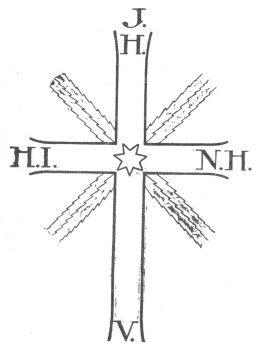
phylos-chapter-1-07
"Close Not the Ends of My Cross."

The Exoteric Church hath closed the ends of His Cross. Wherefore they are exoteric, and shall not ever be esoteric until they open the ends of that Four-Way Path. Open thine eyes and thine ears.

Subscribe to this RSS feed

Log in or create an account