log in
The Popol Vuh

The Popol Vuh (252)

The Popol Vuh

The Sacred Book of The Mayas

The Book of The Community

English Version by

Delia Goetz and Sylvanus G. Morley

( 1950 by the University of Oklahoma Press)

Translation by Adri Recinos


Children categories

The Alexiad

The Alexiad (18)

The Alexiad

by

Anna Comnena (Komnene)

Edited and translated by Elizabeth A. Dawes.

London: Routledge, Kegan, Paul, 1928.


View items...
Famous Men of the Middle Ages

Famous Men of the Middle Ages (35)

Entry of the Crusaders into Jerusalem, by Eugene Delacroix [1840] (Public Domain Image)

Famous Men of

the Middle Ages

BY JOHN HENRY HAAREN, LL.D.

District Superintendent of Schools

The City of New York

and A. B. POLAND, Ph.D.

Superintendent of Schools
Newark, N.J.

AMERICAN BOOK COMPANY
NEW YORK * CINCINNATI * CHICAGO

1904


Scanned and proofed by Eliza Yetter, March 2007. HTML Formatting by John Bruno Hare at sacred-texts.com. This text is in the public domain in the United States because it was published prior to January 1st, 1923. These files may be used for any purpose without restriction.


View items...
From Goddess to King

From Goddess to King (30)

FROM GODDESS TO KING

A History of Ancient Europe from the

OERA LINDA BOOK

By Anthony Radford

1997 Ojai, California

With thanks to Anthony Radford for his permission to publish his book

©1997 Anthony Radford, all rights reserved.


View items...
The Origin and deeds of the Goths

The Origin and deeds of the Goths (10)

THE ORIGIN AND DEEDS OF THE GOTHS

551 AD

JORDANES

translated by Charles C. Mierow

Princeton University Press, 1915


View items...
The Mysteries of Mithra

The Mysteries of Mithra (9)

THE MYSTERIES OF MITHRA

by Franz Cumont

translated from the second revised French edition by Thomas J. McCormack

Chicago, Open Court

[1903]

Scanned at sacred-texts.com, February, 2003. J.B. Hare, redactor. This text is in the public domain. This file may be used for any non-commercial purpose provided this attribution is left intact.

 
View items...
The Oera Linda Book

The Oera Linda Book (11)

The Oera Linda Book

Written in 1256 AD, from a diary
which was put together 560-558 BC.

from the Original Frisian text

verified by Dr. Ottema

by :

William R. Sandbach

Londen, Trubner & Co, 1876

oera-linda-front

Frontpage of the Dutch translation of the Oera Linda Book (1876)

oera-linda-front

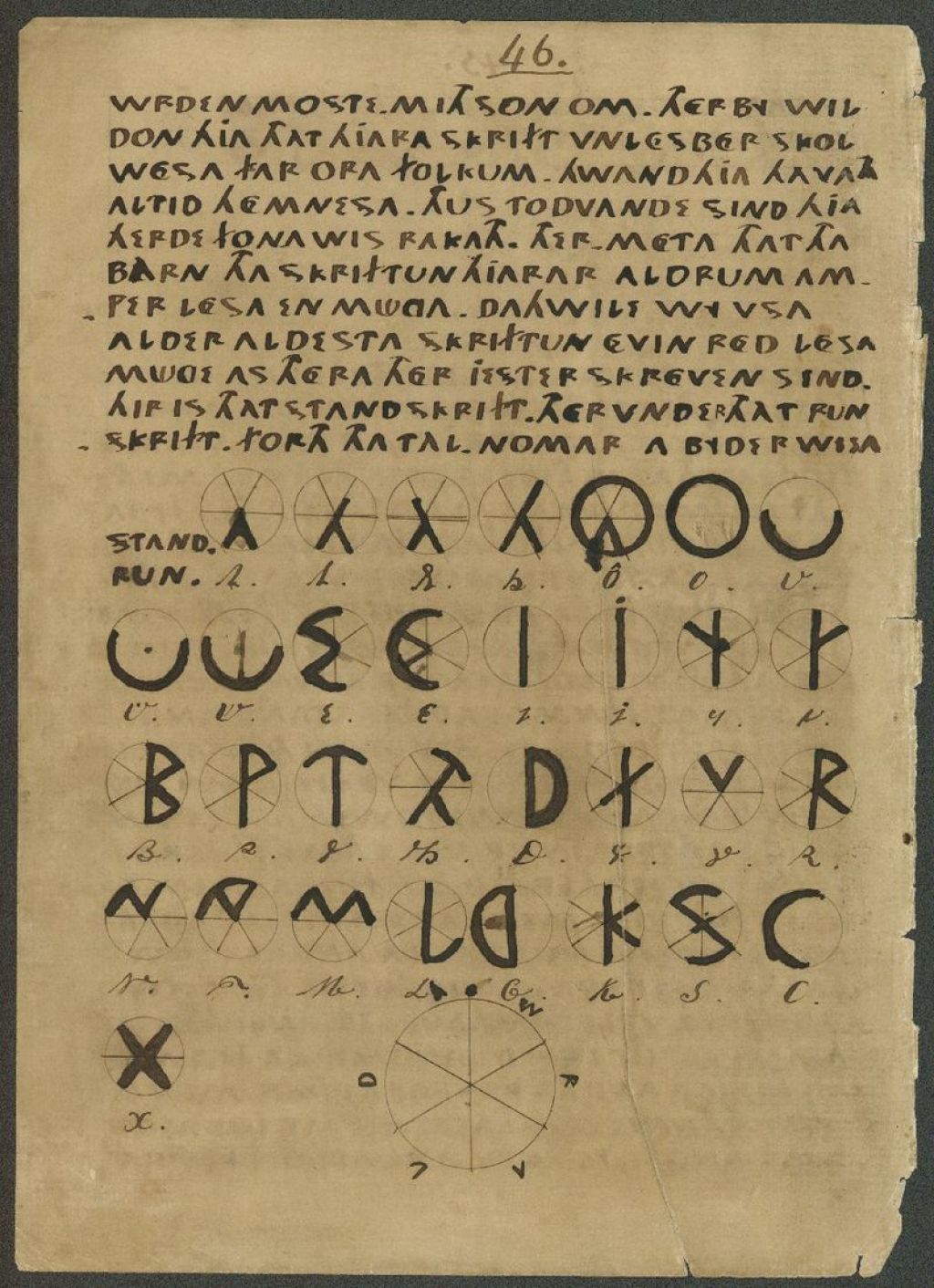
Page 45 from the Oera Linda Manuscript


View items...
Pagan Regeneration

Pagan Regeneration (11)

PAGAN REGENERATION

A STUDY OF MYSTERY INITIATIONS IN THE GRAECO-ROMAN WORLD

BY HAROLD R. WILLOUGHBY

[b. 1890 d. 1962]

Chicago., Ill., The University of Chicago Press

[1929, copyright not renewed]

Scanned and proofed by Eliza Fegley, sacredspiral.com, June 2003. Additional formatting and proofing by J. B. Hare, sacred-texts.com. This text is in the public domain in the United States because it was not renewed in a timely fashion at the US copyright office. These files may be used for any non-commercial purpose, provided this notice of attribution is left intact.

 
View items...
The Secret Hystory

The Secret Hystory (34)

The Secret History

by

Procopius of Caesarea

translated by Richard Atwater

(Chicago: P. Covici, 1927 New York Covici Friede 1927)

Reprinted, Ann Arbor, MI: University of Michigan Press, 1961, with indication that copyright had expired on the text of the translation.

 
View items...
Teutonic Myth and Legend

Teutonic Myth and Legend (47)

Freyja [Public domain image]

TEUTONIC MYTH

AND LEGEND

by Donald A. Mackenzie

An Introduction to the Eddas & Sagas, Beowulf, The Nibelungenlied, etc.

[1912?]

This is Donald Mackenzie's able retelling of the Northern mythological cycle. He weaves a coherent narrative from the Eddas, the Niebelunglied, the Volsung Saga, Beowulf, the primordial Hamlet myths, and Medieval German tales of chivalry. MacKenzie also wrote Egyptian Myth and Legend and Myths of Crete and Pre-Hellenic Europe.


View items...
Caesar's Commentaries on the Gallic and Civil Wars

Caesar's Commentaries on the Gallic and Civil Wars (16)

Julius Caesar

Caesar's Commentaries on the Gallic and Civil Wars

With the Supplementary Books attributed to Hirtius

Including the Alexandrian, African and Spanish Wars

Translator W. A. Mc.Devitte Translator W. S. Bohn

1st Edition.

Harper & Brothers New York 1869

Harper's New Classical Library

Authorship information:

Suetonius (Suet.12 Caes. Julius.56), in his biography of Julius Caesar states that the Gallic and Civil Wars were written by Caesar, and that the 8th book of the Gallic Wars was written by (Aulus) Hirtius. Suetonius also indicates that either Caesar's friend Oppius, or Hirtius likely wrote about the Alexandrian, African and Spanish wars, but that their authorship was not certain.


View items...

The Oera Linda Book, Intro

The Oera Linda Book

Forgery or Fact

There exists one very old Frisian manuscript named the Oera Linda book. It's forewords were written in AD 1256, although its main section was a diary kept about 2000 years, which was put together 560-558 BC.

The authenticity of the Oera Linda Book has not been proved nor disproved.

There is even evidence that most parts of the book are based on ancient events regarding the Lowlands of Europe. Prove of this we can find in the writings and retellings of the writings of Homer, Strabo, Tachitus and even in Celts and German histories.

Against the prevailing opinion of Historians, there are many reasons to believe that "The Oera Linda Book" is one of the most important books about European history from about 3000 BC to at least to about 500 BC.

Although the last chapter - actually the first chapter - of it was written 1256 AD, it was composed to its preserved form 803 AD. The most important part of it - "The Book of Adela's Followers" - was written from 560 BC to 558 BC, but was based on notes that had been kept at least 2000 years.

When we compare the story in "The Oera Linda Book" with other stories which occurred in the same time (about 2,200 BC) in the Middle East (Egypt and Mesopotamia) we can't deny that the occurrences must be based on reality.

From our point of view, the most important single event described in it was the destruction of Atland *, which happened 2194 BC.

* In my opinion is Atland not the same as Atlantis, believed by many historians, but the middle and north part of the present North Sea. There is evidence that Great Britain and Europe were once one continent in the past with a delta between the present Dutch and British coast. The river Rhine (Rene) in the lowlands was at that time connected with the Teems river near London or possibly the Tyre river near New Castle in North-Humbria England..

The North Sea is still at present day a shallow sea (between 30 and 130 meters deep). In the Dutch territory of the North Sea there are still, so called, Sandbanks (Doggers bank and others) on witch once trees grew, most of them were once inhabited too. In my opinion was Atland situated in the present North Sea and sunk in a period of global catastrophic events around 2,200 BC.

A Global catastrophe 2,200 BC

This is the just the time when also the Akkadian (Sumer) empire fell in ruins. This is the time when the first, and in many respects the greatest kingdom of Egypt was transformed into the first Interregnum. This is the time, when the great Indus nation with its towns Mohenjo-daro and Harappa got its sudden end. This is the time when in China Emperor Yu ruled, during his reign a Super Nova was seen in the sky and stones fell from heaven.

ALL this events took place at the same time, about 2,200 BC.

There is a standstill of several centuries all over ancient civilized world, including such faraway places as China and North-Western Europe. The Holocene climate was globally changed from warm and wet to cold and dry. There are impact craters in Argentina and Estonia, whose age is around 4000 years.

Many ancient stories from all over the world mention a global disaster with stones falling from heaven, dust and fire. Even historians are aware of a global catastrophe about 2,200 BC.

Read more at http://www.tilmari.pp.fi/tilmari2.htm

The people who survived the great tsunamis, that washed over at least the Canary Islands, Madeira, Azores, Ireland, Britain, escaped to the Mediterranean. First they bought - yes bought, not occupied by force, Crete.

They brought their civilization, the Minoan one, after their leader Minno to Crete. When during next centuries, the world slowly recovered from the catastrophe, they as great seafarers, conquered the whole area, that became to be called Indo-European. In East they went to India, in South they captured the coastal areas of Mediterranean.*

In Europe they conquered the whole coast from Italy, through Iberia until the Southern Sweden (Skaneland) in North and Lethuania in North-East. Only the Greeks tried to stop them. And the thick forests of Twiskland (Germany) were a hinder for them, especially because behind them there were still more dangerous people, the Finns, and the Magyars.

Most skeptics are telling around that in the Oera Linda Book is written that the Frisians fantasize that they are the ancestors of MOST civilizations but that's not true and is not written in the WHOLE book. These kind of skepticism is only based on the, in their eyes, thrilling and for historians "strange" interpretation of our known ancient history. Maybe they are afraid to rewrite the history of Europe again.

Alexander the Great destroyed their culture in the East, and the Roman Empire in Southern Europe. The Romans never conquered the Frisians in the Lowlands even they tried to do so several times. In the 8th century AD the Roman Catholic church tried to conquer the Frisians but they murdered St. Boniface in 754 AD. *Later when Christianity began to disperse to the North in the 11th century Charlemagne and others made havoc of the rest of their culture but their language survived until this day.

* born c. 675 , Wessex, England, died June 5, 754 , Dokkum, Frisia [now in The Netherlands]

Their last resort was Friesland (Frya's people) in Holland, Germany and Denmark. The Frisian language gave much to the later Dutch, Danish, German and Swedish languages. Even at present day the Frisians in Holland, Denmark and Germany still speak the same Frisian language.

I give the skeptics of The Oera Linda Book some points to consider :

1. If we had no written history of the, so called, Golden Age in Holland (16th and 17th century) and your forefathers tells you the following story :

Once, a long time ago, our "small" country, at the border of the North-Sea, was the most important and powerful seafaring nation of the World. At that time we were the first nation who introduced global trade-companies called VOC and WIC (the first Multinationals), during our exploration of the World we made a trade-union with Japan, we conquered the Indonesian archipel in the Great Ocean, we conquered a part of the South-American coast (Suriname, and some islands), we build a trade-post in Manhattan (Peter Stuyvesant) at present New-York in the USA, we conquered parts of present Argentina, we conquered parts of West and South-Africa, we discovered Tasmania, present Australia (Abel Tasman). At that time, on top of our world power we owned as much land as 900 times the size of our own country at the North Sea (The Netherlands) itself.

Would you believe them ?

The reader can imagine that most of us would not believe this story and consider them as fairytale to fantastic to be true because The Netherlands is too small to have such power and rich history. But we know that it is the truth because we have the written history in books and prove in stone ruins left behind in all these countries.

2. Why do most skeptics believe unconditionally the stories in The Bible ? (consider that the story in the Oera Linda Book, The Eddas and many others, are much older than the Bible. Religion is not a privilege reserved for the Near East alone).

3. Why do most skeptics accept most stories of Mesopotamia, Egypt, Greece, India, China and other ancient Nations as true ?

4. Why did most skeptics not believe in the story of the Trojan Wars until Troy was discovered in the19th century ?

Consider that most Myths and Sages from all over the world are based on "real" events who took place in ancient times, including the "fantastic" stories about Giants and Monsters.

The time has come that we accept these stories as fact and not struggle with each other about little details. When we do so we can search together and someday we will find evidence of Ancient History.

Some excerpts from The Oera Linda Book

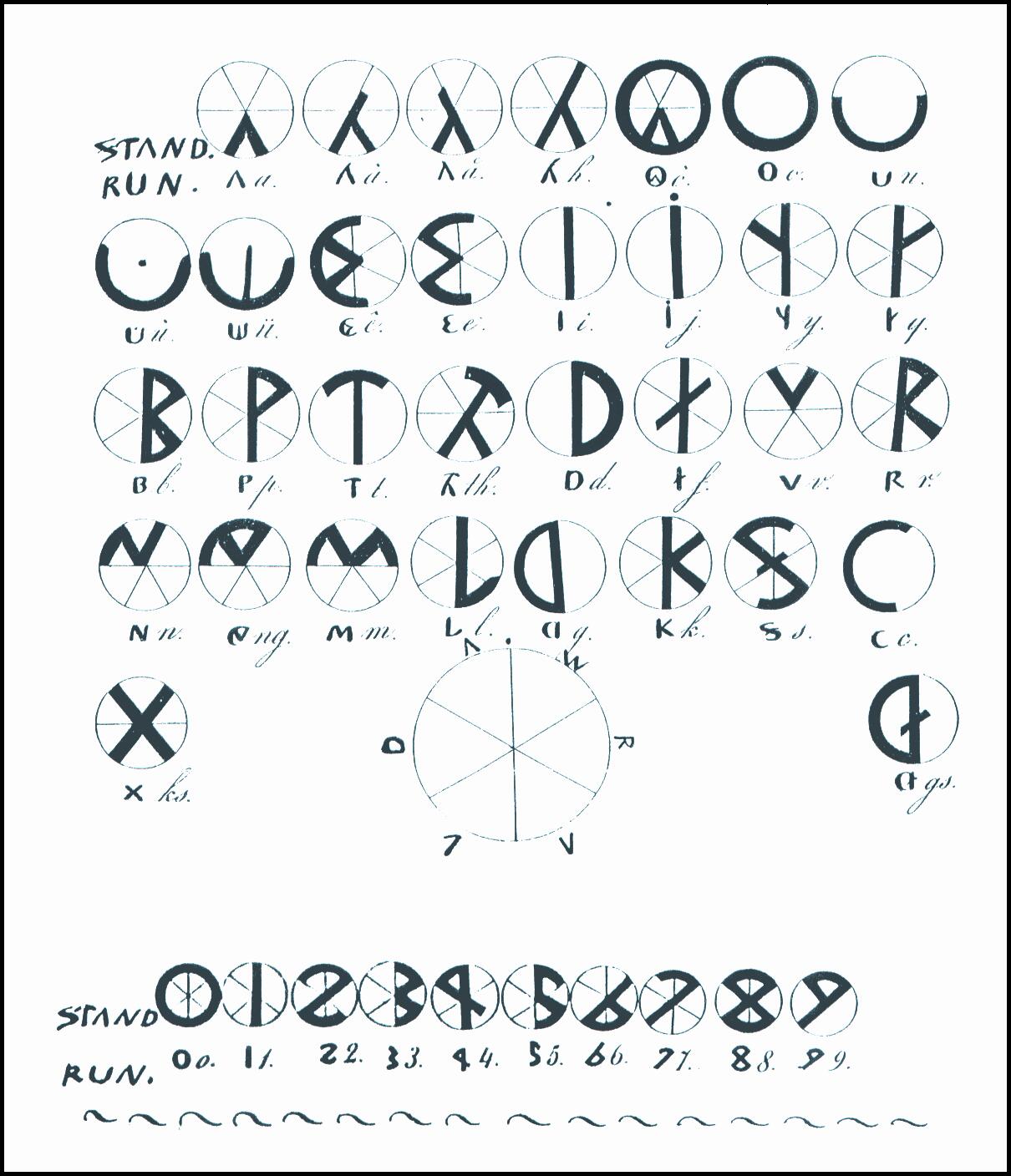
THE LETTERS.

Ch I: OKKE MY SON.

oera-intro

click the image to enlarge

4. Written at Liudwerd, in the year 3449 after Atland was submerged - that is, according to the Christian reckoning, the year 1256.

3449 -1256 -1 (no 0) = 2194 BC.

THE BOOK OF ADELA'S FOLLOWERS.

Ch XIII: USEFUL EXTRACTS FROM THE WRITINGS LEFT BY MINNO.

1. Minno was an ancient sea-king. He was a seer and a wizard, and he gave laws to the Kretans. He was born at Lindawrda, and after all his wanderings he had the happiness to die at Lindahem.

Minoan Crete.

17. "Ewa" means that sentiment which is implanted in the breast of every man in order that he may know what is right and what is wrong... "Ewa" has also another meaning; that is, tranquil, smooth...

18. ..."Ewa" is another symbol of the World, who remains always just and unchangeable.

19. "Ewa", eternal and unalterable, the sign of wisdom and rectitude, must be sought after by all pious people, and must be possessed by all judges.

Ch XIV: FROM MINNO'S WRITINGS.

1. When Nyhellenia, whose real name was Minerva, was well established, and the Krekalanders loved her as well as our own people did, there came some princes and priests to her burgh and asked Minerva where her possessions lay.

2. Nyhellenia answered "... What I have inherited is the love of wisdom, justice, and freedom...".

3. The gentlemen went away laughing, and saying "Your humble servants, wise Hellenia."

4. But they missed their object, for the people took up this name as a name of honour... the good Krekalanders understood at once that it was calumny.

Ch XV: FROM MINNO'S WRITINGS.

1. When I came away from Athenia with my followers, we arrived at an island named by my crew Kreta, because of the cries that the inhabitants raised on our arrival. When they really saw that we did not come to make war, they were quiet, so that at last I was able to buy a harbour in exchange for a boat and some iron implements, and a piece of land.

2. When we had been settled there a short time, and they discovered that we had no slaves, they were very much astonished; and when I explained to them that we had laws which made everybody equal, they wished to have the same...

Ch XXI: THIS STANDS INSCRIBED UPON ALL BURGHS.

1. Before the bad time came our land was the most beautiful in the World. The sun rose higher, and there was seldom frost. The trees and shrubs produced various fruits, which are now lost. In the fields we had not only barley, oats, and rye, but wheat which shone like gold, and which could be baked in the sun's rays. The years were not counted, for one was as happy as another.

2. On one side we were bounded by the World Sea, on which no one but us might or could sail; on the other side we were hedged in by the broad Twiskland, through which Finda's people dared not come on account of the thick forests and the wild beasts.

Twiskland = Tyskland = Germany

Ch XXII: HOW THE BAD TIME CAME.

1. During the whole summer the sun had been hidden behind the clouds, as if unwilling to look upon the Earth. There was perpetual calm, and the damp mist hung like a wet sail over the houses and marshes. The air was heavy and oppressive, and in men's hearts was neither joy nor cheerfulness.

2. In the midst of this stillness the Earth began to tremble as if she was dying. The mountains opened to vomit forth fire and flames. Some sank into the bosom of the Earth, and in other places mountains rose out of the plain.

Aldland, called Atland by the Sturian navigators who lived there, disappeared, and the wild waves rose so high over hill and dale that everything was buried in the sea. Many people were swallowed up by the Earth, and others who had escaped the fire perished in the water.

Atland = Aldland = Oldland.

3. It was also in Finda's land that the Earth vomited fire, and in Twiskland (Germany). Whole forests were burned one after the other, and when the wind blew from that quarter our land was covered with ashes. Rivers changed their course, and at their mouths new islands were formed of sand and drift.

4. During three years this continued, but at length it ceased, and forests became visible. Many countries were submerged, and in other places land rose above the sea, and the wood was destroyed through the half of Twiskland. Troops of Finda's people came and settled in the empty places. Our dispersed people were exterminated or made slaves. Then watchfulness was doubly impressed upon us, and time taught us that union is force.

Ch XXIII: THIS WAS INSCRIBED ON THE WARABURCH BY THE ALDERGAMUDE.

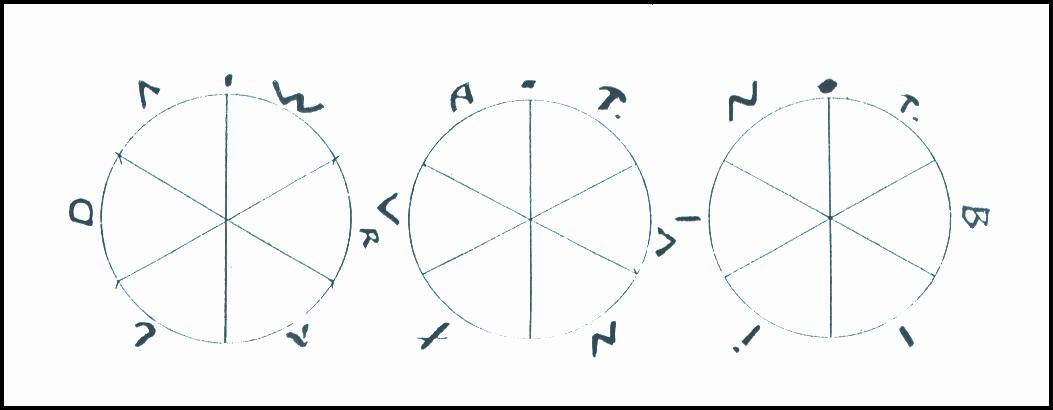
oera-intro

click the image to enlarge

5. In the year 101 (2093 BC) after the submersion of Aldland a people came out of the east. That people was driven by another. Behind us, in Twiskland, they fell into disputes, divided into two parties, and each went its own way. Of the one no account has come to us, but the other came in the back of our Skenland, which was thinly inhabited, particularly the upper part. Therefore they were able to take possession of it without contest, and as they did no other harm, we would not make war about it.

Skenland = Skane/Skone (Southern Sweden). 101 years = 2194 -101 = 2093BC.

As mentioned above the time in which Aldland sunk (2,194 BC) and the end of most civilizations in the East (Akkad, Egypt and India) can/t be a coincidence and is too remarkable to be accidental. Even when we consider that some parts of this manuscript are beside the truth then there are still too many parts left that can be compared with other ancient writers from Greece and Rome, including the dates in which the stories took place.

When we read some of these stories from Plato and Hesiod we can see that the story of the sunken Altland and the fire of the lands (2,194BC( were also known in later times in Egypt (Solon) and Greece.

From Plato's Timaeus

The Priest of Sais, a city in the Nile Delta which was a central point of contact with Greece, to Solon, Greek statesman:

"There have been and will be many and diverse destructions of mankind, Of which the greatest are by fire and water, and lesser ones by countless other means. "For in truth, the story that is told In your country as well as ours, How once upon a time Phaethon, Son of Helios, Yoked his Father's chariot, And because he was unable to drive it along the course taken by his father Burnt up all that was upon the Earth, And himself perished by a thunderboltThat story, as it is told, has the fashion of a legend. "But the truth of it lies In the occurrence of a shifting of the bodies in the heavens, Which move around the Earth, And a destruction of the things on the Earth by fierce fire, Which recurs at long intervals.

This could have been a notion by one of today's astronomers.

"At such times All they that dwell on the mountains and in high places Suffer destruction more than those who dwell near the sea. And in our case, The Nile, our savior in other ways, Saves us also from this calamity by rising high. And when on the other hand, the Gods purge the Earth with a flood of waters, All the herdsmen and shepherds that are in the mountains are saved, But those in the cities of your land are swept into the sea by the streams. Wheras in our country, Neither then, nor at any other time, Does the water pour down over our fields from above; On the contrary, It all tends naturally to well up from below. Hence it is for these reasons, That what is preserved here is reckoned to be the most ancient. ...And if any event has occurred, That is noble or great or in any way conspicuous, Whether it be in your country or in ours, Or in some other place of which we know by report, All such events are recorded from old And preserved here in our temples. Wheras your people and the others Are but newly equipped, every time, with letters and all such arts as civilized states require. And when, After the usual interval of years, Like a plague, The Flood of Heaven comes sweeping down anew upon your people, It leaves none of you but the unlettered and uncultured, So that you become young as ever, with no knowledge of all that happened in old times, in this land or in your own."

Extract from Eberhard Zanger's translation of Plato's Timaeus, from his book "The Flood from Heaven: Deciphering the Atlantis Legend", William Morrow & Company, 1992

Hesiod's Theogony

In his book the Theogony, which sets out the descent of the gods, the Greek poet Hesiod recorded an account of a battle between Zeus and the Titans which appears to be a record of an impact event. Not surprisingly, the battle takes place in Tartarus, in the Atlantic.

"The boundless sea rang terribly around, And the earth crashed loudly: Wide Heaven was shaken and groaned, And high Olympus reeled from its foundation Under the charge of the undying gods, And a heavy quaking reached dim Tartarus And the deep sound of their feet in the fearful onset And of their hard missiles. So, then, they launched their grievous shafts upon one another, And the cry of both armies as they shouted Reached to starry heaven; And they met together with a great battle-cry. "Then Zeus no longer held back his might; But straight his heart was filled with fury And he showed forth all his strength. From Heaven and from Olympus he came forthwith, Hurling his lightning: The bold flew thick and fast From his strong hand Together with thunder and lightning, Whirling an awesome flame. The life-giving earth crashed around in burning, And the vast wood crackled loud with fire all about. All the land seethed, And Ocean's streams And the unfruitful sea. The hot vapour lapped round the earthborn Titans: Flame unspeakable rose to the bright upper air: The flashing glare of the thunder-stone and lightning Blinded their eyes for all that there were strong. Astounding heat seized Chaos: And to see with eyes and to hear the sound with ears It seemed even as if Earth and wide Heaven above came together; For such a mighty crash would have arisen If Earth were being hurled to ruin, And Heaven from on high were hurling her down; So great a crash was there While the gods were meeting together in strife. Also the winds brought rumbling earthquake and duststorm, Thunder and lightning and the lurid thunderbolt, Which are the shafts of great Zeus, And carried the clangour and the warcry Into the midst of the two hosts. An horrible uproar of terrible strife arose: Mighty deeds were shown and the battle inclined. But until then, They kept at one another And fought continually in cruel war. And amongst the foremost Cottus and Briareos And Gyes insatiate for war raised fierce fighting: Three hundred rocks, One upon another, They launched from their strong hands And overshadowed the Titans with their missiles, And buried them beneath the wide-pathed earth, And bound them in bitter chains When they had conquered them by their strength For all their great spirit, As far beneath the earth to Tartarus. For a brazen anvil Falling down from heaven nine nights and days Would reach the earth upon the tenth: And again, A brazen anvil Falling from earth nine nights and days Would reach Tartarus upon the tenth. Round it runs a fence of bronze, And night spreads in triple line all about it like a neck-circlet, While above grow the roots of the earth and unfruitful sea. There by the counsel of Zeus who drives the clouds The Titan gods are hidden under misty gloom, In a dank place where are the ends of the huge earth.

Extract from Hugh G. Evelyn-White's translation of Hesiod's Theogony,

Conclusion :

There is more prove than disprove that The Oera Linda Book is an important report of the European history.

MOST PARTS OF THE OERA LINDA BOOK IS THE REAL HISTORY OF EUROPE, THE LOWLANDS AND THE FRISIAN PEOPLE.

The Oera Linda Book, Appendices

The Oera Linda Book

Written in 1256 AD, from a diary
which was put together 560-558 BC.

from the Original Frisian text

verified by Dr. Ottema

by :

William R. Sandbach

Londen, Trubner & Co, 1876

Appendices

APPENDIX A-1: THE GEOLOGICAL AGES

Age

From

To

Aquarius

23,820 BC

21,660 BC

Capricorn

21,660 BC

19,500 BC

Sagittarius

19,500 BC

17,340 BC

Scorpio

17,340 BC

15,180 BC

Libra

15,180 BC

13,020 BC

Virgo

13,020 BC

10,860 BC

Leo

10,860 BC

8,700 BC

Cancer

8,700 BC

6,540 BC

Gemini

6,540 BC

4,380 BC

Taurus

4,380 BC

2,220 BC

Aries

2,220 BC

60 BC

Pisces

60 BC

2,100 AD

Aquarius

2,100 AD

4,260 AD

One "Age" = 2160 solar years

One "Earth Year" = 12 "Ages" = 25,920 solar years

APPENDIX A-2: CHRONOLOGY OF EVENTS

DATE

EVENT

REF

ca 9600 BC

Sinking of Atlantis per Plato's Timaeus and Critias

Plato

ca 9500 BC

End of Younger Dryas

web

ca 3300 BC

Start of the Pre-Minoan period

Encarta

ca 3000 BC

Earliest indications of settlement at Troy #1 (aka Ilios, now Hissarlik, Turkey)

Grolier

ca 2700 BC

Gilgamesh travels north to 'Netherworld' at mouth of 5 rivers seeking immortality

web

ca 2500 BC

End of Troy #1 by fire, (stone foundations, clay brick walls, bone and stone tools)

Grolier

ca 2200 BC

End of Troy #2 by fire (gold and silver ornaments, copper tools, potters wheels)

Grolier

ca 2200 BC

Current version of Stonehenge

web

ca 2200 BC

Start of First Intermediate Period of Egypt, dark ages lasted ca 200 years

web

ca 2200 BC

Start of the Early-Minoan period

Encarta

2193 BC

The sinking of Aldland/Atland (3449 ASA = 1256 AD)

01-I-4

2193 BC

Frya provides the Tex, Fasta appointed first folk-mother (see also 02-II-41,43)

02-III-12

2163 BC

Alternative calculation for the sinking of Aldland (Kalta 563 ASA = 1600 BC)

only in FGK

ca 2150 BC

End of the Early Minoan period, Start of the Middle-Minoan period

Encarta

2144 BC

Fasta opens a citadel at Medeasblik, inscribes the creation myth (49 ASA)

02-II-1

2092 BC

Magyarar and Finnar settle east (back) of Skenland (101 ASA)

02-XXIII-5

2012 BC

Magyarar and Finnar overrun Skenland, Minna is folk-mother (80 +101 ASA)

02-XXIII-10

ca 2011 BC

Wodin leads campaign to free Skenland (possibly the same year)

approx

ca 2004 BC

Wodin disappears after reigning 7 years, Tunis and Inka depart Skenland

02-XXIII-23

ca 2001 BC

Inka departs from Kadik with a crew of Frisians, Finnar and Magyarar

approx

2000 BC

Teunis founds Thyrhisburch, south of Sydon (193 ASA)

02-XXIV-6

ca 1800 BC

End of Troy #5, start of #6 (the era of Troy #3 through #5 was undistinguished)

Grolier

ca 1750 BC

End of the Middle Minoan period, start of the Late-Minoan period

Encarta

ca 1650 BC

Eruption of Mt. Thera, end of Late Minoan-A

FGK

ca 1645 BC

Eruption of Santorini on Island of Crete

web

1630 BC

War of Kalta and Minerva, Jon and Minerva go to the Mediterranean (563 ASA)

02-XXVI-4

1629 BC

Kalta founds the Kaltanar, builds a citadel at Kaltasburch (within 1 year)

02-XXVII-11

ca 1628 BC

Jon founds Jonhis/Rawer Elanda, Minerva founds Athenia

approx

ca 1628 BC

Minno provides laws to the Kretar

approx

1620 BC

Travellers return with the story of Jon and Minerva (10 years after Jon left)

02-XXVIII-1

ca 1590 BC

Death of Minerva (assumes she was 25 in 1630 and lived to age 65)

approx

ca 1585 BC

Gert elected burgh-femme of Athenia (assumes 5 years disputing the priests)

approx

ca 1571 BC

Estimated birth of Moses - open to debate - said to have lived to 120 years old

web

ca 1567 BC

Expulsion of the Hyksos from Egypt

web

ca 1565 BC

Athenians/Thyriar leave via Rade Sea (assumes 20 years of estrangement)

approx

ca 1564 BC

Date of Israelite Exodus per Ottema in the Address

Appendix B

ca 1550 BC

Gertmannar found Gertmannia in the Pangab (requires 5 years of travel)

approx


(these assumptions put the arrival of the Gertmannar close to the Aryan invasion


and this date reconciles with their meeting with Alexandre 1224 years later)


ca 1555 BC

Destruction of Knossos, end of Minoan civilization

FGK

ca 1550 BC

Start of the Mycenaean period, (the Greeks conquered the Minoans)

Encarta

ca 1500 BC

Date of the Indian Vedas, which tell of the invasion of white-skinned Aryans

Encarta

ca 1450 BC

Estimated date of Israelite Exodus

web

ca 1300 BC

Destruction of Troy #6 by earthquake

Grolier

ca 1250 BC

Another estimate date of Israelite Exodus

Grolier

ca 1200 BC

End of Troy #7A ,archaeological evidence supports the siege theory

Grolier

ca 1190 BC

End of the Trojan War after 10 year siege

FGK

1188 BC

Story of Ulysus inscribed on the walls of Fryasburch (1005 ASA)

02-XXX-title

1184 BC

Fall of Troy according to Homer's Iliad

Grolier

ca 1100 BC

End of Troy #7B - start of ca 400 year abandonment, 'dark age' for Troy

Grolier

1000 BC

End of the Mycenaean period due to civil war - Dark Age ca 1000 BC to 750 BC

Encarta

ca 900 BC

Etruscans (Tyrrhenoi) arrive in north-eastern Italy (gender equality/seafarers)

Encarta

753 BC

Village of Latin renamed City of Rome - start of Roman monarchy

Encarta

750 BC

Start of the Archaic period, (Dorian, Ionian, Aeolian)

Encarta

ca 700 BC

Resettlement of Troy - Start of Troy #8 through #11 (died out 4thcentury AD)

Grolier

593 BC

Birth of Jesus in Kasamyr (1600 ASA)

04-V-5

591 BC

Loss of Denamark to the Magyarar, Frana is folk-mother (1602 ASA)

02-XXXI-01

589 BC

Invasion of Texland by the Magy and murder of Frana (2 years later)

02-XXXI-15

559 BC

Adela nominates Tuntia as folk-mother, advises writing the Book (30 years later)

02-I-Title

558 BC

The Book of Adela's Followers is written (passes to Apollonia the next year)

approx

557 BC

Further invasions and murder of Adela, Adelbrost and Apol (15 months later)

03-II-1

ca 550 BC

Etruscan Kings take over the monarchy of Rome

Encarta

ca 509 BC

Etruscan Kings expelled - start of Roman Republic

Encarta

480 BC

End of the Archaic period, Start of the Classical Athenian period

Encarta

447 BC

Construction of the modern Parthenon begins

Encarta

432 BC

Construction of the modern Parthenon is completed

Encarta

387 BC

Rome invaded by Celts/Gauls over the Alps - they looted and went home

Encarta

359 BC

Start of the Classical Macedonian period, (Phillip II, father of Alexander)

Encarta

336 BC

End of reign of Philip of Macedonia, Start of reign of Alexander the Great

Encarta

326 BC

Gertmannar encounter Alexandre in the Pangab (1224 years after settling)

04-II-11

325 BC

Gertmannar leave the Pangab with Nearchus/Alexandre

approx

323 BC

Gertmannar return to the Middel Sea overland at Suez, death of Alexandre

approx

323 BC

Death of Alexander the Great, End of Classical period, Start of Hellenistic period

Encarta

305 BC

Demetrius sieges Rhodes, (Demetrius was defeated)

FGK

305 BC

Frethorik writes about the second geological disaster (1888 ASA)

04-I-17

305 BC

Gosa Makonta elected folk-mother (immediately after the second disaster)

04-I-18


(possible inconsistency: 589 BC - 282 years with no folk-mother = 307 BC)


303 BC

Return of the Gertmannar, Fere Krekalandar and Joniar (2 years later)

04-II-1


(so, the events described in the Middel Sea transpired over the course of 20 years)


ca 280 BC

Approx time of Wiljo (wife of Frethorik and contributor to the Book)

approx


(The writings of Frethorik and Wiliow cannot be precisely dated)


(The writings of Konered cannot be precisely dated)


(The writings of Beden, and possibly his son cannot be precisely dated)


133 BC

Roman civil wars begin in reign of Gracchi

Encarta

50 BC

Caesar annexes Gaul to Rome

FGK

44 BC

Roman civil wars end with assassination of Gaius Julius Caesar

Encarta

31 BC

End of the Hellenistic period of Greece, Start of the Roman period

Encarta

27 BC

Roman Empire begins with reign of Gaius Octavius

Encarta

23 BC

Title "Augustus" conferred on Octavius

Encarta

ca 4 BC

Alleged birth of Jesus of Nazareth (corrected for "Octavius" vs "Augustus")

Bible


14 AD

End of reign of Augustus

Encarta

98 AD

Tacitus writes Germania

Grolier

803 AD

Liko Oera Linda writes to his Beloved Successors

01-II-5

1255 AD

Hidde Oera Linda saves the Book from a flood, copies it onto foreign paper

01-I-2,4

1256 AD

Hiddo Oera Linda writes to his son Okke

01-I-4

1820 AD

Death of grandfather Andreas Over de Linden, 15thApril, age 61, (Cornelius age 10)

Ottema

1848 AD

Aunt Aafje Meylhoff passes the book to Cornelius (age 38) in August

Ottema

1858 AD

Ferdinand Marie de Lesseps incorporates the Suez Canal Company

Grolier

1867 AD

Dr. Eelco Verwijs (Leeuwarden Prov. Library) translates the Book into modern Frisian

Ottema

1869 AD

Suez canal opens

Grolier

1870 AD

Heinrich Schliemann starts excavating Troy

Grolier

1871 AD

Dr. J. G. Ottema translates the Book into Dutch and Addresses the Frisian Society

Ottema

1875 AD

Heinrich Schliemann publishes Troy and Its Remains

Grolier

1876 AD

W. R. Sandbach translates the Book into English

FGK

1890 AD

Death of Heinrich Schliemann

Grolier

(ASA = After Submergence of Aldland/Atland, FGK = From Goddess to King)

APPENDIX B - ADDRESS TO THE FRIESLAND SOCIETY, 1871

The preface of Dr. Ottemas original modern publication of the Oera Linda Book that was read at a meeting of the Friesland Society, February, 1871.

Over de Linden, Chief Superintendent of the Royal Dockyard at the Helder, possesses a very ancient manuscript which has been inherited and preserved in his family from time immemorial, without anyone knowing whence it came or what it contained, owing to both the language and the writing being unknown.

All that was known was that a tradition contained in it had from generation to generation been recommended to careful preservation. It appeared that the tradition rests upon the contents of two letters, with which the manuscript begins, from Hiddo Oera Linda, anno 1256, and from Liko Oera Linda, anno 803. It came to C. over de Linden by the directions of his grandfather, Den Heer Andries over de Linden, who lived at Enkhuizen, and died there on the 15thof April 1820, aged sixty-one. As the grandson was at that time barely ten years old, the manuscript was taken care of for him by his aunt, Aafjie Meylhoff, born over de Linden, living at Enkhuizen, who in August 1848 delivered it to the present possessor.

Dr. E. Verwijs having heard of this, requested permission to examine the manuscript, and immediately recognized it as very ancient Fries. He obtained at the same time permission to make a copy of it for the benefit of the Friesland Society, and was of the opinion that it might be of great importance, provided it was not suppositious, and invented for some deceptive object, which he feared. The manuscript being placed in my hands, I also felt very doubtful, though I could not understand what object any one could have in inventing a false composition only to keep it a secret. This doubt remained until I had examined carefully executed facsimiles of two fragments, and afterwards of the whole manuscript - the first sight of which convinced me of the great age of the document.

Immediately occurred to me Caesars remark upon the writings of the Gauls and the Helvetians in his `Bello Gallico (i. 29, and vi. 14), `Graecis utuntur literis, though it appears in v. 48 that they were not entirely Greek letters. Caesar thus points out not only a resemblance - and a very true one - as the writing, which does not altogether correspond with any known form of letters, resembles the most, on a cursory view, the Greek writing, such as is found on monuments and the oldest lapidary. Besides, I formed the opinion afterwards that the writer of the latter part of the book had been a contemporary of Caesar.

The form and the origin of the writing is so minutely and fully described in the first part of the book, as it could not be in any other language. It is very complete, and consists of thirty-four letters, among which are three separate forms of a and u, and two of e, i, y, and o, besides four pairs of double constants - ng, th, ks, and gs. The ng, which as a nasal sound has no particular mark in any western language, is an indivisible conjunction; the th is soft, as in English, and is sometimes replaced by d; the gs is seldom met with - I believe only in the word segse, to say, in modern Fries sidse, pronounced sisze.

The paper, of large quarto size, is made of cotton, not very thick, without watermark or makers mark, made upon a frame or wire-web, with not very broad perpendicular lines.

An introductory letter gives the year 1256 as that in which this manuscript was written by Hiddo Oera Linda on foreign paper. Consequently it must have come from Spain, where Arabs brought into the market paper manufactured from cotton.

On this subject, W. Wattenbach writes in his `Das Schriftwesen im Mittelalter (Leipzig, 1871), s. 93:

`The manufacture of paper from cotton must have been in use among the Chinese from very remote times, and must have become known to the Arabs by the conquest of Samarkand about the year 704. In Damascus this manufacture was an important branch of industry, for which reason it was called Charta Damascena. By the Arabians this art was brought to the Greeks. It is asserted that Greek manuscripts of the tenth century written upon cotton paper exist, and that in the thirteenth century it was much more used than parchment. To distinguish it from Egyptian paper it was called Charta bombicina, gossypina, cuttunea, xylina. A distinction from linen paper was not necessary. In the manufacture of cotton paper raw cotton was originally used. We first find paper from rags mentioned by Petrus Clusiacensis (1122-50).

`The Spaniards and the Italians learned the manufacture of this paper from the Arabians. The most celebrated factories were at Jativa, Valencia, Toledo, besides Fabriano in the March of Ancona.

In Germany the use of this material did not become very extended, whether it came from Italy or Spain. Therefore the further this preparation spread from the East and the adjoining countries, the more the necessity there was that linen should take the place of cotton. A document of Kaubeuren on linen paper of the year 1318 is of very doubtful genuineness. Bodman considers the oldest pure linen paper to be of the year 1324, but up to 1350 much mixed paper was used. All carefully written manuscripts of great antiquity show by the regularity of their lines that they must have been ruled, even though no traces of the ruled lines can be distinguished. To make the lines they used a thin piece of lead, a ruler, and a pair of compasses to mark the distances.

In old writings the ink is very black or brown; but while there has been more writing since the thirteenth century, the color of the ink is often gray or yellowish, and sometimes quite pale, showing that it contains iron. All this affords convincing proof that the manuscript before us belongs to the middle of the thirteenth century, written with clear black letters between fine lines carefully traced with lead. The color of the ink shows decidedly that it does not contain iron. By these evidences the date given, 1256, is satisfactorily proved, and it is impossible to assign any later date. Therefore all suspicion of modern deception vanishes.

The language is very old Fries, still older and purer than the Fries Rjuchtboek or old Fries laws, differing from that both in form and spelling, so that it appears to be an entirely distinct dialect, and shows that the locality of the language must have been (as it was spoken) between the Vlie and the Scheldt.

The style is extremely simple, concise, and unembarrassed, resembling that of ordinary conversation, and free in the choice of words. The spelling is also simple and easy, so that the reading of it does not involve the least difficulty, and yet with all its regularity, so unrestricted, that each of the separate writers who have worked at the book has his own peculiarities, arising from the changes in pronunciation in a long course of years, which naturally must have happened, as the last part of the work is written five centuries after the first.

As a specimen of antiquity in language and writing, I believe I may venture to say that this book is unique of its kind.

The writing suggests an observation, which may be of great importance.

The Greeks know and acknowledge that their writing was not their own invention. They attribute the introduction of it to Kadmus, a Phoenician. The names of their oldest letters, from Alpha to Tau, agree so exactly with the names of the letters in the Hebrew alphabet, with which the Phoenician will have been nearly connected, that we cannot doubt that the Hebrew was the origin of the Phoenician. But the form of their letters differs so entirely from that of the Phoenician and Hebrew writing, that in that particular no connection can be thought of between them. Whence, then, have the Greeks derived the form of their letters?

From `thet bok tha Adela folstar (`The Book of Adelas Followers) we learn that in the time when Kadmus is said to have lived, about sixteen centuries before Christ, a brisk trade existed between the Frisians and the Phoenicians, whom they named Kadhemer, or dwellers on the coast.

The name Kadmus comes too near the word Kadhemer for us not to believe that Kadmus simple meant a Phoenician.

Further on we learn that about the same time a priestess of the castle in the island of Walcheren, Min-erva, also called Nyhellenia, had settled in Attica at the head of a Frisian colony, and had founded a castle at Athens. Also, from the accounts written on the walls of Waraburgt, that the Finns likewise had a writing of their own - a very troublesome and difficult one to read - and that, therefore, the Tyrians and the Greeks had learned the writing of Frya. By this representation the whole thing explains itself, and it becomes clear whence comes the exterior resemblance between the Greek and the old Fries writing, which Caesar also remarked among the Gauls; as likewise in what manner the Greeks acquired and retained the names of the Finn and the forms of the Fries writing.

Equally remarkable are the forms of their figures. We usually call our figures Arabian, although they have not the least resemblance to those used by the Arabs. The Arabians did not bring their ciphers from the East, because the Semitic nations used the whole alphabet in writing numbers. The manner of expressing all numbers by ten signs the Arabs learned in the West, though the form was in some measure corresponding with their writing, and was written from left to right, after the Western fashion. Our ciphers seem here to have sprung from the Fries ciphers (siffar), which form had the same origin as the handwriting and is derived from the lines of the Juul.

The book as it lies before us consists of two parts, differing widely from each other, and of dates very far apart. The writer of the first part calls herself Adela, wife of Apol, chief man of the Linda country. This is continued by her son Adelbrost, and her daughter Apollonia. The first book, running from page 1 to 88, is written by Adela. The following part, from 88 to 94, is begun by Adelbrost and continued by Apollonia. The second book, running from page 94 to 114, is written by Apollonia. Much later, perhaps two hundred and fifty years, a third book is written, from page 114 to 134, by Frethorik; then follows from page 134 to 143, written by his widow, Wiljo; after that from page 144 to 169, by their son, Konered; and then from page 169 to 192 by their grandson, Beeden (a doubtful assumption). Pages 193 and 194, with which the last part must have begun, are wanting, therefore the writer is unknown. He must have been a son of Beeden.

On page 134, Wiljo makes mention of another writing of Adela. These she names `thet bok tha sanga (theta boek) tha tellinga, and `thet Hellia bok; and afterwards `tha skrifta fon Adela jeftha Hellia.

To fix a date we must start from the year 1256 of our era, when Hiddo oera Linda made a copy, in which he says that it was 3449 years after Atland was sunk. This disappearance of the old land (aldland, atland) was known by the Greeks, for Plato mentions in his `Timaeus, 24, the disappearance of Atlantis, the position of which was only known as somewhere far beyond the Pillars of Hercules. From this writing it appears that the land stretching far out to the west of Jutland, of which Helgoland and the islands of North Friesland are the last barren remnants. This event, which occasioned a great dispersion of the Frisian race, became the commencement of a chronological reckoning corresponding with 2193 before Christ, and is known by geologists as the Cimbrian flood.

On page 80 begins an account in the year 1602 after the disappearance of Atland, and thus in the year 591 before Christ; and on page 82 is the account of the murder of Frana, `Eeremoeder, of Texland, two years later - that is, in 589. When, therefore, Adela commences her writing with her own coming forward in an assembly of the people thirty years after the murder of the Eeremoeder, that must have been the year 559 before Christ. In the part written by her daughter Apollonia, we find that fifteen months after the assembly Adela was killed by the Finns in an attack by surprise of Texland. This must accordingly have happened 557 years before Christ. Hence it follows that the first book, written by Adela, was of the year 558 before Christ. The second book, by Apollonia, we may assign to the year 530 before Christ. The later part contains the history of the known kings of Friesland, Friso, Adel (Ubbo), and Asega Askar, called Black Adel. Of the third king, Ubbo, nothing is said, or rather that part is lost, as the pages 169 to 188 are missing. Frethorik, the first writer, who appears now, was a contemporary of the occurrences, which he relates, namely, the arrival of Friso. He was a friend of Liudgert den Geertman, who, as rear admiral of the fleet of Wichhirte, the Sea King, had come with Friso in the year 303 before Christ, 1,890 years after the disappearance of Atland. He has borrowed most of his information from the logbook of Liudgert.

The last writer gives himself out most clearly as a contemporary of Black Adel or Askar, about the middle of his reign, which Furmerius states to have been from 70 before Christ to 11 after the Birth of Christ, the same period as Julius Caesar and Augustus. He therefore wrote in the middle of the last century before Christ, and knew of the conquest of Gaul by the Romans. It is thus evident that there elapsed fully two centuries between the two parts of the work.

Of the Gauls we read on page 84 that they were called the `Missionaries of Sidon. And on page 124 `that the Gauls are Druids. The Gauls, then, were Druids and the name Galli, used for the whole nation, was really only the name of an order of priesthood brought from the East, just as among the Romans the Galli were priests of Cybele.

The whole contents of the book are in all respects new. That is to say, there is nothing in it that we were acquainted with before. What we here read of Friso, Adel, and Askar, differs entirely from what is related by our own chroniclers, or rather presents it in quite another light. For instance, they all relate that Friso came from India, and that thus the Frisians were of Indian descent; and yet they add that Friso was a German, and belonged to a Persian race which Herodotus called Germans. Accordingly to the statement in this book, Friso did come from India and with the fleet of Nearchus; but he is not therefore Indian. He is of Frisian origin, of Fryas people. He belongs, in fact to a Frisian colony, which after the death of Nyhellenia, fifteen and a half centuries before Christ, under the guidance of a priestess Geert, settled in the Punjab, and took the name of Geertmen. The Geertmen were known by only one of the Greek writers, Strabo, who mentions them as being entirely different from Phoenicians (slightly edited) in manners, language and religion.

The historians of Alexanders expeditions do not speak of Frisians or Geertmen, though they mention Indo-scythians, thereby describing a people who lived in India, but whose origin is in the distant, unknown North.

In the accounts of Liudgert no names are given of places where the Frieslanders lived in India. We only know that they first established themselves to the east of the Punjab, and afterwards moved to the west of those rivers. It is mentioned, moreover, as a striking fact, that in summer the sun at midday was straight above their heads. They therefore lived within the tropics. We find in Ptolemy, exactly 24N. on the west side of the Indus, the name Minnagara; and about six degrees east of that, in 22N., another Minnagara. This name is pure Fries, the same as Walhallagara, Foolsgara, and comes from Minna, the name of an Eeremoeder, in whose time the voyages of Teunis and his nephew Inca took place.

The coincidence is too remarkable to be accidental, and not to prove that Minnagara was the headquarters of the Frisian Colony. The establishment of the colonists in the Punjab in 1551 before Christ, and their journey thither, we find fully described in Adels book; and with the mention of one most remarkable circumstance, namely, that the Frisian mariners sailed through the strait in whose times still ran into the Red Sea.

In Strabo, book i. pages 38 and 50, it appears that Eratosthenes was acquainted with the existence of the strait, of which the later geographers make no mention. It existed still in the time of Moses (Exodus xiv. 2) for he encamped at Piha-chiroht, `the mouth of the strait. Moreover, Strabo mentions that Sesostris made an attempt to cut through the isthmus, but that he was not able to accomplish it. That in very remote times the sea did flow through is proved by the result of the geological investigations on the isthmus made by the Suez Canal Commission, of which Mr. Renaud presented a report to the Academy of Sciences on the 19th June 1856. In that report, among other things, appears the following: `Une question fort controvers est celle de savoir, si Loque oles Hebreux fuyaient de lEgypte sous la conduite de Moe, les lacs amers faisaient encore partie de la merrouge. Cette dernie hypothes accorderait mieux qu lhypothe contraire avec le texte des livres sacres, mais alors il faudrait admettre que depuis loque de Moe le seuil de Suez serait sorti des eaux.

With regard to this question, it is certainly of importance to fall in with an account in this Frisian manuscript, from which it seems that in the sixteenth century before Christ the connection between the Bitter Lakes and the Red Sea still existed, and that the strait was still navigable. The manuscript further states that soon after the passage of the Geertmen there was an earthquake; that the land rose so high that all the water ran out, and all the shallows and alluvial lands rose up like a wall. This must have happened after the time of Moses, so that at the date of the Exodus (1564 BC) the track between Suez and Bitter Lakes was still navigable, but could be forded dry-foot at low water.

This point, then, is the commencement of the isthmus, after the forming of which, the northern inlet was certainly soon filled up as far as the Gulf of Pelusium.

The map by Louis Figuier, in the `Ann scientifique et industrielle (premie ann), Paris, Hachette, 1857, gives a distinct illustration of the formation of this land.

Another statement that occurs only in Strabo, finds also here a conformation. Strabo alone of all the Greek writers relates that Nearchus, after he had landed his troops in the Persian Gulf, at the mouth of the Pasitigris, sailed out of the Persian Gulf, by Alexanders command, and steered round Arabia through the Arabian Gulf. As the account stands, it is not clear what Nearchus had to do there, and what the object of the further voyage was. If, as Strabo seems to think, it was only for geographical discovery, he need not have taken the whole fleet. One or two ships would have sufficed. We do not read that he returned. Where, then, did he remain with the fleet?

The answer to this question is to found in the Frisian version of the story. Alexander had bought the ships on the Indus, or had had them built by descendants of the Frisians who had settled there - the Geertmen - and had taken into his service sailors from among them, and at the head of them was Friso. Alexander, having accomplished his voyage and the transport of his troops, had no further use for the ships in the Persian Gulf, but wished to employ them in the Mediterranean. He had taken that idea into his head, and it must be carried into effect. He wished to do what no one had done before him. For this purpose Nearchus was to sail up the Red Sea, and on his arrival at Suez was to find 200 elephants, 1,000 camels, workmen and materials, timber and ropes, in order to haul the ships by hand over the isthmus. This work was carried on and accomplished with so much zeal and energy that after three months labor the fleet was launched in the Mediterranean. That the fleet really came to the Mediterranean appears in Plutarchs Life of Alexander; but he makes Nearchus bring the fleet round Africa, and sail through the pillars of Hercules.

After the defeat at Actium, Cleopatra, in imitation of this example, tried to take her fleet over the isthmus in order to escape to India, but was prevented by the inhabitants of Arabia Petraea, who burnt her ships. (See Plutarchs Life of Antony). When Alexander shortly afterwards died, Friso remained in the service of Antigonus and Demetrius, until, having been grievously insulted by the latter, he resolved to seek out with his sailors their fatherland, Friesland. To India he could not, indeed, return.

Thus these accounts chime in with and clear up each other, and in that way afford a mutual confirmation of the events.

Such simple narratives and surprising results led me to conclude that we had to do here with more than mere Saga and Legends.

Since the last twenty years attention has been directed to the remains of the dwellings on piles, first observed in the Swiss lakes, and afterwards in other parts of Europe. (See Dr. E. Rkert, Die Pfahlbauten; Wurzburg, 1869. Dr. T. C. Winkler, in the Volksalmanak, t.N.v.A.1867). When they were found, endeavors were made to discover, by the existing fragments of arms, tools and household articles, by whom and when these dwelling had been inhabited. There are no accounts of them in historical writers, beyond what Herodotus writes in book v. chapter 16, of the Paeonen. The only trace that has been found in one of the panels of Trajans Pillar, in which the destruction of a pile village in Dacia is represented.

Doubly important, therefore, is it to learn from the writing of Apollonia that she, as `Burgtmaagd (chief of the virgins), about 540 years before Christ, made a journey up the Rhine to Switzerland, and there became acquainted with the Lake Dwellers (marsaten). She describes their dwellings built upon piles - the people themselves - their manners and customs. She relates that they lived by fishing and hunting, and that they prepared the skins of animals with the bark of the birch-tree in order to sell the furs to the Rhine boatmen, who brought them into commerce. This account of the pile dwellings of the Swiss lakes can only have been written in the time when these dwellings still existed and were still lived in. In the second part of the writing, Konered Oera Linda relates that Adel, the son of Friso, (approximately 250 years before Christ), visited the pile dwellings in Switzerland with his wife Ifkja.

Later than this account there is no mention by any writer whatever of the pile dwellings, and the subject has remained for twenty centuries utterly unknown until 1853, when an extraordinary low state of the water led to the discovery of these dwellings. Therefore no one could have invented this account in the intervening period. Although a great portion of the first part of the work - the book of Adela - belongs to the mythological period before the Trojan war, there is a striking difference between it and the Greek myths. The Myths have no dates, much less any chronology, nor any internal coherence of successive events. The untrammeled fancy develops itself in every poem separately and independently. The mythological stories contradict each other on every point. `Les Mythes ne se tiennent pas, is the only key to the Greek Mythology.

Here, on the contrary, we meet with a regular succession of dates starting from a fixed period - the destruction of Atland, 2193 before Christ. The accounts are natural and simple, often naive, never contradict each other, and are always consistent with each other in time and place. As, for instance, the arrival and sojourn of Ulysses with the Burgtmaagd Kalip at Walhallagara (Walcheren), which is the most mythical portion of all, is here said to be 1,005 years after the disappearance of Atland, which coincides with 1188 years before Christ, and thus agrees very nearly with the time at which the Greeks say the Trojan war took place. The story of Ulysses was not brought here for the first time by the Romans. Tacitus found it already in Lower Germany (see `Germania, chap. 3), and says that at Asciburgium there was an altar on which the names of Ulysses and his father Laes were inscribed.

Another remarkable difference consists in this, that the Myths knew no origin, do not name either writers or relaters of their stories, and therefore never can bring forward any authority. Whereas in Adelas book, for every statement is given a notice where it was found or whence it was taken. For instance, `This comes from Minnos writings - this is written on the walls of Waraburgt - this in the town of Frya - this at Stavia - this at Walhallagara.

There is also this further. Laws, regular legislative enactments, such as are found in great numbers in Adelas book, are utterly unknown in Mythology, and indeed are irreconcilable with its existence. Even when the Myth attributes to Minos the introduction of lawgiving in Crete, it does not give the least account of what the legislation consisted. Also among the Gods of Mythology there existed no system of laws. The only law was unchangeable Destiny and the will of the supreme Zeus.

With regard to Mythology, this writing, which bears no mythical character, is not less remarkable than with regard to history. Notwithstanding the frequent and various relations with Denmark, Sweden, and Norway, we do not find any traces of acquaintance with the Northern or Scandinavian Mythology. Only Wodin appears in the person of Wodan, a chief of the Frisians, who became the son-in-law of one Magy, King of the Finns, and after his death was deified.

The Frisian religion is extremely simple and pure Monotheism. Wr-Alda or Wr-Aldas spirit is the only eternal, unchangeable, perfect and almighty being. Wr-Alda created everything. Out of him proceeds everything - first the beginning, then time, and afterwards Irtha, the Earth. Irtha bore three daughters - Lyda, Finda and Frya - the mothers of the three distinct races, black, yellow and white - Africa, Asia and Europe. As such, Frya is the mother of Fryas people, the Frieslanders. She is the representative of Wr-Alda, and is reverenced accordingly. Frya has established her `Tex, the first law, and has established the religion of the eternal light. The worship consists of the maintenance of a perpetually burning lamp, foddik, by priestesses, virgins. At the head of the virgins in every town was a Burgtmaagd, and the chief of the Burgtmaagden was the Eeremoeder of the Fryasburgt of Texland. The Eeremoeder governs the whole country. The kings can do nothing, nor can anything happen without her advice and approval. The first Eeremoeder was appointed by Frya herself, and was called Fasta. In fact, we find her the prototype of the Roman Vestal Virgins.

We are reminded here of Velleda (Welda) and `Aurinia in Tacitus (`Germania, 8.Hist., iv. 61, 65; v. 22,24. `Annals i. 54), and of Gauna, the successor of Velleda, in Dio Cassius (Fragments, 49). Tacitus speaks of the town of Velleda as `edita turris, page 146. It was the town of Mannagarda forda (Munster).

In the country of the Marsians he speaks of the temple Tanfane (Tanfanc), so called from the sign of the Juul.

The last of these towns was Fastaburgt in Ameland, temple Fost, destroyed, according to Occa Scarlensis, in 806.

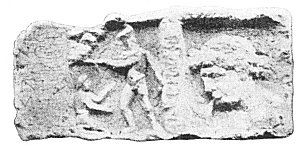
If we find among the Frisians a belief in a Godhead and ideas of religion entirely different from the Mythology of other nations, we are the more surprised to find in some points the closest connections with the Greek and Roman Mythology, and even of the origins of the two deities of the highest rank, Min-erva and Neptune. Min-erva (Athene) was originally a Burgtmaagd, priestess of Frya, at the town of Walhallagara, Middelburg, or Domburg, in Walcheren. And this Min-erva is at the same time the mysterious enigmatical goddess of whose worship scarcely any traces beyond the votive stones of Domburg, in Walcheren, Nyhellenia, of whom no mythology knows anything more than the name, which etymology has used for all sorts of fantastical derivations.

The other, Neptune, called by the Etrurians Nethunus, the God of the Mediterranean Sea, appears here to have been, when living, a Friesland Viking, or Sea King, whose home was Alderga (Ouddorp, not far from Alkmaar). His name was Teunis, or Cousin Teunis, who had chosen the Mediterranean as the destination of his expeditions, and must have been deified by the Tyrians at the time when the Phoenician navigators began to extend their voyages so remarkably, sailing to Friesland in order to obtain British tin, northern iron, and amber from the Baltic, about 2,000 years before Christ.

Besides these two we meet with a third mythological person - Minos, the lawgiver of Crete, who likewise appears to have been a Friesland Sea King, Minno, born at Lindaoord, between Wieringen and Kreyl, who imparted to the Cretans an `Asegaboek. He is that Minos who, with his brother Rhadamanthus and Aeacus, presided as judges over the fates of the ghosts in Hades, and must not be confounded with the late Minos, the contemporary of Aegeus and Theseus, who appears in the Athenian Fables.

The reader may perhaps be inclined to laugh at these statements, and apply to me the words that I myself lately used, fantastic and improbable. Indeed at first I could not believe my own eyes, and yet after further considerations I arrived at the discovery of extraordinary conformities which render the case much less improbable than the birth of Minerva from the head of Jupiter by a blow from the axe of Hephaestus, for instance.

In the Greek Mythology all the gods and goddesses have a youthful period. Pallas alone has no youth. She is no otherwise than adult. Min-erva appears in Attica as high priestess from a foreign country, a country unknown to the Greeks. Pallas is a virgin goddess, Min-erva is a Burgtmaagd. The fair, blue-eyed Pallas, differing thus in type from the rest of the gods and goddesses, evidently belonged to Fryas people. The character for wisdom and emblematical attributes, especially the owl, are the same for both. Pallas gives to the new town her own name, Athenai, which has no meaning in Greek. Min-erva gives to the town built by her the name Athene, which has an important meaning in Fries, namely that they came there as friends - `Athen.

Min-erva came to Athens about 1600 years before Christ, the period at which the Grecian Mythology was beginning to be formed. Min-erva landed with the fleet of Jon at the head of a colony in Attica. In later times we find her on the Roman votive stones in Walcheren, under the name of Nyhellenia, worshipped as a goddess of navigation; and Pallas is worshipped by the Athenians as the protecting goddess of shipbuilding and navigation.

Time is the carrier who must eternally turn the `Jol (wheel) and carry the sun along his course through the firmament from winter to winter, thus forming the year, every turn of the wheel being a day. In winter the `Jolfeest is celebrated on Frys day. Then cakes are baked in the form of the suns wheel, because with the Jol Frya formed the letters when she wrote her `Tex. The Jolfeest is therefore also in honor of Frya as inventor of writing.

Just as this Jolfeest has been changed by Christianity into Christmas throughout Denmark and Germany, and into St. Nicholas Day in Holland; so, certainly, our St. Nicholas dolls - the lover and his sweetheart - are a memorial of Frya, and the St. Nicholas letters a memorial of Fryas invention of letters formed from the wheel.

I cannot analyze the whole contents of this writing, and must content myself with the remarks that I have made. They will give an idea of the richness and importance of the contents. If some of it is fabulous, it must have an interest for us, since so little of the traditions of our forefathers remains to us.

An internal evidence of the antiquity of these writings may be found in the fact that the name Batavians had not yet been used. The inhabitants of the whole country as far as the Scheldt are Fryas people - Frieslanders. The Batavians are not a separate people. The name Batavi is of Roman origin. The Romans gave it to the inhabitants of the banks of the Waal, which river bears the name Patabus in the `Tabula Pentingeriana. The name Batavi does not appear earlier than Tacitus and Pliny, and is interpolated in Caesars `Bello Gallico, iv. 10. (See my treatise on the course of the rivers through the countries of the Frisians and Batavians, p. 49, in `DeVrije Fries. 4th vol. 1st part, 1845).

I will conclude with one more remark regarding the language. Those who have been able to take only a superficial view of the manuscripts have been struck by the polish of the language, and its conformity with the present Friesland language and Dutch. In this they seem to find grounds for doubting the antiquity of the manuscript.

But, I ask, is, then, the language of Homer much less polished than that of Plato or Demosthenes? And does not the greatest portion of Homers vocabulary exist in the Greek of our day?

It is true that language alters with time, and is continually subject to slight variations, owing to which language is found to be different at different epochs. This change in the language in this manuscript accordingly gives ground for important observations to philologists. It is not only that of the eight writers who have successively worked at the book, each is recognizable by slight peculiarities in style, language and spelling; but more particularly between the two parts of the book, between which an interval of more than two centuries occurs, a striking difference of the language is visible, which shows what a slowly progressive regulation it has undergone in that period of time.

As a result of these considerations, I arrive at the conclusion that I cannot find any reason to doubt the authenticity of these writings. They cannot be forgeries. In the first place, the copy of 1256 cannot be. Who could have at that time forged anything of that kind? Certainly no one. Still less any one at an earlier date. At a later date a forgery is equally impossible, for the simple reason that no one was acquainted with the language. Except Grimm, Richthofen and Hettema, no one can be named sufficiently versed in that branch of philology, or who had studied the language so as to be able to write in it. And if one could have done so, there would have been no more extensive vocabulary at his service than that which the East Friesian laws afford. Therefore, in the centuries lately elapsed, the preparation of this writing was impossible. Whoever doubts this let him begin by showing where, when, by whom, and with what object such a forgery could be committed, and let him show in modern times the fellow of this paper, this writing, and this language.

Moreover, that the manuscript of 1256 is not original, but is a copy, is proved by the numerous faults in the writing, as well as by some explanations of words which already in the time of the copyist had become obsolete and little known, as, for instance, in pages 82 (114), `to thera flete jefta bedrum; page 151 (204), `bargum jefta tonnum fon tha besta bjar.

A still stronger proof is that between pages 157 and 158 one or more pages are missing, which cannot have been lost out of the manuscript because the pages 157 and 158 are on the front and the back of the same leaf.

Page 157 finishes thus: `Three months afterwards Adel sent messengers to all the friends that he had gained, and requested them to send him intelligent people in the month of May. When we turn over the leaf, the other side begins, `his wife, he said, who had been Maid of Texland, had got a copy of it.

There is no connection between these two. There is wanting, at least, the arrival of the invited, and an account of what passed at their meeting. It is clear, therefore, that the copyist must have turned over two pages of the original instead of one.

There certainly existed then an earlier manuscript, and that was doubtless written by Liko Oera Linda in the year 803.

We may thus accept that we possess in this manuscript, of which the first part was composed in the sixth century before our era, the oldest production, after Homer and Hesiod, of European literature. And here we find in our fatherland a very ancient people in possession of development, civilization, industry, commerce, literature, and pure elevated ideas of religion, whose existence we had never conjectured. Hitherto we have believed that the historical records of our people reach no farther back than the arrival of Friso the presumptive founder of the Frisians, whereas here we become aware that these records mount up to more than 2,000 years before Christ, surpassing the antiquity of Hellas and equaling that of Israel.

This appendix was taken from the Introduction to the Oera Linda Book by W. R. Sandbach, published in London by Trubner & Co., in 1876.

It is an English translation of Dr. J. G. Ottemas Dutch translation of the original Frisian text, published in Friesland, in 1872 under the title Thet Oera Linda Bok.

The London edition contains the Frisian text on the left and English on the right and was verified by Dr. Ottema.

The Oera Linda Book, Glossary

The Oera Linda Book

Written in 1256 AD, from a diary
which was put together 560-558 BC.

from the Original Frisian text

verified by Dr. Ottema

by :

William R. Sandbach

Londen, Trubner & Co, 1876

GLOSSARY OF NAMES, WORDS FROM THE BOOK

  • Adel, Son of Friso and husband of Ifkja.
  • Adela, The un-elected Earth Mother, the Maiden of Liudgaard, whom the people wanted to elect after the murder of Frana in 589 BC. Instead, she resigned to marry Apol, became matriarch, to what was to become the Oera Linda family, and advised the copying of the citadel records that led to the Oera Linda Book.
  • Adelbond, A mutual defense and attack agreement among surviving citadels made by Apol against the Magy.
  • Adelbrost, Son of Adela who briefly continued the Book after his mothers death until his own murder.
  • Aldland, The old land, Atland or home country.
  • aldermen The older men of a burgt who made the laws of their district by popular assembly. They did not become law until approved by the burgtmaid.
  • Alexander, King of Macedonia who becomes a historically verifiable figure in the Book. He purchased the fleet of the Geertmen in India and was responsible for their return to the Mediterranean.
  • Alkmarum, A settlement with an island in a lake where black rowers were kept while waiting for the ships.
  • Allemannen, A name exiled Germans gave themselves when they were without women.
  • Almanland, A fortified trading town, not a city but an important free-market port for ships of all nations.
  • Alrik, King Askars nephew who tried to unite the German tribes under his Uncles patronage but was thwarted by the independent Franks.
  • Alvader, A term probably introduced in Christian times meaning Our Father and referring to Wr-Alda or God.
  • Angelaren, Angles or Engles. A people of Fryas land who made their living as rod fishermen or anglers.
  • Antigonus, The general of Alexander who took over Greece after his death. Father of Demetrius.
  • Apol, Husband of Adela. A sea-king who became Grevetman of Ostflyland and Lindaoord.
  • Apol, (son) Younger son of Adela who founded the citadel of Lindasburgt in Norway in order to avenge his parents murder against the followers of the Magi. He formed the Adelbond agreement for this purpose.
  • Apollonia, Daughter of Adela, Burgtmaid of Liudgaard and important compiler of the "Book of Adelas Followers".
  • Athens, The "City of Friends", named by Minerva when she left Crete to found a new citadel.
  • Atlantic, The ocean where ships of the "old land" (Atland) sailed.
  • Asegaboek, A city or districts code of laws and moral conducts.
  • Askar, Originally the asker or inquirer of property, a government post most likely related to taxation or defense levy. It became a royal title and name of the first hereditary king at the end of the age. See Black Adel.
  • Atharik, The name meaning rich in friends given to Adel, the son of Friso who succeeded his father as chief count in the first step to royal succession.
  • Athenia, The district around Athens, "the city of friends", Attica.
  • Atland, Same as Aldland but a shortened version used by the seamen.
  • Beeden, One of the last contributors to the Book. A grandson of Frethorik, he was required to acknowledge Adel III as overlord before succeeding his uncle as count.
  • Berthold, The father of Ifkja, wife of Frisos son Adel.
  • Black Adel, King Askar who was the fourth king after Friso. He appealed to military prowess by censuring the learning of writing as unworthy of a soldier when lands had to be restored from the enemy.
  • Brokmen, A term used by Frethorik to deplore the commercialism rampart at the end of the age.
  • Burgtmaid, Burgtmaagd, or local Mother of a citadel. Head of the maidens or virgins and eligible for election to Earth Mother.
  • Burgtmaster, A mayor of a town.
  • Cecrops, An Egyptian priest-commander who laid siege to Athens and negotiated the safe evacuation of the Geertmen.
  • Count, Originally a public office that counted the market sales on which taxes were levied. It become associated with the public levy or call to arms in time of defense and then the chief count, an elected position led on to hereditary kingship when combined with that of Askar.
  • Coward, A youth who had to stay home and tend the cows because he was unfit for service with the sea-kings.
  • Dela, Dela Hellenia was a prophet who may have added her later contribution in Christian times.
  • Demetrius, Son of Antigonus whose depravity caused the sailors to coin the word demented (without mind).
  • Druids, The name meaning "liars", given to missionary priests from Sidon by Frisians because they claimed to speak the truth. (See Golen and Triuwenden).
  • Earth Mother, Eeremoeder, or Earth Mother, the chief of state elected from the Burgtmaiden who served as the defender of Fryas laws for the protection of the combined states. Resolutions passed by the combined assemblies of the aldermen had to be approved by her before they became law. She could call a general levy of the military forces. She resided at Texland in the largest citadel of them all.
  • Evin, A sacred name related to Eve, not even to be spoken in ancient times.
  • Fasta, Festa, Vesta. The first Earth Mother, appointed by Frya after the loss of Atland. She received and codified Fryas Tex and built the first citadel at Texland. She became the goddess Hestia or Vesta and gave her name to the Vestal Virgins in later millennia.
  • Finda, The second goddess created by Wr-Alda who mothered the yellow race. Her children ultimately conquered all of Europe and interbred with Fryas and Lydas descendants to form the present population mixture. They were the persistent foe of the Free peoples.
  • Forest, The woods where the foe (Findas people) rested at night.
  • Flyburgt, The city at Flymeer or the mouth of the Fly river.
  • Flyland, The district around the Fly river (modern Vlie) which may have been the northern branch of the Rhine.
  • Forana, A great citadel and trading port of the low lands.
  • Frana, The Earth Mother who was murdered by the Magy after a marine invasion of Texland.
  • Franken, Franks or Frijen. A German tribe which preferred to remain independent of King Askar and invaded Gaul in the third century BC. Named after their first hereditary king.
  • Frethogunsta, The daughter of the king of Hals who married Askar. She brought idolatry into the royal family.
  • Frethorik, A grandson of Adela and important contributor to the Book. He was elected Askar in his time and told us the story of the recovery after the disasters of 305 BC.
  • Friesland, The name for the lands of the descendants of Frya, originally all of Europe but finally just a coastal area of Holland.
  • Frigg, The later day Scandinavian name for their understanding of the goddess Frya.
  • Frijen, An early name for Franken used when they had elected kings.
  • Friso, A Frisian who traveled to India and helped Alexander of Macedonia bring back to the Mediterranean the Indus fleet. He served Antigonus and Demetrius before bringing the Geertmen to the Rhine in the time of Gosa. He wanted to be permanent king and his descendants succeeded eventually in doing this.
  • Frya, The third goddess created by Wr-Alda and mother of the white race. She gave her sacred `Tex to Fasta, the first Earth Mother, thereby inventing phonetic writing. Her name gave us "freedom" and "friend" but was much misunderstood by the succeeding Finda peoples who had many names for her in their attempt to incorporate her into their pantheon.
  • Fryasburgt, The federal capital city at Texland.
  • Gedrosten, Runaways from India who settled in Afghanistan. So named by the Hindu priests.
  • Geert, The Mother or Burgtmaid of Athens who succeeded Minerva. She and her followers escaped to India after the siege of Athens about 1560 BC.
  • Geertmen, The descendants of the followers of Geert, even fifteen hundred years after her time.
  • Geertmania, The name the Geertmen gave to their new home on the Rhine. Named after their land in the Punjab.
  • Godfried, A sea-king circa 2000 BC known as the `Old who is credited with adding a decimal number system to writing.
  • Golen, Missionary priests from Sidon who celebrated cruel festivals. They were much hated by Frisians who called them Druids. They gave their name to Gaul.
  • Gosa, Gosa Makonta was the last elected Earth Mother, 323 BC. Her citadel survived the "second bad times".
  • Greva, The elders. Age was held in respect and incorporated into government.
  • Grevetman, A high civic office like a local governor. Originally a hearer of grievances.
  • Hachgana, Son of Wiljo, father of Beeden, a late contributor to the Book.
  • Heerman, Forerunner of the position "duke" when it was an elective office, a circuit judge.
  • Helgoland, A tiny island off the North Frisian Islands that was known to be much larger in historical times. Could have originally been part of Atland.
  • Hellenia, A shortened name for Nyhellenia Minerva. Not to be confused with Dela Hellenia. (See Minerva).
  • Hellicht, An Earth Mother who predicted that Fryas customs would never take firm hold in Athens.
  • Hellingers, The original seamen name for the Greeks, meaning cliff hangers.
  • Hiddo, Hiddo Over de Linda wrote the opening lines of the Book in 1256 AD.
  • Hyperboria, A far land beyond the north wind.
  • Ifkja, Wife of Adel, the son of Friso who tried to unite the country in the final good times.
  • Inka, A nephew of Sterik and cousin of Wodin and Teunis. He took half the renegade fleet and sailed into the Atlantic, never to be heard from again.
  • Irtha, Mother Earth, Gaea, Gaia.
  • Jon, Jon, John, Jhon meaning "given". A sea-king who became a pirate against the Phoenicians and based in the Ionian island named after him. Rosamond issued a warrant against him for destroying Kaltas citadel.
  • Joniers, The descendant of the followers of Jon or Ionians known for their seamanship.
  • Jonischen, Ionian, Jons Islands or the Pirate Islands. The reference at the time of Ulysses.
  • Jutlanders, Jutmen, originally meaning those who trade in amber (jutten). They were from the Baltic but migrated to Denmark after the "second bad times".
  • Jule, A wheel meaning a day or a year. The cycle of the sun.
  • Jule-time, Jule-tide, the shortest day of the year, eventually celebrated as Christmas.
  • Julefest, The festival associated with Jule-tide.
  • Kaat, Original name of Kalip or Calypso, the Burgtmaid of Walhallagara who entertained Ulysses.
  • Kadhemers, The inhabitants of the north part of Crete who never went to sea. A dweller near the coast. A Phoenician.
  • Kadmus, A legendary Phoenician who is traditionally credited with bring the alphabet to Greece.
  • Kadik, Modern Cadiz in Spain.
  • Kalip, (see Kaat)
  • Kalta, A name given to the Burgtmaid Sijred of Flyburgt by the sailors because of her devious ways. Her followers became known as Kelts or Celts. After loosing the election, she rebelled against the new Earth Mother and set up a rival state, with the help of the magi, that included Gaul and Britain. Kaltasburgh Kerenak, the new citadel of Kalta which was probably in Scotland.
  • Katerine, Kat, the Burgtmaid of Godasburgt in Norway who after being overrun by the Magy chose death to disgrace and gave her name to the Kattegat or strait where she drowned.
  • Keeren Herne, Kerenak or Chosen Corner. (See Kaltasburgh).
  • Kerenak, (See Keeren Herne)
  • King, An elected leader or general for a campaign. Sons were not allowed to succeed fathers as king.
  • Konered, Son of Frethorik and Wiljo, who contributed to the Book after their deaths.
  • Kreta, Crete, the land of criers because they shouted at foreign ships that came too close.
  • Kroder, The hand or spoke that goes around the Jule or circle. These symbols were used to form the first phonetic alphabet.
  • Letlanders, People from the Baltic or the bad sea.
  • Letten, Isolated islanders so named because they are let alone.
  • Liko, Liko Over de Linden wrote the second letter in the Book that was copied from the 803 AD original.
  • Linda, Meaning lime trees or plane trees, this term has given rise to many family and place names including the authors of the Book. Originally it was a distinction or reward for service, to be able to build ones house in the location that was "over the lime trees".
  • Lithauers, A name given to a German tribe which always attacked the face of their enemies. It means "face hewers".
  • Liudgaard, A citadel that gave rise to many names beginning with "Liud". It was located at the mouth of the Rhine and was inundated by the sea in 305 BC.
  • Liudgert, The admiral of Wichhirt who settled in Walhallagara and was elected king after Wichhirt. He described the Punjab in his writings.
  • Libya, From Lyda, or Africa as it was known to the Mediterranean.
  • Lyda, The first Goddess, created by Wr-Alda, who was the mother of the black race. Little is known of her except her strong passion. Her descendants were often employed as rowers in the great fleets but never as slaves. Many ultimately married into Europe.
  • Lydasburgt, A town on the Rhine were the black rowers were kept waiting for the fleet to leave again.
  • Magy, The title of the priest-king of the Finns and Magyars in much the same way as Pharaoh was used by the Hebrew bible.
  • magi The various priest-kings of Findas people who ruled with fear and magic. A chief Druid.
  • Makonta, Surname of Gosa, the last Earth Mother.
  • Marsaten, The lake dwellers of Switzerland. They were considered poor members of Friesland.
  • Medesblik, An important citadel that dates from the time of the first Earth Mother.
  • Minerva, Pallas Athena in Greek. Hellene or Nyhellenia Minerva, the Rhine maiden who was brought to Crete and Athens by the sea-king Jon and founded a citadel there.
  • Minno, King Minos, an ancient sea-king, who gave laws to Crete and eventually returned to the Rhine where he left his contributions to the Book on the walls of Walhallagara from where they were copied a thousand years later.
  • Missellia, The island that became Marseilles. It was mistakenly sold to the Golen of Sidon hence the name "miss sale". It eventually became the first city of the Gaul in southern France.
  • Navigator, Originally meant a seaman. Someone who made foreign voyages.
  • Nearchus, The admiral of Alexander who was in charge of the expeditions using the fleet of the Geertmen.
  • Neef, Nephew or cousin.
  • Nyhellenia, (see Minerva)
  • Pallas Athena, Greek goddess of wisdom, Minerva.
  • Phonisia, Palmland, or Phoenicia. The land of the Golen at Sidon.
  • Prontlik, A latter-day burgtmaid of Texland who escaped the ambitions of King Askar by hiding in a neighboring forest with her maidens. The last Mother of the most ancient citadel.
  • Puniers, Phoenicians or Carthaginians. A mixture of Finns, Frisians and Blacks. They were the same people who settled Gaul under their Golen or priests. Those ones became known as Celts while the south Mediterranean peoples were the traditional enemies of Rome.
  • Reintja, The last Burgtmaid of Stavia who made a deal with King Askar to rebuild her citadel in return for rallying the districts to support him. He reneged on the deal.
  • Rika, The old Maiden who tried to oppose the ambitions of Frisos successors to form hereditary kingships and desert the old ways.
  • Rome, This city is traditionally believed to be named after its founder Romulus but the Frisians say the word means spacious and was founded by Trojans.
  • Saxmen, Inhabitants of the north bank of the Rhine. Originally a term for ax-men or foresters because they were always armed against the wild beasts. In the forth century BC it appears as a German tribe.
  • Schoonland, Ancient name for Scandinavia not including Denmark.
  • Scythian, The horsemen of the Slavonic regions that were originally considered part of Fryas race and culture before the first disasters. There have been many archaeological discoveries of these tall, fair people in the Caucasus regions.
  • Sea-king, The elected leader for the expedition of a merchant fleet. The huge fleets commanded respect and fair trade because of their armed might. He was above the admiral and chief merchant.
  • Sijred, (see Kalta)
  • Skrivfilt, The ancient name for paper or parchment of linen base and an important commercial product.
  • Sterik, An old sea-king who had three nephews named Wotan, Teunis and Inka. Stuurlieden Inhabitants near Denmark who made their living in small boats. The name came to mean navigator in the modern sense.
  • Teunis, Neef Teunis or Neptune of later traditions. He gave his name to Tunisia, founded Tyre and was acclaimed to be the first king of the Phoenicians by the Golan of Sidon.
  • Teuntia, The Burgtmaid of Medesblik who was recommended by Gosa Makonta to succeed her. There was no conclusive election.
  • Texel, A tiny island in Holland; all that remains of Texland and the city of Fryasburgt.
  • Texland, The original province of Fryas land where the first citadel and seat of the Earth Mother was built for Fasta.
  • Thyr, Thor. One of the idols of the Finns whose name was given to Tyre by Teunis and his followers who became the Phoenicians. In Finland, the son of Odin.
  • Thyriers, Early Phoenicians.
  • Triuwenden, "Abstainers from the truth", a word that became Druids.
  • Troost, A burgtmaid of Stavia.
  • Tuntia, A burgtmaid of Cadiz.
  • Twiskar, A resident of Twiskland or Germany.
  • Ulysses, A sea-king who visited from the Mediterranean who visited Kalip after failing to get a sacred lamp from the Earth Mother. His exploits inspired the original Odyssey.
  • Urgetten, The "Forgotten" or residents west of the Punjab.
  • Walhalla, Where the valiant soldiers go after an honorable death.
  • Walhallagara, Minervas Rhineland citadel in 1600 BC and later that of Kaat (Calypso).
  • Waraburgt, An international trading center, not a maidens city.
  • Wichhirt, The leader of the Geertmen at the time of Alexander. He returned with his people to settle in the Emude and contributed much of the Indian section to the Book.
  • Wiljo, Wife of Frethorik who continued the Book after him.
  • Witkoning, A sea-king.
  • Wodin, Senior cousin and commander of Neef Teunis and Neef Inka who disgraced the northern campaign by marrying the daughter of the Magy who kept him drugged as a puppet king and then deified him. He became known as Odin.
  • Wr-Alda, God. Neither male nor female, the oldest concept of monotheism meaning "all that is", the "Oldest One".
  • Yren, People west of the Punjab, the Iranians, meaning "morose" but named by Hindu priests from whom they wanted to escape.
  • Zeecampers, A Frisian people named because they made their living on the seashore.
  • Zoethart, A sailors sweetheart or lively heart.

The Oera Linda Book, Extracts

The Oera Linda Book

Written in 1256 AD, from a diary
which was put together 560-558 BC.

from the Original Frisian text

verified by Dr. Ottema

by :

William R. Sandbach

Londen, Trubner & Co, 1876

APPENDIX A - EXTRACTS FROM THE BOOK

Frys Tex That was Inscribed on the Walls of all Citadels.

  • Prosperity awaits the free. At last they shall see me again. Though him only can I recognize as free who is neither a slave to another nor to himself. This is my counsel:
  • When in dire distress, and when mental and physical energy avail nothing, then have recourse to the spirit of Wr-Alda; but do not appeal to him before you have tried all other means, for I tell you beforehand, and time will prove its truth, that those who give way to discouragement sink under their burdens.
  • To Wr-Aldas spirit only shall you bend the knee in gratitude - threefold - for what you have received, for what you do receive, and for the hope of aid in time of need.
  • You have seen how speedily I have come to your assistance. Do likewise to your neighbor, but wait not for his entreaties. The suffering would curse you, my maidens would erase your name from the book, and I would regard you as a stranger.
  • Let not your neighbor express his thanks to you on bent knee, which is only due to Wr-Aldas spirit. Envy would assail you, Wisdom would ridicule you, and my maidens would accuse you of irreverence.
  • Four things are given for your enjoyment - air, water, land, and fire - but Wr-Alda is the sole possessor of them. Therefore, my counsel to you is, choose upright men who will fairly divide the labor and the fruits; so that no man shall be exempt from work or from the duty of defense.
  • If ever it should happen that one of your people should sell his freedom, he is not of you, he is a bastard. I counsel you to expel him and his mother from the land. Repeat this to your children morning, noon, and night, till they think of it in their dreams.
  • If any man should deprive another, even his debtor, of his liberty, let him be to you as a vile slave; and I advise you to burn his body and that of his mother in an open place, and bury them fifty feet below the ground, so that no grass shall grow upon them. It would poison your cattle.
  • Meddle not with the people of Lyda, nor of Finda, because Wr-Alda would help them, and any injury that you inflicted on them would recoil upon your heads.
  • If it should happen that they come to you for advice or assistance, then it behooves you to help them; but if they should rob you, then fall upon them with fire and sword.
  • If any of them should seek a daughter of yours to wife, and she is willing, explain to her her folly; but if she will follow her lover, let her go in peace.
  • If your son wishes for a daughter of theirs, do the same as to your daughter; but let not either one or the other ever return among you, for they would introduce foreign morals and customs, and if these were accepted by you, I could not longer watch over you.
  • Upon my servant Fasta I have placed all my hopes. Therefore you must chose her for Earth Mother. Follow my advice, then she will hereafter remain my servant as well as all the sacred maidens who succeed her. Then shall the lamp which I have lighted for you never be extinguished. Its brightness shall always illuminate your intellect, and you shall always remain as free from foreign domination as your fresh river-water is distinct from the sea.

Fastas Laws Established before 2100 BC.

These Are The Laws Established For The Government of Citadels:

  • When a citadel is built, the lamp belonging to it must be lighted at the original lamp in Texland, and that can only be done by the Mother.
  • Every Mother shall appoint her own maidens. She may even choose those who are mothers in other towns.
  • The Mother of Texland may appoint her own successor, but should she die without having done so, the election shall take place at a general assembly of the whole nation.
  • The Mother of Texland may have twenty-one maidens and seven assistants, so that there may always be seven to attend the lamp day and night. She may have the same number of maidens who are mothers in other towns.
  • If a maiden wishes to marry, she must announce it to the Mother, and immediately resign her office, before her passion shall have polluted the light.
  • For the service of the Mother and of each of the burgtmaidens there shall be appointed twenty-one townsmen: seven civilians of mature years, seven warriors of mature years, and seven seamen of mature years.
  • Out of the seven three shall retire every year, and shall not be replaced by members of their own family nearer than the fourth degree.
  • Each may have three hundred young townsmen as defenders.
  • For this service they must study Fryas Tex and the laws. From the sages they must learn wisdom, from the warriors the art of war, and from the sea-kings the skill required for distant voyages.
  • Every year one hundred of the defenders shall return to their homes, and those that may have been wounded shall remain in the citadels.
  • At the election of the defenders no burgher or Grevetman, or other person of distinction, shall vote, but only the people.
  • The Mother at Texland shall have three times seven active messengers, and three times twelve speedy horses. In the other citadels each maiden shall have three messengers and seven horses.
  • Every citadel shall have fifty farm workers chosen by the people, but only those may be chosen who are not strong enough to go to war or to go to sea.
  • Every citadel must provide for its own sustenance, and must maintain its own defense, and look after its share of the general contributions.
  • If a man is chosen to fill any office and refuses to serve, he can never become a burgher, nor have any vote. And if he is already a burgher, he shall cease to be so.
  • If any man wishes to consult the Mother of a burgtmaid, he must apply to the secretary, who will take him to the burgtmaster. He will then be examined by a surgeon to see if he is in good health. If he is passed, he shall lay aside his arms, and seven warriors shall present him to the Mother.
  • If the affair concerns only one district, he must bring forward not less than three witnesses; but if it affects the whole of Friesland, he must have twenty-one additional witnesses, in order to guard against any deceptions.
  • Under all circumstances the Mother must take care that her children, that is, Fryas people, shall remain as temperate as possible. This is her most important duty.
  • If she is called upon to decide any judicial question between a Grevetman and the community, she must incline towards the side of the community in order to maintain peace, and because it is better that one man should suffer than many.
  • If any one comes to the Mother for advice, and she is prepared to give it, she must do it immediately. If she does not know what to advise, he must remain waiting seven days; and if she then is unable to advise, he must go away without complaining, for it is better to have no advice at all than bad advice.
  • If a mother shall have given bad advice out of ill-will, she must be killed or driven out of the land, deprived of everything.
  • If her Burgers are accomplices, they are to be treated in a similar manner.
  • If her guilt is doubtful or only suspected, it must be considered and debated, if necessary, for twenty-one weeks. If half the votes are against her, she must be declared innocent. If two-thirds are against her, she must wait a whole year. If the votes are then the same, she must be considered guilty, but may not be put to death.
  • If any one of the one-third who have voted for her wish to go away with her, they may depart with all their live and dead stock, and shall not be the less considered, since the majority may be wrong as well as the minority.

The Universal Laws that were Begun by Fasta.

  • All freeborn men are equal, wherefore they must all have equal rights on sea and land, and on all that Wr-Alda has given.
  • Every man may seek the wife of his choice, and every woman may bestow her hand on him whom she loves.
  • When a man takes a wife, a house and yard must be given to him. If there is none, one must be built for him.
  • If he has taken a wife in another village, and wishes to remain, they must give him a house there, and likewise the free use of the common.
  • To every man must be given a piece of land behind his house. No man shall have land in front of his house, still less an enclosure, unless he has performed some public service. In such a case it may be given, and the youngest son may inherit it, but after him it returns to the community.
  • Every village shall possess a common for the general good, and the chief of the village shall take care that it is kept in good order, so that posterity shall find it uninjured.
  • Every village shall have a marketplace. All the rest of the land shall be for tillage and forest. No one shall fell trees without the consent of the community, or without the knowledge of the forester; the forests are general property, and no man can appropriate them.
  • The market charges shall not exceed one-twelfth of the value of the goods either to native or strangers. The portion taken for the charges shall not be sold before the other goods.
  • All the market receipts must be divided yearly into a hundred parts, three days before the Jule-day.
  • The Grevetman and his council shall take twenty parts; the keeper of the market ten, and his assistants five, the Earth Mother one, the midwife four, the village ten, and the poor and infirm shall have fifty parts.
  • There shall be no usurers in the market. If any should come, it will be the duty of the maidens to make it known through the whole land, in order that such people may not be chosen for any office, because they are hardhearted. For the sake of money they would betray everybody - the people, the mother, their nearest relations, and even their own selves.
  • If any man should attempt to sell diseased cattle or damaged goods for sound, the market keeper shall expel him, and the maidens shall proclaim him throughout the country.

The Final Section of the Laws of Minno.

Laws For The Navigators:

  • All Fryas sons have equal rights, and every stalwart youth may offer himself as a navigator to the Alderman, who may not refuse him as long as there is any vacancy.
  • The navigators may choose their own masters.
  • The traders must be chosen and named by the community to which they belong, and the navigators have no voice in their election.
  • If during a voyage it is found that the king is bad or incompetent, another may be put in his place, and on the return home he may make his complaint to the Alderman.
  • If the fleet returns with profits, the sailors may divide one-third among themselves in the following manner:
  • The king twelve portions, the admiral seven, the boatswains each two portions; the captains three, and the rest of the crew each one part; the youngest boys each one-third of a portion, the second boys half a portion each, and the eldest boys two-thirds of a portion each.
  • If any have been disabled, they must be maintained at the public expense, and honored in the same way as the soldiers.
  • If any have died on the voyage, their nearest relatives inherit their portion.
  • Their widows and orphans must be maintained at the public expense; and if they were killed in a sea-fight, their sons may bear the names of their fathers on their shields.
  • If a topsailsman is lost, his heirs shall receive a whole portion.
  • If he was betrothed, his bride may claim seven portions in order to erect a monument to her bridegroom, but then she must remain a widow all her life.
  • If the community is fitting out a fleet, the purveyors must provide the best provisions for the voyage, and for the women and children.
  • If a sailor is worn out and poor, and has no house or patrimony, one must be given to him. If he does not wish for a house, his friends may take him home; and the community must bear the expense, unless his friends decline to receive it.

The Oera Linda Book, 6 Writings of Beden

The Oera Linda Book

Written in 1256 AD, from a diary
which was put together 560-558 BC.

from the Original Frisian text

verified by Dr. Ottema

by :

William R. Sandbach

Londen, Trubner & Co, 1876

The Writings of Beden

06 Chapter I: My name is Beden, son of Hachgana -

1. My uncle Konered, not having married, left no children. I was elected in his place. Adel, the third king of that name, approved of the choice, provided I should acknowledge him as master. In addition to the entire inheritance of my uncle, he gave me some land which adjoined my own, on condition that I would settle people there who should never his people [...]

2. [...] therefore I will allow it a place here.

06 Chapter II: Letter of Rika the elder-femme, read at Staveren at the Yule-feast -

1. My greeting to all of you whose forefathers came here with Friso. According to what you say, you are not guilty of idolatry. I will not speak about that now, but will at once mention a failing which is very little better. You know, or you do not know, of the thousand glorious titles Wr-Alda has; but you all know that he is named Alfeder, because that everything comes and proceeds from him for the sustenance of his creatures.

2. It is true that Irtha is named sometimes Alfedstre, because she brings forth all the fruits and grains on which men and beasts are fed; but she would not bear any fruit or grain unless Wr-Alda gave her the power. Women who nourish their children at their breasts are called nurses, but if Wr-Alda did not give them milk the children would find no advantage; so that, in short, Wr-Alda really is the nourisher.

3. That Irtha should be called Alfedstre, and that a mother should be called a feeder, one can understand, figuratively speaking; but that a father should be called a feeder, because he is a father, goes against all reason. Now I know whence all this folly comes. Listen to me. It comes from our enemies; and if this is followed up you will become slaves, to the sorrow of Frya and to the punishment of your pride.

4. I will tell you what happened to the slave people; from that you may take warning. The foreign kings, who follow their own will, place Wr-Alda below the crown. From envy that Wr-Alda is called Alfeder, they wish also to be called feeders of the people. Now, everybody knows that kings regulate neither productiveness nor wealth; and that they have their sustenance by means of the people, but still they persist in their arrogance.

5. In order to attain their object they were not satisfied from the beginning with free gifts, but imposed a tax upon the people. With the tax thus raised they hired foreign soldiers, whom they retained about their courts. Afterwards they took as many wives as they pleased, and the smaller princes and gentry did the same.

6. When, in consequence, quarrels and disputes arose in the households, and complaints were made about it, they said every father is the feeder of his household, therefore he shall be master and judge over it. Thus arose arbitrariness, and as the men ruled over their households the kings would do over their people.

7. When the kings had accomplished that, that they should be called feeders of the people, they had statues of themselves made, and erected in the temples beside the statues of their idols, and those who would not bow down to them were either killed or put in chains. Your forefathers and the Twisklandar had intercourse with the foreigners, and learned these follies from them. But it is not only that some of your men have been guilty of stealing titles, I have also much to complain of against your wives.

8. If there are men among you who wish to put themselves on a level with Wr-Alda, there are also women who wish to consider themselves equals of Frya. Because they have borne children, they call themselves mothers; but they forget that Frya bore children without having intercourse with a man. Yes, they not only have desired to rob Frya and her folk-mothers of their glorious titles - with whom they cannot put themselves upon an equality - but they do the same with the glorious names of their fellow creatures.

9. There are women who allow themselves to be called ladies, although they know that that only belongs to the wives of princes. They also let their daughters be called femmes, although they know that no young girls are so called unless they belong to a burgh. You all fancy that you are the better for this name stealing, but you forget that jealousy clings to it, and that every wrong sows the seed of its own rod.

10. If you do not alter your course, in time it will grow so strong that you cannot see what will be the end. Your descendants will be flogged by it, and will not know whence the stripes come. But although you do not build burghs for the femmes and leave them to their fate, there will still remain some who will come out of woods and caves, and will prove to your descendants that you have by your disorderliness been the cause of it.

11. Then you will be damned. Your ghosts will rise frightened out of their graves. They will call upon Wr-Alda, Frya, and her femmes, but they shall receive no succour before the Yule shall enter upon a new circuit, and that will only be three thousand years after this century.

12. The end of Rikas letter.

06 Chapter III: [...] therefore I will first write about Swarte Adel -

1. Swarte Adel was the fourth king after Friso. In his youth he studied first at Texland, and then at Staveren, and afterwards travelled through all the states. When he was twenty-four years old his father had him elected judge and named Askar. As soon as he became Askar he always took the part of the poor. He said:

2. "The rich do enough of wrong by means of their wealth, therefore we ought to take care that the poor look up to us."

3. By arguments of this kind he became the friend of the poor and the terror of the rich. It was carried so far that his father looked up to him. When his father died he succeeded, and then he wished to retain his office as well, as the kings of the east used to do. The rich would not suffer this, so all the people rose up, and the rich were glad to get out of the assembly with whole skins.

4. From that time there was no more talk of equality. He oppressed the rich and flattered the poor, by whose assistance he succeeded in all his wishes. King Askar, as he was always called, was seven feet high, and his strength was as remarkable as his height. He had a clear intellect, so that he understood all that was talked about, but in his actions he did not display much wisdom. He had a handsome countenance and a smooth tongue, but his soul was blacker than his hair.

5. When he had been king for a year, he obliged all the young men in the state to come once a year to his residence to have a sham fight. At first he had some trouble with it, but at last it became such a habit that old and young came from all sides to ask if they might take part in it. When he had brought it to this point, he established military schools. The rich complained that their children no longer learned to read and write.

6. Askar paid no attention to it; but shortly afterwards, when a sham fight was held, he mounted a throne and spoke aloud:

7. "The rich have come to complain to me that their boys do not learn to read and write. I answered nothing; but I will now declare my opinion, and let the general assembly decide."

8. While they all regarded him with curiosity, he said further:

9. "According to my idea, we ought to leave reading and writing at present to the femmes and elders. I do not wish to speak ill of our forefathers; I will only say that in the times so vaunted by some, the burgh-femmes introduced disputes into our country, which the folk-mothers were unable, either first or last, to put an end to.

10. "Worse still, while they talked and chattered about useless customs the Golar came and seized all our beautiful southern country. Even at this very time our degenerate brothers and their soldiers have already come over the Skelda. It therefore remains for us to choose whether we will carry a yoke or a sword.

11. "If we wish to be and remain free, it behoves our young men to leave reading and writing alone for a time; and instead of playing games of swinging and wrestling, they must learn to play with sword and spear. When we are completely prepared, and the boys are big enough to carry helmet and shield and to use their weapons, then, with your help, I will attack the enemy.

12. "The Golar may then record the defeat of their helpers and soldiers upon our fields with the blood that flows from their wounds. When we have once expelled the enemy, then we must follow it up till there are no more Golar, slaves, or Tartarar to be driven out of Fryas inheritance!"

13. "That is right!" the majority shouted, and the rich did not dare to open their mouths.

14. He must certainly have thought over this address and had it written out, for on the evening of the same day there were copies in at least twenty different hands, and they all sounded the same. Afterwards he ordered the ship people to make double prows, upon which steel crossbows could be fixed. Those who were backward in doing this were fined, and if they swore that they had no means, the rich men of the district were obliged to pay.

15. Now we shall see what resulted from all this bustle. In the north part of Brittania, which is heavily forested, there exists a Skotse people. Most of them spring from Fryas blood, some of them are descended from the followers of Kaltana, and, for the rest, from Britne and fugitives who gradually, in the course of time, took refuge there from the tin mines. Those who came from the tin mines have wives, either altogether foreign or of foreign descent.

16. They are all under the dominion of the Golar. Their arms are wooden bows and arrows pointed with stags horn or flint. Their houses are of turf and straw, and some of them live in caves in the mountains. Sheep that they have stolen form their only wealth. Some of the descendants of Kaltanas followers still have iron weapons, which they have inherited from their forefathers.

17. In order to make myself well understood, I must let alone for a while my account of the Skotse people, and write something about the Heinde Krekalandar. The Heinde Krekalandar formerly belonged to us only, but from time immemorial descendants of Lyda and Finda have established themselves there.

18. Of these last there came in the end a whole troop from Troia. Troia is the name of a state that the Fere Krekalandar had taken and destroyed. When the Trojans had nestled themselves among the Heinde Krekalandar, with time and industry they built a strong state with walls and a burgh named Rome, that is, "Spacious". When this was done, the people by craft and force made themselves masters of the whole land.

19. The people who live on the south side of the Middel Sea come for the most part from Phonisia. The Phonisiar are a bastard race of the blood of Frya, Finda, and Lyda. The Lyda people were there as slaves, but by the unchastity of the women these black people have degenerated the other people and dyed them brown.

20. These people and the people of Rome are constantly struggling for the supremacy over the Middel Sea. The Romar, moreover, live at enmity with the Phonisiar; and their priests, who wish to assume the sole government of the World, cannot bear the sight of the Golar.

21. First they took from the Phonisiar Missellia - then all the lands lying to the south, the west, and the north, as well as the southern part of Brittania - and they have always driven away the Phonisiar priests, that is the Golar, of whom thousands have sought refuge in North Brittania. A short time ago the chief of the Golar was established in the burgh which is called Kerenak, that is the corner, whence he issued his commands to the Golar. All their gold was likewise collected there.

22. Keren Herne, or Kerenak, is a stone burgh which once belonged to Kalta. Therefore the femmes of the descendants of Kaltanas followers wished to have the burgh again. Thus through the enmity of the femmes and the Golar, hatred and quarrelling spread over Berchland with fire and sword. Our navigators often came there to get wool, which they paid for with prepared hides and linen.

23. Askar had often gone with them, and had secretly made friendship with the femmes and some princes, and bound himself to drive the Golar out of Kerenak. When he came back there again he gave to the princes and the fighting men iron helmets and steel bows. War had come with him, and soon blood was streaming down the slopes of the mountains.

24. When Askar thought a favourable opportunity occurred, he went with forty ships and took Kerenak and the chief of the Golar, with all his gold. The people with whom he fought against the soldiers of the Golar, he had enticed out of the Saxanamark by promises of much booty and plunder. Thus nothing was left for the Golar. After that he took two islands for stations for his ships, from which he used later to sally forth and plunder all the Phonisiar ships and states that he could reach.

25. When he returned he brought nearly six hundred of the finest youths of the Skotse mountain people with him. He said that they had been given him as hostages, that he might be sure that the parents would remain faithful to him; but this was untrue. He kept them as a bodyguard at his court, where they had daily lessons in riding and in the use of all kinds of arms.

26. The Denamarkar, who proudly considered themselves sea warriors above all the other navigators, no sooner heard of the glorious deeds of Askar, than they became jealous of him to such a degree, that they would bring war over the sea and over his lands.

27. See here, then, how he was able to avoid a war. Among the ruins of the destroyed burgh of Stavia there was still established a clever burgh-femme, with a few femmes. Her name was Reintia, and she was famed for her wisdom. This femme offered her assistance to Askar, on condition that he should afterwards rebuild the burgh of Stavia.

28. When he had bound himself to do this, Reintia went with three femmes to Hals. She travelled by night, and by day she made speeches in all the markets and in all the assemblies.

29. Wr-Alda, she said, had told her by his thunder that all Fryas people must become friends, and united as brothers and sisters, otherwise Findas people would come and sweep them off the face of Irtha.

30. After the thunder Fryas seven watch-femmes appeared to her in a dream seven nights in succession. They had said:

31. "Disaster hovers over Fryasland with yoke and chains; therefore all the people must do away with their surnames, and only call themselves Fryas Children, or Fryas people.

32. "They must all rise up and drive Findas people out of Fryas inheritance. If you will not do that, you will bring the slave chains round your necks, and the foreign chiefs will ill-treat your children and flog them till the blood streams into your graves. Then shall the spirits of your forefathers appear to you, and reproach your cowardice and thoughtlessness."

33. The stupid people who, by the acts of the Magyarar, were already so much accustomed to folly, believed all that she said, and the mothers clasped their children to their bosoms. When Reintia had brought the king of Hals and the others to an agreement, she sent messengers to Askar, and went herself along the Balda Sea.

34. From there she went to the Hlithhawar, so called because they always strike at their enemys face. The Hlithhawar are fugitives and banished people of our own race, who wander about in the Twiskland. Their wives have been mostly stolen from the Tartarar. The Tartarar are a branch of Findas race, and are thus named by the Twisklandar because they never will be at peace, but provoke people to fight. She proceeded on beyond the Saxanamark, crossing through the other Twisklandar in order always to repeat the same thing.

35. After two years had passed, she came along the Rene home. Among the Twisklandar she gave herself out for a folk-mother, and said that they might return as free and true people; but then they must go over the Rene and drive the Golar out of Fryas south lands. If they did that, then her king Askar would go over the Skelda and win back the land.

36. Among the Twisklandar many bad customs of the Tartarar and Magyarar have crept in, but likewise many of our laws have remained. Therefore they still have femmes, who teach the children and advise the old. In the beginning they were opposed to Reintia, but at last she was followed, obeyed, and praised by them where it was useful or necessary.

37. As soon as Askar heard from Reintias messengers how the Juttar were disposed, he immediately, on his side, sent messengers to the king of Hals. The ship in which the messengers went was laden with womens ornaments, and took a golden shield on which Askars portrait was artistically represented. These messengers were to ask the kings daughter, Frethogunsta, in marriage for Askar.

38. Frethogunsta came a year after that to Staveren. Among her followers was a Magy, for the Juttar had been long ago corrupted. Soon after Askar had married Frethogunsta, a temple was built at Staveren. In the temple were placed monstrous images, bedecked with gold-woven dresses. It is also said that Askar, by night, and at unseasonable times, kneeled to them with Frethogunsta; but one thing is certain, the burgh of Stavia was never rebuilt.

39. Reintia was already come back, and went angrily to Prontlik the folk-mother, at Texland, to complain. Prontlik sent out messengers in all directions, who proclaimed that Askar is gone over to idolatry. Askar took no notice of this, but unexpectedly a fleet arrived from Hals. In the night the femmes were driven out of the burgh, and in the morning there was nothing to be seen of the burgh but a glowing heap of rubbish.

40. Prontlik and Reintia came to me for shelter. When I reflected upon it, I thought that it might prove bad for my state. Therefore, we hit upon a plan which might serve us all. This is the way we went to work. In the middle of the Krylwald, to the east of Liudwerd, lies our place of refuge, which can only be reached by a concealed path. A long time ago I had established a garrison of young men who all hated Askar, and kept away all other people.

41. Now it was come to such a pitch among us, that many women, and even men, talked about ghosts, white women, and dwarfs, just like the Denamarkar. Askar had made use of all these follies for his own advantage, and we wished to do the same. One dark night I brought the femmes to the burgh, and afterwards they went along the path dressed in their short white kilts, mimicking dwarfs and ghosts, so that nobody dare go there any more.

42. When Askar thought he had his hands free, he let the Magyarar travel through his states under all kinds of names, and, except in Grenega and my state, they were not turned away anywhere. After that Askar had become so connected with the Juttar and the Denamarkar, they all went roving together; but it produced no real good to them.

43. They brought all sorts of foreign treasures home, and just for that reason the young men would learn no trades, nor work in the fields; so at last he was obliged to take slaves; but that was altogether contrary to Wr-Aldas wish and Fryas counsel. Therefore the punishment was sure to follow it.

44. This is the way in which the punishment came. They had all together taken a whole fleet that came out of the Middel Sea. This fleet was laden with purple cloths and other valuables that came from Phonisia. The weak people of the fleet were put ashore south of the Seiene, but the strong people were kept to serve as slaves. The handsomest were retained ashore, and the ugly and black were kept on board ship as rowers.

45. In the Fly the plunder was divided, but, without their knowing it, they divided the punishment too. Of those who were placed in the foreign ships six died of colic. It was thought that the food and drink were poisoned, so it was all thrown overboard, but the colic remained all the same. Wherever the slaves or the goods came, there it came too.

46. The Saxmannar took it over to their marches. The Juttar brought it to Skenland and along the coasts of the Balda Sea, and with Askars navigators it was taken to Brittania. We and the people of Grenega did not allow either the people or the goods to come over our boundaries, and therefore we remained free from it.

47. How many people were carried off by this disease I cannot tell; but Prontlik, who heard it afterwards from the femmes, told me that Askar had helped out of his states a thousand times more Children of Frya than he had brought dirty slaves in.

48. When the pest had ceased, the Twisklandar who had become free came to the Rene, but Askar would not put himself on an equality with the princes of that vile degenerate race. He would not suffer them to call themselves Fryas Children, as Reintia had offered them, but he forgot then that he himself had black hair.

49. Among the Twisklandar there were two tribes who did not call themselves Twisklandar. One came from the far south-east, and called themselves Allemannar. They had given themselves this name when they had no women among them, and were wandering as exiles in the forests. Later on they stole women from the slave people like the Hlithhawar, but they kept their name.

50. The other tribe, that wandered about in the neighbourhood, called themselves Frankar, not because they were free, but the name of their first king was Frank, who, by the help of the degenerate femmes, had had himself made hereditary king over his people. The people nearest to him called themselves "Thioths Sons" - that is, "Sons of the People". They had remained Children of Frya, because they never would acknowledge any king, or prince, or master except those chosen by general consent in a general assembly.

51. Askar had already learned from Reintia that the Twisklander princes were almost always at war with each other. He proposed to them that they should choose a duke from his people, because, as he said, he was afraid that they would quarrel among themselves for the supremacy. He said also that his princes could speak with the Golar. This, he said, was also the opinion of the folk-mother.

52. Then the princes of the Twisklandar came together, and after twenty-one days they chose Alrik as duke. Alrik was Askars nephew. He gave two hundred Skotse and one hundred of the greatest Saxmannar to go with him as a bodyguard. The princes were to send twenty-one of their sons as hostages for their fidelity.

53. Thus far all had gone according to his wishes; but when they were to go over the Rene, the king of the Frankar would not be under Alriks command. Thereupon all was confusion. Askar, who thought that all was going on well, landed with his ships on the other side of the Skelda; but there they were already aware of his coming, and were on their guard. He had to flee as quickly as he had come, and was himself taken prisoner.

54. The Golar did not know whom they had taken, so he was afterwards exchanged for a noble Gol whom Askars people had taken with them. While all this was going on, the Magyarar went about audaciously over the lands of our neighbours. Near Egmuda, where formerly the burgh Forana had stood, they built a temple larger and richer than that which Askar had built at Staveren.

55. They said afterwards that Askar had lost the battle against the Golar, because the people did not believe that Wodin could help them, and therefore they would not pray to him. They went about stealing young children, whom they kept and brought up in the mysteries of their abominable doctrines.

56. Were there people who [...]

The Oera Linda Book, 5 Writings of Konered

The Oera Linda Book

Written in 1256 AD, from a diary
which was put together 560-558 BC.

from the Original Frisian text

verified by Dr. Ottema

by :

William R. Sandbach

Londen, Trubner & Co, 1876

The Writings of Konered

05 Chapter I: My forefathers have written this book in succession -

1. I will do the same, the more because there exists no longer in my state a burgh on which events are inscribed as used to be the case. My name is Konered. My fathers name was Frethorik, my mothers name was Wiliow. After my fathers death I was chosen as his successor. When I was fifty years old I was chosen for chief reeve.

2. My father has written how the Lindawrda and Liudgarda were destroyed. Lindahem is still lost, the Lindawrda partially, and the north Liudgarda is still concealed by the salt sea. The foaming sea washes the ramparts of the burgh. As my father has mentioned, the people, being deprived of their harbour, went away and built houses inside the ramparts of the burgh; therefore that complete circuit is called Liudwerd. The navigators say Liuwrd, but that is nonsense.

3. In my youth there was a portion of land lying outside the rampart all mud and marsh; but Fryas people were neither tired nor exhausted when they had a good object in view. By digging ditches, and making dams of the mud that came out of the ditches, we recovered a good space of land outside the rampart, which had the form of a hoof three poles eastwards, three southwards, and three westwards.

4. At present we are engaged in ramming piles into the ground to make a harbour to protect our rampart. When the work is finished we shall attract navigators. In my youth it looked very queer, but now there stands a row of houses.

5. Leaks and deficiencies produced by poverty have been remedied by industry. From this men may learn that Wr-Alda, our Alfeder, protects all his creatures, if they preserve their courage and help each other.

05 Chapter II: Now I will write about Friso -

1. Friso, who was already powerful by his troops, was chosen chief reeve of the districts round Staveren. He laughed at our mode of defending our land and our sea fights; therefore he established a school where the boys might learn to fight in the Krekalandar manner, but I believe that he did it to attach the young people to himself. I sent my brother there ten years ago, because I thought, now that we have not got any folk-mother, it behoves me to be doubly watchful, in order that he may not become our master.

2. Gosa has given us no successors. I will not give any opinion about that; but there are still old suspicious people who think that she and Friso had an understanding about it. When Gosa died, the people from all parts wished to choose another folk-mother; but Friso, who was busy establishing a kingdom for himself, did not desire to have any advice or messenger from Texland.

3. When the messengers of the Landsaton came to him, he said that Gosa had been far-seeing and wiser than all the reeves together, and yet she had been unable to see any light or way out of this affair; therefor she had not had the courage to choose a successor, and to choose a doubtful one she thought would be very bad; therefore she wrote in her last will:

4. "It is better to have no folk-mother than to have one on whom you cannot rely."

5. Friso had seen a great deal. He had been brought up in the wars, and he had just learned and gathered as much of the tricks and cunning ways of the Golar and the princes as he required, to lead the other reeves wherever he wished. See here how he went to work about that.

6. Friso had taken here another wife, a daughter of Wilfrethe, who in his lifetime had been chief reeve of Staveren. By her he had two sons and two daughters. By his wish Kornelia, his younger daughter, was married to my brother. "Kornelia" is not good Fryas language; her name ought to be written "Kornhelia".

7. Wemod, his elder daughter, he married to Kauch. Kauch, who went to school with him, is the son of Wichhirte, the king of the Gertmannar. But "Kauch" is likewise not good Fryas language, and ought to be "Kap". So they have learned more bad language than good manners.

8. Now I must return to my story.

9. After the great flood of which my father wrote an account, there came many Juttar and Letne out of the Balda or Kuade Sea. They were driven down the Katsgat in their boats by the ice as far as the coast of Denamark, and there they remained. There was not a creature to be seen; so they took possession of the land, and named it after themselves, Juttarland.

10. Afterwards many of the Denamarkar returned from the higher lands, but they settled more to the south; and when the navigators returned who had not been lost, they all went together to Seland. By this arrangement the Juttar retained the land to which Wr-Alda had conducted them. The Selandar navigators, who were not satisfied to live upon fish, and who hated the Golar, took to robbing the Phonisiar ships.

11. In the south west point of Skenland there lies Lindasburch, called Lindasnose, built by one Apol, as is written in the book. All the people who live on the coasts, and in the neighbouring districts, had remained true Children of Frya; but by their desire for vengeance upon the Golar, and the followers of Kaltana, they joined the Selandar. But that connection did not hold together, because the Selandar had adopted many evil manners and customs of the wicked Magyarar, in opposition to Fryas people.

12. Afterwards, everybody went stealing on his own account; but when it suited them they held all together. At last the Selandar began to be in want of good ships. Their shipbuilders had died, and their forests as well as their land had been washed out to sea. Now there arrived unexpectedly three ships, which anchored off the ramparts of our burgh. By the disruption of our land they had lost themselves, and had missed Flymuda.

13. The merchant who was with them wished to buy new ships from us, and for that purpose had brought all kinds of valuables, which they had stolen from the Kaltanarland and Phonisiar ships. As we had no ships, I gave them active horses and four armed couriers to Friso; because at Staveren, along the Alderga, the best ships of war were built of hard oak which never rots.

14. While these sea rovers remained with us, some of the Juttar had gone to Texland, and thence to Friso. The Selandar had stolen many of their strongest boys to row their ships, and many of their finest daughters to have children by. The great Juttar could not prevent it, as they were not properly armed. When they had related all their misfortunes, and a good deal of conversation had taken place, Friso asked them at last if they had no good harbours in their country.

15. They answered, "Oh, yes; a beautiful one, created by Wr-Alda. It is like a bottle, the neck narrow, but in the belly a thousand large boats may lie; but we have no burgh and no defences to keep out the pirate ships."

16. Friso said, "Then you should make them."

17. The Juttar said, "That is very good advice; but we have no workmen and no building materials; we are all fishermen and trawlers. The others are drowned or fled to the higher lands."

18. While they were talking in this way, my messengers arrived at the court with the Selandar gentlemen. Here you must observe how Friso understood deceiving everybody, to the satisfaction of both parties, and to the accomplishment of his own ends. To the Selandar he promised that they should have yearly fifty ships of a fixed size for a fixed price, fitted with iron chains and crossbows, and full rigging as is necessary and useful for men-of-war, but that they should leave in peace the Juttar and all the people of Fryas race.

19. But he wished to do more; he wanted to engage all our sea rovers to go with him upon his fighting expedition. When the Selandar had gone, he loaded forty old ships with weapons for wall defences, wood, bricks, carpenters, masons, and smiths, in order to build burghs. Witto, or Witte, his son, he sent to superintend.

20. I have never been well informed of what happened; but this much is clear to me, that on each side of the harbour a strong burgh has been built, and garrisoned by people brought by Friso out of Saxanamark. Witto courted Siuchthirte and married her. Wilhem, her father, was chief alderman of the Juttar - that is, chief reeve or officer. Wilhem died shortly afterwards, and Witto was chosen in his place.

05 Chapter III: What Friso did further -

1. Of his first wife he still had two brothers-in-law, who were very daring. Hetto - that is, "Heat" - the youngest, he sent as messenger to Kattaburch, which lies far in the Saxanamark. Friso gave him to take seven horses, besides his own, laden with precious things stolen by the sea rovers. With each horse there were two young sea rovers and two young horsemen, clad in rich garments, and with money in their purses.

2. In the same way as he sent Hetto to Kattaburch, he sent Bruno that is, "Brown" - the other brother-in-law, to Mannagardawrda. Mannagardawrda was written Mannagardaforda in the earlier part of this book, but that is wrong. All the riches that they took with them were given away, according to circumstances, to princes, princesses, and chosen young girls.

3. When his young men went to the tavern to dance with the young people there, they ordered baskets of spice, gingerbread, and tuns of the best beer. After these messengers he let his young people constantly go over to the Saxanamark, always with money in their purses and presents to give away, and they spent money carelessly in the taverns.

4. When the Saxmannar youths looked with envy at this they smiled, and said:

5. "If you dare go and fight the common enemy you would be able to give much richer presents to your brides, and live much more princely."

6. Both the brothers-in-law of Friso had married daughters of the chief princes, and afterwards the Saxman youths and girls came in whole troops to the Flymar.

7. The burgh-femmes and elder-femmes who still remembered their greatness did not hold with Frisos object, and therefore they said no good of him; but Friso, more cunning than they, let them chatter, but the younger femmes he led to his side with golden fingers. They said everywhere:

8. "For a long time we have had no folk-mother, but that comes from being fit to take care of ourselves. At present it suits us best to have a king to win back our lands that we have lost through the imprudence of our folk-mothers."

9. Further they said, "Every Child of Frya has permission to let his voice be heard before the choice of a prince is decided; but if it comes to that, that you choose a king, then also we will have our say. From all that we can see, Wr-Alda has appointed Friso for it, for he has brought him here in a wonderful way. Friso knows the tricks of the Golar, whose language he speaks; he can therefore watch against their craftiness. Then there is something else to keep the eye upon. What reeve could be chosen as king without the others being jealous of him?"

10. All such nonsense the young femmes talked; but the elder-femmes, though few in number, tapped their advice out of another cask. They said always and to every one:

11. "Friso does like the spiders. At night he spreads his webs in all directions, and in the day he catches in them all his unsuspecting friends. Friso says he cannot suffer any priests or foreign princes, but we say that he cannot suffer anybody but himself; therefore he will not allow the burgh of Stavia to be rebuilt; therefore he will not have the folk-mother again. Today Friso is your counsellor, tomorrow he will be your king, in order to have full power over you."

12. Among the people there now existed two parties. The old and the poor wished to have the folk-mother again, but the young and the warlike wished for a father and a king. The first called themselves "Mothers Sons", the others, "Fathers Sons", but the Mothers Sons did not count for much; because there were many ships to build, there was a good time for all kinds of workmen. Moreover, the sea rovers brought all sorts of treasures, with which the femmes were pleased, the girls were pleased, and their relations and friends.

13. When Friso had been nearly forty years at Staveren he died. Owing to him many of the states had been joined together again, but that we were the better for it I am not prepared to certify. Of all the reeves that preceded him there was none so renowned as Friso; for, as I said before, the young femmes spoke in his praise, while the elder-femmes did all in their power to make him hateful to everybody. Although the old women could not prevent his meddling, they made so much fuss that he died without becoming king.

05 Chapter IV: Now I will write about his son Adel -

1. Friso, who had learned our history from The Book of Adelas Followers, had done everything in his power to win their friendship. His eldest son, whom he had by his wife Swethirte, he named Adel; and although he strove with all his might to prevent the building or restoring of any burghs, he sent Adel to the burgh of Texland in order to make himself better acquainted with our laws, language, and customs.

2. When Adel was twenty years old Friso brought him into his own school, and when he had fully educated him he sent him to travel through all the states. Adel was an amiable young man, and in his travels he made many friends, so the people called him Atharik - that is, "Rich in Friends" - which was very useful to him afterwards, for when his father died he took his place without a question of any other reeve being chosen.

3. While Adel was studying at Texland there was a lovely femme at the burgh. She came from Saxanamark, from the state of Suobaland, therefore she was called at Texland Suobene, although her name was Ifkia. Adel fell in love with her, and she with him, but his father wished him to wait a little. Adel did as he wished; but as soon as he was dead, sent messengers to Bertholda, her father, to ask her in marriage.

4. Bertholda was a prince of high-principled feelings. He had sent his daughter to Texland in the hope that she might be chosen burgh-femme in her country, but when he knew of their mutual affection he bestowed his blessings upon them. Ifkia was a clever Child of Frya. As far as I have been able to learn, she always toiled and worked to bring the Fryas people back under the same laws and customs.

5. To bring the people to her side, she travelled with her husband through all Saxanamark, and also to Gertmannia - as the Gertmannar had named the country which they had obtained by means of Gosa. Thence they went to Denamark, and from Denamark by sea to Texland. From Texland they went to Westflyland, and so along the coast to Walhallagara; thence they followed the Suder Hrenum, till, with great apprehension, they arrived beyond the Rene at the Marsatar of whom our Apollonia has written.

6. When they had stayed there a little time, they returned to the lowlands. When they had been some time descending towards the lowlands, and had reached about the old burgh of Aken, four of their servants were suddenly murdered and stripped. They had loitered a little behind. My brother, who was always on the alert, had forbidden them to do so, but they did not listen to him.

7. The murderers that had committed this crime were Twisklandar, who had at that time audaciously crossed the Rene to murder and to steal. The Twisklandar are banished and fugitive Children of Frya, but their wives they have stolen from the Tartarar. The Tartarar are a brown tribe of Findas people, who are thus named because they make war on everybody. They are all horsemen and robbers. This is what makes the Twisklandar so bloodthirsty.

8. The Twisklandar who had done the wicked deed called themselves Fryar or Frankar. There were among them, my brother said, red, brown, and white men. The red and brown made their hair white with lime water but as their faces remained brown, they were only the more ugly.

9. In the same way as Apollonia, they visited Lydasburch and the Alderga. Afterwards they made a tour of all the neighbourhood of Staveren. They behaved with so much amiability, that everywhere the people wished to install Adel as king. Three months later, Adel sent messengers to all the friends that he had made, requesting them to send to him their representatives in the Minna Month [...]

10. [...] his wife, he said, who had been a femme at Texland, had received a copy of it. In Texland many writings are still found which are not copied in The Book of Adelas Followers. One of these writings had been placed by Gosa with her last will, which was to be opened by the most senior elder-femme, Albethe, as soon as Friso was dead.

05 Chapter V: Here is the writing with Gosas advice -

1. When Wr-Alda gave children to the mothers of mankind, he gave one language to every tongue and to all lips. This gift Wr-Alda had bestowed upon men in order that by its means they might make known to each other what must be avoided and what must be followed to find true life, and to hold that life to all eternity.

2. Wr-Alda is wise and good, and all foreseeing. As he knew that happiness and holiness would flee from Irtha when wickedness could overcome virtue, he has attached to the language an equitable property. This property consists in this, that men can neither lie nor use deceitful words without stammering or blushing, by which means the innately bad are easily known.

3. As thus our language opens the way to happiness and blessedness, and thus helps to guard against evil inclinations, it is rightly named the language of the gods, and all those by whom it is held in honour derive honour from it. But what has happened? As soon as among our half brothers and sisters deceivers arose, who gave themselves out as servants of the good, it soon became otherwise.

4. The deceitful priests and the malignant princes, who always clung together, wished to live according to their own inclinations, without regard to the laws of right. In their wickedness they went so far as to invent other languages, so that they might speak secretly in anybodys presence of their wicked and unworthy affairs without betraying themselves by stammering, and without showing a blush upon their countenances.

5. But what has that produced? Just as the seed of good herbs which has been sown by good men in the open day springs up from the ground, so time brings to light the evil seed which has been sown by wicked men in secret and in darkness.

6. The wanton girls and effeminate youths who consorted with the immoral priests and princes, taught the new language to their companions, and thus spread it among the people till the language of the gods was clean forgotten.

7. Would you know what came of all this? How that stammering and blushing no longer betrayed their evil doings - virtue passed away, wisdom and liberty followed; unity was lost, and quarrelling took its place; love flew away, and unchastity and envy met round their tables; and where previously justice reigned, now it is the sword. All are slaves - the subjects of their masters, envy, bad passions and covetousness.

8. If they had only invented one language things might possibly have still gone on well; but they invented as many languages as there are states, so that one people can no more understand another people than a cow a dog, or a wolf a sheep. The navigators can bear witness to this. From all this it results that all the slave people look upon each other as strangers; and that as a punishment of their inconsiderateness and presumption, they must quarrel and fight till they are all destroyed.

05 Chapter VI: Here is my counsel -

1. If you wish that you alone should inherit the World, you must never allow any language but the language of the gods to pass your lips, and take care that your own language remains free from outlandish sounds. If you wish that some of Lydas children and some of Findas children remain, you must do the same.

2. The language of the Ast Skenlandar has been perverted by the vile Magyarar, and the language of the followers of Kaltana has been spoiled by the dirty Golar. Now, we have been weak enough to admit among us the returned followers of Hellenia, but I anxiously fear that they will reward our weakness by debasing our pure language.

3. Many things have happened to us, but among all the burghs that have been disturbed and destroyed in the bad time, Irtha has preserved Fryasburch uninjured; and I may remark that Fryas language, or the language of the gods, has always remained here untainted.

4. Here in Texland, therefore, schools should be established; and from all the states that have kept to the old customs the young people should be sent here, and afterwards those whose education is complete can help those who remain at home.

5. If foreigners come to buy ironwares from you, and want to talk and bargain, they must come back to the language of the gods. If they learn the language of the gods, then the words, "To Be Free", and, "To Have Justice", will come to them, and glimmer and glitter in their brains to a perfect light, and that flame will destroy all bad princes and hypocritical dirty priests.

6. The native and foreign messengers were pleased with that writing, but no schools came from it. Then Adel established schools himself. Every year Adel and Ifkia went to inspect the schools. If they found a friendly feeling existing between the natives and foreigners, they were extremely pleased.

7. If there were any who had sworn friendship together, they assembled the people, and with great ceremony let them inscribe their names in a book which was called The Book of Friendship, and afterwards a festival was held. All these customs were kept up in order to bring together the separate branches of Fryas race; but the femmes who were opposed to Adel and Ifkia said that they did it for no other reason than to make a name for themselves, and to bring all the other states under their subjection.

8. Among my fathers papers I found a letter from Liudgert the Gertman. Omitting some passages which only concern my father, I proceed to relate the rest.

9. Pangab, that is, "Five Rivers", and by which we travel, is a river of extraordinary beauty, and is called "Five Rivers" because four other streams flow into the sea by its mouth. Far away to the eastward is another large river, the Helige or Sacred Gongga. Between these two rivers is the land of the Hindos. Both rivers run from the high mountains to the plains. The mountains in which their sources lie are so high that they reach the heavens, and therefore these mountains are called Himellaia.

10. Among the Hindos and others out of these countries there are people who meet together secretly. They believe that they are pure children of Finda, and that Finda was born in the Himellaia mountains, whence she went with her children to the lowlands. Some of them believe that she, with her children, floated down upon the foam of the Gongga, and that that is the reason why the river is called the Helige Gongga.

11. But the priests, who came from another country, traced out these people and had them burnt, so that they do not dare to declare openly their creed. In this country all the priests are fat and rich. In their temples there are all kinds of monstrous images, many of them gold.

12. To the west of the Pangab are the Yrar, or "Morose", the Gedrostne, or "Runaways", and the Orjetten, or "Forgotten". These names are given by the priests out of spite, because they fled from their customs and religion.

13. On their arrival our forefathers likewise established themselves to the east of the Pangab, but on account of the priests they likewise went to the west.

14. In that way we learned to know the Yrar and the other people. The Yrar are not savages, but good people, who neither pray to nor tolerate images; neither will they suffer priests or temples; but as we adhere to the light of Fasta, so they everywhere maintain fire in their houses.

15. Coming still further westward, we arrive at the Gedrostne. Regarding the Gedrostne: they have been mixed with other people, and speak a variety of languages. These people are really savage murderers, who always wander about the country on horseback hunting and robbing, and hire themselves as soldiers to the surrounding princes, at whose command they destroy whatever they can reach.

16. The country between the Pangab and the Gongga is as flat as Fryasland near the sea, and consists of forests and fields, fertile in every part, but this does not prevent the people from dying by thousands of hunger. The famines, however, must not be attributed to Wr-Alda or Irtha, but to the princes and priests.

17. The Hindos are timid and submissive before their princes, like hinds before wolves. Therefore the Yrar and others have called them Hindos, which means "Hinds". But their timidity is frightfully abused. If strangers come to purchase corn, everything is turned into money, and this is not prevented by the priests, because they, being more crafty and rapacious than all the princes put together, know very well that all the money will come into their pockets.

18. Besides what the people suffer from their princes, they suffer a great deal from poisonous and wild beasts. There are great elephants that sometimes go about in whole flocks and trample down cornfields and whole villages. There are great black and white cats which are called tigers. They are as large as calves, and they devour both men and beasts.

19. Besides other creeping animals there are snakes from the size of a worm to the size of a tree. The largest can swallow a cow, but the smallest are the most deadly. They conceal themselves among the fruits and flowers, and surprise the people who come to gather them. Any one who is bitten by them is sure to die, as Irtha has given no antidote to their poison, because the people have so given themselves up to idolatry.

20. There are, besides, all sorts of lizards, tortoises, and crocodiles. All these reptiles, like the snakes, vary from the size of a worm to the trunk of a tree. According to their size and fierceness, they have names which I cannot recollect, but the largest are called alligators, because they eat as greedily the putrid cattle that float down the stream as they do living animals that they seize.

21. On the west of the Pangab where we come from, and where I was born, the same fruits and crops grow as on the east side. Formerly there existed also the same crawling animals, but our forefathers burnt all the underwood, and so diligently hunted all the wild animals, that there are scarcely any left.

22. To the extreme west of the Pangab there is found rich clay land as well as barren heaths, which seem endless, occasionally varied lovely spots on which they eye rests enchanted. Among the fruits there are many that I have not found here. Among the various kinds of corn some is as yellow as gold. There are also golden apples, of which some are as sweet as honey and others as sour as vinegar.

23. In our country there are nuts as large as a childs head. They contain cheese and milk. When they are old oil is made from them. Of the husks ropes are made, and of the shells cups and other household utensils are made. I have found in the woods here bramble and holly berries. In my country we have trees bearing berries, as large as your lime-trees, the berries of which are much sweeter and three times as large as your gooseberries.

24. When the days are at the longest, and the sun is in the zenith, a mans body has no shadow. If you sail very far to the south and look to the east at midday, the sun shines on your left side as it does in other countries on the right side.

25. With this I will finish. It will be easy for you, by means of what I have written, to distinguish between false accounts and true descriptions.

26. Your Liudgert.

The Oera Linda Book, 4 Writings of Frethorik

The Oera Linda Book

Written in 1256 AD, from a diary
which was put together 560-558 BC.

from the Original Frisian text

verified by Dr. Ottema

by :

William R. Sandbach

Londen, Trubner & Co, 1876

The Writings of Frethorik and Wiliow

04 Chapter I: My name is Frethorik, surnamed Oera Linda, which means Over the Linda -

1. In Liudwerd I was chosen as judge. Liudwerd is a new settlement within the fortification of the burgh Liudgarda, of which the name has fallen into disrepute. In my time much has happened. I had written a good deal about it, but afterwards much more was related to me. I will write an account of both one and the other after this book, to the honour of the good people and to the disgrace of the bad.

2. In my youth I heard complaints on all sides. The bad time was coming; the bad time did come - Frya had forsaken us. She withheld from us all her watch-femmes, because monstrous idolatrous images had been found within our landmarks.

3. I burnt with curiosity to see those images.

4. In our neighbourhood an elder-femme tottered in and out of the houses, always calling out about the bad times. I came to her; she stroked my chin; then I became bold, and asked her if she would show me the bad times and the images. She laughed good-naturedly, and took me to the burgh. An old man asked me if I could read and write.

5. I said, "No."

6. He replied, "Then you must first go and learn, otherwise it may not be shown to you."

7. I went daily to the scribe and learnt.

8. Eight years afterwards I heard that our burgh-femme had been unchaste, and that some of the burghers had committed treason with the Magy, and many people took their part. Everywhere disputes arose. There were children rebelling against their parents; good people were secretly murdered. The elder-femme who had brought everything to light was found dead in a ditch.

9. My father, who was a judge, would have her avenged. He was murdered in the night in his own house. Three years after that the Magy was master without any resistance. The Saxmannar had remained religious and upright. All the good people fled to them. My mother died of it. Now I did like the others.

10. The Magy prided himself upon his cunning, but Irtha made him know that she would not tolerate any Magy or idol on the holy bosom that had borne Frya. As a wild horse tosses his mane after he has thrown his rider, so Irtha shook her forests and her mountains. Rivers flowed over the land; the sea raged; mountains spouted fire to the clouds, and what they vomited forth the clouds flung upon Irtha.

11. At the beginning of the Arne Month Irtha bowed towards the north, and sank down lower and lower. In the Wolfa Month the low lands of Denamark and Fryasland were buried under the sea. The woods in which the images were, were torn up and scattered by the wind.

12. The following year the frost came in the Herde Month, and laid Fryasland concealed under a sheet of ice. In Sella Month there were storms of wind from the north, driving mountains of ice and stones. When the spring-tides came Irtha raised herself up, the ice melted; with the ebb the forests with the images drifted out to sea.

13. In the Winne, or Minna Month, every one who dared went home. I came with a femme to the burgh Liudgarda. How sad it looked there. The forests of the Lindawrda were almost all gone. Where Liudgarda used to be was sea. The waves swept over the fortifications. Ice had destroyed the tower, and the houses lay heaped over each other.

14. On the slope of the dyke I found a stone on which the scribe had written his name. That was a sign to me. The same thing had happened to other burghs as to ours. In the upper lands they had been destroyed by Irtha, in the lower lands by the water. Fryasburch, at Texland, was the only one found uninjured, but all the land to the north was sunk under the sea, and has never been recovered.

15. At the mouth of the Flymar, as we were told, thirty salt swamps were found, consisting of the forest and the ground that had been swept away. At Westflyland there were fifty. The canal which had run across the land from Alderga was filled up with sand and destroyed. The navigators and other travellers who were at home had saved themselves, their goods, and their relations upon their ships.

16. But the black people at Lydasburch and Alkmarum had done the same; and as they went south they saved many girls, and as no one came to claim them, they took them for their wives. The people who came back all lived within the lines of the burgh, as outside there was nothing but mud and marsh. The old houses were all smashed together. People bought cattle and sheep from the upper lands, and in the great houses where formerly the femmes were established cloth and felt were made for a livelihood.

17. This happened in the year 1888 after the submersion of Atland.

18. For two hundred and eighty-two years we had not had a folk-mother, and now, when everything seemed lost, they set about choosing one. The lot fell upon Gosa, surnamed Makonta. She was burgh-femme of Fryasburch, in Texland. She had a clear head and strong sense, and was very good; and as her burgh was the only one that had been spared, every one saw in that her call.

19. Ten years after that the navigators came from Forana and Lydasburch. They wished to drive the black men, with their wives and children, out of the land. They wished to obtain the opinion of the folk-mother upon the subject.

20. She asked them, "Can you send them all back to their country? If so, then lose no time, or they will find no relatives alive."

21. They said, "No."

22. Gosa replied, "They have eaten your bread and salt; they have placed themselves entirely under your protection. You must consult your own hearts. But I will give you one piece of advice. Keep them till you are able to send them back, but keep them outside your burghs. Watch over their morals, and educate them as if they were Fryas sons. Their women are the strongest here. Their blood will disappear like smoke, till at last nothing but Fryas blood will remain in their descendants."

23. So they remained here.

24. Now, I should wish that my descendants should observe in how far Gosa spoke the truth. When our land began to recover, there came troops of poor Saxmannar men and women to the neighbourhoods of Staveren and Alderga, to search for gold and other treasures in the swampy lands. But the navigators would not permit it, so they went and settled in the empty villages of the Westflyland in order to preserve their lives.

04 Chapter II: now I will relate how the Gertmannar and many followers of Hellenia came back -

1. Two years after Gosa became the folk-mother there arrived a fleet at Flymar. The people shouted, "Huzza!" They sailed to Staveren, where they shouted again. Their flags were hoisted, and at night they shot lighted arrows into the air. At daylight some of them rowed into the harbour in a boat, shouting again, "Huzza!"

2. When they landed a young fellow jumped upon the rampart. In his hand he held a shield on which bread and salt were laid. After him came a grey-headed man, who said:

3. "We come from the Fere Krekaland to preserve our customs. Now we wish you to be kind enough to give us as much land as will enable us to live."

4. He told a long story, which I will hereafter relate more fully.

5. The reeve did not know what to do. They sent messengers all round, also to me. I went, and said, "Now that we have a folk-mother it behoves us to ask her advice."

6. I went with them myself. The folk-mother, who already knew it all, said:

7. "Let them come, they will help us to keep our lands, but do not let them remain in one place, that they may not become too powerful over us."

8. We did as she said, which was quite to their liking. Friso remained with his people at Staveren, which they made again into a port as well as they could. Wichhirte went with his people eastwards to the Emude.

9. Some of the descendants of Jon who imagined that they sprang from the Alderga people went there. A small number, who fancied that their forefathers had come from the Siugon Elanda, went there and set themselves down within the enclosure of the burgh of Walhallagara.

10. Liudgert, the admiral of Wichhirte, was my comrade, and afterwards my friend. Out of his diary I have taken the following history.

11. After we had been settled twelve times a hundred and twice twelve years in the five waters, whilst our sea warriors were navigating all the seas they could find, came Alexandre the king, with a powerful army descending the river towards our villages. No one could withstand him; but we navigators, who lived by the sea, put all our possessions on board ships and took our departure.

12. When Alexandre heard that such a large fleet had escaped him, he became furious, and swore that he would burn all the villages if we did not come back. Wichhirte was ill in bed. When Alexandre heard that, he waited till he was better. After that he came to him, speaking very kindly - but he deceived, as he had done before.

13. Wichhirte answered, "O greatest of kings, we navigators go everywhere; we have heard of your great deeds, therefore we are full of respect for your arms, and still more for your wisdom; but we who are free-born Fryas Children, we may not become your slaves; and even if I would, the others would sooner die, for so it is commanded in our laws."

14. Alexandre said, "I do not desire to take your land or make slaves of your people, I only wish to hire your services. That I will swear by both our gods, so that no one may be dissatisfied."

15. When Alexandre shared bread and salt with him, Wichhirte had chosen the wisest part. He lest his son fetch the ships. When they were all come back Alexandre hired them all. By means of them he wished to transport his people to the Helige Gongga, which he had not been able to reach. Then he chose among all his people and soldiers those who were accustomed to the sea.

16. Wichhirte had fallen sick again, therefore I went alone with Nearchus, sent by the king.

17. The voyage came to an end without any advantage, because the Joniar and the Phonisiar were always quarrelling, so that Nearchus himself could not keep them in order.

18. In the meantime, the king had not sat still. He had let his soldiers cut down trees and make planks, with which, with the help of our carpenters, he had built ships.

19. Now he would himself become a sea king, and sail with his whole army up the Gongga; but the soldiers who came from the mountainous countries were afraid of the sea. When they heard that they must sail, they set fire to the timber yards, and so our whole village was laid in ashes. At first we thought that this had been done by Alexandres orders, and we were all ready to cast ourselves into the sea: but Alexandre was furious, and wished his own people to kill the soldiers.

20. However, Nearchus, who was not only his chief officer, but also his friend, advised him not to do so. So he pretended to believe that it had happened by accident, and said no more about it. He wished now to return, but before going he made an inquiry who really were the guilty ones. As soon as he ascertained it, he had them all disarmed, and made them build a new village. His own people he kept under arms to overawe the others, and to build a burgh.

21. We were to take the women and children with us. When we arrived at the mouth of the Euphrat, we might either choose a place to settle there or come back. Our pay would be guaranteed to us the same in either case.

22. Upon the new ships which had been saved from the fire he embarked the Joniar and the Krekalandar. He himself went with the rest of his people along the coast, through the barren wilderness; that is, through the land that Irtha had heaved up out of the sea when she had raised up the strait as soon as our forefathers had passed into the Rade Sea.

23. When we arrived at Ny Gertmannia - Ny Gertmannia is the port that we had made in order to take in water - we met Alexandre with his army. Nearchus went ashore, and stayed three days. Then we proceeded further on.

24. When we came to the Euphrat, Nearchus went ashore with the soldiers and a large body of people; but he soon returned, and said:

25. "The king requests you, for his sake, to go a voyage up the Rade Sea; after that each shall receive as much gold as he can carry."

26. When we arrived there, he showed us where the strait had formerly been. There he spent thirty-one days, always looking steadily towards the desert.

27. At last there arrived a great troop of people, bringing with them two hundred elephants, a thousand camels, a quantity of timber, ropes, and all kinds of implements necessary to drag our fleet to the Middel Sea. This astounded us, and seemed most extraordinary, but Nearchus told us that his king wished to show to the other kings that he was more powerful than any kings of Thyr had ever been. We were only to assist, and that surely could do us no harm.

28. We were obliged to yield, and Nearchus knew so well how to regulate everything, that before three months had elapsed our ships lay in the Middel Sea. When Alexandre ascertained how his project had succeeded, he became so audacious that he wished to dig out the dried-up strait in defiance of Irtha; but Wr-Alda deserted his soul, so that he destroyed himself by wine and rashness before he could begin it.

29. After his death his kingdom was divided among his princes. They were each to have preserved a share for his sons, but that was not their intention. Each wished to keep his own share, and to get more. Then war arose, and we could not return. Nearchus wished us to settle on the coast of Phonisia, but that no one would do. We said we would rather risk the attempt to return to Fryasland.

30. Then he brought us to the new port of Athenia, where all the true Children of Frya had formerly gone. We went, soldiers with our goods and weapons. Among the many princes Nearchus had a friend named Antigonus. These two had only one object in view, as they told us - to help the royal race, and to restore freedom to all Krekaland. Antigonus had, among many others, one son named Demetrius, afterwards called the State Winner.

31. He went once to the state of Salamis, and after he had been some time fighting there, he had an engagement with the fleet of Ptholemeus. Ptholemeus was the name of the prince who ruled over Egiptaland. Demetrius won the battle, not by his own soldiers, but because we helped him. We had done this out of friendship for Nearchus, because we knew that he was of bastard birth by his white skin, blue eyes, and fair hair.

32. Afterwards, Demetrius attacked Hrodus, and we transported thither his soldiers and provisions. When we made our last voyage to Hrodus, the war was finished. Demetrius had sailed to Athenia. When we came into the harbour, the whole village was in deep mourning. Friso, who was king over the fleet, had a son and a daughter so remarkably fair, as if they had just come out of Fryasland, and more beautiful than any one could picture to himself.

33. The fame of this went all over Krekaland, and came to the ears of Demetrius. Demetrius was vile and immoral, and thought he could do as he pleased. He carried off the daughter. The mother did not dare await the return of her Joi - the navigators wives call their husbands Joi or Swethirte. The men call their wives Trast and Fro or Frow, that is, "Delight" and "Frolic". That is on account of the pleasure they bring.

34. As she dared no wait for her husbands return, she went with her son to Demetrius, and implored him to send back her daughter; but when Demetrius saw the son he had him taken to his palace, and did to him as he had done to his sister. He sent a bag of gold to the mother, which she flung into the sea. When she came home she was out of her mind, and ran about the streets calling out:

35. "Have you seen my children? Woe is me! Let me find a place to hide in, for my husband will kill me because I have lost his children."

36. When Demetrius heard that Friso had come home, he sent messengers to him to say that he had taken his children to raise them to high rank, and to reward him for his services. But Friso was proud and passionate, and sent a messenger with a letter to his children, in which he recommended them to accept the will of Demetrius, as he wished to promote their happiness; but the messenger had another letter with poison, which he ordered them to take.

37. It said, "Your bodies have been defiled against your will. That you are not to blame for; but if your souls are not pure, you will never come into Walhalla. Your spirits will haunt Irtha in darkness. Like the bats and owls, you will hide yourselves in the daytime in holes, and in the night will come and shriek and cry about our graves, while Frya must turn her head away from you."

38. The children did as their father had commanded. The messenger had their bodies thrown into the sea, and it was reported that they had fled.

39. Now Friso wished to go with all his people to Fryasland, where he had been formerly, but most of them would not go. So Friso set fire to the village and all the royal storehouses; then no one could remain there, and all were glad to be out of it. We left everything behind us except wives and children, but we had an ample stock of provisions and warlike implements.

40. Friso was not yet satisfied. When we came to the old harbour, he went off with his stout soldiers and threw fire into all the ships that he could reach with his arrows. Six days later we saw the war-fleet of Demetrius coming down upon us. Friso ordered us to keep back the small ships in a broad line, and to put the large ships with the women and children in front.

41. Further, he ordered us to take the crossbows that were in the fore part and fix them on the sterns of the ships, because, said he:

42. "We must fight a retreating battle. No man must presume to pursue a single enemy - that is my order."

43. While we were busy about this, all at once the wind came ahead, to the great alarm of the cowards and the women, because we had no slaves except those who had voluntarily followed us. Therefore we could not escape the enemy by rowing.

44. But Wr-Alda knew well why he did this; and Friso, who understood it, immediately had the fire-arrows placed on the crossbows. At the same time he gave the order that no one should shoot before he did, and that we should all aim at the centre ship.

45. He said, "If we succeeded in this, the others would all go to its assistance, and then everybody might shoot as he best was able."

46. When we were at a cable and a half distance from them the Phonisiar began to shoot, but Friso did not reply till the first arrow fell six fathoms from his ship. Then he fired, and the rest followed. It was like a shower of fire; and as our arrows went with the wind, they all remained alight and reached the third line. Everybody shouted and cheered, but the screams of our opponents were so loud that our hearts shrank.

47. When Friso thought that it was sufficient he called us off, and we sped away; but after two days of slow sailing another fleet of thirty ships came in sight and gained upon us. Friso cleared for action again, but the others sent forward a small rowing-boat with messengers, who asked permission to sail with us.

48. They were Joniar, and had been compelled by Demetrius to go to the old harbour; there they had heard of the battle, and girding on their stout swords, had followed us.

49. Friso, who had sailed a good deal with the Joniar, said, "Yes."

50. But Wichhirte, our king, said, "No. The Joniar are worshippers of false gods; I myself have heard them call upon them."

51. Friso said, "That comes from their intercourse with the real Krekalandar. I have often done it myself, and yet I am as pious a Child of Frya man as any of you."

52. Friso was the man to take us to Fryasland, therefore the Joniar went with us. It seems that this was pleasing to Wr-Alda, for before three months were past we coasted along Brittania, and three days later we could shout, "Huzza!"

04 Chapter III: This writing has been given to me about Northland or Skenland -

1. When our land was submerged I was in Skenland. It was very bad there. There were great lakes which rose from Irtha like bubbles, then burst asunder, and from the rents flowed a stuff like red-hot iron. The tops of high mountains fell and destroyed whole forests and villages. I myself saw one mountain torn from another and fall straight down. When I afterwards went to see the place there was a lake there.

2. When Irtha was composed there came a duke of Lindasburch with his people, and one femme who cried everywhere:

3. "Magy is the cause of all the misery that we have suffered."

4. They continued their progress, and their hosts increased. The Magy fled, and his corpse was found where he had killed himself.

5. Then the Finnar were driven to one place where they might live. There were some of mixed blood who were allowed to stay, but most of them went with the Finnar.

6. The duke was chosen as king. The temples which had remained whole were destroyed. Since that time the good Northlandar come often to Texland for the advice of the folk-mother; still we cannot consider them real Children of Frya.

7. In Denamark it has certainly happened as with us. The navigators, who call themselves famous sea-warriors, went on board their ships, and afterwards went back again.

04 Chapter IV: Hail!

1. Whenever the carrier has completed a period, then posterity shall understand that the faults and misdeeds that the Brokmannar have brought with them belonged to their forefathers; therefore I will watch, and will describe as much of their manners as I have seen.

2. The Gertmannar I can readily pass by. I have not had much to do with them, but as far as I have seen they have mostly retained their language and customs.

3. I cannot say that of the others. Those who descend from the Krekalandar speak a bad language, and have not much to boast of in their manners. Many have brown eyes and hair. They are envious and impudent, and cowardly from superstition. When they speak, they put the words first that ought to come last. For old they say "at", for salt, "sat", and for man, "ma" - too many to mention. They also use abbreviations of names, which have no meaning.

4. The Joniar speak better, but they drop the "H", and put it where it ought not to be. When they make a statue of a dead person they believe that the spirit of the departed enters into it; therefore they have hidden their statues of Frya, Fasta, Medea, Thiania, Hellenia, and many others. When a child is born, all the relatives come together and pray to Frya to send her femmes to bless the child. When they have prayed, they must neither move nor speak.

5. If the child begins to cry, and continues some time, it is a bad sign, and they suspect that the mother has committed adultery. I have seen very bad things come from that. If the child sleeps, that is a good sign - Fryas femmes are come. If it laughs in its sleep, the femmes have promised it happiness.

6. Moreover they falsely believe that spirits, witches, sorcerers, dwarfs, and elves, are descended from the Finnar.

7. Herewith I will finish, and I think I have written more than any of my forefathers - Frethorik.

8. Frethorik, my husband, lived to the age of sixty-three. Since one hundred and eight years he is the first of his family who died a peaceable death; all the others died by violence, because they all fought with their own people, and with foreigners for right and duty.

9. My name is Wiliow. I am the femme who came home with him from Saxanamark. In the course of conversation it came out that we were both of Adelas family - thus our affection commenced, and we became man and wife. He left me with five children, two sons and three daughters. Konered was my eldest son, Hachgana my second. My eldest daughter is called Adela, my second Frulik, and my youngest Nocht. When I went to Saxanamark I preserved three books - The Book of Songs, The Book of Narratives, and The Hellenia Book.

10. I write this in order that people may not think they were by Apollonia. I have a good deal of annoyance about this, and therefore now wish to have the honour of it. I also did more. When Gosa Makonta died, whose goodness and clear-sightedness have become a proverb, I went alone to Texland to copy the writings that she had left; and when the last will of Frana was found, and the writings left by Adela or Hellenia, I did that again.

11. These are the writings of Hellenia. I have put them first because they are the oldest.

04 Chapter V: Hail to all true Children of Frya!

1. In olden times, the slave people knew nothing of liberty. They were brought under the yoke like oxen. They were driven into the bowels of Irtha to dig metals, and had to build houses of stone as dwelling places for princes and priests. Of all that they did nothing came to themselves, everything must serve to enrich and make more powerful the priests and the princes, and to satisfy them.

2. Under this treatment they grew grey and old before their time, and died without any enjoyment; although Irtha produces abundantly for the good of all her children. But our runaways and exiles came through Twiskland to their boundaries, and our navigators came to the harbours. From them they heard of liberty, of justice, and laws, without which men cannot exist. This was all absorbed by the unhappy people like dew into an arid soil.

3. When they fully understood this, the most courageous among them began to clank their chains, which grieved the princes. The princes are proud and warlike; there is therefore some virtue in their hearts. They consulted together and bestowed some of their superfluity; but the cowardly hypocritical priests could not suffer this.

4. Among their false gods they had created also wicked cruel monsters. Pestilence broke out in the country; and they said that the gods were angry with the domineering of the wicked. Then the boldest of the people were strangled in their chains. Irtha drank their blood, and that blood produced corn and fruits that inspired with wisdom those who ate them.

5. In the year 1600 after Atland was submerged, something happened which nobody had reckoned upon. In the heart of Findas land, upon a mountain, lies a plain called Kasamyr, that is, "Extraordinary". There was a child born whose mother was the daughter of a king, and whose father was a high-priest. In order to hide the shame they were obliged to renounce their own blood. Therefore it was taken out of the state to poor people.

6. As the boy grew up, nothing was concealed from him, so he did all in his power to acquire wisdom. His intellect was so great that he understood everything that he saw or heard. The people regarded him with respect, and the priests were afraid of his questions. When he was of full age he went to his parents. They had to listen to some hard language; and to get rid of him they gave him a quantity of jewels, but they dared not openly acknowledge him.

7. Overcome with sorrow at the false shame of his parents, he wandered about. While travelling he fell in with a navigator from Fryasland who was serving as a slave, and who taught him our manners and customs. He bought the freedom of the slave, and they remained friends till death. Wherever he went he taught the people not to tolerate rich men or priests, and that they must guard themselves against false shame, which everywhere did harm to love and charity.

8. He said, "Irtha bestows her treasures on those who scratch her skin; so all are obliged to dig, and plough, and sow if they wish to reap, but no one is obliged to do anything for another unless it be out of goodwill."

9. He taught that men should not seek in her bowels for gold, or silver, or precious stones, which occasion envy and destroy love.

10. He said, "To embellish your wives and daughters, the river offers her pure stream. No man is able to make everybody equally rich and happy, but it is the duty of all men to make each other as equally rich and as happy as possible. Men should not despise any knowledge; but justice is the greatest knowledge that time can teach, because she wards off offences and promotes love."

11. His first name was Jesus, but the priests, who hated him, called him Fo, that is, "False"; the people called him Krisen, that is, "Shepherd"; and his friend who was a Child of Frya called him Buda, because he had in his head a treasure of wisdom, and in his heart a treasure of love.

12. At last he was obliged to flee from the wrath of the priests; but wherever he went his teaching had preceded him, whilst his enemies followed him like his shadow. When Jesus had thus travelled for twelve years he died; but his friends preserved his teaching, and spread it wherever they found listeners.

13. What do you think the priests did then? That I must tell you, and you must give your best attention to it. Moreover, you must keep guard against their acts and their tricks with all the strength that Wr-Alda has given you. While the doctrine of Jesus was thus spreading over Irtha, the false priests went to the land of his birth to make his death known.

14. They said they were his friends, and they pretended to show great sorrow by tearing their clothes and shaving their heads.

15. They went to live in caves in the mountains, but in them they had hid all their treasures, and they made in them images of Jesus. They gave these statues to simple people, and at last they said that Jesus was a god, that he had declared this himself to them, and that all those who followed his doctrine should enter his kingdom hereafter, where all was joy and happiness.

16. Because they knew that he was opposed to the rich, they announced everywhere that poverty, suffering, and humility were the door by which to enter into his kingdom, and that those who had suffered the most on Irtha should enjoy the greatest happiness there.

17. Although they knew that Jesus had taught that men should regulate and control their passions, they taught that men should stifle their passions, and that the perfection of humanity consisted in being as unfeeling as the cold stones.

18. In order to make the people believe that they did as they preached, they pretended to outward poverty; and that they had overcome all sensual feelings, they took no wives. But if any young girl had made a false step, it was quickly forgiven.

19. They said, "The weak are to be assisted, and to save their souls men must give largely to the temple."

20. Acting in this way, they had wives and children without households, and were rich without working; but the people grew poorer and more miserable than they had ever been before.

21. This doctrine, which requires the priests to possess no further knowledge than to speak deceitfully, and to pretend to be pious while acting unjustly, spreads from east to west, and will come to our land also.

22. But when the priests fancy that they have entirely extinguished the light of Frya and Jesus, then shall all classes of men rise up who have quietly preserved the truth among themselves, and have hidden it from the priests. They shall be of princely blood of priests, slave blood, and Fryas blood. They will make their light visible, so that all men shall see the truth; they shall cry woe to the acts of the princes and the priests.

23. The princes who love the truth and justice shall separate themselves from the priests; blood shall flow, but from it the people will gather new strength. Findas people shall contribute their industry to the common good, Lydas people their strength, and we our wisdom. Then the false priests shall be swept away from Irtha. Wr-Aldas spirit shall be invoked everywhere and always; the laws that Wr-Alda in the beginning instilled into our consciences shall alone be listened to.

24. There shall be neither princes, nor masters, nor rulers, except those chosen by the general voice. Then Frya shall rejoice, and Irtha will only bestow her gifts on those who work. All this shall begin in the year 4000 after the submersion of Atland, and a thousand years later there shall exist no longer either priest or oppression.

25. Dela, surnamed Hellenia - Watch!

26. Thus runs Franas last will:

27. All noble Children of Frya - Hail!

28. In the name of Wr-Alda, of Frya, and of freedom, I greet you; and pray you if I die before I have named a successor, then I recommend to you Tuntia, who is burgh-femme in the burgh of Medeasblik; till now she is the best.

29. This Gosa has left behind her:

30. Hail to all men!

31. I have named no folk-mother, because I knew none, and because it is better for you to have no folk-mother than to have one you cannot trust.

32. One bad time is passed by, but there is still another coming. Irtha has not given it birth, and Wr-Alda has not decreed it. It comes from the east, out of the bosom of the priests.

33. It will breed so much mischief that Irtha will not be able to drink the blood of her slain children. It will spread darkness over the minds of men like storm-clouds over the sunlight. Everywhere craft and deception shall contend with freedom and justice. Freedom and justice shall be overcome, and we with them.

34. But this success will work out its own loss. Our descendants shall teach their people and their slaves the meaning of three words; they are: "Universal Law", "Freedom", and "Justice". At first they shall shine, then struggle with darkness, until every mans head and heart has become bright and clear. Then shall oppression be driven from Irtha, like the thunder-clouds by the storm-wind, and all deceit will cease to have any more power.

35. Gosa.

The Oera Linda Book, 3 The Writings of Adelbrost and Apollonia

The Oera Linda Book

Written in 1256 AD, from a diary
which was put together 560-558 BC.

from the Original Frisian text

verified by Dr. Ottema

by :

William R. Sandbach

Londen, Trubner & Co, 1876

The Writings of Adelbrost and Apollonia

03 Chapter I: My name is Adelbrost, the son of Apol and Adela -

1. I was elected by my people as reeve over the Lindawrda. Therefore I will continue this book in the same way as my mother has spoken it.

2. After the Magy was killed and Fryasburch was restored, a folk-mother had to be chosen. The folk-mother had not named her successor, and her will was nowhere to be found. Seven months later a general assembly was called at Grenega, because it was on the boundary of Saxanamark. My mother was chosen, but she would not be the folk-mother. She had saved my fathers life, in consequence of which they had fallen in love with each other, and she wished to marry.

3. Many people wished my mother to alter her decision, but she said:

4. "A folk-mother ought to be as pure in her conscience as she appears outwardly, and to have the same love for all her children. Now, as I love Apol better than anything else in the World, I cannot be such a folk-mother."

5. Thus spoke and reasoned Adela, but all the other femmes wished to be the folk-mother. Each state was in favour of its own femme, and would not yield. Therefore none was chosen, and the country was without any restraint.

6. From what follows you will understand Liudgert, the king who had lately died, who had been chosen in the lifetime of the folk-mother, and seemingly with the love and confidence of all the states.

7. It was his turn to live at the great court of Dokhem, and in the lifetime of the folk-mother great honour was done to him there, as there were more messengers and knights there than had ever been seen there before. But now he was lonely and forsaken, because every one was afraid that he would set himself above the law, and rule them like the slave kings.

8. Every official imagined that he did enough if he looked after his own state, and did nor care for the others. With the burgh-femmes it was still worse. Each of them depended upon her own judgment, and whenever a reeve did anything without her, she raised distrust between him and his people. If any case happened which concerned several states, and one femme had been consulted, the rest all exclaimed that she had spoken only in the interest of her own state.

9. By such proceedings they brought disputes among the states, and so severed the bond of union that the people of one state were jealous of those of the rest, or at least considered them as strangers; the consequence of which was that the Golar or Trowydar took possession of our lands as far as the Skelda, and the Magy as far as the Wrsara.

10. How this happened my mother has explained, otherwise this book would not have been written, although I have lost all hope that it would be of any use. I do not write in the hope that I shall win back the land or preserve it: in my opinion that is impossible. I write only for the future generations, that they may all know in what way we were lost, and that each may learn that every crime brings its punishment.

11. My name is Apollonia. Two-and-thirty days after my mothers death my brother Adelbrost was found murdered on the wharf, his skull fractured and his limbs torn asunder. My father, who lay ill, died of fright. Then my younger brother, Apol, sailed from here to the west side of Skenland. There he built a burgh named Lindasburch, in order there to avenge our wrong. Wr-Alda accorded him many years for that. He had five sons, who all caused fear to Magy, and brought fame to my brother.

12. After the death of my mother and my brother, all the bravest of the land joined together and made a covenant, called the Adelband. In order to preserve us from injury, they brought me and my youngest brother, Adelhirt, to the burgh - me to the femmes, and him to the warriors.

13. When I was thirty years old I was chosen as burgh-femme, and my brother at fifty was chosen reeve. From mothers side my brother was the sixth, but from fathers side the third. By right, therefore, his descendants could not put Oera Linda after their names, but they all wished to do it in honour of their mother.

14. In addition to this, there was given to us also a copy of The Book of Adelas Followers. That gave me the most pleasure, because it came into the World by my mothers wisdom. In the burgh I have found other writings also in praise of my mother. All this I will write afterwards.

15. These are the writings left by Brunno, who was the scribe of this burgh:

16. After the followers of Adela had made copies, each in his state, of what was inscribed upon the walls of the burgh, they resolved to choose a folk-mother. For this purpose a general assembly was called at this farm.

17. By the advice of Adela, Tuntia was recommended. That would have been arranged, only that my burgh-femme asked to speak: she had always supposed that she would be chosen folk-mother, because she was at the burgh from which folk-mothers had generally been chosen.

18. When she was allowed to speak, she opened her false lips and said:

19. "You all seem to place great value on Adelas advice, but that shall not shut my mouth. Who is Adela, and whence comes it that you respect her so highly? She was what I am now, a burgh-femme of this place; is she, then, wiser and better than I and all the others? Or is she more conversant with our laws and customs?

20. "If that had been the case, she would have become folk-mother when she was chosen; but instead of that, she preferred matrimony to a single life, watching over herself and her people. She is certainly very clear-sighted, but my eyes are far from being dim. I have observed that she is very much attached to her husband, which is very praiseworthy; but I see, likewise, that Tuntia is Apols niece. Further I say nothing."

21. The principal people understood very well which way the wind blew with her; but among the people there arose disputes, and as most of the people came from here, they would not give the honour to Tuntia. The conferences were ended, knives were drawn, and no folk-mother was chosen.

22. Shortly afterwards one of our messengers killed his comrade. As he had been a man of good character hitherto, my burgh-femme had permission to help him over the frontier; but instead of helping him over to Twiskland, she fled with him herself to Wrsara, and then to the Magy.

23. The Magy, who wished to please his sons of Frya, appointed her burgh-femme of Godahisburch, in Skenland; but she wished for more, and she told him that if he could get Adela out of the way he might become master of the whole of Fryasland. She said she hated Adela for having prevented her from being chosen folk-mother. If he would promise her Texland, her messenger should serve as guide to his warriors. All this was confessed by her messenger.

03 Chapter II: The second writing -

1. Fifteen months after the last general assembly, at the festival of the Winne Month, everybody gave himself up to pleasure and merry-making, and no one thought of anything but diversion; but Wr-Alda wished to teach us that watchfulness should never be relaxed. In the midst of the festivities the fog came and enveloped every place in darkness. Cheerfulness melted away, but watchfulness did not take its place. The coastguard deserted their beacons, and no one was to be seen on any of the paths.

2. When the fog rose, the sun scarcely appeared among the clouds; but the people all came out shouting with joy, and the young folks went about singing to their bagpipes, filling the air with their melody. But while every one was intoxicated with pleasure, treachery had landed with its horses and riders.

3. As usual, darkness had favoured the wicked, and they had slipped in through the paths of Linda Wald. Before Adelas door twelve girls led twelve lambs, and twelve boys led twelve calves. A young Saxman bestrode a wild bull which he had caught and tamed. They were decked with all kinds of flowers, and the linen tunics of the girls were fringed with gold from the Rene.

4. When Adela came out of her house, a shower of flowers fell on her head; they all cheered loudly, and the fifes of the boys were heard over everything. Poor Adela! Poor people! How short will be your joy! When the procession was out of sight, a troop of Magyarar soldiers rushed up to Adelas house.

5. Her father and her husband were sitting on the steps. The door was open, and within stood Adelbrost her son. When he saw the danger of his parents, he took his bow from the wall and shot the leader of the pirates, who staggered and fell on the grass. The second and third met a similar fate.

6. In the meantime his parents had seized their weapons, and went slowly to Jons house. They would soon have been taken, but Adela came. She had learned in the burgh to use all kinds of weapons. She was seven feet high, and her sword was the same length. She waved it three times over her head, and each time a knight bit the dirt.

7. Reinforcements came, and the pirates were made prisoners; but too late - an arrow had penetrated her bosom! The treacherous Magy had poisoned it, and she died of it.

03 Chapter III: The elegy of the burgh-femme -

1. Yes, departed friend, thousands are arrived, and more are coming.

2. They wish to hear the wisdom of Adela.

3. Truly, she was a princess, for she had always been the leader.

4. O sorrow, what can you do?

5. Her short kilt of linen, and her tunic of wool, she spun and wove herself. How could she add to her beauty? Not with pearls, for her teeth were more white; not with gold, for her tresses were more brilliant; not with precious stones, for her eyes, though soft as those of a lamb, were so lustrous that you could scarcely look into them.

6. But why do I talk of beauty?

7. Frya was certainly not more beautiful.

8. Yes, my friends, Frya possessed seven perfections, of which each of her daughters inherited one, or at most three. But even if she had been ugly, she would still have been dear to us.

9. Is she warlike? Listen, my friend. Adela was the only daughter of our reeve. She stood seven feet high. Her wisdom exceeded her stature, and her courage was equal to both together.

10. Here is an instance. There was once a turf-ground on fire. Three children got upon yonder gravestone. There was a furious wind. The people were all shouting, and their mother was helpless. Then came Adela. She cried:

11. "What are you all standing still here for? Try to help them, and Wr-Alda will give you strength."

12. Then she ran to the Krylwald and got some elder branches, of which she made a bridge. The others then came to assist her, and the children were saved.

13. The children bring flowers to the place every year.

14. There came once three Phonisiar sailors, who began to ill-treat the children, when Adela, having heard their screams, beat the scoundrels till they were insensible, and then, to prove to them what miserable wretches they were, she tied them all three to a spindle.

15. The foreign lords came to look after their people, and when they saw how ridiculously they had been treated they were very angry, till they were told what had happened.

16. Upon that they bowed themselves before Adela, and kissed the hems of her short kilt and tunic.

17. But come, distant living friend. The birds of the forest fled before the numerous visitors. Come, friend, and you shall hear her wisdom.

18. By the gravestone of which mention has already been made her body is buried. Upon the stone the following words are inscribed:

19. "Tread softly, for here lies Adela."

20. The old legend which is written on the outside wall of the burgh tower is not written in The Book of Adelas Followers. Why this has been neglected I do not know; but this book is my own, so I will put it in out of regard to my relations.

03 Chapter IV: The oldest doctrine -

1. Hail to all the well-intentioned Children of Frya!

2. Through you Irtha shall become holy.

3. Learn and announce to the people that Wr-Alda is the ancient of ancients, for he created all things.

4. Wr-Alda is all in all, for he is eternal and everlasting.

5. Wr-Alda is everywhere but invisible, and therefore is called a spirit. All that we can see of him are the created beings who come to life through him and go again, because from Wr-Alda all things proceed and return to him.

6. Wr-Alda is the beginning and the end.

7. Wr-Alda is the only mighty being, because from him all strength comes, and returns to him. Therefore he alone is the creator, and nothing exists without him.

8. Wr-Alda established eternal principles, upon which the laws of creation were founded, and no good laws could stand on any other foundation.

9. But although everything is derived from Wr-Alda, the wickedness of men does not come from him. Wickedness comes from heaviness, carelessness, and stupidity; therefore they may well be injurious to men, but never to Wr-Alda.

10. Wr-Alda is wisdom, and the laws that he has made are the books from which we learn, nor is any wisdom to be found or gathered but in them.

11. Men may see a great deal, but Wr-Alda sees everything. Men can learn a great deal, but Wr-Alda knows everything. Men can discover much, but to Wr-Alda everything is open. Mankind are male and female, but Wr-Alda created both. Mankind love and hate, but Wr-Alda alone is just. Therefore Wr-Alda is good, and there is no good without him.

12. In the progress of time all creation alters and changes, but goodness alone is unalterable; and since Wr-Alda is good, he cannot change. As he endures, he alone exists; everything else is show.

03 Chapter V: The second part of the oldest doctrine -

1. Among Findas people there are false teachers, who, by their over-inventiveness, have become so wicked that they make themselves and their adherents believe that they are the best part of Wr-Alda, that their spirit is the best part of Wr-Aldas spirit, and that Wr-Alda can only think by the help of their brains.

2. That every creature is a part of Wr-Aldas eternal being, that they have stolen from us.

3. But their false reasoning and ungovernable pride have brought them on the road to ruin. If their spirit was Wr-Aldas spirit, then Wr-Alda would be very stupid, instead of being sensible and wise; for their spirit labours to create beautiful statues, which they afterwards worship.

4. Findas people are a wicked people, for although they presumptuously pretend among themselves that they are gods, they proclaim the unconsecrated false gods, and declare everywhere that these idols created Wr-Alda and all that therein is - greedy idols, full of envy and anger, who desire to be served and honoured by the people, and who exact bloody sacrifices and rich offerings; but these presumptuous and false men, who call themselves servants of the gods and priests, receive and collect everything in the name of the idols that have no real existence, for their own benefit.

5. They do all this with an easy conscience, as they think themselves gods not answerable to any one. If there are some who discover their tricks and expose them, they hand them over to the executioners to be burnt for their calumnies, with solemn ceremonies in honour of the false gods; but really in order to save themselves.

6. In order that our children may be protected against their idolatrous doctrine, the duty of the femmes is to make them learn by heart the following:

7. "Wr-Alda existed before all things, and will endure after all things. Wr-Alda is also eternal and everlasting, therefore nothing exists without him. From Wr-Aldas life sprang time and all living things, and his life takes away time and every other thing."

8. These things must be made clear and manifest in every way, so that they can be made clear and comprehensible to all. When we have learned thus much, then we say further:

9. "In what regards our existence, we are a part of Wr-Aldas everlasting being, like the existence of all created beings; but as regards our form, our qualities, our spirit, and all our thoughts, these do not belong to the being."

10. All these are passing things which appear through Wr-Aldas life, and which appear through his wisdom, and not otherwise; but whereas his life is continually progressing, nothing can remain stationary, therefore all created things change their locality, their form, and their thoughts.

11. So neither Irtha nor any other created object can say, "I am" but rather, "I was". So no man can say, "I think" but rather, "I thought".

12. The boy is greater and different from the child; he has different desires, inclinations, and thoughts. The man and father feels and thinks differently from the boy, the old man just the same. Everybody knows that.

13. Besides, everybody knows and must acknowledge that he is now changing, that he changes every minute even while he says, "I am", and that his thoughts change even while he says, "I think".

14. Instead, then, of imitating Findas wicked people, and saying, "I am the best part of Wr-Alda, and through us alone he can think."

15. We proclaim everywhere where it is necessary, "We, Fryas Children, exist through Wr-Aldas life - in the beginning mean and base, but always advancing towards perfection without ever attaining the excellence of Wr-Alda himself."

16. Our spirit is not Wr-Aldas spirit, it is merely a shadow of it.

17. When Wr-Alda created us, he lent us his wisdom, brains, organs, memory, and many other good qualities. By this means we are able to contemplate his creatures and his laws; by this means we can learn and can speak of them always, and only for our own benefit. If Wr-Alda had given us no organs, we should have known nothing, and been more irrational than a piece of sea-weed driven up and down by the ebb and flood.

03 Chapter VI: This is written on parchment; speech and answer to other femmes as an example -

1. An unsociable, avaricious man came to complain to Trast, who was the femme of Stavia. He said a thunderstorm had destroyed his house. He had prayed to Wr-Alda, but Wr-Alda had given him no help.

2. Trast asked, "Are you a true Child of Frya?"

3. The man replied, "From father and forefathers."

4. Then she said, "I will sow something in your conscience, in confidence that it will take root, grow, and bear fruit.

5. "When Frya was born, our mother stood naked and bare, unprotected from the rays of the sun. She could ask no one, and there was no one who could give her any help

6. "Then Wr-Alda wrought in her conscience inclination and love, anxiety and fright. She looked round her, and her inclination chose the best. She sought a hiding-place under the sheltering lime-trees, but the rain came, and the difficulty was that she got wet. She had seen how the water ran down the pendent leaves; so she made a roof of leaves fastened with sticks, but the wind blew the rain under it.

7. "She observed that the stem would afford protection. She then built a wall of sods, first on one side, and then all round. The wind grew stronger and blew away the roof, but she made no complaint of Wr-Alda. She made a roof of rushes, and put stones upon it. Having found how hard it is to toil alone, she showed her children how and why she had done it. They acted and thought as she did.

8. "This is the way in which we became possessed of houses and porches, a street, and lime-trees to protect us from the rays of the sun. At last we have built a burgh, and all the rest. If your house is not strong enough, then you must try and make another."

9. He said, "My house was strong enough, but the flood and the wind destroyed it."

10. Trast asked, "Where did your house stand?"

11. He answered, "On the bank of the Rene."

12. Trast asked, "Did it stand on a knoll or in a village?"

13. The man said, "No; my house stood alone on the bank. I built it alone, but I could not alone make a hillock."

14. Trast answered, "I knew it; the femmes told me. All your life you have avoided your neighbours, fearing that you might have to give or do something for them; but one cannot get on in Wr-Alda that way, for Wr-Alda, who is kind, turns away from the niggardly.

15. "Fasta has advised us, and it is engraved in stone over all our doors.

16. "If you are selfish, distrustful towards your neighbours, teach your neighbours, help your neighbours, and they will return the same to you. If this advice is not good enough for you, I can give you no better."

17. The man blushed for shame, and slunk away.

03 Chapter VII: Now I will write myself, first about my burgh, and then about what I have been able to see -

1. My burgh lies near the north end of the Liudgarda. The tower has six sides, and is ninety feet high, flat-roofed, with a small house upon it out of which they look at the stars. On each side of the tower is a house three hundred feet long, and twenty-one feet broad, and twenty-one feet high, besides the roof, which is round. All this is built of hard-baked bricks, and outside there is nothing else. The burgh is surrounded by a dyke, with a moat thirty-six feet broad and twenty-one feet deep.

2. If one looks down from the tower, he sees the form of the Yule. In the ground among the houses on the south side all kinds of native and foreign herbs grow, of which the femmes must study the qualities. Among the houses on the north side there are only fields. The three houses on the north are full of corn and other necessaries; the two houses on the south are for the femmes to live in and keep school. The most southern house is the dwelling of the burgh-femme.

3. In the tower hangs the lamp. The walls of the tower are decorated with precious stones. On the south wall the Tex is inscribed. On the right side of this are the formulas, and on the other side the laws; the other things are found upon the three other sides.

4. Against the dyke, near the house of the burgh-femme, stand the oven and the mill, worked by four oxen. Outside the burgh wall is the place where the burghers and the warriors live. The fortification outside is an hour long - not a navigators hour, but an hour of the sun, of which twenty-four go to a day. Inside it is a plain five feet below the top. On it are three hundred crossbows covered with wood and leather.

5. Besides the houses of the inhabitants, there are along the inside of the dyke thirty-six refuge-houses for the people who live in the neighbourhood. The field serves for a camp and for a meadow. On the south side of the outer fortification is the Liudgarda, enclosed by the great Linda Wald. Its shape is three-cornered, with the widest part outside, so that the sun may shine in it, for there are a great number of foreign trees and flowers brought by the navigators.

6. All the other burghs are the same shape as ours, only not so large; but the largest of all is that of Texland. The tower of the Fryasburch is so high that it rends the sky, and all the rest is in proportion to the tower.

7. In our burgh this is the arrangement:

8. Seven young femmes attend to the lamp, giving thricefold thanks to Wr-Aldas spirit; each watch is three hours, in which they must bend their knees six hundred times. In the rest of their time they do housework, learn, and sleep. When they have watched for seven years they are discharged; then they may go among the people as elder-femmes, to look after their morals and to give advice. The elder-femmes must give thricefold thanks to Wr-Aldas spirit for six hours each day. When the femmes have served three years, they may sometimes accompany the elder-femmes.

9. The scribe must teach the femmes to read, to write, and to reckon. The elders, or burghers, must teach them justice and duty, morals, botany, and medicine, history, traditions, and singing, besides all that may be necessary for them to give advice. The burgh-femme must teach them how to set to work when they go among the people.

10. Before a burgh-femme can take office, she must travel through the land a whole year. Three grey-headed burghers and three elder-femmes must go with her.

11. This was the way that I did. My journey was along the Rene - on this side up, and on the other side down. The higher I went, the poorer the people seemed to be. Everywhere about the Rene the people dug holes, and the sand that was got out was poured with water over fleeces to get the gold, but the girls did not wear golden crowns of it. Formerly they were more numerous, but since we lost Skenland they have gone up to the mountains. There they dig ore and make silver.

12. Above the Rene among the mountains I have seen Marsatar. The Marsatar are people who live on the lakes. Their houses are built upon piles, for protection from the wild beasts and wicked people. There are wolves, bears, and horrible lions. Then come the Swetsar, the nearest to the frontiers of the Heinde Krekalandar, the followers of Kalta and the savage Twisklandar, all greedy for robbery and booty.

13. The Marsatar gain their livelihood by fishing and hunting. The skins are sewn together by the women, and prepared with birch bark. The small skins are as soft as a womans skin. The burgh-femme at Fryasburch told us that they were good, simple people; but if I had not heard her speak of them first, I should have thought that they were not Fryas people, they looked so impudent.

14. Their wool and herbs are bought by the Rene people, and taken to foreign countries by the ship captains. Along the other side of the Rene it was just the same as at Lydasburch. There was a great river or lake, and upon this lake also there were people living upon piles. But they were not Fryas people; they were black and brown men who had been employed as rowers to bring home the men who had been making foreign voyages, and they had to stay there till the fleet went back.

15. At last we came to Alderga. At the head of the south harbour lies the Waraburch, built of stone, in which all kinds of clothes, weapons, shells, and horns are kept, which were brought by the navigators from distant lands. A quarter of an hours distance from there is Alderga, a great river surrounded by houses, sheds, and gardens, all richly decorated. In the river lay a great fleet ready, with banners of all sorts of colours.

16. On Fryas Day the shields were hung on board likewise. Some shone like the sun. The shields of the sea king and the admiral were bordered with gold. From the river a canal was dug going past the burgh Forana, with a narrow outlet to the sea. This was the egress of the fleet; the Fly was the ingress. On both sides of the river are fine houses built, painted in bright colours. The gardens are all surrounded by green hedges.

17. I saw there women wearing felt tunics, as if it were writing felt. Just as at Staveren, the girls wore golden crowns on their heads, and rings on their arms and ankles.

18. To the south of Forana lies Alkmarum. Alkmarum is a lake or river in which there is an island. On this island the black and brown people must remain, the same as at Lydasburch.

19. The burgh-femme of Forana told me that the burghers go every day to teach them what real freedom is, and how it behoves men to live in order to obtain the blessing of Wr-Aldas spirit. If there was any one who was willing to listen and could comprehend, he was kept there till he was fully taught. That was done in order to instruct the distant people, and to make friends everywhere.

20. I had been before in the Saxanamark, at the burgh Mannagardaforda. There I saw more poverty than I could discover wealth here.

21. She told me that whenever at the Saxanamark a young man courts a young girl, the girl asks:

22. "Can you keep your house free from the banished Trisklanders? Have you ever killed any of them? How many cattle have you already caught, and how many bear and wolf skins have you brought to market?"

23. And from this it comes that the Saxmannar have left the cultivation of the soil to the women, that not one in a hundred can read or write; from this it comes, too, that no one has a motto on his shield, but only a misshapen form of some animal that he has killed; and lastly, from this comes also that they are very war-like, but sometimes as stupid as the beasts that they catch, and as poor as the Twisklandar with whom they go to war.

24. Irtha and the sea were made for Fryas people. All our rivers run into the sea. The Lydas people and the Findas people will exterminate each other, and we must people the empty countries. In movement and sailing is our prosperity.

25. If you wish the highlanders to share our riches and wisdom, I will give you a piece of advice.

26. Let the girls, when they are asked to marry, before they agree, ask their lovers:

27. "What parts of the World have you travelled in? What can you tell your children about distant lands and distant people?"

28. If they do this, then the young warriors will come to us; they will become wiser and richer, and we shall have no occasion to deal with those nasty people.

29. The youngest of the femmes who were with me came from the Saxanamark. When we came back she asked leave to go home. Afterwards she became burgh-femme there, and that is the reason why in these days so many of our navigators are Saxmannar.

30. The end of Apollonias book.

The Oera Linda Book, 2 Adela's followers

The Oera Linda Book

Written in 1256 AD, from a diary
which was put together 560-558 BC.

from the Original Frisian text

verified by Dr. Ottema

by :

William R. Sandbach

Londen, Trubner & Co, 1876

The Book of Adela's followers

02 Chapter I: Thirty years after the day on which the folk-mother was murdered by the commander Magy was a time of great distress -

1. All the states that lie on the other side of the Wrsara had been wrested from us, and had fallen under the power of Magy, and it looked as if his power was to become supreme over the whole land.

2. To avert this misfortune a general assembly of the people was summoned, which was attended by all the men who stood in good repute with the femmes. Then at the end of three days the whole council was in confusion, and in the same position as when they came together. Thereupon Adela demanded to be heard, and said:

3. "You all know that I was three years burgh-femme. You know also that I was chosen for folk-mother, and that I refused to be folk-mother because I wished to marry Apol; but what you do not know is, that I have watched everything that has happened, as if I had really been your folk-mother. I have constantly travelled about, observing what was going on. By that means I have become acquainted with many things that others do not know.

4. "You said yesterday that our relatives on the other side of the Wrsara were dull and cowardly; but I may tell you that the Magy has not won a single village from them by force of arms; but only by detestable deceit, and still more by the rapacity of their dukes and nobles.

5. "Frya has said we must not admit amongst us any but free people; but what have they done? They have imitated our enemies, and instead of killing their prisoners, or letting them go free, they have despised the counsel of Frya, and have made slaves of them.

6. "Because they have acted thus, Frya cared no longer to watch over them. They robbed others of their freedom, and therefore lost their own.

7. "This is well known to you, but I will tell you how they came to sink so low. The Finnar women had children. These grew up with our Children of Frya. They played and gamboled together in the fields, and were also together by the hearth.

8. "There they learned with pleasure the loose ways of the Finnar, because they were bad and new; and thus they became corrupted in spite of the efforts of their parents. When the children grew up, and saw that the children of the Finnar handled no weapons, and scarcely worked, they took a distaste for work, and became proud.

9. "The principal men and their cleverest sons made up to the wanton daughters of the Finnar; and their own daughters, led astray by this bad example, allowed themselves to be beguiled by the handsome young Finnar in derision of their depraved fathers.

10. "When the Magy found this out, he took the handsomest of his Finnar and Magyarar, and promised them red cows with golden horns to let themselves be taken prisoners by our people in order to spread his doctrines. His people did even more. Children disappeared, were taken away to Upsaland, and after they had been brought up in his pernicious doctrines, were sent back.

11. "When these pretended prisoners had learned our language, they persuaded the dukes and nobles that they should become subject to the Magy - that then their sons would succeed to them without having to be elected.

12. "Those who by their good deeds had gained a piece of land in front of their house, they promised should receive in addition a piece behind; those who had got a piece before and behind, should have a complete circuit; and those who had a complete circuit should have a whole freehold. If the elders were true to Frya, then they changed their course, and turned to the degenerate sons.

13. "Yesterday there were among you those who would have called the whole people together, to compel the eastern states to return to their duty. According to my humble opinion, they would have made a great mistake.

14. "Suppose that there was a very serious epidemic among the cattle, would you run the risk of sending your healthy cattle among the sick ones? Certainly not. Every one must see that doing that would turn out very badly for the whole of the cattle. Who, then, would be so imprudent as to send their children among a people wholly depraved?

15. "If I were to give you any advice, it would be to choose a new folk-mother. I know that you are in a difficulty about it, because out of the thirteen burgh-femmes that we still have remaining, eight are candidates for the dignity; but I should pay no attention to that.

16. "Tuntia, the burgh-femme of Medeasblik, who is not a candidate, is a person of knowledge and sound sense, and quite as attached to our people and our customs as all the rest together.

I should further recommend that you should visit all the burghs, and write down all the laws of Frya's Tex, as well as all the histories, and all that is written on the walls, in order that it may not be destroyed with the burghs.

17. "It stands written that every folk-mother and every burgh-femme shall have assistants and messengers - twenty-one femmes and seven apprentices.

18. "If I might add more, I would recommend that all the respectable girls in the burghs should be taught; for I say positively, and time will show it, that if you wish to remain true Children of Frya, never to be vanquished by fraud or arms, you must take care to bring up your daughters as true Frya's daughters.

19. "You must teach the children how great our nation has been, what great men our forefathers were, how great we still are, if we compare ourselves to others.

20. "You must tell them of the wizards, of their magical deeds and distant travels. All these stories must be told by the fireside and in the field, wherever it may be, in times of joy or sorrow; and if you wish to impress it on the brains and the hearts of your sons, you must let it flow through the lips of your wives and your daughters."

21. Adela's advice was followed.

22. These are the reeves under whose direction this book is composed:

23. Apol, Adela's husband; three times a sea king; reeve over Astflyland and over Lindawrda. The burghs Liudgarda, Lindahem, and Stavia are under his care.

24. The Saxman Storo, Sytia's husband; reeve over Hagafenna and Walda. Nine times he was chosen as duke, that is, commander. The burghs Buda and Mannagardaforda are under his care.

25. Abelo, Jaltia's husband; reeve over the Sudar Flyland. He was three times commander. The burghs Aken, Liudburch, and Katsburch are under his care.

26. Enoch, Dywek's husband; reeve over Westflyland and Texland. He was chosen nine times for sea king. Waraburch, Medeasblik, Forana, and Fryasburch are under his care.

27. Foppa, Dunro's husband; reeve over the Siugon Elanda. He was five times sea king. The burgh Walhallagara is under his care.

02 Chapter II: This was inscribed upon the walls of Fryasburch in Texland, as well as at Stavia and Medeasblik -

1. It was Frya's Day, and seven times seven years had elapsed since Fasta was appointed folk-mother by the desire of Frya.

The burgh of Medeasblik was ready, and a burgh-femme was chosen.

Fasta was about to light her new lamp, and when she had done so in the presence of all the people, Frya called from her watch-star, so that every one could hear it:

2. "Fasta, take your style and write the things, that I may not speak."

3. Fasta did as she was bid, and thus we became Frya's Children, and our earliest history began.

4. This is our earliest history:

5. Wr-Alda, who alone is eternal and good, made the beginning. Then commenced time. Time wrought all things, even Irtha. Irtha bore grass, herbs, and trees, all useful and all noxious animals. All that is good and useful she brought forth by day, and all that is bad and injurious by night.

6. After the twelfth Yule-feast she brought forth three girls:

7. Lyda out of fierce heat.

8. Finda out of strong heat.

9. Frya out of moderate heat.

10. When the last came into existence, Wr-Alda breathed his spirit upon her in order that men might be bound to him. As soon as they were full grown they took pleasure and delight in the visions of Wr-Alda.

11. Hatred found its way among them.

12. They each bore twelve sons and twelve daughters - at every Yuletide a couple.

Thence came all mankind.

13. Lyda was black, with hair curled like a lamb's; her eyes shone like stars, and shot out glances like those of a bird of prey.

14. Lyda was acute. She could hear a snake glide, and could smell a fish in the water.

15. Lyda was strong and nimble. She could bend a large tree, yet when she walked she did not bruise a flower-stalk.

16. Lyda was violent. Her voice was loud, and when she screamed in anger every creature quailed.

17. Wonderful Lyda! She had no regard for laws; her actions were governed by her passions. To help the weak she would kill the strong, and when she had done it she would weep by their bodies.

18. Poor Lyda! She turned grey by her mad behaviour, and at last she died heart-broken by the wickedness of her children.

19. Foolish children! They accused each other of their mother's death. They howled and fought like wolves, and while they did this the birds devoured the corpse. Who can refrain from tears at such a recital?

20. Finda was yellow, and her hair was like the mane of a horse. She could not bend a tree, but where Lyda killed one lion she killed ten.

21. Finda was seductive. Her voice was sweeter than any bird's. Her eyes were alluring and enticing, but whoever looked upon them became her slave.

22. Finda was unreasonable. She wrote thousands of laws, but she never obeyed one. She despised the frankness of the good, and gave herself up to flatterers.

23. That was her misfortune. Her head was too full, but her heart was too vain. She loved nobody but herself, and she wished that all should love her.

24. False Finda! Honey-sweet were her words, but those who trusted them found sorrow at hand.

25. Selfish Finda! She wished to rule everybody, and her sons were like her. They made their sisters serve them, and they slew each other for the mastery.

26. Treacherous Finda! One wrong word would irritate her, and the cruellest deeds did not affect her. If she saw a lizard swallow a spider, she shuddered; but if she saw her children kill a Child of Frya, her bosom swelled with pleasure.

27. Unfortunate Finda! She died in the bloom of her age, and the mode of her death is unknown.

28. Hypocritical children! Her corpse was buried under a costly stone, pompous inscriptions were written on it, and loud lamentations were heard at it, but in private not a tear was shed.

29. Despicable people! The laws that Finda established were written on golden tablets, but the object for which they were made was never attained. The good laws were abolished, and selfishness instituted bad ones in their place.

30. O Finda! Then Irtha overflowed with blood, and your children were mown down like grass.

31. Yes, Finda! Those were the fruits of your vanity. Look down from your watch-star and weep.

32. Frya was white like the snow at sunrise, and the blue of her eyes vied with the rainbow.

33. Beautiful Frya! Like the rays of the sun shone the locks of her hair, which were as fine as spiders' webs.

34. Clever Frya! When she opened her lips the birds ceased to sing and the leaves to quiver.

35. Powerful Frya! At the glance of her eye the lion lay down at her feet and the adder withheld his poison.

36. Pure Frya! Her food was honey, and her beverage was dew gathered from the cups of the flowers.

37. Sensible Frya! The first lesson that she taught her children was self-control, and the second was the love of virtue; and when they were grown she taught them the value of liberty; for she said:

38. "Without liberty all other virtues serve to make you slaves, and to disgrace your origin."

39. Generous Frya! She never allowed metal to be dug from Irtha for her own benefit, but when she did it it was for the general use.

40. Most happy Frya! Like the starry host in the firmament, her children clustered around her.

41. Wise Frya! When she had seen her children reach the seventh generation, she summoned them all to Flyland, and there gave them her Tex, saying:

42. "Let this be your guide, and it can never go ill with you."

43. Exalted Frya! When she had thus spoken Irtha shook like Wr-Alda's Sea. The ground of Flyland sunk beneath her feet, the air was dimmed by tears, and when they looked for their mother she was already risen to her watch-star; then at length thunder burst from the clouds, and the lightning wrote upon the firmament, "Watch!"

44. Far-seeing Frya! The land from which she had risen was now a stream, and except her Tex all that was in it was overwhelmed.

45. Obedient children! When they came to themselves again, they made this high mound and built this burgh upon it, and on the walls they wrote the Tex, and that every one should be able to find it they called the land about it Texland. Therefore it shall remain as long as Irtha shall be Irtha.

oera-02-adelas-followers

02 Chapter III: Frya's Tex -

1. Hail to the Children of Frya! At last you shall see me again. Though him only can I recognise as free who is neither a slave to another nor to himself. This is my counsel: when in dire distress, and when mental and physical energy avail nothing, then have recourse to the spirit of Wr-Alda; but do not appeal to him before you have tried all other means, for I tell you beforehand, and time will prove its truth, that those who give way to discouragement sink under their burdens.

2. To Wr-Alda's spirit always shall you bare and bend your knees in thricefold gratitude - for what you have received, for what you do receive, and for the hope of aid in time of need.

3. You have seen how speedily I have come to your assistance. Do likewise to your neighbour, but wait not for his entreaties. The suffering would curse you, my femmes would erase your name from the book, and I would regard you as a stranger.

4. Let not your neighbour express his thanks to you with bare and bended knees, which are always reserved for Wr-Alda's spirit alone. Envy would assail you, wisdom would ridicule you, and my femmes would accuse you of irreverence.

5. Four things are given for your enjoyment - air, water, land, and fire - but Wr-Alda is the sole possessor of them. Therefore my counsel to you is, choose upright men who will fairly divide the labour and the fruits, so that no man shall be exempt from work or from the duty of defence.

6. If ever it should happen that one of your people should sell his freedom, he is not of you, he is a bastard. I counsel you to expel him and his mother from the land. Repeat this to your children morning, noon, and night, till they think of it in their dreams.

7. If any man shall deprive another, even his debtor, of his liberty, let him be to you as a vile slave; and I advise you to burn his body and that of his mother in an open place, and bury them fifty feet below the ground, so that no grass shall grow upon them. It would poison your cattle.

8. Meddle not with the people of Lyda, nor of Finda, because Wr-Alda would help them, and any injury that you inflicted on them would recoil upon your own heads.

9. If it should happen that they come to you for advice or assistance, then it behoves you to help them; but if they should rob you, then fall upon them with fire and sword.

10. If any of them should seek a daughter of yours to wife, and she is willing, explain to her her folly; but if she will follow her lover, let her go in peace.

11. If your son wishes for a daughter of theirs, do the same as to your daughter; but let not either one or the other ever return among you, for they would introduce foreign morals and customs, and if these were accepted by you, I could no longer watch over you.

12. Upon my femme Fasta I have placed all my hopes. Therefore you must choose her for folk-mother. Follow my advice, then she will hereafter remain my femme as well as all the sacred femmes who succeed her. Then shall the lamp which I have lighted for you never be extinguished. Its brightness shall always illuminate your intellect, and you shall always remain as free from foreign domination as your fresh river-water is distinct from the salt sea.

02 Chapter IV: This has Fasta spoken -

1. All the regulations which have existed a century, that is, a hundred years as measured by the carrier and the Yule, may by the advise of the folk-mother, with the consent of the community, be inscribed upon the walls of the burgh, and when inscribed on the walls they become laws, and it is our duty to respect them all.

2. If by force or necessity any regulations should be imposed upon us at variance with our laws and customs, we must always return to our own again. That is Frya's will, and must be that of all her children.

02 Chapter V: Fasta said -

1. Anything that any man commences, whatever it may be, on the day appointed for Frya's worship shall eternally fail, for time has proved that she was right.

2. It is become a law that no man shall, except from absolute necessity, keep that day otherwise than as a joyful feast.

02 Chapter VI: These are the laws established for the government of the burghs -

1. Whenever a burgh is built, the lamp belonging to it must be lighted at the original lamp in Texland, and that can only be done by the folk-mother.

2. Each folk-mother shall appoint her own femmes. The other burgh-femmes shall do the same as the folk-mother.

3. The folk-mother of Texland may appoint her own successor, but should she die without having done so, the election shall take place at a general assembly of the whole nation.

4. The folk-mother of Texland may have twenty-one femmes and seven apprentices, so that there may always be seven to attend the lamp day and night. The other burgh-femmes may have the same number as the folk-mother.

5. If a femme wishes to renounce her vow of celibacy, she must obtain the permission of the folk-mother, and immediately resign her office, before her passion shall have polluted the light.

6. For the service of the folk-mother and of each of the burgh-femmes there shall be appointed twenty-one burghers - seven elder wizards, seven elder warriors, and seven elder seamen.

7. Out of the seven three shall retire every year, and shall not be replaced by members of their own family nearer than the fourth degree.

8. Every burgh may have three hundred young warriors.

9. For this service they must study Frya's Tex and the laws. From the elder wizards they must learn wisdom, from the elder warriors the art of war, and from the elder seamen the skill required for distant voyages.

10. Every year one hundred of the warriors shall return to their homes, and those that may have been wounded shall remain in the burghs for the rest of their lives.

11. At the election of the warriors no burgher or reeve, or other person of distinction, shall vote, but only the people.

12. The folk-mother of Texland shall have three times seven active messengers, and three times twelve speedy horses. In the other burghs each burgh-femme shall have three messengers and seven horses.

13. Each and every burgh-femme shall have fifty farm-workers chosen by the people, but only those may be chosen who are not strong enough to go to war or to go to sea.

14. Every burgh must provide for its own sustenance, and must maintain its own defences, and look after its share of the general contributions.

15. If a man is chosen to fill any office and refuses to serve, he can never become a burgher, nor have any vote. And if he is already a burgher, he shall cease to be so.

16. If any man wishes to consult the folk-mother or a burgh-femme, he must apply to the scribe, who will take him to the burgomaster. He will then be examined by a healer to see if he is in good health. If he is passed, he shall lay aside his arms, and seven warriors shall present him to the folk-mother.

17. If the affair concerns only one state, he must bring forward not less than three witnesses; but if it affects the whole of Fryasland, he must have twenty-one additional witnesses, in order to guard against any deceptions.

18. Under all circumstances the folk-mother must take care that her children, that is, Frya's people, shall remain as peaceable as possible. This is her most important duty, and it is the duty of all of us to help her in performing it.

19. If she is called upon to decide any judicial question between a reeve and the community, she must incline towards the side of the community in order to maintain peace, and because it is better that one man should suffer than many.

20. If any one comes to the folk-mother for advice, and she is prepared to give it, she must do it immediately. If she does not know what to advise, he must remain waiting seven days; and if she then is unable to advise, he must go away without complaining, for it is better to have no advice at all than bad advice.

21. If a folk-mother shall have given bad advice out of illwill, she must be killed or driven out of the land, deprived of everything.

22. If her burghers are accomplices, they are to be treated in a similar manner.

23. If her guilt is doubtful or only suspected, it must be considered and debated, if necessary, for twenty-one weeks. If half the votes are against her, she must be declared innocent. If two-thirds are against her, she must wait a whole year. If the votes are then the same, she must be considered guilty, but may not be put to death.

24. If any of the one-third who have voted for her wish to go away with her, they may depart with all their live and dead stock, and shall not be the less considered, since the majority may be wrong as well as the minority.

02 Chapter VII: Universal law -

1. All Frya's Children are equal, wherefore they must all have equal rights on sea and land, and in all that Wr-Alda has given.

2. Every man may seek the wife of his choice, and each woman may bestow her hand on him whom she loves.

3. When a man takes a wife, a house and land must be given to him. If there is no house, one must be built for him.

4. If he has taken a wife in another village, and wishes to remain, they must give him a house and land there, and likewise the free use of the common.

5. To every man must be given a piece of land behind his house for his inheritance. No man shall have land in front of his house, still less a complete circuit, unless he has performed some public service. In such a case it may be given, and the youngest son may inherit it, but after him it returns to the community.

6. Each village shall possess a common for the general good, and the reeve shall take care that it is kept in good order, so that posterity shall find it uninjured.

7. Each village shall have a market-place. All the rest of the land shall be for tillage and forest. No one shall fell trees without the consent of the community, or without the knowledge of the forester; for the forests are general property, and no man can appropriate them.

8. The market charges shall not exceed one-twelfth of the value of the goods either to natives or strangers. The portion taken for the charges shall not be sold before the other goods.

9. All the market receipts must be divided yearly into a hundred parts three days before the Yule-day.

10. The reeve and his elders shall take twenty parts; the keeper of the market ten, and his assistants five; the folk-mother one, the burgh-femme four, the village ten, and the poor and infirm shall have fifty parts.

11. There shall be no usurers in the market. If any should come, it will be the duty of the femmes to make it known through the whole land, in order that such people may not be chosen for any office, because they are hard-hearted. For the sake of money they would betray everybody the people, the folk-mother, their nearest relations, and even their own selves.

12. If any man should attempt to sell diseased cattle or damaged goods for sound, the market-keeper shall expel him, and the femmes shall proclaim him through the country.

13. In early times almost all of Finda's people lived together in their mother-country, which like Aldland is now submerged. They were thus far away, and we had no wars. When they were driven hitherwards, and appeared as robbers, then arose the necessity of defending ourselves, and we had armies, kings, and wars.

14. For all this there were established regulations, and out of the regulations came fixed laws.

02 Chapter VIII: Here follow the laws which were thus established -

1. Each Child of Frya must resist the assailants with such weapons as he can procure, invent, and use.

2. When a boy is twelve years old he must devote one day in seven to learning how to use his weapons.

3. As soon as he is perfect in the use of them they are to be given to him, and he is to be admitted as a warrior.

4. After serving as a warrior three years, he may become a burgher, and may have a vote in the election of the state officials.

5. When he has been seven years a voter he then may have a vote for the commander or king, and may be himself elected.

6. Every year he must be re-elected.

7. Except the king, all other officials are re-eligible who act according to Frya's counsels.

8. No king may be in office more than three years, in order that the office may not be permanent.

9. After an interval of seven years he may be elected again.

10. If the king is killed by the enemy, his nearest relative may be a candidate to succeed him.

11. If he dies a natural death, or if his period of service has expired, he shall not be succeeded by any blood relative nearer than the fourth degree.

12. Those who fight with arms are not men of counsel, therefore no king must bear arms. His wisdom must be his weapon, and the love of his warriors his shield.

02 Chapter IX: These are the rights of the folk-mothers and the kings -

1. If war breaks out, the folk-mother sends her messengers to the king, who sends messengers to the reeves to call the warriors to arms.

2. The reeves call all the burghers together and decide how many men shall be sent.

3. All the resolutions must immediately be sent to the folk-mother by messengers and witnesses.

4. The folk-mother considers all the resolutions and decides upon them, and with this the king as well as the people must be satisfied.

5. When in the field, the king consults only his superior officers, but three burghers of the folk-mother must be present, without any voice. These burghers must send daily reports to the folk-mother, that they may be sure nothing is done contrary to law or to the counsels of Frya.

6. If the king wishes to do anything which his elders oppose, he may not persist in it.

7. If an enemy appears unexpectedly, then the king's orders must be obeyed.

8. If the king is not present, the next to him takes command, and so on in succession according to rank.

9. If there is no officer present, one must be elected.

10. If there is no time to choose, any one may come forward who feels himself capable of being an officer.

11. If a king has conquered a dangerous enemy, his successors may take his name after their own. The king may, if he wishes, choose an open piece of ground for a house and land; this land shall be a complete circuit, which may be so large that there shall be seven hundred steps to the boundary in all directions from the house.

12. His youngest son may inherit this, and that son's youngest son after him; then it shall return to the community.

02 Chapter X: Here are the rules established for the security of all the Children of Frya -

1. Whenever new laws are made or new regulations established, they must be for the common good, and not for individual advantage.

2. Whenever in time of war either houses or ships are destroyed, either by the enemy or as a matter of precaution, a general levy shall be assessed on the people to make it good again, so that no one may neglect the general welfare to preserve his own interest.

3. At the conclusion of a war, if any men are so severely wounded as to be unable to work, they shall be maintained at the public expense, and shall have the best seats at festivals, in order that the young may learn to honour them.

4. If there are widows and orphans, they shall likewise be maintained at the public expense; and the sons may inscribe the names of their fathers on their shields for the honour of their families.

5. If any who have been taken prisoners should return, they must be kept separate from the dwellings, because they may have obtained their liberty by making treacherous promises, and thus they may avoid keeping their promises without forfeiting their honour.

6. If any enemies be taken prisoners, they must be sent to the interior of the country, that they may learn our free customs.

7. If they are afterwards set free, it must be done with kindness by the femmes, in order that we may make them comrades and friends, instead of haters and enemies.

02 Chapter XI: From Minno's writings -

1. If any one should be so wicked as to commit robbery, murder, arson, rape, or any other crime, upon a neighbouring state, and our people wish to inflict punishment, the culprit shall be put to death in the presence of the offended, in order that no war may arise, and the innocent suffer for the guilty.

2. If the offended will spare his life and forego their revenge, it may be permitted. If the culprit should be a king, reeve, or other state official, we must make good his fault, but he must be punished.

3. If he bears on his shield the honourable name of his forefathers, his kinsmen shall no longer wear it, in order that every man may look after the conduct of his relatives.

02 Chapter XII: Laws for the navigators; navigator is the title of those who make foreign voyages -

1. All Frya's sons have equal rights, and every stalwart youth may offer himself as a navigator to the alderman, who may not refuse him as long as there is any vacancy.

2. The navigators may choose their own masters.

3. The traders must be chosen and named by the community to which they belong, and the navigators have no voice in their election.

4. If during a voyage it is found that the sea king is bad or incompetent, another may be put in his place, and on the return home he may make his complaint to the alderman.

5. If the fleet returns with profits, the navigators may divide one-third among themselves in the following manner: The sea king twelve portions, the admiral seven, the boatswains each two portions, the captains three, and the rest of the crew each one portion; the youngest apprentices each one-third of a portion, the middle apprentices half a portion each, and the eldest apprentices two-thirds of a portion each.

6. If any have been disabled, they must be maintained at the public expense, and honoured in the same way as the warriors.

7. If any have died on the voyage, their nearest relatives inherit their portion.

8. Their widows and orphans must be maintained at the public expense; and if they were killed in a sea fight, their sons may bear the names of their fathers on their shields.

9. If an apprentice is lost, his heirs shall receive a whole portion.

10. If he was betrothed, his bride may claim seven portions in order to erect a monument to her bridegroom, but then she must remain a widow all her life.

11. If the community is fitting out a fleet, the purveyors must provide the best provisions for the voyage, and for the women and children.

12. If a navigator is worn out and poor, and has no house or land, it must be given him. If he does not wish for a house, his friends may take him home; and the community must bear the expense, unless his friends decline to receive it.

02 Chapter XIII: Useful extracts from the writings left by Minno -

1. Minno was an ancient sea king. He was a seer and a wizard, and he gave laws to the Kretar. He was born at Lindawrda, and after all his wanderings he had the happiness to die at Lindahem.

2. If our neighbours have a piece of land or water which it would be advantageous for us to possess, it is proper that we should offer to buy it. If they refuse to sell it, we must let them keep it. This is Frya's Tex, and it would be unjust to act contrary to it.

3. If any of our neighbours quarrel and fight about any matter except land, and they request us to arbitrate, our best course will be to decline; but if they insist upon it, it must be done honourably and justly.

4. If any one comes and says, "I am at war, you must help me."

5. Or another comes and says, "My son is an infant and incompetent, and I am old, so I wish you to be his guardian, and take charge of my property until he is of age."

6. It is proper to refuse in order that we may not come into disputes about matters foreign to our free customs.

7. Whenever a foreign trader comes to the open markets at Wyringga and Almanland, if he cheats, he must immediately be fined, and it must be published by the femmes throughout the whole land.

8. If he should come back, no one must deal with him. He must return as he came.

9. Whenever traders are chosen to go to trading stations, or to sail with the fleets, they must be well known and of good reputation with the femmes.

10. If, however, a bad man should by chance be chosen and should try to cheat, the others are bound to remove him. If he should have committed a cheat, it must be made good, and the culprit must be banished from the land in order that our name may be everywhere held in honour.

11. If we should be ill-treated in a foreign market, whether distant or near, we must immediately attack them; for though we desire to be at peace, we must not let our neighbours underrate us or think that we are afraid.

12. In my youth I often grumbled at the strictness of the laws, but afterwards I learned to thank Frya for her Tex and our forefathers for the laws which they established upon it. Wr-Alda or Alfeder has given me many years, and I have travelled over many lands and seas, and after all that I have seen, I am convinced that we alone are chosen by Alfeder to have laws.

13. Lyda's people can neither make laws nor obey them, they are too stupid and uncivilised. Many are like Finda. They are clever enough, but they are too rapacious, haughty, false, immoral, and bloodthirsty.

14. The toad blows himself out, but he can only crawl. The frog cries, "Work! Work!" but he can do nothing but hop and make himself ridiculous. The raven cries, "Spare! Spare!" but he steals and wastes everything that he gets into his beak.

15. Finda's people are just like these. They say a great deal about making good laws, and every one wishes to make regulations against misconduct, but does not wish to submit to them himself. Whoever is the most crafty crows over the others, and tries to make them submit to him, till another comes who drives him off his perch.

16. The word "Ewa" is too sacred for common use, therefore men have learned to say, "Evin".

17. "Ewa" means that sentiment which is implanted in the breast of every man in order that he may know what is right and what is wrong, and by which he is able to judge his own deeds and those of others; that is, if he has been well and properly brought up. "Ewa" has also another meaning; that is, tranquil, smooth, like water that is not stirred by a breath of wind. If the water is disturbed it becomes troubled, uneven, but it always has a tendency to return to its tranquil condition.

18. That is its nature, just as the inclination towards justice and freedom exists in Frya's Children. We derive this disposition from the spirit of Wr-Alda, our provider, which speaks strongly in Frya's Children, and will eternally remain so. "Ewa" is another symbol of Wr-Alda, who remains always just and unchangeable.

19. "Ewa", eternal and unalterable, the sign of wisdom and rectitude, must be sought after by all pious people, and must be possessed by all judges. If, therefore, it is desired to make laws and regulations which shall be permanent, they must be equal for all men. The judges must pronounce their decisions according to these laws.

20. If any crime is committed respecting which no law has been made, a general assembly of the people shall be called, where judgment shall be pronounced in accordance with the inspiration of Wr-Alda's spirit. If we act thus, our judgment will never fail to be right.

21. If instead of doing right, men will commit wrong, there will arise quarrels and differences among people and states. Thence arise civil wars, and everything is thrown into confusion and destroyed; and O foolish people! while you are injuring each other the spiteful Finda's people with their false priests come and attack your ports, ravish your daughters, corrupt your morals, and at last throw the bonds of slavery over the neck of every Child of Frya.

02 Chapter XIV: From Minno's writings -

1. When Nyhellenia, whose real name was Minerva, was well established, and the Krekalandar loved her as well as our own people did, there came some princes and priests to her burgh and asked Minerva where her possessions lay.

2. Nyhellenia answered, "I carry my possessions in my own bosom. What I have inherited is the love of wisdom, justice, and freedom. If I lose these I shall become as the least of your slaves; now I give advice for nothing, but then I should sell it."

3. The gentlemen went away laughing, and saying, "Your humble servants, wise Hellenia."

4. But they missed their object, for the people took up this name as a name of honour. When they saw that their shot had missed they began to calumniate her, and to say that she had bewitched the people; but our people and the good Krekalandar understood at once that it was calumny.

5. She was once asked, "If you are not a witch, what is the use of the eggs that you always carry with you?"

6. Minerva answered, "These eggs are the symbols of Frya's counsels, in which our future and that of the whole human race lies concealed. Time will hatch them, and we must watch that no harm happens to them."

7. The priests said, "Well answered; but what is the use of the dog on your right hand?"

8. Hellenia replied, "Does not the shepherd have a sheep-dog to keep his flock together? What the dog is to the shepherd I am in Frya's service. I must watch over Frya's flocks."

9. The priests said, "We understand that very well; but tell us what means the owl that always sits upon your head, is that light-shunning animal a sign of your clear vision?"

10. Hellenia answered, "No; he reminds me that there are people on Irtha who, like him, have their homes in temples and holes, who go about in the twilight, not, like him, to deliver us from mice and other plagues, but to invent tricks to steal away the knowledge of other people, in order to take advantage of them, to make slaves of them, and to suck their blood in imitation of vampires."

11. Another time they came with a whole troop of people, when the plague was in the country, and said, "We are all making offerings to the gods that they may take away the plague. Will you not help to turn away their anger, or have you yourself brought the plague into the land with all your arts?"

12. Minerva said, "No; I know no gods that do evil, therefore I cannot ask them to do better. I only know of one good spirit, that is Wr-Alda's; and as he is good he never does evil."

13. The priests asked, "Where, then, does evil come from? All the evil comes from you, and from the stupidity of the people who let themselves be deceived by you. If, then, your god is so exceedingly good, why does he not turn away the bad?"

14. Hellenia answered, "Frya has placed us here, and the carrier, that is, time, must do the rest. For all calamities there is counsel and remedy to be found, but Wr-Alda wills that we should search it out ourselves, in order that we may become strong and wise. If we will not do that, he leaves us to our own devices, in order that we may experience the results of wise or foolish conduct."

15. Then a prince said, "I should think it best to submit."

16. Hellenia answered, "Very possibly; for then men would be like sheep, and you and the priests would take care of them, shearing them and leading them to the shambles. That is what our god does not desire, he desires that we should help one another, but that all should be free and wise. That is also our desire, and therefore our people choose their princes, reeves, elders, leaders, and masters from among the wisest of the good men, in order that every man shall do his best to be wise and good. Thus doing, we learn ourselves and teach the people that being wise and acting wisely can alone lead to holiness."

17. The priests said, "That seems very good judgment; but if you mean that the plague is caused by our stupidity, then Nyhellenia will perhaps be so good as to bestow upon us a little of that new light of which she is so proud."

18. Hellenia said, "Yes, but ravens and other birds of prey feed only on dead carrion, whereas the plague feeds not only on carrion but on bad laws and customs and wicked passions. If you wish the plague to depart from you and not return, you must put away your bad passions and become pure within and without."

19. The priests said, "We admit that the advice is good, but how shall we induce all the people under our rule to agree to it?"

20. Then Hellenia stood up and said, "The sparrows follow the sower, and the people their good princes, therefore it becomes you to begin by rendering yourselves pure, so that you may look within and without, and not be ashamed of your own conduct. Now, instead of purifying the people, you have invented foul festivals, in which they have so long revelled that they wallow like swine in the mire to atone for your evil passions."

21. The people began to mock and to jeer, so that she did not dare to pursue the subject; and one would have thought that they would have called all the people together to drive us out of the land; but no, in place of abusing her they went all about from Heinde Krekaland to the Alpa, proclaiming that it had pleased the great god to send his clever daughter Minerva, surnamed Nyhellenia, over the sea in a cloud to give people good counsel, and that all who listened to her should become rich and happy, and in the end governors of all the kingdoms of Irtha.

22. They erected statues to her on all their altars, they announced and sold to the simple people advice that she had never given, and related miracles that she had never performed. They cunningly made themselves masters of our laws and customs, and by craft and subtlety were able to explain and spread them around.

23. They appointed femmes under their own care, who were apparently under the protection of Fasta, our first folk-mother, to watch over the holy lamp; but that lamp they lit themselves, and instead of imbuing the femmes with wisdom, and then sending them to watch the sick and educate the young, they made them stupid and ignorant, and never allowed them to come out. They were employed as advisors, but the advice which seemed to come from them was but the repetition of the behests of the priests.

24. When Nyhellenia died, we wished to choose another burgh-femme, and some of us wished to go to Texland to look for her; but the priests, who were all-powerful among their own people, would not permit it, and accused us before the people of being unholy.

02 Chapter XV: From Minno's writings -

1. When I came away from Athenia with my followers, we arrived at an island named by my crew Kreta, because of the cries that the inhabitants raised on our arrival. When they really saw that we did not come to make war, they were quiet, so that at last I was able to buy a harbour in exchange for a boat and some silver implements, and a piece of land.

2. When we had been settled there a short time, and they discovered that we had no slaves, they were very much astonished; and when I explained to them that we had laws which made everybody equal, they wished to have the same; but they had hardly established them before the whole land was in confusion.

3. The priests and princes declared that we had excited their subjects to rebellion, and the people appealed to us for aid and protection. When the princes saw that they were about to lose their kingdom, they gave freedom to their people, and came to me to establish a code of laws. The people, however, got no freedom, and the princes remained masters, acting according to their own pleasure.

4. When this storm had passed, they began to sow divisions among us. They told my people that I had invoked their assistance to make myself permanent king. Once I found poison in my food. So when a ship from Flyland sailed past, I quietly took my departure.

5. Leaving alone, then, my own adventures, I will conclude this history by saying that we must not have anything to do with Finda's people, wherever it may be, because they are full of false tricks, fully as much to be feared as their sweet wine with deadly poison.

6. Here ends Minno's writings.

02 Chapter XVI: These are the three principles on which the following laws are established -

1. Everybody knows that he requires the necessaries of life, and if he cannot obtain them he does not know how to preserve his life.

2. All men have a natural desire to marry, and if it is not satisfied they are not aware what evil may spring from it.

3. Every man knows that he wishes to live free and undisturbed, and that others wish the same thing.

02 Chapter XVII: To secure this, these laws and regulations are made -

1. The people of Finda have also their rules and regulations, but these are not made according to what is just - only for the advantage of priests and princes - therefore their states are full of disputes and murder. If any Child of Frya falls into a state of destitution, his case must be brought before the reeve by the femmes, because a high-minded Child of Frya cannot bear to do that himself.

2. If any man becomes poor because he will not work, he must be sent out of the land, because the cowardly and lazy are troublesome and ill-disposed, therefore they ought to be got rid of.

3. Every young man ought to seek a bride and to be married at five-and-twenty.

4. If a young man is not married at five-and-twenty, he must be driven from his home, and the younger men must avoid him. If then he will not marry, he must be declared dead, and leave the country, so that he may not give offence.

5. If a man is impotent, he must openly declare that no one has anything to fear from him, then he may come or go where he likes.

6. If after that he commits any carnal act, then he must flee away; if he does not, he may be given over to the vengeance of those whom he has offended, and no one may aid him.

7. Any one who commits a theft shall restore it three-fold. For a second offence he shall be sent to the tin mines. The person robbed may forgive him if he pleases, but for a third offence no one shall protect him.

02 Chapter XVIII: These rules are made for angry people -

1. If a man in a passion or out of illwill breaks another's limb or puts out an eye or a tooth, he must pay whatever the injured man demands. If he cannot pay, he must suffer the same injury as he has done to the other. If he refuses this, he must appeal to the burgh-femme in order to be sent to work in the silver or tin mines until he has expiated his crime under the general law.

2. If a man is so wicked as to kill a Child of Frya, he must forfeit his own life; but if the burgh-femme can send him to the tin mines for his life before he is taken, she may do so.

3. If the prisoner can prove by proper witnesses that the death was accidental, he may go free; but if it happens a second time, he must go to the tin mines, in order to avoid any unseemly hatred or vengeance.

02 Chapter XIX: These are the rules concerning bastards -

1. If any man sets fire to another's house, he is no Child of Frya, he is a bastard. If he is caught in the act, he must be thrown into the fire; and wherever he may flee, he shall never be secure from the avenging justice.

2. No true Child of Frya shall speak ill of the faults of his neighbours. If any man injures himself, but does no harm to others, he must be his own judge; but if he becomes so bad that he is dangerous to others, they must bring it before the reeve. But if instead of going to the reeve a man accuses another behind his back, he must be put on the pillory in the market-place, and then sent out of the land, but not to the tin mines, because even there a backbiter is to be feared.

3. If any man should prove a traitor and show our enemies the paths leading to our places of refuge, or creep into them by night, he must be the offspring of Finda; he must be burnt. The navigators must take his mother and all his relations to a desolate island, and there scatter his ashes, in order that no poisonous herbs may spring from them. The femmes must curse his name in all the states, in order that no child may be called by his name, and that his ancestors may repudiate him.

4. War had come to an end, but famine came in its place. There were three men who each stole a sack of corn from different owners, but they were all caught.

5. The first owner brought his thief to the judge, and the femmes said everywhere that he had done right.

6. The second owner took the corn away from his thief and let him go in peace. The femmes said he had done well.

7. The third owner went to the thief's house, and when he saw what misery was there, he went and brought a waggon-load of necessaries to relieve their distress. Frya's femmes came around him and wrote his deed in the eternal book, and wiped out all his guilt. This was reported to the folk-mother, and she had it made known over the whole land.

02 Chapter XX: What is written hereunder is inscribed on the walls of Waraburch -
oera-02-adelas-followers

1. What appears at the top is the signs of the Yule - that is, the first symbol of Wr-Alda: the Origin and the Beginning; from which time is derived. This is the carrier, which must always go round with the Yule. According to this model Frya formed the set hand which she used to write her Tex. When Fasta was folk-mother she made a running hand out of it.

2. The wit-king, that is, sea king Godfreiath the Elder, made separate numbers for the set hand and for the running hand. It is therefore not too much that we celebrate it once a year. We may be eternally thankful to Wr-Alda that he allowed his spirit to exercise such an influence over our forefathers.

3. In her time Finda also invented a mode of writing, but that was so high-flown and full of flourishes that her descendants have soon lost the meaning of it.

4. Afterwards they learned our writing - that is, the Finnar, the Thyriar, and the Krekalandar - but they did not know that it was taken from the Yule, and must therefore always be written round like the sun.

5. Furthermore, they wished that their writing should be illegible by other people, because they always had matters to conceal. In doing this they acted very unwisely, because their children could only with great difficulty read the writings of their predecessors, whereas our most ancient writings are as easy to read as those that were written yesterday.

6. Here is a specimen of the set hand and of the running hand, as well as of the figures, in both:
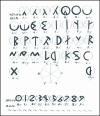
oera-02-adelas-followers

02 Chapter XXI: This stands inscribed upon all burghs -

1. Before the bad time came our land was the most beautiful in the World. The sun rose higher, and there was seldom frost. The trees and shrubs produced various fruits, which are now lost. In the fields we had not only barley, oats, and rye, but wheat which shone like gold, and which could be baked in the sun's rays. The years were not counted, for one was as happy as another.

2. On one side we were bounded by Wr-Alda's Sea, on which no one but us might or could sail; on the other side we were hedged in by the broad Twiskland, through which Finda's people dared not come on account of the thick forests and the wild beasts.

3. Eastward our boundary went to the extremity of the Aster Sea, and westwards to the Middel Sea; so that besides the small rivers we had twelve large rivers given us by Wr-Alda to keep our land moist, and to show our seafaring men the way to his sea.

4. The banks of these rivers were at one time entirely inhabited by our people, as well as the banks of the Rene from one end to the other.

5. Opposite Denamark and Juttarland we had colonies and a burgh-femme. Thence we obtained copper and silver, as well as tar and pitch, and some other necessaries.

6. Opposite to us we had Brittania, formerly Westland, with her tin mines.

7. Brittania was the land of the exiles, who with the help of their burgh-femme had gone away to save their lives; but in order that they might not come back they were tattooed with a "B" on the forehead, the banished with a red dye, the other criminals with blue.

8. Moreover, our navigators and merchants had many factories among the Heinde Krekalandar and in Lydia. In Lydia the people are black.

9. As our country was so great and extensive, we had many different names. Those who were settled to the east of Denamark were called Juttar, because often they did nothing else than look for amber on the shore. Those who lived in the islands were called Letne, because they lived an isolated life.

10. All those who lived between Denamark and the Sandfal, now the Skelda, were called Stiurar, Sekampar, and Angelarar. The Angelarar were men who fished in the sea, and were so named because they used lines and hooks instead of nets.

11. From there to Heinde Krekaland the inhabitants were called Kadhemar, because they never went to sea but remained ashore.

12. Those who were settled in the higher marches bounded by Twiskland were called Saxmannar, because they were always armed against the wild beasts and the savage Britne.

13. Besides these we had the names Landsaton, Marsatar, and Holt- or Wodsatar.

02 Chapter XXII: How the bad time came -

1. During the whole summer the sun had been hidden behind the clouds, as if unwilling to look upon Irtha. There was perpetual calm, and the damp mist hung like a wet sail over the houses and marshes. The air was heavy and oppressive, and in men's hearts was neither joy nor cheerfulness.

2. In the midst of this stillness Irtha began to tremble as if she was dying. The mountains opened to vomit forth fire and flames. Some sank into the bosom of Irtha, and in other places mountains rose out of the plain. Aldland, called Atland by the navigators, disappeared, and the wild waves rose so high over hill and dale that everything was buried in the sea. Many people were swallowed up by Irtha, and others who had escaped the fire perished in the water.

3. It was also in Finda's land that Irtha vomited fire, and in Twiskland. Whole forests were burned one after the other, and when the wind blew from that quarter our land was covered with ashes. Rivers changed their course, and at their mouths new islands were formed of sand and drift.

4. During three years this continued, but at length it ceased, and forests became visible. Many countries were submerged, and in other places land rose above the sea, and the wood was destroyed through the half of Twiskland. Troops of Finda's people came and settled in the empty places. Our dispersed people were exterminated or made slaves. Then watchfulness was doubly impressed upon us, and time taught us that union is force.

02 Chapter XXIII: This was inscribed on the Waraburch by the Aldergamude -
oera-02-adelas-followers

1., The Waraburch is not a femme's burgh, but the place where all the foreign articles brought by navigators were stored. It lies three hours south from Medeasblik.

2. Thus is the preface:

3. Hills, bow your heads; weep, ye streams and clouds. Yes. Skenland blushes, an enslaved people tramples on your short kilt, O Frya.

4. This is the history:

5. In the year 101 after the submersion of Aldland a people came out of the east. That people was driven by another. Behind us, in Twiskland, they fell into disputes, divided into two parties, and each went its own way. Of the one no account has come to us, but the other came in the back of our Skenland, which was thinly inhabited, particularly the upper part. Therefore they were able to take possession of it without contest, and as they did no other harm, we would not make war about it.

6. Now that we have learned to know them, we will describe their customs, and after that how matters went between us. They were not wild people, like most of Finda's race; but, like the Egiptalandar, they have priests and also statues in their temples. The priests are the only rulers; they call themselves Magyarar, and their leader Magy. He is high priest and king in one. The rest of the people are of no account, and in subjection to them.

7. This people have not even a name; but we call them Finnar, because although all the festivals are melancholy and bloody, they are so formal that we are inferior to them in that respect. But still they are not to be envied, because they are slaves to their priests, and still more to their creeds.

8. They believe that evil spirits abound everywhere, and enter into men and beasts, but of Wr-Alda's spirit they know nothing. They have weapons of stone, the Magyarar of copper. The Magyarar affirm that they can exorcise and recall the evil spirits, and this frightens the people, so that you never see a cheerful face.

9. When they were well established, the Magyarar sought our friendship, they praised our language and customs, our cattle and silver weapons, which they would willingly have exchanged for their gold and silver ornaments, and they always kept their people within their own boundaries, and that outwitted our watchfulness.

10. Eighty years afterwards, just at the time of the Yule-feast, they overran our country like a snowstorm driven by the wind. All who could not flee away were killed. Frya was appealed to, but the Skenlandar had neglected her advice. Then all the forces were assembled, and three hours from Godahisburch they were withstood, but war continued.

11. Kat or Katerinne was the name of the burgh-femme of Godahisburch. Kat was proud and haughty, and would neither seek counsel nor aid from the folk-mother; but when the burghers knew this, they themselves sent messengers to Texland to the folk-mother. Minna - this was the name of the folk-mother - summoned all the navigators and the young men from Astflyland and Denamark.

12. From this expedition the history of Wodin sprang, which is inscribed on the burghs, and is here copied:

13. At Aldergamude there lived an old sea king whose name was Sterik, and whose deeds were famous. This old fellow had three nephews. Wodin, the eldest, lived at Lumkamakia, near the Emude, in Astflyland, with his parents. He had once commanded troops. Tunis and Inka were naval warriors, and were just then staying with their father at Aldergamude.

14. When the young warriors had assembled together, they chose Wodin to be their commander or king, and the naval force chose Tunis for their sea king and Inka for their admiral. The navigators then sailed for Denamark, where they took on board Wodin and his valiant host.

15. The wind was fair, so they arrived immediately in Skenland. When the northern brothers met together, Wodin divided his powerful army into three bodies. "Frya" was their war-cry, and they drove back the Finnar and Magyarar like children.

16. When the Magy heard how his forces had been utterly defeated, he sent messengers with truncheon and crown, who said to Wodin:

17. "O almighty king, we are guilty, but all that we have done was done from necessity. You think that we attacked your brothers out of illwill, but we were driven out by our enemies, who are still at our heels. We have often asked your burgh-femme for help, but she took no notice of us.

18. "The Magy says that if we kill half our numbers in fighting with each other, then the wild shepherds will come and kill all the rest. The Magy possesses great riches, but he has seen that Frya is much more powerful than all our spirits together. He will lay down his head in her lap.

19. "You are the most warlike king on Irtha, and your people are of silver. Become our king, and we will all be your slaves. What glory it would be for you if you could drive back the savages! Our trumpets would resound with your praises, and the fame of your deeds would precede you everywhere."

20. Wodin was strong, fierce, and warlike, but he was not clear-sighted, therefore he was taken in their toils, and crowned by the Magy.

21. Very many of the navigators and soldiers to whom this proceeding was displeasing went away secretly, taking Kat with them. But Kat, who did not wish to appear before either the folk-mother or the general assembly, jumped overboard. Then a storm arose and drove the ships upon the banks of Denamark, with the total destruction of their crews. This strait was afterwards called the Katsgat.

22. When Wodin was crowned, he attacked the savages, who were all horsemen, and fell upon Wodin's troops like a hailstorm; but like a whirlwind they were turned back, and did not dare to appear again.

23. When Wodin returned, Magy gave him his daughter to wife. Whereupon he was incensed with herbs; but they were magic herbs, and by degrees he became so audacious that he dared to disavow and ridicule the spirits of Frya and Wr-Alda, while he bent his free head before the false and deceitful images. His reign lasted seven years, and then he disappeared. The Magy said that he was taken up by their gods and still reigned over us, but our people laughed at what they said.

24. When Wodin had disappeared some time, disputes arose. We wished to choose another king, but the Magy would not permit it. He asserted that it was his right given him by his idols. But besides this dispute there was one between the Magyarar and Finnar, who would honour neither Frya nor Wodin; but the Magy did just as he pleased, because his daughter had a son by Wodin, and he would have it that this son was of high descent.

25. While all were disputing and quarrelling, he crowned the boy as king, and set up himself as guardian and counsellor. Those who cared more for themselves than for justice let him work his own way, but the good men took their departure. Many Magyarar fled back with their troops, and the sea-people took ship, accompanied by a body of stalwart Finnar as rowers.

26. Next comes upon the stage the history of Nef Tunis and Nef Inka.

02 Chapter XXIV: All this is inscribed not only on the Waraburch, but also on the burgh Stavia, which lies behind the port of Staveren -

1. When Tunis wished to return home, he went first towards Denamark; but he might not land there, for so the folk-mother had ordered, nor was he to land at Flyland nor anywhere about there. In this way he would have lost all his people by want and hardship, so he landed at night to steal and sailed by day. Thus coasting along, he at length arrived at the colony of Kadik, so called because it was built with a stone quay.

2. Here they bought all kinds of stores, but Tutia the burgh-femme would not allow them to settle there. When they were ready they began to disagree. Tunis wished to sail through the straits to the Middel Sea, and enter the service of the rich king of Egiptaland, as he had done before, but Inka said he had had enough of all those Finda's people. Inka thought that perchance some high-lying part of Atland might remain as an island, where he and his people might live in peace.

3. As the two brothers could not agree, Tunis planted a red flag on the shore, and Inka a blue flag. Every man could choose which he pleased, and to their astonishment the greater part of the Finnar and Magyarar followed Inka, who had objected to serve the kings of Finda's people. When they had counted the people and divided the ships accordingly, the fleet separated. We shall hear of Tunis afterwards, but nothing more of Inka.

4. Nef Tunis coasted through the straits to the Middel Sea. When Atland was submerged there was much suffering also on the shores of the Middel Sea, on which account many of Finda's people, Heinde and Fere Krekalandar, and people from Lyda's land, came to us. On the other hand, many of our people went to Lyda's land. The result of all this was that the Heinde and Fere Krekalandar were lost to the superintendence of the folk-mother.

5. Tunis had reckoned on this, and had therefore wished to find there a good haven from which he might go and serve under the rich princes; but as his fleet and his people had such a shattered appearance, the inhabitants on the coasts thought that they were pirates, and drove them away.

6. At last they arrived at the Phonisiar coast, in the year 193 after Atland was submerged.

7. Near the coast they found an island with two deep bays, so that there appeared to be three islands. In the middle one they established themselves, and afterwards built a burgh wall round the place. Then they wanted to give it a name, but disagreed about it. Some wanted to call it Fryasburch, others Neftunia; but the Magyarar and Finnar begged that it might be called Thyrhisburch.

8. Thyr was the name of one of their idols, and it was upon his feast-day that they had landed there; and in return they offered to recognise Tunis as their perpetual king. Tunis let himself be persuaded, and the others would not make any quarrel about it.

9. When they were well established, they sent some senior navigators and Magyarar on an expedition as far as the burgh of Sydon; but at first the inhabitants of the coast would have nothing to do with them, saying:

10. "You are only foreign adventurers whom we do not respect."

11. But when we sold them some of our silver weapons, everything went well. They also wished to buy our amber, and their inquiries about it were incessant. But Tunis, who was far-seeing, pretended that he had no more weapons or amber.

12. Then merchants came and begged him to let them have twenty vessels, which they would freight with the finest goods, and they would provide as many people to row as he would require. Twelve ships were laden with wine, honey, tanned leather, and saddles and bridles mounted in gold, such as had never been seen before.

13. Tunis sailed to the Flymar with all this treasure, which so enchanted the reeve of Westflyland that he induced Tunis to build a warehouse at the mouth of the Flymar. Afterwards this place was called Almanland, and the market where they traded at Wyringga was called Toletmark.

14. The folk-mother advised that they should sell everything except silver weapons, but no attention was paid to what she said. As the Thyriar had thus free play, they came from far and near to take away our goods, to the loss of our seafaring people. Therefore it was resolved in a general assembly to allow only seven Thyrier ships and no more in a year.

02 Chapter XXV: What the consequence of this was -

1. In the northernmost part of the Middel Sea there lies an island close to the coast. They now came and asked to buy that, on which a general assembly was held.

2. The folk-mother's advice was asked, and she wished to see them at some distance, so she saw no harm in it; but as we afterwards saw what a mistake we had made, we called the island Missellia. Hereafter will be seen what reason we had.

3. The Golar, as the missionary priests of Sydon were called, had observed that the land there was thinly peopled, and was far from the folk-mother. In order to make a favourable impression, they had themselves called in our language "Truth Followers"; but they had better have been called "Truth Shunners", or, in short, Trowydar, as our navigators afterwards called them.

4. When they were well established, their merchants exchanged their beautiful copper weapons and all sorts of jewels for our silver weapons and hides of wild beasts, which were abundant in our southern countries; but the Golar celebrated all sorts of vile and monstrous festivals, which the inhabitants of the coast promoted with their wanton women and sweet poisonous wine.

5. If any of our people had so conducted himself that his life was in danger, the Golar afforded him a refuge, and sent him to Phonisia, that is, Palmland. When he was settled there, they made him write to his family, friends, and connections that the country was so good and the people so happy that no one could form any idea of it.

6. In Brittania there were plenty of men, but few women. When the Golar knew this, they carried off girls everywhere and gave them to the Britne for nothing. So all these girls served their purpose to steal children from Wr-Alda in order to give them to false gods.

02 Chapter XXVI: Now we will write about the war between the burgh-femmes Kalta and Minerva -

oera-02-adelas-followers

1. And how we thereby lost all our southern lands and Brittania to the Golar.

2. Near the mouth of the Suder Hrenum and the Skelda there are the Siugon Elanda, named after Frya's seven watch-femmes of the week. In the middle of one island is the burgh of Walhallagara, and on the walls of this burgh the following history is inscribed.

3. Above it are the words, "Read, Learn, and Watch!"

4. In the year 563 after the submersion of Aldland a wise burgh-femme presided here, whose name was Minerva - called by the navigators Nyhellenia. This name was well chosen, for her counsels were new and clear above all others.

5. On the other side of the Skelda, at Flyburch, Syrhed presided. This femme was full of tricks. Her face was beautiful, and her tongue was nimble; but the advice that she gave was always conveyed in mysterious terms. Therefore the navigators called her Kalta, and the land-dwellers thought it was a title.

6. In the last will of the dead folk-mother, Rosamond was named first, Minerva second, and Syrhed third in succession. Minerva did not mind that, but Syrhed was very much offended. Like a foreign princess, she wished to be honoured, feared, and worshipped; but Minerva only desired to be loved. At last all the navigators, even from Denamark and Flymar, did homage to her. This hurt Syrhed, because she wanted to excel Minerva.

7. In order to give an impression of her great watchfulness, she had a cock put on her banner. So then Minerva went and put a sheep-dog and an owl on her banner. The dog, she said, guards his master and his flock, and the owl watches that the mice shall not devastate the fields; but the cock in his lewdness and his pride is only fit to murder his nearest relations. When Kalta found that her scheme had failed she was still more vexed, so she secretly sent for the Magyarar to teach her sorcery.

8. When she had had enough of this she threw herself into the hands of the Golar; but all her malpractices did not improve her position. When she saw that the navigators kept more and more aloof from her, she tried to win them back by fear. At the full moon, when the sea was stormy, she ran over the wild waves, calling to the navigators that they would all be lost if they did not worship her. Then she blinded their eyes, so that they mistook land for water and water for land, and in this way many a good ship was totally lost.

9. At the first war-feast, when all her countrymen were armed, she brought casks of beer, which she had drugged. When they were all drunk she mounted her war-horse, leaning her head upon her spear. Sunrise could not be more beautiful. When she saw that the eyes of all were fixed upon her, she opened her lips and said:

10. "Sons and daughters of Frya, you know that in these last times we have suffered much loss and misery because the navigators no longer come to buy our paper, but you do not know what the reason of it is. I have kept silence about it, but can do so no longer.

11. "Listen, then, my friends, that you may know on which side to show your teeth. On the other side of the Skelda, where from time to time there come ships from all parts, they make now paper from pumpkin leaves, by which they save flax and outdo us.

12. "Now, as the making of paper was always our principal industry, the folk-mother willed that people should learn it from us; but Minerva has bewitched all the people - yes, bewitched, my friends - as well as all our cattle that died lately. I must come out with it. If I were not burgh-femme, I should know what to do. I should burn the witch in her nest."

13. As soon as she had uttered these words she sped away to her burgh; but the drunken people were so excited that they did not stop to weigh what they had heard. In mad haste they hurried over the Sandfal, and as night came on they burst into the burgh. However, Kalta again missed her aim; for Minerva, her femmes, and her lamp were all saved by the alertness of the navigators.

02 Chapter XXVII: We now come to the history of Jon -

oera-02-adelas-followers

1. Jon, Jhon, Jan, are all the same name, though the pronunciation varies, as the navigators like to shorten everything to be able to make it easier to call. Jon - that is, "Given" - was a sea king, born at Alderga, who sailed from the Flymar with a fleet of one hundred and twenty-seven ships fitted out for a long voyage, and laden with amber, tin, copper, cloth, linen, felt, otter-skins, beaver and rabbit skins.

2. He would also have taken paper from here, but when he saw how Kalta had destroyed the burgh he became so angry that he went off with all his people to Flyburch, and out of revenge set fire to it. His admiral and some of his people saved the lamp and the femmes, but they could not catch Syrhed, or Kalta. She climbed up on the furthest battlement, and they thought she must be killed in the flames; but what happened?

3. While all her people stood transfixed with horror, she appeared upon her steed more beautiful than ever, calling to them, "To Kalta!"

4. Then the other Skelda people poured out towards her. When the navigators saw that, they shouted, "We are for Minerva!"

5. From this arose a war in which thousands were killed.

6. At this time Rosamond, that is Rosamuda, the folk-mother, who had done all in her power by gentle means to preserve peace, when she saw how bad it was, made short work of it. Immediately she sent messengers throughout all the districts to call a general levy, which brought together all the warriors of the country. The landsmen who were fighting were all caught, but Jon with his navigators took refuge on board his fleet, taking with him the two lamps, as well as Minerva and the femmes of both the burghs.

7. Helprik, the commander, summoned him to appear; but while all the soldiers were on the other side of the Skelda, Jon sailed back to the Flymar, and then straight to our islands. His fighting men and many of our people took women and children on board, and when Jon saw that he and his people would be punished for their misdeeds, he secretly took his departure.

8. He did well, for all our islanders, and the other Skelda people who had been fighting were transported to Brittania. This step was a mistake, for now came the beginning of the end.

9. Kalta, who, people said, could go as easily on the water as on the land, went to the mainland and on to Missellia. Then came the Golar out of the Middel Sea with their ships to Kadik, and along all our coasts, and fell upon Brittania; but they could not make any good footing there, because the government was powerful and the exiles were still Children of Frya.

10. But now came Kalta and said, "You were born free, and for small offences have been sent away, not for your own improvement, but to get tin by your labour. If you wish to be free again, and take my advice, and live under my care, come away. I will provide you with arms, and will watch over you."

11. The news flew through the land like lightning, and before the carrier had made one revolution of the Yule she was mistress of all the Thyriar in all our southern states as far as the Seiene. She built herself a burgh in Berchland to the north, and called it Kaltasburch. It still exists under the name of Kerenak. From this burgh she ruled as a tyrannical folk-mother, against their will, not for her followers, but over them, who were thenceforth called Kaltanar.

12. The Golar gradually obtained dominion over the whole of Brittania, partly because they no longer had any burghs; secondly, because they had there no burgh-femmes; and thirdly, because they had no real lamps. From all these causes the people could not learn anything. They were stupid and foolish, and having allowed the Golar to rob them of their arms, they were led about like a bull with a ring in his nose.

02 Chapter XXVIII: Now we shall write how it fared with Jon; it is inscribed at Texland -

1. Ten years after Jon went away, there arrived three ships in the Flymar; the people cried, "Huzza!" From their accounts the folk-mother had this written:

2. When Jon reached the Middel Sea, the reports of the Golar had preceded him, so that on the coast of Heinde Krekaland he was nowhere safe. Therefore he went with his fleet straight over to Lydia. There the black men wanted to catch them and eat them. At last they came to Thyr, but Minerva said:

3. "Keep clear, for here the air has been long poisoned by the priests."

4. The king was a descendant of Tunis, as we were afterwards informed; but as the priests wished to have a king, who, according to their ideas, was of long descent, they deified Tunis, to the vexation of his followers. After they had passed Thyr, the Thyriar seized one of the rearmost ships, and as the ship was too far behind us, we could not take it back again; but Jon swore to be revenged for it.

5. When night came, Jon went his course towards Fere Krekaland. At last they arrived at a country that looked very barren, but they found a harbour there. Minerva said:

6. "Here we need not perhaps have any fear of princes or priests, as they always look out for rich fat lands."

7. When they entered the harbour, there was not room for all the ships, and yet most of the people were too cowardly to go any further.

8. Then Jon, who wished to get away, went with his spear and banner, calling to the young people, to know who would volunteer to share his adventures. Minerva did the same thing, but wished to remain there. The greater part stopped with Minerva, but the young navigators went with Jon. Jon took the lamp of Kalta and her femmes with him. Minerva retained her lamp and her own femmes.

9. Between Fere and Heinde Krekaland Jon found some islands, which he thought desirable. Upon the largest he built a burgh in the wood between the mountains. From the smaller islands he made expeditions for vengeance on the Thyriar, and plundered their ships and their lands. Therefore these islands were called Rawer Elanda, as well as Jonhis Elanda.

10. When Minerva had examined the country which is called by the inhabitants Attika, she saw that the people were all goatherds, and that they lived on meat, wild roots, herbs, and honey. They were clothed in skins, and had their dwellings on the slopes of the hills, wherefore they were called Hellinggar.

11. At first they ran away, but when they found that we did not attack them, they came back and showed great friendship. Minerva asked if we might settle there peaceably. This was agreed to on the condition that we should help them to fight against their neighbours, who came continually to carry away their children and to rob their dwellings.

12. Then we built a burgh at an hour's distance from the harbour. By the advice of Minerva it was called Athenia, because, she said:

13. "Those who came after us ought to know that we are not here by cunning or violence, but were received as friends."

14. While we were building the burgh the principal personages came to see us, and when they saw that we had no slaves it did not please them, and they gave Minerva to understand it, as they thought that she was a princess.

15. But Minerva said, "How did you get your slaves?"

16. They answered, "We bought some and took others in war."

17. Minerva replied, "If nobody would buy slaves they would not steal your children, and you would have no wars about it. If you wish to remain our allies, you will free your slaves."

18. The princes did not like this, and wanted to drive us away; but the most enlightened of the people came and helped us to build our burgh, which was built of stone.

19. This is the history of Jon and Minerva.

20. When they had finished their story they asked respectfully for silver weapons; for, said they, "Our foes are powerful, but if we have good arms we can withstand them."

21. When this had been agreed to, the people asked if Frya's customs would flourish in Athenia and in other parts of Krekaland. The folk-mother answered:

22. "If the Fere Krekalandar belong to the direct descent of Frya, then they will flourish; but if they do not descend from Frya, then there will be a long contention about it, because the carrier must make five thousand revolutions of his Yule before Finda's people will be ripe for liberty."

02 Chapter XXIX: This is about the Gertmannar -

1. When Hellenia or Minerva died, the priests pretended to be with us, and in order to make it appear so, they deified Hellenia. They refused to have any other burgh-femme chosen, saying that they feared there was no one among her femmes whom they could trust as they had trusted Minerva, surnamed Nyhellenia.

2. But we would not recognise Minerva as a goddess, because she herself had told us that no one could be perfectly good except the spirit of Wr-Alda. Therefore we chose Gert, Pire's daughter, for our burgh-femme.

3. When the priests saw that they could not fry their herrings on our fire, they left Athenia, and said that we refused to acknowledge Minerva as a goddess out of envy, because she had shown so much affection to the natives.

4. Thereupon they gave the people statues of her, declaring that they might ask of them whatever they liked, as long as they were obedient to her. By these kinds of tales the stupid people were estranged from us, and at last they attacked us; but as we had built our stone burgh wall with two horns down to the sea, they could not get at us. Then, lo and behold! An Egiptalandar high priest, bright of eye, clear of brain, and enlightened of mind, whose name was Sekrops, came to give them advice.

5. When he saw that with his people he could not storm our wall, he sent messengers to Thyr. Thereupon there arrived three hundred ships full of wild mountain soldiers, which sailed unexpectedly into our haven while we were defending the walls.

6. When they had taken our harbour the wild soldiers wanted to plunder the state and our ships - one had already ravished a girl - but Sekrops would not permit it; and the Thyriar navigators, who still had Frya's blood in their veins, said:

7. "If you do that we will burn our ships, and you shall never see your mountains again."

8. Sekrops, who had no inclination towards murder or devastation, sent messengers to Gert, requiring her to give up the burgh, offering her free exit with all her live and dead property, and her followers the same. The wisest of the burghers, seeing that they could not hold the burgh, advised Gert to accept at once, before Sekrops became furious and changed his mind.

9. Three months afterwards Gert departed with the best of Frya's Children, and seven times twelve ships. Soon after they had left the harbour they fell in with at least thirty ships coming from Thyr with women and children. They were on their way to Athenia, but when they heard how things stood there they went with Gert. The sea king of the Thyriar brought them altogether through the strait which at that time ran into the Rade Sea.

10. At last they landed at the Pangab, called in our language the five rivers, because five rivers flow together to the sea. Here they settled, and called it Gertmannia.

11. The king of Thyr afterwards, seeing that all his best navigators were gone, sent all his ships with his wild soldiers to catch them, dead or alive. When they arrived at the strait, both sea and Irtha trembled. The land was upheaved so that all the water ran out of the strait, and the muddy shores were raised up like a rampart. This happened on account of the virtues of the Gertmannar, as every one can plainly understand.

02 Chapter XXX: In the year 1005 after Aldland was submerged, this was inscribed on the eastern wall of Fryasburch

1. After twelve years had elapsed without our seeing any Krekalandar in Almanland, there came three ships, finer than any that we possessed or had ever seen.

2. On the largest of them was a king of the Jonhis Elenda whose name was Ulysus, the fame of whose wisdom was great. To him a priestess had prophesied that he should become the king of all Krekaland provided he could obtain a lamp that had been lighted at the lamp in Texland. For this purpose he had brought great treasures with him, above all, jewels for women more beautiful than had ever been seen before. They were from Troia, a state that the Krekalandar had taken.

3. All these treasures he offered to the folk-mother, but the folk-mother would have nothing to do with them. At last, when he found that there was nothing to be got from her, he went to Walhallagara.

4. There there was established a burgh-femme whose name was Kat, but who was commonly called Kalip, because her lower lip stuck out like a mast-head. Here he tarried for years, to the scandal of all that knew it.

5. According to the report of the femmes, he obtained a lamp from her; but it did him no good, because when he got to sea his ship was lost, and he was taken up naked and destitute by another ship.

6. There was left behind by this king a scribe of pure Frya's blood, born in the new harbour of Athenia, who wrote for us what follows about Athenia, from which may be seen how truly the folk-mother Hellicht spoke when she said that the customs of Frya could never take firm hold in Athenia.

7. From the other Krekalandar you will have heard a great deal of bad about Sekrops, because he was not in good repute; but I dare affirm that he was an enlightened man, very renowned both among the inhabitants and among us, for he was against oppression, unlike the other priests, and was virtuous, and knew how to value the wisdom of distant nations. Knowing that, he permitted us to live according to our own Law Book.

8. There was a story current that he was favourable to us because he was the son of a daughter of Frya and an Egiptalandar priest - the reason of this was that he had blue eyes, and that many of our girls had been stolen and sold to Egiptaland, but he never confirmed this. However it may have been, certain it is that he showed us more friendship than all the other priests together.

9. When he died, his successors soon began to tear up our charters, and gradually to enact so many unsuitable statutes that at long last nothing remained of liberty but the shadow and the name. Besides, they would not allow the laws to be written, so that the knowledge of them was hidden from us. Formerly all the cases in Athenia were pleaded in our language, but afterwards in both languages, and at last in the native language only.

10. At first the men of Athenia only married women of our own race, but the young men as they grew up with the girls of the country took them to wife. The bastard children of this connection were the handsomest and cleverest in the World; but they were likewise the wickedest, wavering between the two parties, paying no regard to laws or customs except where they suited their own interests.

11. As long as a ray of Frya's spirit existed, all the building materials were for common use, and no one might build a house larger or better than his neighbour's; but when some degenerate statesmen got rich by sea-voyages and by the silver that their slaves got in the silver countries, they went to live out on the hills or in the valleys.

12. There, behind high enclosures of trees or walls, they built palaces with costly furniture, and in order to remain in good odour with the nasty priests, they placed there likenesses of false gods and unchaste statues. Sometimes the dirty priests and princes wished for the boys rather than the girls, and often led them astray from the paths of virtue by rich presents or by force.

13. Because riches were more valued by this lost and degenerate race than virtue or honour, one sometimes saw boys dressed in splendid flowing robes, to the disgrace of their parents and femmes, and to the shame of their own sex.

14. If our simple parents came to a general assembly at Athenia and made complaints, a cry was raised, "Hear, Hear! There is a sea-monster going to speak!"

15. Such is Athenia become, like a morass in a tropical country full of leeches, toads, and poisonous snakes, in which no man of decent habits can set his foot.

02 Chapter XXXI: This is inscribed in all our burghs -

1. How our Denamark was lost to us in the year 1602 after the submersion of Aldland.

2. Through the mad wantonness of Wodin, Magy had become master of the east part of Skenland. They dare not come over the hills and over the sea. The folk-mother would not prevent it. She said:

3. "I see no danger in their weapons, but much in taking the Skenlandar back again, because they are so degenerate and spoilt."

4. The general assembly were of the same opinion. Therefore it was left to him.

5. A good hundred years ago the Denamarkar began to trade; they gave their silver weapons in exchange for gold ornaments, as well as for copper and silver-ore. The folk-mother sent messengers to advise them to have nothing to do with this trade. There was danger to their morals in it, and if they lost their morals they would soon lose their liberty.

6. But the Denamarkar paid no attention to her. They did not believe that they could lose their morals, therefore they would not listen to her. At last they were at a loss themselves for weapons and necessaries, and this difficulty was their punishment. Their bodies were brilliantly adorned, but their cupboards and their sheds were empty.

7. Just one hundred years after the first ship with provisions sailed from the coast, poverty and want made their appearance, hunger spread her wings all over the land, dissension marched proudly about the streets and into the houses, charity found no place, and unity departed. The child asked its mother for food; she had no food to give, only jewels. The women applied to their husbands, the husbands appealed to the reeves; the reeves had nothing to give, or if they had, they hid it away.

8. Now the jewels must be sold, but while the navigators were away for that purpose, the frost came and laid a plank upon the sea and the strait. When the frost had made the bridge, vigilance ceased in the land, and treachery took its place. Instead of watching on the shores, they put their horses in their sledges and drove off to Skenland.

9. Then the Skenlandar, who hungered after the land of their forefathers, came to Denamark. One bright night they all came. They said:

10. "Now we have a right to the land of our fathers."

11. And while they were fighting about it, the Finnar came to the defenceless states and ran away with the children. As they had no good weapons, they lost the battle, and with it their freedom, and Magy became master.

12. All this was the consequence of their not reading Frya's Tex, and neglecting her counsels.

13. There are some who think that they were betrayed by the reeves, and that the femmes had long suspected it; but if any one attempted to speak about it, his mouth was shut by golden chains.

14. We can express no opinion about it, we can only say to you: Do not trust too much to the wisdom of your princes or of your femmes; but if you wish to keep things straight, everybody must watch over his passions, as well as the general welfare.

15. Two years afterwards Magy himself came with a fleet of light boats to steal the lamp from the folk-mother of Texland.

16. This wicked deed he accomplished one stormy winter night, while the wind roared and the hail rattled against the windows. The watchman on the tower hearing the noise, lighted his torch. As soon as the light from the tower fell upon the burgh, he saw that already armed men had got over the wall.

17. He immediately gave the alarm, but it was too late. Before the guard was ready, there were two thousand people battering the gate. The struggle did not last long. As the guard had not kept a good watch, they were overwhelmed.

18. While the fight was going on, a rascally Finn stole into the bedroom of the folk-mother, and would have raped her. She resisted him, and threw him down against the wall. When he got up, he ran his sword through her:

19. "If you will not have me, you shall have my sword."

20. A Denamarkar soldier came behind him and clave his head in two. There came from it a stream of black blood and a wreath of blue flame.

21. The Magy had the folk-mother nursed on his own ship. As soon as she was well enough to speak clearly, the Magy told her that she must sail with him, but that she should keep her lamp and her femmes, and should hold a station higher than she had ever done before.

22. Moreover, he said that he should ask her, in presence of all his chief men, if he would become the ruler of all the lands and people of Frya; that she must declare and affirm this, or he would let her die a painful death.

23. Then, when he had gathered all his chiefs around her bed, he asked, in a loud voice, "Frana, since you are a prophetess, shall I become ruler over all the lands and people of Frya?"

24. Frana did as if she took no notice of him; but at last she opened her lips, and said:

25. "My eyes are dim, but the other light dawns upon my soul. Yes, I see it. Hear, Irtha, and rejoice with me.

26. "At the time of the submersion of Aldland, the first spoke of the Yule stood at the top. After that it went down, and our freedom with it.

27. "When two spokes, or two thousand years, shall have rolled down, the sons shall arise who have been bred of the fornication of the princes and priests with the people, and shall witness against their fathers.

They shall all fall by murder, but what they have proclaimed shall endure, and shall bear fruit in the bosoms of able men, like good seed which is laid in thy lap.

28. "Yet a thousand years shall the spoke descend, and sink deeper in darkness, and in the blood shed over you by the wickedness of the princes and priests.

29. "After that, the dawn shall begin to glow. When they perceive this, the false princes and priests will strive and wrestle against freedom; but freedom, love, and unity will take the people under their protection, and rise out of the vile pool.

30. "The light which at first only glimmered shall flow over your surface, but you must not absorb it. At last the poisoned animals shall eat it, and die of it. All the stories that have been written in praise of the princes and priests shall be committed to the flames. Thenceforth your children shall live in peace."

31. When she had finished speaking she sank down.

32. The Magy, who had not understood her, shrieked out, "I asked you if I should become master of all the lands and people of Frya, and now you have been speaking to another."

33. Frana raised herself up, stared at him, and said, "Before seven days have passed your soul shall haunt the tombs with the night-birds, and your body shall be at the bottom of the sea."

34. Swelling with rage, the Magy said, "Very good; say that I am coming!"

35. Then he said to his executioners, "Throw this woman overboard!"

36. This was the end of the last of the folk-mothers. We do not ask for revenge. Time will provide that; but a thousand thousand times we will call with Frya - "Watch! Watch! Watch!"

02 Chapter XXXII: How it fared afterwards with the Magy -

1. After the murder of the folk-mother, he brought the lamp and the femmes into his own ship, together with all the booty that he chose. Afterwards he went up the Flymar because he wished to take the burgh-femme of Medeasblik or Stavia and install her as folk-mother; but there they were on their guard.

2. The navigators of Staveren and Alderga would gladly have gone to Jon, but the great fleet was out on a distant voyage; so they proceeded in their small fleet to Medeasblik, and kept themselves concealed in a sheltered place behind trees.

3. The Magy approached Medeasblik in broad daylight; nevertheless, his men boldly stormed the burgh. But as they landed from the boats, our people sallied forth from the creek, and shot their arrows with balls of burning turpentine upon the fleet. They were so well aimed that many of the ships were instantly on fire. Those left to guard the ships shot at us, but they could not reach us.

4. When at last a burning ship drifted towards the ship of the Magy, he ordered the man at the helm to sheer of, but this man was the Denamarkar who had cleft the head of the Finn. He said:

5. "You sent our folk-mother to the bottom of the sea to say that you were coming. In the bustle of the fight you might forget it; now I will take care that you keep your word."

6. The Magy tried to push him off, but the navigator, a real Child of Frya and strong as an ox, clutched his head with both hands, and pitched him into the surging billows. Then he hoisted up his brown shield, and sailed straight to our fleet. Thus the femmes came unhurt to us; but the lamp was extinguished, and no one knew how that had happened.

7. When those on the uninjured ships heard that the Magy was drowned, they sailed away, because their crews were Denamarkar. When the fleet was far enough off, our navigators turned and shot their burning arrows at the Finnar.

8. When the Finnar saw that, and found that they were betrayed, they fell into confusion, and lost all discipline and order. At this moment the garrison sallied forth from the burgh. Those who resisted were killed, and those who fled found their death in the marshes of the Krylinger Wald.

02 Chapter XXXIII: Postscript -

1. When the navigators were in the creek, there was a wag from Staveren among them, who said, "Medea may well laugh if we rescue her from the burgh."

2. Upon this, the femmes gave to the creek the name Medea Meilakkia.

3. The occurrences that happened after this everybody can remember. The femmes ought to relate it in their own way, and have it well inscribed. We consider that our task is fulfilled. Hail!

4. The end of the book.

The Oera Linda Book, 1 Okke, my son

The Oera Linda Book

Written in 1256 AD, from a diary
which was put together 560-558 BC.

from the Original Frisian text

verified by Dr. Ottema

by :

William R. Sandbach

Londen, Trubner & Co, 1876

The Letters

oera-01-letters

01 Chapter I: Okke, my son -

1. You must preserve these books with body and soul. They contain the history of all our people, as well as of our forefathers.

2. Last year I saved them in the flood, as well as you and your mother; but they got wet, and therefore began to perish. In order not to lose them, I copied them on foreign paper.

3. In case you inherit them, you must copy them likewise, and your children must do so too, so that they may never be lost.

4. Written at Liudwerd, in the year 3449 after Atland was submerged - that is, according to the Christian reckoning, the year 1256.

Hidde, surnamed Oera Linda - Watch!

01 Chapter II: Beloved successors -

1. For the sake of our dear forefathers, and of our dear liberty, I entreat you a thousand times never let the eye of a monk look on these writings.

2. The monks are very insinuating, but they destroy in an underhand manner all that relates to us Children of Frya.

3. In order to gain rich benefices, they conspire with foreign kings, who know that we are their greatest enemies, because we dare to speak to their people of liberty, rights, and the duties of princes. Therefore they seek to destroy all that we derive from our forefathers, and all that is left of our old customs.

4. Ah, my beloved ones! I have visited their courts! If Wr-Alda permits it, and we do not show ourselves strong to resist, they will altogether exterminate us.

Written at Liudwerd, in the year 803 of the Christian era.

Liko, surnamed Oera Linda.

Subscribe to this RSS feed

Log in or create an account